Hurricane Damage
Of all documented weather disasters in U.S. history, hurricanes have caused the most deaths and destruction. The year 2020 set a new record for events with 22 billion-dollar weather and climate disasters—shattering the previous annual record of 16 events in 2011 and 2017.
Then on August 29, 2021, Hurricane Ida made landfall on Louisiana’s Gulf Coast, becoming the second-most damaging and intense hurricane on record to make landfall there, behind Hurricane Katrina in 2005. With 149-mile-per-hour winds, the Category 4 hurricane was just shy of the 157-mile-per-hour wind classification to be ranked as a Category 5 storm. And as with any major storm, the destruction and devastation were overwhelming. These disasters are becoming more frequent as can be seen in the fact that 2021 became the seventh consecutive year in which 10 or more billion-dollar disaster events occurred in the U.S.
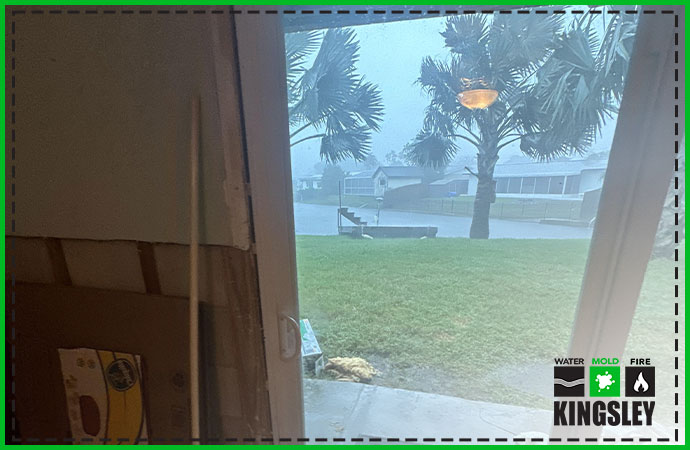
Hurricanes can cause catastrophic damage to coastlines as well as several hundred miles inland. They can create winds exceeding 155 miles per hour and may spawn destructive tornadoes and microbursts. Additionally, hurricanes can generate storm surges alongside coastal areas and produce heavy rainfall inland that causes flooding and flash floods, leading to extreme water damage. Flying debris from extreme winds is many times lethal and causes property destruction.

Hurricane Risks to South Carolina
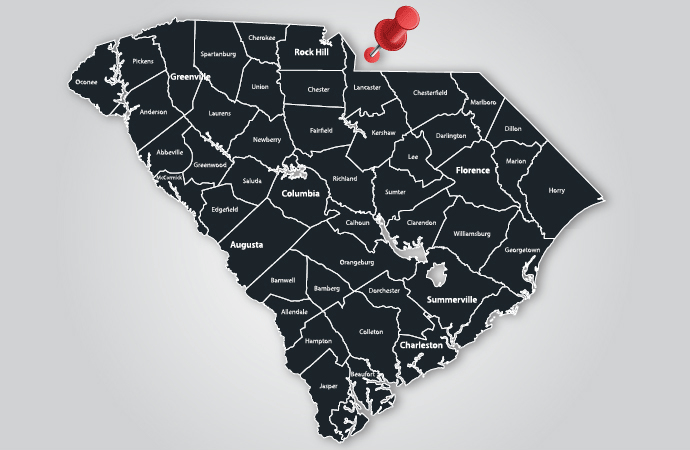
If you live in South Carolina, you’re aware of the risk of hurricanes. They not only threaten South Carolina’s coast but ALL areas of our state. But how likely are we to be hit by one? The South Carolina Department of Natural Resources has been tracking tropical systems since 1851, and their findings indicate how likely South Carolina is to be hit each year.
Between 1851-2020, 255 systems have impacted the state. Of those, 131 hurricanes have tracked into the state – 60 were a category 1 or higher, 43 made direct landfall and four were major category 3 or higher landfalls. This means that South Carolina has a 79.7% chance of being impacted by a tropical system every year, even if it doesn’t track directly through the state.
Helpful Info to Keep You Safe
Living in South Carolina means that everyone needs to understand and be prepared for hurricane damage. We can’t prevent hurricanes, but we can take action to protect ourselves and our families from the dangers of these storms.
To help keep you safe, the South Carolina Emergency Management Division (SCEMD) publishes a South Carolina Hurricane Guide that they update annually. (All information contained in the Guide is valid at the time of publishing each year but is subject to change depending on actual storm conditions.) Printed copies of the Guide are available at all South Carolina Welcome Centers, at any Walgreens store statewide, and at most SCDMV offices.
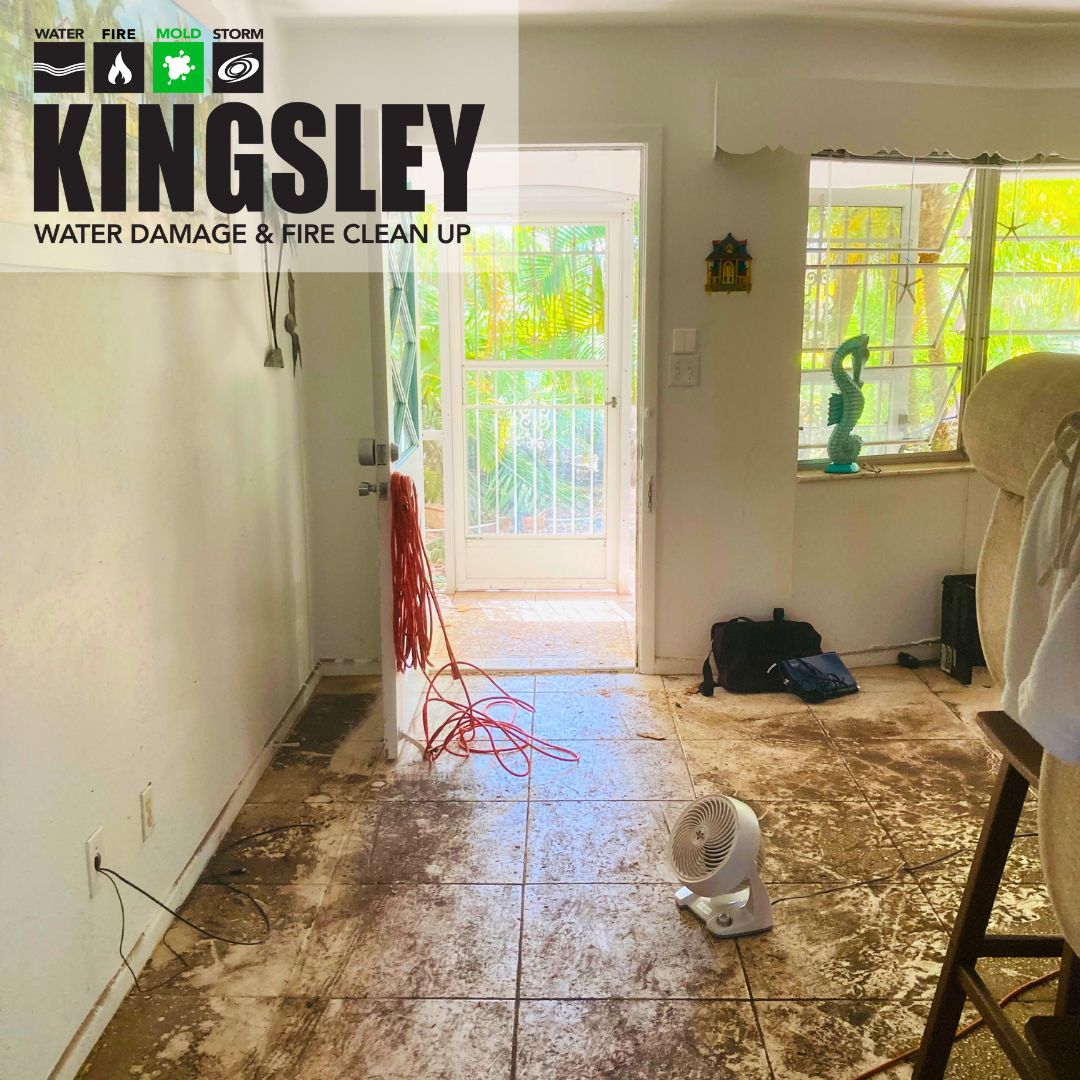
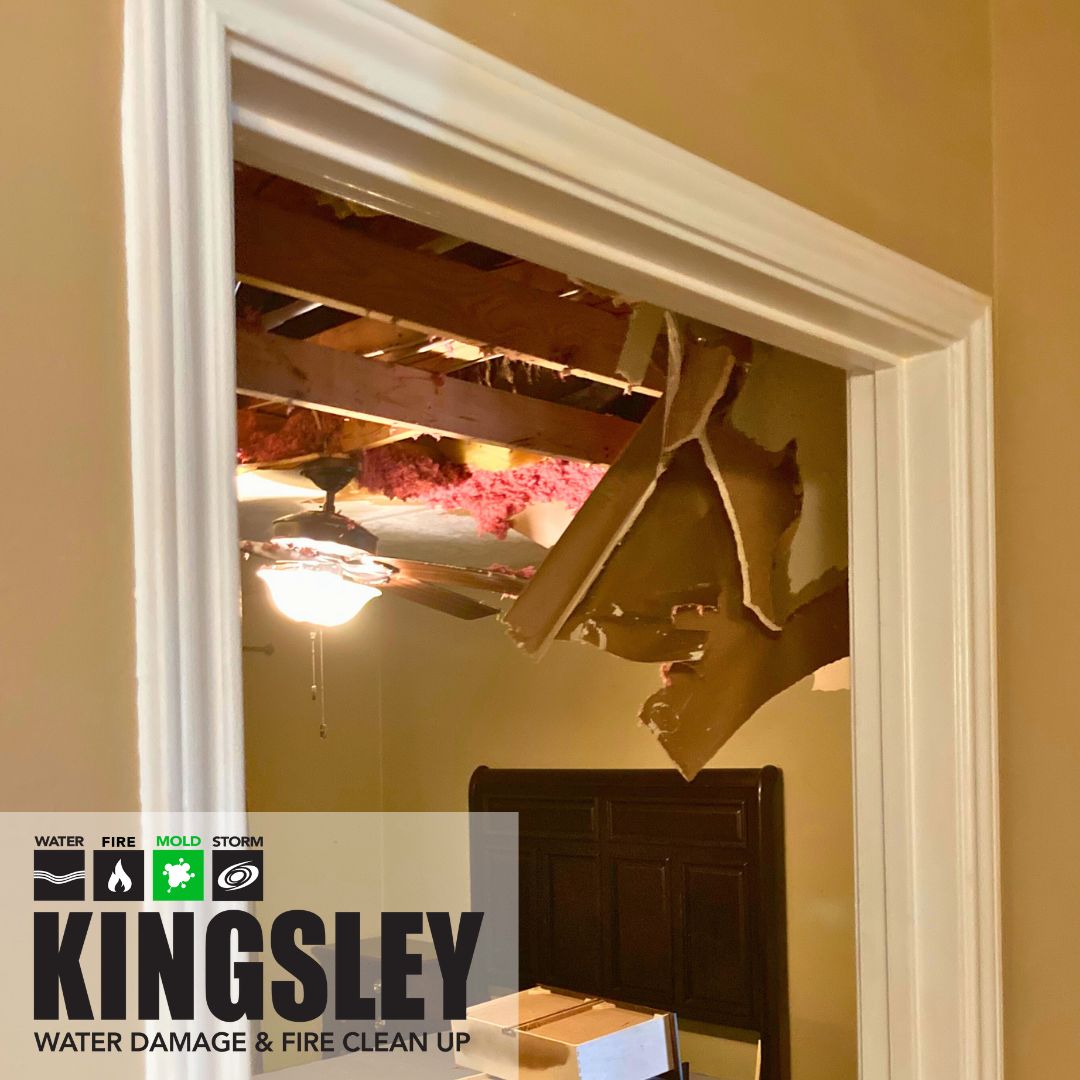
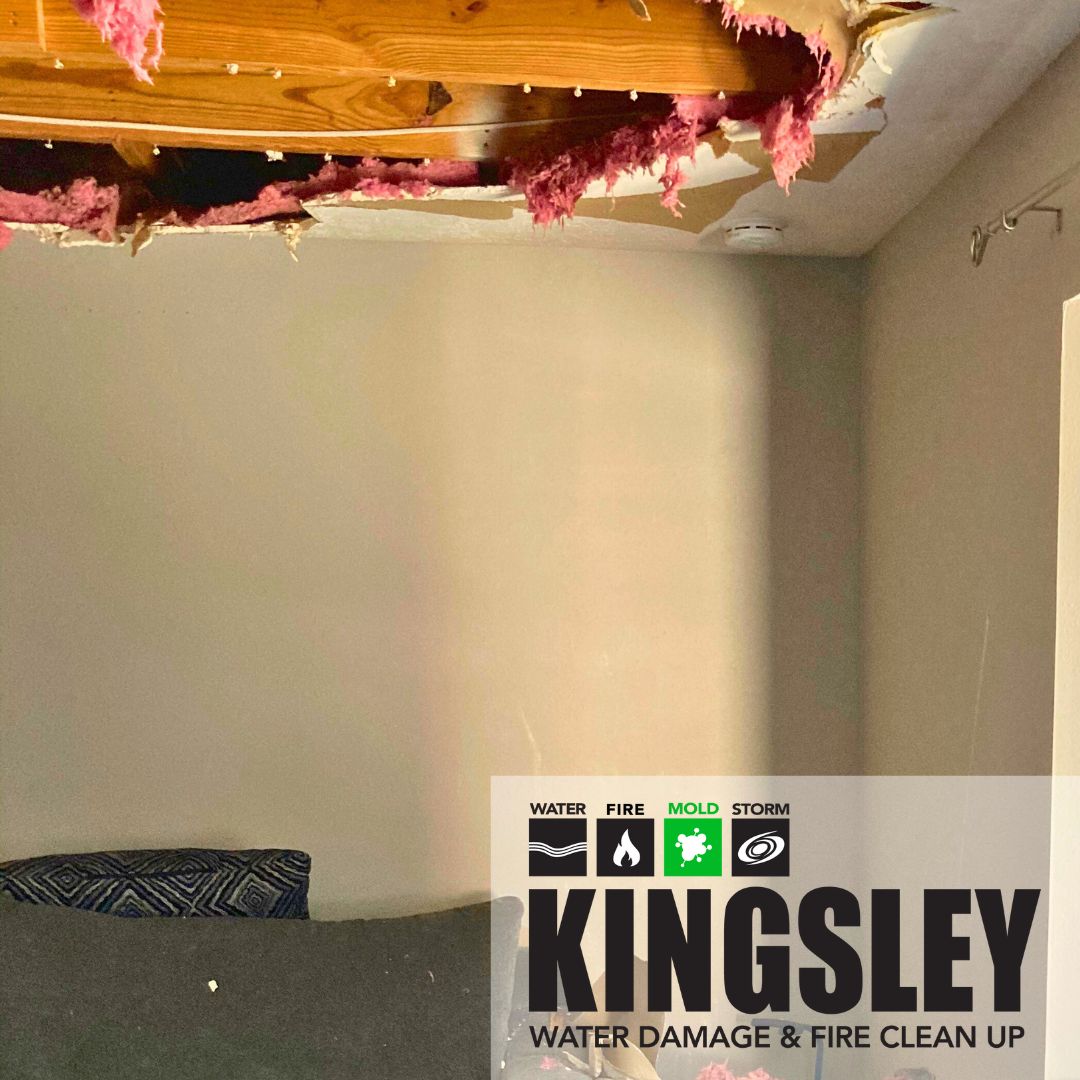
But even when you’re prepared, the aftermath of hurricanes is usually destroyed roofs, broken windows, exterior and interior damages, and more, leaving your property unprotected from the elements. This exposure may lead to further water damage that can become costly. At Kingsley Water Damage & Fire Cleanup, we understand that hurricane damage is an emergency that requires an immediate response.
Hurricane damage comes in many different forms, and Kingsley Water Damage & Fire Cleanup is equipped to deal with all of them. Some results of hurricane damage are:
- Water Damage
- Flooding
- Wind Damage
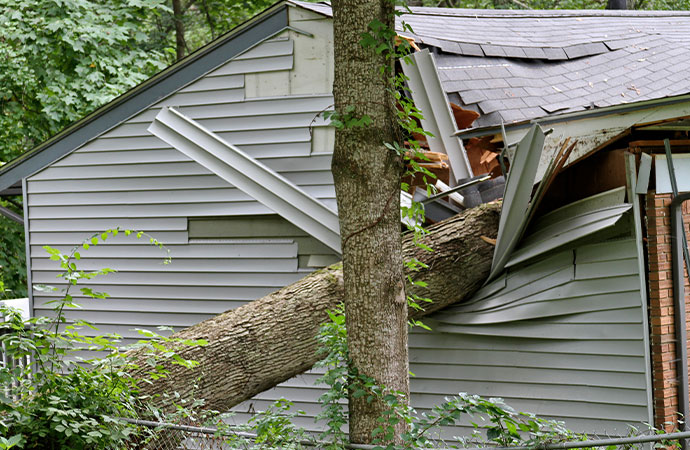
- Tree and Limb Damage
- Partial or Major Reconstruction
Hurricane damage can be sudden and severe, resulting in property loss to your home or business. Kingsley Water Damage Restoration is skilled in documenting water damage so that they can work along with insurers to handle this vital process as quickly and fairly as possible.
Kingsley Water Damage & Fire Cleanup is also an experienced water damage restoration company and expert in all types of damages caused by hurricanes and South Carolina storms. The sooner you contact us to begin the restoration process, the better. The longer you allow water damage to go untreated, the worse the damage will be. Give us a call and our professional crew will have your South Carolina home or business back to normal in as little time as possible.
5 out of 441 reviews

Other pages you may be interested in...
Frequently Asked Questions
Emergency board-up and tarping, extraction of rain that entered through storm openings, contents protection, and structural drying—plus coordination when wind and water combined. Kingsley Water Damage & Fire Cleanup responds to hurricane-related losses in South Carolina—call 803-590-0370.
Hurricanes bring high wind, driven rain, and sometimes prolonged power loss. Multiple openings and saturated assemblies are common. Mitigation prioritizes securing the envelope, then drying interiors.
Wind and wind-driven rain are often under homeowners policies; flooding from storm surge or rising water usually needs flood coverage. Named-storm deductibles may apply. Confirm with your carrier; we document restoration scope—not claim decisions.
As soon as it is safe to travel and re-enter. Openings invite more rain; wet materials can support mold within 24–48 hours. Prioritize life safety, then emergency tarping and extraction.
Board-up and tarping often finish within hours on site when accessible. Many residential drying scopes then average about 3–7 days depending on how much rain entered. Permanent exterior rebuilds add time after the structure is dry.
We plan extraction and drying around generator support and safety constraints. Do not run fuel equipment indoors. Moisture control still matters even when utilities are limited.