BEST Water Damage and Fire Cleanup Service in Mount Pleasant, SC

Water Damage in home
  • Calls Answered Live- No Call Center
  • Insurance Restoration Specialists- Direct Billing
  • 440+ five-star Google reviews
  • IICRC Certified Technicians

When water or fire causes damage to your Mount Pleasant home or business, you need more than just a cleanup--you need immediate, expert restoration. Water damage is a traumatic event that causes devastating results; delaying a fast response allows water to quickly spread and worsen the damage.

The Mount Pleasant water damage restoration experts at Kingsley Water Damage & Fire Cleanup guarantee help is on the way in one hour or less for your water emergency.

803-590-0370
Water Leak or Flood

What to Do When You Have a Water Leak or Flood in Mount Pleasant

Emergency Action: Water Damage in Mount Pleasant

When you're faced with an emergency like a frozen pipe bursting, a washing machine leak, or a toilet overflow late at night, the sudden rush of water can feel devastating. Your Mount Pleasant home--your largest investment--is being actively ruined, and knowing the immediate steps to take is crucial. Your first and most vital action is to immediately shut off the main water supply. Every second the water flows increases the trauma and the severity of the damage to your structure and belongings.

Once the flooding has stopped, you have three critical calls to make to secure your property. First, call a licensed plumber right away to permanently fix the source of the leak. Second, call a reliable water damage restoration company like Kingsley Water Damage & Fire Cleanup to begin the urgent process of water extraction and professional drying. This fast response is the key to minimizing loss and preventing serious secondary issues like mold growth.

Finally, you need to notify your insurance company to open a claim. Be aware that if this emergency happens very late at night, you may not be able to reach your local agent. In this case, you should call your insurance carrier's 24/7 emergency line directly for immediate assistance and claim reporting. Following these steps quickly will put the necessary professional help in motion to restore your home.

Contact Us

Selecting the Right Water Damage Restoration Company in Mount Pleasant

Water Damage Restoration Company - Kingsley
  • Ask about their rating with the BBB and if they are accredited and/or have any open complaints.
  • Check whether they offer detailed inspections in South Carolina and estimates and if they will let you see the final bill before it is submitted to insurance.
  • Ask them if are fully insured with a pollution liability (mold) policy.
  • Are they located nearby in South Carolina, or are they traveling far?
  • Do they offer a warranty, and is it a craftsmanship or product warranty?
  • What kind of reviews do they have, and are they legitimate?
  • What is their normal dispatch time frame to South Carolina addresses and how long will it take for them to arrive?
  • Do they work on smoke damage and fire damage?
  • Do they provide free estimates? Dealing with property damage and water restoration after a disaster in the Mount Pleasant area can be really defeating. Kingsley Water Damage & Fire Cleanup offers quality work for damage restoration in homes and business locations in Mount Pleasant. Water damage restoration Mount Please  is more successful when it is put in motion right away, so reaching out to use for water damage restoration services can be the difference between getting back home or back to work right away.You will have a wonderful experience working with us for your water damage services needs for your home or small business. We stand behind our work, offer free estimates, and help you to back on your feet.
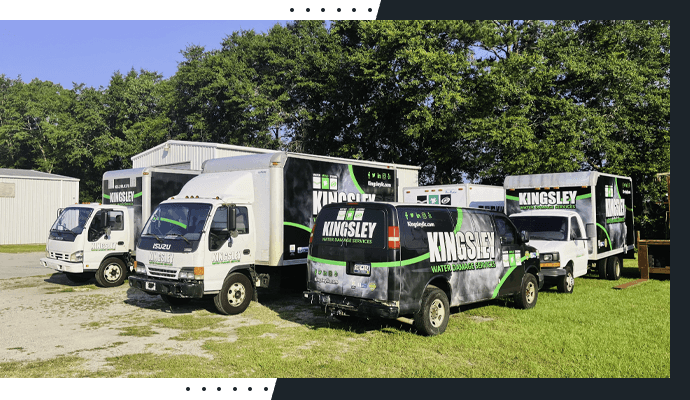
Your Trusted Restoration Company - Kingsley

How We Protect Your Mount Pleasant Home From Water Damage

Our Scientific Drying and Water Removal process

When you call Kingsley Water Damage & Fire Cleanup, our first step is to swiftly identify all areas of moisture. We then physically remove as much bulk water as possible. After initial extraction, our experts set up specialized drying equipment to target affected areas using less intrusive, scientific drying strategies. This method is crucial for safely removing any water that's been trapped within your structure.

Materials like drywall, wood, and other highly absorbent surfaces soak up water incredibly fast. Our water damage pros use advanced moisture detection meters and thermal equipment to pinpoint the exact extent of existing damage, including hidden moisture behind insulated walls and under flooring. Water remaining in these unseen areas is a major contributor to long-term damage and mold growth if not addressed immediately.
Our customers love us!

See All 439 Reviews
Customer Reviews from Mount Pleasant and Surrounding Areas ( 5
from 12 reviews )

Happy Customers across Mount Pleasant and Surrounding Areas

Completed Jobs from Mount Pleasant and Surrounding Areas

See All

September 08, 2026 | Mount Pleasant, SC

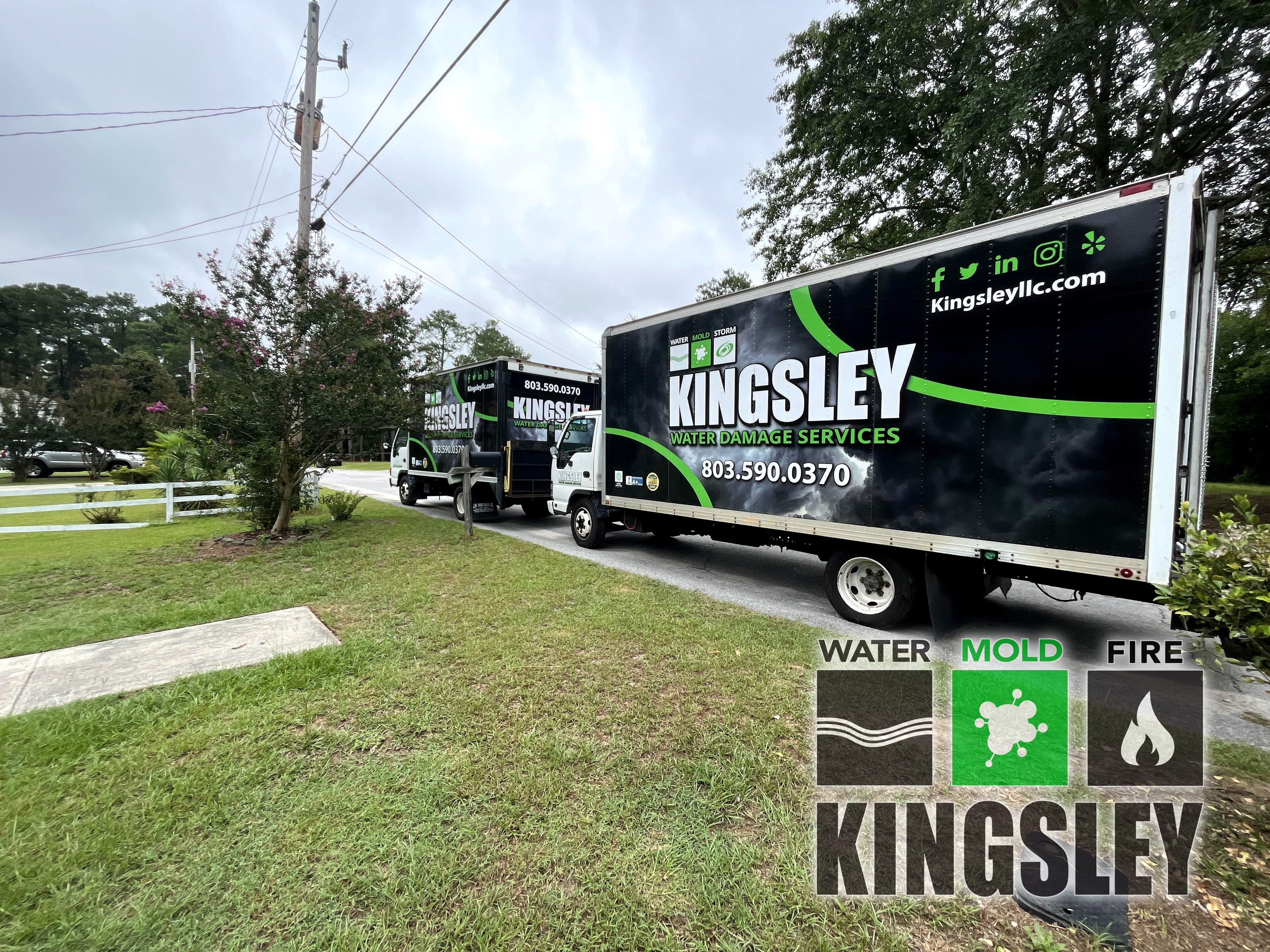
Kingsley water damage & Fire cleanup handled residential water damage emergency response in Mount Pleasant, SC after residential water damage call requiring on-site emergency response. We began with a room-by-room and assembly-level inspection of the residential street curb at the job site, documenting two white Kingsley-branded box trucks with green storm-graphic wraps parked at a residential curb beside a white picket fence and pink-blooming tree. That visual and instrument check — not a guess from the hallway — defined where finishes had to open, what could stay, and where drying equipment had to aim. the home needed source control, selective removal of non-salvageable wet or contaminated material, and verified drying of what remained.

During mitigation we controlled the work zone so debris and moisture did not track into clean rooms. Where finishes blocked drying, we opened only the wet footprint shown by meters and the photo record. Contaminated or saturated materials were bagged and removed; salvageable framing and sheathing were cleaned and treated with an EPA-registered antimicrobial when staining or microbial growth warranted it. HEPA vacuuming and careful handling limited dust from demo. The unique on-site detail that guided this file was two white Kingsley-branded box trucks with green storm-graphic wraps parked at a residential curb beside a white picket fence and pink-blooming tree — that condition stayed in the documentation so the homeowner and any follow-on trade could see exactly what drove the scope in Mount Pleasant.

IICRC water-damage and mold-remediation practice prioritizes stop-the-source, remove what cannot be dried in place, clean and treat remaining structures, then dry to target with measured air movement and dehumidification. We placed air movers and/or dehumidifiers to match the wet assembly, ran equipment under monitoring, and rechecked moisture within the first week of mitigation rather than leaving gear unattended for an open-ended stretch. Skipping that short monitoring window is how a straightforward wet call becomes secondary damage in adjoining cavities.

As readings stabilized and the work area met a clean, dry condition, we demobilized equipment and left the residential street curb at the job site ready for any needed rebuild of finishes. Photo documentation of the mitigation state stayed with the claim file. If you see standing water, elevated meter readings, or soft/stained flooring in Mount Pleasant, stop the source and start professional extraction and drying within the first days — delayed drying is what turns a contained wet zone into a larger structural call.

IICRC water-damage and mold-remediation practice prioritizes stop the moisture source, remove what cannot be dried in place, clean and treat remaining structures, then dry to target with measured air movement and dehumidification. On this Mount Pleasant file we ran air movers and dehumidifiers against the wet assembly under monitoring and rechecked moisture on a 3–7 day drying calendar—never past about a week. Skipping that short window is how secondary damage or musty odor returns after finishes go back up.

As readings stabilized within that first-week window, equipment came out and the work area was left ready for any needed rebuild. Photo documentation of the mitigation state stayed with the job file. Helpful takeaway: If you see standing water, elevated meter readings, or soft/stained flooring in Mount Pleasant, stop the source and start professional extraction and drying within the first days — delayed drying is what turns a contained wet zone into a larger structural call.

Homeowners comparing residential water damage emergency response options in the Mount Pleasant area should expect a written moisture map, selective removal instead of full tear-out when meters allow, and a clear end point when materials hit dry goal—not an open-ended equipment rental. Kingsley water damage & Fire cleanup follows that measured approach so rebuild decisions rest on documented conditions rather than a calendar guess.

September 07, 2026 | Mount Pleasant, SC

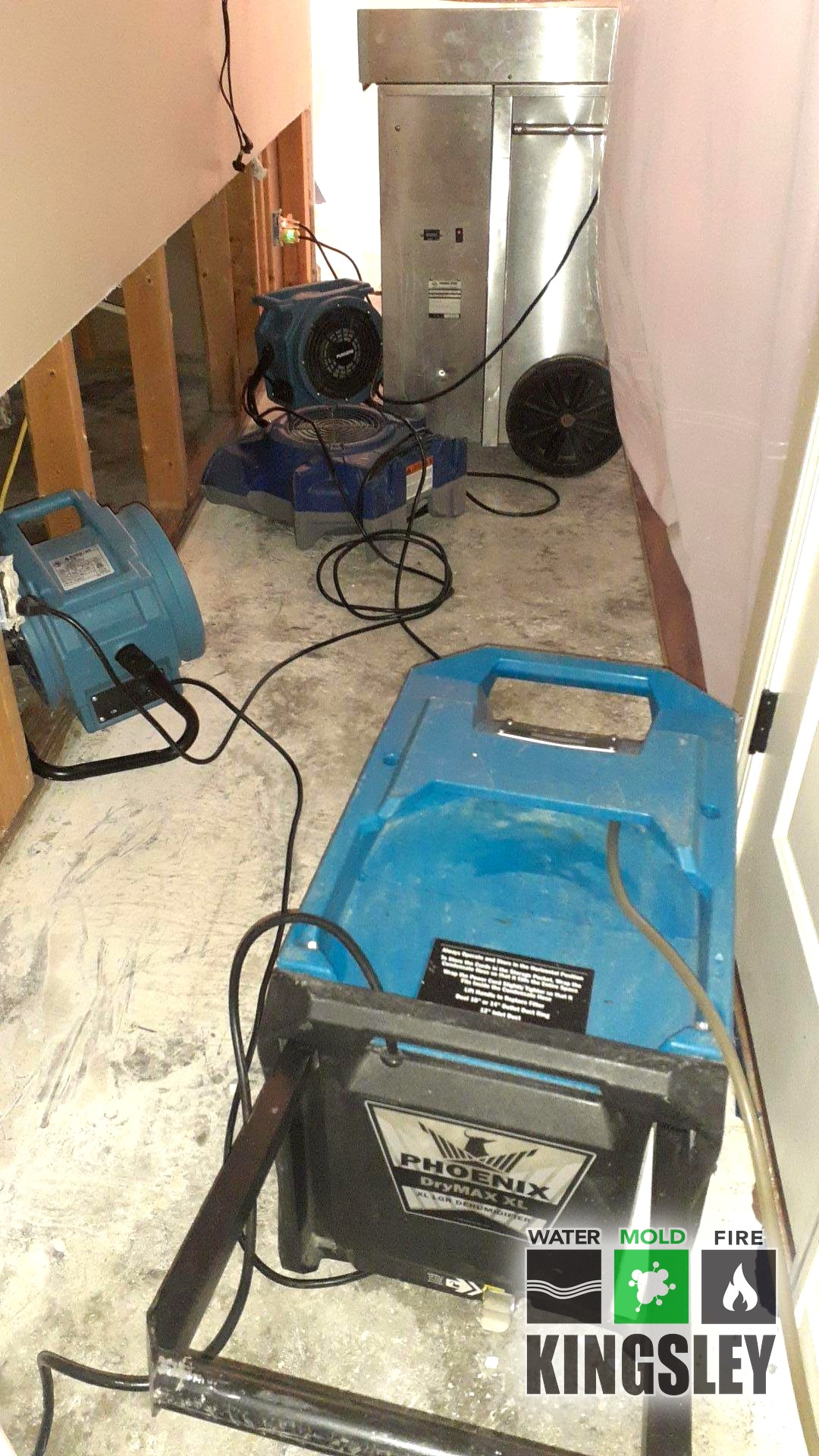
Kingsley water damage & Fire cleanup handled contained structural drying with lgr dehumidifiers in Mount Pleasant, SC after water loss requiring LGR dehumidification inside containment. We began with a room-by-room and assembly-level inspection of the contained hallway / room drying chamber, documenting a blue/black Phoenix DryMAX XL LGR dehumidifier in front of a tall stainless dehumidifier and two blue air movers on dusty subfloor with flood-cut studs and pinkish plastic containment. That visual and instrument check — not a guess from the hallway — defined where finishes had to open, what could stay, and where drying equipment had to aim. the home needed source control, selective removal of non-salvageable wet or contaminated material, and verified drying of what remained.

During mitigation we controlled the work zone so debris and moisture did not track into clean rooms. Where finishes blocked drying, we opened only the wet footprint shown by meters and the photo record. Contaminated or saturated materials were bagged and removed; salvageable framing and sheathing were cleaned and treated with an EPA-registered antimicrobial when staining or microbial growth warranted it. HEPA vacuuming and careful handling limited dust from demo. The unique on-site detail that guided this file was a blue/black Phoenix DryMAX XL LGR dehumidifier in front of a tall stainless dehumidifier and two blue air movers on dusty subfloor with flood-cut studs and pinkish plastic containment — that condition stayed in the documentation so the homeowner and any follow-on trade could see exactly what drove the scope in Mount Pleasant.

IICRC water-damage and mold-remediation practice prioritizes stop-the-source, remove what cannot be dried in place, clean and treat remaining structures, then dry to target with measured air movement and dehumidification. We placed air movers and/or dehumidifiers to match the wet assembly, ran equipment under monitoring, and rechecked moisture within the first week of mitigation rather than leaving gear unattended for an open-ended stretch. Skipping that short monitoring window is how a straightforward wet call becomes secondary damage in adjoining cavities.

As readings stabilized and the work area met a clean, dry condition, we demobilized equipment and left the contained hallway / room drying chamber ready for any needed rebuild of finishes. Photo documentation of the mitigation state stayed with the claim file. If you see standing water, elevated meter readings, or soft/stained flooring in Mount Pleasant, stop the source and start professional extraction and drying within the first days — delayed drying is what turns a contained wet zone into a larger structural call.

IICRC water-damage and mold-remediation practice prioritizes stop the moisture source, remove what cannot be dried in place, clean and treat remaining structures, then dry to target with measured air movement and dehumidification. On this Mount Pleasant file we ran air movers and dehumidifiers against the wet assembly under monitoring and rechecked moisture on a 3–7 day drying calendar—never past about a week. Skipping that short window is how secondary damage or musty odor returns after finishes go back up.

As readings stabilized within that first-week window, equipment came out and the work area was left ready for any needed rebuild. Photo documentation of the mitigation state stayed with the job file. Helpful takeaway: If you see standing water, elevated meter readings, or soft/stained flooring in Mount Pleasant, stop the source and start professional extraction and drying within the first days — delayed drying is what turns a contained wet zone into a larger structural call.

Homeowners comparing contained structural drying with lgr dehumidifiers options in the Mount Pleasant area should expect a written moisture map, selective removal instead of full tear-out when meters allow, and a clear end point when materials hit dry goal—not an open-ended equipment rental. Kingsley water damage & Fire cleanup follows that measured approach so rebuild decisions rest on documented conditions rather than a calendar guess.

September 06, 2026 | Mount Pleasant, SC

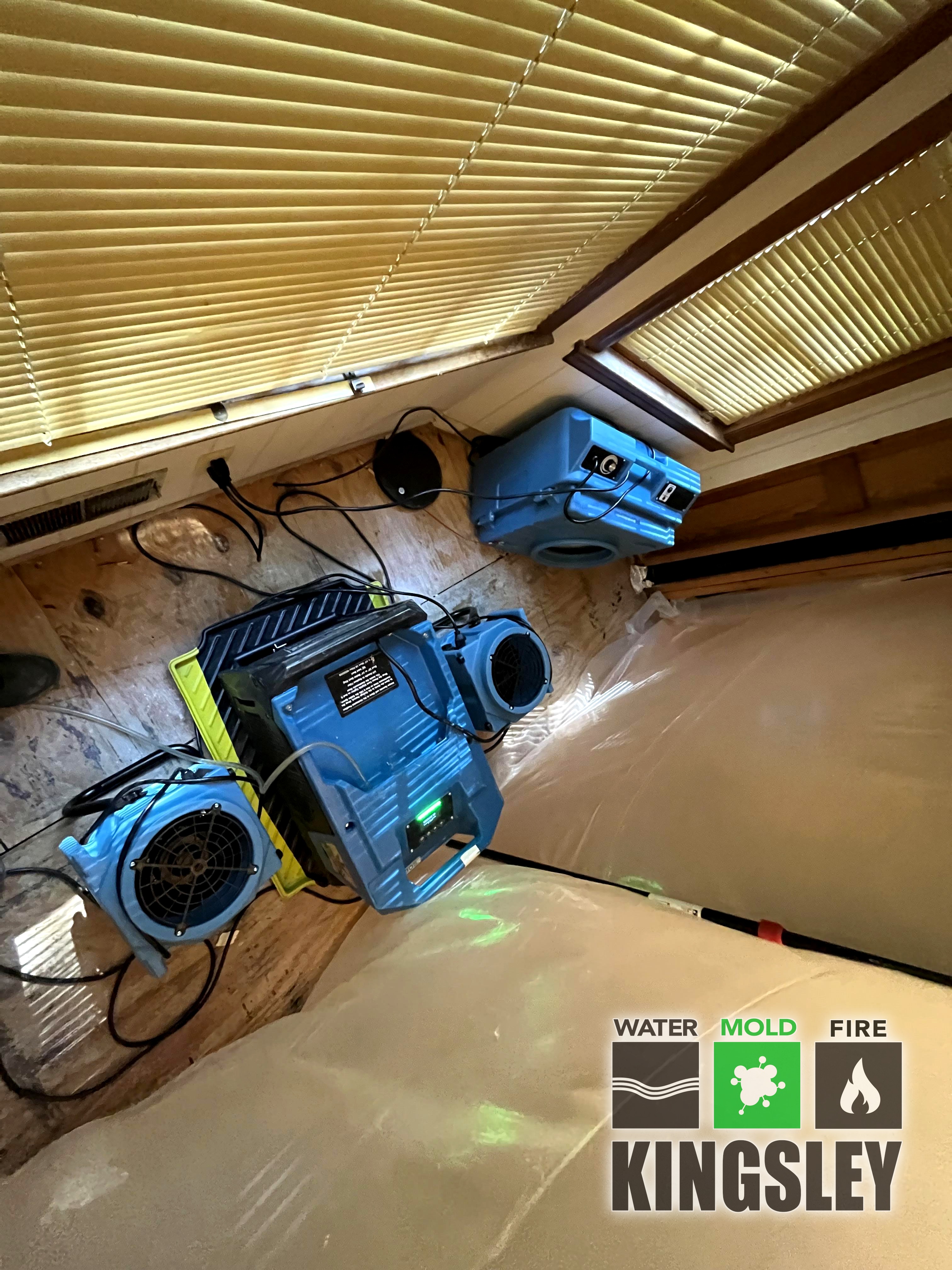
Kingsley water damage & Fire cleanup handled contained room structural drying setup in Mount Pleasant, SC after room-level water loss managed with contained equipment drying. We began with a room-by-room and assembly-level inspection of the contained interior room on exposed subfloor, documenting a blue dehumidifier on a yellow/black mat with two blue air movers on plywood subfloor, plastic containment on a tension pole, and window blinds above dark wood trim. That visual and instrument check — not a guess from the hallway — defined where finishes had to open, what could stay, and where drying equipment had to aim. the home needed source control, selective removal of non-salvageable wet or contaminated material, and verified drying of what remained.

During mitigation we controlled the work zone so debris and moisture did not track into clean rooms. Where finishes blocked drying, we opened only the wet footprint shown by meters and the photo record. Contaminated or saturated materials were bagged and removed; salvageable framing and sheathing were cleaned and treated with an EPA-registered antimicrobial when staining or microbial growth warranted it. HEPA vacuuming and careful handling limited dust from demo. The unique on-site detail that guided this file was a blue dehumidifier on a yellow/black mat with two blue air movers on plywood subfloor, plastic containment on a tension pole, and window blinds above dark wood trim — that condition stayed in the documentation so the homeowner and any follow-on trade could see exactly what drove the scope in Mount Pleasant.

IICRC water-damage and mold-remediation practice prioritizes stop-the-source, remove what cannot be dried in place, clean and treat remaining structures, then dry to target with measured air movement and dehumidification. We placed air movers and/or dehumidifiers to match the wet assembly, ran equipment under monitoring, and rechecked moisture within the first week of mitigation rather than leaving gear unattended for an open-ended stretch. Skipping that short monitoring window is how a straightforward wet call becomes secondary damage in adjoining cavities.

As readings stabilized and the work area met a clean, dry condition, we demobilized equipment and left the contained interior room on exposed subfloor ready for any needed rebuild of finishes. Photo documentation of the mitigation state stayed with the claim file. If you see standing water, elevated meter readings, or soft/stained flooring in Mount Pleasant, stop the source and start professional extraction and drying within the first days — delayed drying is what turns a contained wet zone into a larger structural call.

IICRC water-damage and mold-remediation practice prioritizes stop the moisture source, remove what cannot be dried in place, clean and treat remaining structures, then dry to target with measured air movement and dehumidification. On this Mount Pleasant file we ran air movers and dehumidifiers against the wet assembly under monitoring and rechecked moisture on a 3–7 day drying calendar—never past about a week. Skipping that short window is how secondary damage or musty odor returns after finishes go back up.

As readings stabilized within that first-week window, equipment came out and the work area was left ready for any needed rebuild. Photo documentation of the mitigation state stayed with the job file. Helpful takeaway: If you see standing water, elevated meter readings, or soft/stained flooring in Mount Pleasant, stop the source and start professional extraction and drying within the first days — delayed drying is what turns a contained wet zone into a larger structural call.

Homeowners comparing contained room structural drying setup options in the Mount Pleasant area should expect a written moisture map, selective removal instead of full tear-out when meters allow, and a clear end point when materials hit dry goal—not an open-ended equipment rental. Kingsley water damage & Fire cleanup follows that measured approach so rebuild decisions rest on documented conditions rather than a calendar guess.