Job completed for Crawlspace Moisture Mapping and Cleanup
Completion date: September 28, 2026
Location: Atlantic Beach, SC
Why did the customer contact us?
Solutions provided:
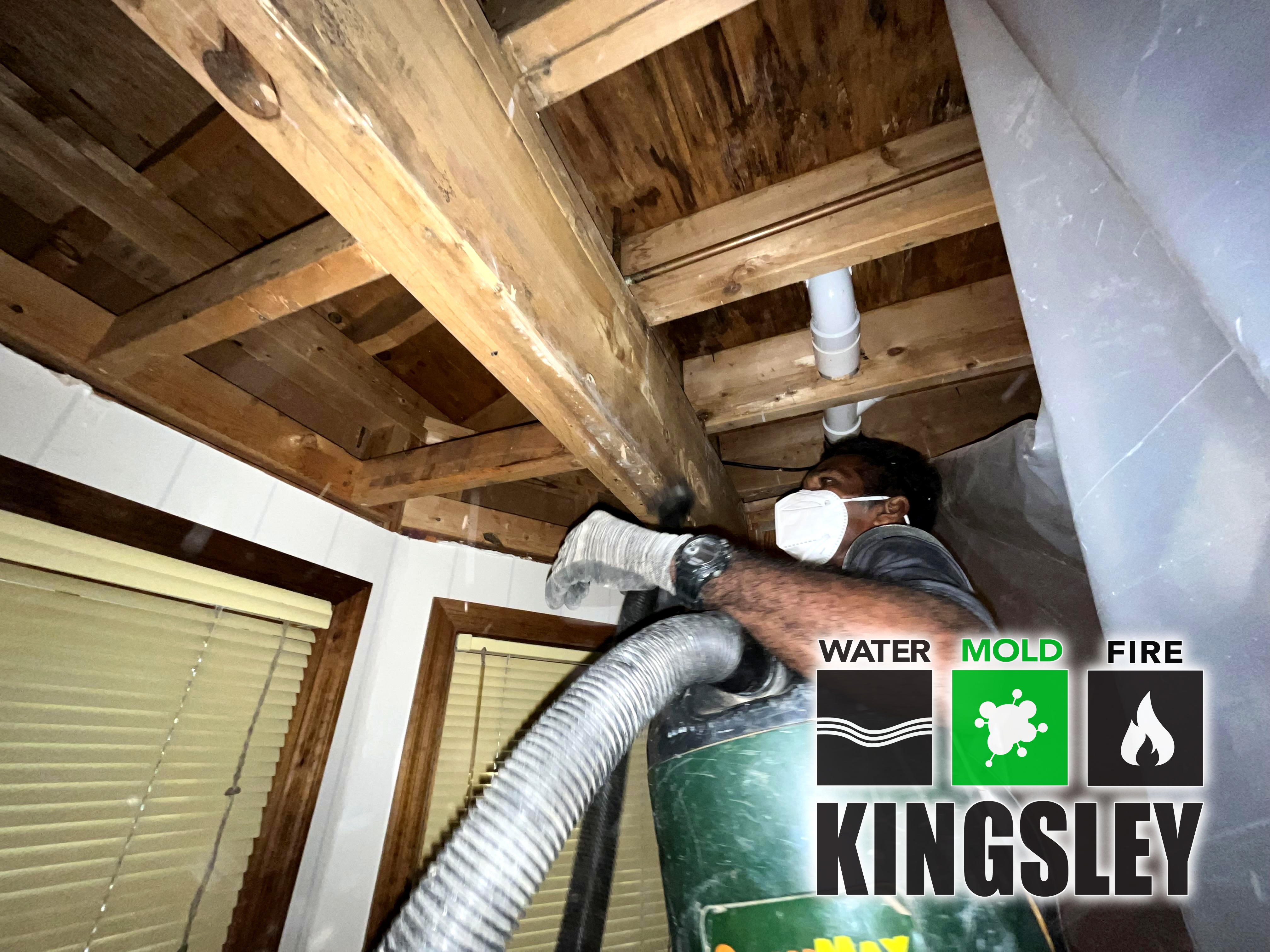
Kingsley water damage & Fire cleanup responded for crawlspace moisture mapping and cleanup in Atlantic Beach, SC and began with a photo-backed survey that captured crawlspace Moisture Mapping and Cleanup. That photo-backed condition check defined where finishes had to open, what could stay, and where drying equipment had to aim. The home needed source control, selective removal of non-salvageable wet or contaminated material, and verified drying of what remained in Atlantic Beach. The adjuster-ready photo set stayed with the file so rebuild trades could see the same framed assembly the crew saw.
During mitigation we controlled the work zone so debris did not track into clean rooms. Where finishes blocked drying, we opened only the wet footprint shown by meters and the photo record. Non-salvageable saturated material was bagged and removed; salvageable framing and sheathing were cleaned. HEPA vacuuming and careful handling limited dust from demo. The unique on-site detail that guided this Atlantic Beach file was crawlspace Moisture Mapping and Cleanup. We labeled the wet edge on the sketch so later visits matched day-one photos in Atlantic Beach.
IICRC water-damage practice prioritizes stop the moisture source, remove what cannot be dried in place, clean remaining structures, then dry to target with measured air movement and dehumidification. We placed air movers and dehumidifiers to match the crawlspace bay, aimed airflow along the wet materials in the photo, and rechecked moisture on a 3–7 day drying calendar with overnight humidity checks—never past about a week. Skipping that short monitoring window is how a straightforward wet call becomes secondary damage or a musty return odor in Atlantic Beach.
As readings stabilized within that first-week window, we demobilized equipment and left the work area ready for any needed rebuild of finishes or insulation. Photo documentation of the mitigation state stayed with the job file for the Atlantic Beach property, including the same angle that showed crawlspace Moisture Mapping and Cleanup. Helpful takeaway: If flooring feels soft, edges cup, or a stain keeps spreading in Atlantic Beach, stop walking the wet zone and request moisture mapping before new finishes go down.
Homeowners comparing crawlspace moisture mapping and cleanup options in the Atlantic Beach area should expect a written moisture map, selective removal instead of full tear-out when meters allow, and a clear end point when materials hit dry goal—not an open-ended equipment rental. Kingsley water damage & Fire cleanup follows that measured approach so rebuild decisions rest on documented conditions rather than a calendar guess.
When rebuild starts, keep the dry-standard notes handy for flooring, cabinet, or insulation trades so no one closes a cavity that still reads wet. That handoff is part of finishing crawlspace moisture mapping and cleanup correctly in Atlantic Beach after mitigation—not a separate sales pitch.
Throughout the Atlantic Beach job we kept communication practical: what was wet, what was removed, what was drying, and when meters said the assembly met goal. That plain record is what homeowners and trades use after crawlspace moisture mapping and cleanup—not jargon and not an invented multi-week timeline.
Team members on this project:
Angel Garcia
Photos & Videos: