Job completed for Ceiling Cavity Joist Mold Remediation
Completion date: September 12, 2026
Location: Anderson, SC
Why did the customer contact us?
Solutions provided:
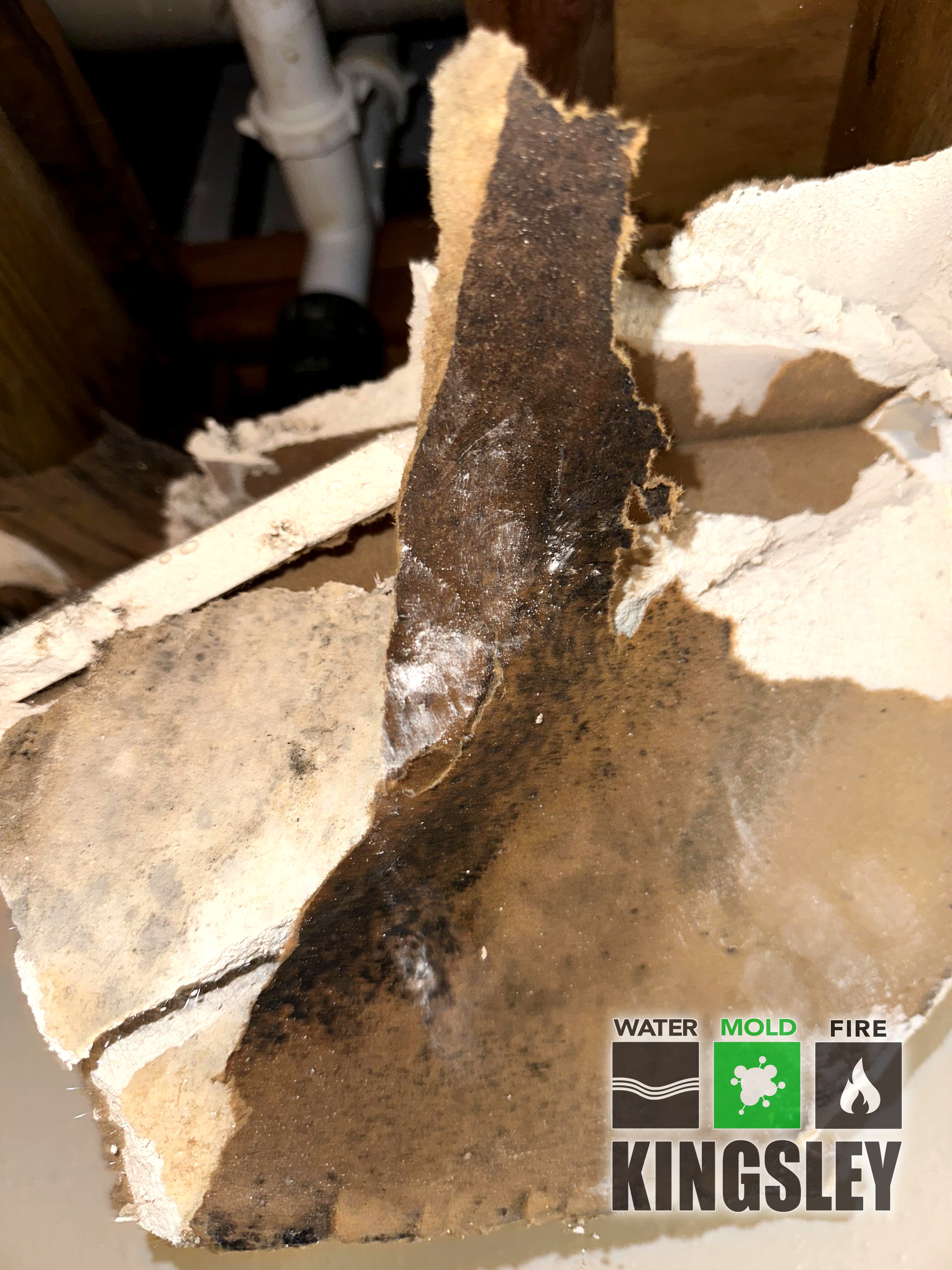
Kingsley water damage & Fire cleanup handled ceiling cavity joist mold remediation in Anderson, SC after mold on framing inside a wet ceiling cavity. We began with a room-by-room and assembly-level inspection of the opened ceiling structural cavity, documenting mold on a joist inside an opened ceiling cavity after finish materials were selectively removed. That visual and instrument check — not a guess from the hallway — defined where finishes had to open, what could stay, and where drying equipment had to aim. Answer-first: the home needed source control, selective removal of non-salvageable wet or contaminated material, and verified drying of what remained.
During mitigation we controlled the work zone so debris and moisture did not track into clean rooms. Where finishes blocked drying, we opened only the wet footprint shown by meters and the photo record. Contaminated or saturated materials were bagged and removed; salvageable framing and sheathing were cleaned and treated with an EPA-registered antimicrobial when staining or microbial growth warranted it. HEPA vacuuming and careful handling limited dust from demo. The unique on-site detail that guided this file was mold on a joist inside an opened ceiling cavity after finish materials were selectively removed — that condition stayed in the documentation so the homeowner and any follow-on trade could see exactly what drove the scope in Anderson.
IICRC water-damage and mold-remediation practice prioritizes stop-the-source, remove what cannot be dried in place, clean and treat remaining structures, then dry to target with measured air movement and dehumidification. We placed air movers and/or dehumidifiers to match the wet assembly, ran equipment under monitoring, and rechecked moisture within the first week of mitigation rather than leaving gear unattended for an open-ended stretch. Skipping that short monitoring window is how a straightforward wet call becomes secondary damage in adjoining cavities.
As readings stabilized and the work area met a clean, dry condition, we demobilized equipment and left the opened ceiling structural cavity ready for any needed rebuild of finishes. Photo documentation of the mitigation state stayed with the claim file. If you notice musty odors, spotting on wood, or staining at cabinets, vents, or window sills in Anderson, have the moisture source and affected materials inspected before finishes hide the growth path.
Photos & Videos: