Job completed for Crawlspace Joist Rot and Fungal Damage Cleanup
Completion date: September 26, 2026
Location: Lexington, SC
Why did the customer contact us?
Solutions provided:
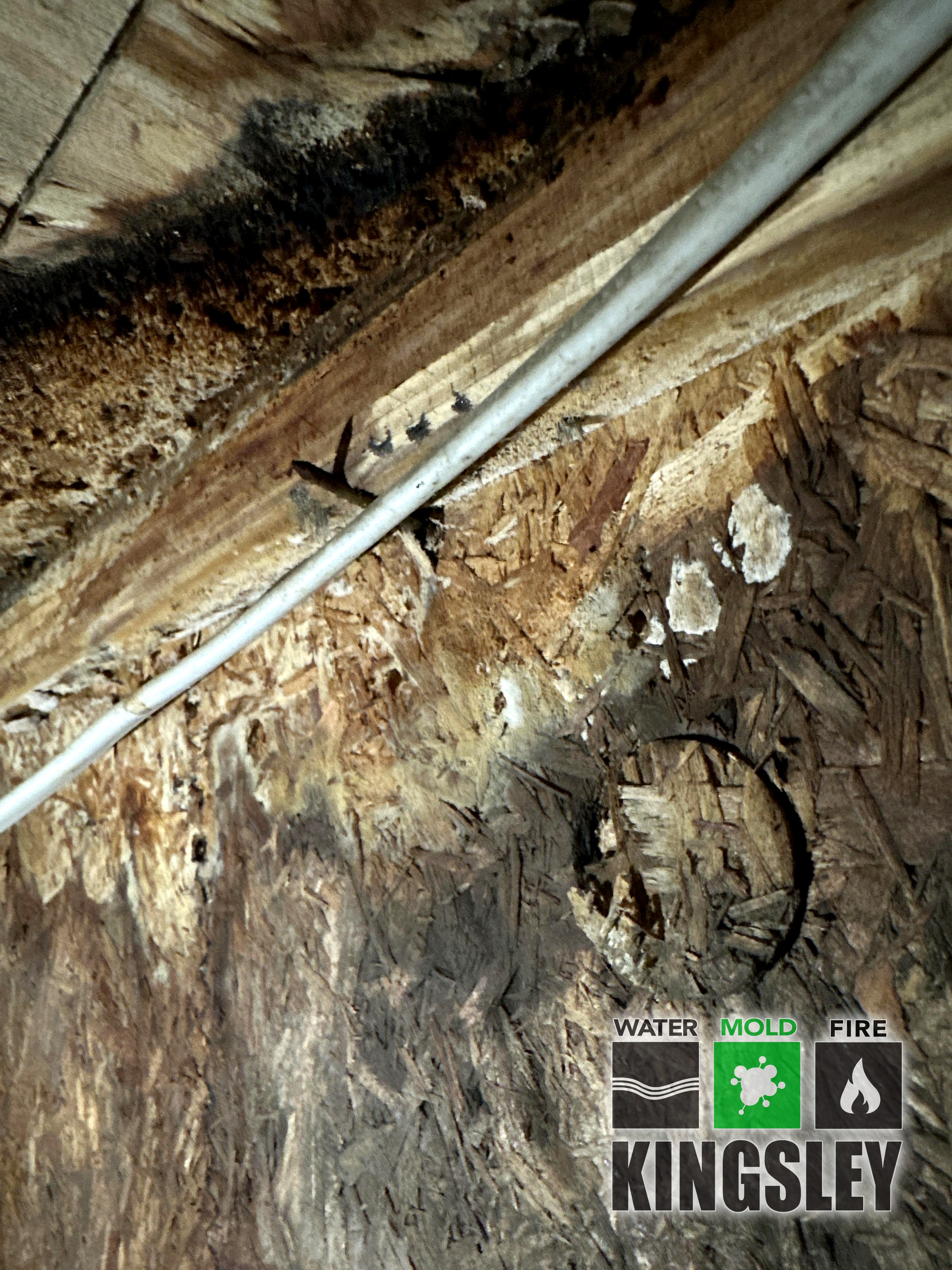
Kingsley water damage & Fire cleanup completed crawlspace joist rot and fungal damage cleanup in Lexington, SC after long-term moisture left rot and fungal growth on framing. On arrival we inspected the crawlspace structural bay and recorded what the camera shows clearly: advanced dark staining across the OSB subfloor underside, white fuzzy fungal colonies on the sheathing, and crumbly wood fiber on the joist face. A white electrical cable stapled along the joist crossed the wet zone, so the crew worked carefully around utilities while mapping how far moisture had traveled from a dark, saturated circular cutout in the OSB. That photo-backed condition check—not a guess from the hallway—set the wet map and the scope for selective cleanup, antimicrobial treatment where needed, and verified drying.
During mitigation we controlled the work zone so debris and spores did not track into clean living space above the crawl. Where insulation or vapor barrier blocked drying, we opened only the wet footprint shown by meters and the photo record. Non-salvageable saturated or contaminated OSB and soft framing pieces were bagged and removed; salvageable joist faces and sheathing were cleaned and treated with an EPA-registered antimicrobial when staining or microbial growth warranted it. HEPA vacuuming and careful wipe-down limited dust from demo around the joist bay and the cutout. The unique on-site detail that guided this Lexington file was the combination of black moisture staining, white fungal patches on the OSB, and soft wood on the joist next to that opening—conditions left in the documentation so the homeowner and any follow-on trade could see exactly what drove the scope.
IICRC water-damage and mold-remediation practice prioritizes stop the moisture source, remove what cannot be dried in place, clean and treat remaining structures, then dry to target with measured air movement and dehumidification. We placed air movers and dehumidifiers to match the wet crawl assembly, aimed airflow along the stained joist and OSB underside, and rechecked moisture on a 3–7 day drying calendar with overnight humidity checks—never past about a week. Quiet work windows were held where the home required it. Skipping that short monitoring window is how a straightforward wet crawl call becomes secondary damage in adjoining cavities or a musty return odor under the floor boards.
As readings stabilized and the work area met a clean, dry condition within that first-week window, we demobilized equipment and left the crawlspace structural bay ready for any needed rebuild of finishes or insulation. Photo documentation of the mitigation state stayed with the job file for the Lexington property. Helpful takeaway: if you notice musty odors from floor registers, white spotting on crawl wood, or dark staining around pipe or duct cutouts under a Lexington home, have the moisture source and affected joists inspected before new insulation or vapor barrier hides the growth path.
Homeowners comparing crawlspace mold cleanup options in the Lexington area should expect a written moisture map, selective removal instead of full tear-out when meters allow, and a clear end point when materials hit dry goal—not an open-ended equipment rental. Kingsley water damage & Fire cleanup follows that measured approach so rebuild decisions rest on documented conditions rather than a calendar guess.
Team members on this project:
Angel Garcia
Photos & Videos: