Mold Cleanup & Remediation in Columbia, SC
A kitchen ceiling leak is every homeowner's nightmare. One minute you’re making coffee, and the next, you’re watching a literal waterfall pour through your recessed lighting.
We recently handled a high-stakes emergency call in Columbia that perfectly illustrates why professional water remediation isn't just about "mopping up”, it’s about saving your home from long-term structural failure and mold.
The Scene: A Columbia Kitchen Under Siege
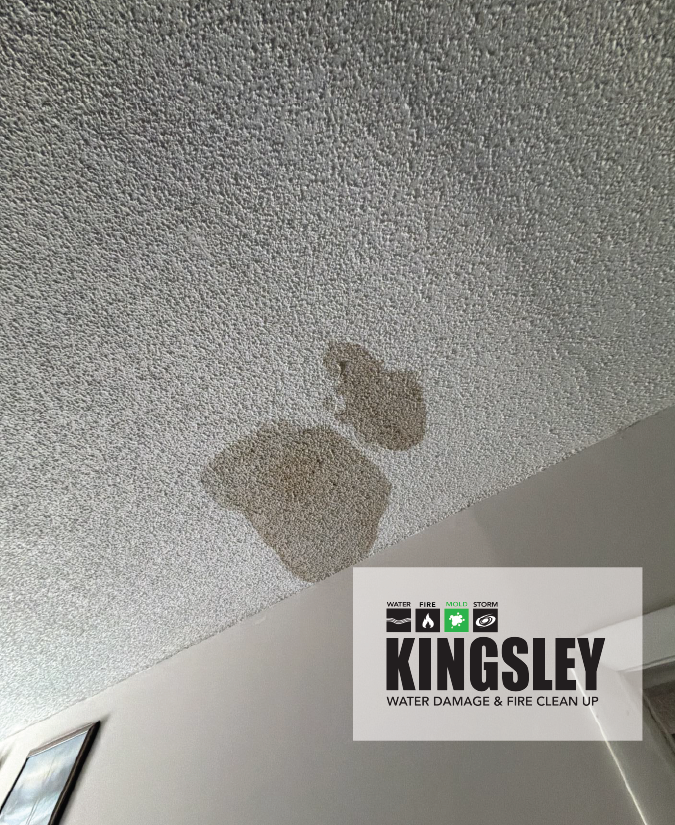
The call came in during the early morning hours. A secondary bathroom on the second floor had an overflow, and the water had migrated through the floorboards, saturating the kitchen ceiling below. By the time our Kingsley team arrived, the drywall was beginning to sag, a clear sign that the weight of the water was compromising the ceiling's integrity.
Phase 1: The Race Against the Clock (Response Time)
In the world of water damage, time is your greatest enemy. Within 24 hours, untreated water can begin to breed mold. Within 48 hours, that mold can become a colony.
Our rapid response in Columbia allowed us to:
- Stop the Migration: We immediately identified the "path of least resistance" the water was taking.
- Protect the Assets: We moved and shielded expensive kitchen cabinetry and appliances from secondary splashing and high humidity.
Phase 2: More Than Just a Mop (The Remediation Process)
Many people think that if the dripping stops and the spot feels dry to the touch, the problem is solved. This is a dangerous misconception. Here is how we handled the professional remediation:
1. Thermal Imaging & Moisture Mapping
We don't guess where the water is. We use FLIR thermal cameras to "see" through the drywall. These cameras detect temperature differences, allowing us to map out the exact moisture footprint hidden behind your paint and plaster.
2. Controlled Demolition
To save the ceiling, we sometimes have to remove small sections of it. By creating "flood cuts" or removing saturated insulation, we allow the structural joists to breathe. This prevents the "greenhouse effect" that happens when water is trapped in a dark, warm ceiling cavity.
3. Industrial-Grade Structural Drying
We deployed a strategic "drying hitch" consisting of:
- LGR (Low Grain Refrigerant) Dehumidifiers: These pull massive amounts of moisture out of the air.
- High-Velocity Air Movers: These create airflow across the wet surfaces to accelerate evaporation.
4. Antimicrobial Application
Even if the area looks clean, we apply an EPA-registered antimicrobial treatment. This ensures that any microscopic spores that were activated by the moisture are neutralized before they can grow.
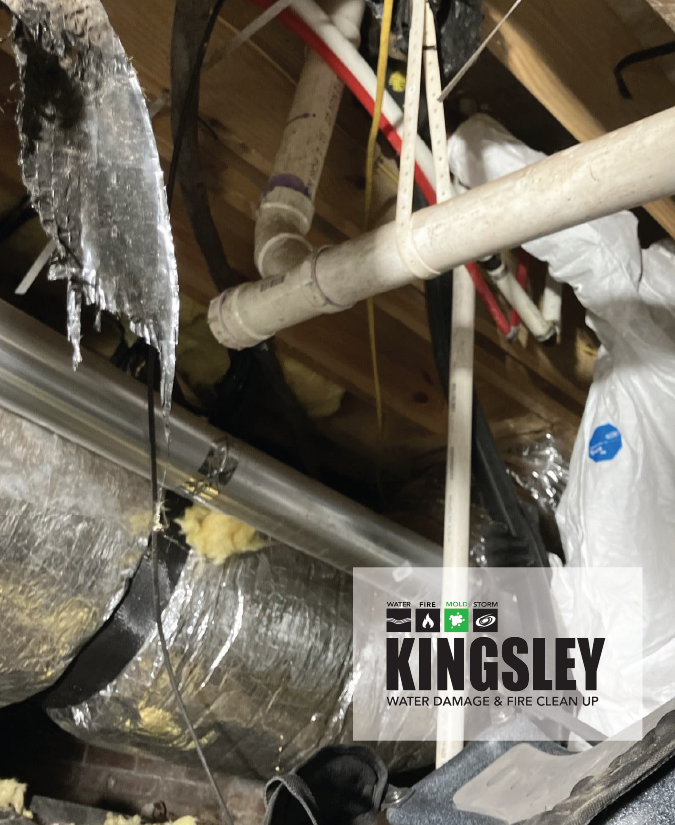
The Kingsley Difference: Peace of Mind
The Columbia homeowners were back to using their kitchen faster than they expected, but more importantly, they had the peace of mind that comes with a Certificate of Dryness. We didn't just hide the damage; we eliminated the threat.
Are you seeing a brown stain or a "bubble" on your ceiling? Don't wait for it to collapse.
Frequently Asked Questions
Kingsley Water Damage & Fire Cleanup remediates mold for Columbia homes and businesses using IICRC-aligned containment, removal, and drying. Call 803-590-0370 when you see growth, smell musty odors, or after water damage.
Many residential mold cleanup jobs average about 3–7 days for containment, removal, and drying, depending on square footage. Rebuild of finishes adds time afterward.
Not always. Visible mold with a known moisture source can often proceed to remediation. Testing helps for documentation or unclear sources. We offer both.
Mold from a sudden covered water event is more often considered than long-term humidity issues. Confirm with your carrier; we document moisture sources and scope.
Under moist conditions, growth can begin within 24–48 hours—Midlands humidity makes prompt drying important after any water event.
Small spots on hard surfaces sometimes can; larger or porous-material growth needs containment and professional removal so spores are not spread through the house.