Attic Fire Damage Restoration in Columbia, SC
When the Roof is on Fire: Lessons from a Recent Attic Fire Restoration in Columbia
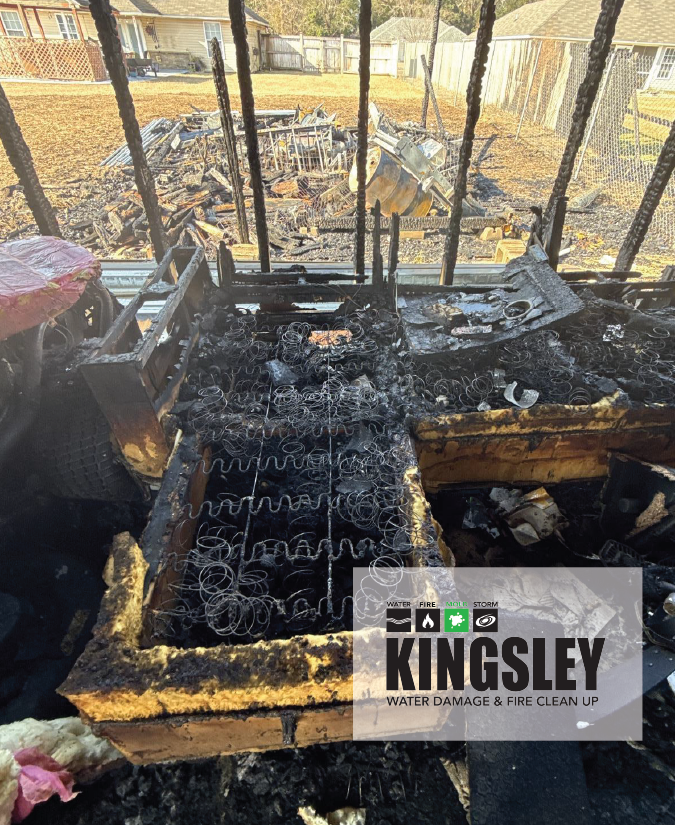
Most homeowners worry about kitchen fires or space heaters, but attic fires are a different kind of beast. They often start silently—hidden away in old wiring or a malfunctioning HVAC unit—and by the time you see smoke, the damage is already moving fast.
We recently took a call for an emergency attic fire right here in Columbia. The family was safe (which is always the most important thing), but the house was a mess. Between the flames, the heavy smoke, and the thousands of gallons of water used by the fire department, the "bones" of the home were under serious threat.
At Kingsley, we don’t just "clean up"; we restore. Here is exactly how we handled this project from the moment we arrived on-site.
1. Stopping the Bleeding (Stabilization)
When we arrive at a fire scene, the first hour is a race against the elements.
- Board-Up & Tarping: Firefighters often have to cut holes in the roof (ventilation) or break windows to fight the flames. We immediately tarped the roof and secured the windows to make sure a Columbia afternoon thunderstorm didn't turn a fire claim into a flood claim.
- Power & Safety: We worked to ensure the structure was safe to enter. Fire weakens support beams, and mixing water with damaged wiring is a recipe for disaster.
2. Managing the "Secondary" Damage: Water
It’s the great irony of fire restoration: the water used to save the house often does more long-term damage than the fire itself.
- Extraction: We used industrial-grade pumps to get standing water out of the attic and the floors below.
- Structural Drying: Water seeps into the wall cavities and insulation. We deployed high-velocity air movers and LGR (Low Grain Refrigerant) dehumidifiers to pull moisture out of the studs before mold could even think about moving in.
3. The Science of Soot Removal
Soot isn't just "dust." It’s acidic and chemically complex. If you leave it on your walls or fixtures, it will permanently etch and corrode the surfaces.
- HEPA Vacuuming: We started by removing dry soot from the rafters and remaining attic surfaces.
- Chemical Sponges: For non-greasy soot, we used specialized dry-cleaning sponges that lift the particles without smearing them into the wood grain.
- Pressure Washing & Blasting: In the attic space, we often use advanced cleaning techniques to strip charred wood back to a clean, stable surface.
4. Killing the "Ghost" of the Fire (Deodorization)
You know that smell—the heavy, acrid scent of burnt plastic and wood. It lives inside the pores of your drywall and wood framing.
- Thermal Fogging: We used a process that mimics the fire’s heat, opening the "pores" of the building materials to neutralize the odor molecules trapped inside.
- Hydroxyl Generators: Unlike old-school ozone machines, these are safe and incredibly effective at breaking down the chemical bonds of smoke odors, ensuring that when you move back in, it actually smells like home again.
Why Columbia Homeowners Trust Kingsley
An attic fire is overwhelming. You’re dealing with insurance adjusters, structural engineers, and the stress of a displaced family. We see our job as more than just remediation—we’re here to be the calm in the middle of the storm.
We are IICRC-certified, we know the local Columbia building codes, and we work directly with your insurance to make sure the job is done right, not just fast.
If you’ve experienced a fire, don’t wait for the smoke to settle on its own. Every hour matters when it comes to saving your property.
Call the Kingsley team today. We’ve got your back.