Job completed for Crawlspace Plumbing Repair and Water Cleanup in Blythewood, SC
Completion date: September 25, 2026
Location: Blythewood, SC
Why did the customer contact us?
Solutions provided:
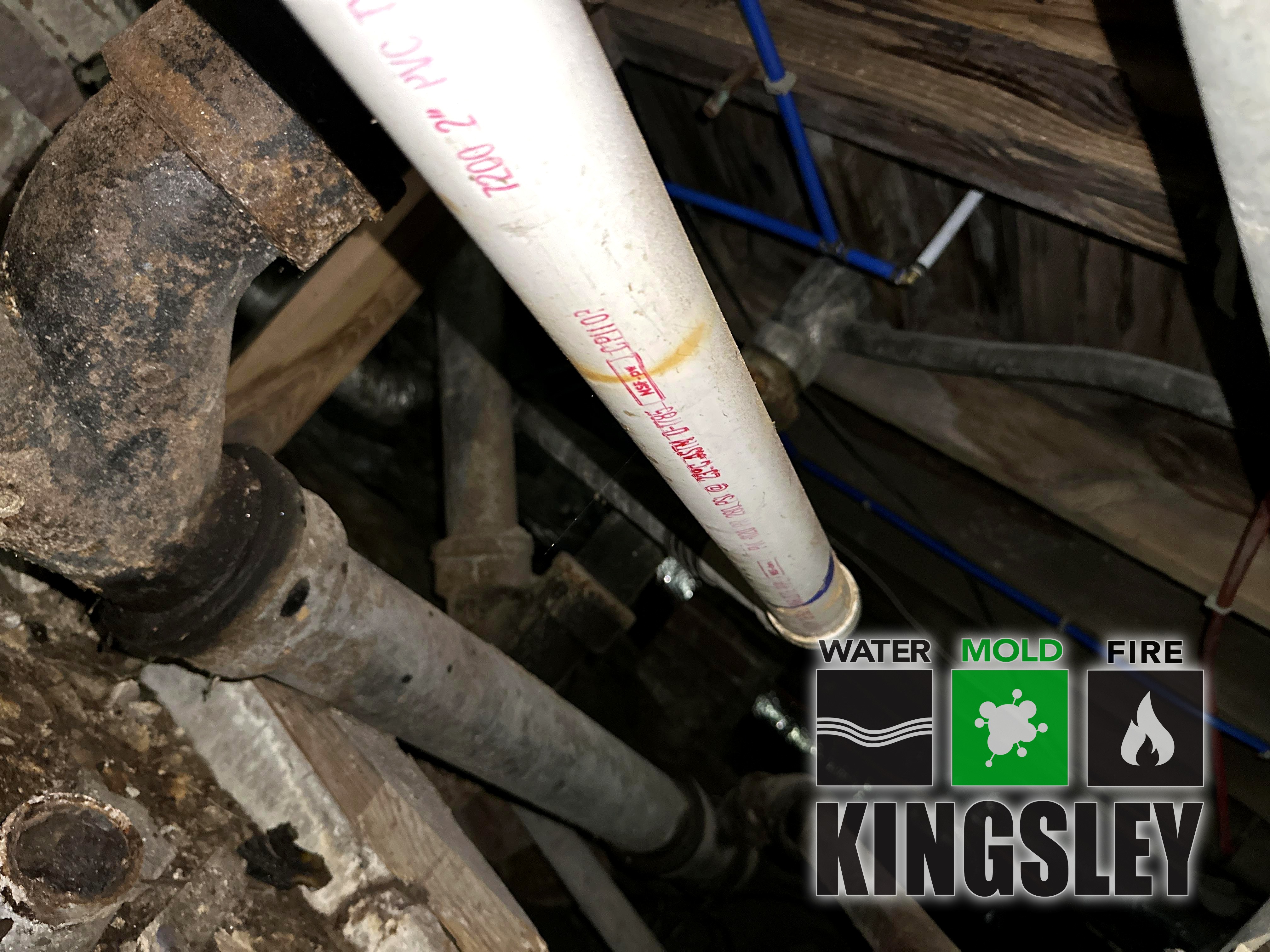
Kingsley water damage & Fire cleanup handled crawlspace plumbing repair and associated water cleanup in Blythewood, SC after an aging cast-iron drain section under the floor needed selective replacement. We started with a crawlspace inspection of the under-floor assembly — wooden joists, the dark metal elbow, and the adjoining drain path — so the open work matched the wet and deteriorated metal zone instead of a guess. Flash documentation of the cramped cavity showed where soil and debris collected under the piping and where the old iron elbow still tied into the run. Moisture and condition checks on the immediate work area guided how far the cast-iron section came out and where new PVC would land, so we did not open more of the assembly than the repair required. That inspection-first pass is how under-floor plumbing calls stay scoped to the real wet zone.
In the opened section we removed the deteriorated length of aging cast-iron drain and set a new white 2-inch PVC pipe into the run, leaving the remaining cast-iron elbow and coupling in frame as the transition point. The PVC carried factory markings for a 2-inch drain application, and light surface staining on the new pipe was wipe-cleaned as we finished joints in the tight space. Blue and white PEX supply lines clipped along the joists stayed protected and out of the cut zone while drain work proceeded. We bagged cut pipe and crawl debris so contaminated material did not track back into living space upstairs. Leaving a mixed metal-to-plastic transition undocumented is how small under-floor leaks become repeated callbacks, so every joint and support got checked before we treated the cavity as ready for drying.
After the new PVC was in place, we cleaned accessible surfaces around the repair and treated wood and soil-contact edges with an EPA-registered antimicrobial where staining and damp conditions warranted it. Dust and debris from the pipe cut were controlled with careful handling and HEPA cleanup in the crawl. The work zone stayed contained under the floor so adjoining rooms upstairs were not pulled into an open demolition. IICRC-aligned water damage and plumbing-loss practice prioritizes source control on the drain line, selective removal of non-salvageable pipe, and verified drying of remaining structural materials — not covering a damp crawl and hoping the next season stays quiet. Keeping the iron elbow visible in the documentation also helps the next trade understand exactly where the material change sits.
We then set drying support as the crawl conditions required so remaining wood and the work cavity could stabilize under monitoring. Free water and damp soil pockets get addressed first; after that, moving dry air through the under-floor space and rechecking the area around the new PVC and cast-iron transition is the real close-out work. We returned for monitoring visits within the first week of mitigation, rechecked the repair zone, and adjusted equipment until conditions supported leaving the crawl. Skipping that short monitoring window is what turns a straightforward plumbing swap into secondary moisture under the subfloor later. Photo documentation of the white PVC beside the rusted iron elbow and the PEX lines along the joists stayed with the file so the homeowner and any follow-on trade could see exactly what changed under the house in Blythewood.
When the crawlspace around the repaired drain met a clean, stable condition, we left the under-floor assembly ready for normal use with the new PVC in service and the remaining cast-iron transition intact. Under-floor plumbing repairs often look minor until you open the cavity; documenting the iron-to-PVC change and verifying the zone before close-out stops a small drain issue from becoming a larger water call. If you see recurring damp soil or staining under a cast-iron drain in the crawl, have the line inspected and repaired before finish flooring or insulation hides the leak path — early selective pipe replacement is far simpler than drying a soaked subfloor after the leak has already spread.
Photos & Videos: