Job completed for Laundry Room Water Damage Demo and Structural Drying in Camden, SC
Completion date: September 24, 2026
Location: Camden, SC
Why did the customer contact us?
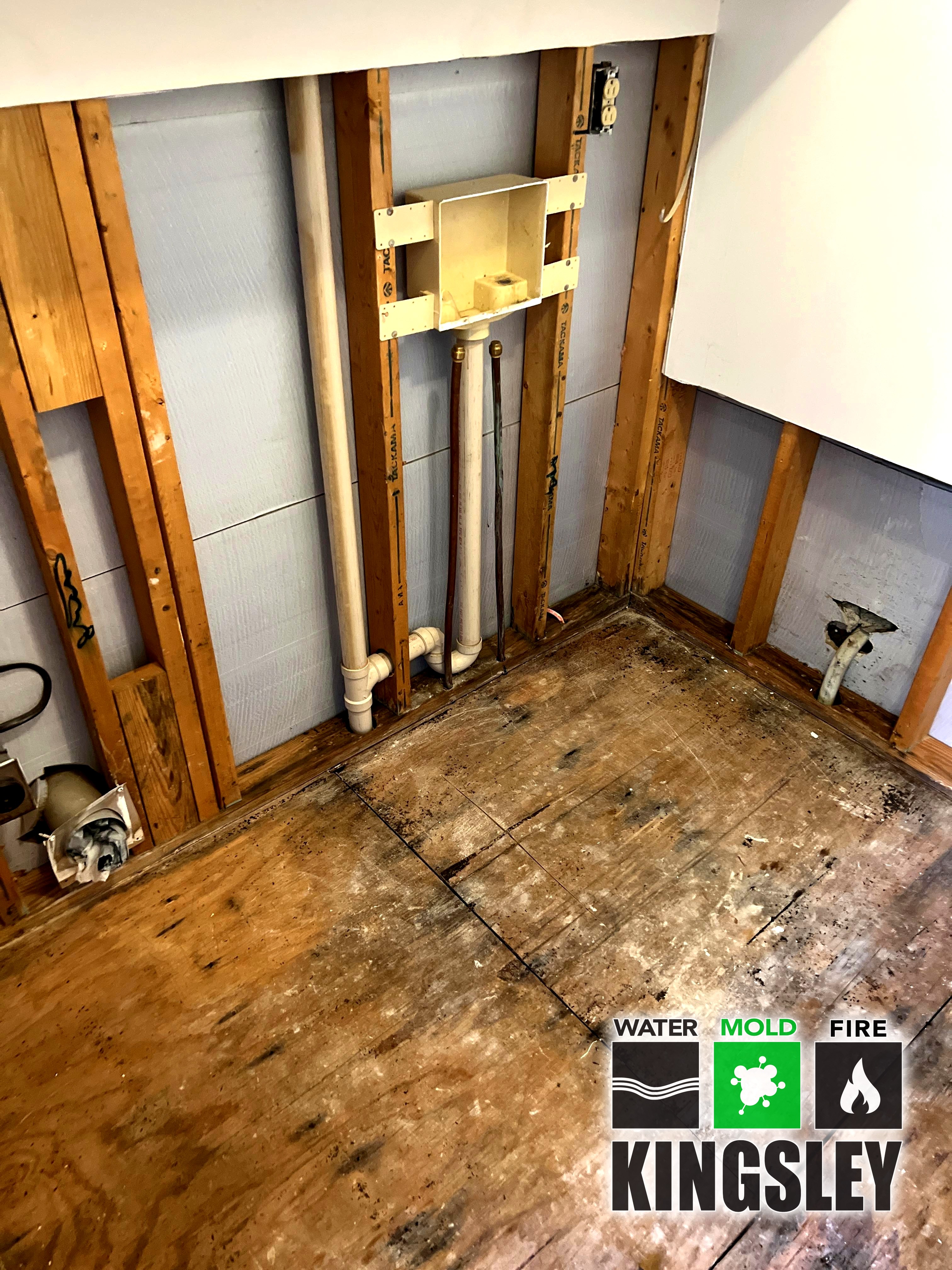
Kingsley water damage & Fire cleanup completed laundry-room water damage restoration in Camden, SC after moisture reached the wall and floor around the washer hookups. We removed wet drywall and insulation to expose the studs and found darkened staining across the plywood subfloor at the supply and drain lines. Light superficial growth inside the cavity was remediated before we set drying equipment, leaving the room mid-demo with copper supplies, PVC drain, and wet floor fully open for cleaning and structural drying.
Solutions provided:
Kingsley water damage & Fire cleanup restored a Camden, SC laundry room after water damage reached the wall cavity and plywood subfloor at the washer connections. We began with inspection and moisture mapping of the wet wall and floor assembly. Flooring, baseboards, and trim had already been removed before our crew arrived; we then removed the laundry drywall along with the insulation. Finished drywall that had taken on moisture came out under controlled demolition — two walls cut four feet up and the remaining walls two feet up — so we could see the studs, insulation, bottom plate, and the full washer outlet box. That flood-cut approach confirmed how far water had traveled along the framing and subfloor without opening more of the home than necessary. Wet insulation came out with the drywall so drying air could reach the wood instead of staying trapped behind saturated batts.
With the wall open, copper supply lines, the PVC drain and P-trap, and the recessed washer box were fully accessible for inspection. A dryer vent plate and adjacent plumbing stack remained visible in the open cavity while the plywood subfloor showed irregular dark staining concentrated near the wall and along panel seams — a pattern consistent with prolonged moisture at laundry connections. Studs near the floor plates carried vertical water staining. We HEPA-vacuumed and remediated light superficial growth present inside the drywall cavity with an EPA-registered antimicrobial before any drying equipment was placed. Wet or contaminated finish materials that could not be cleaned to a dry standard were bagged and removed so the structure, not the finishes, became the focus of mitigation.
We set containment so the work zone would not pull adjoining rooms into the project while we cleaned exposed framing and subfloor. In the laundry itself we set three air movers and one dehumidifier to establish controlled airflow across the open studs and stained plywood. Connected areas that moisture mapping had flagged — including the back entry hall and a small kitchen floor section — received additional air movement and dehumidification so the laundry loss did not rewet through shared assemblies. We also finished crawlspace work on the connected underside of the home and set air movers there as part of that same mitigation scope; the laundry cavity above grade is what this job stage documents, not the crawlspace itself. Psychrometric conditions and moisture-content readings, not the calendar, decided when equipment could come out.
We inspected plumbing connections while the wall was open so any ongoing leak risk at the washer supply or drain could be addressed before new drywall went up. Leaving a slow drip behind finished surfaces is how laundry losses return months later as mold behind baseboards. We collected a material sample for flooring identification so rebuild products would match what was removed, and we coordinated an adjuster video walkthrough of the affected areas so the mid-demo condition — studs open, plumbing visible, stained subfloor exposed — was documented while the cavity was still accessible.
Monitoring continued over several days until all affected materials were dry at goal or below, then we removed drying equipment from the structure. When readings were stable within that first week of mitigation, we left the laundry cavity and floor ready for new insulation, drywall, base, and flooring on a clean substrate. Laundry rooms are a frequent water source because of supply-line and drain issues; opening the wall early, remediating growth before equipment runs, and drying to industry standards is what keeps a Camden repair contained instead of becoming a larger microbial problem later.
After mitigation, there was a clear path to restore the laundry room without trapping moisture inside the wall or under new flooring in this Camden home. Crew documentation stayed with the file so rebuild could proceed on a verified dry substrate. If you notice a musty smell near the washer, soft flooring at the toe-kick, or staining around supply valves, shut the valves off and request moisture mapping before replacing finishes alone.
Photos & Videos: