Job completed for Tile Floor Water Damage Cleanup and Structural Drying in Ridgeway, SC
Completion date: September 22, 2026
Location: Ridgeway, SC
Why did the customer contact us?
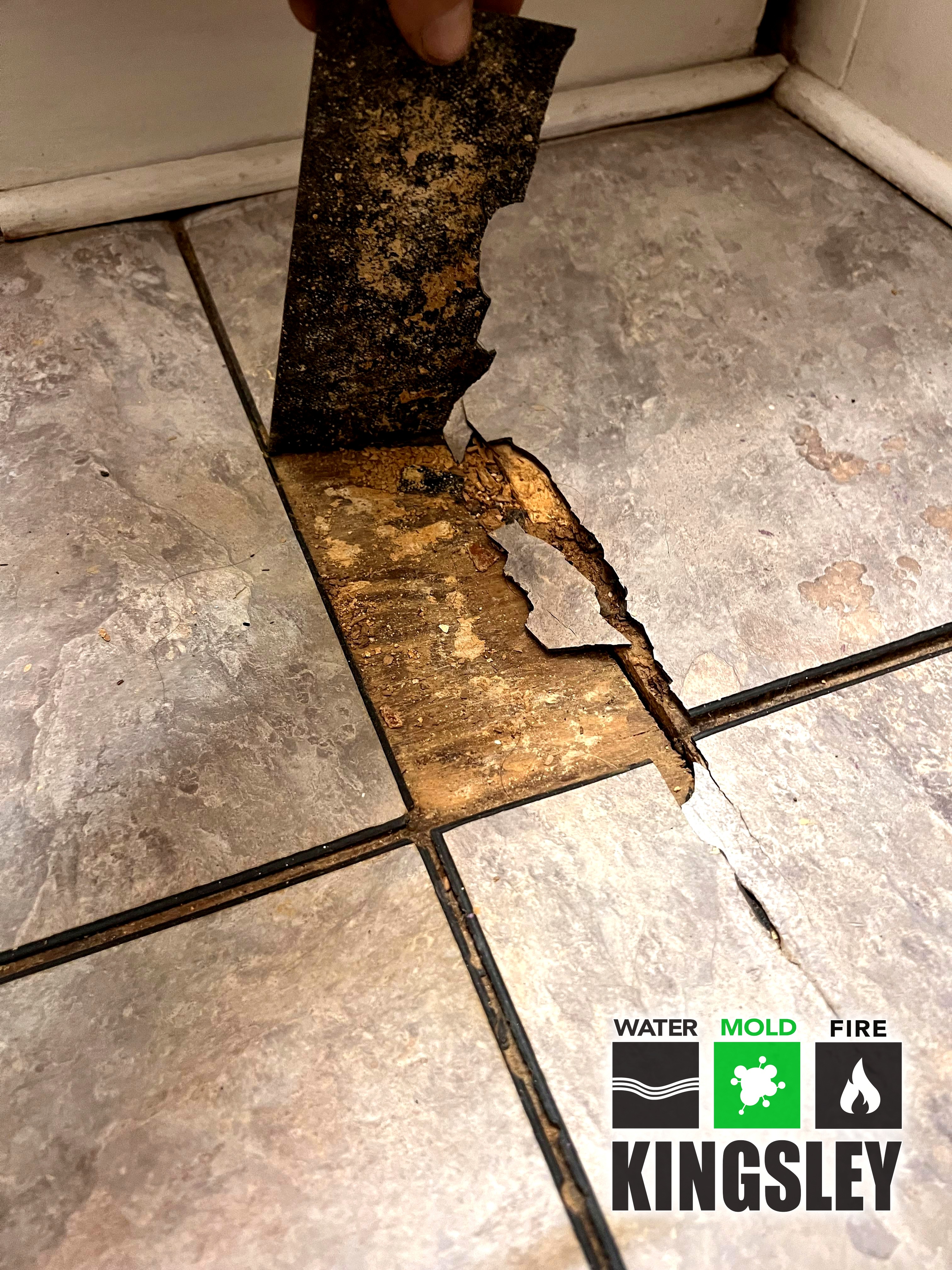
Kingsley water damage & Fire cleanup responded to tile-floor water damage in Ridgeway, SC after soft spots and staining showed under gray stone-pattern vinyl tile. We moisture-mapped the soft zone during inspection and found elevated moisture where the finish covering had already deteriorated over darkened, crumbly wooden subfloor. We lifted the damaged vinyl squares at a stable edge so we could document the wet assembly, remove what could not be saved, and move into structural drying before secondary damage spread.
Solutions provided:
Kingsley water damage & Fire cleanup handled water damage restoration under vinyl tile in Ridgeway, SC. We started with a full floor inspection and moisture mapping of the soft zone. We walked the room for springy tiles, lifting edges, and grout lines that had opened up. Pin and non-invasive meters mapped how far moisture had traveled under the finish so the open area matched the wet footprint instead of a guess. The vinyl squares in the problem zone needed removal — the covering was already damaged and deteriorated before this work began — and elevated moisture found during inspection confirmed the finish layer could not stay. Once we outlined the problem zone, we lifted the damaged covering from a stable tile edge so debris stayed in the work area and clean parts of the room stayed clean.
With the covering peeled back, the wooden subfloor matched what the meters had already flagged. Dark, irregular staining ran across the exposed plywood, with crumbling fibers and loose fragments along the opening. A wet gap showed where panels met and moisture had already wicked deeper into the assembly. The adjacent tile edge was cracked and jagged where the assembly had lost strength, and the underside of the lifted vinyl square carried dark, patchy residue consistent with long-term moisture at the adhesive line. Gray stone-pattern vinyl with dark grout lines framed the opening, and white baseboard with quarter-round remained at the wall while the deteriorated center came up. That deterioration develops when moisture sits between finish flooring and structural wood long enough to break down the board and invite microbial growth. We removed the damaged pieces under controlled demolition and bagged material that could not be salvaged. Surrounding tile and grout were cleaned so we kept a sound working edge for the rest of the scope.
After the wet section was out, we cleaned exposed framing and subfloor surfaces and treated them with an EPA-registered antimicrobial where staining and condition warranted it. We controlled contaminated dust with careful handling and HEPA cleanup as we worked. The opening stayed contained so adjoining rooms were not pulled into the work zone. Leaving stained, crumbly wood under a new finish is how flooring calls turn into mold remediation callbacks months later, so removal and surface cleaning came before any rebuild talk. IICRC-aligned water damage restoration prioritizes source control, selective demolition of non-salvageable finishes, and verified drying of remaining structural materials — not covering over a soft spot and hoping it holds.
We then set air movers and dehumidification so remaining structural wood could dry under psychrometric monitoring. Free water comes out first on any wet floor; after that, dry air across wet wood and moisture removal from the room until readings stabilize is the real structural drying work. We returned for monitoring visits, rechecked moisture content in the exposed assembly, and adjusted equipment until materials met drying goals. Skipping that monitoring window is what turns a straightforward floor opening into secondary damage in the next season. We kept documentation of the opening — the stained subfloor, the removed covering, and the cleaned cavity — with the file so the homeowner and rebuild crew could see why the finish layer had to come up before new vinyl or tile went down.
When readings supported the next phase, we left the area ready for new subfloor and finish flooring on a clean, dry substrate. Soft tile and hidden rot in Ridgeway often look like a small soft spot until you lift the covering; opening and verifying first stops the damage from spreading and leaves the structure ready for reconstruction. The same inspection-first approach protects nearby rooms in a Ridgeway home from being pulled into a larger demo once moisture has already wicked under a continuous tile field. If tile feels spongy underfoot or grout darkens next to a soft corner, stop walking that area and have the subfloor checked before anyone sets new tile over it.
Photos & Videos: