Job completed for Hardwood Floor Water Extraction and Drying in Lake City, SC
Completion date: June 20, 2022
Location: Lake City, SC
Why did the customer contact us?
Water had spread through several rooms of the home, including the foyer, kitchen, dining room, bathroom and garage. The call came in once water was standing on finished hardwood flooring at the foot of the stairs. An inspection also turned up older termite damage in a bathroom corner, which added to the reasons for getting a professional crew on site.
Solutions provided:
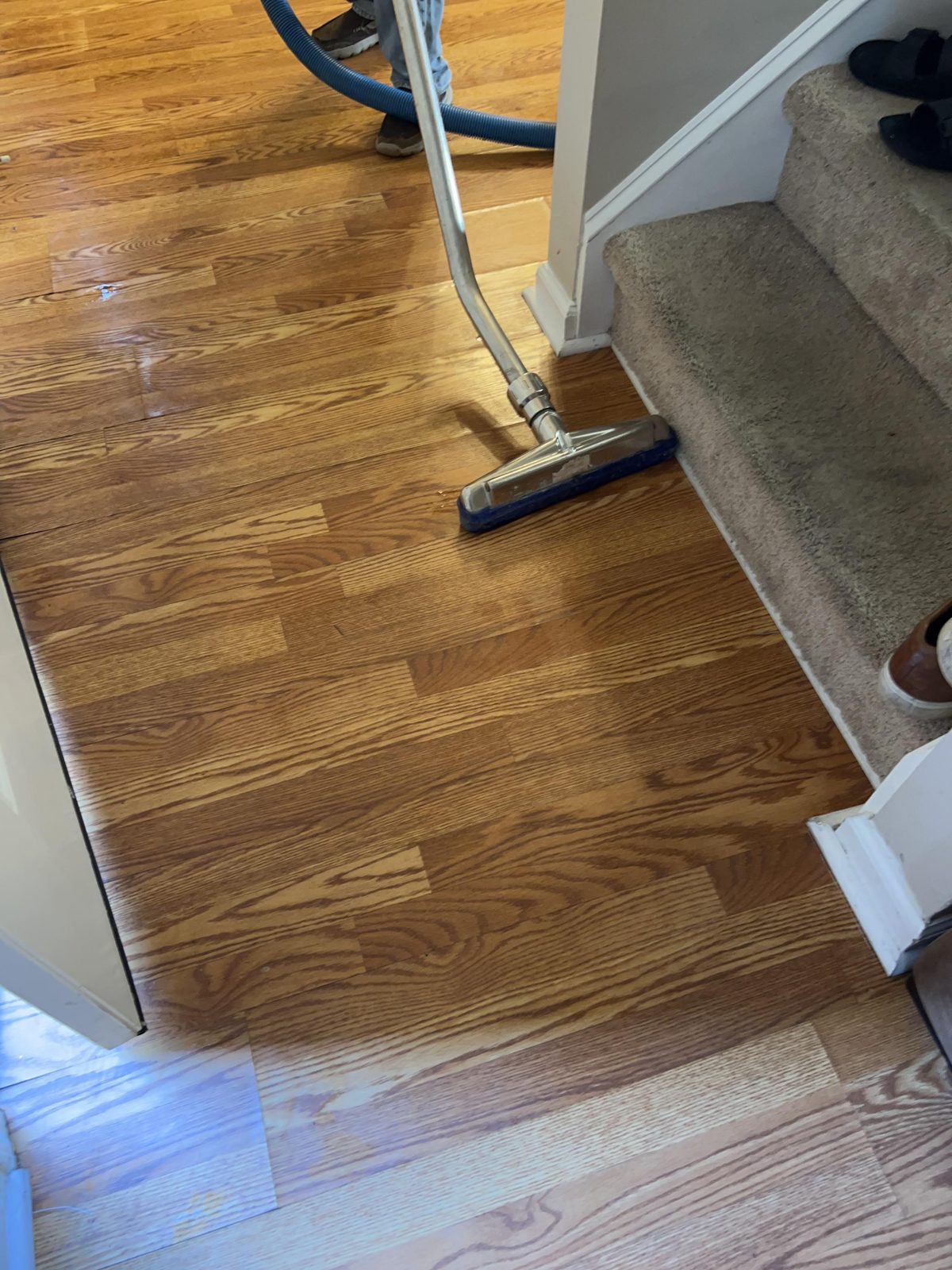
Standing water on a finished wood floor is a timing problem. Every hour it sits, more of it moves down through the seams into the subfloor, so extraction was the first task on this Lake City property before any assessment was written up. A weighted extraction tool was worked across the hardwood in the entry and the adjoining rooms, drawing water up through the board seams under vacuum instead of merely wiping the surface. The crew worked outward from the wettest area toward the carpeted stair landing so water was not pushed into dry material.
With the surface water gone, the extent of the intrusion could be measured properly. Moisture meters and thermal imaging were used across the foyer, kitchen, dining room, bathroom and garage to find where water had gone under cabinets, behind baseboards and beneath the floor covering. Readings from unaffected areas of the same house were taken as a baseline so there was something real to dry back to. The termite damage in the bathroom corner was noted and photographed at this stage so the compromised wood was handled carefully rather than discovered mid-demolition.
Only the material that could not be dried in place was removed. Baseboards came off in the affected rooms so air could reach the wall cavities and the framing behind them, and wet insulation and drywall were cut out where the readings called for it. The bathroom toilet and pedestal sink were detached so the wall and floor behind them could be reached. Everything that was opened up was HEPA vacuumed and treated with an antimicrobial before drying equipment went in, which is the step that keeps a water loss from turning into a mold problem later.
Drying the hardwood was handled differently from drying the rest of the house. Air movers were set to move air along the length of the boards rather than straight down at them, and dehumidifiers were sized to hold the room dry while moisture came out of the wood, which happens slowly and unevenly. Readings were taken from the boards, the subfloor beneath and the framing on each visit, and the equipment was left running and adjusted until those numbers matched the baseline instead of being pulled on a schedule. Wood floors that look dry on top routinely still hold water underneath, so the meter decides.
When the readings held steady, the equipment was removed and the reconstruction stage began. Removed drywall and insulation were replaced, baseboards were reinstalled, plumbing fixtures were reset, and the sections of flooring that could not be saved were addressed. The affected rooms in Lake City were cleaned down and the drying documentation was completed and filed with the job.
Photos & Videos: