Job completed for Crawl Space Insulation Removal and Moisture Control in Sumter, SC
Completion date: September 28, 2022
Location: Sumter, SC
Why did the customer contact us?
A tenant noticed light microbial growth on a kitchen cabinet and called it in. The owner was already concerned that a wider humidity problem was affecting other parts of the home, including the master bedroom and closet. Rainwater had been collecting in the yard and running beneath the structure. We were asked to find the moisture source and clean up the affected areas before the growth spread further.
Solutions provided:
The first thing this job needed was an explanation, not equipment. Surfaces inside the home were checked for growth, starting with the kitchen cabinet the tenant had flagged and extending to fabrics and stored items in the bedroom and closet. Moisture readings were taken at the cabinet base, the wall behind it and the flooring nearby. The answer turned out to be underneath: rainwater was pooling in the back yard and running beneath the home, keeping the space under the kitchen damp for long stretches at a time.
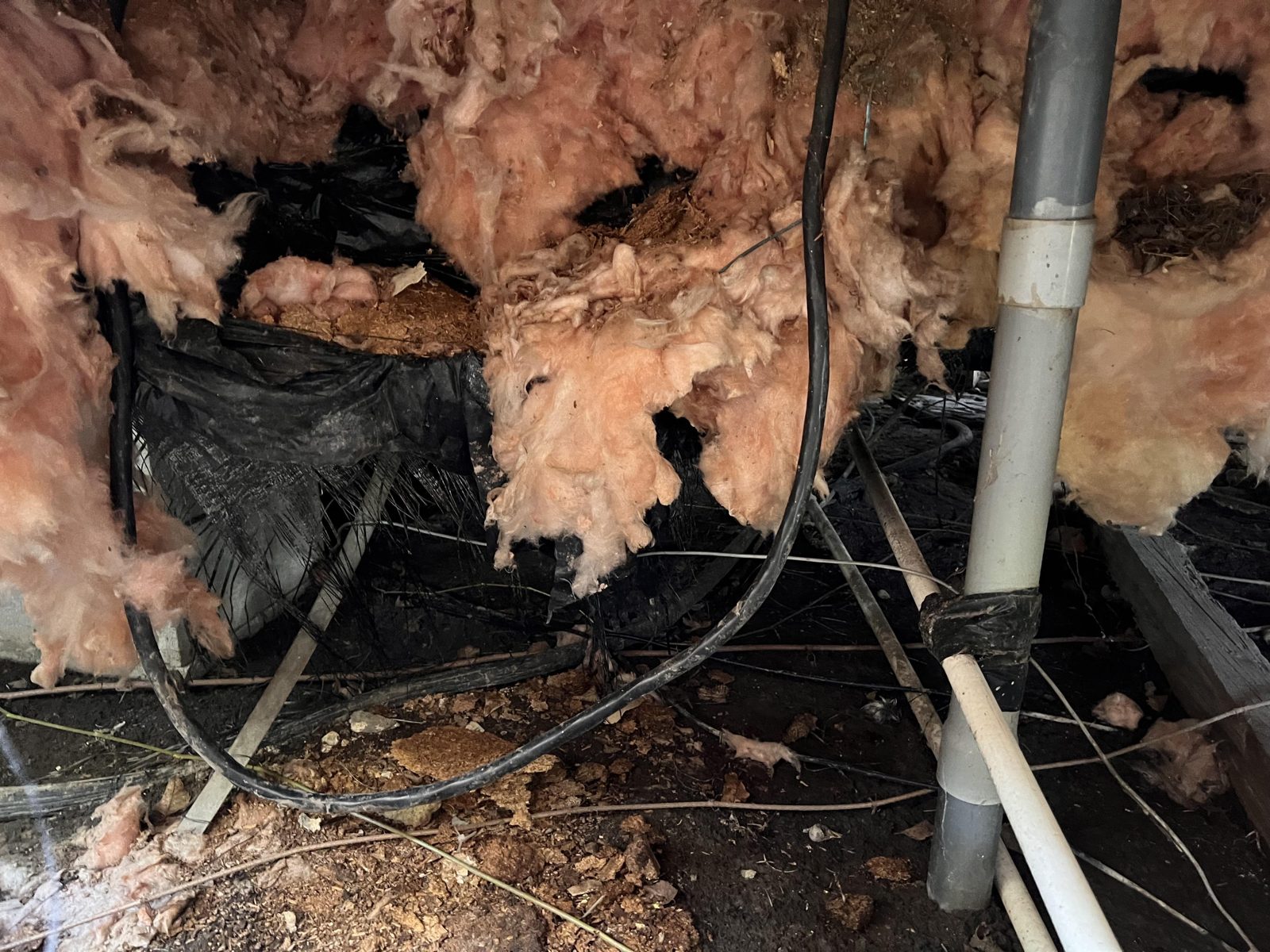
Underneath the home the picture was clear enough. Fiberglass batt insulation had absorbed moisture and pulled loose from the floor joists, hanging down in sections, and the underbelly wrap that should hold it in place had torn open. Wet insulation resting on damp soil next to supply and drain lines is a reliable way to keep humidity high in the floor system above it. Before any removal began, the area was contained and the crew worked in respirators and protective coveralls, since disturbing wet insulation releases both fiberglass and whatever has grown in it.
Removal followed. The loose and saturated insulation was cut away and bagged for disposal along with the damaged sections of underbelly wrap, and the debris that had collected on the ground below was cleared out. Exposed joists and subfloor decking were HEPA vacuumed and then treated with an antimicrobial so the surfaces were clean before anything new went back up. Inside, the affected cabinet surfaces were cleaned down and the soft goods that showed light growth were HEPA vacuumed rather than simply wiped, which pushes spores deeper into fabric.
Drying and airflow came before any rebuild. Dehumidification was set under the home and monitored until readings in the joists and decking came down and held, and the same points were re-checked on later visits rather than being signed off on the first good number. The moisture source itself also had to be dealt with, or the space would simply take on water again with the next heavy rain in Sumter. Grading and drainage away from the perimeter were addressed so surface water is carried away from the home instead of running under it.
With the structure dry and clean, the crawl space was rebuilt. New insulation was installed between the joists and secured with fresh underbelly material so it stays tight against the floor system, and the ground cover was put back in place to keep soil moisture from evaporating up into the space. Access points were closed and sealed, and interior surfaces that had been cleaned were re-checked before the work in Sumter was finished.
Photos & Videos: