Job completed for Bathroom and Kitchen Plumbing Overflow Cleanup in Winnsboro, SC
Completion date: December 19, 2022
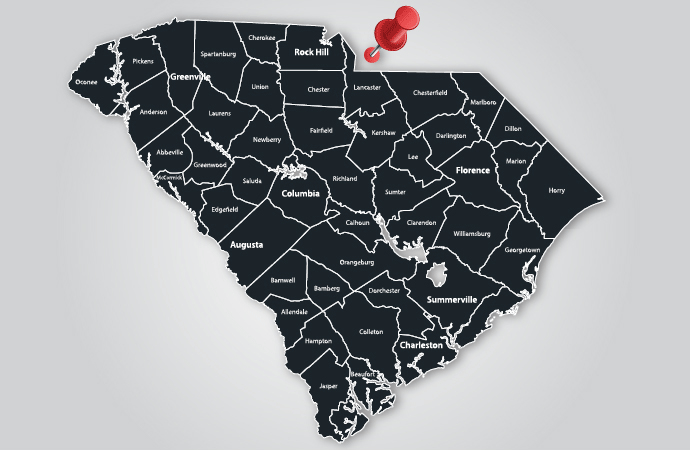
Location: Winnsboro, SC
Why did the customer contact us?
A plumbing backup overflowed and pushed water through the bathroom and into the adjoining kitchen. The homeowner had also noticed a leak running in the crawl space beneath the bathroom and soft spots forming in the hallway floor. Because the home had older flooring layers in place, there were questions about what could safely be pulled up and what needed testing first. Our team was asked to find the true extent of the moisture and handle the removal and drying.
Solutions provided:
A backup that comes up through a fixture rarely stays where you can see it. The visit to this Winnsboro home started with a walk of every room that shared a wall or a floor plane with the bathroom, followed by moisture readings on the tile, the subfloor beneath it, the base of the kitchen cabinets and the hallway where the floor had started to feel soft underfoot. Thermal imaging helped narrow down where to probe, and a trip into the crawl space confirmed what the homeowner suspected: water was still finding its way down through the bathroom floor system rather than draining away.
Because the water had passed through a drain line, it was treated as contaminated from the outset. Plastic sheeting and spring poles closed off the bathroom doorway and the run of kitchen cabinets nearest to it, with a zipped entry so technicians could work without tracking soil through clean rooms. Air scrubbers ran inside the containment to keep dust and odor from migrating. The older flooring layers raised a reasonable question about asbestos-containing material, so nothing suspect was disturbed until that question had been settled through proper testing channels.
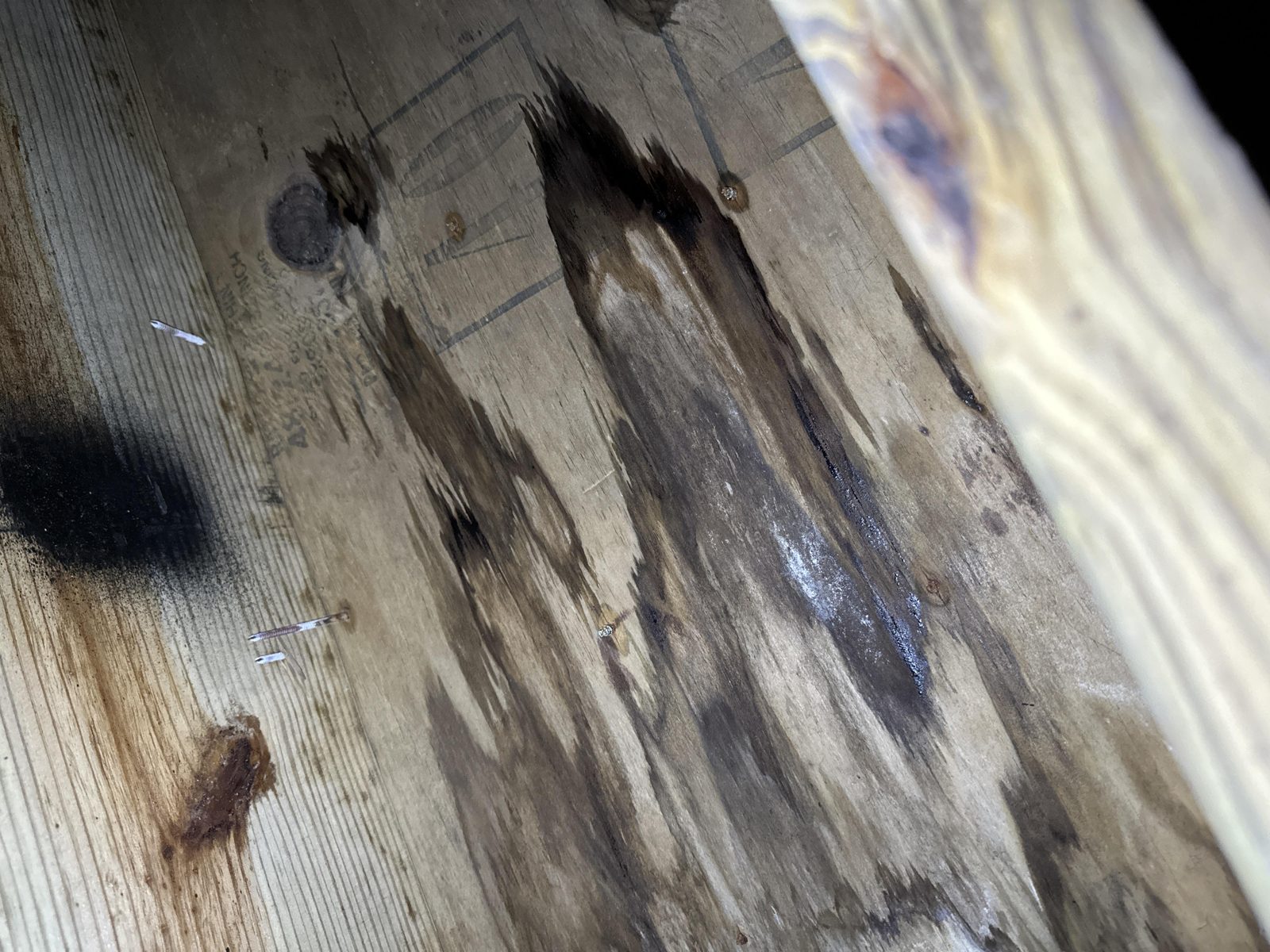
Removal came next and was kept as tight as the readings allowed. Tile and the mortar bed came up in the bathroom, the wet toe kick and cabinet base panels came out in the kitchen, and the hallway boards that had lost integrity were cut back to solid, dry framing. The picture attached to this job was taken once the finished floor was gone, and it shows what the plywood decking underneath looked like: dark, feathered staining running along the seams where water had wicked and sat. Staining like that is a map of how the water traveled, and it tells you where the drying equipment needs to point.
With the wet materials out, the exposed subfloor and framing were cleaned and treated with an antimicrobial, and the drying system went in. Air movers were aimed along the stained decking and into the open cabinet bays, dehumidifiers took the released vapor back out of the air, and the crawl space was dried separately so it could not keep feeding humidity back up into the rooms above. Readings were taken at the same marked points each visit, and equipment was moved or added wherever a spot refused to come down on schedule.
Drying was called complete only when the subfloor, framing and cabinet bases in this Winnsboro house matched the dry standard taken from an unaffected part of the home on two consecutive days. The containment then came down, the work area was HEPA vacuumed and wiped, and the structure was left clean, dry and ready for the flooring and cabinet repairs that followed.
Photos & Videos: