Job completed for Crawl Space Mold Remediation and Insulation Replacement in Johns Island, SC
Completion date: December 6, 2022
Location: Johns Island, SC
Why did the customer contact us?
A homeowner on Johns Island noticed that a piece of drywall beside the bathtub had fallen away, exposing dark growth behind it. The crawl space directly below had a history of termite damage and had recently had its insulation replaced, so they wanted the whole underside of the house looked at rather than just the bathroom. They asked for a full inspection and remediation if the growth turned out to be widespread.
Solutions provided:
The inspection covered the bathroom and the crawl space together, since one sits directly above the other. Moisture mapping came back unremarkable, with no elevated readings anywhere in the structure at the time we measured, but visible growth was present on the subfloor and behind the insulation below. That combination is common and worth explaining. Once mold establishes on organic material such as wood framing or paper facing, it can persist on what it has already colonized long after the moisture that started it has gone. Normal meter readings on their own are not evidence that a crawl space is clean, which is why the visual inspection under the house mattered more here than the numbers did.
Both areas were placed under negative pressure before any material was disturbed. In the Johns Island crawl space we built containment from sheeting with a zippered entry, and the bathroom was sealed off and fitted with an air scrubber. Working under negative pressure means air inside the contained space is drawn out through filtration instead of being pushed into the living areas above, and it is the single most important control when colonized material is being removed.
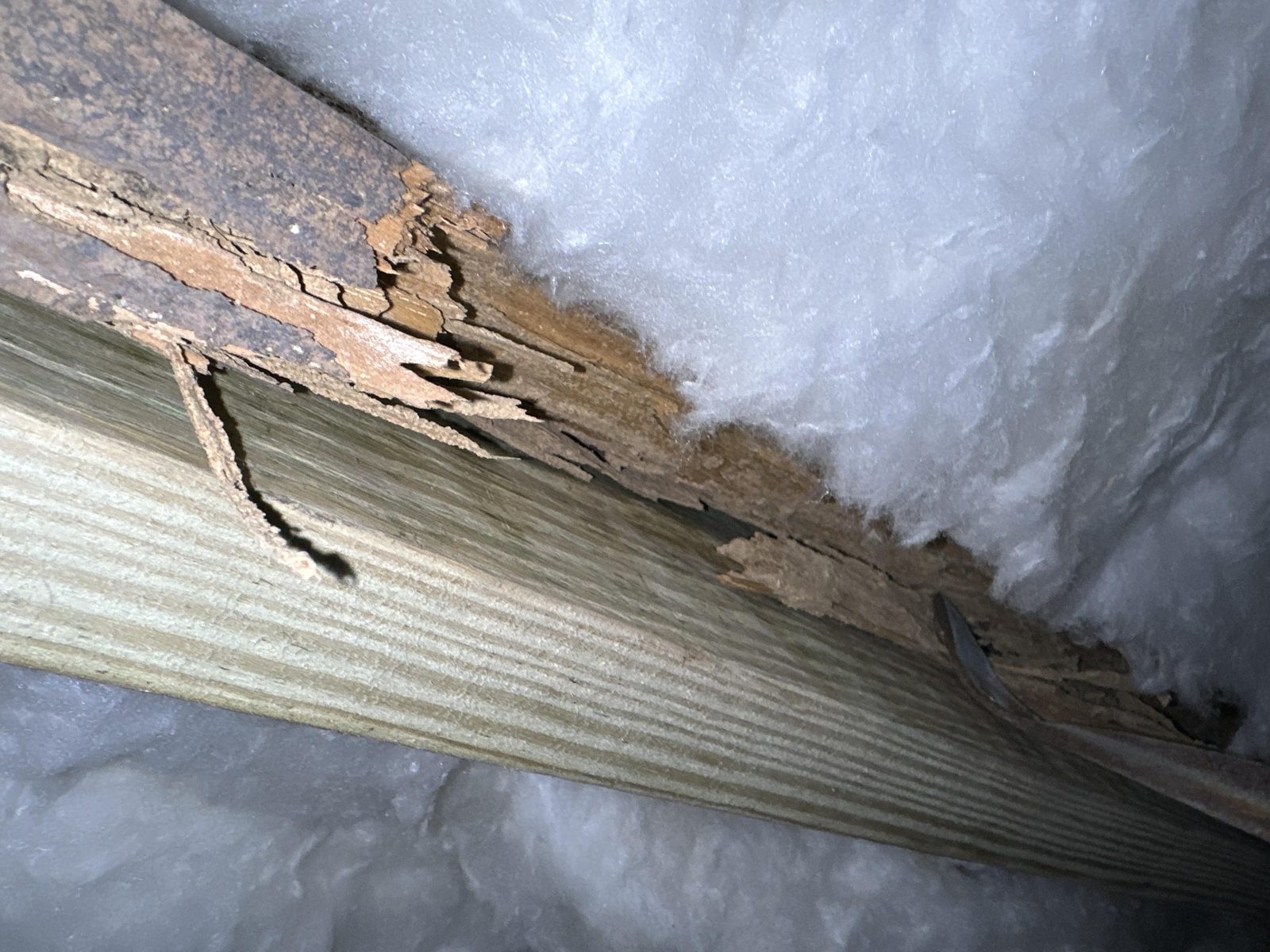
All compromised insulation and the old vapor barrier came out of the crawl space and were bagged for disposal. Insulation cannot be cleaned once growth is in it, and the existing barrier had to be lifted to reach the ground beneath. With the underside open, we HEPA vacuumed the joists, band boards and subfloor to physically lift spores and debris off the wood, then applied an antimicrobial and wiped the framing down by hand. Sections where earlier termite activity had left the timber soft and broken were cleaned carefully and flagged for the homeowner so the structural side could be evaluated separately. Remediation cleans and protects the wood, but it does not restore strength that insect damage has already taken out of a joist.
Once the wood was clean and dry, we primed and sealed the joists and subfloor to encapsulate anything left down in the grain, then installed a new moisture barrier across the crawl space floor and secured it at the piers and around the perimeter with the seams lapped so bare soil stayed covered. Ground moisture is what feeds most crawl space problems in this part of South Carolina, and sealing it off is what stops the same cleanup being needed again in a couple of years.
In the bathroom, the affected section of drywall beside the tub was cut out and removed while the room stayed under negative pressure with the scrubber running. Final monitoring confirmed that moisture levels stayed stable throughout the work and that nothing new had developed in the treated areas. The Johns Island house was left with a sealed and encapsulated crawl space, clean framing underneath, and an open bathroom wall ready for new drywall.
Photos & Videos: