Job completed for Kitchen, Laundry and Garage Water Damage Cleanup in Greer, SC
Completion date: November 11, 2022
Location: Greer, SC
Why did the customer contact us?
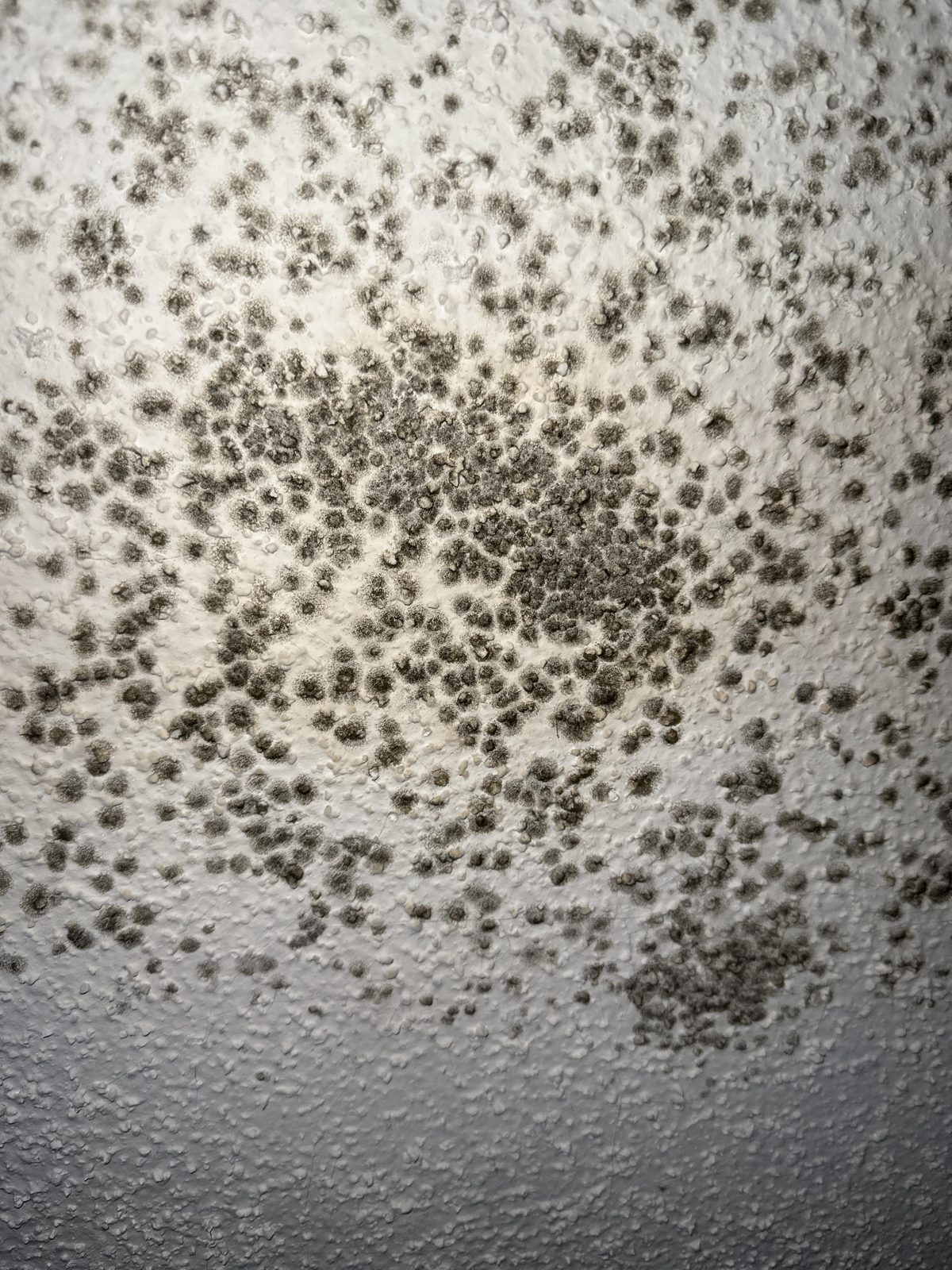
A Greer homeowner called after water worked its way through the kitchen, laundry room and garage. They asked for an estimate and wanted the affected areas moisture tested before deciding how much material would have to come out. By the time we arrived, spotted growth had already appeared on painted drywall in the wettest areas.
Solutions provided:
The inspection started with mapping, because the three affected rooms in this Greer house shared walls and a ceiling plane, and water rarely stops at a doorway. Moisture meters and thermal imaging traced damp material behind the base cabinets, into the laundry room floor structure, and across a large section of the garage ceiling. On the surfaces that had stayed wet longest, dark spotting had already established itself on the painted drywall, a fine dense pattern of colonies rather than a simple stain. That finding turned a straightforward drying job into one that needed containment first, and it set the order of operations for everything that followed: contain, remove, clean, then dry.
Each room was sealed off with plastic barriers at the doorways and put under negative air pressure, so air moved into the work zone and left through filtration rather than drifting into the rest of the house. Air scrubbers ran in all three spaces throughout the job. This step matters most where growth is visible: cutting or vacuuming a colonized surface without containment simply relocates the problem to another room.
Removal followed the readings. About five feet of kitchen cabinetry came out along with a two-by-five-foot section of drywall behind it, opening the wall cavity so it could dry rather than staying sealed and damp. In the laundry room we pulled roughly twenty square feet of wet batt insulation away from the joists and subfloor. The garage needed the most work, with around one hundred and forty square feet of ceiling drywall taken down. Every exposed surface was HEPA vacuumed and then wiped with an antimicrobial, removing residue rather than sealing it under new finishes. Ceilings are worth singling out here, because a wet ceiling cavity holds insulation that stays damp long after the drywall below it looks dry.
Drying equipment went in behind the cleaning. Dehumidifiers pulled moisture out of the air in each zone while air movers kept it circulating across the newly opened framing and subfloor, and the scrubbers stayed running to hold air quality steady. Monitoring ran alongside the drying: on each visit we recorded meter values from the same reference locations, tracked how far they had fallen since the last check, and repositioned equipment wherever progress had stalled. Wall cavities behind cabinetry are the usual culprit for a stalled reading, and they were checked first each time.
When every monitored point held at dry standard and the cleaned surfaces stayed clear, the equipment came out. What was left in this Greer home was open, dry framing and clean substrate, which is the condition a rebuild needs before new drywall, insulation and cabinetry go back in. Closing a wall or a ceiling over material that is still holding moisture is how a water loss becomes a mold problem six months later, so this verification step is the one we treat as non-negotiable.
Photos & Videos: