Job completed for Flood Cut Drywall Removal and Structural Drying in Port Royal, SC
Completion date: October 25, 2022
Location: Port Royal, SC
Why did the customer contact us?
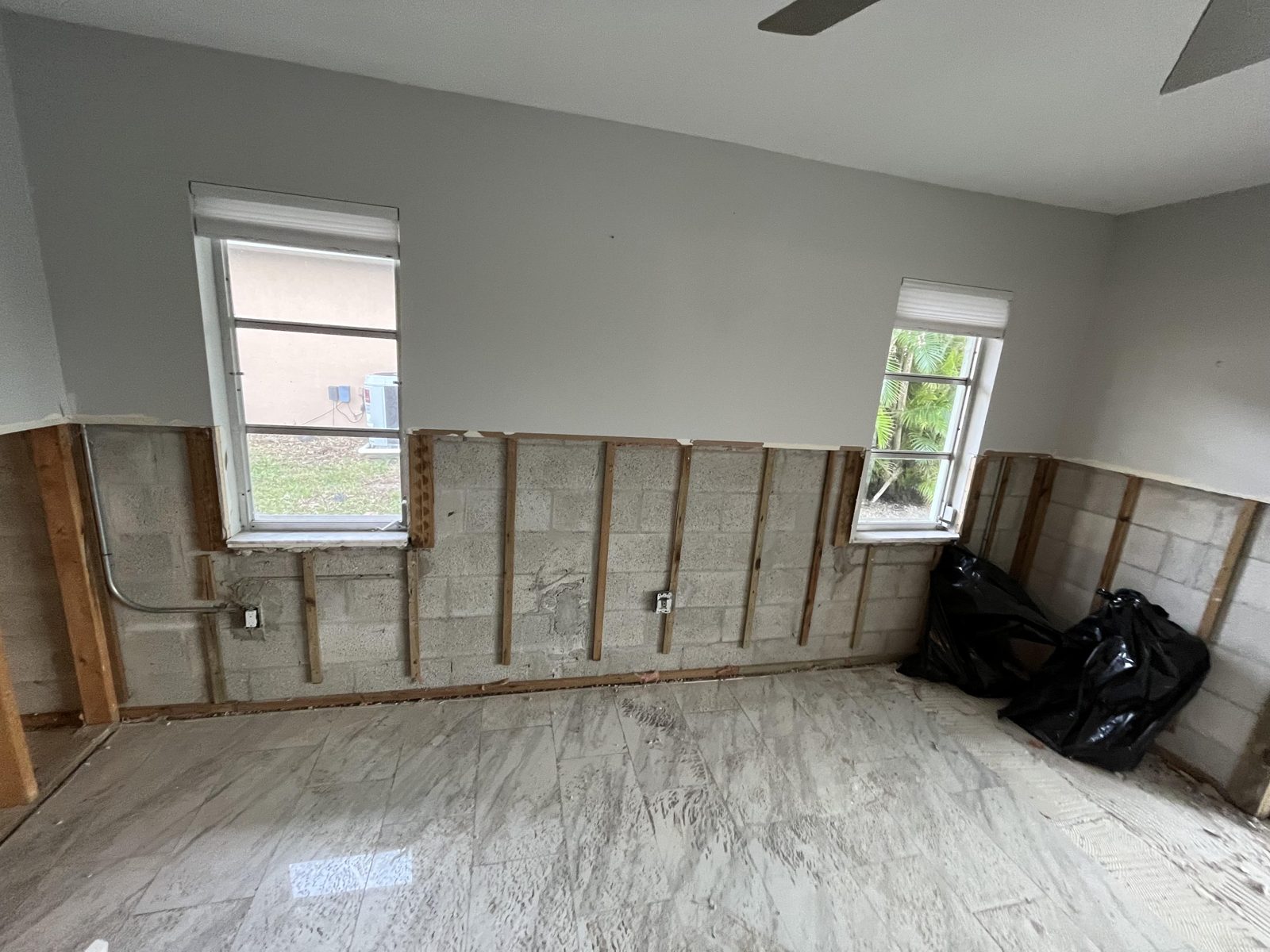
Water moved through several rooms of a Port Royal, SC home, soaking the drywall along the base of the exterior walls and running out across the tile floor. The homeowner was worried about what had been trapped behind the wall finish and in the masonry behind it. We were asked to open the affected walls, dry the structure and keep the loss from turning into a mold problem.
Solutions provided:
Before anything came off the wall, we walked the affected rooms of this Port Royal home with moisture meters and a thermal camera to establish how high the water had wicked up the drywall. The reading line sat well above the visible staining, which is typical, because gypsum draws water upward long after any standing water is gone. We marked a cut line a comfortable margin above the highest wet reading and recorded conditions in each room so there was a baseline to measure the drying against.
The work area was sheeted off from the rest of the house and held under negative pressure with air scrubbers running HEPA filtration, which controlled the dust that drywall removal always produces and kept it out of the rooms still in use. Power to the affected circuits was shut off before we opened any wall containing outlets, and debris was bagged at the point of removal rather than stacked in the room. Contents were moved to the center of each room and covered, which cleared working space along the walls and kept furniture out of the path of the cutting and bagging.
Drywall was cut cleanly along the marked line and removed down to the floor, exposing the block wall and the wood furring strips fastened to it. Wet base trim and saturated insulation behind the finish came out with it. Opening the wall this way lets air reach the block, the furring and the bottom plate directly, which is the only reliable way to dry a masonry wall assembly; closing it back up while it is still wet only moves the problem out of sight. Every exposed surface was then wiped down with an antimicrobial solution ahead of the drying setup.
Air movers were set to sweep along the open wall base and a bank of dehumidifiers handled the water they lifted into the air. We checked readings daily at marked points in the block, the furring and the floor, and shifted equipment toward whichever room was lagging behind. The dehumidifiers were left running overnight after the last readings came into range, since materials that look dry can give moisture back up when the equipment is shut off too early. Readings were logged for each room separately, because a house rarely dries at one uniform rate and the room with the most exposure to the water almost always sets the schedule for the rest.
Once every marked point held at normal levels through a full check cycle, the equipment was pulled room by room and the floor and remaining finishes were cleaned. The Port Royal home was left dry, open at the wall base and ready for insulation, drywall and trim to be rebuilt, with the moisture documentation from the job handed over for the repair work that followed.
Photos & Videos: