Job completed for Crawl Space and Subfloor Drying in Ladys Island, SC
Completion date: October 2, 2022
Location: Ladys Island, SC
Why did the customer contact us?
Solutions provided:
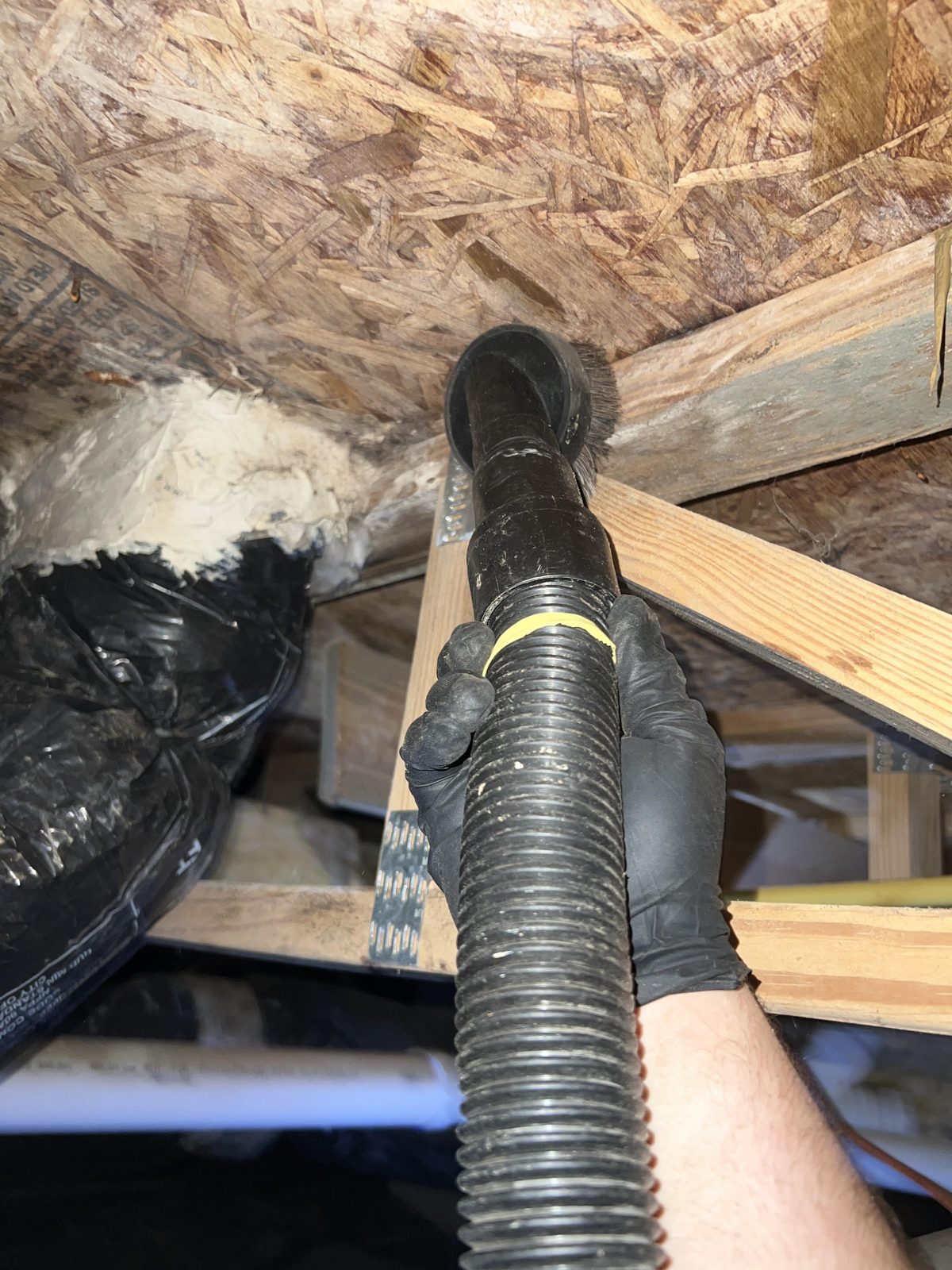
The first task at this Ladys Island home was to get underneath the floor. A technician worked the crawlspace by hand, checking the underside of the subfloor bay by bay with a moisture meter. Flexible ductwork and the insulation batts between the joists had to be eased aside to reach the sheathing above them, and each duct connection was reseated at its boot before we moved on. From below, the wet area showed up as a band of darker, damp sheathing that reached beyond where the finished floor upstairs looked affected.
A crawlspace is a confined space, so the work under the house was done in gloves and a respirator with a second crew member stationed at the access hatch. Upstairs, the affected hall and closets were closed off with sheeting so the drying chambers stayed separate from the rooms the family was still using, which also kept children and pets clear of the running equipment and cords. Cords were routed against the baseboards and taped down at doorways so the household could still move between the rooms that were not part of the drying work.
Sections of hardwood that had cupped and lifted were cut out where the boards were trapping water against the sheathing beneath them. Pulling those boards let the subfloor breathe and gave the drying equipment a direct path to the wet material instead of forcing air through a sealed finished surface. The exposed subfloor was cleaned and treated with an antimicrobial before any drying began. Down below, the insulation that had been displaced during the inspection was reset between the joists and the ground cover was smoothed back into place so airflow under the house was not fighting a loose barrier.
Air movers were placed along the open runs upstairs and a dehumidifier was set to draw the released moisture out of the chamber, with lay flat ducting used to keep exhaust air moving across the wettest edges of the remaining flooring. Readings were taken daily at fixed points, including from the crawlspace side, so we could confirm the subfloor was drying through its full thickness and not just at the surface. Where a reading refused to fall, the air mover feeding that run was turned to a shallower angle so it swept across the face of the boards instead of blowing straight at them, which moves far more moisture off a flat surface.
Equipment stayed in place until the subfloor and the remaining hardwood held stable readings that matched unaffected parts of the house. It came out room by room, starting with the spaces that reached dry first, and the floors were cleaned once the chambers came down. Loose fasteners and staples left behind where the boards were removed were pulled so the sheathing was clean and flat for whatever went down next. The home in Ladys Island was left dry through the floor system and ready for new flooring in the areas where boards had been taken up.
Photos & Videos: