Job completed for Crawl Space Moisture and Mold Cleanup in White Knoll, SC
Completion date: September 28, 2022
Location: White Knoll, SC
Why did the customer contact us?
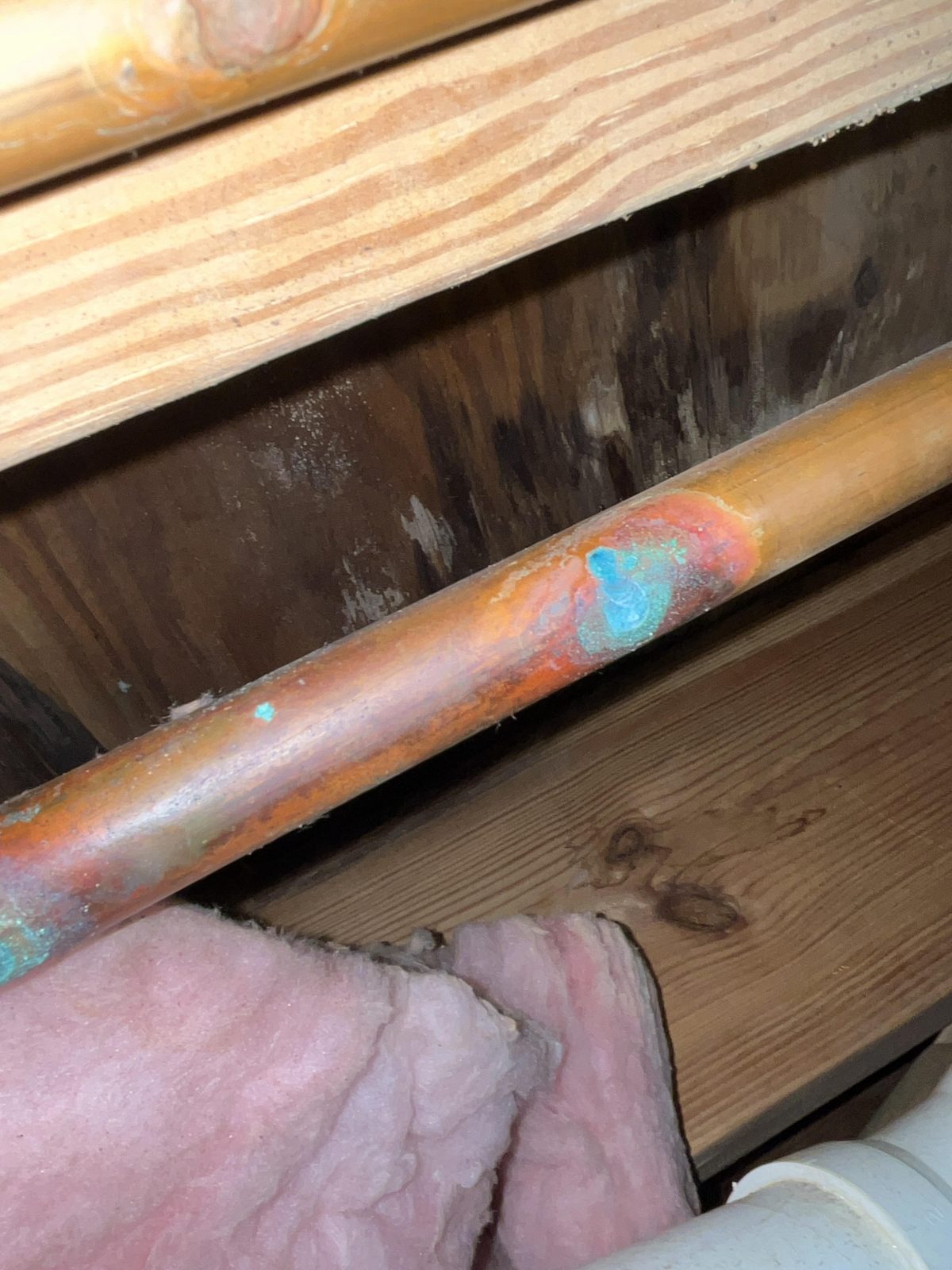
A homeowner in White Knoll called after noticing a musty smell and discolored framing in the crawl space under the master bath and laundry room. Staining had also shown up on surfaces in the master bedroom and closet and around the bathroom vents. The moisture was being driven mainly by high indoor humidity from an HVAC system that was not holding its setpoint, with some residual dampness left behind by a plumbing leak that had already been repaired.
Solutions provided:
Our first visit to the White Knoll home was an assessment day rather than a demolition day. We walked the master bedroom and closet, the bathroom and its vents, the laundry room, and the crawl space underneath both wet areas, taking moisture readings in drywall, subfloor, and framing as we went. Thermal imaging helped us see where damp material sat behind finished surfaces, and humidity readings inside the crawl space told us how much water the air itself was carrying. That combination separated the two problems we were dealing with: an ongoing humidity load coming off the HVAC system, and localized residual moisture left over from the repaired supply line.
Because there was visible microbial growth on the crawl space joists and in a few spots inside the master closet, we set up containment before disturbing anything. The affected areas were isolated with sheeting, the supply and return vents serving those rooms were sealed so spores could not ride the duct system into clean parts of the house, and HEPA-filtered negative air machines kept airflow moving out of the work zone instead of into the living space. Crews worked in respirators and disposable suits, and debris was bagged inside containment before it was carried out.
In the crawl space, wet fiberglass insulation was pulled and discarded; once it holds water it stops insulating and starts feeding growth. Exposed joists, sill areas, and subfloor decking were HEPA-vacuumed, cleaned down, and treated with an antimicrobial to kill what remained on the surface of the wood. Inside the house, drywall and trim that stayed wet on repeat readings were removed back to sound material so we could dry the cavity rather than try to dry through a finish. Air movers and low-grain refrigerant dehumidifiers were then set in the affected rooms and in the crawl space, with the dehumidifiers doing the real work of pulling moisture out of the enclosed air.
Drying is not finished when a surface feels dry. We came back daily to log moisture content at the same marked points, tracked temperature and relative humidity in each drying chamber, and moved equipment as the numbers came down. Framing and subfloor had to reach a dry standard consistent with unaffected material in the same house, and crawl space humidity had to hold at a level that would not restart the problem. Only after several consecutive stable readings did we break down containment and pull equipment out of the White Knoll property.
Closing the job out meant dealing with the cause as well as the damage. The homeowner was walked through the thermostat and system settings that had let indoor humidity climb, and the crawl space was left clean, dry, and ready for new insulation. Everything removed was documented room by room so the rebuild could be scoped accurately, and all work areas were HEPA-vacuumed and wiped down before we left. Houses in White Knoll and the rest of Lexington County sit over vented crawl spaces that stay humid most of the summer, so an HVAC system that is not managing moisture indoors tends to show up in the framing under the floor first.
Photos & Videos: