Job completed for Attic and Ceiling Water Leak Cleanup in White Rock, SC
Completion date: September 7, 2022
Location: White Rock, SC
Why did the customer contact us?
A homeowner in White Rock, SC found water where it should not have been: standing in the air handler pan up in the attic, with stains spreading around the ceiling vent in the upstairs bathroom and a patch showing on the kitchen ceiling below. Water appearing on two floors from a source in the attic worried them, and so did the question of what the damp had done to the air in the house. They asked for a full inspection and testing.
Solutions provided:
Water that shows up on a kitchen ceiling has usually travelled a long way to get there, so the inspection at this White Rock home covered the attic, the upstairs landing, the kitchen and every affected ceiling area rather than just the visible stain. Water runs along framing and ductwork and drops through at whatever opening it finds first, which means the wet spot on a ceiling is rarely underneath the actual leak.
Finding the source was the priority, and it turned out to be the air handler in the attic. Its drain pan was holding standing water, which is one of the most common causes of this exact pattern of damage. When the drain line blocks or the pan overflows, water spills into the attic and starts working its way down through the ceiling cavities. That explained both the staining around the upstairs bathroom vent and the affected area on the kitchen ceiling below it, since water had migrated through the cavity between floors.
Because the homeowner was concerned about air quality, we carried out professional testing rather than making assumptions. Samples were collected from key points, including the upstairs spaces and the surface of the attic plywood, and sent to a certified laboratory for analysis. Attic plywood is a sensible place to sample: it is where roof and HVAC moisture tends to concentrate, and growth there is easy to miss because nobody looks.
Containment was set up to isolate the affected areas and stop airborne contaminants from moving through the rest of the house while work was underway. With that in place, removing the standing water became the immediate priority. Water sitting in an attic degrades sheathing, framing and insulation quickly, and in a South Carolina attic in September the heat accelerates everything.
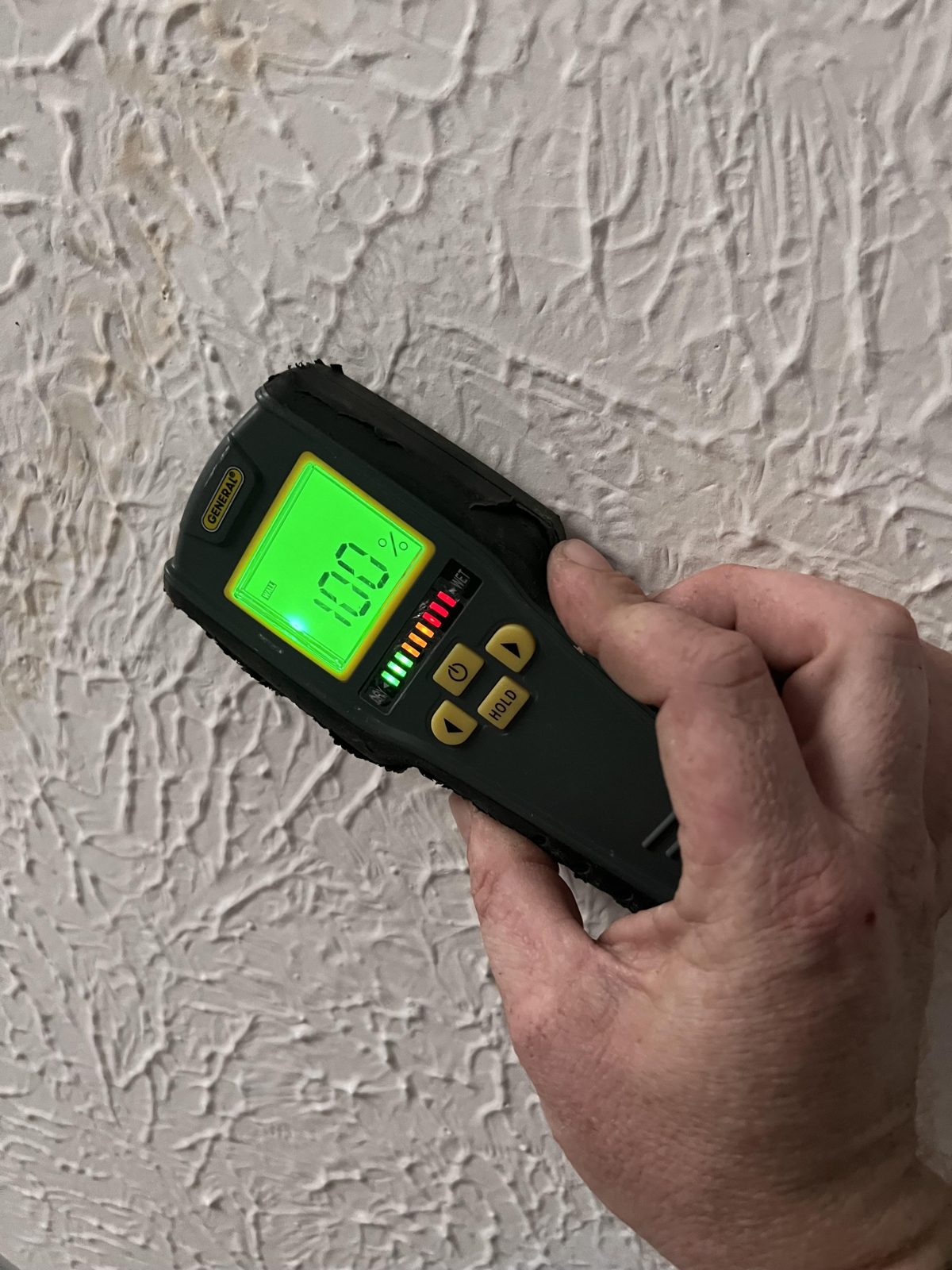
From there the affected materials were cleaned and the ceiling cavities dried out, with monitoring to confirm the moisture in the structure was actually coming down rather than simply moving from one hidden space into another.
The useful lesson from this White Rock job is where the problem started. Nothing had leaked through the roof and no plumbing had failed. An air handler drain pan in the attic was quietly overflowing, and by the time it announced itself on the kitchen ceiling, it had already affected two floors.
Photos & Videos: