Job completed for Water Damage Restoration in Swansea, SC
Completion date: October 5, 2022
Location: Swansea, SC
Why did the customer contact us?
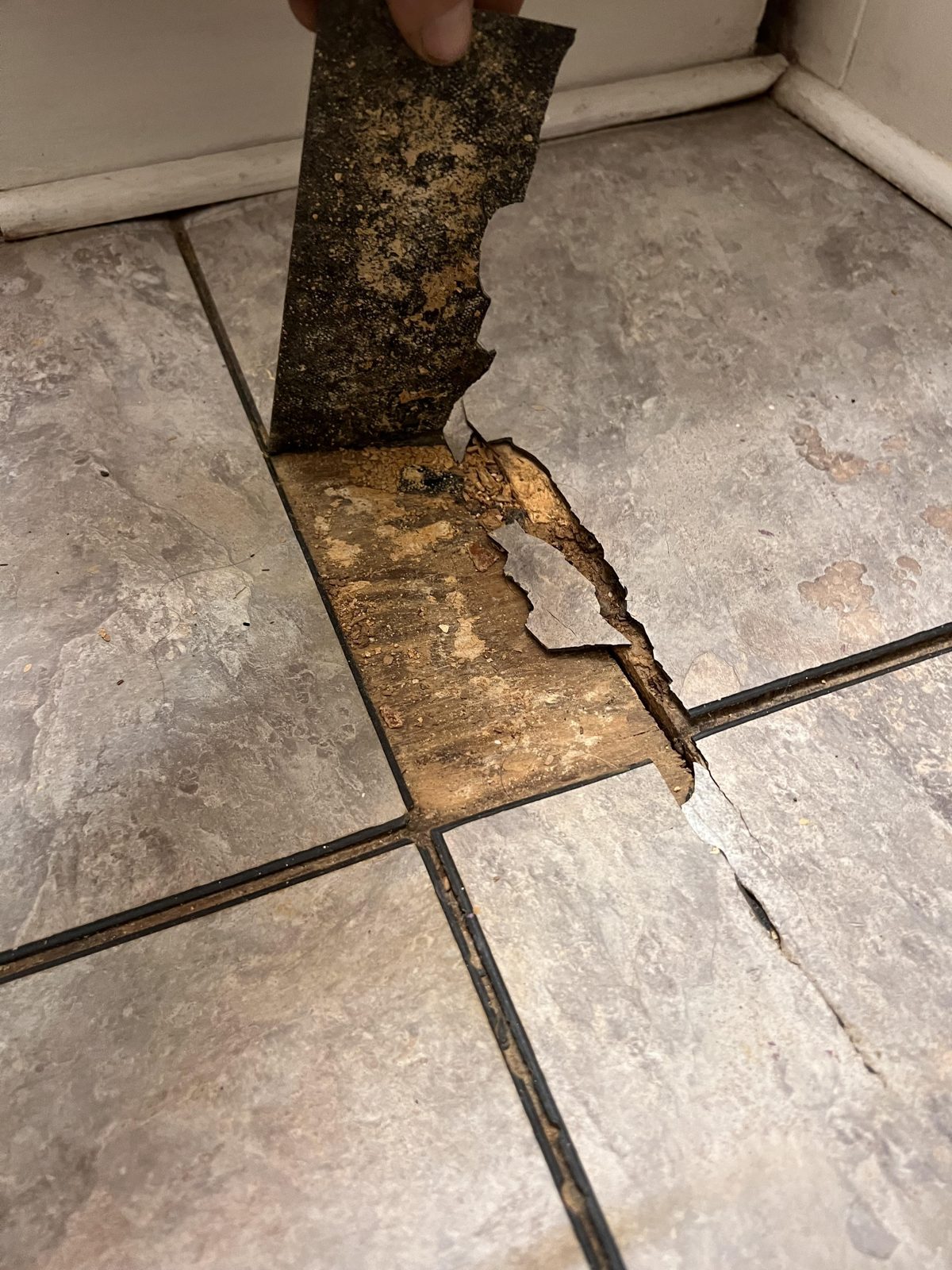
The owner of a building in Swansea, SC contacted us about water damage showing up in more than one area, including the hall bathroom, the crawlspace underneath it and parts of the exterior. Moisture readings taken in that crawlspace came back higher than they should have been. The vinyl floor tiles in the bathroom were already damaged before the current occupants moved in, and the attic showed old staining with no active moisture behind it.
Solutions provided:
We began with a full walkthrough of the Swansea property to find out where water had actually gone, rather than only where it was visible. That meant checking the hall bathroom, the crawlspace underneath it, the exterior walls and the attic, and taking moisture readings in each of those areas. The attic told us something useful right away: the staining up there was old, with no active moisture behind it, so it did not need to be opened up. The crawlspace was a different story, with readings under the hall bathroom coming back elevated.
Crawlspaces are tight, poorly ventilated spaces, so before starting we made sure the area was safe to work in and that anything we disturbed stayed contained. Damp material under a floor can carry microbial growth, and stirring it up sends it toward the living space above through the gaps around plumbing and ductwork. Keeping that separation in place protected the occupied part of the building while the work went on underneath it.
In the bathroom, the vinyl floor tiles were already damaged, and because tile and sheet flooring traps water underneath it, we removed them to expose the substrate and let it dry out. Below that, in the crawlspace, the work was structural drying: air movers positioned to push air across the wood framing and subfloor, and dehumidifiers to pull the evaporated moisture out of the air rather than let it settle somewhere else in the building. Damp wood in a closed crawlspace does not dry on its own, and it stays wet long enough for mold to take hold.
We took moisture readings on a schedule while the equipment ran, tracking the framing and subfloor as the numbers came down. This is the part of a job a homeowner cannot see, and it is the part that determines whether the repair holds. Equipment comes out when the readings say the materials are dry, not when a certain number of days have passed.
Once the crawlspace and the bathroom substrate reached normal moisture levels, we removed the equipment, cleaned the work areas and left the bathroom floor ready for new finish flooring. The exterior and attic were documented as inspected with no active intrusion, so the owner has a clear record of what was affected and what was not.
The reason a job like this one in Swansea gets handled from the crawlspace up rather than from the finished floor down is straightforward. The water was never really in the bathroom, it was under it. Drying the space you can see while skipping the space you cannot is how the same problem comes back a few months later as a musty smell or a soft spot in the floor.
Photos & Videos: