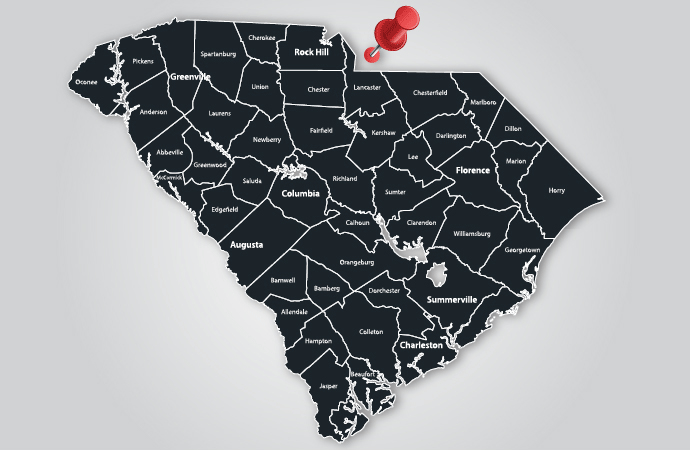
Water Damage Restoration in Mount Pleasant, SC
When the Kitchen Sink Strikes Back: A Florence, SC Flood Story
We’ve all been there—you walk through the front door after a long day, expecting the smell of home, but instead, you hear a faint hushing sound. Then you step into the kitchen and feel that cold, squelching soak in your socks.
This past week, a family in Florence experienced every homeowner’s nightmare: a high-pressure copper pipe under the kitchen sink decided to give up the ghost while they were out for the afternoon. By the time they got home, the kitchen was a lake, and the water was already migrating into the breakfast nook and the hardwood in the dining room.
At Kingsley Restoration, we see this a lot, but that doesn't make it any less stressful for the family involved. Here is how we handled the situation and what you should know if your plumbing ever decides to stage a rebellion.
The Anatomy of a Kitchen Flood
Under-sink leaks are particularly nasty because they happen in an enclosed space. The water sprays against the back of the cabinets, soaking the particle board or plywood, and then pools on the floor. Because kitchen cabinets usually sit on a "toe-kick" (that recessed space at the bottom), water hides underneath the cabinets where you can't see it or dry it with a towel.
Our Rapid Response in Florence
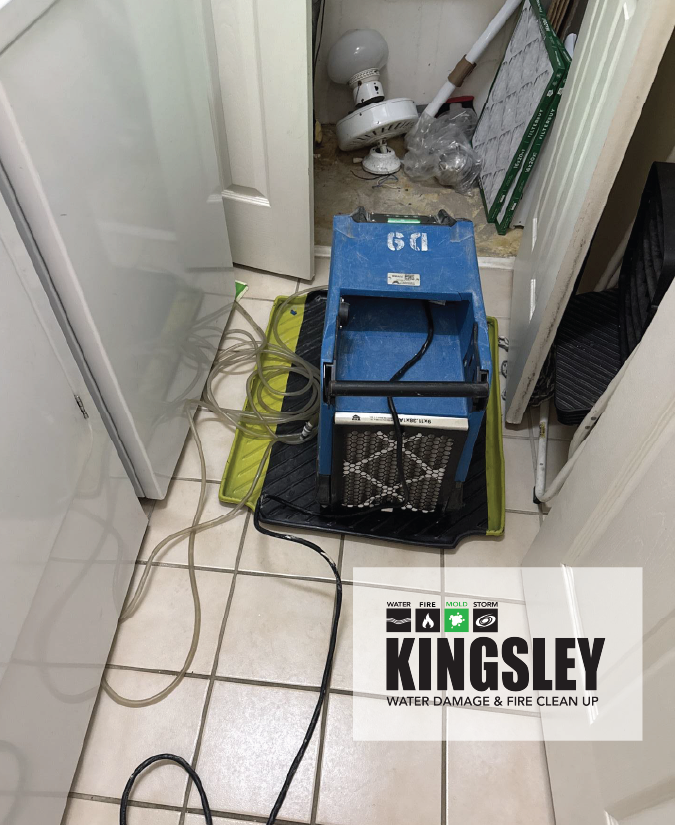
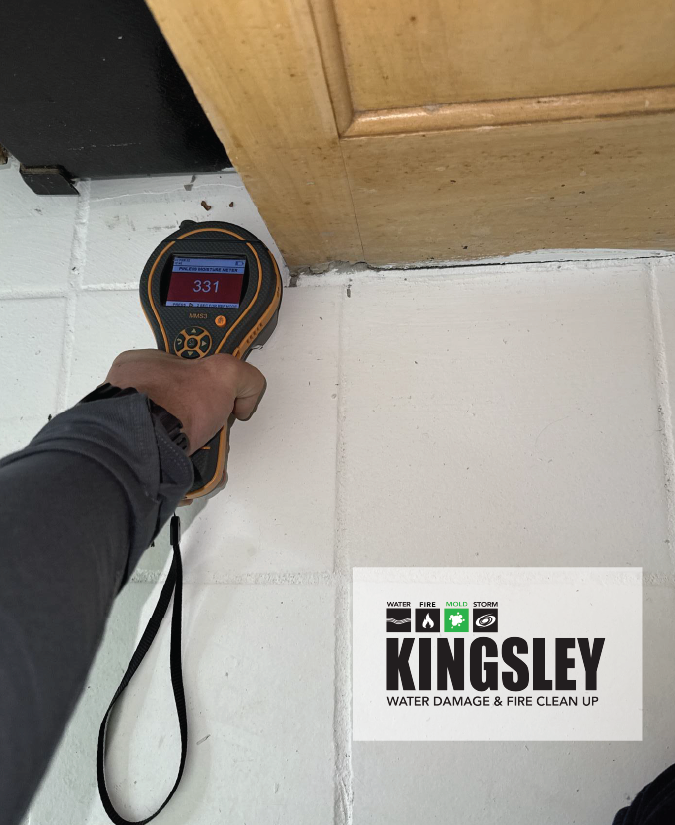
When this Florence homeowner called us, our local crew was on-site in under an hour. In the world of water damage, time is literally money. 1. Immediate Extraction: We didn't waste time with mops. We used industrial-grade truck-mounted vacuums to suck the standing water out of the cracks in the hardwood and from under the baseboards. 2. Saving the Cabinets: Most people think a flooded kitchen means a total gut job. Not always! We used "Injectidry" systems—essentially high-pressure air forced into the wall cavities and under the cabinets—to dry the wood from the inside out before it started to swell and crack. 3. Moisture Mapping: We don't just "feel" if it's dry. We use thermal imaging and moisture meters to track exactly where the water traveled behind the walls. If you miss even a small pocket of moisture, you're looking at a mold problem in 48 to 72 hours.
Why "Drying it Yourself" Often Fails
We totally get the urge to just put a few box fans out and hope for the best. But home fans only dry the surface. The water that soaked into the subfloor or the drywall behind your cabinets stays trapped. Without professional-grade dehumidification to pull the moisture out of the air, that trapped water creates a "sauna effect" that leads to warped floors and musty odors.
A Happy Ending in Florence
By acting fast, we were able to save this family's hardwood floors and their custom cabinetry. It took a few days of monitored drying, but we got them back to normal without the need for a massive, expensive reconstruction project.
Kingsley’s Pro-Tip: Do you know where your main water shut-off valve is? If a pipe bursts, knowing how to kill the water in 30 seconds instead of 30 minutes can save you thousands of dollars in repairs.
Facing a flood in Florence, West Columbia, or Lexington? Don't wait for the mold to move in. Kingsley Restoration is local, family-owned, and ready to jump into action 24/7.
Give us a call at [Insert Phone Number]—we’ll bring the pumps!
Frequently Asked Questions
Yes. Kingsley Water Damage & Fire Cleanup provides extraction and structural drying for Mount Pleasant homes after pipe breaks. Call 803-590-0370 for response coordination.
Coastal humidity and finished living spaces over crawlspaces can hide wetting in floors and cavities. Moisture mapping after a break finds water that traveled beyond the visible puddle.
Many residential drying jobs average about 3–7 days after the leak is stopped and extraction begins. Plumbing repair timing affects when full drying can start.
Sudden bursts are commonly considered—confirm with your carrier about cause and any freeze or maintenance conditions. We document restoration scope.
Moving air helps slightly on surfaces but does not dry wet insulation or subfloors thoroughly and can spread contamination if water is dirty. Professional extraction and monitored drying are still needed.