Angel Garcia
Client Manager
Hometown: Caguas, Puerto Rico
Hobbies: Vacationing
Certifications: WRT/ASD, FSRT/OCT
Angel Garcia
Client Manager
About Angel Garcia:
My name is Angel Garcia, I come from Caguas Puerto Rico. I've been in South Carolina for 10 years. My professional background started with furniture delivery. I did that for quite a few years before I got into carpet cleaning and air duct cleaning, which inspired my passion for water damage mitigation. In my free time I enjoy exploring South Carolina with my wife and 3 children.

Customers love working with Angel Garcia
See All

Jobs Completed by Angel Garcia
See All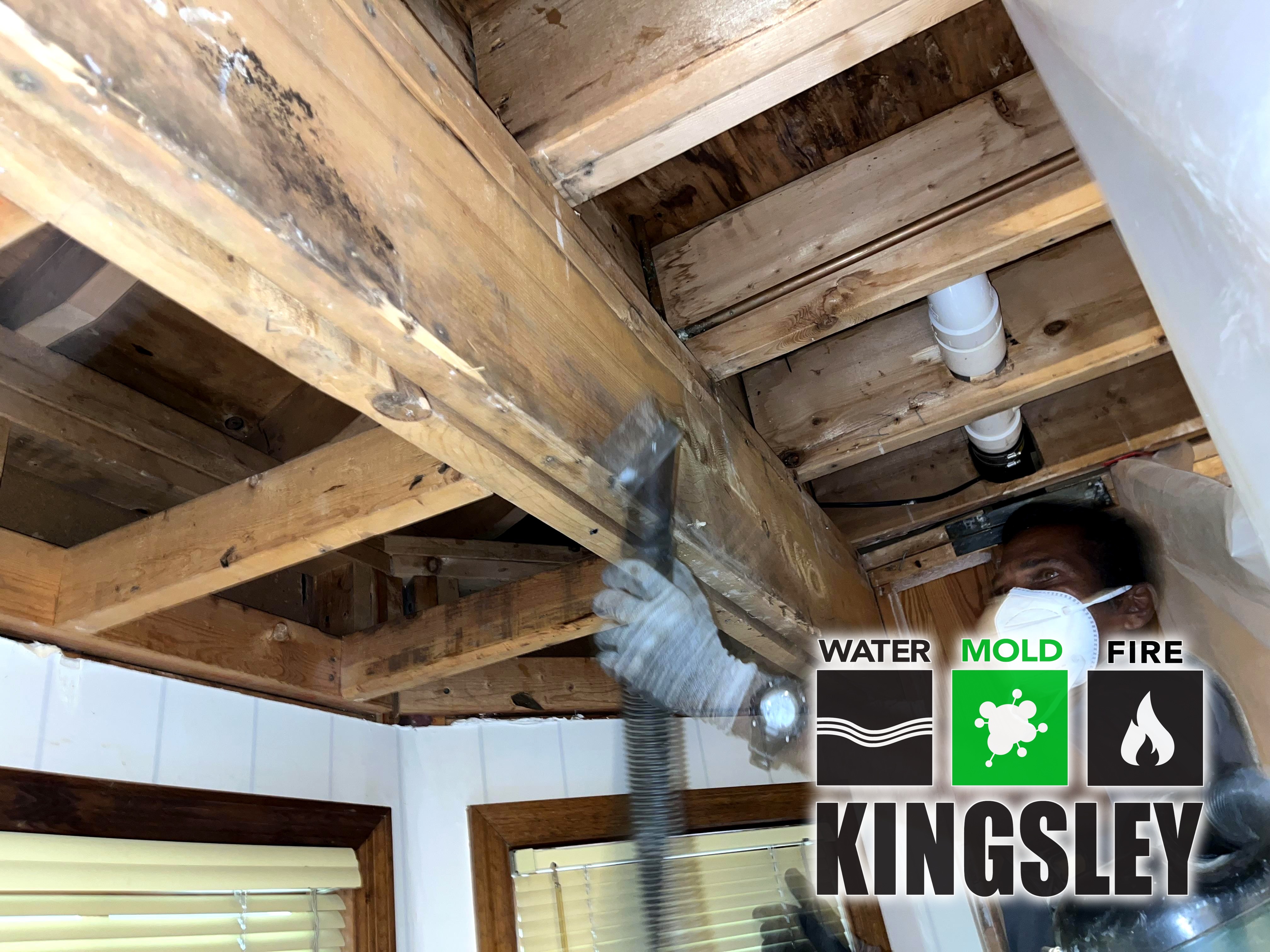
Socastee, SC
September 29, 2026
Kingsley water damage & Fire cleanup handled supply line water extraction and drying for a Socastee, SC property. The camera and meters guided scope from the start: supply Line Water Extraction and Drying. That photo-backed condition check defined where finishes had to open, what could stay, and where drying equipment had to aim. The home needed source control, selective removal of non-salvageable wet or contaminated material, and verified drying of what remained in Socastee. We labeled the wet edge on the sketch so later visits matched day-one photos.
During mitigation we controlled the work zone so debris did not track into clean rooms. Where finishes blocked drying, we opened only the wet footprint shown by meters and the photo record. Non-salvageable saturated material was bagged and removed; salvageable framing and sheathing were cleaned. HEPA vacuuming and careful handling limited dust from demo. The unique on-site detail that guided this Socastee file was supply Line Water Extraction and Drying. Contents near the work path were shifted or protected before tools came out.
IICRC water-damage practice prioritizes stop the moisture source, remove what cannot be dried in place, clean remaining structures, then dry to target with measured air movement and dehumidification. We placed air movers and dehumidifiers to match the wet assembly, aimed airflow along the wet materials in the photo, and rechecked moisture on a 3–7 day drying calendar with overnight humidity checks—never past about a week. Quiet work windows were held where the household schedule required it, without stretching past that first-week ceiling. Skipping that short monitoring window is how a straightforward wet call becomes secondary damage or a musty return odor in Socastee.
As readings stabilized within that first-week window, we demobilized equipment and left the work area ready for any needed rebuild of finishes or insulation. Photo documentation of the mitigation state stayed with the job file for the Socastee property, including the same angle that showed supply Line Water Extraction and Drying. Helpful takeaway: If flooring feels soft, edges cup, or a stain keeps spreading in Socastee, stop walking the wet zone and request moisture mapping before new finishes go down.
Homeowners comparing supply line water extraction and drying options in the Socastee area should expect a written moisture map, selective removal instead of full tear-out when meters allow, and a clear end point when materials hit dry goal—not an open-ended equipment rental. Kingsley water damage & Fire cleanup follows that measured approach so rebuild decisions rest on documented conditions rather than a calendar guess.
When rebuild starts, keep the dry-standard notes handy for flooring, cabinet, or insulation trades so no one closes a cavity that still reads wet. That handoff is part of finishing supply line water extraction and drying correctly in Socastee after mitigation. Throughout the job we kept communication practical: what was wet, what was removed, what was drying, and when meters said the assembly met goal—without inventing a multi-week timeline.
For this Socastee stop, the close-out standard stayed simple: meters at goal, photo set filed, and no equipment left running past the 3–7 day band.
Forest Acres, SC
September 29, 2026
Kingsley water damage & Fire cleanup handled moisture mapping, containment as needed, and verified drying over a 3–7 day window in Forest Acres, SC.
Columbia, SC
September 29, 2026
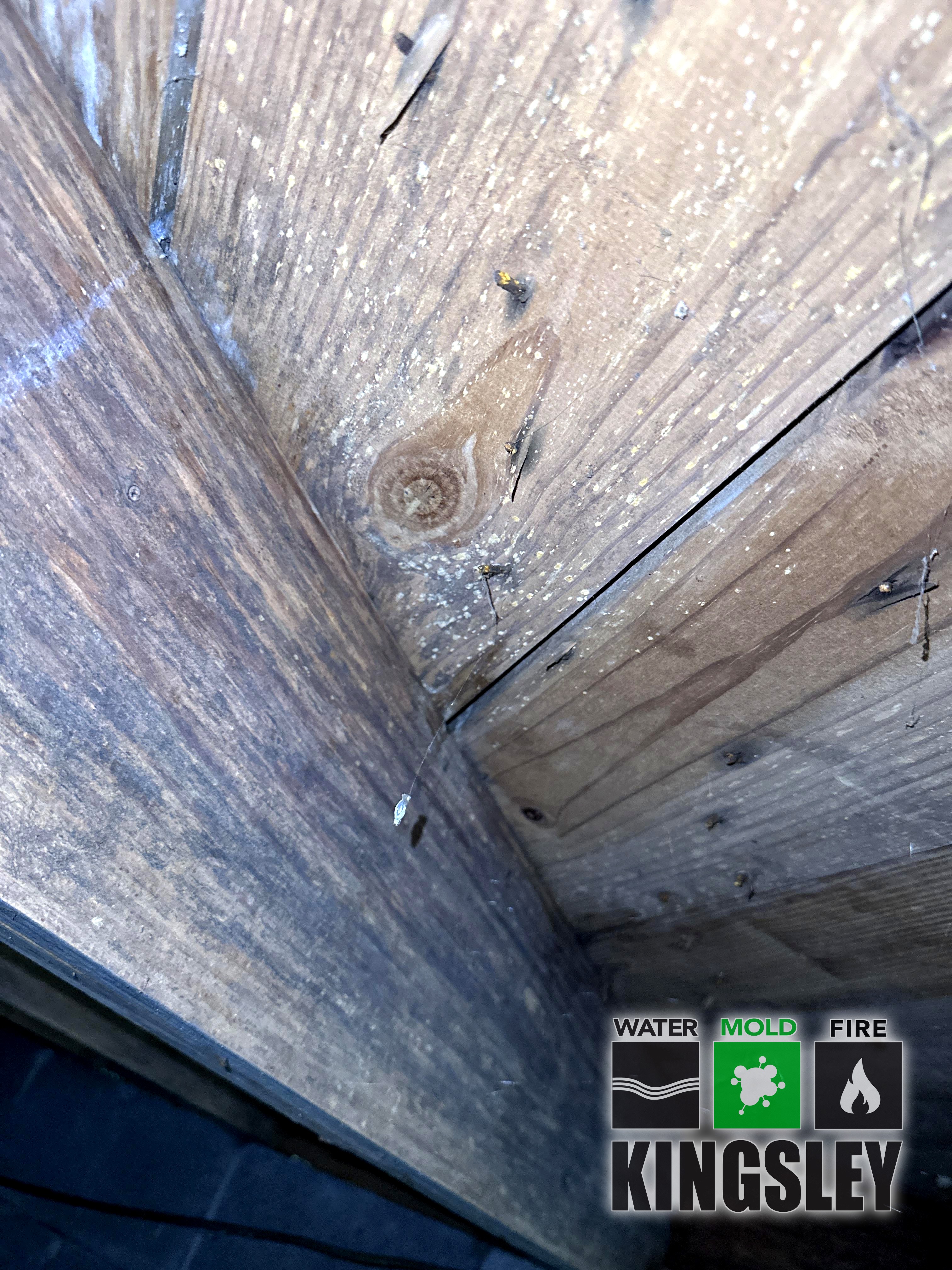
Kingsley water damage & Fire cleanup handled crawlspace mold inspection and wood cleanup in Columbia, SC after moisture-driven microbial growth on structural wood in the crawl. We began with a room-by-room and assembly-level inspection of the crawlspace under the home, documenting scattered white microbial spots on the underside of subfloor planks meeting a joist, with rusty nails and cobwebs in the corner. That visual and instrument check — not a guess from the hallway — defined where finishes had to open, what could stay, and where drying equipment had to aim. the home needed source control, selective removal of non-salvageable wet or contaminated material, and verified drying of what remained.
During mitigation we controlled the work zone so debris and moisture did not track into clean rooms. Where finishes blocked drying, we opened only the wet footprint shown by meters and the photo record. Contaminated or saturated materials were bagged and removed; salvageable framing and sheathing were cleaned and treated with an EPA-registered antimicrobial when staining or microbial growth warranted it. HEPA vacuuming and careful handling limited dust from demo. The unique on-site detail that guided this file was scattered white microbial spots on the underside of subfloor planks meeting a joist, with rusty nails and cobwebs in the corner — that condition stayed in the documentation so the homeowner and any follow-on trade could see exactly what drove the scope in Columbia.
IICRC water-damage and mold-remediation practice prioritizes stop-the-source, remove what cannot be dried in place, clean and treat remaining structures, then dry to target with measured air movement and dehumidification. We placed air movers and/or dehumidifiers to match the wet assembly, ran equipment under monitoring, and rechecked moisture within the first week of mitigation rather than leaving gear unattended for an open-ended stretch. Skipping that short monitoring window is how a straightforward wet call becomes secondary damage in adjoining cavities.
As readings stabilized and the work area met a clean, dry condition, we demobilized equipment and left the crawlspace under the home ready for any needed rebuild of finishes. Photo documentation of the mitigation state stayed with the claim file. If you notice musty odors, spotting on wood, or staining at cabinets, vents, or window sills in Columbia, have the moisture source and affected materials inspected before finishes hide the growth path.
IICRC water-damage and mold-remediation practice prioritizes stop the moisture source, remove what cannot be dried in place, clean and treat remaining structures, then dry to target with measured air movement and dehumidification. On this Columbia file we ran air movers and dehumidifiers against the wet assembly under monitoring and rechecked moisture on a 3–7 day drying calendar—never past about a week. Skipping that short window is how secondary damage or musty odor returns after finishes go back up.
As readings stabilized within that first-week window, equipment came out and the work area was left ready for any needed rebuild. Photo documentation of the mitigation state stayed with the job file. Helpful takeaway: If you notice musty odors, spotting on wood, or staining at cabinets, vents, or window sills in Columbia, have the moisture source and affected materials inspected before finishes hide the growth path.
Homeowners comparing crawlspace mold inspection and wood cleanup options in the Columbia area should expect a written moisture map, selective removal instead of full tear-out when meters allow, and a clear end point when materials hit dry goal—not an open-ended equipment rental. Kingsley water damage & Fire cleanup follows that measured approach so rebuild decisions rest on documented conditions rather than a calendar guess.
Elgin, SC
September 29, 2026
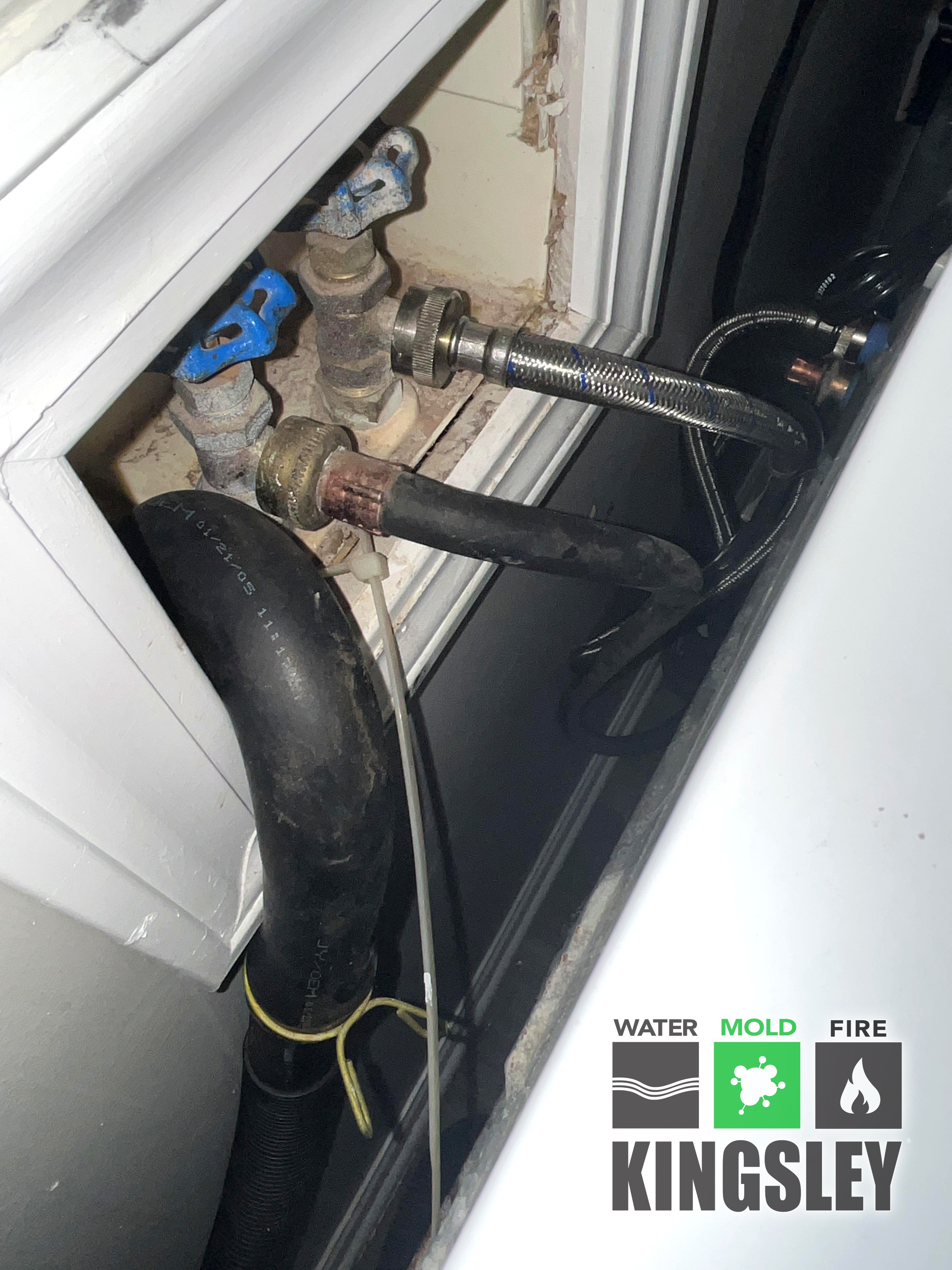
In Elgin, SC, Kingsley water damage & Fire cleanup performed crawlspace joist stain inspection and cleanup after documenting crawlspace joists with water staining during the initial condition check. That photo-backed condition check defined where finishes had to open, what could stay, and where drying equipment had to aim. The home needed source control, selective removal of non-salvageable wet or contaminated material, and verified drying of what remained in Elgin. Contents near the work path were shifted or protected before tools came out in this Elgin home.
During mitigation we controlled the work zone so debris and spores did not track into clean rooms. Where finishes blocked drying, we opened only the wet footprint shown by meters and the photo record. Non-salvageable saturated material was bagged and removed; salvageable framing and sheathing were cleaned and treated when microbial staining warranted it. HEPA vacuuming and careful handling limited dust from demo. The unique on-site detail that guided this Elgin file was crawlspace joists with water staining. We labeled the wet edge on the sketch so later visits matched day-one photos in Elgin.
IICRC water-damage and mold-remediation practice prioritizes stop the moisture source, remove what cannot be dried in place, clean and treat remaining structures with an EPA-registered antimicrobial when staining warranted it, then dry to target with measured air movement and dehumidification. We placed air movers and dehumidifiers to match the crawlspace bay, aimed airflow along the wet materials in the photo, and rechecked moisture on a 3–7 day drying calendar with overnight humidity checks—never past about a week. Skipping that short monitoring window is how a straightforward wet call becomes secondary damage or a musty return odor in Elgin.
As readings stabilized within that first-week window, we demobilized equipment and left the work area ready for any needed rebuild of finishes or insulation. Photo documentation of the mitigation state stayed with the job file for the Elgin property, including the same angle that showed crawlspace joists with water staining. Helpful takeaway: Dark staining on crawl joists in Elgin is a reason to map moisture before buttoning the bay back up with fresh vapor barrier.
Homeowners comparing crawlspace joist stain inspection and cleanup options in the Elgin area should expect a written moisture map, selective removal instead of full tear-out when meters allow, and a clear end point when materials hit dry goal—not an open-ended equipment rental. Kingsley water damage & Fire cleanup follows that measured approach so rebuild decisions rest on documented conditions rather than a calendar guess.
When rebuild starts, keep the dry-standard notes handy for flooring, cabinet, or insulation trades so no one closes a cavity that still reads wet. That handoff is part of finishing crawlspace joist stain inspection and cleanup correctly in Elgin after mitigation—not a separate sales pitch.
Throughout the Elgin job we kept communication practical: what was wet, what was removed, what was drying, and when meters said the assembly met goal. That plain record is what homeowners and trades use after crawlspace joist stain inspection and cleanup—not jargon and not an invented multi-week timeline.
Atlantic Beach, SC
September 28, 2026
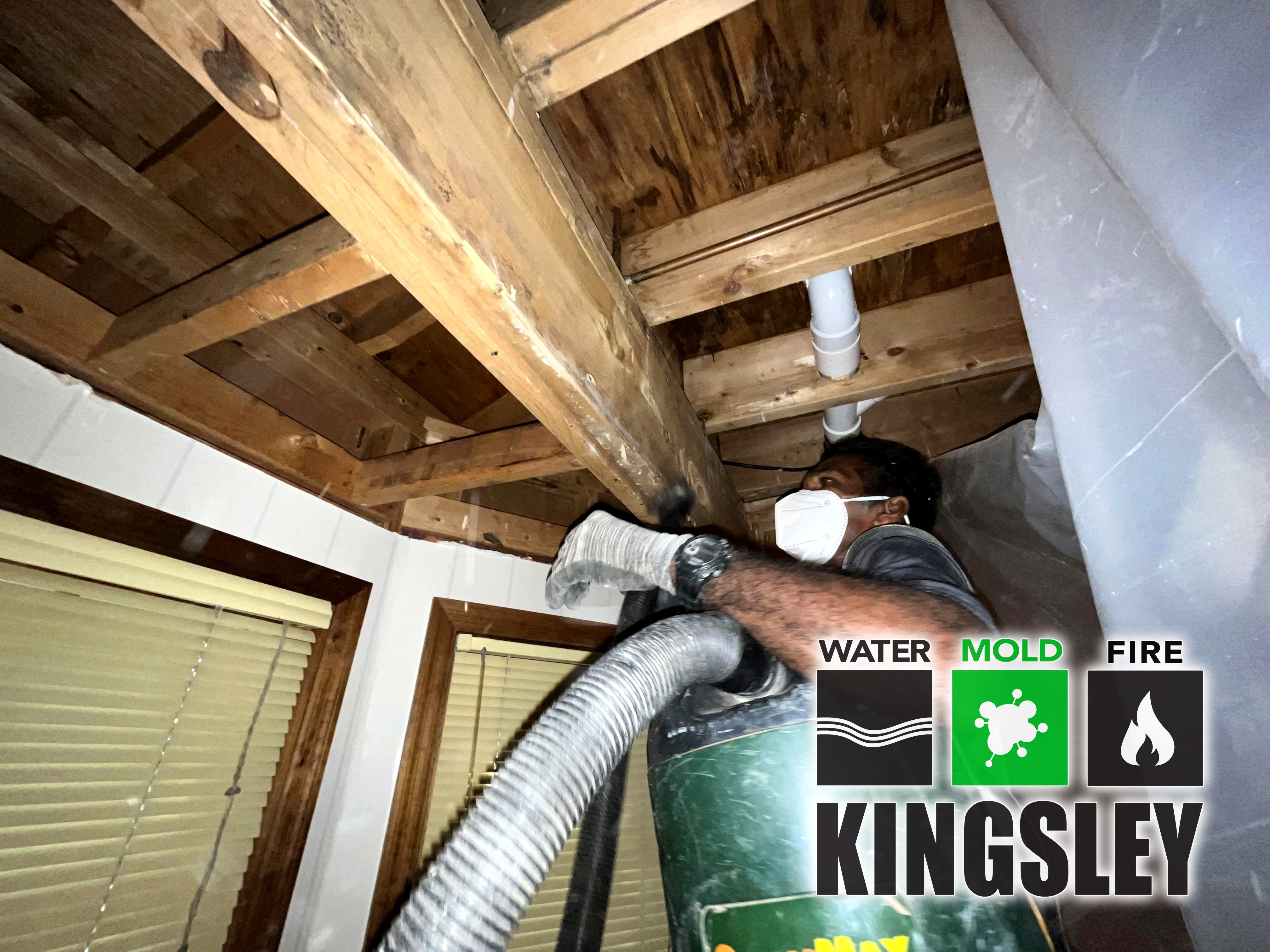
Kingsley water damage & Fire cleanup responded for crawlspace moisture mapping and cleanup in Atlantic Beach, SC and began with a photo-backed survey that captured crawlspace Moisture Mapping and Cleanup. That photo-backed condition check defined where finishes had to open, what could stay, and where drying equipment had to aim. The home needed source control, selective removal of non-salvageable wet or contaminated material, and verified drying of what remained in Atlantic Beach. The adjuster-ready photo set stayed with the file so rebuild trades could see the same framed assembly the crew saw.
During mitigation we controlled the work zone so debris did not track into clean rooms. Where finishes blocked drying, we opened only the wet footprint shown by meters and the photo record. Non-salvageable saturated material was bagged and removed; salvageable framing and sheathing were cleaned. HEPA vacuuming and careful handling limited dust from demo. The unique on-site detail that guided this Atlantic Beach file was crawlspace Moisture Mapping and Cleanup. We labeled the wet edge on the sketch so later visits matched day-one photos in Atlantic Beach.
IICRC water-damage practice prioritizes stop the moisture source, remove what cannot be dried in place, clean remaining structures, then dry to target with measured air movement and dehumidification. We placed air movers and dehumidifiers to match the crawlspace bay, aimed airflow along the wet materials in the photo, and rechecked moisture on a 3–7 day drying calendar with overnight humidity checks—never past about a week. Skipping that short monitoring window is how a straightforward wet call becomes secondary damage or a musty return odor in Atlantic Beach.
As readings stabilized within that first-week window, we demobilized equipment and left the work area ready for any needed rebuild of finishes or insulation. Photo documentation of the mitigation state stayed with the job file for the Atlantic Beach property, including the same angle that showed crawlspace Moisture Mapping and Cleanup. Helpful takeaway: If flooring feels soft, edges cup, or a stain keeps spreading in Atlantic Beach, stop walking the wet zone and request moisture mapping before new finishes go down.
Homeowners comparing crawlspace moisture mapping and cleanup options in the Atlantic Beach area should expect a written moisture map, selective removal instead of full tear-out when meters allow, and a clear end point when materials hit dry goal—not an open-ended equipment rental. Kingsley water damage & Fire cleanup follows that measured approach so rebuild decisions rest on documented conditions rather than a calendar guess.
When rebuild starts, keep the dry-standard notes handy for flooring, cabinet, or insulation trades so no one closes a cavity that still reads wet. That handoff is part of finishing crawlspace moisture mapping and cleanup correctly in Atlantic Beach after mitigation—not a separate sales pitch.
Throughout the Atlantic Beach job we kept communication practical: what was wet, what was removed, what was drying, and when meters said the assembly met goal. That plain record is what homeowners and trades use after crawlspace moisture mapping and cleanup—not jargon and not an invented multi-week timeline.
Forest Acres, SC
September 28, 2026
Kingsley water damage & Fire cleanup handled moisture mapping, containment as needed, and verified drying over a 3–7 day window in Forest Acres, SC.
Columbia, SC
September 28, 2026
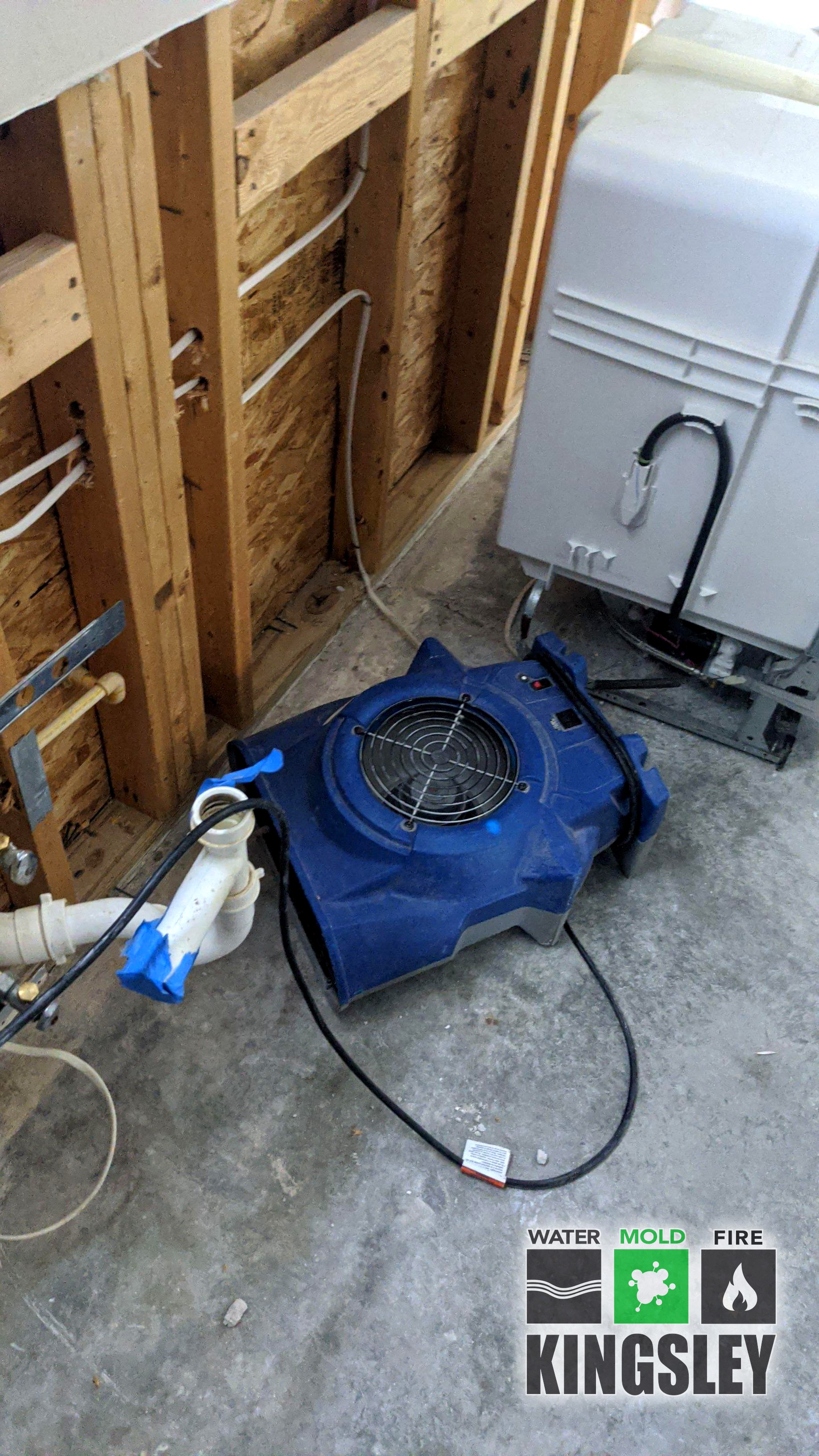
Kingsley water damage & Fire cleanup handled kitchen appliance leak demo and structural drying in Columbia, SC after appliance-area water loss that wet lower walls and flooring. We began with a room-by-room and assembly-level inspection of the kitchen / utility wet zone, documenting a blue centrifugal air mover on bare concrete aimed at flood-cut wall studs beside a pulled-out white appliance and taped-off white PVC drain. That visual and instrument check — not a guess from the hallway — defined where finishes had to open, what could stay, and where drying equipment had to aim. the home needed source control, selective removal of non-salvageable wet or contaminated material, and verified drying of what remained.
During mitigation we controlled the work zone so debris and moisture did not track into clean rooms. Where finishes blocked drying, we opened only the wet footprint shown by meters and the photo record. Contaminated or saturated materials were bagged and removed; salvageable framing and sheathing were cleaned and treated with an EPA-registered antimicrobial when staining or microbial growth warranted it. HEPA vacuuming and careful handling limited dust from demo. The unique on-site detail that guided this file was a blue centrifugal air mover on bare concrete aimed at flood-cut wall studs beside a pulled-out white appliance and taped-off white PVC drain — that condition stayed in the documentation so the homeowner and any follow-on trade could see exactly what drove the scope in Columbia.
IICRC water-damage and mold-remediation practice prioritizes stop-the-source, remove what cannot be dried in place, clean and treat remaining structures, then dry to target with measured air movement and dehumidification. We placed air movers and/or dehumidifiers to match the wet assembly, ran equipment under monitoring, and rechecked moisture within the first week of mitigation rather than leaving gear unattended for an open-ended stretch. Skipping that short monitoring window is how a straightforward wet call becomes secondary damage in adjoining cavities.
As readings stabilized and the work area met a clean, dry condition, we demobilized equipment and left the kitchen / utility wet zone ready for any needed rebuild of finishes. Photo documentation of the mitigation state stayed with the claim file. If you see standing water, elevated meter readings, or soft/stained flooring in Columbia, stop the source and start professional extraction and drying within the first days — delayed drying is what turns a contained wet zone into a larger structural call.
IICRC water-damage and mold-remediation practice prioritizes stop the moisture source, remove what cannot be dried in place, clean and treat remaining structures, then dry to target with measured air movement and dehumidification. On this Columbia file we ran air movers and dehumidifiers against the wet assembly under monitoring and rechecked moisture on a 3–7 day drying calendar—never past about a week. Skipping that short window is how secondary damage or musty odor returns after finishes go back up.
As readings stabilized within that first-week window, equipment came out and the work area was left ready for any needed rebuild. Photo documentation of the mitigation state stayed with the job file. Helpful takeaway: If you see standing water, elevated meter readings, or soft/stained flooring in Columbia, stop the source and start professional extraction and drying within the first days — delayed drying is what turns a contained wet zone into a larger structural call.
Homeowners comparing kitchen appliance leak demo and structural drying options in the Columbia area should expect a written moisture map, selective removal instead of full tear-out when meters allow, and a clear end point when materials hit dry goal—not an open-ended equipment rental. Kingsley water damage & Fire cleanup follows that measured approach so rebuild decisions rest on documented conditions rather than a calendar guess.
Elgin, SC
September 28, 2026
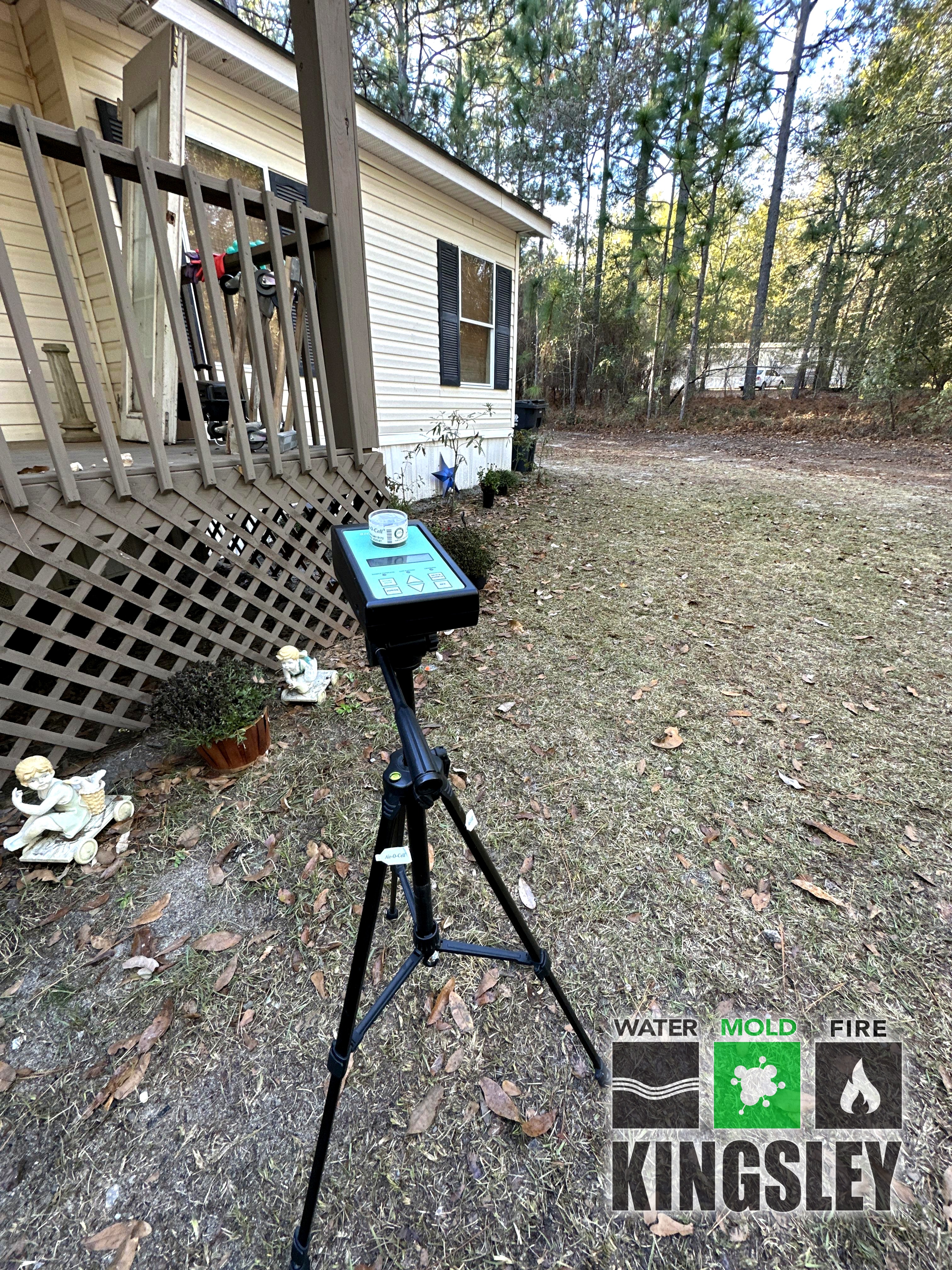
Kingsley water damage & Fire cleanup handled outdoor air sampling during mold inspection for a Elgin, SC property. The camera and meters guided scope from the start: air sampling pump on tripod with cassette outdoors. That setup—not a guess from the porch—defined where samples or meter points were pulled and what the homeowner file needed next. Outdoor control readings sat alongside indoor locations so any later remediation decision in Elgin could point back to the same photo and sample map. We labeled each draw location on the sketch so a second visit would match day-one photos.
During the visit we protected finished floors and kept equipment stable while pumps, cassettes, or meters did their timed work. We photographed labels and locations, noted nearby stain or odor clues, and avoided inventing Category or Class labels the documentation did not support. Where visible growth or water staining appeared next to the sample path, that observation stayed in the notes for the Elgin file without publishing lab numbers here. Contents near the work path were shifted or protected before tools came out.
IICRC-aligned inspection practice separates find-the-moisture-story from tear-out. If cleanup followed, it would still aim at source control, remove what cannot be saved, clean and treat remaining structures when staining warranted it, then dry to target on a 3–7 day monitoring calendar when materials were wet—never past about a week. This visit focused on documentation so any later drying window in Elgin would start from a clear map instead of an open-ended equipment guess.
We demobilized sampling or metering gear, left the property tidy aside from the documented test points, and filed photos with the job record. A short written summary of locations checked stayed with the Elgin file for the homeowner and any follow-on trade. Helpful takeaway: If indoor air feels musty or you see unexplained staining in Elgin, ask for a documented inspection with outdoor and indoor samples before anyone starts demo.
Homeowners comparing mold inspection or moisture-mapping options in the Elgin area should expect labeled sample or meter locations, outdoor controls when air is tested, and photo-backed notes—not a one-line checklist. Kingsley water damage & Fire cleanup keeps that trail so cleanup crews and rebuild trades can see what drove the recommendation without redoing the first walkthrough.
If cleanup is later approved, the same IICRC order applies: stop the source, open only the wet footprint, HEPA and clean what remains, and verify dry goals inside that first-week window. Starting from this inspection record is how Elgin homeowners avoid paying twice for the same unknowns. Throughout we kept communication practical—what was checked, what was photographed, and what still needed a meter before rebuild.
For this Elgin stop, the close-out standard stayed simple: meters at goal, photo set filed, and no equipment left running past the 3–7 day band.
For this Elgin inspection stop we also noted weather and HVAC status at the time of the draws so later readers understand why outdoor controls mattered that day. Labels on cassettes matched the photo board, and nothing in the marketing copy invents spore counts or species names that belong in the lab report only.
If remediation is approved later, the same 3–7 day drying discipline applies once materials are wet: monitor to goal, then demobilize—never an open-ended week-plus rental. Helpful takeaway: If indoor air feels musty or you see unexplained staining in Elgin, ask for a documented inspection with outdoor and indoor samples before anyone starts demo.
Murrells Inlet, SC
September 28, 2026
Kingsley water damage & Fire cleanup handled crawlspace joist mold inspection and cleanup for a Murrells Inlet, SC property. The camera and meters guided scope from the start: crawlspace Joist Mold Inspection and Cleanup. That photo-backed condition check defined where finishes had to open, what could stay, and where drying equipment had to aim. The home needed source control, selective removal of non-salvageable wet or contaminated material, and verified drying of what remained in Murrells Inlet. We avoided opening dry cavities that meters and the camera did not support on this Murrells Inlet stop.
During mitigation we controlled the work zone so debris and spores did not track into clean rooms. Where finishes blocked drying, we opened only the wet footprint shown by meters and the photo record. Non-salvageable saturated material was bagged and removed; salvageable framing and sheathing were cleaned and treated when microbial staining warranted it. HEPA vacuuming and careful handling limited dust from demo. The unique on-site detail that guided this Murrells Inlet file was crawlspace Joist Mold Inspection and Cleanup. We labeled the wet edge on the sketch so later visits matched day-one photos in Murrells Inlet.
IICRC water-damage and mold-remediation practice prioritizes stop the moisture source, remove what cannot be dried in place, clean and treat remaining structures with an EPA-registered antimicrobial when staining warranted it, then dry to target with measured air movement and dehumidification. We placed air movers and dehumidifiers to match the crawlspace bay, aimed airflow along the wet materials in the photo, and rechecked moisture on a 3–7 day drying calendar with overnight humidity checks—never past about a week. Skipping that short monitoring window is how a straightforward wet call becomes secondary damage or a musty return odor in Murrells Inlet.
As readings stabilized within that first-week window, we demobilized equipment and left the work area ready for any needed rebuild of finishes or insulation. Photo documentation of the mitigation state stayed with the job file for the Murrells Inlet property, including the same angle that showed crawlspace Joist Mold Inspection and Cleanup. Helpful takeaway: Dark staining on crawl joists in Murrells Inlet is a reason to map moisture before buttoning the bay back up with fresh vapor barrier.
Homeowners comparing crawlspace joist mold inspection and cleanup options in the Murrells Inlet area should expect a written moisture map, selective removal instead of full tear-out when meters allow, and a clear end point when materials hit dry goal—not an open-ended equipment rental. Kingsley water damage & Fire cleanup follows that measured approach so rebuild decisions rest on documented conditions rather than a calendar guess.
When rebuild starts, keep the dry-standard notes handy for flooring, cabinet, or insulation trades so no one closes a cavity that still reads wet. That handoff is part of finishing crawlspace joist mold inspection and cleanup correctly in Murrells Inlet after mitigation—not a separate sales pitch.
Throughout the Murrells Inlet job we kept communication practical: what was wet, what was removed, what was drying, and when meters said the assembly met goal. That plain record is what homeowners and trades use after crawlspace joist mold inspection and cleanup—not jargon and not an invented multi-week timeline.
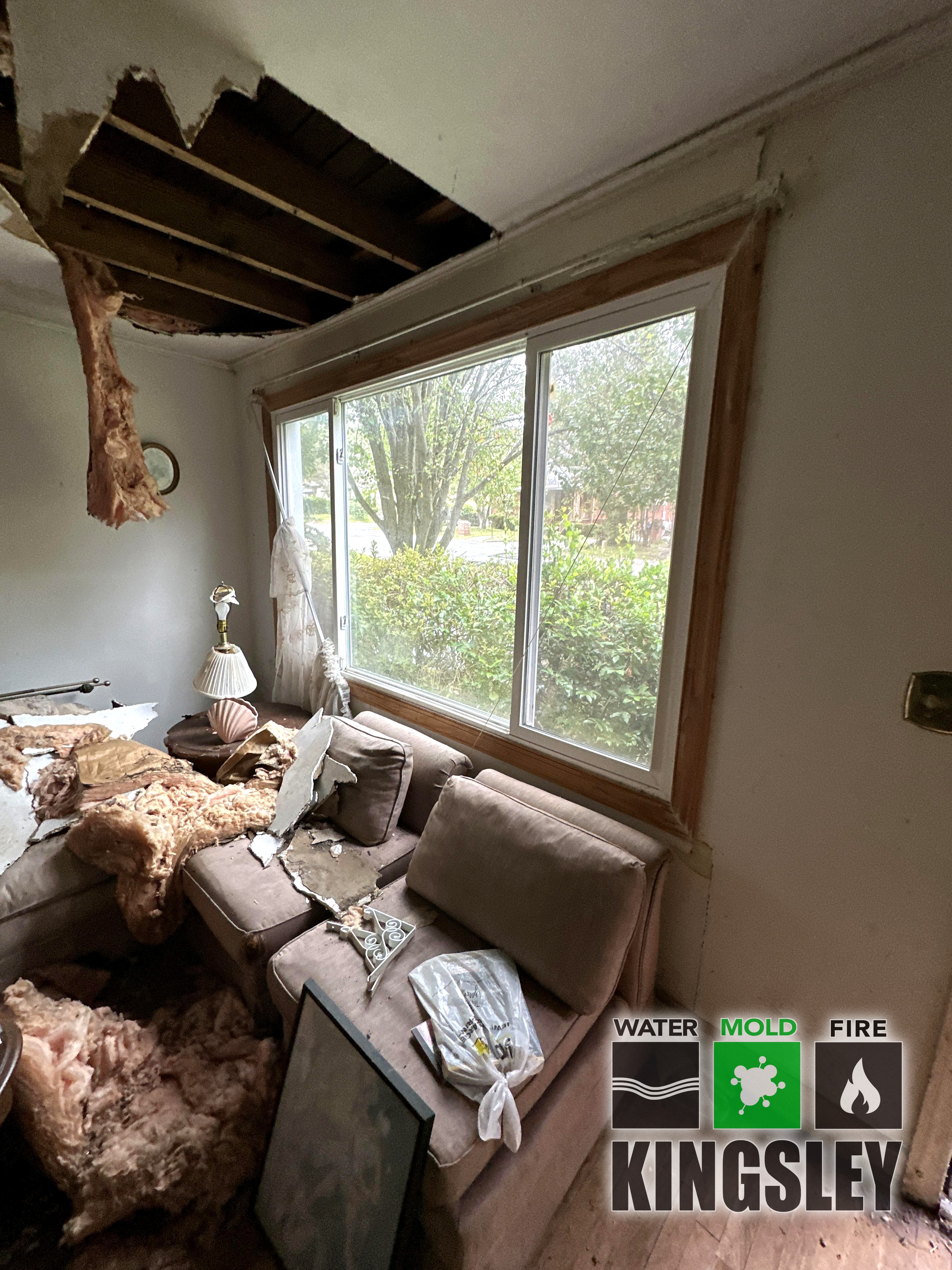
Ladies Island, SC
September 28, 2026
Kingsley water damage & Fire cleanup completed crawlspace joist mold inspection and cleanup in Ladies Island, SC. On arrival we walked the loss area and documented crawlspace Joist Mold Inspection and Cleanup. That photo-backed condition check defined where finishes had to open, what could stay, and where drying equipment had to aim. The home needed source control, selective removal of non-salvageable wet or contaminated material, and verified drying of what remained in Ladies Island. Contents near the work path were shifted or protected before tools came out in this Ladies Island home.
During mitigation we controlled the work zone so debris and spores did not track into clean rooms. Where finishes blocked drying, we opened only the wet footprint shown by meters and the photo record. Non-salvageable saturated material was bagged and removed; salvageable framing and sheathing were cleaned and treated when microbial staining warranted it. HEPA vacuuming and careful handling limited dust from demo. The unique on-site detail that guided this Ladies Island file was crawlspace Joist Mold Inspection and Cleanup. We avoided opening dry cavities that meters and the camera did not support on this Ladies Island stop.
IICRC water-damage and mold-remediation practice prioritizes stop the moisture source, remove what cannot be dried in place, clean and treat remaining structures with an EPA-registered antimicrobial when staining warranted it, then dry to target with measured air movement and dehumidification. We placed air movers and dehumidifiers to match the crawlspace bay, aimed airflow along the wet materials in the photo, and rechecked moisture on a 3–7 day drying calendar with overnight humidity checks—never past about a week. Skipping that short monitoring window is how a straightforward wet call becomes secondary damage or a musty return odor in Ladies Island.
As readings stabilized within that first-week window, we demobilized equipment and left the work area ready for any needed rebuild of finishes or insulation. Photo documentation of the mitigation state stayed with the job file for the Ladies Island property, including the same angle that showed crawlspace Joist Mold Inspection and Cleanup. Helpful takeaway: If you notice musty odors from floor registers or white spotting on crawl wood under a Ladies Island home, have the moisture source and joists inspected before new insulation hides the path.
Homeowners comparing crawlspace joist mold inspection and cleanup options in the Ladies Island area should expect a written moisture map, selective removal instead of full tear-out when meters allow, and a clear end point when materials hit dry goal—not an open-ended equipment rental. Kingsley water damage & Fire cleanup follows that measured approach so rebuild decisions rest on documented conditions rather than a calendar guess.
When rebuild starts, keep the dry-standard notes handy for flooring, cabinet, or insulation trades so no one closes a cavity that still reads wet. That handoff is part of finishing crawlspace joist mold inspection and cleanup correctly in Ladies Island after mitigation—not a separate sales pitch.
Throughout the Ladies Island job we kept communication practical: what was wet, what was removed, what was drying, and when meters said the assembly met goal. That plain record is what homeowners and trades use after crawlspace joist mold inspection and cleanup—not jargon and not an invented multi-week timeline.
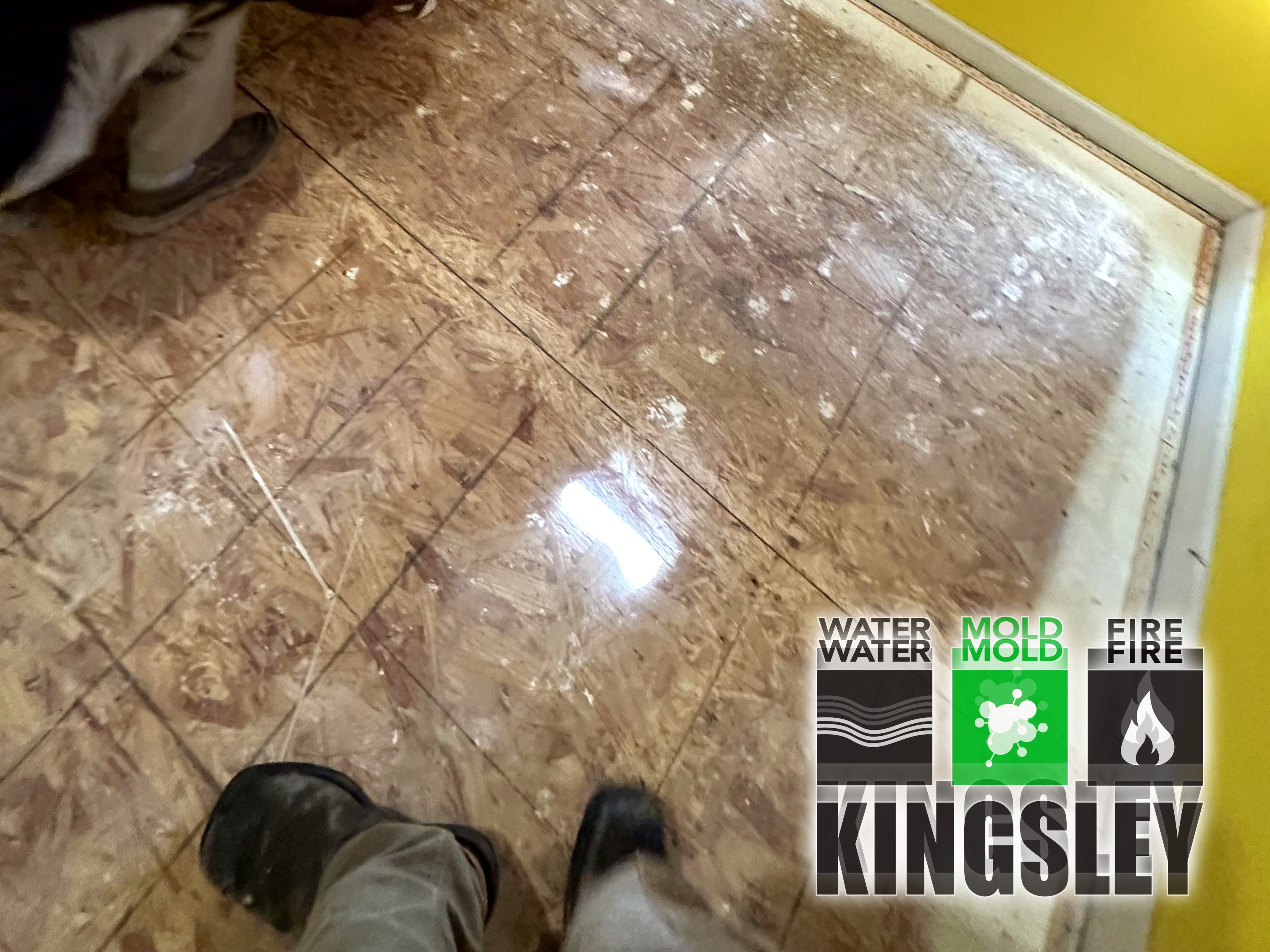
Myrtle Beach, SC
September 27, 2026
In Myrtle Beach, SC, Kingsley water damage & Fire cleanup performed crawlspace mold inspection and cleanup after documenting crawlspace Mold Inspection and Cleanup during the initial condition check. That photo-backed condition check defined where finishes had to open, what could stay, and where drying equipment had to aim. The home needed source control, selective removal of non-salvageable wet or contaminated material, and verified drying of what remained in Myrtle Beach. We labeled the wet edge on the sketch so later visits matched day-one photos in Myrtle Beach.
During mitigation we controlled the work zone so debris and spores did not track into clean rooms. Where finishes blocked drying, we opened only the wet footprint shown by meters and the photo record. Non-salvageable saturated material was bagged and removed; salvageable framing and sheathing were cleaned and treated when microbial staining warranted it. HEPA vacuuming and careful handling limited dust from demo. The unique on-site detail that guided this Myrtle Beach file was crawlspace Mold Inspection and Cleanup. The adjuster-ready photo set stayed with the file so rebuild trades could see the same framed assembly the crew saw.
IICRC water-damage and mold-remediation practice prioritizes stop the moisture source, remove what cannot be dried in place, clean and treat remaining structures with an EPA-registered antimicrobial when staining warranted it, then dry to target with measured air movement and dehumidification. We placed air movers and dehumidifiers to match the crawlspace bay, aimed airflow along the wet materials in the photo, and rechecked moisture on a 3–7 day drying calendar with overnight humidity checks—never past about a week. Skipping that short monitoring window is how a straightforward wet call becomes secondary damage or a musty return odor in Myrtle Beach.
As readings stabilized within that first-week window, we demobilized equipment and left the work area ready for any needed rebuild of finishes or insulation. Photo documentation of the mitigation state stayed with the job file for the Myrtle Beach property, including the same angle that showed crawlspace Mold Inspection and Cleanup. Helpful takeaway: Dark staining on crawl joists in Myrtle Beach is a reason to map moisture before buttoning the bay back up with fresh vapor barrier.
Homeowners comparing crawlspace mold inspection and cleanup options in the Myrtle Beach area should expect a written moisture map, selective removal instead of full tear-out when meters allow, and a clear end point when materials hit dry goal—not an open-ended equipment rental. Kingsley water damage & Fire cleanup follows that measured approach so rebuild decisions rest on documented conditions rather than a calendar guess.
When rebuild starts, keep the dry-standard notes handy for flooring, cabinet, or insulation trades so no one closes a cavity that still reads wet. That handoff is part of finishing crawlspace mold inspection and cleanup correctly in Myrtle Beach after mitigation—not a separate sales pitch.
Throughout the Myrtle Beach job we kept communication practical: what was wet, what was removed, what was drying, and when meters said the assembly met goal. That plain record is what homeowners and trades use after crawlspace mold inspection and cleanup—not jargon and not an invented multi-week timeline.
Forest Acres, SC
September 27, 2026
Kingsley water damage & Fire cleanup handled moisture mapping, containment as needed, and verified drying over a 3–7 day window in Forest Acres, SC.
Columbia, SC
September 27, 2026
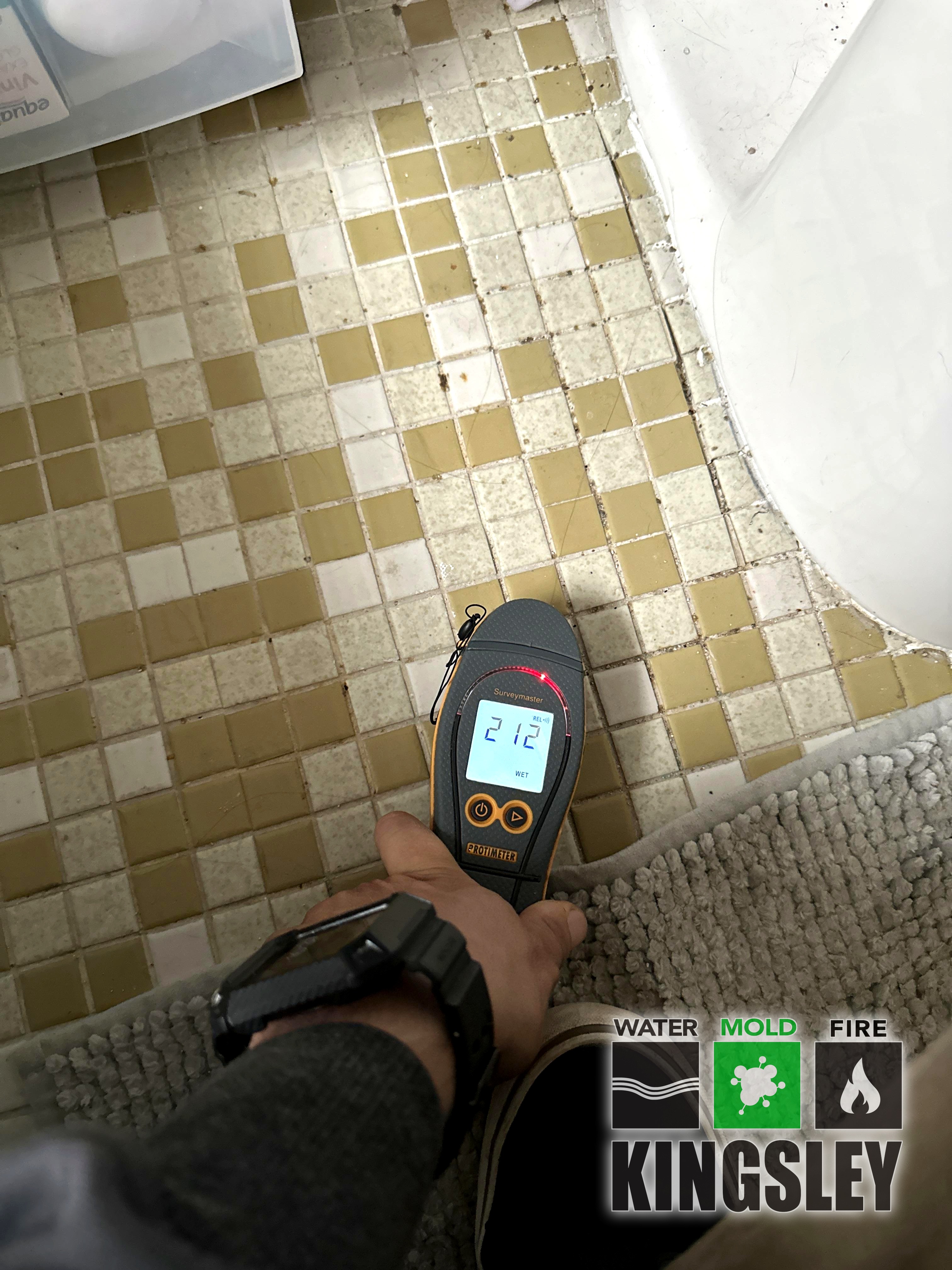
Kingsley water damage & Fire cleanup handled tile floor moisture mapping and water cleanup in Columbia, SC after hidden moisture under and around tile after a water event. We began with a room-by-room and assembly-level inspection of the tiled living area floor, documenting a handheld moisture meter pressed to tiled flooring with a clear elevated digital reading guiding the wet map. That visual and instrument check — not a guess from the hallway — defined where finishes had to open, what could stay, and where drying equipment had to aim. the home needed source control, selective removal of non-salvageable wet or contaminated material, and verified drying of what remained.
During mitigation we controlled the work zone so debris and moisture did not track into clean rooms. Where finishes blocked drying, we opened only the wet footprint shown by meters and the photo record. Contaminated or saturated materials were bagged and removed; salvageable framing and sheathing were cleaned and treated with an EPA-registered antimicrobial when staining or microbial growth warranted it. HEPA vacuuming and careful handling limited dust from demo. The unique on-site detail that guided this file was a handheld moisture meter pressed to tiled flooring with a clear elevated digital reading guiding the wet map — that condition stayed in the documentation so the homeowner and any follow-on trade could see exactly what drove the scope in Columbia.
IICRC water-damage and mold-remediation practice prioritizes stop-the-source, remove what cannot be dried in place, clean and treat remaining structures, then dry to target with measured air movement and dehumidification. We placed air movers and/or dehumidifiers to match the wet assembly, ran equipment under monitoring, and rechecked moisture within the first week of mitigation rather than leaving gear unattended for an open-ended stretch. Skipping that short monitoring window is how a straightforward wet call becomes secondary damage in adjoining cavities.
As readings stabilized and the work area met a clean, dry condition, we demobilized equipment and left the tiled living area floor ready for any needed rebuild of finishes. Photo documentation of the mitigation state stayed with the claim file. If you see standing water, elevated meter readings, or soft/stained flooring in Columbia, stop the source and start professional extraction and drying within the first days — delayed drying is what turns a contained wet zone into a larger structural call.
IICRC water-damage and mold-remediation practice prioritizes stop the moisture source, remove what cannot be dried in place, clean and treat remaining structures, then dry to target with measured air movement and dehumidification. On this Columbia file we ran air movers and dehumidifiers against the wet assembly under monitoring and rechecked moisture on a 3–7 day drying calendar—never past about a week. Skipping that short window is how secondary damage or musty odor returns after finishes go back up.
As readings stabilized within that first-week window, equipment came out and the work area was left ready for any needed rebuild. Photo documentation of the mitigation state stayed with the job file. Helpful takeaway: If you see standing water, elevated meter readings, or soft/stained flooring in Columbia, stop the source and start professional extraction and drying within the first days — delayed drying is what turns a contained wet zone into a larger structural call.
Homeowners comparing tile floor moisture mapping and water cleanup options in the Columbia area should expect a written moisture map, selective removal instead of full tear-out when meters allow, and a clear end point when materials hit dry goal—not an open-ended equipment rental. Kingsley water damage & Fire cleanup follows that measured approach so rebuild decisions rest on documented conditions rather than a calendar guess.
Elgin, SC
September 27, 2026
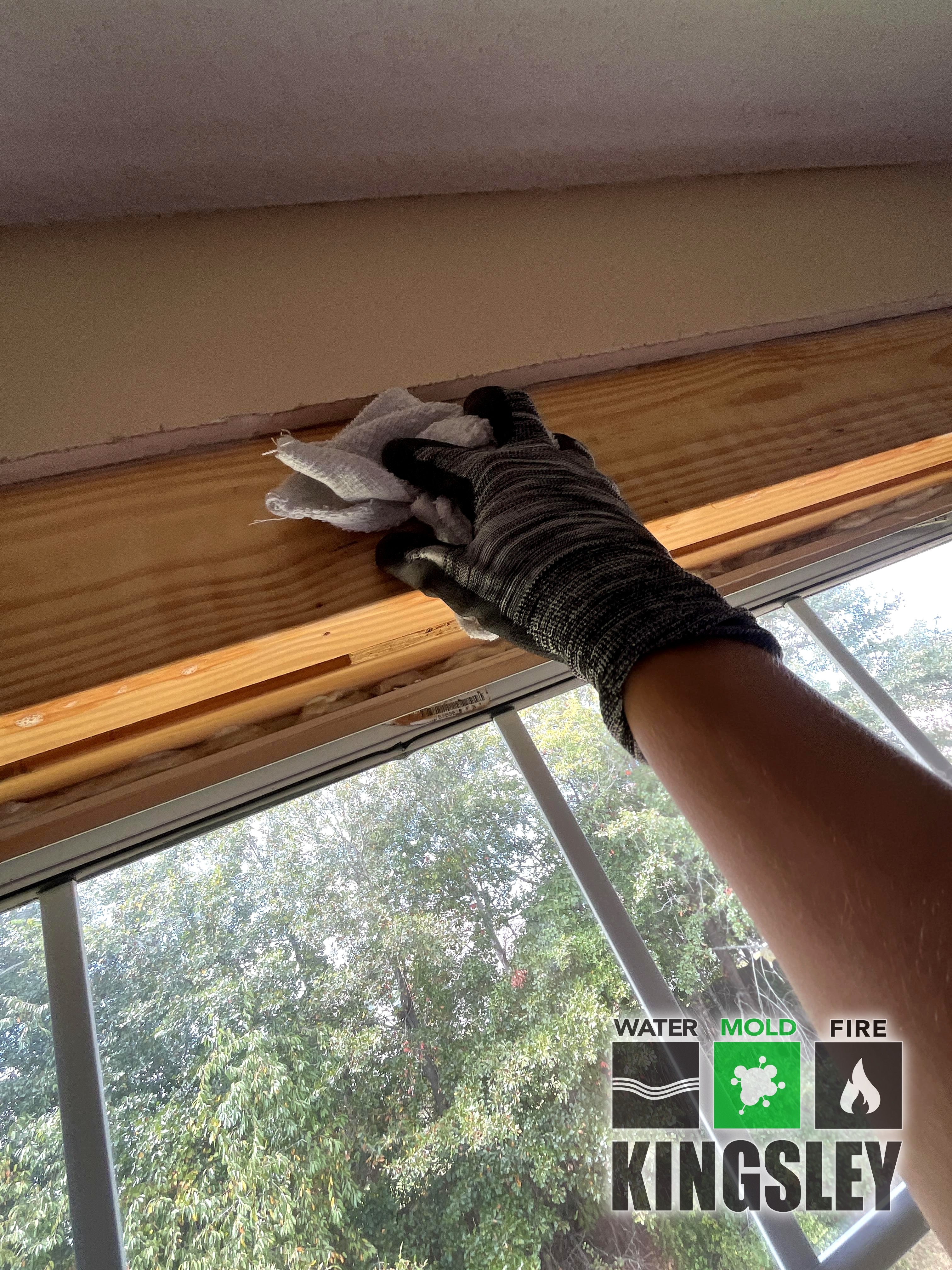
Kingsley water damage & Fire cleanup completed window frame mold cleanup and remediation in Elgin, SC. On arrival we walked the loss area and documented gloved technician cleaning window framing during mold remediation. That photo-backed condition check defined where finishes had to open, what could stay, and where drying equipment had to aim. The home needed source control, selective removal of non-salvageable wet or contaminated material, and verified drying of what remained in Elgin. We labeled the wet edge on the sketch so later visits matched day-one photos in Elgin.
During mitigation we controlled the work zone so debris and spores did not track into clean rooms. Where finishes blocked drying, we opened only the wet footprint shown by meters and the photo record. Non-salvageable saturated material was bagged and removed; salvageable framing and sheathing were cleaned and treated when microbial staining warranted it. HEPA vacuuming and careful handling limited dust from demo. The unique on-site detail that guided this Elgin file was gloved technician cleaning window framing during mold remediation. The adjuster-ready photo set stayed with the file so rebuild trades could see the same framed assembly the crew saw.
IICRC water-damage and mold-remediation practice prioritizes stop the moisture source, remove what cannot be dried in place, clean and treat remaining structures with an EPA-registered antimicrobial when staining warranted it, then dry to target with measured air movement and dehumidification. We placed air movers and dehumidifiers to match the wet assembly, aimed airflow along the wet materials in the photo, and rechecked moisture on a 3–7 day drying calendar with overnight humidity checks—never past about a week. Skipping that short monitoring window is how a straightforward wet call becomes secondary damage or a musty return odor in Elgin.
As readings stabilized within that first-week window, we demobilized equipment and left the work area ready for any needed rebuild of finishes or insulation. Photo documentation of the mitigation state stayed with the job file for the Elgin property, including the same angle that showed gloved technician cleaning window framing during mold remediation. Helpful takeaway: Musty odor that returns after a quick wipe in Elgin usually means moisture is still feeding the stain—map it before painting over it.
Homeowners comparing window frame mold cleanup and remediation options in the Elgin area should expect a written moisture map, selective removal instead of full tear-out when meters allow, and a clear end point when materials hit dry goal—not an open-ended equipment rental. Kingsley water damage & Fire cleanup follows that measured approach so rebuild decisions rest on documented conditions rather than a calendar guess.
When rebuild starts, keep the dry-standard notes handy for flooring, cabinet, or insulation trades so no one closes a cavity that still reads wet. That handoff is part of finishing window frame mold cleanup and remediation correctly in Elgin after mitigation—not a separate sales pitch.
Throughout the Elgin job we kept communication practical: what was wet, what was removed, what was drying, and when meters said the assembly met goal. That plain record is what homeowners and trades use after window frame mold cleanup and remediation—not jargon and not an invented multi-week timeline.
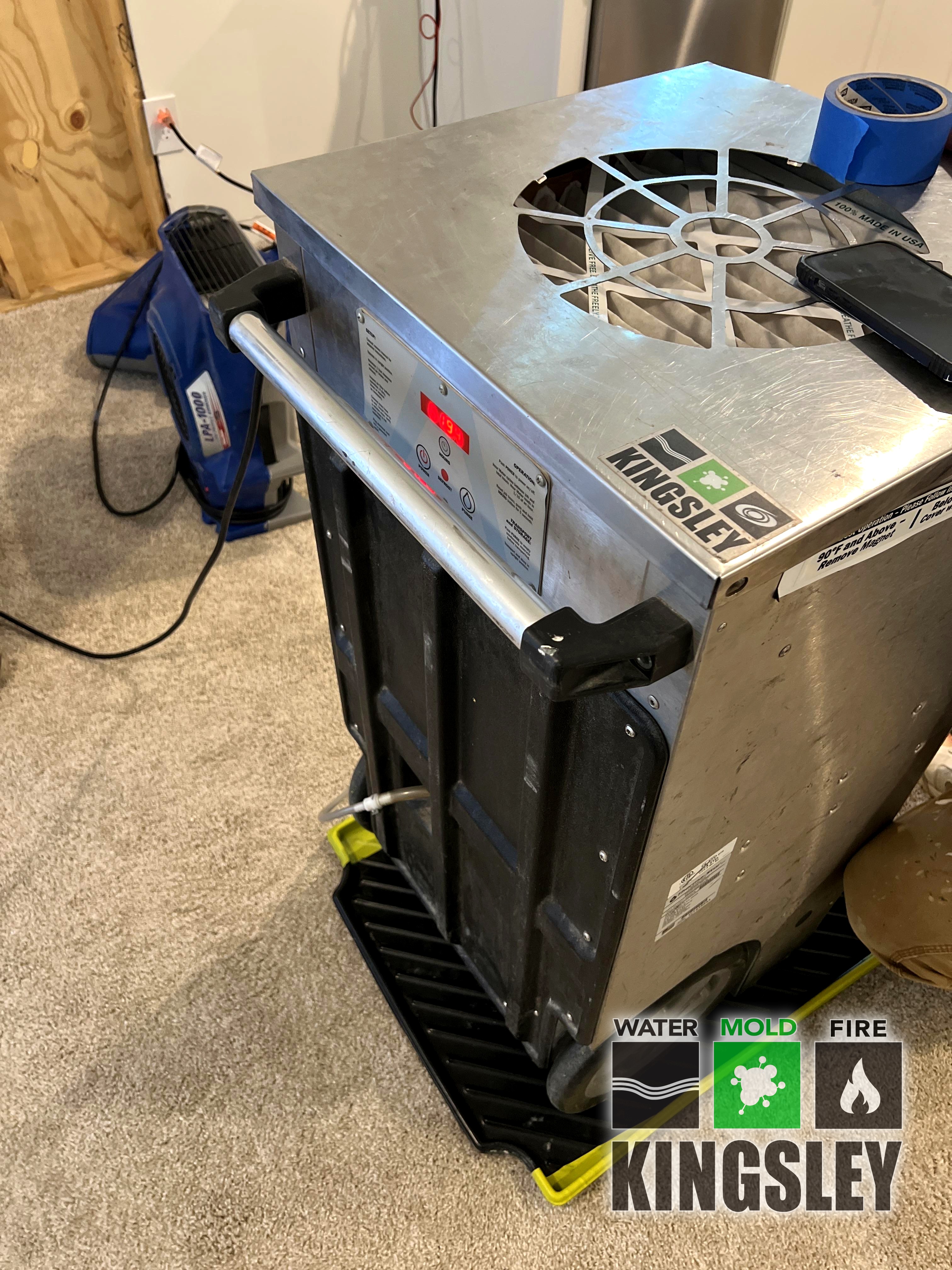
Myrtle Beach, SC
September 27, 2026
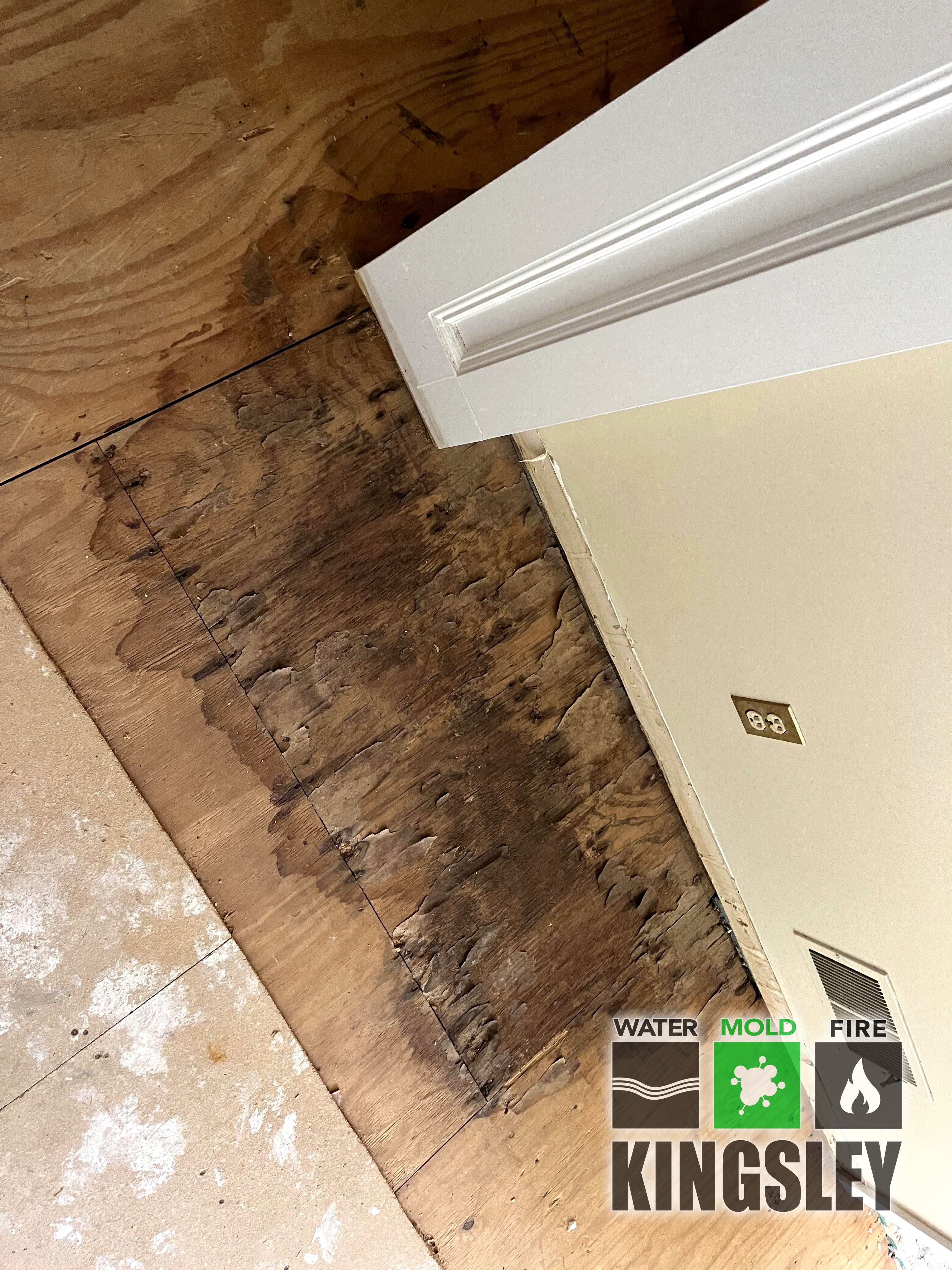
Kingsley water damage & Fire cleanup handled doorway subfloor water damage cleanup for a Myrtle Beach, SC property. The camera and meters guided scope from the start: doorway Subfloor Water Damage Cleanup. That photo-backed condition check defined where finishes had to open, what could stay, and where drying equipment had to aim. The home needed source control, selective removal of non-salvageable wet or contaminated material, and verified drying of what remained in Myrtle Beach. Quiet work windows were held where the household schedule required it, without stretching the drying calendar past about a week.
During mitigation we controlled the work zone so debris did not track into clean rooms. Where finishes blocked drying, we opened only the wet footprint shown by meters and the photo record. Non-salvageable saturated material was bagged and removed; salvageable framing and sheathing were cleaned. HEPA vacuuming and careful handling limited dust from demo. The unique on-site detail that guided this Myrtle Beach file was doorway Subfloor Water Damage Cleanup. The adjuster-ready photo set stayed with the file so rebuild trades could see the same framed assembly the crew saw.
IICRC water-damage practice prioritizes stop the moisture source, remove what cannot be dried in place, clean remaining structures, then dry to target with measured air movement and dehumidification. We placed air movers and dehumidifiers to match the wet assembly, aimed airflow along the wet materials in the photo, and rechecked moisture on a 3–7 day drying calendar with overnight humidity checks—never past about a week. Skipping that short monitoring window is how a straightforward wet call becomes secondary damage or a musty return odor in Myrtle Beach.
As readings stabilized within that first-week window, we demobilized equipment and left the work area ready for any needed rebuild of finishes or insulation. Photo documentation of the mitigation state stayed with the job file for the Myrtle Beach property, including the same angle that showed doorway Subfloor Water Damage Cleanup. Helpful takeaway: If flooring feels soft, edges cup, or a stain keeps spreading in Myrtle Beach, stop walking the wet zone and request moisture mapping before new finishes go down.
Homeowners comparing doorway subfloor water damage cleanup options in the Myrtle Beach area should expect a written moisture map, selective removal instead of full tear-out when meters allow, and a clear end point when materials hit dry goal—not an open-ended equipment rental. Kingsley water damage & Fire cleanup follows that measured approach so rebuild decisions rest on documented conditions rather than a calendar guess.
When rebuild starts, keep the dry-standard notes handy for flooring, cabinet, or insulation trades so no one closes a cavity that still reads wet. That handoff is part of finishing doorway subfloor water damage cleanup correctly in Myrtle Beach after mitigation—not a separate sales pitch.
Throughout the Myrtle Beach job we kept communication practical: what was wet, what was removed, what was drying, and when meters said the assembly met goal. That plain record is what homeowners and trades use after doorway subfloor water damage cleanup—not jargon and not an invented multi-week timeline.
Ladies Island, SC
September 27, 2026
Kingsley water damage & Fire cleanup handled extraction, unsalvable finish removal as needed, and structural drying over a 3–7 day window in Ladies Island, SC.
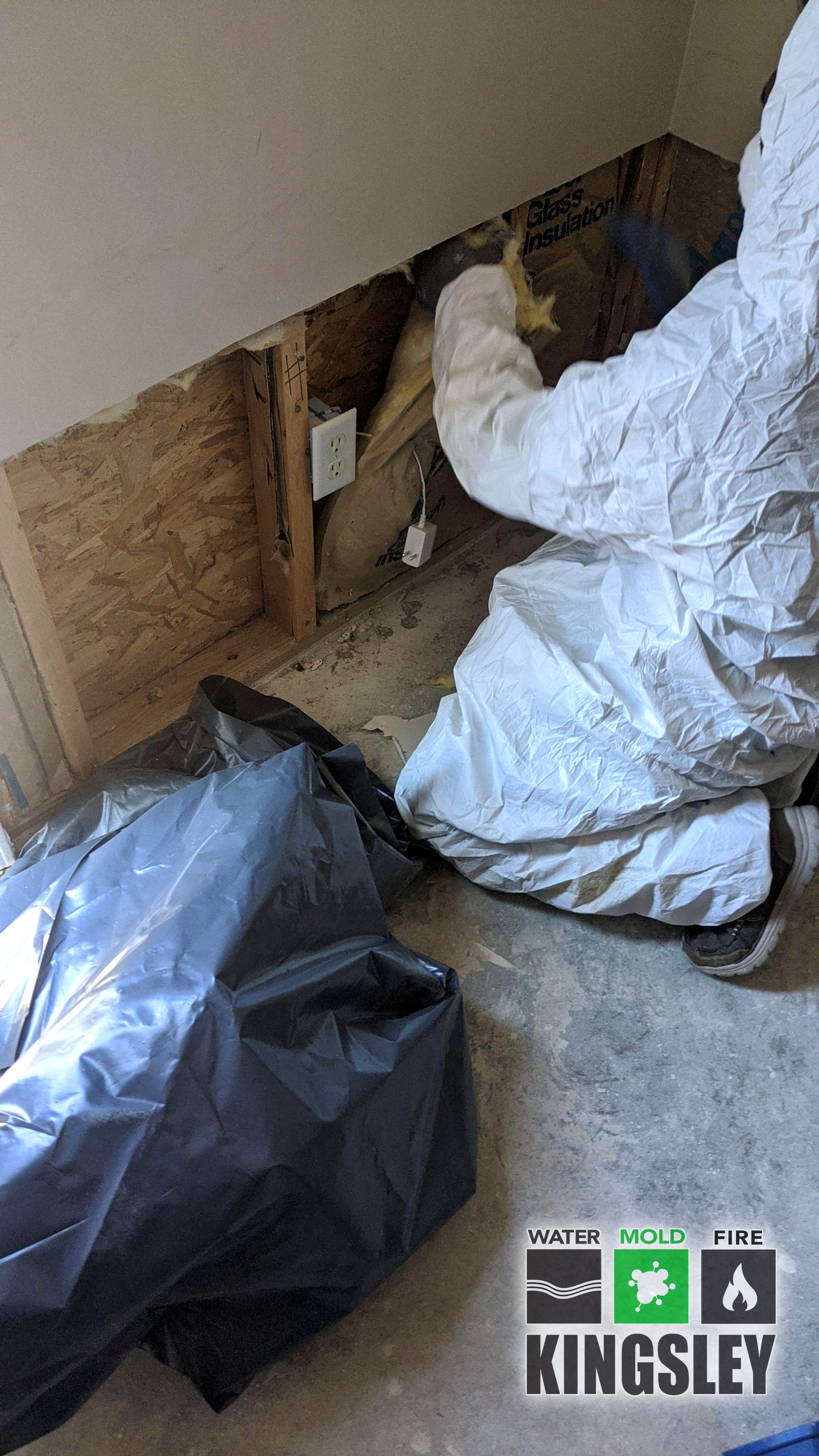
Ladies Island, SC
September 27, 2026
Kingsley water damage & Fire cleanup completed doorway subfloor water damage cleanup in Ladies Island, SC. On arrival we walked the loss area and documented doorway Subfloor Water Damage Cleanup. That photo-backed condition check defined where finishes had to open, what could stay, and where drying equipment had to aim. The home needed source control, selective removal of non-salvageable wet or contaminated material, and verified drying of what remained in Ladies Island. Contents near the work path were shifted or protected before tools came out in this Ladies Island home.
During mitigation we controlled the work zone so debris did not track into clean rooms. Where finishes blocked drying, we opened only the wet footprint shown by meters and the photo record. Non-salvageable saturated material was bagged and removed; salvageable framing and sheathing were cleaned. HEPA vacuuming and careful handling limited dust from demo. The unique on-site detail that guided this Ladies Island file was doorway Subfloor Water Damage Cleanup. We labeled the wet edge on the sketch so later visits matched day-one photos in Ladies Island.
IICRC water-damage practice prioritizes stop the moisture source, remove what cannot be dried in place, clean remaining structures, then dry to target with measured air movement and dehumidification. We placed air movers and dehumidifiers to match the wet assembly, aimed airflow along the wet materials in the photo, and rechecked moisture on a 3–7 day drying calendar with overnight humidity checks—never past about a week. Skipping that short monitoring window is how a straightforward wet call becomes secondary damage or a musty return odor in Ladies Island.
As readings stabilized within that first-week window, we demobilized equipment and left the work area ready for any needed rebuild of finishes or insulation. Photo documentation of the mitigation state stayed with the job file for the Ladies Island property, including the same angle that showed doorway Subfloor Water Damage Cleanup. Helpful takeaway: If flooring feels soft, edges cup, or a stain keeps spreading in Ladies Island, stop walking the wet zone and request moisture mapping before new finishes go down.
Homeowners comparing doorway subfloor water damage cleanup options in the Ladies Island area should expect a written moisture map, selective removal instead of full tear-out when meters allow, and a clear end point when materials hit dry goal—not an open-ended equipment rental. Kingsley water damage & Fire cleanup follows that measured approach so rebuild decisions rest on documented conditions rather than a calendar guess.
When rebuild starts, keep the dry-standard notes handy for flooring, cabinet, or insulation trades so no one closes a cavity that still reads wet. That handoff is part of finishing doorway subfloor water damage cleanup correctly in Ladies Island after mitigation—not a separate sales pitch.
Throughout the Ladies Island job we kept communication practical: what was wet, what was removed, what was drying, and when meters said the assembly met goal. That plain record is what homeowners and trades use after doorway subfloor water damage cleanup—not jargon and not an invented multi-week timeline.
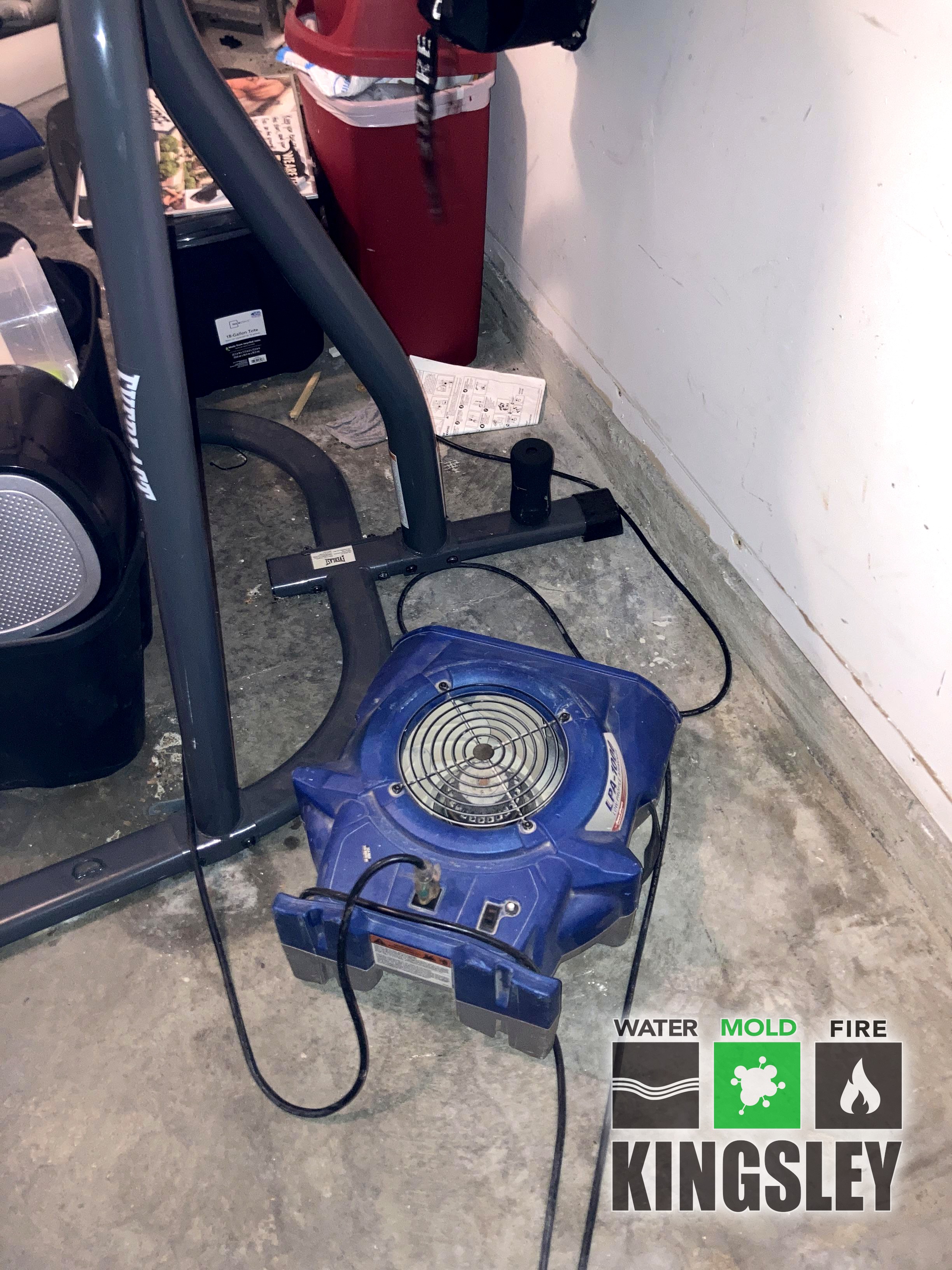
Moncks Corner, SC
September 26, 2026
Kingsley water damage & Fire cleanup handled tile floor moisture mapping and water cleanup for a Moncks Corner, SC property. The camera and meters guided scope from the start: tile Floor Moisture Mapping and Water Cleanup. That photo-backed condition check defined where finishes had to open, what could stay, and where drying equipment had to aim. The home needed source control, selective removal of non-salvageable wet or contaminated material, and verified drying of what remained in Moncks Corner. We avoided opening dry cavities that meters and the camera did not support on this Moncks Corner stop.
During mitigation we controlled the work zone so debris did not track into clean rooms. Where finishes blocked drying, we opened only the wet footprint shown by meters and the photo record. Non-salvageable saturated material was bagged and removed; salvageable framing and sheathing were cleaned. HEPA vacuuming and careful handling limited dust from demo. The unique on-site detail that guided this Moncks Corner file was tile Floor Moisture Mapping and Water Cleanup. Contents near the work path were shifted or protected before tools came out in this Moncks Corner home.
IICRC water-damage practice prioritizes stop the moisture source, remove what cannot be dried in place, clean remaining structures, then dry to target with measured air movement and dehumidification. We placed air movers and dehumidifiers to match the wet assembly, aimed airflow along the wet materials in the photo, and rechecked moisture on a 3–7 day drying calendar with overnight humidity checks—never past about a week. Skipping that short monitoring window is how a straightforward wet call becomes secondary damage or a musty return odor in Moncks Corner.
As readings stabilized within that first-week window, we demobilized equipment and left the work area ready for any needed rebuild of finishes or insulation. Photo documentation of the mitigation state stayed with the job file for the Moncks Corner property, including the same angle that showed tile Floor Moisture Mapping and Water Cleanup. Helpful takeaway: If flooring feels soft, edges cup, or a stain keeps spreading in Moncks Corner, stop walking the wet zone and request moisture mapping before new finishes go down.
Homeowners comparing tile floor moisture mapping and water cleanup options in the Moncks Corner area should expect a written moisture map, selective removal instead of full tear-out when meters allow, and a clear end point when materials hit dry goal—not an open-ended equipment rental. Kingsley water damage & Fire cleanup follows that measured approach so rebuild decisions rest on documented conditions rather than a calendar guess.
When rebuild starts, keep the dry-standard notes handy for flooring, cabinet, or insulation trades so no one closes a cavity that still reads wet. That handoff is part of finishing tile floor moisture mapping and water cleanup correctly in Moncks Corner after mitigation—not a separate sales pitch.
Throughout the Moncks Corner job we kept communication practical: what was wet, what was removed, what was drying, and when meters said the assembly met goal. That plain record is what homeowners and trades use after tile floor moisture mapping and water cleanup—not jargon and not an invented multi-week timeline.
Johnsonville, SC
September 26, 2026
Kingsley water damage & Fire cleanup handled moisture mapping, containment as needed, and verified drying over a 3–7 day window in Johnsonville, SC.
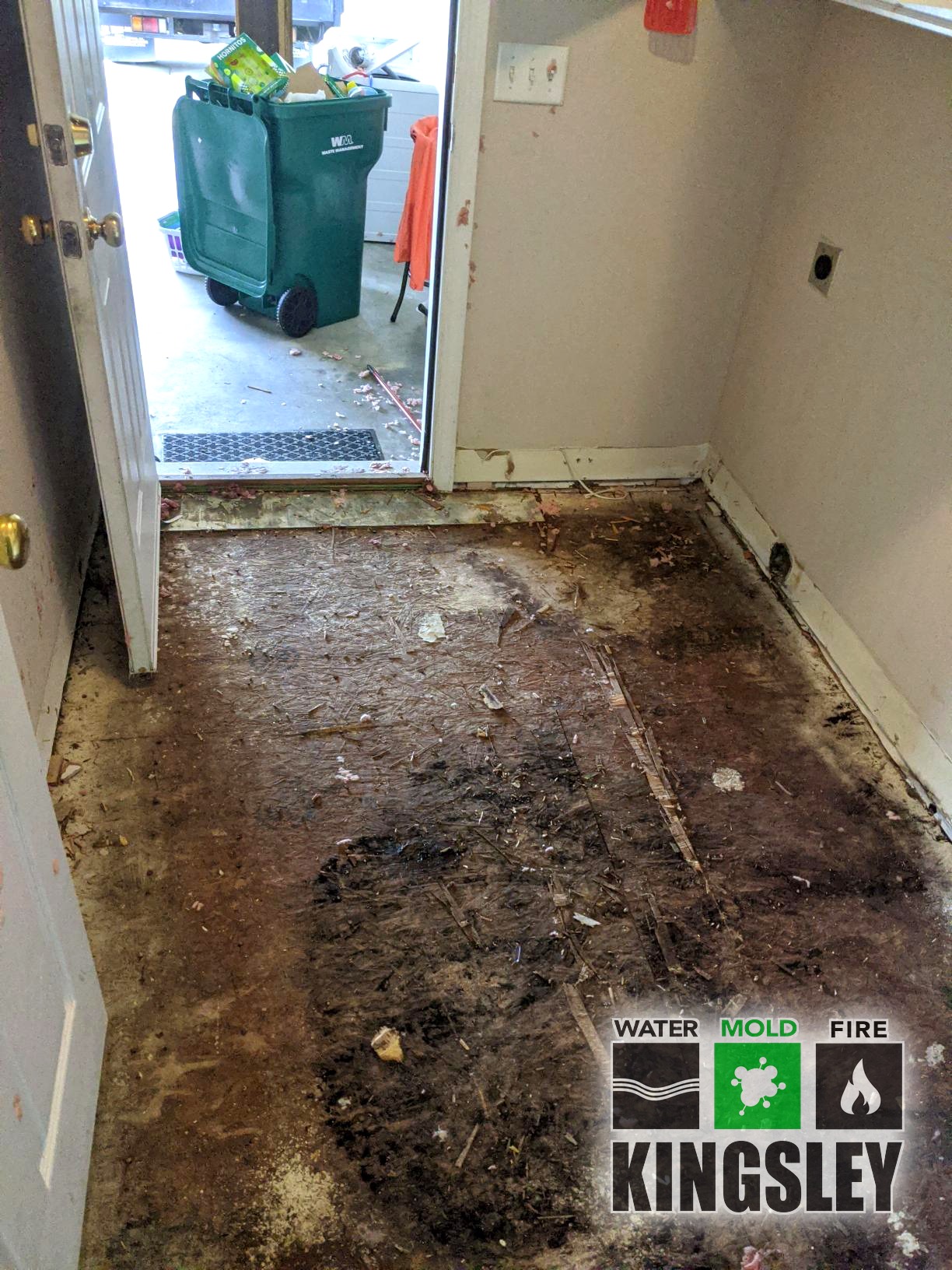
Ridgeway, SC
September 26, 2026
Kingsley water damage & Fire cleanup performed water damage restoration in Ridgeway, SC after a busted hot water heater left standing water across living areas and into the AdvanTech subfloor. Extraction came first — we pulled free water until extractor tanks were emptied twelve times — then demolition continued with stabilization equipment already running so ambient conditions would not worsen while finishes came out. Demolition and stabilization ran about six days within the first week: carpet out of hallways and bedrooms; vinyl and underlayment from laundry, kitchen, and dining; hardwoods from the living room; affected garage walls and ceiling; flood cuts on exterior walls; and cabinets where flooring ran underneath. AdvanTech is water-resistant under normal use, but once moisture soaks through the panel it is far harder to dry than standard plywood or OSB. Broad dark staining and swollen strand texture across the open subfloor are exactly what that saturation looks like after prolonged exposure.
Heat inside the house sat in the 80s during demo, and we avoided AC so contamination would not spread through the ductwork; short cool-down breaks slowed the work but kept the crew safe. Brian, Teddy, and Van handled the heavy demo and equipment days, including bringing additional power distribution and drying gear when subfloor and crawlspace moisture content still read over forty percent. We set containment between laundry, kitchen, and garage so haul-out through the garage doorway moved wet debris out of the living space quickly. HEPA vacuuming and damp wiping of framing and subfloor followed each demo pass, and we treated surfaces with an EPA-registered antimicrobial where microbial growth had been found in kitchen and living-room areas.
Drying strategy had to account for both the engineered subfloor and the crawlspace below. Crawlspace contamination levels ruled out open air movement under the house even after cleaning, so we cut a hole in the living-room subfloor and forced warm, dry air in with lay-flat ducting — two movers on low into the crawlspace, two on high exhausting out — to hold negative pressure while promoting drying from both sides of the assembly. That approach dried the AdvanTech without dragging crawlspace air into the living space. When outdoor grains (GPP) dropped unusually low, we switched to a desiccant dehumidifier processing outside air at roughly 900 CFM, because psychrometric readings showed that was the most effective way to drop indoor moisture against the remaining wet volume per IICRC S500 air-exchange guidance.
We recalculated dehumidification load as rooms came dry. With garage, attic, bedroom two, and the master closet at goal, containment tightened the remaining affected volume and a standard calculation of about 361 PPD guided how many refrigerant units stayed online. We relocated air movers off dry areas onto still-wet subfloor and wall plates. Crawlspace joists and the underside of the subfloor were hand-wiped with cleaning solution, and a desiccant was staged to keep processing capacity matched to the still-wet assembly. Monitoring continued until moisture content in the AdvanTech and framing met drying goals — not until a calendar date looked convenient. Closing over a panel that still reads high is how water-heater losses come back as cupping, odor, or mold under the new floor.
Throughout the project we documented the open-subfloor stage so the homeowner and rebuild trades could see why the finish layer could not stay. The garage doorway and debris handling reflect that haul-out and cleanup phase: remove what cannot be saved, clean and treat what remains, then dry to industry standards before reconstruction. For homes on crawlspaces in Ridgeway, a water heater rupture is rarely just a floor swap — extraction, containment, HEPA cleaning, and psychrometric drying of difficult engineered subfloor are what make the rebuild last. Brian, Teddy, and Van traveled substantial distances on multi-hour work days to keep demo and equipment adjustments on schedule during that first week of mitigation.
When the subfloor and framing reached a clean, dry condition, we left the room ready for new finish flooring on a sound substrate. No shortcuts on the drying window in Ridgeway; that open engineered panel is progress, not a setback, and it protects the next trade from building on wet wood. If a water heater leaks onto AdvanTech or OSB, do not assume the panel is fine because it is marketed as water-resistant — once saturation soaks through, plan for full structural drying before new flooring goes down.
Eastover, SC
September 26, 2026
Kingsley water damage & Fire cleanup handled moisture mapping, containment as needed, and verified drying over a 3–7 day window in Eastover, SC.
Lexington, SC
September 26, 2026
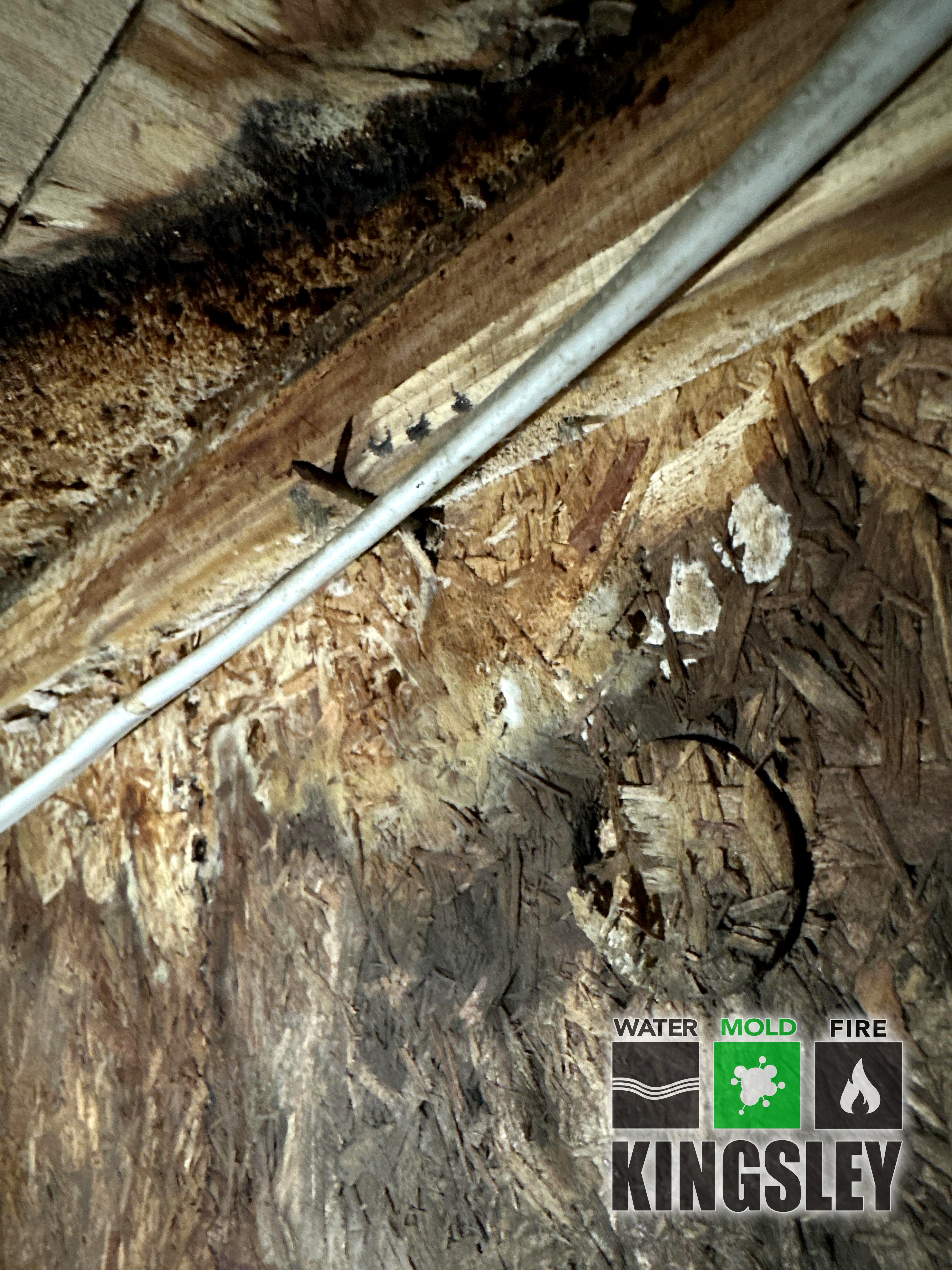
Kingsley water damage & Fire cleanup completed crawlspace joist rot and fungal damage cleanup in Lexington, SC after long-term moisture left rot and fungal growth on framing. On arrival we inspected the crawlspace structural bay and recorded what the camera shows clearly: advanced dark staining across the OSB subfloor underside, white fuzzy fungal colonies on the sheathing, and crumbly wood fiber on the joist face. A white electrical cable stapled along the joist crossed the wet zone, so the crew worked carefully around utilities while mapping how far moisture had traveled from a dark, saturated circular cutout in the OSB. That photo-backed condition check—not a guess from the hallway—set the wet map and the scope for selective cleanup, antimicrobial treatment where needed, and verified drying.
During mitigation we controlled the work zone so debris and spores did not track into clean living space above the crawl. Where insulation or vapor barrier blocked drying, we opened only the wet footprint shown by meters and the photo record. Non-salvageable saturated or contaminated OSB and soft framing pieces were bagged and removed; salvageable joist faces and sheathing were cleaned and treated with an EPA-registered antimicrobial when staining or microbial growth warranted it. HEPA vacuuming and careful wipe-down limited dust from demo around the joist bay and the cutout. The unique on-site detail that guided this Lexington file was the combination of black moisture staining, white fungal patches on the OSB, and soft wood on the joist next to that opening—conditions left in the documentation so the homeowner and any follow-on trade could see exactly what drove the scope.
IICRC water-damage and mold-remediation practice prioritizes stop the moisture source, remove what cannot be dried in place, clean and treat remaining structures, then dry to target with measured air movement and dehumidification. We placed air movers and dehumidifiers to match the wet crawl assembly, aimed airflow along the stained joist and OSB underside, and rechecked moisture on a 3–7 day drying calendar with overnight humidity checks—never past about a week. Quiet work windows were held where the home required it. Skipping that short monitoring window is how a straightforward wet crawl call becomes secondary damage in adjoining cavities or a musty return odor under the floor boards.
As readings stabilized and the work area met a clean, dry condition within that first-week window, we demobilized equipment and left the crawlspace structural bay ready for any needed rebuild of finishes or insulation. Photo documentation of the mitigation state stayed with the job file for the Lexington property. Helpful takeaway: if you notice musty odors from floor registers, white spotting on crawl wood, or dark staining around pipe or duct cutouts under a Lexington home, have the moisture source and affected joists inspected before new insulation or vapor barrier hides the growth path.
Homeowners comparing crawlspace mold cleanup options in the Lexington area should expect a written moisture map, selective removal instead of full tear-out when meters allow, and a clear end point when materials hit dry goal—not an open-ended equipment rental. Kingsley water damage & Fire cleanup follows that measured approach so rebuild decisions rest on documented conditions rather than a calendar guess.
West Columbia, SC
September 26, 2026
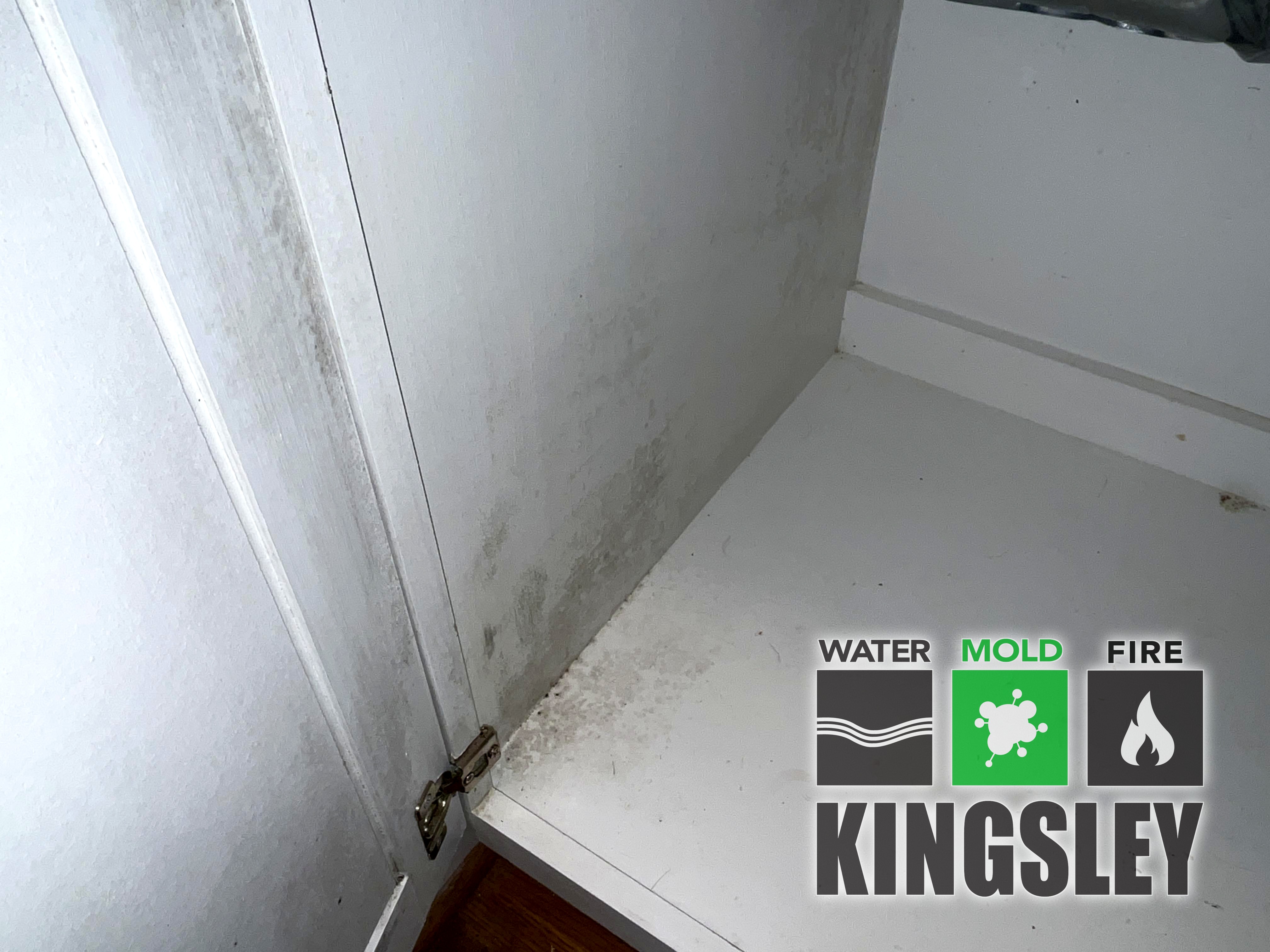
In West Columbia, SC, Kingsley water damage & Fire cleanup performed vanity cabinet mold remediation after documenting mold growth inside vanity cabinet corner during remediation during the initial condition check. That photo-backed condition check defined where finishes had to open, what could stay, and where drying equipment had to aim. The home needed source control, selective removal of non-salvageable wet or contaminated material, and verified drying of what remained in West Columbia. Quiet work windows were held where the household schedule required it, without stretching the drying calendar past about a week.
During mitigation we controlled the work zone so debris and spores did not track into clean rooms. Where finishes blocked drying, we opened only the wet footprint shown by meters and the photo record. Non-salvageable saturated material was bagged and removed; salvageable framing and sheathing were cleaned and treated when microbial staining warranted it. HEPA vacuuming and careful handling limited dust from demo. The unique on-site detail that guided this West Columbia file was mold growth inside vanity cabinet corner during remediation. We avoided opening dry cavities that meters and the camera did not support on this West Columbia stop.
IICRC water-damage and mold-remediation practice prioritizes stop the moisture source, remove what cannot be dried in place, clean and treat remaining structures with an EPA-registered antimicrobial when staining warranted it, then dry to target with measured air movement and dehumidification. We placed air movers and dehumidifiers to match the wet assembly, aimed airflow along the wet materials in the photo, and rechecked moisture on a 3–7 day drying calendar with overnight humidity checks—never past about a week. Skipping that short monitoring window is how a straightforward wet call becomes secondary damage or a musty return odor in West Columbia.
As readings stabilized within that first-week window, we demobilized equipment and left the work area ready for any needed rebuild of finishes or insulation. Photo documentation of the mitigation state stayed with the job file for the West Columbia property, including the same angle that showed mold growth inside vanity cabinet corner during remediation. Helpful takeaway: If you see spotting on cabinets, vents, or window sills in West Columbia, have the moisture source checked before finishes hide the growth path.
Homeowners comparing vanity cabinet mold remediation options in the West Columbia area should expect a written moisture map, selective removal instead of full tear-out when meters allow, and a clear end point when materials hit dry goal—not an open-ended equipment rental. Kingsley water damage & Fire cleanup follows that measured approach so rebuild decisions rest on documented conditions rather than a calendar guess.
When rebuild starts, keep the dry-standard notes handy for flooring, cabinet, or insulation trades so no one closes a cavity that still reads wet. That handoff is part of finishing vanity cabinet mold remediation correctly in West Columbia after mitigation—not a separate sales pitch.
Throughout the West Columbia job we kept communication practical: what was wet, what was removed, what was drying, and when meters said the assembly met goal. That plain record is what homeowners and trades use after vanity cabinet mold remediation—not jargon and not an invented multi-week timeline.
Myrtle Beach, SC
September 26, 2026
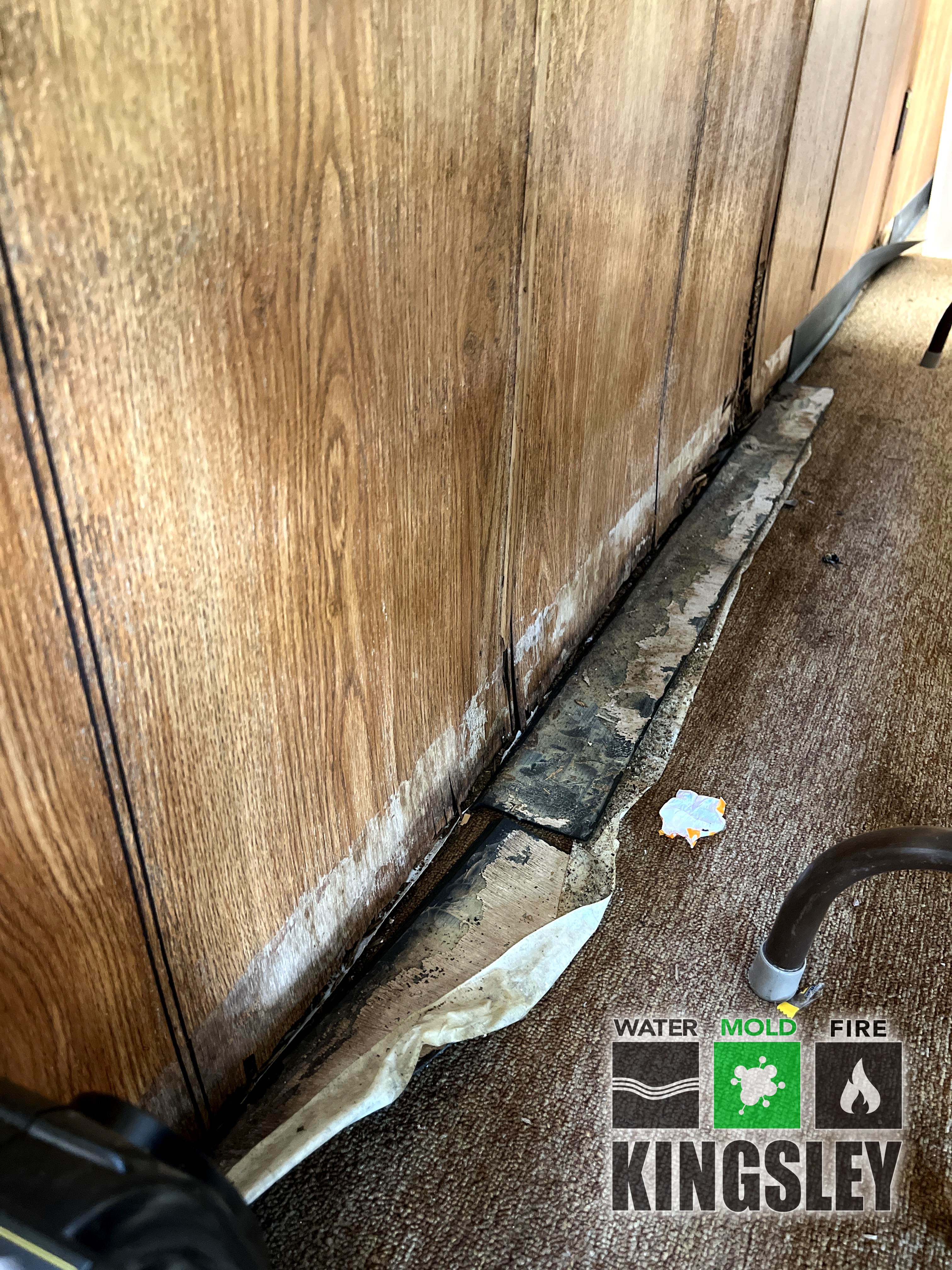
Kingsley water damage & Fire cleanup handled tile floor moisture mapping and water cleanup for a Myrtle Beach, SC property. The camera and meters guided scope from the start: tile Floor Moisture Mapping and Water Cleanup. That photo-backed condition check defined where finishes had to open, what could stay, and where drying equipment had to aim. The home needed source control, selective removal of non-salvageable wet or contaminated material, and verified drying of what remained in Myrtle Beach. The adjuster-ready photo set stayed with the file so rebuild trades could see the same framed assembly the crew saw.
During mitigation we controlled the work zone so debris did not track into clean rooms. Where finishes blocked drying, we opened only the wet footprint shown by meters and the photo record. Non-salvageable saturated material was bagged and removed; salvageable framing and sheathing were cleaned. HEPA vacuuming and careful handling limited dust from demo. The unique on-site detail that guided this Myrtle Beach file was tile Floor Moisture Mapping and Water Cleanup. The adjuster-ready photo set stayed with the file so rebuild trades could see the same framed assembly the crew saw.
IICRC water-damage practice prioritizes stop the moisture source, remove what cannot be dried in place, clean remaining structures, then dry to target with measured air movement and dehumidification. We placed air movers and dehumidifiers to match the wet assembly, aimed airflow along the wet materials in the photo, and rechecked moisture on a 3–7 day drying calendar with overnight humidity checks—never past about a week. Skipping that short monitoring window is how a straightforward wet call becomes secondary damage or a musty return odor in Myrtle Beach.
As readings stabilized within that first-week window, we demobilized equipment and left the work area ready for any needed rebuild of finishes or insulation. Photo documentation of the mitigation state stayed with the job file for the Myrtle Beach property, including the same angle that showed tile Floor Moisture Mapping and Water Cleanup. Helpful takeaway: A leak that looks dry after towels in Myrtle Beach can still leave wet underlayment—meter the assembly before rebuild.
Homeowners comparing tile floor moisture mapping and water cleanup options in the Myrtle Beach area should expect a written moisture map, selective removal instead of full tear-out when meters allow, and a clear end point when materials hit dry goal—not an open-ended equipment rental. Kingsley water damage & Fire cleanup follows that measured approach so rebuild decisions rest on documented conditions rather than a calendar guess.
When rebuild starts, keep the dry-standard notes handy for flooring, cabinet, or insulation trades so no one closes a cavity that still reads wet. That handoff is part of finishing tile floor moisture mapping and water cleanup correctly in Myrtle Beach after mitigation—not a separate sales pitch.
Throughout the Myrtle Beach job we kept communication practical: what was wet, what was removed, what was drying, and when meters said the assembly met goal. That plain record is what homeowners and trades use after tile floor moisture mapping and water cleanup—not jargon and not an invented multi-week timeline.
Moncks Corner, SC
September 26, 2026
Kingsley water damage & Fire cleanup handled moisture mapping, targeted removal where required, and verified drying over a 3–7 day window in Moncks Corner, SC.
Johns Island, SC
September 25, 2026
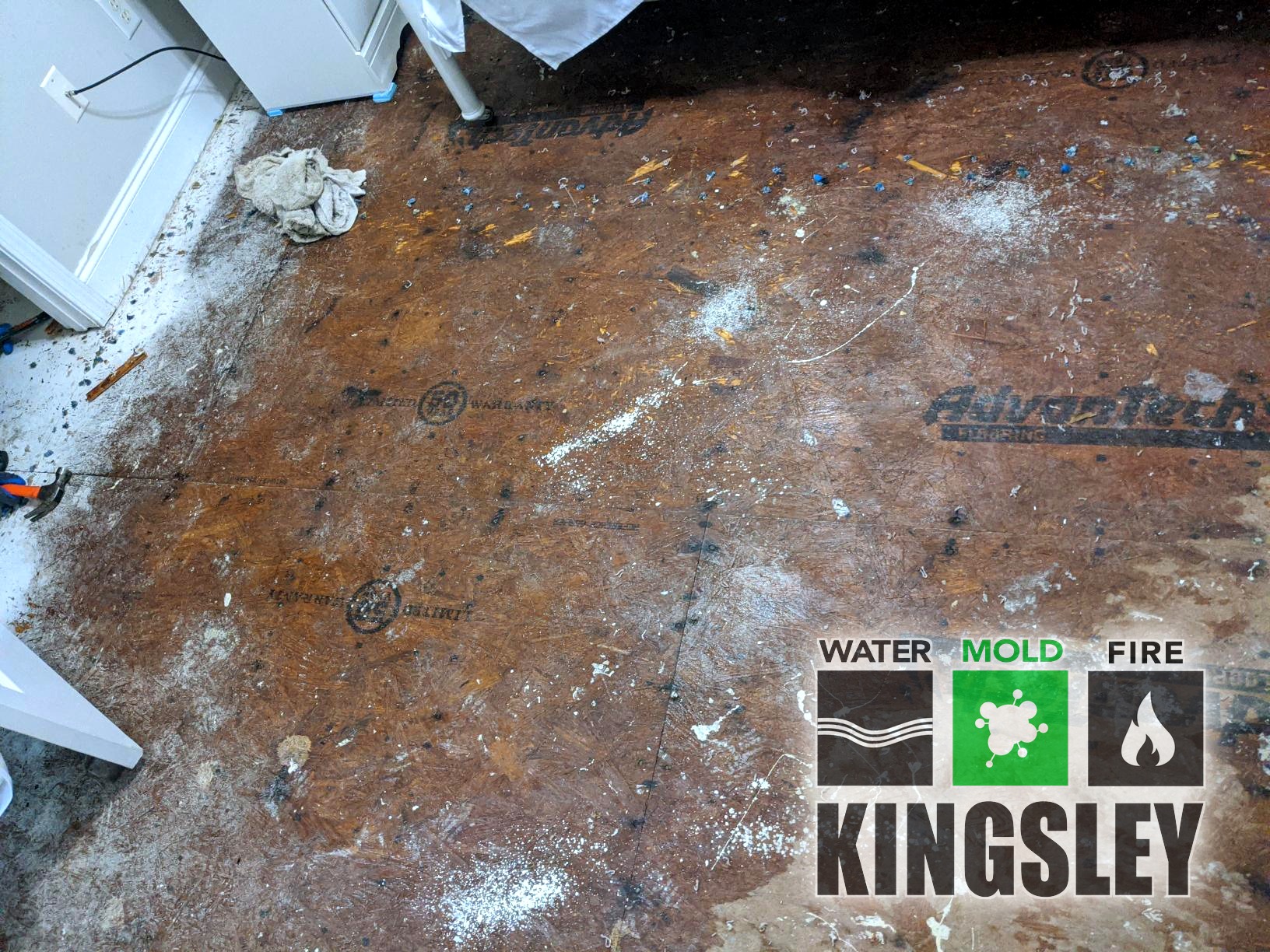
Kingsley water damage & Fire cleanup completed bathroom cabinet water damage cleanup in Johns Island, SC. On arrival we walked the loss area and documented bathroom Cabinet Water Damage Cleanup. That photo-backed condition check defined where finishes had to open, what could stay, and where drying equipment had to aim. The home needed source control, selective removal of non-salvageable wet or contaminated material, and verified drying of what remained in Johns Island. Quiet work windows were held where the household schedule required it, without stretching the drying calendar past about a week.
During mitigation we controlled the work zone so debris did not track into clean rooms. Where finishes blocked drying, we opened only the wet footprint shown by meters and the photo record. Non-salvageable saturated material was bagged and removed; salvageable framing and sheathing were cleaned. HEPA vacuuming and careful handling limited dust from demo. The unique on-site detail that guided this Johns Island file was bathroom Cabinet Water Damage Cleanup. Quiet work windows were held where the household schedule required it, without stretching the drying calendar past about a week.
IICRC water-damage practice prioritizes stop the moisture source, remove what cannot be dried in place, clean remaining structures, then dry to target with measured air movement and dehumidification. We placed air movers and dehumidifiers to match the wet assembly, aimed airflow along the wet materials in the photo, and rechecked moisture on a 3–7 day drying calendar with overnight humidity checks—never past about a week. Skipping that short monitoring window is how a straightforward wet call becomes secondary damage or a musty return odor in Johns Island.
As readings stabilized within that first-week window, we demobilized equipment and left the work area ready for any needed rebuild of finishes or insulation. Photo documentation of the mitigation state stayed with the job file for the Johns Island property, including the same angle that showed bathroom Cabinet Water Damage Cleanup. Helpful takeaway: If flooring feels soft, edges cup, or a stain keeps spreading in Johns Island, stop walking the wet zone and request moisture mapping before new finishes go down.
Homeowners comparing bathroom cabinet water damage cleanup options in the Johns Island area should expect a written moisture map, selective removal instead of full tear-out when meters allow, and a clear end point when materials hit dry goal—not an open-ended equipment rental. Kingsley water damage & Fire cleanup follows that measured approach so rebuild decisions rest on documented conditions rather than a calendar guess.
When rebuild starts, keep the dry-standard notes handy for flooring, cabinet, or insulation trades so no one closes a cavity that still reads wet. That handoff is part of finishing bathroom cabinet water damage cleanup correctly in Johns Island after mitigation—not a separate sales pitch.
Throughout the Johns Island job we kept communication practical: what was wet, what was removed, what was drying, and when meters said the assembly met goal. That plain record is what homeowners and trades use after bathroom cabinet water damage cleanup—not jargon and not an invented multi-week timeline.
Johnsonville, SC
September 25, 2026
Kingsley water damage & Fire cleanup handled moisture mapping, containment as needed, and verified drying over a 3–7 day window in Johnsonville, SC.
Blythewood, SC
September 25, 2026
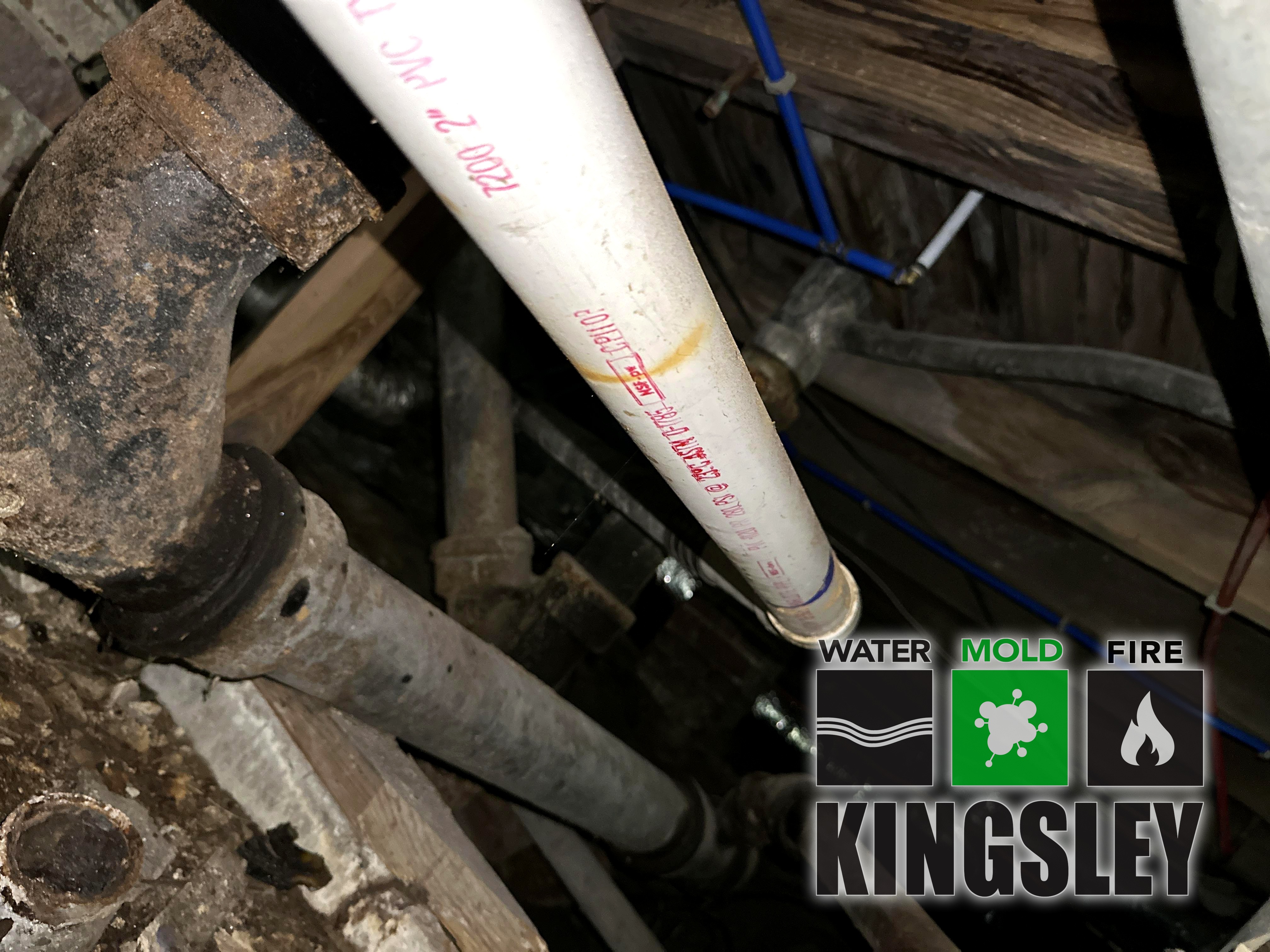
Kingsley water damage & Fire cleanup handled crawlspace plumbing repair and associated water cleanup in Blythewood, SC after an aging cast-iron drain section under the floor needed selective replacement. We started with a crawlspace inspection of the under-floor assembly — wooden joists, the dark metal elbow, and the adjoining drain path — so the open work matched the wet and deteriorated metal zone instead of a guess. Flash documentation of the cramped cavity showed where soil and debris collected under the piping and where the old iron elbow still tied into the run. Moisture and condition checks on the immediate work area guided how far the cast-iron section came out and where new PVC would land, so we did not open more of the assembly than the repair required. That inspection-first pass is how under-floor plumbing calls stay scoped to the real wet zone.
In the opened section we removed the deteriorated length of aging cast-iron drain and set a new white 2-inch PVC pipe into the run, leaving the remaining cast-iron elbow and coupling in frame as the transition point. The PVC carried factory markings for a 2-inch drain application, and light surface staining on the new pipe was wipe-cleaned as we finished joints in the tight space. Blue and white PEX supply lines clipped along the joists stayed protected and out of the cut zone while drain work proceeded. We bagged cut pipe and crawl debris so contaminated material did not track back into living space upstairs. Leaving a mixed metal-to-plastic transition undocumented is how small under-floor leaks become repeated callbacks, so every joint and support got checked before we treated the cavity as ready for drying.
After the new PVC was in place, we cleaned accessible surfaces around the repair and treated wood and soil-contact edges with an EPA-registered antimicrobial where staining and damp conditions warranted it. Dust and debris from the pipe cut were controlled with careful handling and HEPA cleanup in the crawl. The work zone stayed contained under the floor so adjoining rooms upstairs were not pulled into an open demolition. IICRC-aligned water damage and plumbing-loss practice prioritizes source control on the drain line, selective removal of non-salvageable pipe, and verified drying of remaining structural materials — not covering a damp crawl and hoping the next season stays quiet. Keeping the iron elbow visible in the documentation also helps the next trade understand exactly where the material change sits.
We then set drying support as the crawl conditions required so remaining wood and the work cavity could stabilize under monitoring. Free water and damp soil pockets get addressed first; after that, moving dry air through the under-floor space and rechecking the area around the new PVC and cast-iron transition is the real close-out work. We returned for monitoring visits within the first week of mitigation, rechecked the repair zone, and adjusted equipment until conditions supported leaving the crawl. Skipping that short monitoring window is what turns a straightforward plumbing swap into secondary moisture under the subfloor later. Photo documentation of the white PVC beside the rusted iron elbow and the PEX lines along the joists stayed with the file so the homeowner and any follow-on trade could see exactly what changed under the house in Blythewood.
When the crawlspace around the repaired drain met a clean, stable condition, we left the under-floor assembly ready for normal use with the new PVC in service and the remaining cast-iron transition intact. Under-floor plumbing repairs often look minor until you open the cavity; documenting the iron-to-PVC change and verifying the zone before close-out stops a small drain issue from becoming a larger water call. If you see recurring damp soil or staining under a cast-iron drain in the crawl, have the line inspected and repaired before finish flooring or insulation hides the leak path — early selective pipe replacement is far simpler than drying a soaked subfloor after the leak has already spread.
Eastover, SC
September 25, 2026
Kingsley water damage & Fire cleanup handled moisture mapping, containment as needed, and verified drying over a 3–7 day window in Eastover, SC.
Lexington, SC
September 25, 2026
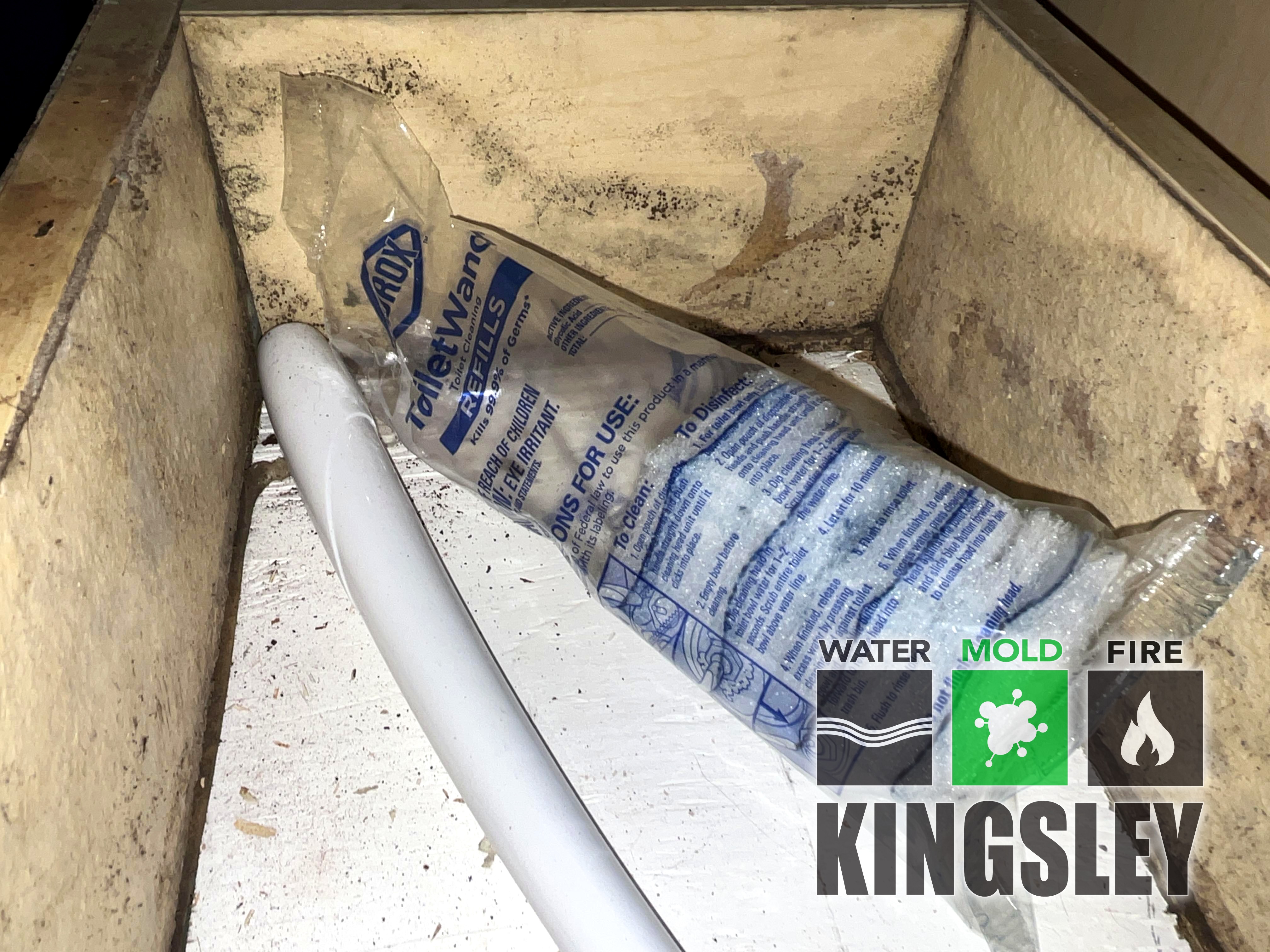
Kingsley water damage & Fire cleanup handled cabinet seam mold remediation in Lexington, SC after localized mold along cabinet joints from repeated moisture. We began with a room-by-room and assembly-level inspection of the interior cabinetry / vanity zone, documenting mold tracking along a cabinet seam and adjacent wood panel face. That visual and instrument check — not a guess from the hallway — defined where finishes had to open, what could stay, and where drying equipment had to aim. the home needed source control, selective removal of non-salvageable wet or contaminated material, and verified drying of what remained.
During mitigation we controlled the work zone so debris and moisture did not track into clean rooms. Where finishes blocked drying, we opened only the wet footprint shown by meters and the photo record. Contaminated or saturated materials were bagged and removed; salvageable framing and sheathing were cleaned and treated with an EPA-registered antimicrobial when staining or microbial growth warranted it. HEPA vacuuming and careful handling limited dust from demo. The unique on-site detail that guided this file was mold tracking along a cabinet seam and adjacent wood panel face — that condition stayed in the documentation so the homeowner and any follow-on trade could see exactly what drove the scope in Lexington.
IICRC water-damage and mold-remediation practice prioritizes stop-the-source, remove what cannot be dried in place, clean and treat remaining structures, then dry to target with measured air movement and dehumidification. We placed air movers and/or dehumidifiers to match the wet assembly, ran equipment under monitoring, and rechecked moisture within the first week of mitigation rather than leaving gear unattended for an open-ended stretch. Skipping that short monitoring window is how a straightforward wet call becomes secondary damage in adjoining cavities.
As readings stabilized and the work area met a clean, dry condition, we demobilized equipment and left the interior cabinetry / vanity zone ready for any needed rebuild of finishes. Photo documentation of the mitigation state stayed with the claim file. If you notice musty odors, spotting on wood, or staining at cabinets, vents, or window sills in Lexington, have the moisture source and affected materials inspected before finishes hide the growth path.
IICRC water-damage and mold-remediation practice prioritizes stop the moisture source, remove what cannot be dried in place, clean and treat remaining structures, then dry to target with measured air movement and dehumidification. On this Lexington file we ran air movers and dehumidifiers against the wet assembly under monitoring and rechecked moisture on a 3–7 day drying calendar—never past about a week. Skipping that short window is how secondary damage or musty odor returns after finishes go back up.
As readings stabilized within that first-week window, equipment came out and the work area was left ready for any needed rebuild. Photo documentation of the mitigation state stayed with the job file. Helpful takeaway: If you notice musty odors, spotting on wood, or staining at cabinets, vents, or window sills in Lexington, have the moisture source and affected materials inspected before finishes hide the growth path.
Homeowners comparing cabinet seam mold remediation options in the Lexington area should expect a written moisture map, selective removal instead of full tear-out when meters allow, and a clear end point when materials hit dry goal—not an open-ended equipment rental. Kingsley water damage & Fire cleanup follows that measured approach so rebuild decisions rest on documented conditions rather than a calendar guess.
West Columbia, SC
September 25, 2026
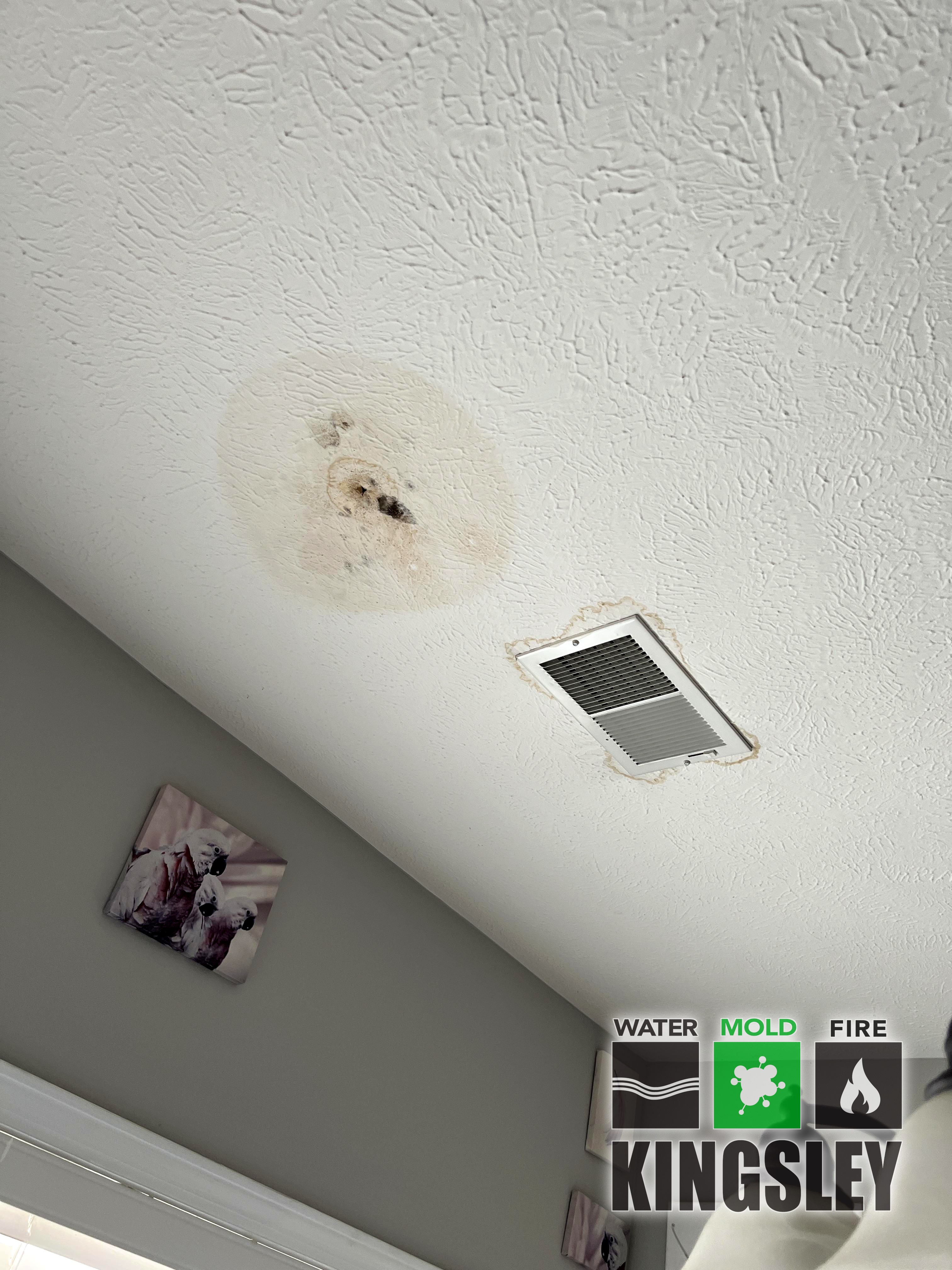
Kingsley water damage & Fire cleanup responded for ceiling moisture mapping near hvac vent in West Columbia, SC and began with a photo-backed survey that captured ceiling water stain near HVAC vent during moisture mapping. That photo-backed condition check defined where finishes had to open, what could stay, and where drying equipment had to aim. The home needed source control, selective removal of non-salvageable wet or contaminated material, and verified drying of what remained in West Columbia. We labeled the wet edge on the sketch so later visits matched day-one photos in West Columbia.
During mitigation we controlled the work zone so debris did not track into clean rooms. Where finishes blocked drying, we opened only the wet footprint shown by meters and the photo record. Non-salvageable saturated material was bagged and removed; salvageable framing and sheathing were cleaned. HEPA vacuuming and careful handling limited dust from demo. The unique on-site detail that guided this West Columbia file was ceiling water stain near HVAC vent during moisture mapping. Contents near the work path were shifted or protected before tools came out in this West Columbia home.
IICRC water-damage practice prioritizes stop the moisture source, remove what cannot be dried in place, clean remaining structures, then dry to target with measured air movement and dehumidification. We placed air movers and dehumidifiers to match the wet assembly, aimed airflow along the wet materials in the photo, and rechecked moisture on a 3–7 day drying calendar with overnight humidity checks—never past about a week. Skipping that short monitoring window is how a straightforward wet call becomes secondary damage or a musty return odor in West Columbia.
As readings stabilized within that first-week window, we demobilized equipment and left the work area ready for any needed rebuild of finishes or insulation. Photo documentation of the mitigation state stayed with the job file for the West Columbia property, including the same angle that showed ceiling water stain near HVAC vent during moisture mapping. Helpful takeaway: A leak that looks dry after towels in West Columbia can still leave wet underlayment—meter the assembly before rebuild.
Homeowners comparing ceiling moisture mapping near hvac vent options in the West Columbia area should expect a written moisture map, selective removal instead of full tear-out when meters allow, and a clear end point when materials hit dry goal—not an open-ended equipment rental. Kingsley water damage & Fire cleanup follows that measured approach so rebuild decisions rest on documented conditions rather than a calendar guess.
When rebuild starts, keep the dry-standard notes handy for flooring, cabinet, or insulation trades so no one closes a cavity that still reads wet. That handoff is part of finishing ceiling moisture mapping near hvac vent correctly in West Columbia after mitigation—not a separate sales pitch.
Throughout the West Columbia job we kept communication practical: what was wet, what was removed, what was drying, and when meters said the assembly met goal. That plain record is what homeowners and trades use after ceiling moisture mapping near hvac vent—not jargon and not an invented multi-week timeline.
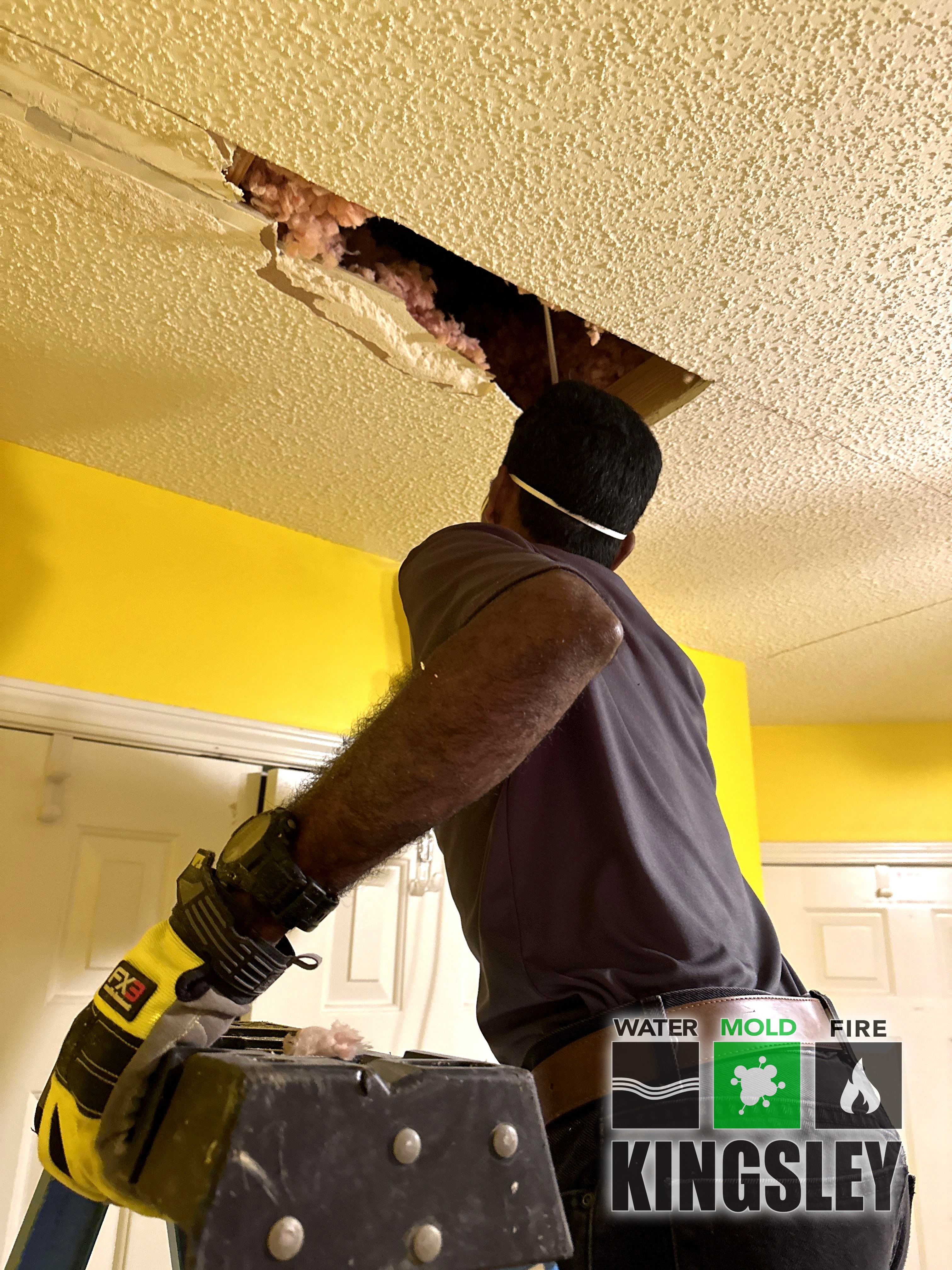
Johns Island, SC
September 25, 2026
In Johns Island, SC, Kingsley water damage & Fire cleanup performed crawlspace joist mold inspection and cleanup after documenting crawlspace Joist Mold Inspection and Cleanup during the initial condition check. That photo-backed condition check defined where finishes had to open, what could stay, and where drying equipment had to aim. The home needed source control, selective removal of non-salvageable wet or contaminated material, and verified drying of what remained in Johns Island. We avoided opening dry cavities that meters and the camera did not support on this Johns Island stop.
During mitigation we controlled the work zone so debris and spores did not track into clean rooms. Where finishes blocked drying, we opened only the wet footprint shown by meters and the photo record. Non-salvageable saturated material was bagged and removed; salvageable framing and sheathing were cleaned and treated when microbial staining warranted it. HEPA vacuuming and careful handling limited dust from demo. The unique on-site detail that guided this Johns Island file was crawlspace Joist Mold Inspection and Cleanup. The adjuster-ready photo set stayed with the file so rebuild trades could see the same framed assembly the crew saw.
IICRC water-damage and mold-remediation practice prioritizes stop the moisture source, remove what cannot be dried in place, clean and treat remaining structures with an EPA-registered antimicrobial when staining warranted it, then dry to target with measured air movement and dehumidification. We placed air movers and dehumidifiers to match the crawlspace bay, aimed airflow along the wet materials in the photo, and rechecked moisture on a 3–7 day drying calendar with overnight humidity checks—never past about a week. Skipping that short monitoring window is how a straightforward wet call becomes secondary damage or a musty return odor in Johns Island.
As readings stabilized within that first-week window, we demobilized equipment and left the work area ready for any needed rebuild of finishes or insulation. Photo documentation of the mitigation state stayed with the job file for the Johns Island property, including the same angle that showed crawlspace Joist Mold Inspection and Cleanup. Helpful takeaway: If you notice musty odors from floor registers or white spotting on crawl wood under a Johns Island home, have the moisture source and joists inspected before new insulation hides the path.
Homeowners comparing crawlspace joist mold inspection and cleanup options in the Johns Island area should expect a written moisture map, selective removal instead of full tear-out when meters allow, and a clear end point when materials hit dry goal—not an open-ended equipment rental. Kingsley water damage & Fire cleanup follows that measured approach so rebuild decisions rest on documented conditions rather than a calendar guess.
When rebuild starts, keep the dry-standard notes handy for flooring, cabinet, or insulation trades so no one closes a cavity that still reads wet. That handoff is part of finishing crawlspace joist mold inspection and cleanup correctly in Johns Island after mitigation—not a separate sales pitch.
Throughout the Johns Island job we kept communication practical: what was wet, what was removed, what was drying, and when meters said the assembly met goal. That plain record is what homeowners and trades use after crawlspace joist mold inspection and cleanup—not jargon and not an invented multi-week timeline.
Johns Island, SC
September 25, 2026
Kingsley water damage & Fire cleanup handled cabinet drying, moisture mapping, and verified structural drying over a 3–7 day window in Johns Island, SC.
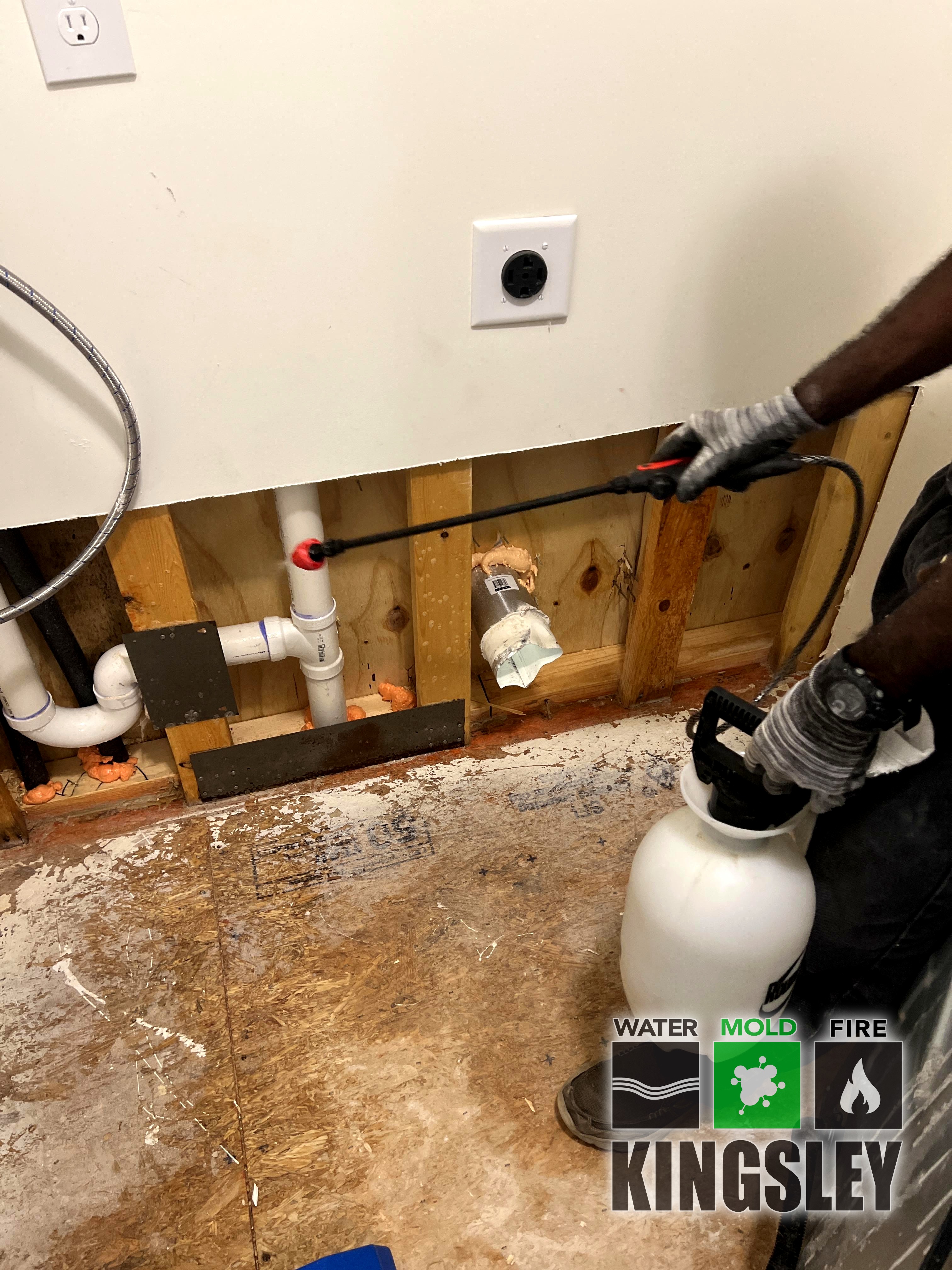
Johns Island, SC
September 24, 2026
Kingsley water damage & Fire cleanup completed ceiling stain water intrusion cleanup in Johns Island, SC. On arrival we walked the loss area and documented ceiling Stain Water Intrusion Cleanup. That photo-backed condition check defined where finishes had to open, what could stay, and where drying equipment had to aim. The home needed source control, selective removal of non-salvageable wet or contaminated material, and verified drying of what remained in Johns Island. We labeled the wet edge on the sketch so later visits matched day-one photos.
During mitigation we controlled the work zone so debris did not track into clean rooms. Where finishes blocked drying, we opened only the wet footprint shown by meters and the photo record. Non-salvageable saturated material was bagged and removed; salvageable framing and sheathing were cleaned. HEPA vacuuming and careful handling limited dust from demo. The unique on-site detail that guided this Johns Island file was ceiling Stain Water Intrusion Cleanup. Contents near the work path were shifted or protected before tools came out.
IICRC water-damage practice prioritizes stop the moisture source, remove what cannot be dried in place, clean remaining structures, then dry to target with measured air movement and dehumidification. We placed air movers and dehumidifiers to match the wet assembly, aimed airflow along the wet materials in the photo, and rechecked moisture on a 3–7 day drying calendar with overnight humidity checks—never past about a week. Quiet work windows were held where the household schedule required it, without stretching past that first-week ceiling. Skipping that short monitoring window is how a straightforward wet call becomes secondary damage or a musty return odor in Johns Island.
As readings stabilized within that first-week window, we demobilized equipment and left the work area ready for any needed rebuild of finishes or insulation. Photo documentation of the mitigation state stayed with the job file for the Johns Island property, including the same angle that showed ceiling Stain Water Intrusion Cleanup. Helpful takeaway: If flooring feels soft, edges cup, or a stain keeps spreading in Johns Island, stop walking the wet zone and request moisture mapping before new finishes go down.
Homeowners comparing ceiling stain water intrusion cleanup options in the Johns Island area should expect a written moisture map, selective removal instead of full tear-out when meters allow, and a clear end point when materials hit dry goal—not an open-ended equipment rental. Kingsley water damage & Fire cleanup follows that measured approach so rebuild decisions rest on documented conditions rather than a calendar guess.
When rebuild starts, keep the dry-standard notes handy for flooring, cabinet, or insulation trades so no one closes a cavity that still reads wet. That handoff is part of finishing ceiling stain water intrusion cleanup correctly in Johns Island after mitigation. Throughout the job we kept communication practical: what was wet, what was removed, what was drying, and when meters said the assembly met goal—without inventing a multi-week timeline.
For this Johns Island stop, the close-out standard stayed simple: meters at goal, photo set filed, and no equipment left running past the 3–7 day band.
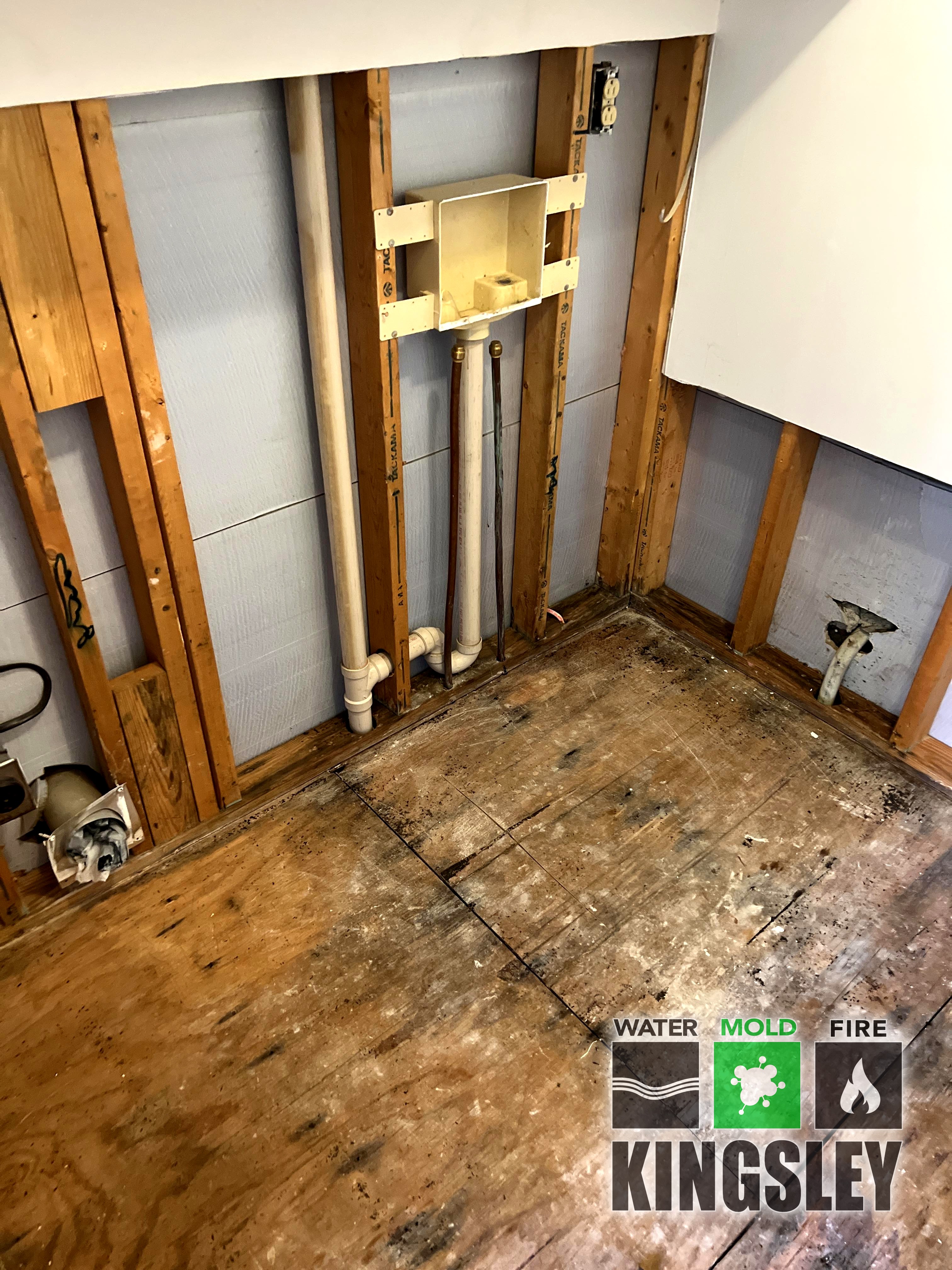
Camden, SC
September 24, 2026
Kingsley water damage & Fire cleanup restored a Camden, SC laundry room after water damage reached the wall cavity and plywood subfloor at the washer connections. We began with inspection and moisture mapping of the wet wall and floor assembly. Flooring, baseboards, and trim had already been removed before our crew arrived; we then removed the laundry drywall along with the insulation. Finished drywall that had taken on moisture came out under controlled demolition — two walls cut four feet up and the remaining walls two feet up — so we could see the studs, insulation, bottom plate, and the full washer outlet box. That flood-cut approach confirmed how far water had traveled along the framing and subfloor without opening more of the home than necessary. Wet insulation came out with the drywall so drying air could reach the wood instead of staying trapped behind saturated batts.
With the wall open, copper supply lines, the PVC drain and P-trap, and the recessed washer box were fully accessible for inspection. A dryer vent plate and adjacent plumbing stack remained visible in the open cavity while the plywood subfloor showed irregular dark staining concentrated near the wall and along panel seams — a pattern consistent with prolonged moisture at laundry connections. Studs near the floor plates carried vertical water staining. We HEPA-vacuumed and remediated light superficial growth present inside the drywall cavity with an EPA-registered antimicrobial before any drying equipment was placed. Wet or contaminated finish materials that could not be cleaned to a dry standard were bagged and removed so the structure, not the finishes, became the focus of mitigation.
We set containment so the work zone would not pull adjoining rooms into the project while we cleaned exposed framing and subfloor. In the laundry itself we set three air movers and one dehumidifier to establish controlled airflow across the open studs and stained plywood. Connected areas that moisture mapping had flagged — including the back entry hall and a small kitchen floor section — received additional air movement and dehumidification so the laundry loss did not rewet through shared assemblies. We also finished crawlspace work on the connected underside of the home and set air movers there as part of that same mitigation scope; the laundry cavity above grade is what this job stage documents, not the crawlspace itself. Psychrometric conditions and moisture-content readings, not the calendar, decided when equipment could come out.
We inspected plumbing connections while the wall was open so any ongoing leak risk at the washer supply or drain could be addressed before new drywall went up. Leaving a slow drip behind finished surfaces is how laundry losses return months later as mold behind baseboards. We collected a material sample for flooring identification so rebuild products would match what was removed, and we coordinated an adjuster video walkthrough of the affected areas so the mid-demo condition — studs open, plumbing visible, stained subfloor exposed — was documented while the cavity was still accessible.
Monitoring continued over several days until all affected materials were dry at goal or below, then we removed drying equipment from the structure. When readings were stable within that first week of mitigation, we left the laundry cavity and floor ready for new insulation, drywall, base, and flooring on a clean substrate. Laundry rooms are a frequent water source because of supply-line and drain issues; opening the wall early, remediating growth before equipment runs, and drying to industry standards is what keeps a Camden repair contained instead of becoming a larger microbial problem later.
After mitigation, there was a clear path to restore the laundry room without trapping moisture inside the wall or under new flooring in this Camden home. Crew documentation stayed with the file so rebuild could proceed on a verified dry substrate. If you notice a musty smell near the washer, soft flooring at the toe-kick, or staining around supply valves, shut the valves off and request moisture mapping before replacing finishes alone.
Monitoring stayed on a 3–7 day drying calendar—never past about a week—until materials hit dry goal and equipment came out.
Johnsonville, SC
September 24, 2026
Kingsley water damage & Fire cleanup handled moisture mapping, containment as needed, and verified drying over a 3–7 day window in Johnsonville, SC.
Eastover, SC
September 24, 2026
Kingsley water damage & Fire cleanup handled moisture mapping, containment as needed, and verified drying over a 3–7 day window in Eastover, SC.
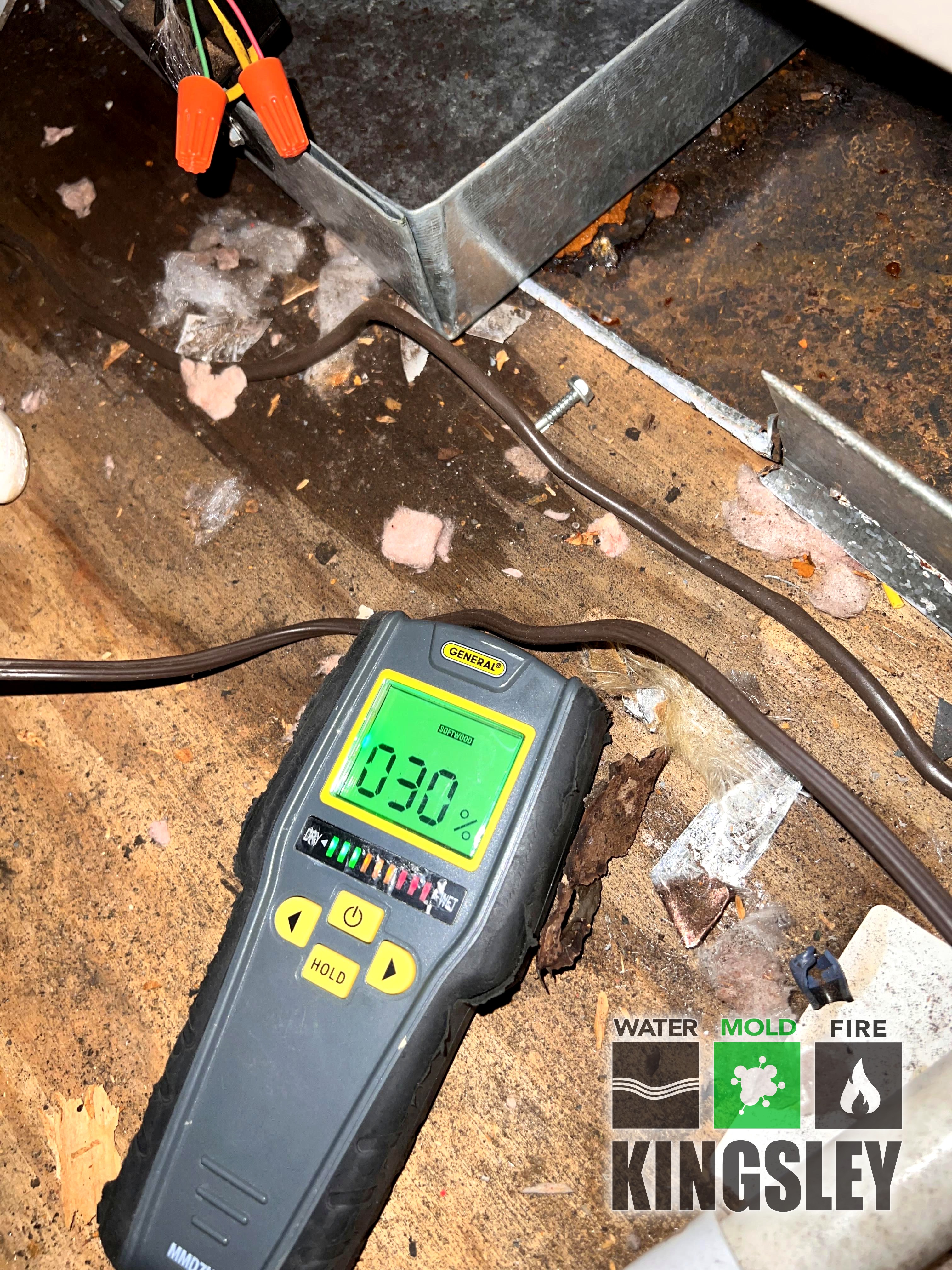
Lexington, SC
September 24, 2026
Kingsley water damage & Fire cleanup handled subfloor moisture mapping and water damage cleanup in Lexington, SC after elevated moisture in plywood subfloor after water intrusion. We began with a room-by-room and assembly-level inspection of the exposed plywood subfloor cavity, documenting a GENERAL softwood moisture meter reading 030% in the red WET zone on dusty plywood with pink insulation scraps and wire nuts nearby. That visual and instrument check — not a guess from the hallway — defined where finishes had to open, what could stay, and where drying equipment had to aim. the home needed source control, selective removal of non-salvageable wet or contaminated material, and verified drying of what remained.
During mitigation we controlled the work zone so debris and moisture did not track into clean rooms. Where finishes blocked drying, we opened only the wet footprint shown by meters and the photo record. Contaminated or saturated materials were bagged and removed; salvageable framing and sheathing were cleaned and treated with an EPA-registered antimicrobial when staining or microbial growth warranted it. HEPA vacuuming and careful handling limited dust from demo. The unique on-site detail that guided this file was a GENERAL softwood moisture meter reading 030% in the red WET zone on dusty plywood with pink insulation scraps and wire nuts nearby — that condition stayed in the documentation so the homeowner and any follow-on trade could see exactly what drove the scope in Lexington.
IICRC water-damage and mold-remediation practice prioritizes stop-the-source, remove what cannot be dried in place, clean and treat remaining structures, then dry to target with measured air movement and dehumidification. We placed air movers and/or dehumidifiers to match the wet assembly, ran equipment under monitoring, and rechecked moisture within the first week of mitigation rather than leaving gear unattended for an open-ended stretch. Skipping that short monitoring window is how a straightforward wet call becomes secondary damage in adjoining cavities.
As readings stabilized and the work area met a clean, dry condition, we demobilized equipment and left the exposed plywood subfloor cavity ready for any needed rebuild of finishes. Photo documentation of the mitigation state stayed with the claim file. If you see standing water, elevated meter readings, or soft/stained flooring in Lexington, stop the source and start professional extraction and drying within the first days — delayed drying is what turns a contained wet zone into a larger structural call.
IICRC water-damage and mold-remediation practice prioritizes stop the moisture source, remove what cannot be dried in place, clean and treat remaining structures, then dry to target with measured air movement and dehumidification. On this Lexington file we ran air movers and dehumidifiers against the wet assembly under monitoring and rechecked moisture on a 3–7 day drying calendar—never past about a week. Skipping that short window is how secondary damage or musty odor returns after finishes go back up.
As readings stabilized within that first-week window, equipment came out and the work area was left ready for any needed rebuild. Photo documentation of the mitigation state stayed with the job file. Helpful takeaway: If you see standing water, elevated meter readings, or soft/stained flooring in Lexington, stop the source and start professional extraction and drying within the first days — delayed drying is what turns a contained wet zone into a larger structural call.
Homeowners comparing subfloor moisture mapping and water damage cleanup options in the Lexington area should expect a written moisture map, selective removal instead of full tear-out when meters allow, and a clear end point when materials hit dry goal—not an open-ended equipment rental. Kingsley water damage & Fire cleanup follows that measured approach so rebuild decisions rest on documented conditions rather than a calendar guess.
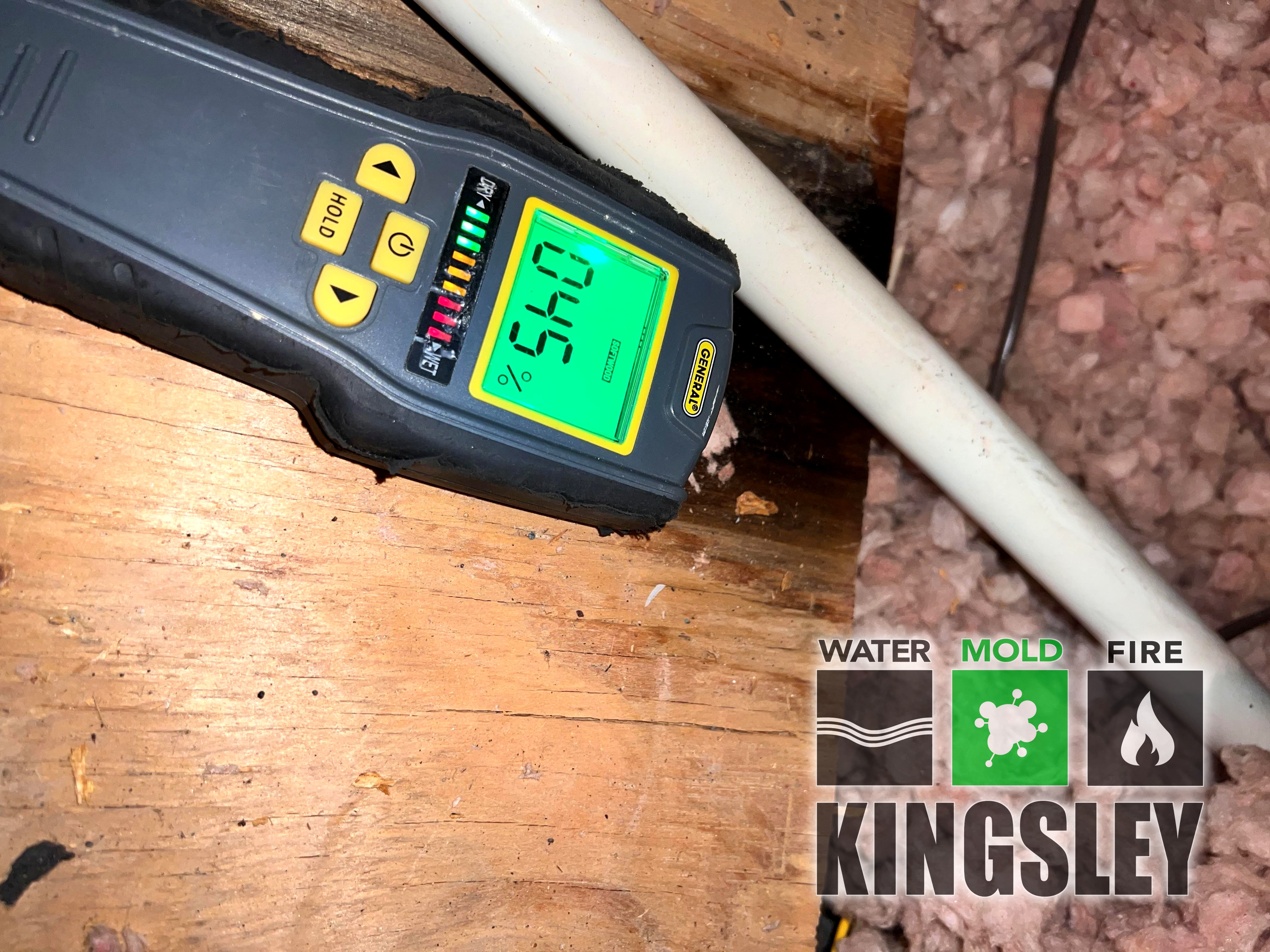
Springdale, SC
September 24, 2026
Kingsley water damage & Fire cleanup handled structural wood moisture meter mapping for a Springdale, SC property. The camera and meters guided scope from the start: moisture meter reading wet on structural wood. That photo-backed condition check defined where finishes had to open, what could stay, and where drying equipment had to aim. The home needed source control, selective removal of non-salvageable wet or contaminated material, and verified drying of what remained in Springdale. We labeled the wet edge on the sketch so later visits matched day-one photos.
During mitigation we controlled the work zone so debris did not track into clean rooms. Where finishes blocked drying, we opened only the wet footprint shown by meters and the photo record. Non-salvageable saturated material was bagged and removed; salvageable framing and sheathing were cleaned. HEPA vacuuming and careful handling limited dust from demo. The unique on-site detail that guided this Springdale file was moisture meter reading wet on structural wood. Contents near the work path were shifted or protected before tools came out.
IICRC water-damage practice prioritizes stop the moisture source, remove what cannot be dried in place, clean remaining structures, then dry to target with measured air movement and dehumidification. We placed air movers and dehumidifiers to match the wet assembly, aimed airflow along the wet materials in the photo, and rechecked moisture on a 3–7 day drying calendar with overnight humidity checks—never past about a week. Quiet work windows were held where the household schedule required it, without stretching past that first-week ceiling. Skipping that short monitoring window is how a straightforward wet call becomes secondary damage or a musty return odor in Springdale.
As readings stabilized within that first-week window, we demobilized equipment and left the work area ready for any needed rebuild of finishes or insulation. Photo documentation of the mitigation state stayed with the job file for the Springdale property, including the same angle that showed moisture meter reading wet on structural wood. Helpful takeaway: If flooring feels soft, edges cup, or a stain keeps spreading in Springdale, stop walking the wet zone and request moisture mapping before new finishes go down.
Homeowners comparing structural wood moisture meter mapping options in the Springdale area should expect a written moisture map, selective removal instead of full tear-out when meters allow, and a clear end point when materials hit dry goal—not an open-ended equipment rental. Kingsley water damage & Fire cleanup follows that measured approach so rebuild decisions rest on documented conditions rather than a calendar guess.
When rebuild starts, keep the dry-standard notes handy for flooring, cabinet, or insulation trades so no one closes a cavity that still reads wet. That handoff is part of finishing structural wood moisture meter mapping correctly in Springdale after mitigation. Throughout the job we kept communication practical: what was wet, what was removed, what was drying, and when meters said the assembly met goal—without inventing a multi-week timeline.
For this Springdale stop, the close-out standard stayed simple: meters at goal, photo set filed, and no equipment left running past the 3–7 day band.
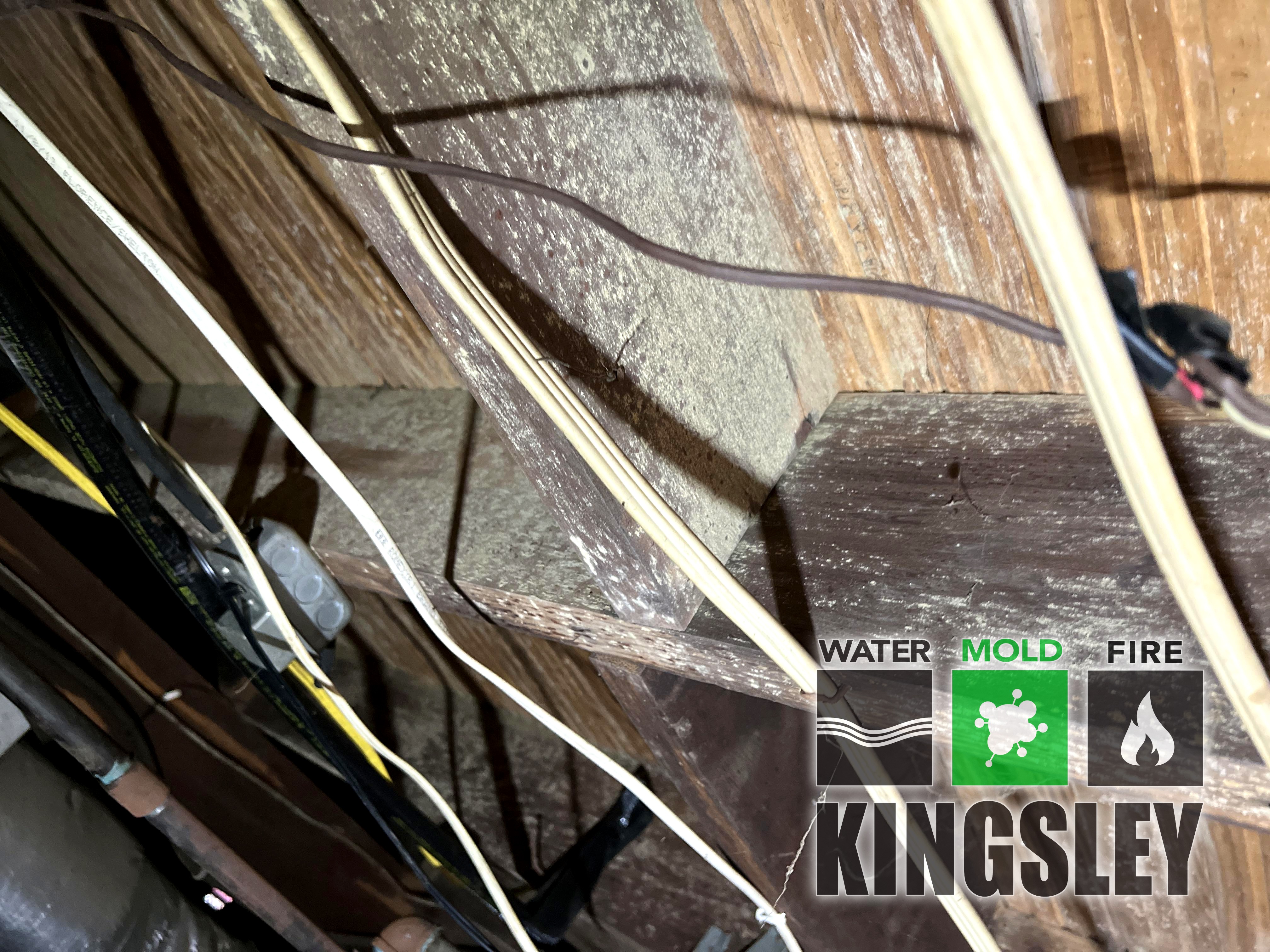
Hanahan, SC
September 24, 2026
In Hanahan, SC, Kingsley water damage & Fire cleanup performed doorway subfloor water damage cleanup after documenting doorway Subfloor Water Damage Cleanup during the initial condition check. That photo-backed condition check defined where finishes had to open, what could stay, and where drying equipment had to aim. The home needed source control, selective removal of non-salvageable wet or contaminated material, and verified drying of what remained in Hanahan. We labeled the wet edge on the sketch so later visits matched day-one photos.
During mitigation we controlled the work zone so debris did not track into clean rooms. Where finishes blocked drying, we opened only the wet footprint shown by meters and the photo record. Non-salvageable saturated material was bagged and removed; salvageable framing and sheathing were cleaned. HEPA vacuuming and careful handling limited dust from demo. The unique on-site detail that guided this Hanahan file was doorway Subfloor Water Damage Cleanup. Contents near the work path were shifted or protected before tools came out.
IICRC water-damage practice prioritizes stop the moisture source, remove what cannot be dried in place, clean remaining structures, then dry to target with measured air movement and dehumidification. We placed air movers and dehumidifiers to match the wet assembly, aimed airflow along the wet materials in the photo, and rechecked moisture on a 3–7 day drying calendar with overnight humidity checks—never past about a week. Quiet work windows were held where the household schedule required it, without stretching past that first-week ceiling. Skipping that short monitoring window is how a straightforward wet call becomes secondary damage or a musty return odor in Hanahan.
As readings stabilized within that first-week window, we demobilized equipment and left the work area ready for any needed rebuild of finishes or insulation. Photo documentation of the mitigation state stayed with the job file for the Hanahan property, including the same angle that showed doorway Subfloor Water Damage Cleanup. Helpful takeaway: If flooring feels soft, edges cup, or a stain keeps spreading in Hanahan, stop walking the wet zone and request moisture mapping before new finishes go down.
Homeowners comparing doorway subfloor water damage cleanup options in the Hanahan area should expect a written moisture map, selective removal instead of full tear-out when meters allow, and a clear end point when materials hit dry goal—not an open-ended equipment rental. Kingsley water damage & Fire cleanup follows that measured approach so rebuild decisions rest on documented conditions rather than a calendar guess.
When rebuild starts, keep the dry-standard notes handy for flooring, cabinet, or insulation trades so no one closes a cavity that still reads wet. That handoff is part of finishing doorway subfloor water damage cleanup correctly in Hanahan after mitigation. Throughout the job we kept communication practical: what was wet, what was removed, what was drying, and when meters said the assembly met goal—without inventing a multi-week timeline.
For this Hanahan stop, the close-out standard stayed simple: meters at goal, photo set filed, and no equipment left running past the 3–7 day band.
Johns Island, SC
September 24, 2026
Kingsley water damage & Fire cleanup handled source isolation support, extraction, and ceiling cavity drying over a 3–7 day window in Johns Island, SC.
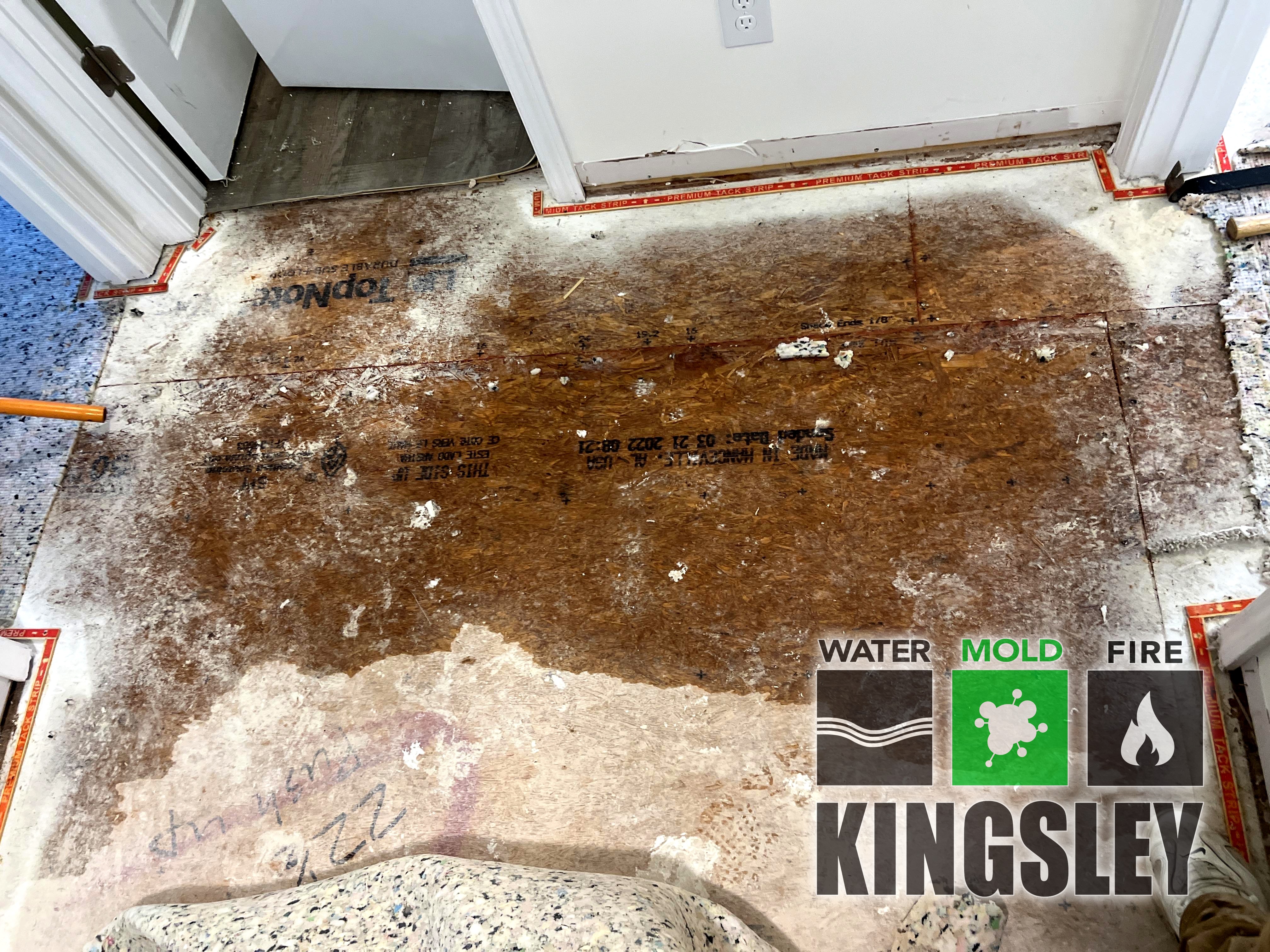
Johns Island, SC
September 23, 2026
Kingsley water damage & Fire cleanup handled laundry room supply line water cleanup for a Johns Island, SC property. The camera and meters guided scope from the start: laundry Room Supply Line Water Cleanup. That photo-backed condition check defined where finishes had to open, what could stay, and where drying equipment had to aim. The home needed source control, selective removal of non-salvageable wet or contaminated material, and verified drying of what remained in Johns Island. Contents near the work path were shifted or protected before tools came out in this Johns Island home.
During mitigation we controlled the work zone so debris did not track into clean rooms. Where finishes blocked drying, we opened only the wet footprint shown by meters and the photo record. Non-salvageable saturated material was bagged and removed; salvageable framing and sheathing were cleaned. HEPA vacuuming and careful handling limited dust from demo. The unique on-site detail that guided this Johns Island file was laundry Room Supply Line Water Cleanup. We labeled the wet edge on the sketch so later visits matched day-one photos in Johns Island.
IICRC water-damage practice prioritizes stop the moisture source, remove what cannot be dried in place, clean remaining structures, then dry to target with measured air movement and dehumidification. We placed air movers and dehumidifiers to match the wet assembly, aimed airflow along the wet materials in the photo, and rechecked moisture on a 3–7 day drying calendar with overnight humidity checks—never past about a week. Skipping that short monitoring window is how a straightforward wet call becomes secondary damage or a musty return odor in Johns Island.
As readings stabilized within that first-week window, we demobilized equipment and left the work area ready for any needed rebuild of finishes or insulation. Photo documentation of the mitigation state stayed with the job file for the Johns Island property, including the same angle that showed laundry Room Supply Line Water Cleanup. Helpful takeaway: A leak that looks dry after towels in Johns Island can still leave wet underlayment—meter the assembly before rebuild.
Homeowners comparing laundry room supply line water cleanup options in the Johns Island area should expect a written moisture map, selective removal instead of full tear-out when meters allow, and a clear end point when materials hit dry goal—not an open-ended equipment rental. Kingsley water damage & Fire cleanup follows that measured approach so rebuild decisions rest on documented conditions rather than a calendar guess.
When rebuild starts, keep the dry-standard notes handy for flooring, cabinet, or insulation trades so no one closes a cavity that still reads wet. That handoff is part of finishing laundry room supply line water cleanup correctly in Johns Island after mitigation—not a separate sales pitch.
Throughout the Johns Island job we kept communication practical: what was wet, what was removed, what was drying, and when meters said the assembly met goal. That plain record is what homeowners and trades use after laundry room supply line water cleanup—not jargon and not an invented multi-week timeline.
Abbeville, SC
September 23, 2026
Kingsley water damage & Fire cleanup handled moisture mapping, containment as needed, and verified drying over a 3–7 day window in Abbeville, SC.
Lugoff, SC
September 23, 2026
Washer Overflow Extraction and Drying in Lugoff.
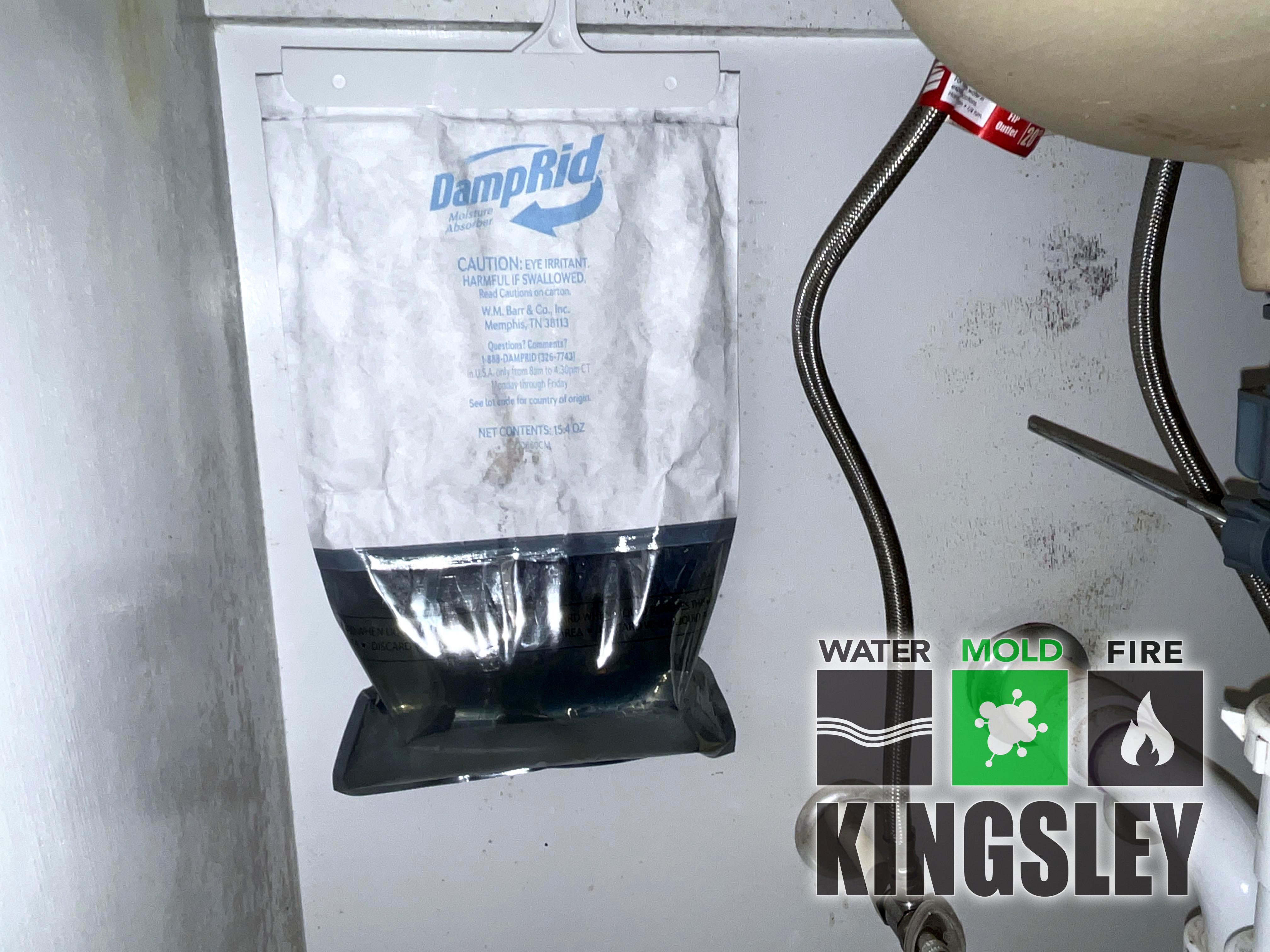
Florence, SC
September 23, 2026
Kingsley water damage & Fire cleanup handled vanity cabinet mold remediation in Florence, SC after cabinet-base mold from bathroom moisture. We began with a room-by-room and assembly-level inspection of the bathroom vanity cabinet, documenting mold on the vanity cabinet floor and inner door face where splash and leak moisture collected. That visual and instrument check — not a guess from the hallway — defined where finishes had to open, what could stay, and where drying equipment had to aim. the home needed source control, selective removal of non-salvageable wet or contaminated material, and verified drying of what remained.
During mitigation we controlled the work zone so debris and moisture did not track into clean rooms. Where finishes blocked drying, we opened only the wet footprint shown by meters and the photo record. Contaminated or saturated materials were bagged and removed; salvageable framing and sheathing were cleaned and treated with an EPA-registered antimicrobial when staining or microbial growth warranted it. HEPA vacuuming and careful handling limited dust from demo. The unique on-site detail that guided this file was mold on the vanity cabinet floor and inner door face where splash and leak moisture collected — that condition stayed in the documentation so the homeowner and any follow-on trade could see exactly what drove the scope in Florence.
IICRC water-damage and mold-remediation practice prioritizes stop-the-source, remove what cannot be dried in place, clean and treat remaining structures, then dry to target with measured air movement and dehumidification. We placed air movers and/or dehumidifiers to match the wet assembly, ran equipment under monitoring, and rechecked moisture within the first week of mitigation rather than leaving gear unattended for an open-ended stretch. Skipping that short monitoring window is how a straightforward wet call becomes secondary damage in adjoining cavities.
As readings stabilized and the work area met a clean, dry condition, we demobilized equipment and left the bathroom vanity cabinet ready for any needed rebuild of finishes. Photo documentation of the mitigation state stayed with the claim file. If you notice musty odors, spotting on wood, or staining at cabinets, vents, or window sills in Florence, have the moisture source and affected materials inspected before finishes hide the growth path.
IICRC water-damage and mold-remediation practice prioritizes stop the moisture source, remove what cannot be dried in place, clean and treat remaining structures, then dry to target with measured air movement and dehumidification. On this Florence file we ran air movers and dehumidifiers against the wet assembly under monitoring and rechecked moisture on a 3–7 day drying calendar—never past about a week. Skipping that short window is how secondary damage or musty odor returns after finishes go back up.
As readings stabilized within that first-week window, equipment came out and the work area was left ready for any needed rebuild. Photo documentation of the mitigation state stayed with the job file. Helpful takeaway: If you notice musty odors, spotting on wood, or staining at cabinets, vents, or window sills in Florence, have the moisture source and affected materials inspected before finishes hide the growth path.
Homeowners comparing vanity cabinet mold remediation options in the Florence area should expect a written moisture map, selective removal instead of full tear-out when meters allow, and a clear end point when materials hit dry goal—not an open-ended equipment rental. Kingsley water damage & Fire cleanup follows that measured approach so rebuild decisions rest on documented conditions rather than a calendar guess.
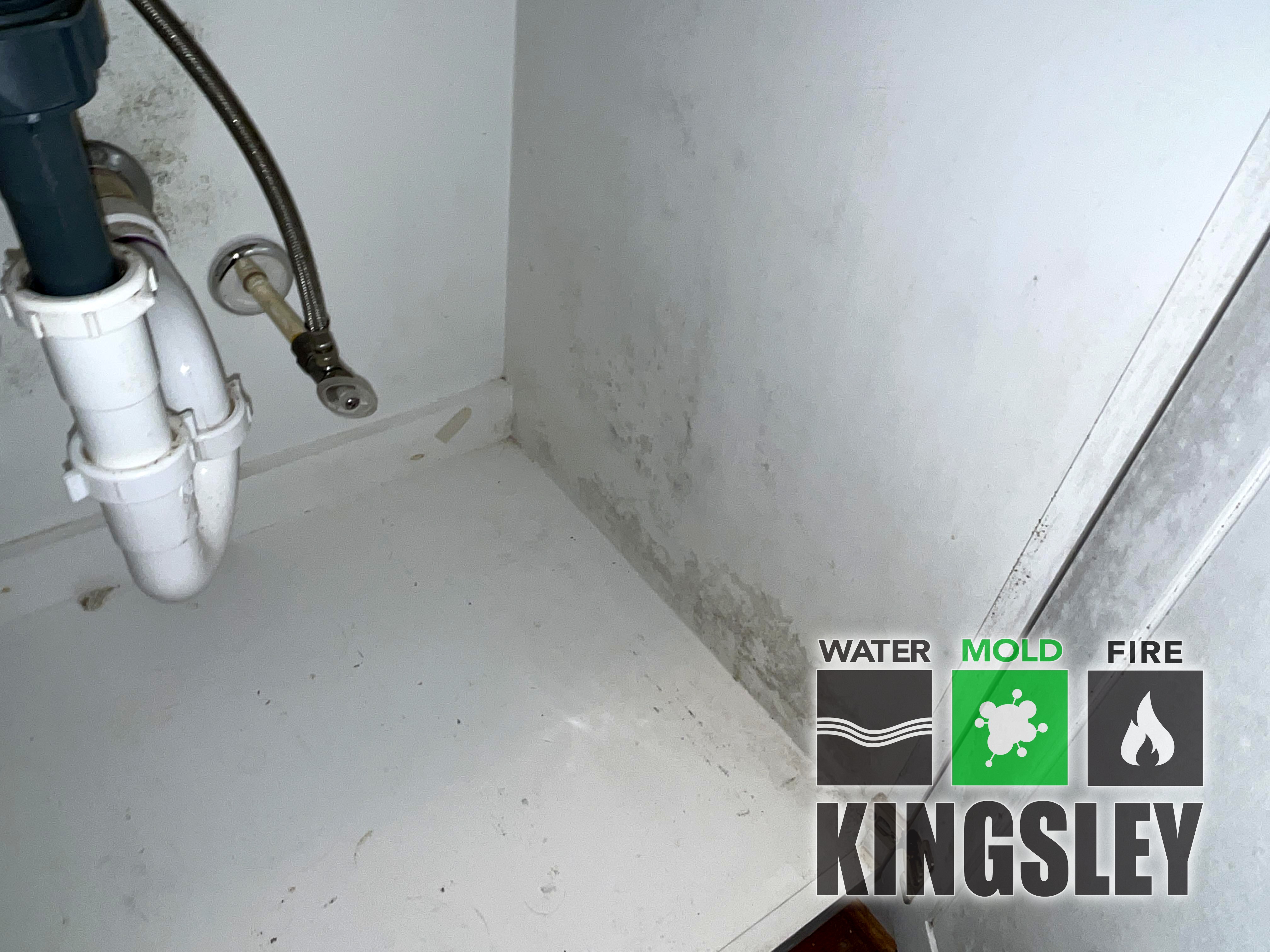
West Columbia, SC
September 23, 2026
Kingsley water damage & Fire cleanup handled under-sink mold cleanup at p-trap for a West Columbia, SC property. The camera and meters guided scope from the start: under-sink mold behind plumbing P-trap during cleanup. That photo-backed condition check defined where finishes had to open, what could stay, and where drying equipment had to aim. The home needed source control, selective removal of non-salvageable wet or contaminated material, and verified drying of what remained in West Columbia. We avoided opening dry cavities that meters and the camera did not support on this West Columbia stop.
During mitigation we controlled the work zone so debris and spores did not track into clean rooms. Where finishes blocked drying, we opened only the wet footprint shown by meters and the photo record. Non-salvageable saturated material was bagged and removed; salvageable framing and sheathing were cleaned and treated when microbial staining warranted it. HEPA vacuuming and careful handling limited dust from demo. The unique on-site detail that guided this West Columbia file was under-sink mold behind plumbing P-trap during cleanup. We labeled the wet edge on the sketch so later visits matched day-one photos in West Columbia.
IICRC water-damage and mold-remediation practice prioritizes stop the moisture source, remove what cannot be dried in place, clean and treat remaining structures with an EPA-registered antimicrobial when staining warranted it, then dry to target with measured air movement and dehumidification. We placed air movers and dehumidifiers to match the wet assembly, aimed airflow along the wet materials in the photo, and rechecked moisture on a 3–7 day drying calendar with overnight humidity checks—never past about a week. Skipping that short monitoring window is how a straightforward wet call becomes secondary damage or a musty return odor in West Columbia.
As readings stabilized within that first-week window, we demobilized equipment and left the work area ready for any needed rebuild of finishes or insulation. Photo documentation of the mitigation state stayed with the job file for the West Columbia property, including the same angle that showed under-sink mold behind plumbing P-trap during cleanup. Helpful takeaway: Musty odor that returns after a quick wipe in West Columbia usually means moisture is still feeding the stain—map it before painting over it.
Homeowners comparing under-sink mold cleanup at p-trap options in the West Columbia area should expect a written moisture map, selective removal instead of full tear-out when meters allow, and a clear end point when materials hit dry goal—not an open-ended equipment rental. Kingsley water damage & Fire cleanup follows that measured approach so rebuild decisions rest on documented conditions rather than a calendar guess.
When rebuild starts, keep the dry-standard notes handy for flooring, cabinet, or insulation trades so no one closes a cavity that still reads wet. That handoff is part of finishing under-sink mold cleanup at p-trap correctly in West Columbia after mitigation—not a separate sales pitch.
Throughout the West Columbia job we kept communication practical: what was wet, what was removed, what was drying, and when meters said the assembly met goal. That plain record is what homeowners and trades use after under-sink mold cleanup at p-trap—not jargon and not an invented multi-week timeline.
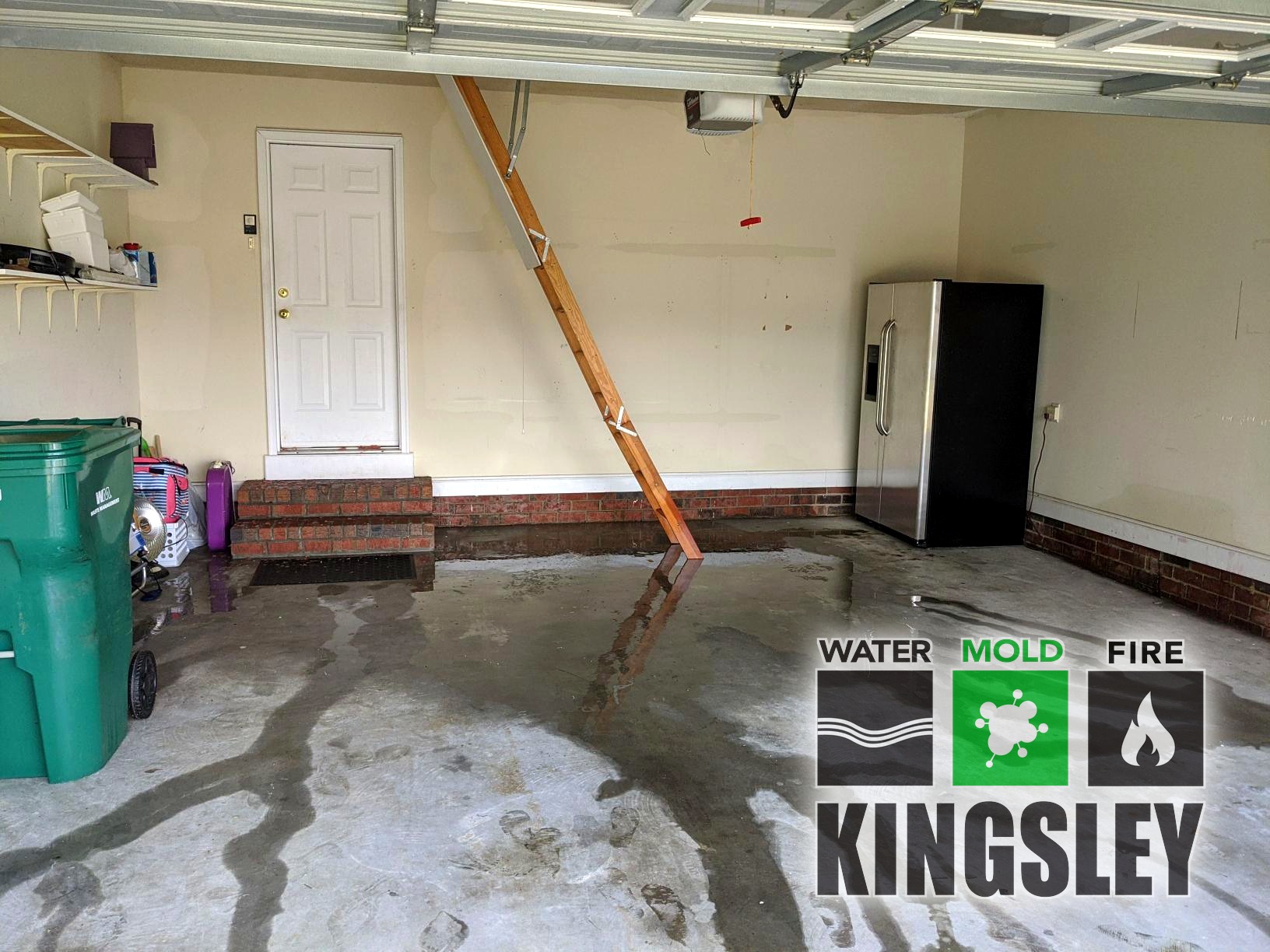
Liberty Hill, SC
September 23, 2026
Kingsley water damage & Fire cleanup responded for tile floor moisture mapping and water cleanup in Liberty Hill, SC and began with a photo-backed survey that captured tile Floor Moisture Mapping and Water Cleanup. That photo-backed condition check defined where finishes had to open, what could stay, and where drying equipment had to aim. The home needed source control, selective removal of non-salvageable wet or contaminated material, and verified drying of what remained in Liberty Hill. We labeled the wet edge on the sketch so later visits matched day-one photos in Liberty Hill.
During mitigation we controlled the work zone so debris did not track into clean rooms. Where finishes blocked drying, we opened only the wet footprint shown by meters and the photo record. Non-salvageable saturated material was bagged and removed; salvageable framing and sheathing were cleaned. HEPA vacuuming and careful handling limited dust from demo. The unique on-site detail that guided this Liberty Hill file was tile Floor Moisture Mapping and Water Cleanup. Quiet work windows were held where the household schedule required it, without stretching the drying calendar past about a week.
IICRC water-damage practice prioritizes stop the moisture source, remove what cannot be dried in place, clean remaining structures, then dry to target with measured air movement and dehumidification. We placed air movers and dehumidifiers to match the wet assembly, aimed airflow along the wet materials in the photo, and rechecked moisture on a 3–7 day drying calendar with overnight humidity checks—never past about a week. Skipping that short monitoring window is how a straightforward wet call becomes secondary damage or a musty return odor in Liberty Hill.
As readings stabilized within that first-week window, we demobilized equipment and left the work area ready for any needed rebuild of finishes or insulation. Photo documentation of the mitigation state stayed with the job file for the Liberty Hill property, including the same angle that showed tile Floor Moisture Mapping and Water Cleanup. Helpful takeaway: If flooring feels soft, edges cup, or a stain keeps spreading in Liberty Hill, stop walking the wet zone and request moisture mapping before new finishes go down.
Homeowners comparing tile floor moisture mapping and water cleanup options in the Liberty Hill area should expect a written moisture map, selective removal instead of full tear-out when meters allow, and a clear end point when materials hit dry goal—not an open-ended equipment rental. Kingsley water damage & Fire cleanup follows that measured approach so rebuild decisions rest on documented conditions rather than a calendar guess.
When rebuild starts, keep the dry-standard notes handy for flooring, cabinet, or insulation trades so no one closes a cavity that still reads wet. That handoff is part of finishing tile floor moisture mapping and water cleanup correctly in Liberty Hill after mitigation—not a separate sales pitch.
Throughout the Liberty Hill job we kept communication practical: what was wet, what was removed, what was drying, and when meters said the assembly met goal. That plain record is what homeowners and trades use after tile floor moisture mapping and water cleanup—not jargon and not an invented multi-week timeline.
St Andrews, SC
September 23, 2026
Kingsley water damage & Fire cleanup handled extraction, baseboard protection, and verified drying over a 3–7 day window in St Andrews, SC.
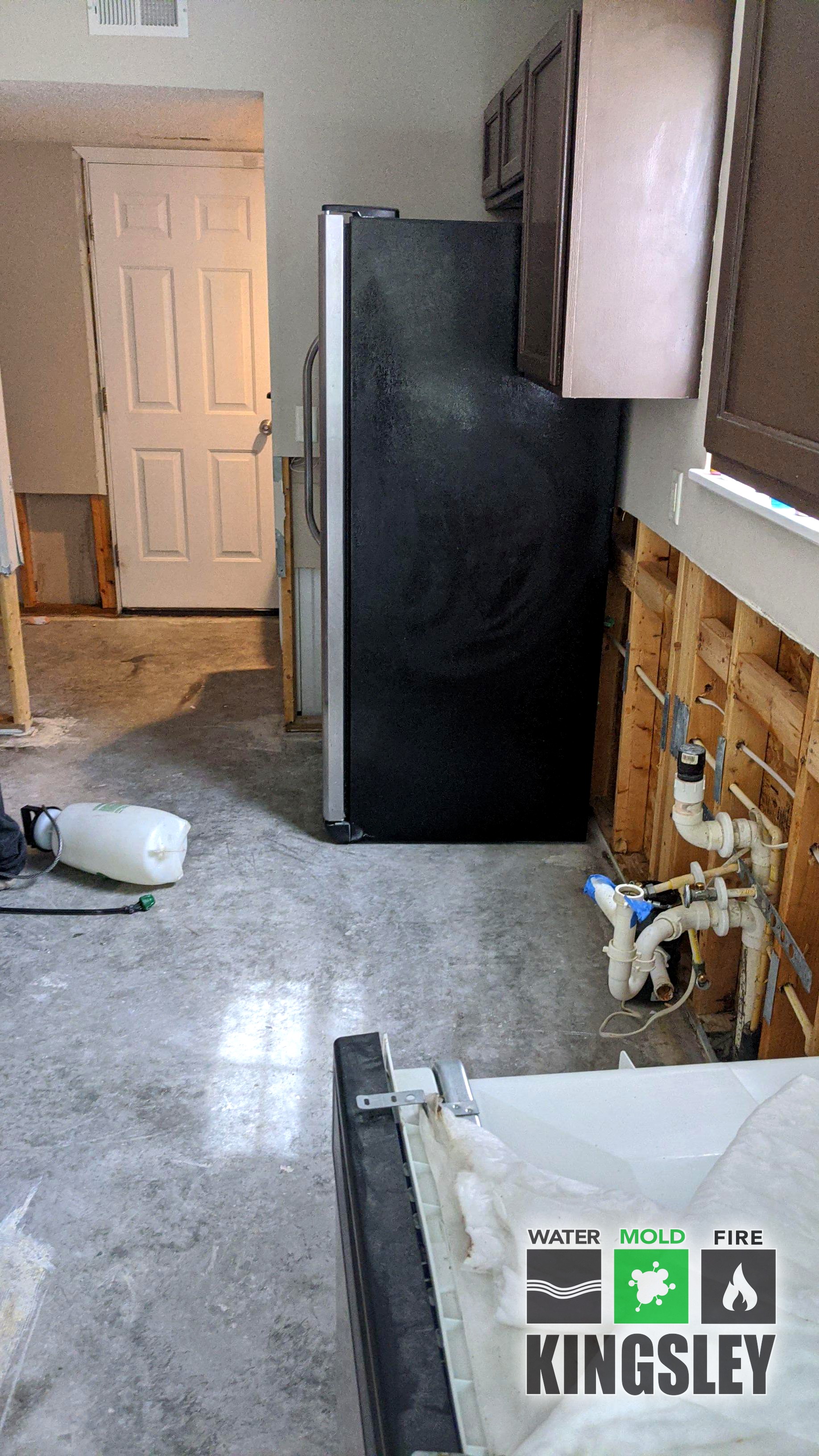
Cayce, SC
September 22, 2026
Kingsley water damage & Fire cleanup completed hvac closet moisture and mold cleanup in Cayce, SC. On arrival we walked the loss area and documented hVAC Closet Moisture and Mold Cleanup. That photo-backed condition check defined where finishes had to open, what could stay, and where drying equipment had to aim. The home needed source control, selective removal of non-salvageable wet or contaminated material, and verified drying of what remained in Cayce. We avoided opening dry cavities that meters and the camera did not support on this Cayce stop.
During mitigation we controlled the work zone so debris and spores did not track into clean rooms. Where finishes blocked drying, we opened only the wet footprint shown by meters and the photo record. Non-salvageable saturated material was bagged and removed; salvageable framing and sheathing were cleaned and treated when microbial staining warranted it. HEPA vacuuming and careful handling limited dust from demo. The unique on-site detail that guided this Cayce file was hVAC Closet Moisture and Mold Cleanup. Quiet work windows were held where the household schedule required it, without stretching the drying calendar past about a week.
IICRC water-damage and mold-remediation practice prioritizes stop the moisture source, remove what cannot be dried in place, clean and treat remaining structures with an EPA-registered antimicrobial when staining warranted it, then dry to target with measured air movement and dehumidification. We placed air movers and dehumidifiers to match the wet assembly, aimed airflow along the wet materials in the photo, and rechecked moisture on a 3–7 day drying calendar with overnight humidity checks—never past about a week. Skipping that short monitoring window is how a straightforward wet call becomes secondary damage or a musty return odor in Cayce.
As readings stabilized within that first-week window, we demobilized equipment and left the work area ready for any needed rebuild of finishes or insulation. Photo documentation of the mitigation state stayed with the job file for the Cayce property, including the same angle that showed hVAC Closet Moisture and Mold Cleanup. Helpful takeaway: Musty odor that returns after a quick wipe in Cayce usually means moisture is still feeding the stain—map it before painting over it.
Homeowners comparing hvac closet moisture and mold cleanup options in the Cayce area should expect a written moisture map, selective removal instead of full tear-out when meters allow, and a clear end point when materials hit dry goal—not an open-ended equipment rental. Kingsley water damage & Fire cleanup follows that measured approach so rebuild decisions rest on documented conditions rather than a calendar guess.
When rebuild starts, keep the dry-standard notes handy for flooring, cabinet, or insulation trades so no one closes a cavity that still reads wet. That handoff is part of finishing hvac closet moisture and mold cleanup correctly in Cayce after mitigation—not a separate sales pitch.
Throughout the Cayce job we kept communication practical: what was wet, what was removed, what was drying, and when meters said the assembly met goal. That plain record is what homeowners and trades use after hvac closet moisture and mold cleanup—not jargon and not an invented multi-week timeline.
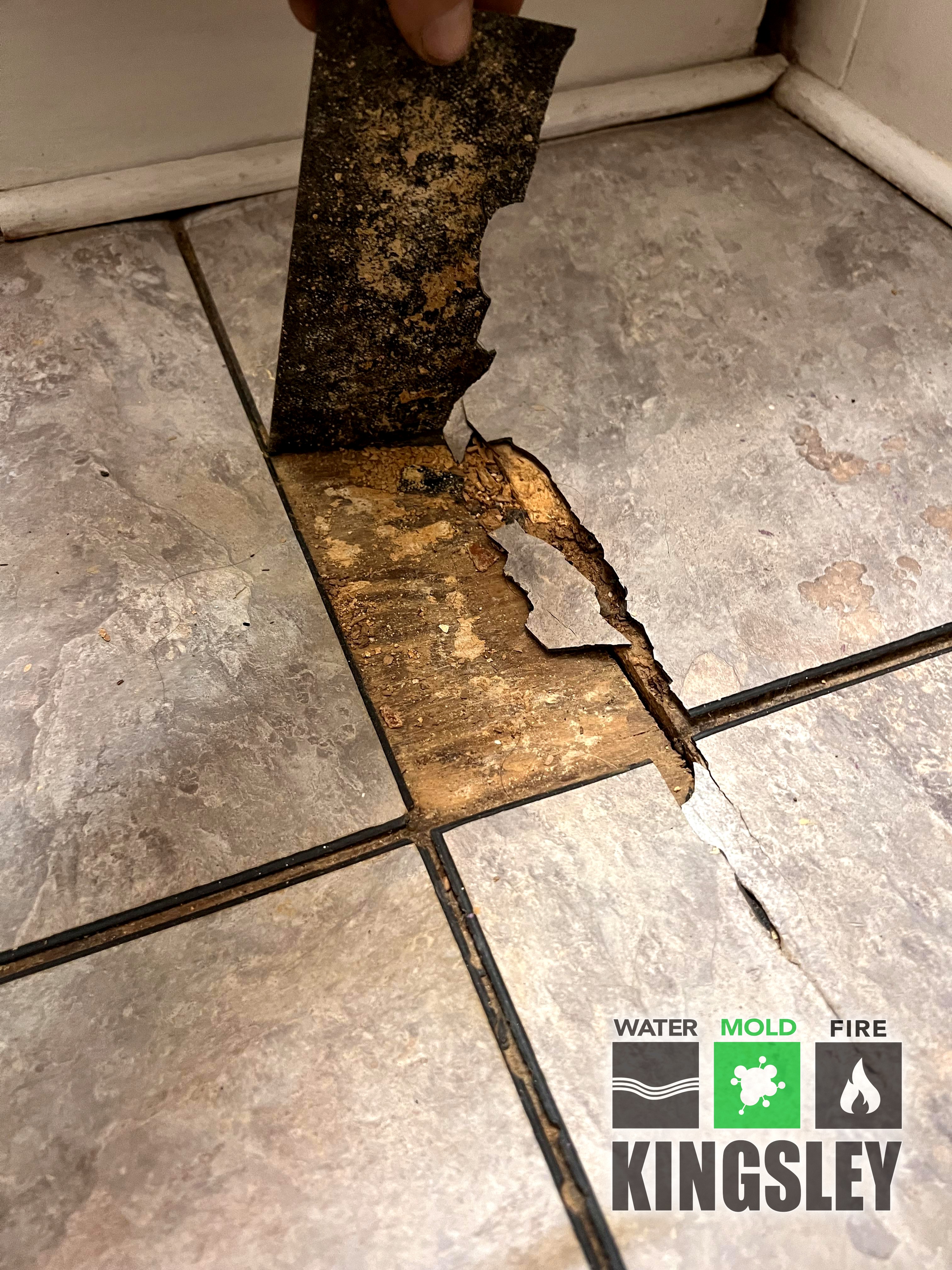
Ridgeway, SC
September 22, 2026
Kingsley water damage & Fire cleanup handled water damage restoration under vinyl tile in Ridgeway, SC. We started with a full floor inspection and moisture mapping of the soft zone. We walked the room for springy tiles, lifting edges, and grout lines that had opened up. Pin and non-invasive meters mapped how far moisture had traveled under the finish so the open area matched the wet footprint instead of a guess. The vinyl squares in the problem zone needed removal — the covering was already damaged and deteriorated before this work began — and elevated moisture found during inspection confirmed the finish layer could not stay. Once we outlined the problem zone, we lifted the damaged covering from a stable tile edge so debris stayed in the work area and clean parts of the room stayed clean.
With the covering peeled back, the wooden subfloor matched what the meters had already flagged. Dark, irregular staining ran across the exposed plywood, with crumbling fibers and loose fragments along the opening. A wet gap showed where panels met and moisture had already wicked deeper into the assembly. The adjacent tile edge was cracked and jagged where the assembly had lost strength, and the underside of the lifted vinyl square carried dark, patchy residue consistent with long-term moisture at the adhesive line. Gray stone-pattern vinyl with dark grout lines framed the opening, and white baseboard with quarter-round remained at the wall while the deteriorated center came up. That deterioration develops when moisture sits between finish flooring and structural wood long enough to break down the board and invite microbial growth. We removed the damaged pieces under controlled demolition and bagged material that could not be salvaged. Surrounding tile and grout were cleaned so we kept a sound working edge for the rest of the scope.
After the wet section was out, we cleaned exposed framing and subfloor surfaces and treated them with an EPA-registered antimicrobial where staining and condition warranted it. We controlled contaminated dust with careful handling and HEPA cleanup as we worked. The opening stayed contained so adjoining rooms were not pulled into the work zone. Leaving stained, crumbly wood under a new finish is how flooring calls turn into mold remediation callbacks months later, so removal and surface cleaning came before any rebuild talk. IICRC-aligned water damage restoration prioritizes source control, selective demolition of non-salvageable finishes, and verified drying of remaining structural materials — not covering over a soft spot and hoping it holds.
We then set air movers and dehumidification so remaining structural wood could dry under psychrometric monitoring. Free water comes out first on any wet floor; after that, dry air across wet wood and moisture removal from the room until readings stabilize is the real structural drying work. We returned for monitoring visits, rechecked moisture content in the exposed assembly, and adjusted equipment until materials met drying goals. Skipping that monitoring window is what turns a straightforward floor opening into secondary damage in the next season. We kept documentation of the opening — the stained subfloor, the removed covering, and the cleaned cavity — with the file so the homeowner and rebuild crew could see why the finish layer had to come up before new vinyl or tile went down.
When readings supported the next phase, we left the area ready for new subfloor and finish flooring on a clean, dry substrate. Soft tile and hidden rot in Ridgeway often look like a small soft spot until you lift the covering; opening and verifying first stops the damage from spreading and leaves the structure ready for reconstruction. The same inspection-first approach protects nearby rooms in a Ridgeway home from being pulled into a larger demo once moisture has already wicked under a continuous tile field. If tile feels spongy underfoot or grout darkens next to a soft corner, stop walking that area and have the subfloor checked before anyone sets new tile over it.
Abbeville, SC
September 22, 2026
Kingsley water damage & Fire cleanup handled moisture mapping, containment as needed, and verified drying over a 3–7 day window in Abbeville, SC.
Lugoff, SC
September 22, 2026
Ceiling Stain Moisture Mapping in Lugoff.
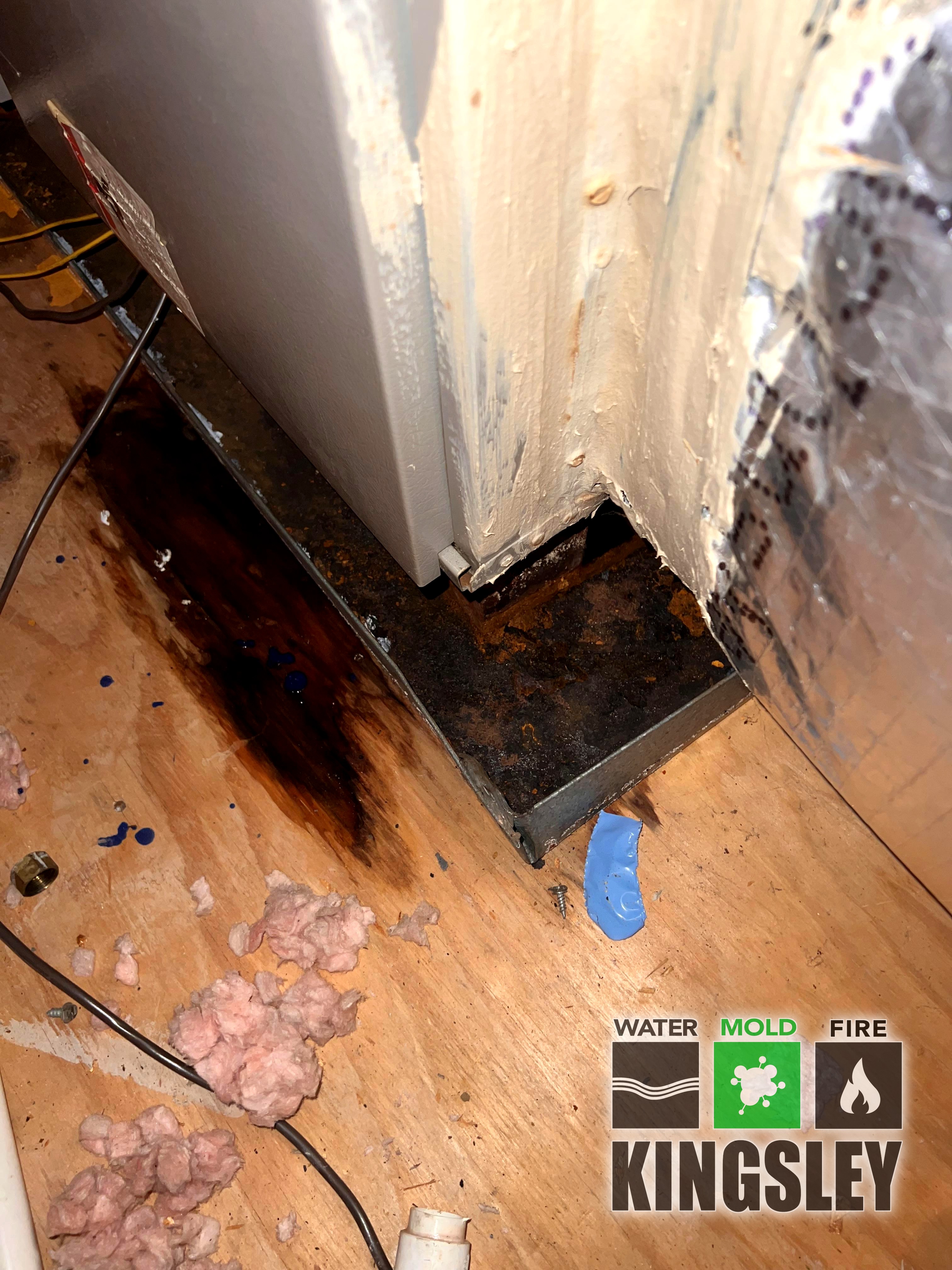
Florence, SC
September 22, 2026
Kingsley water damage & Fire cleanup handled crawlspace moisture meter mapping and cleanup in Florence, SC after elevated wood moisture next to plumbing in the crawl. We began with a room-by-room and assembly-level inspection of the crawlspace framing beside plumbing, documenting moisture meter on wood framing beside PVC plumbing confirming a high reading in the wet zone. That visual and instrument check — not a guess from the hallway — defined where finishes had to open, what could stay, and where drying equipment had to aim. the home needed source control, selective removal of non-salvageable wet or contaminated material, and verified drying of what remained.
During mitigation we controlled the work zone so debris and moisture did not track into clean rooms. Where finishes blocked drying, we opened only the wet footprint shown by meters and the photo record. Contaminated or saturated materials were bagged and removed; salvageable framing and sheathing were cleaned and treated with an EPA-registered antimicrobial when staining or microbial growth warranted it. HEPA vacuuming and careful handling limited dust from demo. The unique on-site detail that guided this file was moisture meter on wood framing beside PVC plumbing confirming a high reading in the wet zone — that condition stayed in the documentation so the homeowner and any follow-on trade could see exactly what drove the scope in Florence.
IICRC water-damage and mold-remediation practice prioritizes stop-the-source, remove what cannot be dried in place, clean and treat remaining structures, then dry to target with measured air movement and dehumidification. We placed air movers and/or dehumidifiers to match the wet assembly, ran equipment under monitoring, and rechecked moisture within the first week of mitigation rather than leaving gear unattended for an open-ended stretch. Skipping that short monitoring window is how a straightforward wet call becomes secondary damage in adjoining cavities.
As readings stabilized and the work area met a clean, dry condition, we demobilized equipment and left the crawlspace framing beside plumbing ready for any needed rebuild of finishes. Photo documentation of the mitigation state stayed with the claim file. If you see standing water, elevated meter readings, or soft/stained flooring in Florence, stop the source and start professional extraction and drying within the first days — delayed drying is what turns a contained wet zone into a larger structural call.
IICRC water-damage and mold-remediation practice prioritizes stop the moisture source, remove what cannot be dried in place, clean and treat remaining structures, then dry to target with measured air movement and dehumidification. On this Florence file we ran air movers and dehumidifiers against the wet assembly under monitoring and rechecked moisture on a 3–7 day drying calendar—never past about a week. Skipping that short window is how secondary damage or musty odor returns after finishes go back up.
As readings stabilized within that first-week window, equipment came out and the work area was left ready for any needed rebuild. Photo documentation of the mitigation state stayed with the job file. Helpful takeaway: If you see standing water, elevated meter readings, or soft/stained flooring in Florence, stop the source and start professional extraction and drying within the first days — delayed drying is what turns a contained wet zone into a larger structural call.
Homeowners comparing crawlspace moisture meter mapping and cleanup options in the Florence area should expect a written moisture map, selective removal instead of full tear-out when meters allow, and a clear end point when materials hit dry goal—not an open-ended equipment rental. Kingsley water damage & Fire cleanup follows that measured approach so rebuild decisions rest on documented conditions rather than a calendar guess.
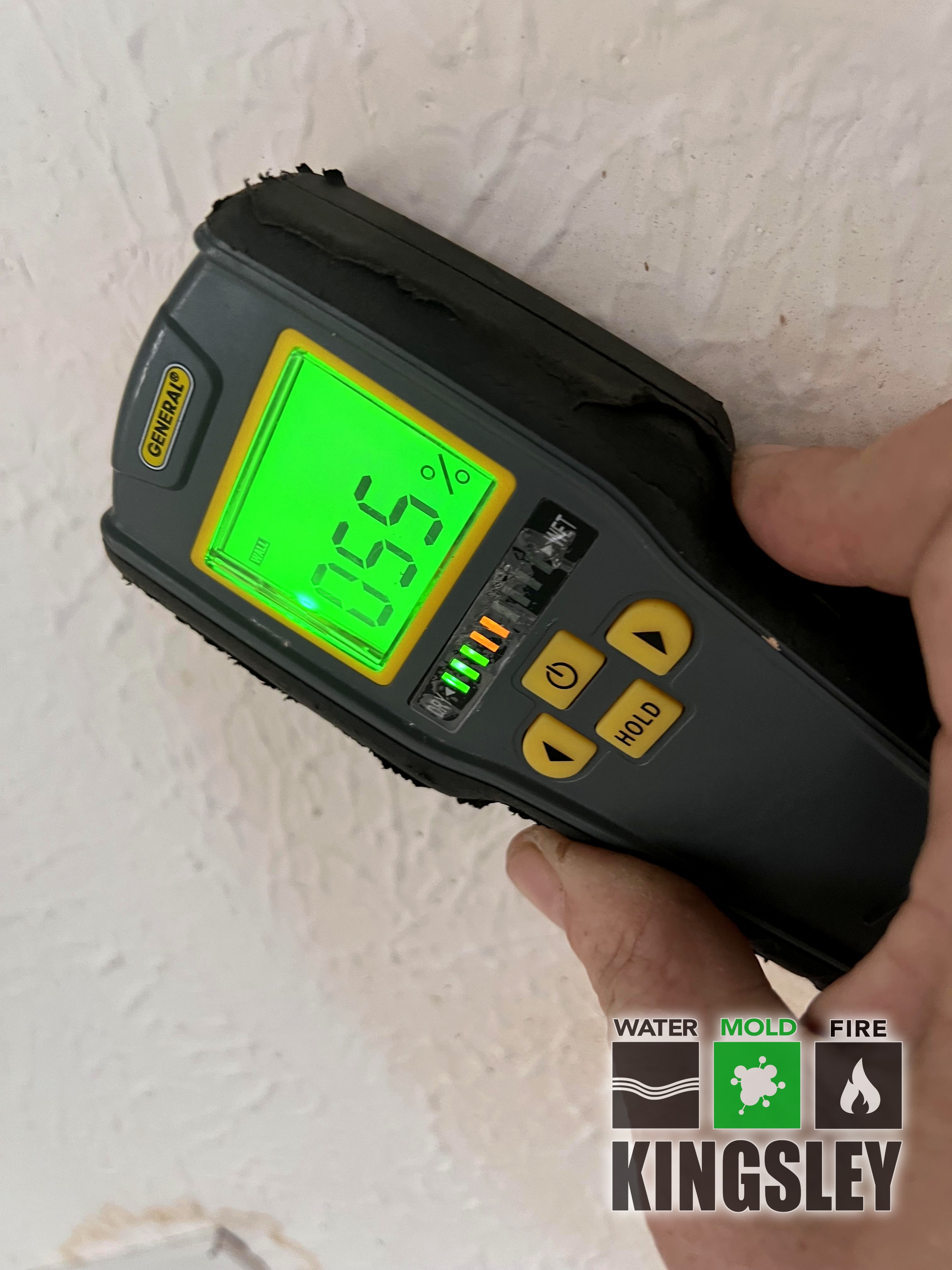
Springdale, SC
September 22, 2026
In Springdale, SC, Kingsley water damage & Fire cleanup performed structural wood moisture meter mapping after documenting moisture meter reading wet on structural wood during the initial condition check. That photo-backed condition check defined where finishes had to open, what could stay, and where drying equipment had to aim. The home needed source control, selective removal of non-salvageable wet or contaminated material, and verified drying of what remained in Springdale. We labeled the wet edge on the sketch so later visits matched day-one photos.
During mitigation we controlled the work zone so debris did not track into clean rooms. Where finishes blocked drying, we opened only the wet footprint shown by meters and the photo record. Non-salvageable saturated material was bagged and removed; salvageable framing and sheathing were cleaned. HEPA vacuuming and careful handling limited dust from demo. The unique on-site detail that guided this Springdale file was moisture meter reading wet on structural wood. Contents near the work path were shifted or protected before tools came out.
IICRC water-damage practice prioritizes stop the moisture source, remove what cannot be dried in place, clean remaining structures, then dry to target with measured air movement and dehumidification. We placed air movers and dehumidifiers to match the wet assembly, aimed airflow along the wet materials in the photo, and rechecked moisture on a 3–7 day drying calendar with overnight humidity checks—never past about a week. Quiet work windows were held where the household schedule required it, without stretching past that first-week ceiling. Skipping that short monitoring window is how a straightforward wet call becomes secondary damage or a musty return odor in Springdale.
As readings stabilized within that first-week window, we demobilized equipment and left the work area ready for any needed rebuild of finishes or insulation. Photo documentation of the mitigation state stayed with the job file for the Springdale property, including the same angle that showed moisture meter reading wet on structural wood. Helpful takeaway: If flooring feels soft, edges cup, or a stain keeps spreading in Springdale, stop walking the wet zone and request moisture mapping before new finishes go down.
Homeowners comparing structural wood moisture meter mapping options in the Springdale area should expect a written moisture map, selective removal instead of full tear-out when meters allow, and a clear end point when materials hit dry goal—not an open-ended equipment rental. Kingsley water damage & Fire cleanup follows that measured approach so rebuild decisions rest on documented conditions rather than a calendar guess.
When rebuild starts, keep the dry-standard notes handy for flooring, cabinet, or insulation trades so no one closes a cavity that still reads wet. That handoff is part of finishing structural wood moisture meter mapping correctly in Springdale after mitigation. Throughout the job we kept communication practical: what was wet, what was removed, what was drying, and when meters said the assembly met goal—without inventing a multi-week timeline.
For this Springdale stop, the close-out standard stayed simple: meters at goal, photo set filed, and no equipment left running past the 3–7 day band.
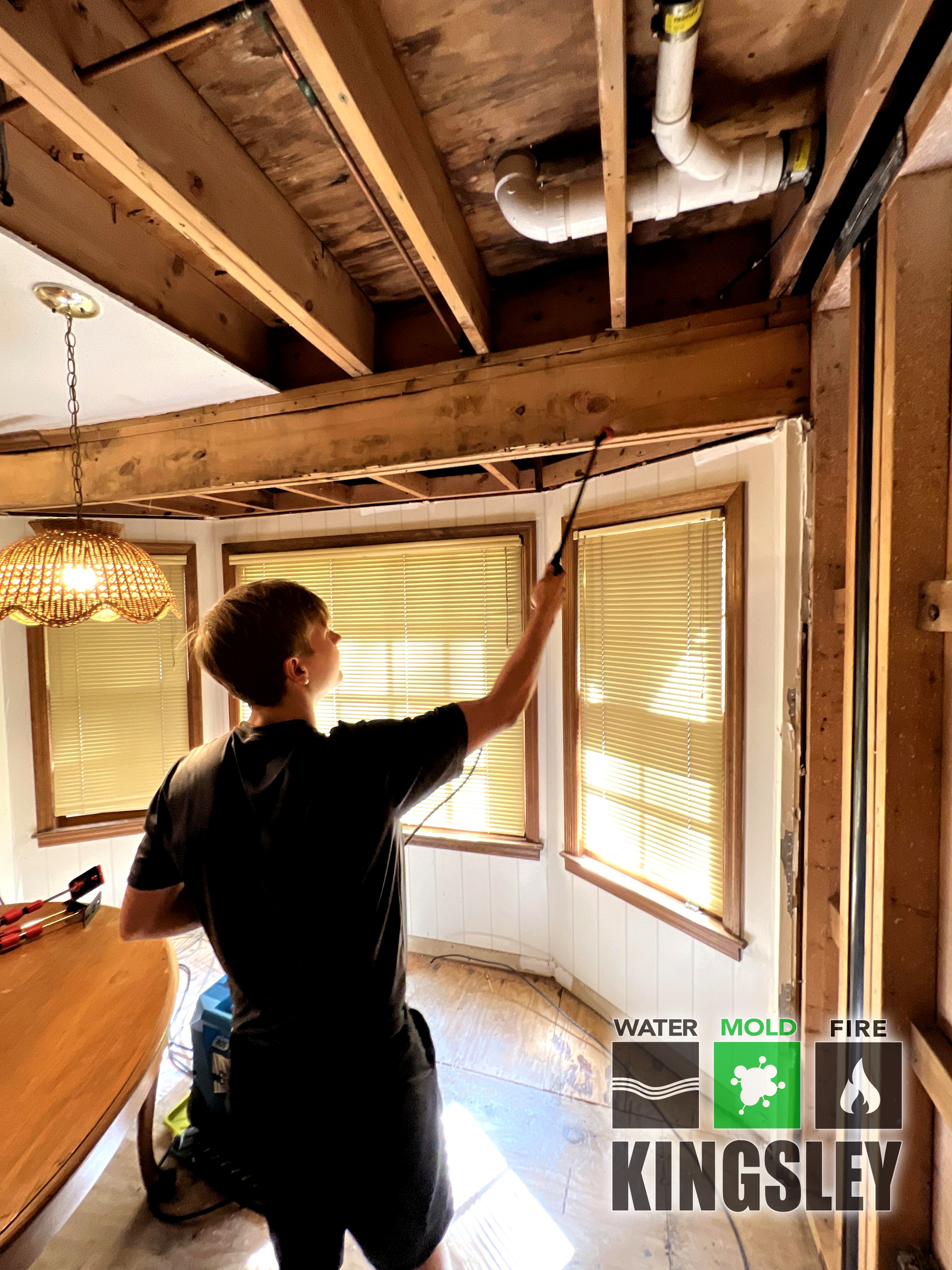
Georgetown, SC
September 22, 2026
Kingsley water damage & Fire cleanup completed crawlspace joist mold inspection and cleanup in Georgetown, SC. On arrival we walked the loss area and documented crawlspace Joist Mold Inspection and Cleanup. That photo-backed condition check defined where finishes had to open, what could stay, and where drying equipment had to aim. The home needed source control, selective removal of non-salvageable wet or contaminated material, and verified drying of what remained in Georgetown. We avoided opening dry cavities that meters and the camera did not support on this Georgetown stop.
During mitigation we controlled the work zone so debris and spores did not track into clean rooms. Where finishes blocked drying, we opened only the wet footprint shown by meters and the photo record. Non-salvageable saturated material was bagged and removed; salvageable framing and sheathing were cleaned and treated when microbial staining warranted it. HEPA vacuuming and careful handling limited dust from demo. The unique on-site detail that guided this Georgetown file was crawlspace Joist Mold Inspection and Cleanup. We labeled the wet edge on the sketch so later visits matched day-one photos in Georgetown.
IICRC water-damage and mold-remediation practice prioritizes stop the moisture source, remove what cannot be dried in place, clean and treat remaining structures with an EPA-registered antimicrobial when staining warranted it, then dry to target with measured air movement and dehumidification. We placed air movers and dehumidifiers to match the crawlspace bay, aimed airflow along the wet materials in the photo, and rechecked moisture on a 3–7 day drying calendar with overnight humidity checks—never past about a week. Skipping that short monitoring window is how a straightforward wet call becomes secondary damage or a musty return odor in Georgetown.
As readings stabilized within that first-week window, we demobilized equipment and left the work area ready for any needed rebuild of finishes or insulation. Photo documentation of the mitigation state stayed with the job file for the Georgetown property, including the same angle that showed crawlspace Joist Mold Inspection and Cleanup. Helpful takeaway: Dark staining on crawl joists in Georgetown is a reason to map moisture before buttoning the bay back up with fresh vapor barrier.
Homeowners comparing crawlspace joist mold inspection and cleanup options in the Georgetown area should expect a written moisture map, selective removal instead of full tear-out when meters allow, and a clear end point when materials hit dry goal—not an open-ended equipment rental. Kingsley water damage & Fire cleanup follows that measured approach so rebuild decisions rest on documented conditions rather than a calendar guess.
When rebuild starts, keep the dry-standard notes handy for flooring, cabinet, or insulation trades so no one closes a cavity that still reads wet. That handoff is part of finishing crawlspace joist mold inspection and cleanup correctly in Georgetown after mitigation—not a separate sales pitch.
Throughout the Georgetown job we kept communication practical: what was wet, what was removed, what was drying, and when meters said the assembly met goal. That plain record is what homeowners and trades use after crawlspace joist mold inspection and cleanup—not jargon and not an invented multi-week timeline.
Jenkinsville, SC
September 22, 2026
Kingsley water damage & Fire cleanup handled containment as needed, HEPA cleaning, and verified drying over a 3–7 day window in Jenkinsville, SC.
Jenkinsville, SC
September 21, 2026
Kingsley water damage & Fire cleanup handled mapping under LVP, targeted removal, and verified drying over a 3–7 day window in Jenkinsville, SC.
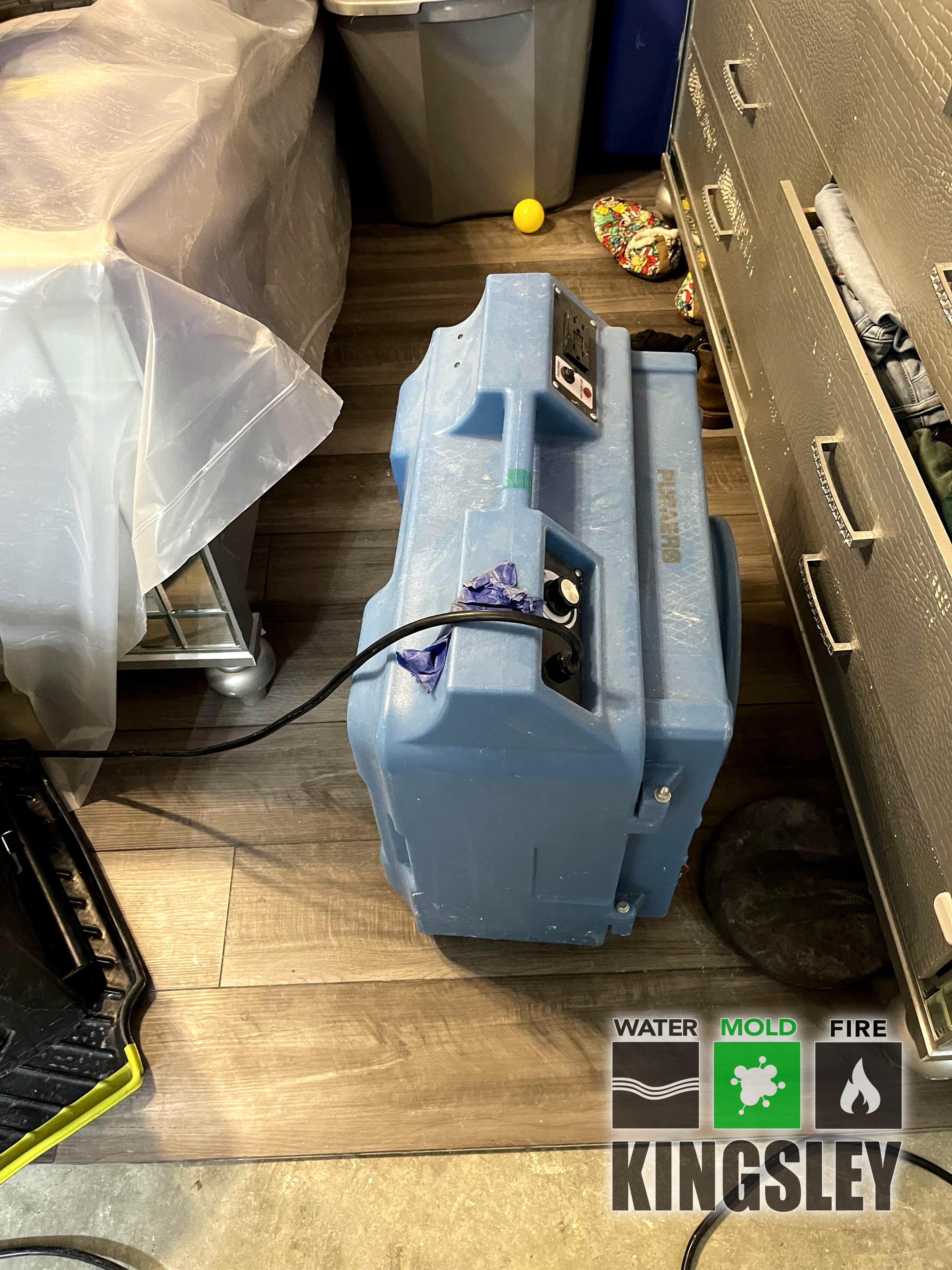
Jenkinsville, SC
September 21, 2026
Kingsley water damage & Fire cleanup completed vinyl plank edge water damage cleanup in Jenkinsville, SC. On arrival we walked the loss area and documented vinyl Plank Edge Water Damage Cleanup. That photo-backed condition check defined where finishes had to open, what could stay, and where drying equipment had to aim. The home needed source control, selective removal of non-salvageable wet or contaminated material, and verified drying of what remained in Jenkinsville. We labeled the wet edge on the sketch so later visits matched day-one photos.
During mitigation we controlled the work zone so debris did not track into clean rooms. Where finishes blocked drying, we opened only the wet footprint shown by meters and the photo record. Non-salvageable saturated material was bagged and removed; salvageable framing and sheathing were cleaned. HEPA vacuuming and careful handling limited dust from demo. The unique on-site detail that guided this Jenkinsville file was vinyl Plank Edge Water Damage Cleanup. Contents near the work path were shifted or protected before tools came out.
IICRC water-damage practice prioritizes stop the moisture source, remove what cannot be dried in place, clean remaining structures, then dry to target with measured air movement and dehumidification. We placed air movers and dehumidifiers to match the wet assembly, aimed airflow along the wet materials in the photo, and rechecked moisture on a 3–7 day drying calendar with overnight humidity checks—never past about a week. Quiet work windows were held where the household schedule required it, without stretching past that first-week ceiling. Skipping that short monitoring window is how a straightforward wet call becomes secondary damage or a musty return odor in Jenkinsville.
As readings stabilized within that first-week window, we demobilized equipment and left the work area ready for any needed rebuild of finishes or insulation. Photo documentation of the mitigation state stayed with the job file for the Jenkinsville property, including the same angle that showed vinyl Plank Edge Water Damage Cleanup. Helpful takeaway: If flooring feels soft, edges cup, or a stain keeps spreading in Jenkinsville, stop walking the wet zone and request moisture mapping before new finishes go down.
Homeowners comparing vinyl plank edge water damage cleanup options in the Jenkinsville area should expect a written moisture map, selective removal instead of full tear-out when meters allow, and a clear end point when materials hit dry goal—not an open-ended equipment rental. Kingsley water damage & Fire cleanup follows that measured approach so rebuild decisions rest on documented conditions rather than a calendar guess.
When rebuild starts, keep the dry-standard notes handy for flooring, cabinet, or insulation trades so no one closes a cavity that still reads wet. That handoff is part of finishing vinyl plank edge water damage cleanup correctly in Jenkinsville after mitigation. Throughout the job we kept communication practical: what was wet, what was removed, what was drying, and when meters said the assembly met goal—without inventing a multi-week timeline.
For this Jenkinsville stop, the close-out standard stayed simple: meters at goal, photo set filed, and no equipment left running past the 3–7 day band.
Abbeville, SC
September 21, 2026
Kingsley water damage & Fire cleanup handled moisture mapping, containment as needed, and verified drying over a 3–7 day window in Abbeville, SC.
Lugoff, SC
September 21, 2026
HVAC Closet Water Damage Cleanup in Lugoff.
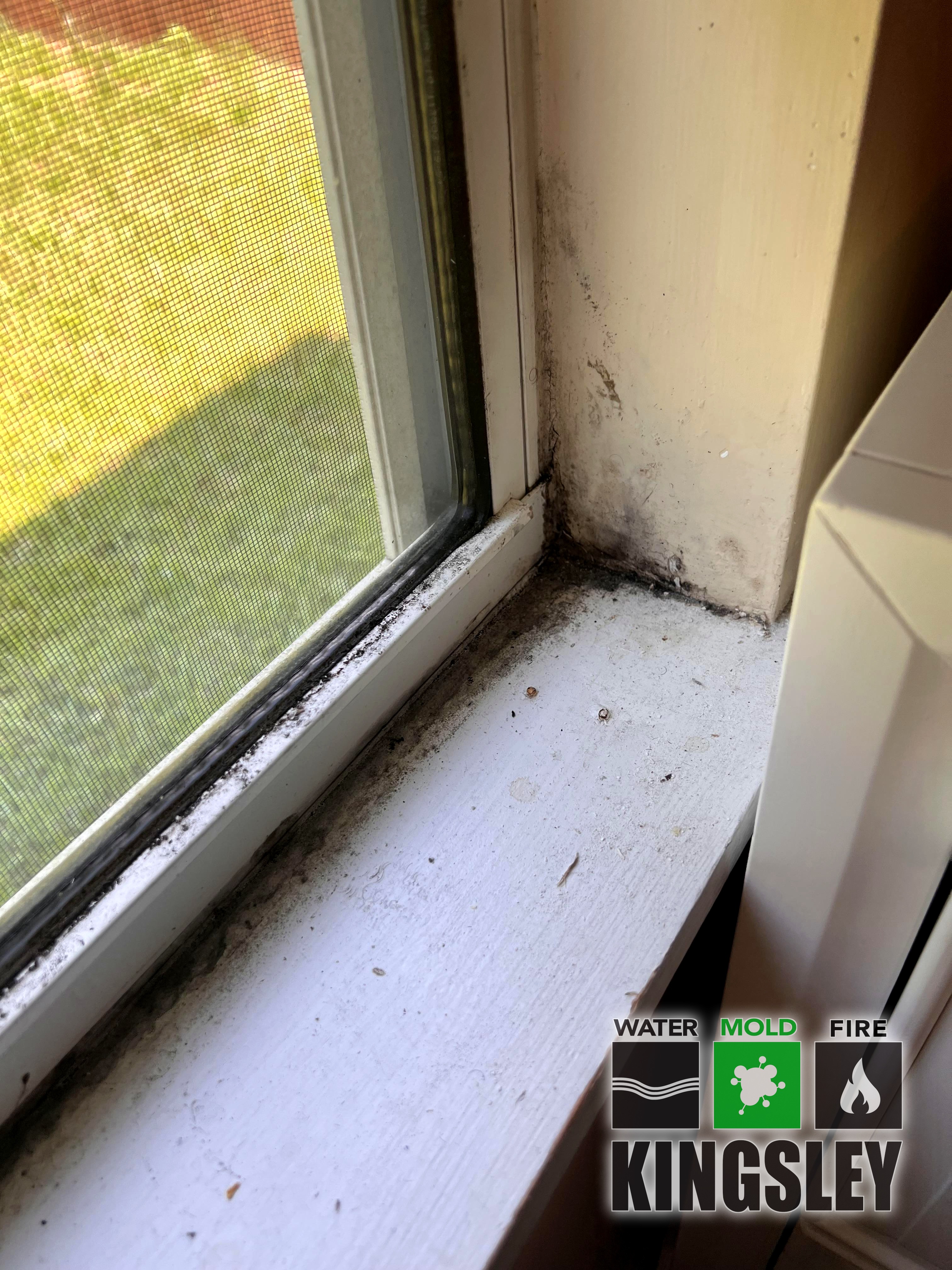
Florence, SC
September 21, 2026
Kingsley water damage & Fire cleanup handled window sill mold cleanup and remediation in Florence, SC after window-area mold from moisture at the sill/jamb. We began with a room-by-room and assembly-level inspection of the window sill and jamb assembly, documenting mold staining along the window sill and jamb where condensation and intrusion marked the finish. That visual and instrument check — not a guess from the hallway — defined where finishes had to open, what could stay, and where drying equipment had to aim. the home needed source control, selective removal of non-salvageable wet or contaminated material, and verified drying of what remained.
During mitigation we controlled the work zone so debris and moisture did not track into clean rooms. Where finishes blocked drying, we opened only the wet footprint shown by meters and the photo record. Contaminated or saturated materials were bagged and removed; salvageable framing and sheathing were cleaned and treated with an EPA-registered antimicrobial when staining or microbial growth warranted it. HEPA vacuuming and careful handling limited dust from demo. The unique on-site detail that guided this file was mold staining along the window sill and jamb where condensation and intrusion marked the finish — that condition stayed in the documentation so the homeowner and any follow-on trade could see exactly what drove the scope in Florence.
IICRC water-damage and mold-remediation practice prioritizes stop-the-source, remove what cannot be dried in place, clean and treat remaining structures, then dry to target with measured air movement and dehumidification. We placed air movers and/or dehumidifiers to match the wet assembly, ran equipment under monitoring, and rechecked moisture within the first week of mitigation rather than leaving gear unattended for an open-ended stretch. Skipping that short monitoring window is how a straightforward wet call becomes secondary damage in adjoining cavities.
As readings stabilized and the work area met a clean, dry condition, we demobilized equipment and left the window sill and jamb assembly ready for any needed rebuild of finishes. Photo documentation of the mitigation state stayed with the claim file. If you notice musty odors, spotting on wood, or staining at cabinets, vents, or window sills in Florence, have the moisture source and affected materials inspected before finishes hide the growth path.
IICRC water-damage and mold-remediation practice prioritizes stop the moisture source, remove what cannot be dried in place, clean and treat remaining structures, then dry to target with measured air movement and dehumidification. On this Florence file we ran air movers and dehumidifiers against the wet assembly under monitoring and rechecked moisture on a 3–7 day drying calendar—never past about a week. Skipping that short window is how secondary damage or musty odor returns after finishes go back up.
As readings stabilized within that first-week window, equipment came out and the work area was left ready for any needed rebuild. Photo documentation of the mitigation state stayed with the job file. Helpful takeaway: If you notice musty odors, spotting on wood, or staining at cabinets, vents, or window sills in Florence, have the moisture source and affected materials inspected before finishes hide the growth path.
Homeowners comparing window sill mold cleanup and remediation options in the Florence area should expect a written moisture map, selective removal instead of full tear-out when meters allow, and a clear end point when materials hit dry goal—not an open-ended equipment rental. Kingsley water damage & Fire cleanup follows that measured approach so rebuild decisions rest on documented conditions rather than a calendar guess.
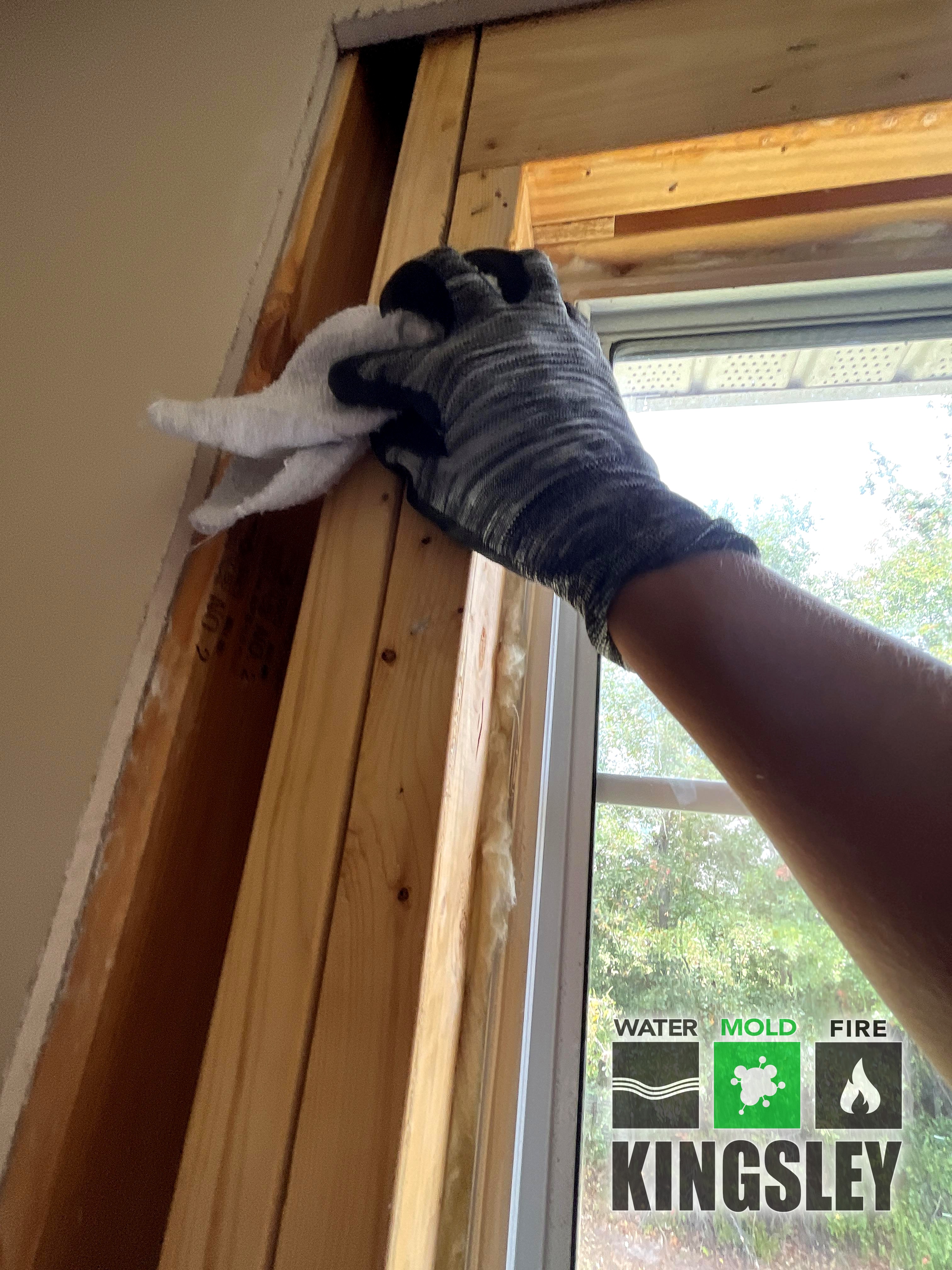
West Columbia, SC
September 21, 2026
In West Columbia, SC, Kingsley water damage & Fire cleanup performed window frame mold cleanup and remediation after documenting gloved technician cleaning window framing during mold remediation during the initial condition check. That photo-backed condition check defined where finishes had to open, what could stay, and where drying equipment had to aim. The home needed source control, selective removal of non-salvageable wet or contaminated material, and verified drying of what remained in West Columbia. Quiet work windows were held where the household schedule required it, without stretching the drying calendar past about a week.
During mitigation we controlled the work zone so debris and spores did not track into clean rooms. Where finishes blocked drying, we opened only the wet footprint shown by meters and the photo record. Non-salvageable saturated material was bagged and removed; salvageable framing and sheathing were cleaned and treated when microbial staining warranted it. HEPA vacuuming and careful handling limited dust from demo. The unique on-site detail that guided this West Columbia file was gloved technician cleaning window framing during mold remediation. Quiet work windows were held where the household schedule required it, without stretching the drying calendar past about a week.
IICRC water-damage and mold-remediation practice prioritizes stop the moisture source, remove what cannot be dried in place, clean and treat remaining structures with an EPA-registered antimicrobial when staining warranted it, then dry to target with measured air movement and dehumidification. We placed air movers and dehumidifiers to match the wet assembly, aimed airflow along the wet materials in the photo, and rechecked moisture on a 3–7 day drying calendar with overnight humidity checks—never past about a week. Skipping that short monitoring window is how a straightforward wet call becomes secondary damage or a musty return odor in West Columbia.
As readings stabilized within that first-week window, we demobilized equipment and left the work area ready for any needed rebuild of finishes or insulation. Photo documentation of the mitigation state stayed with the job file for the West Columbia property, including the same angle that showed gloved technician cleaning window framing during mold remediation. Helpful takeaway: Musty odor that returns after a quick wipe in West Columbia usually means moisture is still feeding the stain—map it before painting over it.
Homeowners comparing window frame mold cleanup and remediation options in the West Columbia area should expect a written moisture map, selective removal instead of full tear-out when meters allow, and a clear end point when materials hit dry goal—not an open-ended equipment rental. Kingsley water damage & Fire cleanup follows that measured approach so rebuild decisions rest on documented conditions rather than a calendar guess.
When rebuild starts, keep the dry-standard notes handy for flooring, cabinet, or insulation trades so no one closes a cavity that still reads wet. That handoff is part of finishing window frame mold cleanup and remediation correctly in West Columbia after mitigation—not a separate sales pitch.
Throughout the West Columbia job we kept communication practical: what was wet, what was removed, what was drying, and when meters said the assembly met goal. That plain record is what homeowners and trades use after window frame mold cleanup and remediation—not jargon and not an invented multi-week timeline.
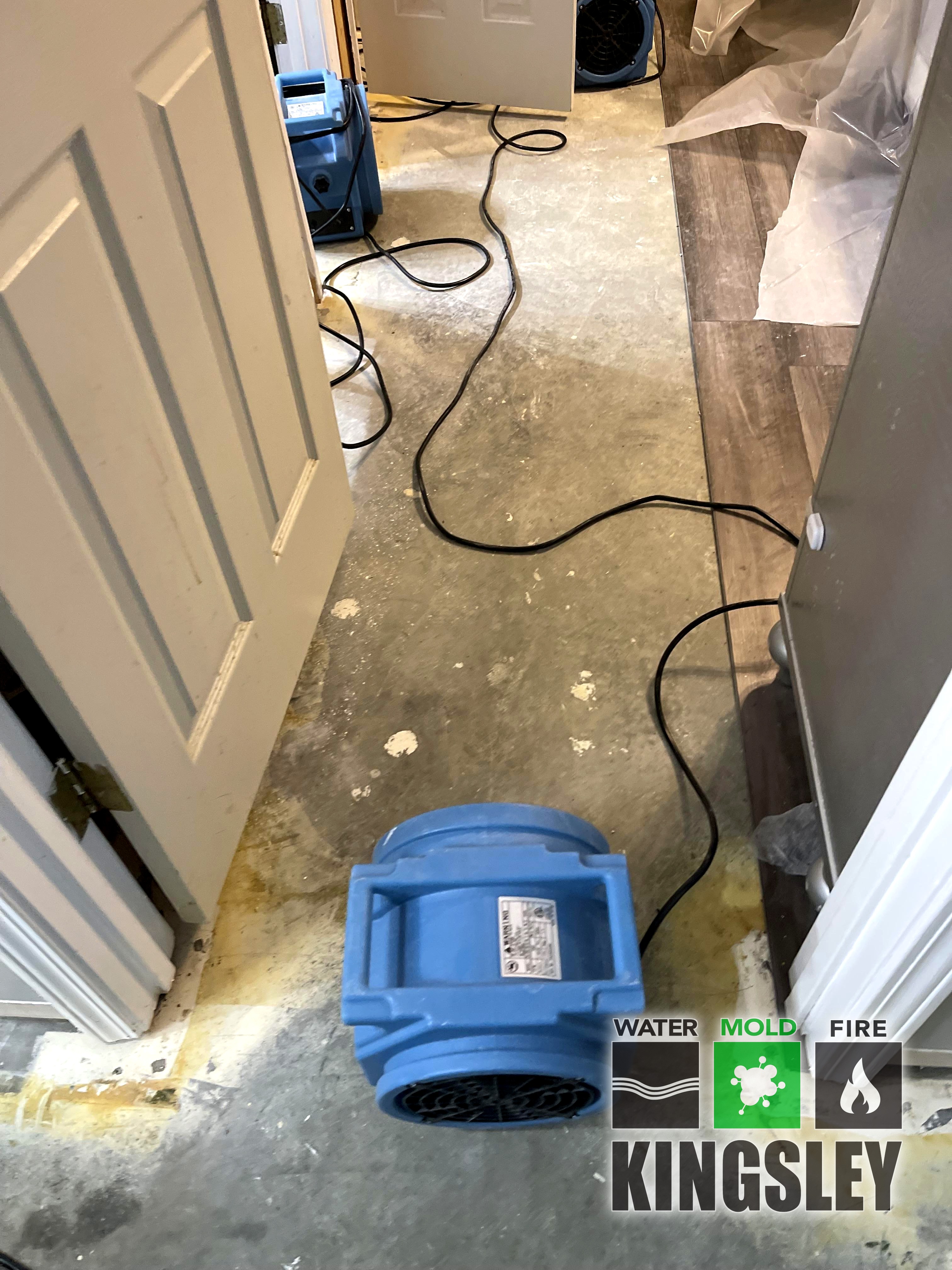
Georgetown, SC
September 21, 2026
In Georgetown, SC, Kingsley water damage & Fire cleanup performed doorway subfloor water damage cleanup after documenting doorway Subfloor Water Damage Cleanup during the initial condition check. That photo-backed condition check defined where finishes had to open, what could stay, and where drying equipment had to aim. The home needed source control, selective removal of non-salvageable wet or contaminated material, and verified drying of what remained in Georgetown. We labeled the wet edge on the sketch so later visits matched day-one photos.
During mitigation we controlled the work zone so debris did not track into clean rooms. Where finishes blocked drying, we opened only the wet footprint shown by meters and the photo record. Non-salvageable saturated material was bagged and removed; salvageable framing and sheathing were cleaned. HEPA vacuuming and careful handling limited dust from demo. The unique on-site detail that guided this Georgetown file was doorway Subfloor Water Damage Cleanup. Contents near the work path were shifted or protected before tools came out.
IICRC water-damage practice prioritizes stop the moisture source, remove what cannot be dried in place, clean remaining structures, then dry to target with measured air movement and dehumidification. We placed air movers and dehumidifiers to match the wet assembly, aimed airflow along the wet materials in the photo, and rechecked moisture on a 3–7 day drying calendar with overnight humidity checks—never past about a week. Quiet work windows were held where the household schedule required it, without stretching past that first-week ceiling. Skipping that short monitoring window is how a straightforward wet call becomes secondary damage or a musty return odor in Georgetown.
As readings stabilized within that first-week window, we demobilized equipment and left the work area ready for any needed rebuild of finishes or insulation. Photo documentation of the mitigation state stayed with the job file for the Georgetown property, including the same angle that showed doorway Subfloor Water Damage Cleanup. Helpful takeaway: If flooring feels soft, edges cup, or a stain keeps spreading in Georgetown, stop walking the wet zone and request moisture mapping before new finishes go down.
Homeowners comparing doorway subfloor water damage cleanup options in the Georgetown area should expect a written moisture map, selective removal instead of full tear-out when meters allow, and a clear end point when materials hit dry goal—not an open-ended equipment rental. Kingsley water damage & Fire cleanup follows that measured approach so rebuild decisions rest on documented conditions rather than a calendar guess.
When rebuild starts, keep the dry-standard notes handy for flooring, cabinet, or insulation trades so no one closes a cavity that still reads wet. That handoff is part of finishing doorway subfloor water damage cleanup correctly in Georgetown after mitigation. Throughout the job we kept communication practical: what was wet, what was removed, what was drying, and when meters said the assembly met goal—without inventing a multi-week timeline.
For this Georgetown stop, the close-out standard stayed simple: meters at goal, photo set filed, and no equipment left running past the 3–7 day band.
Aiken, SC
September 20, 2026
Kingsley water damage & Fire cleanup handled extraction, pad assessment, and verified drying over a 3–7 day window in Aiken, SC.
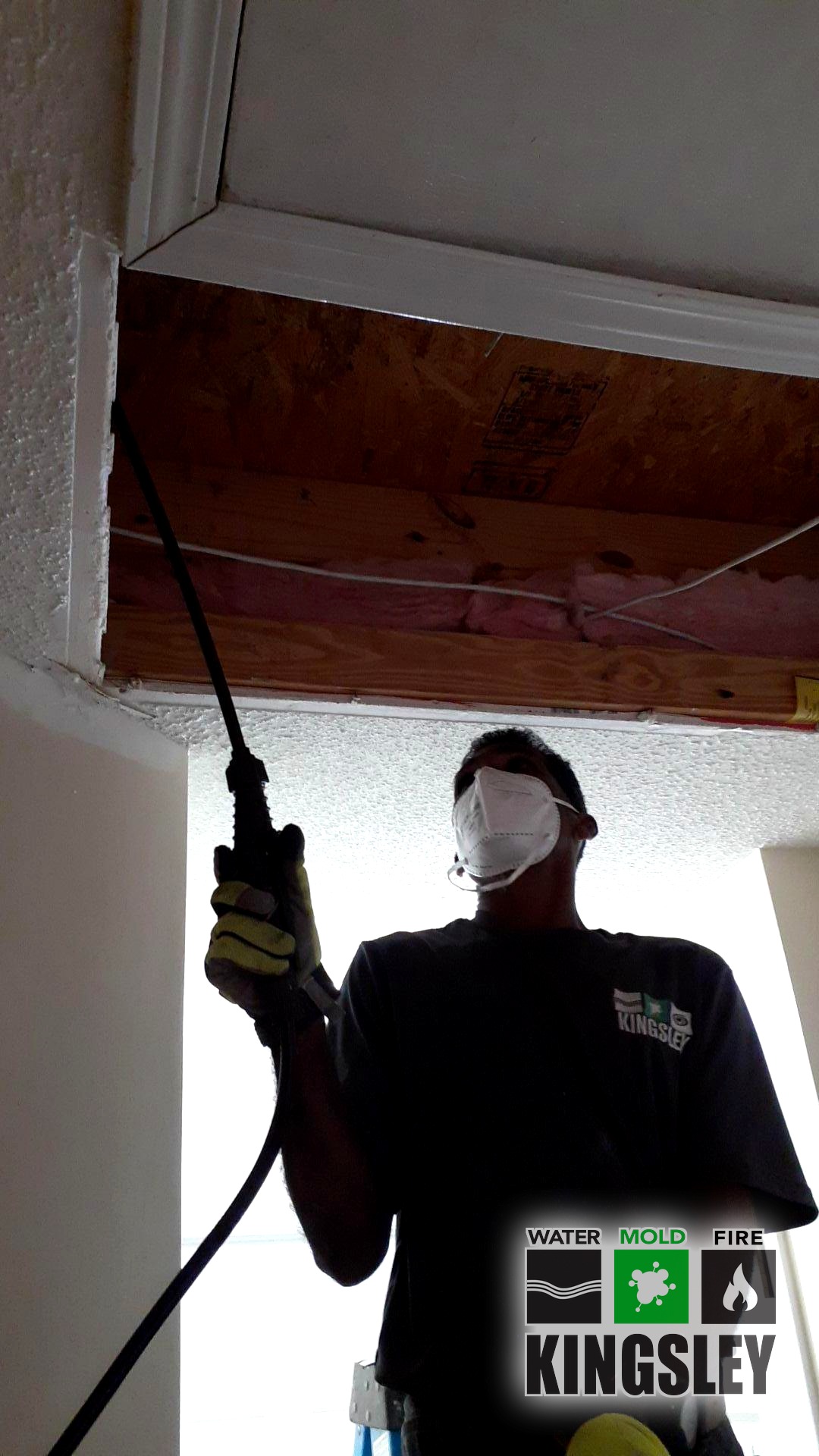
Aiken, SC
September 20, 2026
Kingsley water damage & Fire cleanup handled hallway carpet water extraction cleanup for a Aiken, SC property. The camera and meters guided scope from the start: hallway Carpet Water Extraction Cleanup. That photo-backed condition check defined where finishes had to open, what could stay, and where drying equipment had to aim. The home needed source control, selective removal of non-salvageable wet or contaminated material, and verified drying of what remained in Aiken. We labeled the wet edge on the sketch so later visits matched day-one photos.
During mitigation we controlled the work zone so debris did not track into clean rooms. Where finishes blocked drying, we opened only the wet footprint shown by meters and the photo record. Non-salvageable saturated material was bagged and removed; salvageable framing and sheathing were cleaned. HEPA vacuuming and careful handling limited dust from demo. The unique on-site detail that guided this Aiken file was hallway Carpet Water Extraction Cleanup. Contents near the work path were shifted or protected before tools came out.
IICRC water-damage practice prioritizes stop the moisture source, remove what cannot be dried in place, clean remaining structures, then dry to target with measured air movement and dehumidification. We placed air movers and dehumidifiers to match the wet assembly, aimed airflow along the wet materials in the photo, and rechecked moisture on a 3–7 day drying calendar with overnight humidity checks—never past about a week. Quiet work windows were held where the household schedule required it, without stretching past that first-week ceiling. Skipping that short monitoring window is how a straightforward wet call becomes secondary damage or a musty return odor in Aiken.
As readings stabilized within that first-week window, we demobilized equipment and left the work area ready for any needed rebuild of finishes or insulation. Photo documentation of the mitigation state stayed with the job file for the Aiken property, including the same angle that showed hallway Carpet Water Extraction Cleanup. Helpful takeaway: If flooring feels soft, edges cup, or a stain keeps spreading in Aiken, stop walking the wet zone and request moisture mapping before new finishes go down.
Homeowners comparing hallway carpet water extraction cleanup options in the Aiken area should expect a written moisture map, selective removal instead of full tear-out when meters allow, and a clear end point when materials hit dry goal—not an open-ended equipment rental. Kingsley water damage & Fire cleanup follows that measured approach so rebuild decisions rest on documented conditions rather than a calendar guess.
When rebuild starts, keep the dry-standard notes handy for flooring, cabinet, or insulation trades so no one closes a cavity that still reads wet. That handoff is part of finishing hallway carpet water extraction cleanup correctly in Aiken after mitigation. Throughout the job we kept communication practical: what was wet, what was removed, what was drying, and when meters said the assembly met goal—without inventing a multi-week timeline.
For this Aiken stop, the close-out standard stayed simple: meters at goal, photo set filed, and no equipment left running past the 3–7 day band.
Batesburg, SC
September 20, 2026
Kingsley water damage & Fire cleanup handled moisture mapping, containment as needed, and verified drying over a 3–7 day window in Batesburg, SC.
Lake Carolina, SC
September 20, 2026
Kingsley water damage & Fire cleanup handled moisture mapping, containment as needed, and verified drying over a 3–7 day window in Lake Carolina, SC.
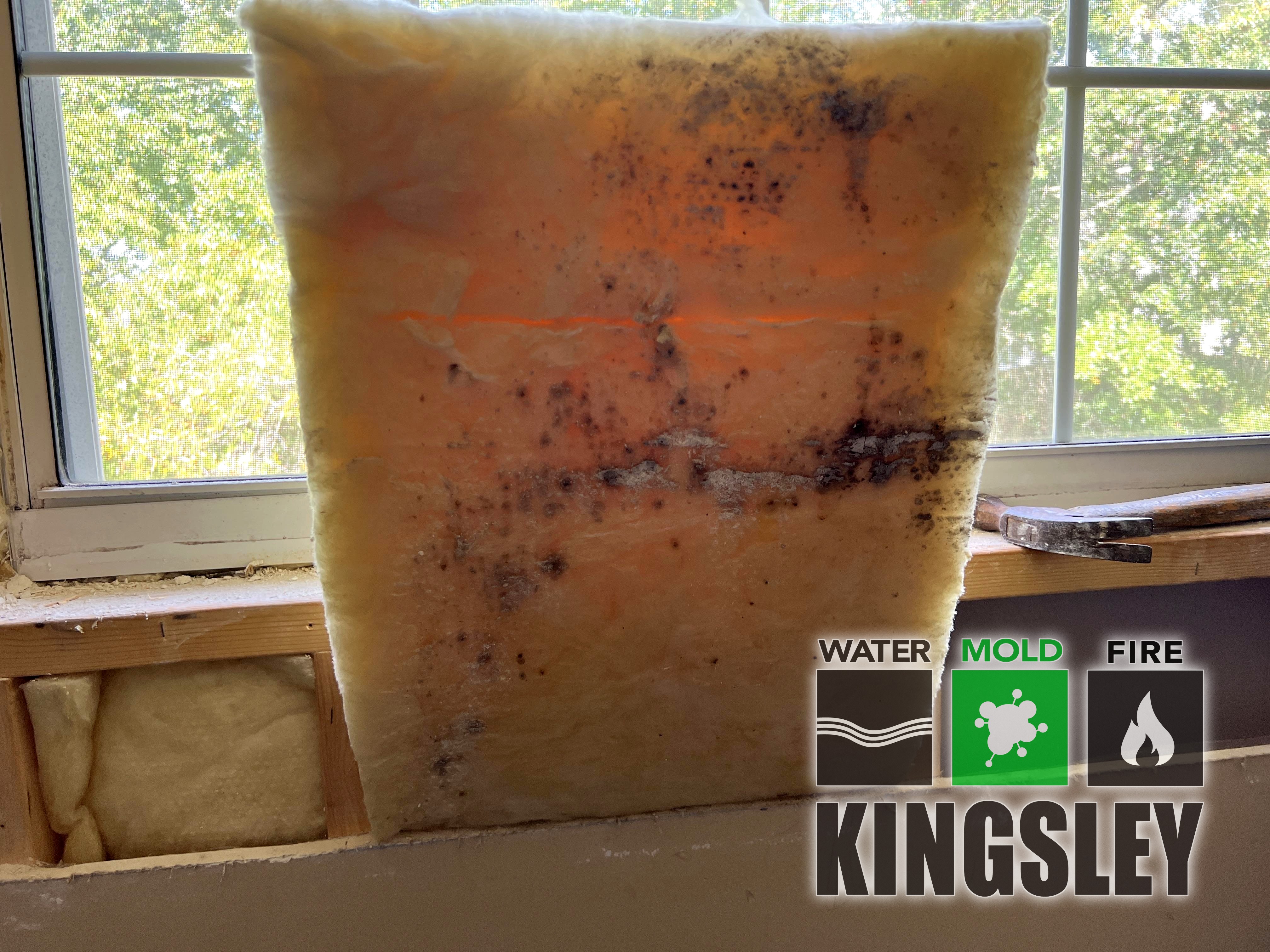
Greer, SC
September 20, 2026
Kingsley water damage & Fire cleanup handled moldy insulation removal and remediation in Greer, SC after insulation that held moisture and microbial growth. We began with a room-by-room and assembly-level inspection of the wall or ceiling cavity insulation, documenting contaminated fiberglass insulation held up to light so microbial staining on the batting is visible. That visual and instrument check — not a guess from the hallway — defined where finishes had to open, what could stay, and where drying equipment had to aim. the home needed source control, selective removal of non-salvageable wet or contaminated material, and verified drying of what remained.
During mitigation we controlled the work zone so debris and moisture did not track into clean rooms. Where finishes blocked drying, we opened only the wet footprint shown by meters and the photo record. Contaminated or saturated materials were bagged and removed; salvageable framing and sheathing were cleaned and treated with an EPA-registered antimicrobial when staining or microbial growth warranted it. HEPA vacuuming and careful handling limited dust from demo. The unique on-site detail that guided this file was contaminated fiberglass insulation held up to light so microbial staining on the batting is visible — that condition stayed in the documentation so the homeowner and any follow-on trade could see exactly what drove the scope in Greer.
IICRC water-damage and mold-remediation practice prioritizes stop-the-source, remove what cannot be dried in place, clean and treat remaining structures, then dry to target with measured air movement and dehumidification. We placed air movers and/or dehumidifiers to match the wet assembly, ran equipment under monitoring, and rechecked moisture within the first week of mitigation rather than leaving gear unattended for an open-ended stretch. Skipping that short monitoring window is how a straightforward wet call becomes secondary damage in adjoining cavities.
As readings stabilized and the work area met a clean, dry condition, we demobilized equipment and left the wall or ceiling cavity insulation ready for any needed rebuild of finishes. Photo documentation of the mitigation state stayed with the claim file. If you notice musty odors, spotting on wood, or staining at cabinets, vents, or window sills in Greer, have the moisture source and affected materials inspected before finishes hide the growth path.
IICRC water-damage and mold-remediation practice prioritizes stop the moisture source, remove what cannot be dried in place, clean and treat remaining structures, then dry to target with measured air movement and dehumidification. On this Greer file we ran air movers and dehumidifiers against the wet assembly under monitoring and rechecked moisture on a 3–7 day drying calendar—never past about a week. Skipping that short window is how secondary damage or musty odor returns after finishes go back up.
As readings stabilized within that first-week window, equipment came out and the work area was left ready for any needed rebuild. Photo documentation of the mitigation state stayed with the job file. Helpful takeaway: If you notice musty odors, spotting on wood, or staining at cabinets, vents, or window sills in Greer, have the moisture source and affected materials inspected before finishes hide the growth path.
Homeowners comparing moldy insulation removal and remediation options in the Greer area should expect a written moisture map, selective removal instead of full tear-out when meters allow, and a clear end point when materials hit dry goal—not an open-ended equipment rental. Kingsley water damage & Fire cleanup follows that measured approach so rebuild decisions rest on documented conditions rather than a calendar guess.
Hilton Head Island, SC
September 20, 2026
Kingsley water damage & Fire cleanup completed hardwood structural drying with air movers in Hilton Head Island, SC. On arrival we walked the loss area and documented blue air movers on flooring during structural drying. That photo-backed condition check defined where finishes had to open, what could stay, and where drying equipment had to aim. The home needed source control, selective removal of non-salvageable wet or contaminated material, and verified drying of what remained in Hilton Head Island. We avoided opening dry cavities that meters and the camera did not support on this Hilton Head Island stop.
During mitigation we controlled the work zone so debris did not track into clean rooms. Where finishes blocked drying, we opened only the wet footprint shown by meters and the photo record. Non-salvageable saturated material was bagged and removed; salvageable framing and sheathing were cleaned. HEPA vacuuming and careful handling limited dust from demo. The unique on-site detail that guided this Hilton Head Island file was blue air movers on flooring during structural drying. The adjuster-ready photo set stayed with the file so rebuild trades could see the same framed assembly the crew saw.
IICRC water-damage practice prioritizes stop the moisture source, remove what cannot be dried in place, clean remaining structures, then dry to target with measured air movement and dehumidification. We placed air movers and dehumidifiers to match the wet assembly, aimed airflow along the wet materials in the photo, and rechecked moisture on a 3–7 day drying calendar with overnight humidity checks—never past about a week. Skipping that short monitoring window is how a straightforward wet call becomes secondary damage or a musty return odor in Hilton Head Island.
As readings stabilized within that first-week window, we demobilized equipment and left the work area ready for any needed rebuild of finishes or insulation. Photo documentation of the mitigation state stayed with the job file for the Hilton Head Island property, including the same angle that showed blue air movers on flooring during structural drying. Helpful takeaway: If flooring feels soft, edges cup, or a stain keeps spreading in Hilton Head Island, stop walking the wet zone and request moisture mapping before new finishes go down.
Homeowners comparing hardwood structural drying with air movers options in the Hilton Head Island area should expect a written moisture map, selective removal instead of full tear-out when meters allow, and a clear end point when materials hit dry goal—not an open-ended equipment rental. Kingsley water damage & Fire cleanup follows that measured approach so rebuild decisions rest on documented conditions rather than a calendar guess.
When rebuild starts, keep the dry-standard notes handy for flooring, cabinet, or insulation trades so no one closes a cavity that still reads wet. That handoff is part of finishing hardwood structural drying with air movers correctly in Hilton Head Island after mitigation—not a separate sales pitch.
Throughout the Hilton Head Island job we kept communication practical: what was wet, what was removed, what was drying, and when meters said the assembly met goal. That plain record is what homeowners and trades use after hardwood structural drying with air movers—not jargon and not an invented multi-week timeline.
Georgetown, SC
September 20, 2026
Kingsley water damage & Fire cleanup completed tile floor moisture mapping and water cleanup in Georgetown, SC. On arrival we walked the loss area and documented tile Floor Moisture Mapping and Water Cleanup. That photo-backed condition check defined where finishes had to open, what could stay, and where drying equipment had to aim. The home needed source control, selective removal of non-salvageable wet or contaminated material, and verified drying of what remained in Georgetown. We labeled the wet edge on the sketch so later visits matched day-one photos.
During mitigation we controlled the work zone so debris did not track into clean rooms. Where finishes blocked drying, we opened only the wet footprint shown by meters and the photo record. Non-salvageable saturated material was bagged and removed; salvageable framing and sheathing were cleaned. HEPA vacuuming and careful handling limited dust from demo. The unique on-site detail that guided this Georgetown file was tile Floor Moisture Mapping and Water Cleanup. Contents near the work path were shifted or protected before tools came out.
IICRC water-damage practice prioritizes stop the moisture source, remove what cannot be dried in place, clean remaining structures, then dry to target with measured air movement and dehumidification. We placed air movers and dehumidifiers to match the wet assembly, aimed airflow along the wet materials in the photo, and rechecked moisture on a 3–7 day drying calendar with overnight humidity checks—never past about a week. Quiet work windows were held where the household schedule required it, without stretching past that first-week ceiling. Skipping that short monitoring window is how a straightforward wet call becomes secondary damage or a musty return odor in Georgetown.
As readings stabilized within that first-week window, we demobilized equipment and left the work area ready for any needed rebuild of finishes or insulation. Photo documentation of the mitigation state stayed with the job file for the Georgetown property, including the same angle that showed tile Floor Moisture Mapping and Water Cleanup. Helpful takeaway: If flooring feels soft, edges cup, or a stain keeps spreading in Georgetown, stop walking the wet zone and request moisture mapping before new finishes go down.
Homeowners comparing tile floor moisture mapping and water cleanup options in the Georgetown area should expect a written moisture map, selective removal instead of full tear-out when meters allow, and a clear end point when materials hit dry goal—not an open-ended equipment rental. Kingsley water damage & Fire cleanup follows that measured approach so rebuild decisions rest on documented conditions rather than a calendar guess.
When rebuild starts, keep the dry-standard notes handy for flooring, cabinet, or insulation trades so no one closes a cavity that still reads wet. That handoff is part of finishing tile floor moisture mapping and water cleanup correctly in Georgetown after mitigation. Throughout the job we kept communication practical: what was wet, what was removed, what was drying, and when meters said the assembly met goal—without inventing a multi-week timeline.
For this Georgetown stop, the close-out standard stayed simple: meters at goal, photo set filed, and no equipment left running past the 3–7 day band.
St Matthews, SC
September 19, 2026
Kingsley water damage & Fire cleanup handled moisture mapping, localized remediation, and verified drying over a 3–7 day window in St. Matthews, SC.
St Matthews, SC
September 19, 2026
Kingsley water damage & Fire cleanup completed vanity subfloor mold inspection cleanup in St Matthews, SC. On arrival we walked the loss area and documented vanity Subfloor Mold Inspection Cleanup. That photo-backed condition check defined where finishes had to open, what could stay, and where drying equipment had to aim. The home needed source control, selective removal of non-salvageable wet or contaminated material, and verified drying of what remained in St Matthews. Quiet work windows were held where the household schedule required it, without stretching the drying calendar past about a week.
During mitigation we controlled the work zone so debris and spores did not track into clean rooms. Where finishes blocked drying, we opened only the wet footprint shown by meters and the photo record. Non-salvageable saturated material was bagged and removed; salvageable framing and sheathing were cleaned and treated when microbial staining warranted it. HEPA vacuuming and careful handling limited dust from demo. The unique on-site detail that guided this St Matthews file was vanity Subfloor Mold Inspection Cleanup. We avoided opening dry cavities that meters and the camera did not support on this St Matthews stop.
IICRC water-damage and mold-remediation practice prioritizes stop the moisture source, remove what cannot be dried in place, clean and treat remaining structures with an EPA-registered antimicrobial when staining warranted it, then dry to target with measured air movement and dehumidification. We placed air movers and dehumidifiers to match the wet assembly, aimed airflow along the wet materials in the photo, and rechecked moisture on a 3–7 day drying calendar with overnight humidity checks—never past about a week. Skipping that short monitoring window is how a straightforward wet call becomes secondary damage or a musty return odor in St Matthews.
As readings stabilized within that first-week window, we demobilized equipment and left the work area ready for any needed rebuild of finishes or insulation. Photo documentation of the mitigation state stayed with the job file for the St Matthews property, including the same angle that showed vanity Subfloor Mold Inspection Cleanup. Helpful takeaway: If you see spotting on cabinets, vents, or window sills in St Matthews, have the moisture source checked before finishes hide the growth path.
Homeowners comparing vanity subfloor mold inspection cleanup options in the St Matthews area should expect a written moisture map, selective removal instead of full tear-out when meters allow, and a clear end point when materials hit dry goal—not an open-ended equipment rental. Kingsley water damage & Fire cleanup follows that measured approach so rebuild decisions rest on documented conditions rather than a calendar guess.
When rebuild starts, keep the dry-standard notes handy for flooring, cabinet, or insulation trades so no one closes a cavity that still reads wet. That handoff is part of finishing vanity subfloor mold inspection cleanup correctly in St Matthews after mitigation—not a separate sales pitch.
Throughout the St Matthews job we kept communication practical: what was wet, what was removed, what was drying, and when meters said the assembly met goal. That plain record is what homeowners and trades use after vanity subfloor mold inspection cleanup—not jargon and not an invented multi-week timeline.
Batesburg, SC
September 19, 2026
Kingsley water damage & Fire cleanup handled moisture mapping, containment as needed, and verified drying over a 3–7 day window in Batesburg, SC.
Lake Carolina, SC
September 19, 2026
Kingsley water damage & Fire cleanup handled moisture mapping, containment as needed, and verified drying over a 3–7 day window in Lake Carolina, SC.
Greer, SC
September 19, 2026
Kingsley water damage & Fire cleanup handled ceiling tile and vent mold remediation in Greer, SC after vent-adjacent ceiling mold from moist air and surface condensation. We began with a room-by-room and assembly-level inspection of the ceiling tile at supply/return vent, documenting mold spreading across a ceiling tile at the HVAC vent opening. That visual and instrument check — not a guess from the hallway — defined where finishes had to open, what could stay, and where drying equipment had to aim. the home needed source control, selective removal of non-salvageable wet or contaminated material, and verified drying of what remained.
During mitigation we controlled the work zone so debris and moisture did not track into clean rooms. Where finishes blocked drying, we opened only the wet footprint shown by meters and the photo record. Contaminated or saturated materials were bagged and removed; salvageable framing and sheathing were cleaned and treated with an EPA-registered antimicrobial when staining or microbial growth warranted it. HEPA vacuuming and careful handling limited dust from demo. The unique on-site detail that guided this file was mold spreading across a ceiling tile at the HVAC vent opening — that condition stayed in the documentation so the homeowner and any follow-on trade could see exactly what drove the scope in Greer.
IICRC water-damage and mold-remediation practice prioritizes stop-the-source, remove what cannot be dried in place, clean and treat remaining structures, then dry to target with measured air movement and dehumidification. We placed air movers and/or dehumidifiers to match the wet assembly, ran equipment under monitoring, and rechecked moisture within the first week of mitigation rather than leaving gear unattended for an open-ended stretch. Skipping that short monitoring window is how a straightforward wet call becomes secondary damage in adjoining cavities.
As readings stabilized and the work area met a clean, dry condition, we demobilized equipment and left the ceiling tile at supply/return vent ready for any needed rebuild of finishes. Photo documentation of the mitigation state stayed with the claim file. If you notice musty odors, spotting on wood, or staining at cabinets, vents, or window sills in Greer, have the moisture source and affected materials inspected before finishes hide the growth path.
IICRC water-damage and mold-remediation practice prioritizes stop the moisture source, remove what cannot be dried in place, clean and treat remaining structures, then dry to target with measured air movement and dehumidification. On this Greer file we ran air movers and dehumidifiers against the wet assembly under monitoring and rechecked moisture on a 3–7 day drying calendar—never past about a week. Skipping that short window is how secondary damage or musty odor returns after finishes go back up.
As readings stabilized within that first-week window, equipment came out and the work area was left ready for any needed rebuild. Photo documentation of the mitigation state stayed with the job file. Helpful takeaway: If you notice musty odors, spotting on wood, or staining at cabinets, vents, or window sills in Greer, have the moisture source and affected materials inspected before finishes hide the growth path.
Homeowners comparing ceiling tile and vent mold remediation options in the Greer area should expect a written moisture map, selective removal instead of full tear-out when meters allow, and a clear end point when materials hit dry goal—not an open-ended equipment rental. Kingsley water damage & Fire cleanup follows that measured approach so rebuild decisions rest on documented conditions rather than a calendar guess.
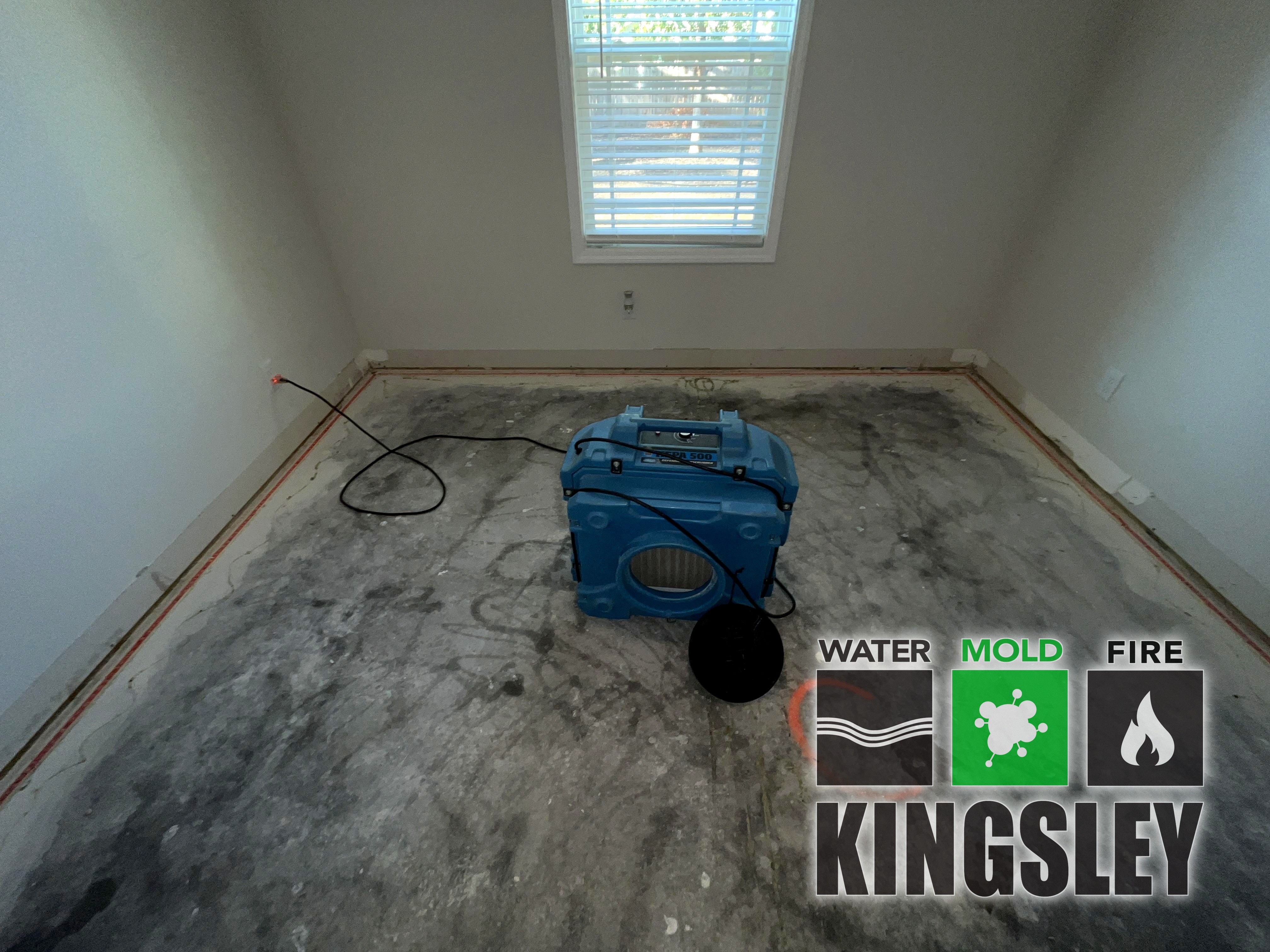
Ladies Island, SC
September 19, 2026
Kingsley water damage & Fire cleanup completed hallway structural drying with air movers in Ladies Island, SC. On arrival we walked the loss area and documented blue air movers. That photo-backed condition check defined where finishes had to open, what could stay, and where drying equipment had to aim. The home needed source control, selective removal of non-salvageable wet or contaminated material, and verified drying of what remained in Ladies Island. We labeled the wet edge on the sketch so later visits matched day-one photos.
During mitigation we controlled the work zone so debris did not track into clean rooms. Where finishes blocked drying, we opened only the wet footprint shown by meters and the photo record. Non-salvageable saturated material was bagged and removed; salvageable framing and sheathing were cleaned. HEPA vacuuming and careful handling limited dust from demo. The unique on-site detail that guided this Ladies Island file was blue air movers. Contents near the work path were shifted or protected before tools came out.
IICRC water-damage practice prioritizes stop the moisture source, remove what cannot be dried in place, clean remaining structures, then dry to target with measured air movement and dehumidification. We placed air movers and dehumidifiers to match the wet assembly, aimed airflow along the wet materials in the photo, and rechecked moisture on a 3–7 day drying calendar with overnight humidity checks—never past about a week. Quiet work windows were held where the household schedule required it, without stretching past that first-week ceiling. Skipping that short monitoring window is how a straightforward wet call becomes secondary damage or a musty return odor in Ladies Island.
As readings stabilized within that first-week window, we demobilized equipment and left the work area ready for any needed rebuild of finishes or insulation. Photo documentation of the mitigation state stayed with the job file for the Ladies Island property, including the same angle that showed blue air movers. Helpful takeaway: If flooring feels soft, edges cup, or a stain keeps spreading in Ladies Island, stop walking the wet zone and request moisture mapping before new finishes go down.
Homeowners comparing hallway structural drying with air movers options in the Ladies Island area should expect a written moisture map, selective removal instead of full tear-out when meters allow, and a clear end point when materials hit dry goal—not an open-ended equipment rental. Kingsley water damage & Fire cleanup follows that measured approach so rebuild decisions rest on documented conditions rather than a calendar guess.
When rebuild starts, keep the dry-standard notes handy for flooring, cabinet, or insulation trades so no one closes a cavity that still reads wet. That handoff is part of finishing hallway structural drying with air movers correctly in Ladies Island after mitigation. Throughout the job we kept communication practical: what was wet, what was removed, what was drying, and when meters said the assembly met goal—without inventing a multi-week timeline.
For this Ladies Island stop, the close-out standard stayed simple: meters at goal, photo set filed, and no equipment left running past the 3–7 day band.
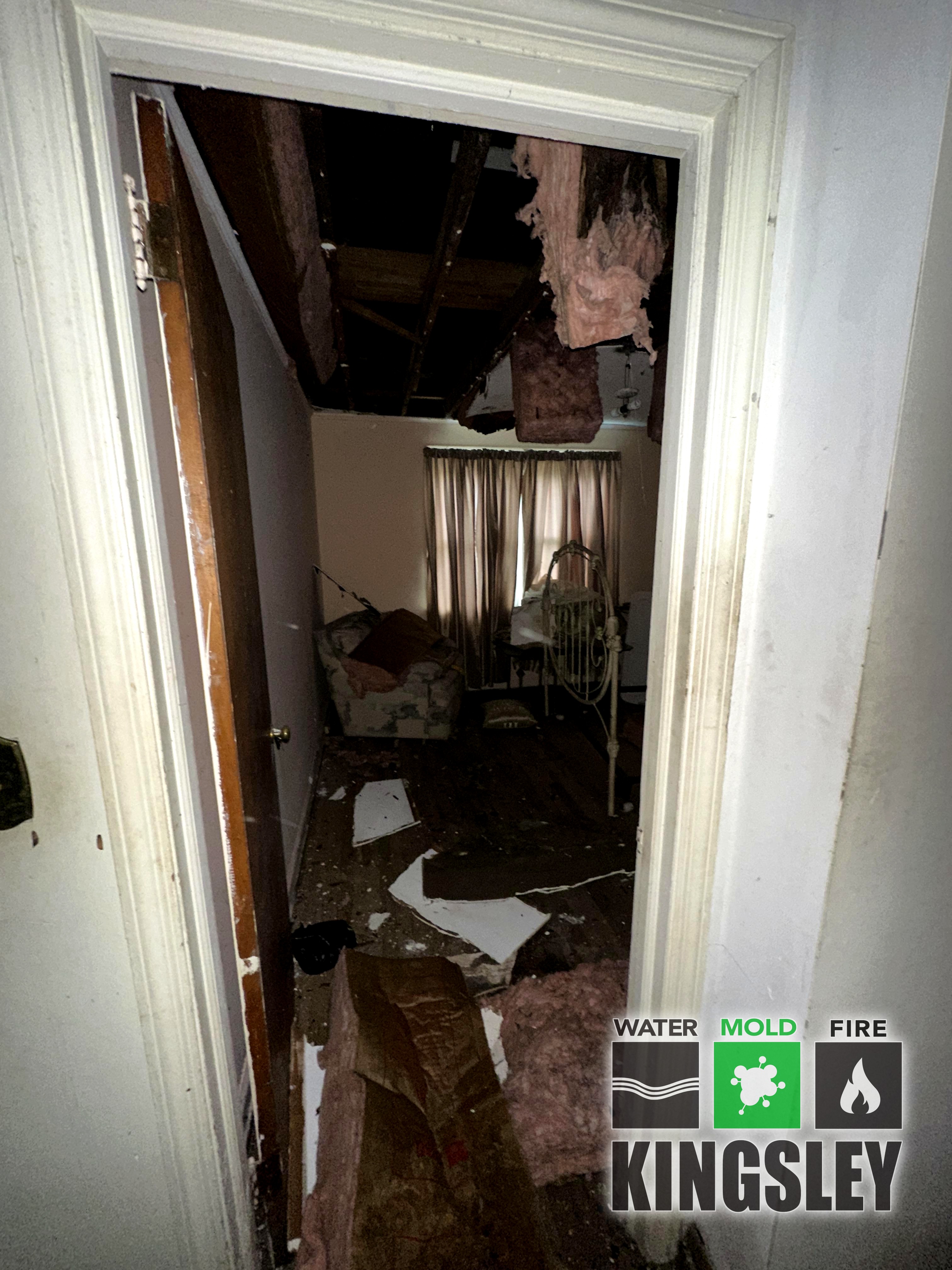
Hopkins, SC
September 19, 2026
Kingsley water damage & Fire cleanup handled crawlspace joist mold inspection and cleanup for a Hopkins, SC property. The camera and meters guided scope from the start: crawlspace Joist Mold Inspection and Cleanup. That photo-backed condition check defined where finishes had to open, what could stay, and where drying equipment had to aim. The home needed source control, selective removal of non-salvageable wet or contaminated material, and verified drying of what remained in Hopkins. We labeled the wet edge on the sketch so later visits matched day-one photos in Hopkins.
During mitigation we controlled the work zone so debris and spores did not track into clean rooms. Where finishes blocked drying, we opened only the wet footprint shown by meters and the photo record. Non-salvageable saturated material was bagged and removed; salvageable framing and sheathing were cleaned and treated when microbial staining warranted it. HEPA vacuuming and careful handling limited dust from demo. The unique on-site detail that guided this Hopkins file was crawlspace Joist Mold Inspection and Cleanup. The adjuster-ready photo set stayed with the file so rebuild trades could see the same framed assembly the crew saw.
IICRC water-damage and mold-remediation practice prioritizes stop the moisture source, remove what cannot be dried in place, clean and treat remaining structures with an EPA-registered antimicrobial when staining warranted it, then dry to target with measured air movement and dehumidification. We placed air movers and dehumidifiers to match the crawlspace bay, aimed airflow along the wet materials in the photo, and rechecked moisture on a 3–7 day drying calendar with overnight humidity checks—never past about a week. Skipping that short monitoring window is how a straightforward wet call becomes secondary damage or a musty return odor in Hopkins.
As readings stabilized within that first-week window, we demobilized equipment and left the work area ready for any needed rebuild of finishes or insulation. Photo documentation of the mitigation state stayed with the job file for the Hopkins property, including the same angle that showed crawlspace Joist Mold Inspection and Cleanup. Helpful takeaway: If you notice musty odors from floor registers or white spotting on crawl wood under a Hopkins home, have the moisture source and joists inspected before new insulation hides the path.
Homeowners comparing crawlspace joist mold inspection and cleanup options in the Hopkins area should expect a written moisture map, selective removal instead of full tear-out when meters allow, and a clear end point when materials hit dry goal—not an open-ended equipment rental. Kingsley water damage & Fire cleanup follows that measured approach so rebuild decisions rest on documented conditions rather than a calendar guess.
When rebuild starts, keep the dry-standard notes handy for flooring, cabinet, or insulation trades so no one closes a cavity that still reads wet. That handoff is part of finishing crawlspace joist mold inspection and cleanup correctly in Hopkins after mitigation—not a separate sales pitch.
Throughout the Hopkins job we kept communication practical: what was wet, what was removed, what was drying, and when meters said the assembly met goal. That plain record is what homeowners and trades use after crawlspace joist mold inspection and cleanup—not jargon and not an invented multi-week timeline.
St Matthews, SC
September 18, 2026
Kingsley water damage & Fire cleanup handled crawlspace moisture mapping, HEPA containment as needed, and verified drying over a 3–7 day window in St. Matthews, SC.
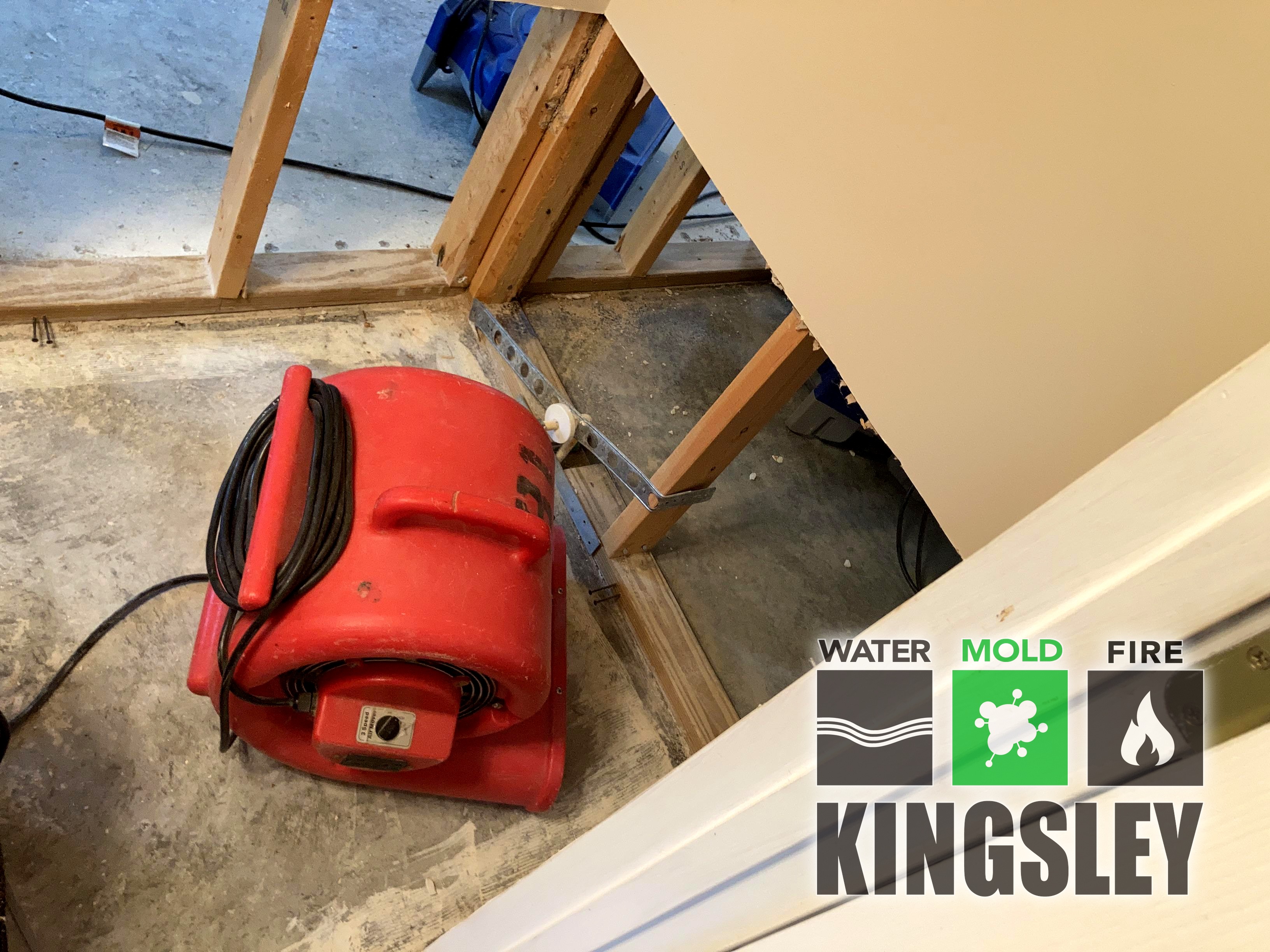
St. Matthews, SC
September 18, 2026
Kingsley water damage & Fire cleanup handled crawlspace joist mold inspection and cleanup for a St. Matthews, SC property. The camera and meters guided scope from the start: crawlspace Joist Mold Inspection and Cleanup. That photo-backed condition check defined where finishes had to open, what could stay, and where drying equipment had to aim. The home needed source control, selective removal of non-salvageable wet or contaminated material, and verified drying of what remained in St. Matthews. Contents near the work path were shifted or protected before tools came out in this St. Matthews home.
During mitigation we controlled the work zone so debris and spores did not track into clean rooms. Where finishes blocked drying, we opened only the wet footprint shown by meters and the photo record. Non-salvageable saturated material was bagged and removed; salvageable framing and sheathing were cleaned and treated when microbial staining warranted it. HEPA vacuuming and careful handling limited dust from demo. The unique on-site detail that guided this St. Matthews file was crawlspace Joist Mold Inspection and Cleanup. The adjuster-ready photo set stayed with the file so rebuild trades could see the same framed assembly the crew saw.
IICRC water-damage and mold-remediation practice prioritizes stop the moisture source, remove what cannot be dried in place, clean and treat remaining structures with an EPA-registered antimicrobial when staining warranted it, then dry to target with measured air movement and dehumidification. We placed air movers and dehumidifiers to match the crawlspace bay, aimed airflow along the wet materials in the photo, and rechecked moisture on a 3–7 day drying calendar with overnight humidity checks—never past about a week. Skipping that short monitoring window is how a straightforward wet call becomes secondary damage or a musty return odor in St. Matthews.
As readings stabilized within that first-week window, we demobilized equipment and left the work area ready for any needed rebuild of finishes or insulation. Photo documentation of the mitigation state stayed with the job file for the St. Matthews property, including the same angle that showed crawlspace Joist Mold Inspection and Cleanup. Helpful takeaway: If you notice musty odors from floor registers or white spotting on crawl wood under a St. Matthews home, have the moisture source and joists inspected before new insulation hides the path.
Homeowners comparing crawlspace joist mold inspection and cleanup options in the St. Matthews area should expect a written moisture map, selective removal instead of full tear-out when meters allow, and a clear end point when materials hit dry goal—not an open-ended equipment rental. Kingsley water damage & Fire cleanup follows that measured approach so rebuild decisions rest on documented conditions rather than a calendar guess.
When rebuild starts, keep the dry-standard notes handy for flooring, cabinet, or insulation trades so no one closes a cavity that still reads wet. That handoff is part of finishing crawlspace joist mold inspection and cleanup correctly in St. Matthews after mitigation—not a separate sales pitch.
Throughout the St. Matthews job we kept communication practical: what was wet, what was removed, what was drying, and when meters said the assembly met goal. That plain record is what homeowners and trades use after crawlspace joist mold inspection and cleanup—not jargon and not an invented multi-week timeline.
Gilbert, SC
September 18, 2026
Kingsley water damage & Fire cleanup handled moisture mapping, containment as needed, and verified drying over a 3–7 day window in Gilbert, SC.
Lake Carolina, SC
September 18, 2026
Kingsley water damage & Fire cleanup handled moisture mapping, containment as needed, and verified drying over a 3–7 day window in Lake Carolina, SC.
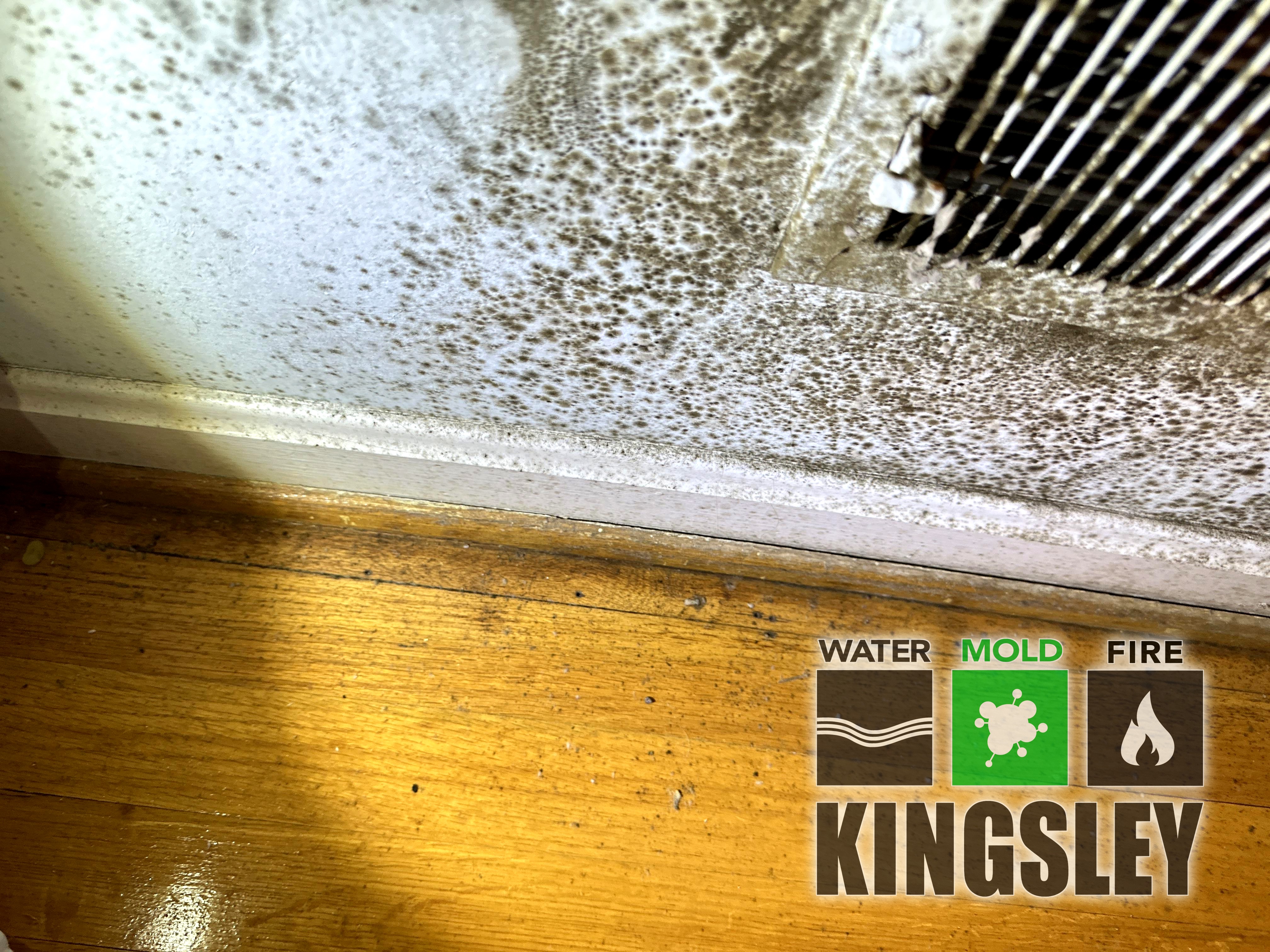
Greer, SC
September 18, 2026
Kingsley water damage & Fire cleanup handled hvac vent mold cleanup and remediation in Greer, SC after mold colonization on a vent register. We began with a room-by-room and assembly-level inspection of the HVAC supply/return vent, documenting a close framed moldy vent grille with clear microbial growth on the register face. That visual and instrument check — not a guess from the hallway — defined where finishes had to open, what could stay, and where drying equipment had to aim. the home needed source control, selective removal of non-salvageable wet or contaminated material, and verified drying of what remained.
During mitigation we controlled the work zone so debris and moisture did not track into clean rooms. Where finishes blocked drying, we opened only the wet footprint shown by meters and the photo record. Contaminated or saturated materials were bagged and removed; salvageable framing and sheathing were cleaned and treated with an EPA-registered antimicrobial when staining or microbial growth warranted it. HEPA vacuuming and careful handling limited dust from demo. The unique on-site detail that guided this file was a close framed moldy vent grille with clear microbial growth on the register face — that condition stayed in the documentation so the homeowner and any follow-on trade could see exactly what drove the scope in Greer.
IICRC water-damage and mold-remediation practice prioritizes stop-the-source, remove what cannot be dried in place, clean and treat remaining structures, then dry to target with measured air movement and dehumidification. We placed air movers and/or dehumidifiers to match the wet assembly, ran equipment under monitoring, and rechecked moisture within the first week of mitigation rather than leaving gear unattended for an open-ended stretch. Skipping that short monitoring window is how a straightforward wet call becomes secondary damage in adjoining cavities.
As readings stabilized and the work area met a clean, dry condition, we demobilized equipment and left the HVAC supply/return vent ready for any needed rebuild of finishes. Photo documentation of the mitigation state stayed with the claim file. If you notice musty odors, spotting on wood, or staining at cabinets, vents, or window sills in Greer, have the moisture source and affected materials inspected before finishes hide the growth path.
IICRC water-damage and mold-remediation practice prioritizes stop the moisture source, remove what cannot be dried in place, clean and treat remaining structures, then dry to target with measured air movement and dehumidification. On this Greer file we ran air movers and dehumidifiers against the wet assembly under monitoring and rechecked moisture on a 3–7 day drying calendar—never past about a week. Skipping that short window is how secondary damage or musty odor returns after finishes go back up.
As readings stabilized within that first-week window, equipment came out and the work area was left ready for any needed rebuild. Photo documentation of the mitigation state stayed with the job file. Helpful takeaway: If you notice musty odors, spotting on wood, or staining at cabinets, vents, or window sills in Greer, have the moisture source and affected materials inspected before finishes hide the growth path.
Homeowners comparing hvac vent mold cleanup and remediation options in the Greer area should expect a written moisture map, selective removal instead of full tear-out when meters allow, and a clear end point when materials hit dry goal—not an open-ended equipment rental. Kingsley water damage & Fire cleanup follows that measured approach so rebuild decisions rest on documented conditions rather than a calendar guess.
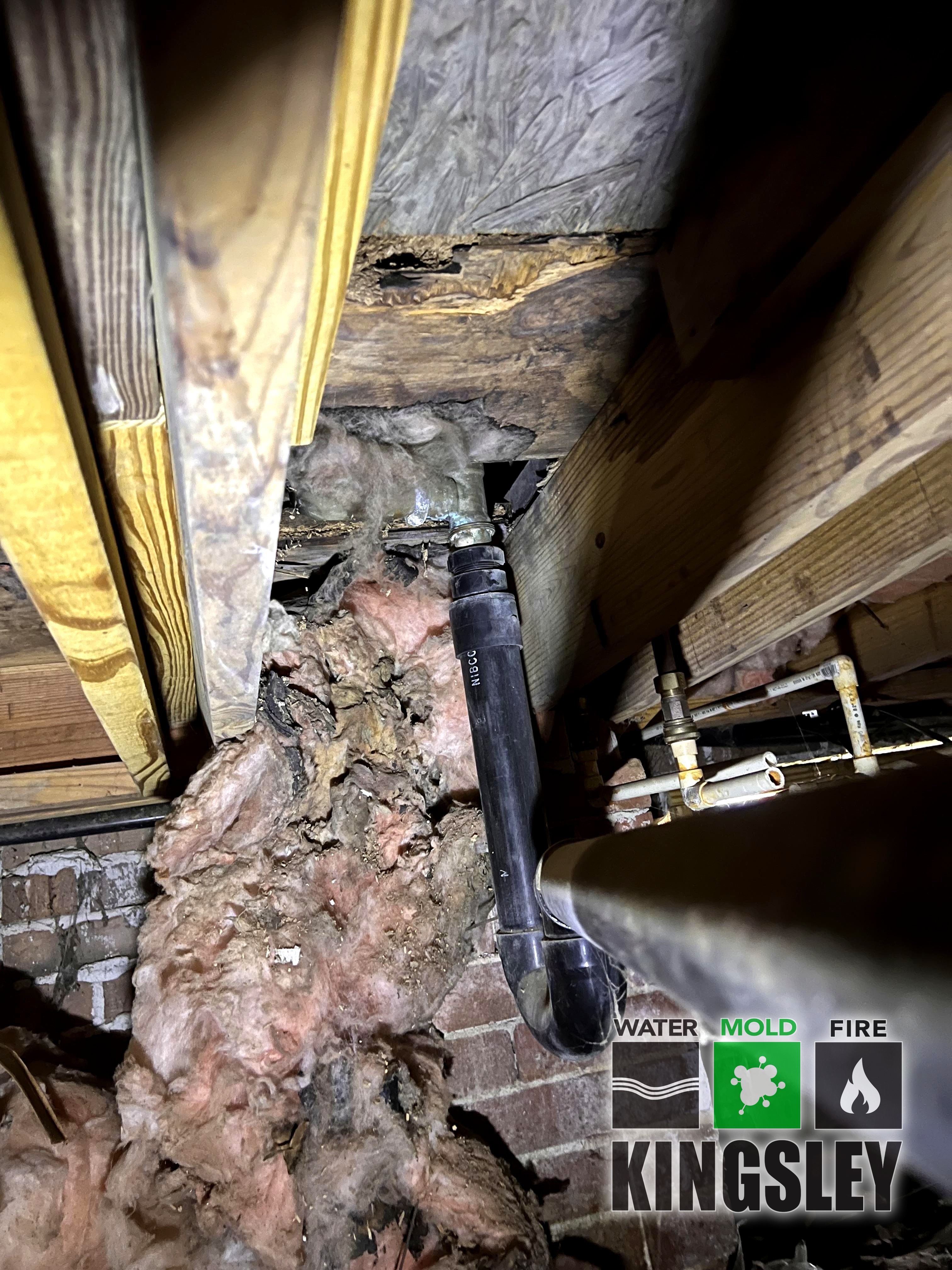
Ladies Island, SC
September 18, 2026
Kingsley water damage & Fire cleanup completed crawlspace joist mold inspection and cleanup in Ladies Island, SC. On arrival we walked the loss area and documented crawlspace joists with staining during mold cleanup. That photo-backed condition check defined where finishes had to open, what could stay, and where drying equipment had to aim. The home needed source control, selective removal of non-salvageable wet or contaminated material, and verified drying of what remained in Ladies Island. Quiet work windows were held where the household schedule required it, without stretching the drying calendar past about a week.
During mitigation we controlled the work zone so debris and spores did not track into clean rooms. Where finishes blocked drying, we opened only the wet footprint shown by meters and the photo record. Non-salvageable saturated material was bagged and removed; salvageable framing and sheathing were cleaned and treated when microbial staining warranted it. HEPA vacuuming and careful handling limited dust from demo. The unique on-site detail that guided this Ladies Island file was crawlspace joists with staining during mold cleanup. The adjuster-ready photo set stayed with the file so rebuild trades could see the same framed assembly the crew saw.
IICRC water-damage and mold-remediation practice prioritizes stop the moisture source, remove what cannot be dried in place, clean and treat remaining structures with an EPA-registered antimicrobial when staining warranted it, then dry to target with measured air movement and dehumidification. We placed air movers and dehumidifiers to match the crawlspace bay, aimed airflow along the wet materials in the photo, and rechecked moisture on a 3–7 day drying calendar with overnight humidity checks—never past about a week. Skipping that short monitoring window is how a straightforward wet call becomes secondary damage or a musty return odor in Ladies Island.
As readings stabilized within that first-week window, we demobilized equipment and left the work area ready for any needed rebuild of finishes or insulation. Photo documentation of the mitigation state stayed with the job file for the Ladies Island property, including the same angle that showed crawlspace joists with staining during mold cleanup. Helpful takeaway: If you notice musty odors from floor registers or white spotting on crawl wood under a Ladies Island home, have the moisture source and joists inspected before new insulation hides the path.
Homeowners comparing crawlspace joist mold inspection and cleanup options in the Ladies Island area should expect a written moisture map, selective removal instead of full tear-out when meters allow, and a clear end point when materials hit dry goal—not an open-ended equipment rental. Kingsley water damage & Fire cleanup follows that measured approach so rebuild decisions rest on documented conditions rather than a calendar guess.
When rebuild starts, keep the dry-standard notes handy for flooring, cabinet, or insulation trades so no one closes a cavity that still reads wet. That handoff is part of finishing crawlspace joist mold inspection and cleanup correctly in Ladies Island after mitigation—not a separate sales pitch.
Throughout the Ladies Island job we kept communication practical: what was wet, what was removed, what was drying, and when meters said the assembly met goal. That plain record is what homeowners and trades use after crawlspace joist mold inspection and cleanup—not jargon and not an invented multi-week timeline.
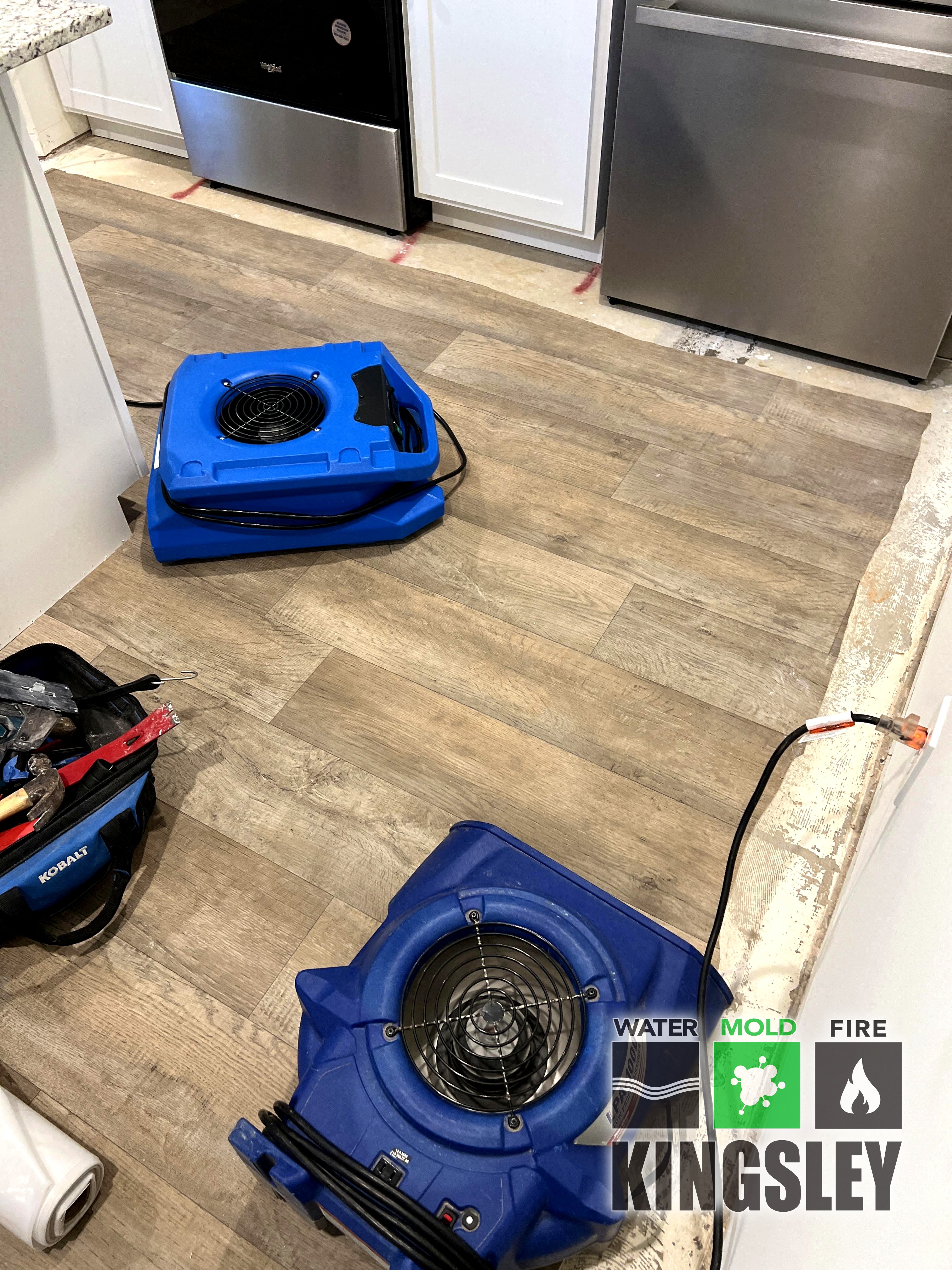
Hopkins, SC
September 18, 2026
Kingsley water damage & Fire cleanup completed doorway subfloor water damage cleanup in Hopkins, SC. On arrival we walked the loss area and documented doorway Subfloor Water Damage Cleanup. That photo-backed condition check defined where finishes had to open, what could stay, and where drying equipment had to aim. The home needed source control, selective removal of non-salvageable wet or contaminated material, and verified drying of what remained in Hopkins. We labeled the wet edge on the sketch so later visits matched day-one photos.
During mitigation we controlled the work zone so debris did not track into clean rooms. Where finishes blocked drying, we opened only the wet footprint shown by meters and the photo record. Non-salvageable saturated material was bagged and removed; salvageable framing and sheathing were cleaned. HEPA vacuuming and careful handling limited dust from demo. The unique on-site detail that guided this Hopkins file was doorway Subfloor Water Damage Cleanup. Contents near the work path were shifted or protected before tools came out.
IICRC water-damage practice prioritizes stop the moisture source, remove what cannot be dried in place, clean remaining structures, then dry to target with measured air movement and dehumidification. We placed air movers and dehumidifiers to match the wet assembly, aimed airflow along the wet materials in the photo, and rechecked moisture on a 3–7 day drying calendar with overnight humidity checks—never past about a week. Quiet work windows were held where the household schedule required it, without stretching past that first-week ceiling. Skipping that short monitoring window is how a straightforward wet call becomes secondary damage or a musty return odor in Hopkins.
As readings stabilized within that first-week window, we demobilized equipment and left the work area ready for any needed rebuild of finishes or insulation. Photo documentation of the mitigation state stayed with the job file for the Hopkins property, including the same angle that showed doorway Subfloor Water Damage Cleanup. Helpful takeaway: If flooring feels soft, edges cup, or a stain keeps spreading in Hopkins, stop walking the wet zone and request moisture mapping before new finishes go down.
Homeowners comparing doorway subfloor water damage cleanup options in the Hopkins area should expect a written moisture map, selective removal instead of full tear-out when meters allow, and a clear end point when materials hit dry goal—not an open-ended equipment rental. Kingsley water damage & Fire cleanup follows that measured approach so rebuild decisions rest on documented conditions rather than a calendar guess.
When rebuild starts, keep the dry-standard notes handy for flooring, cabinet, or insulation trades so no one closes a cavity that still reads wet. That handoff is part of finishing doorway subfloor water damage cleanup correctly in Hopkins after mitigation. Throughout the job we kept communication practical: what was wet, what was removed, what was drying, and when meters said the assembly met goal—without inventing a multi-week timeline.
For this Hopkins stop, the close-out standard stayed simple: meters at goal, photo set filed, and no equipment left running past the 3–7 day band.
St. Matthews, SC
September 17, 2026
Kingsley water damage & Fire cleanup handled extraction, unsalvable finish removal as needed, and structural drying over a 3–7 day window in St. Matthews, SC.
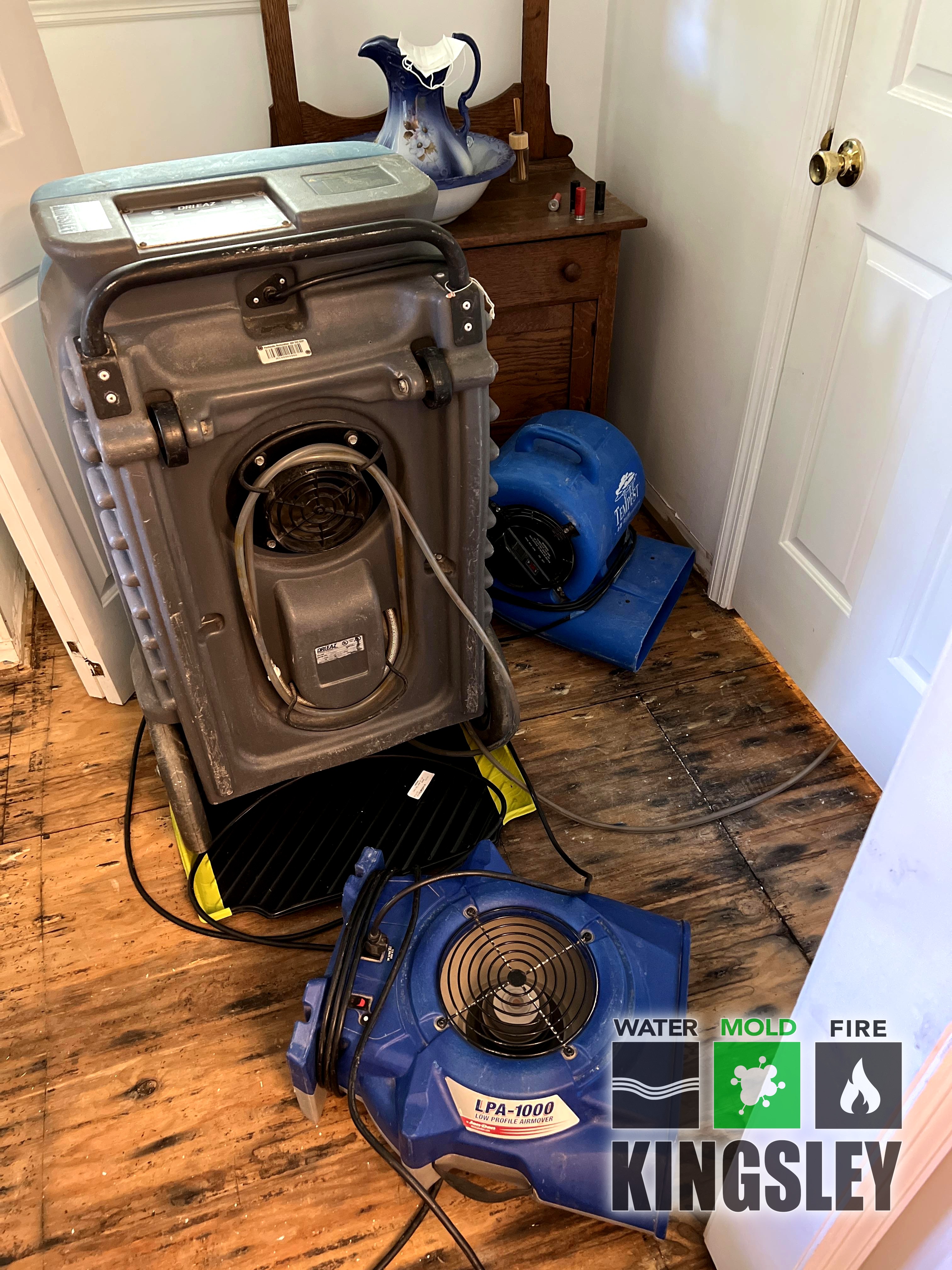
St. Matthews, SC
September 17, 2026
In St. Matthews, SC, Kingsley water damage & Fire cleanup performed doorway subfloor water damage cleanup after documenting doorway Subfloor Water Damage Cleanup during the initial condition check. That photo-backed condition check defined where finishes had to open, what could stay, and where drying equipment had to aim. The home needed source control, selective removal of non-salvageable wet or contaminated material, and verified drying of what remained in St. Matthews. The adjuster-ready photo set stayed with the file so rebuild trades could see the same framed assembly the crew saw.
During mitigation we controlled the work zone so debris did not track into clean rooms. Where finishes blocked drying, we opened only the wet footprint shown by meters and the photo record. Non-salvageable saturated material was bagged and removed; salvageable framing and sheathing were cleaned. HEPA vacuuming and careful handling limited dust from demo. The unique on-site detail that guided this St. Matthews file was doorway Subfloor Water Damage Cleanup. We labeled the wet edge on the sketch so later visits matched day-one photos in St. Matthews.
IICRC water-damage practice prioritizes stop the moisture source, remove what cannot be dried in place, clean remaining structures, then dry to target with measured air movement and dehumidification. We placed air movers and dehumidifiers to match the wet assembly, aimed airflow along the wet materials in the photo, and rechecked moisture on a 3–7 day drying calendar with overnight humidity checks—never past about a week. Skipping that short monitoring window is how a straightforward wet call becomes secondary damage or a musty return odor in St. Matthews.
As readings stabilized within that first-week window, we demobilized equipment and left the work area ready for any needed rebuild of finishes or insulation. Photo documentation of the mitigation state stayed with the job file for the St. Matthews property, including the same angle that showed doorway Subfloor Water Damage Cleanup. Helpful takeaway: If flooring feels soft, edges cup, or a stain keeps spreading in St. Matthews, stop walking the wet zone and request moisture mapping before new finishes go down.
Homeowners comparing doorway subfloor water damage cleanup options in the St. Matthews area should expect a written moisture map, selective removal instead of full tear-out when meters allow, and a clear end point when materials hit dry goal—not an open-ended equipment rental. Kingsley water damage & Fire cleanup follows that measured approach so rebuild decisions rest on documented conditions rather than a calendar guess.
When rebuild starts, keep the dry-standard notes handy for flooring, cabinet, or insulation trades so no one closes a cavity that still reads wet. That handoff is part of finishing doorway subfloor water damage cleanup correctly in St. Matthews after mitigation—not a separate sales pitch.
Throughout the St. Matthews job we kept communication practical: what was wet, what was removed, what was drying, and when meters said the assembly met goal. That plain record is what homeowners and trades use after doorway subfloor water damage cleanup—not jargon and not an invented multi-week timeline.
Liberty Hill, SC
September 17, 2026
Kingsley water damage & Fire cleanup handled moisture mapping, containment as needed, and verified drying over a 3–7 day window in Liberty Hill, SC.
Gaston, SC
September 17, 2026
Kingsley water damage & Fire cleanup handled moisture mapping, containment as needed, and verified drying over a 3–7 day window in Gaston, SC.
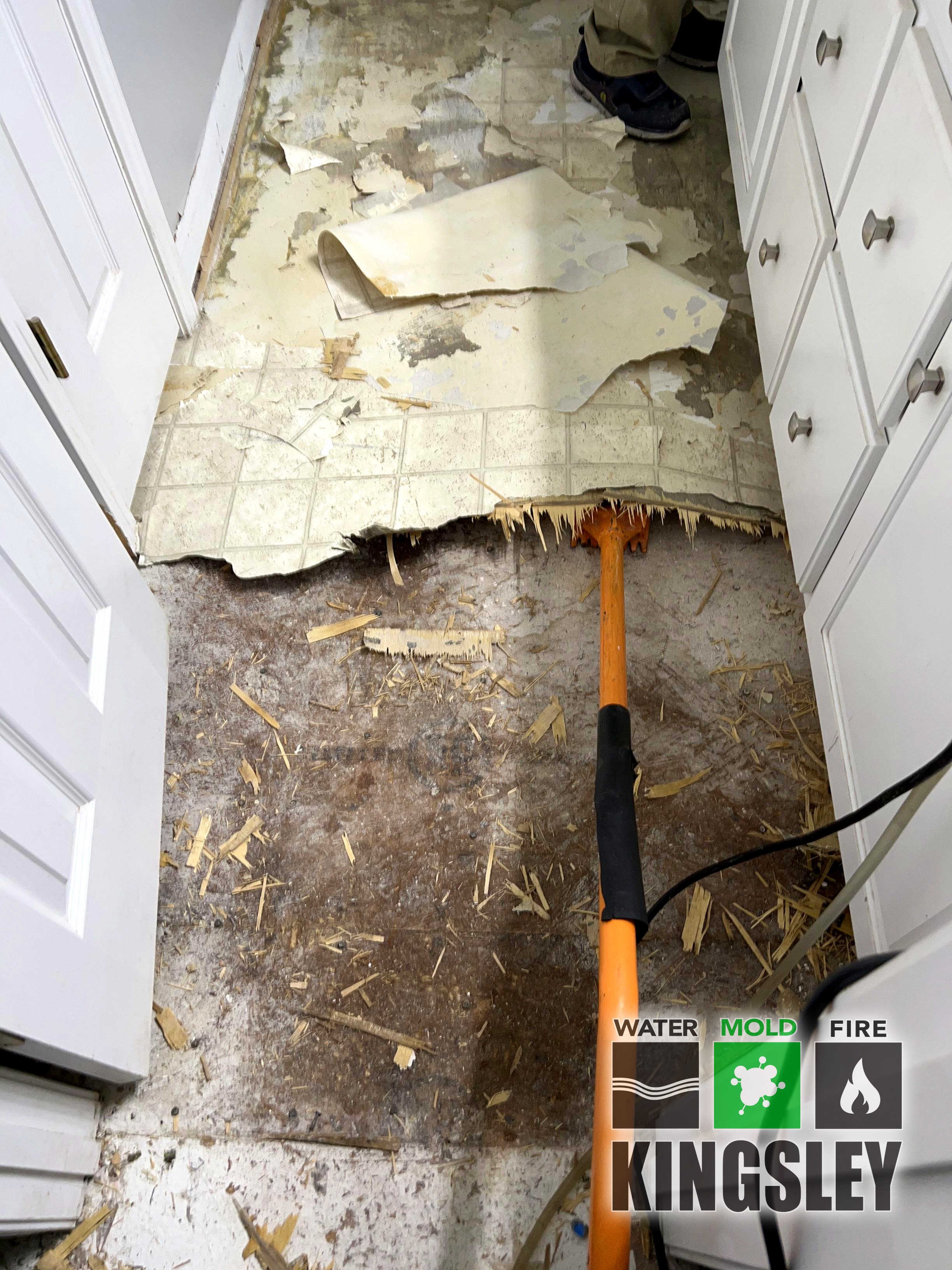
Sumter, SC
September 17, 2026
Kingsley water damage & Fire cleanup handled vinyl floor removal and subfloor water cleanup in Sumter, SC after water under vinyl that required selective floor removal to reach the subfloor. We began with a room-by-room and assembly-level inspection of the bathroom / laundry vinyl floor, documenting an orange long-handled floor scraper lifting square-pattern vinyl to expose dark, debris-covered subfloor beside a white vanity with silver knobs. That visual and instrument check — not a guess from the hallway — defined where finishes had to open, what could stay, and where drying equipment had to aim. the home needed source control, selective removal of non-salvageable wet or contaminated material, and verified drying of what remained.
During mitigation we controlled the work zone so debris and moisture did not track into clean rooms. Where finishes blocked drying, we opened only the wet footprint shown by meters and the photo record. Contaminated or saturated materials were bagged and removed; salvageable framing and sheathing were cleaned and treated with an EPA-registered antimicrobial when staining or microbial growth warranted it. HEPA vacuuming and careful handling limited dust from demo. The unique on-site detail that guided this file was an orange long-handled floor scraper lifting square-pattern vinyl to expose dark, debris-covered subfloor beside a white vanity with silver knobs — that condition stayed in the documentation so the homeowner and any follow-on trade could see exactly what drove the scope in Sumter.
IICRC water-damage and mold-remediation practice prioritizes stop-the-source, remove what cannot be dried in place, clean and treat remaining structures, then dry to target with measured air movement and dehumidification. We placed air movers and/or dehumidifiers to match the wet assembly, ran equipment under monitoring, and rechecked moisture within the first week of mitigation rather than leaving gear unattended for an open-ended stretch. Skipping that short monitoring window is how a straightforward wet call becomes secondary damage in adjoining cavities.
As readings stabilized and the work area met a clean, dry condition, we demobilized equipment and left the bathroom / laundry vinyl floor ready for any needed rebuild of finishes. Photo documentation of the mitigation state stayed with the claim file. If you see standing water, elevated meter readings, or soft/stained flooring in Sumter, stop the source and start professional extraction and drying within the first days — delayed drying is what turns a contained wet zone into a larger structural call.
IICRC water-damage and mold-remediation practice prioritizes stop the moisture source, remove what cannot be dried in place, clean and treat remaining structures, then dry to target with measured air movement and dehumidification. On this Sumter file we ran air movers and dehumidifiers against the wet assembly under monitoring and rechecked moisture on a 3–7 day drying calendar—never past about a week. Skipping that short window is how secondary damage or musty odor returns after finishes go back up.
As readings stabilized within that first-week window, equipment came out and the work area was left ready for any needed rebuild. Photo documentation of the mitigation state stayed with the job file. Helpful takeaway: If you see standing water, elevated meter readings, or soft/stained flooring in Sumter, stop the source and start professional extraction and drying within the first days — delayed drying is what turns a contained wet zone into a larger structural call.
Homeowners comparing vinyl floor removal and subfloor water cleanup options in the Sumter area should expect a written moisture map, selective removal instead of full tear-out when meters allow, and a clear end point when materials hit dry goal—not an open-ended equipment rental. Kingsley water damage & Fire cleanup follows that measured approach so rebuild decisions rest on documented conditions rather than a calendar guess.
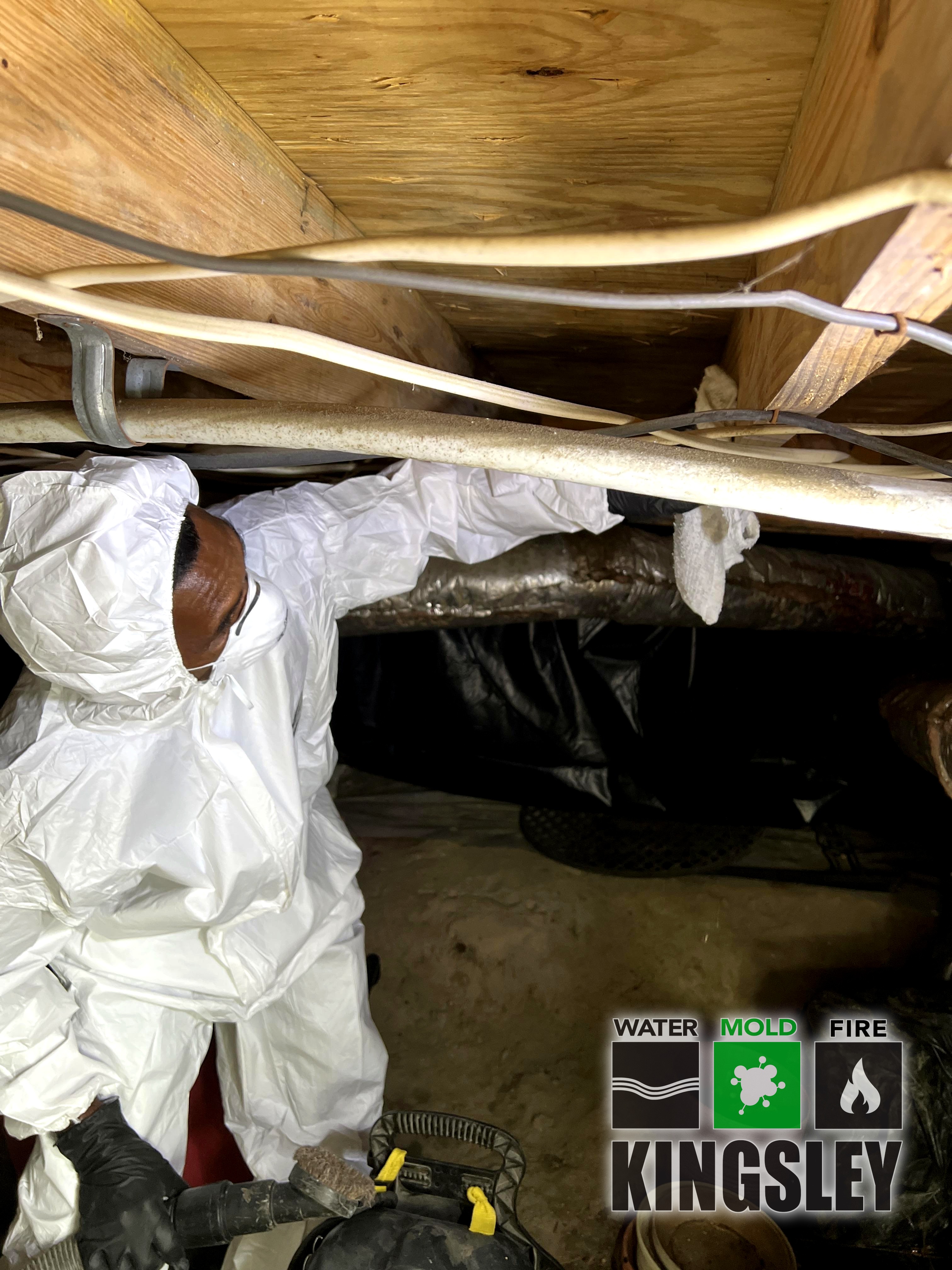
Bluffton, SC
September 17, 2026
Kingsley water damage & Fire cleanup responded for crawlspace joist mold inspection and cleanup in Bluffton, SC and began with a photo-backed survey that captured crawlspace joists with staining during mold cleanup. That photo-backed condition check defined where finishes had to open, what could stay, and where drying equipment had to aim. The home needed source control, selective removal of non-salvageable wet or contaminated material, and verified drying of what remained in Bluffton. The adjuster-ready photo set stayed with the file so rebuild trades could see the same framed assembly the crew saw.
During mitigation we controlled the work zone so debris and spores did not track into clean rooms. Where finishes blocked drying, we opened only the wet footprint shown by meters and the photo record. Non-salvageable saturated material was bagged and removed; salvageable framing and sheathing were cleaned and treated when microbial staining warranted it. HEPA vacuuming and careful handling limited dust from demo. The unique on-site detail that guided this Bluffton file was crawlspace joists with staining during mold cleanup. The adjuster-ready photo set stayed with the file so rebuild trades could see the same framed assembly the crew saw.
IICRC water-damage and mold-remediation practice prioritizes stop the moisture source, remove what cannot be dried in place, clean and treat remaining structures with an EPA-registered antimicrobial when staining warranted it, then dry to target with measured air movement and dehumidification. We placed air movers and dehumidifiers to match the crawlspace bay, aimed airflow along the wet materials in the photo, and rechecked moisture on a 3–7 day drying calendar with overnight humidity checks—never past about a week. Skipping that short monitoring window is how a straightforward wet call becomes secondary damage or a musty return odor in Bluffton.
As readings stabilized within that first-week window, we demobilized equipment and left the work area ready for any needed rebuild of finishes or insulation. Photo documentation of the mitigation state stayed with the job file for the Bluffton property, including the same angle that showed crawlspace joists with staining during mold cleanup. Helpful takeaway: Dark staining on crawl joists in Bluffton is a reason to map moisture before buttoning the bay back up with fresh vapor barrier.
Homeowners comparing crawlspace joist mold inspection and cleanup options in the Bluffton area should expect a written moisture map, selective removal instead of full tear-out when meters allow, and a clear end point when materials hit dry goal—not an open-ended equipment rental. Kingsley water damage & Fire cleanup follows that measured approach so rebuild decisions rest on documented conditions rather than a calendar guess.
When rebuild starts, keep the dry-standard notes handy for flooring, cabinet, or insulation trades so no one closes a cavity that still reads wet. That handoff is part of finishing crawlspace joist mold inspection and cleanup correctly in Bluffton after mitigation—not a separate sales pitch.
Throughout the Bluffton job we kept communication practical: what was wet, what was removed, what was drying, and when meters said the assembly met goal. That plain record is what homeowners and trades use after crawlspace joist mold inspection and cleanup—not jargon and not an invented multi-week timeline.
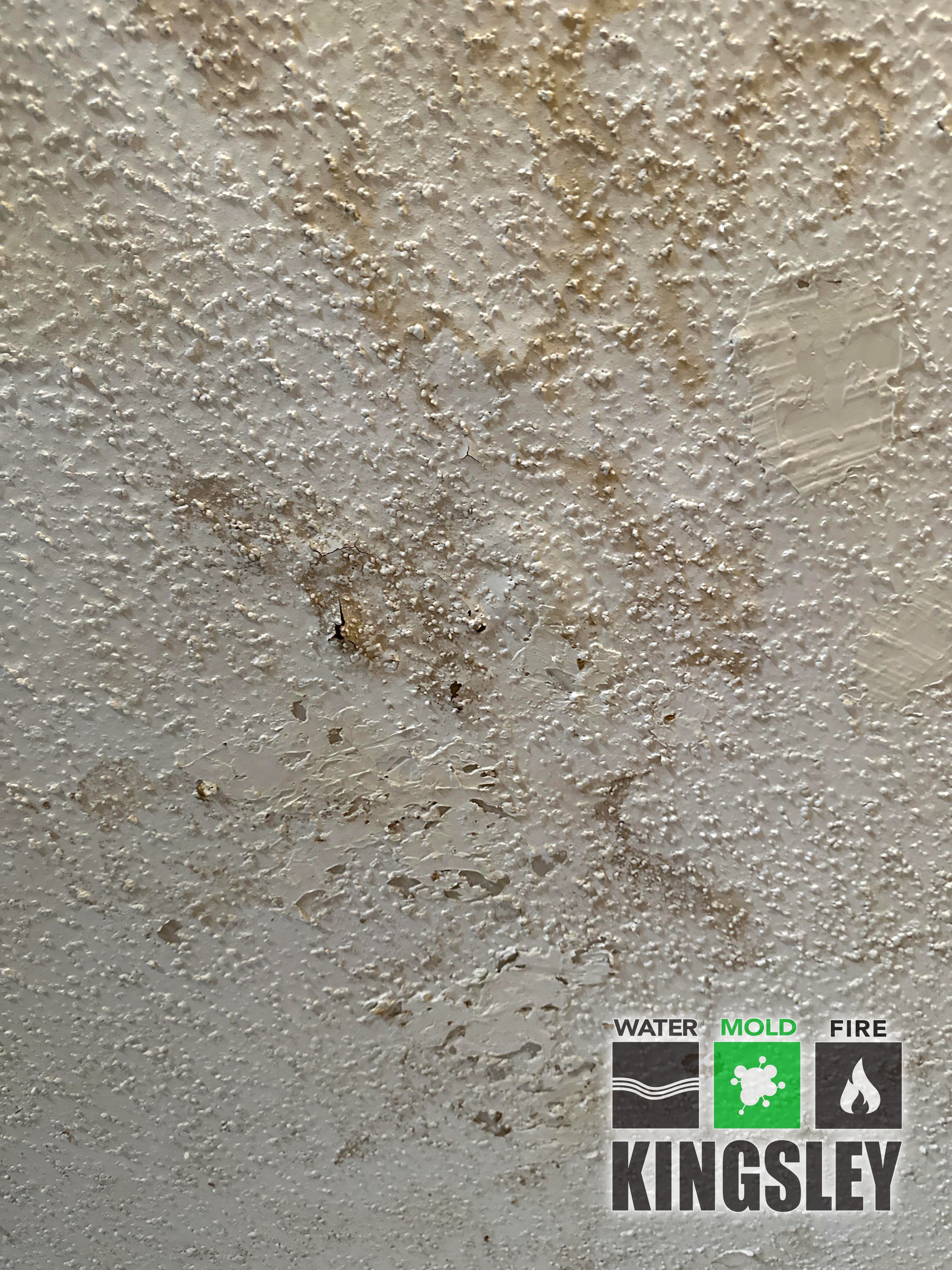
Hopkins, SC
September 17, 2026
Kingsley water damage & Fire cleanup responded for tile floor moisture mapping and water cleanup in Hopkins, SC and began with a photo-backed survey that captured tile Floor Moisture Mapping and Water Cleanup. That photo-backed condition check defined where finishes had to open, what could stay, and where drying equipment had to aim. The home needed source control, selective removal of non-salvageable wet or contaminated material, and verified drying of what remained in Hopkins. The adjuster-ready photo set stayed with the file so rebuild trades could see the same framed assembly the crew saw.
During mitigation we controlled the work zone so debris did not track into clean rooms. Where finishes blocked drying, we opened only the wet footprint shown by meters and the photo record. Non-salvageable saturated material was bagged and removed; salvageable framing and sheathing were cleaned. HEPA vacuuming and careful handling limited dust from demo. The unique on-site detail that guided this Hopkins file was tile Floor Moisture Mapping and Water Cleanup. Quiet work windows were held where the household schedule required it, without stretching the drying calendar past about a week.
IICRC water-damage practice prioritizes stop the moisture source, remove what cannot be dried in place, clean remaining structures, then dry to target with measured air movement and dehumidification. We placed air movers and dehumidifiers to match the wet assembly, aimed airflow along the wet materials in the photo, and rechecked moisture on a 3–7 day drying calendar with overnight humidity checks—never past about a week. Skipping that short monitoring window is how a straightforward wet call becomes secondary damage or a musty return odor in Hopkins.
As readings stabilized within that first-week window, we demobilized equipment and left the work area ready for any needed rebuild of finishes or insulation. Photo documentation of the mitigation state stayed with the job file for the Hopkins property, including the same angle that showed tile Floor Moisture Mapping and Water Cleanup. Helpful takeaway: If flooring feels soft, edges cup, or a stain keeps spreading in Hopkins, stop walking the wet zone and request moisture mapping before new finishes go down.
Homeowners comparing tile floor moisture mapping and water cleanup options in the Hopkins area should expect a written moisture map, selective removal instead of full tear-out when meters allow, and a clear end point when materials hit dry goal—not an open-ended equipment rental. Kingsley water damage & Fire cleanup follows that measured approach so rebuild decisions rest on documented conditions rather than a calendar guess.
When rebuild starts, keep the dry-standard notes handy for flooring, cabinet, or insulation trades so no one closes a cavity that still reads wet. That handoff is part of finishing tile floor moisture mapping and water cleanup correctly in Hopkins after mitigation—not a separate sales pitch.
Throughout the Hopkins job we kept communication practical: what was wet, what was removed, what was drying, and when meters said the assembly met goal. That plain record is what homeowners and trades use after tile floor moisture mapping and water cleanup—not jargon and not an invented multi-week timeline.
Newberry, SC
September 16, 2026
Kingsley water damage & Fire cleanup handled moisture mapping, targeted removal where required, and verified drying over a 3–7 day window in Newberry, SC.
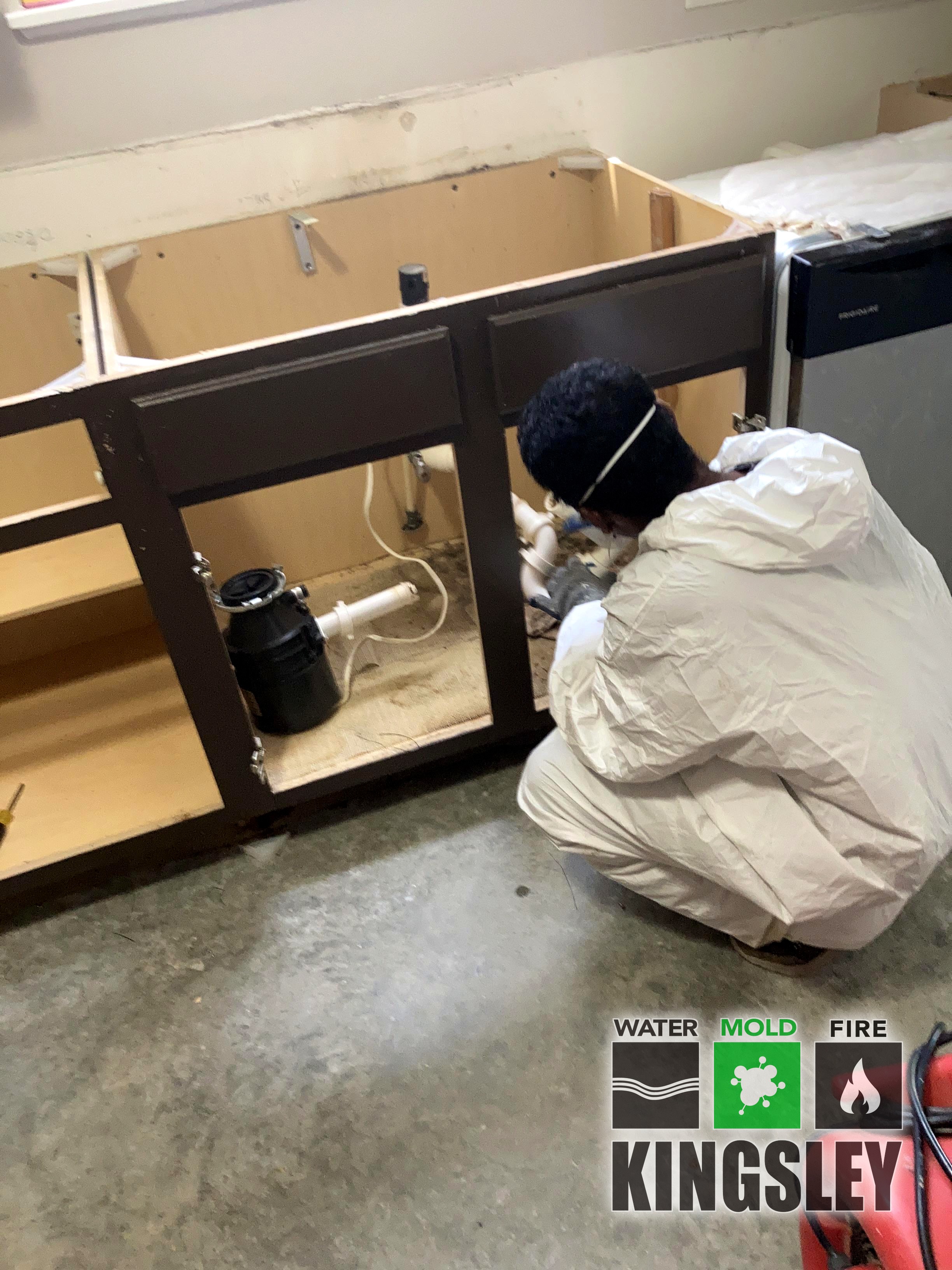
Newberry, SC
September 16, 2026
Kingsley water damage & Fire cleanup handled tile floor moisture mapping and water cleanup for a Newberry, SC property. The camera and meters guided scope from the start: tile Floor Moisture Mapping and Water Cleanup. That photo-backed condition check defined where finishes had to open, what could stay, and where drying equipment had to aim. The home needed source control, selective removal of non-salvageable wet or contaminated material, and verified drying of what remained in Newberry. Contents near the work path were shifted or protected before tools came out in this Newberry home.
During mitigation we controlled the work zone so debris did not track into clean rooms. Where finishes blocked drying, we opened only the wet footprint shown by meters and the photo record. Non-salvageable saturated material was bagged and removed; salvageable framing and sheathing were cleaned. HEPA vacuuming and careful handling limited dust from demo. The unique on-site detail that guided this Newberry file was tile Floor Moisture Mapping and Water Cleanup. Contents near the work path were shifted or protected before tools came out in this Newberry home.
IICRC water-damage practice prioritizes stop the moisture source, remove what cannot be dried in place, clean remaining structures, then dry to target with measured air movement and dehumidification. We placed air movers and dehumidifiers to match the wet assembly, aimed airflow along the wet materials in the photo, and rechecked moisture on a 3–7 day drying calendar with overnight humidity checks—never past about a week. Skipping that short monitoring window is how a straightforward wet call becomes secondary damage or a musty return odor in Newberry.
As readings stabilized within that first-week window, we demobilized equipment and left the work area ready for any needed rebuild of finishes or insulation. Photo documentation of the mitigation state stayed with the job file for the Newberry property, including the same angle that showed tile Floor Moisture Mapping and Water Cleanup. Helpful takeaway: If flooring feels soft, edges cup, or a stain keeps spreading in Newberry, stop walking the wet zone and request moisture mapping before new finishes go down.
Homeowners comparing tile floor moisture mapping and water cleanup options in the Newberry area should expect a written moisture map, selective removal instead of full tear-out when meters allow, and a clear end point when materials hit dry goal—not an open-ended equipment rental. Kingsley water damage & Fire cleanup follows that measured approach so rebuild decisions rest on documented conditions rather than a calendar guess.
When rebuild starts, keep the dry-standard notes handy for flooring, cabinet, or insulation trades so no one closes a cavity that still reads wet. That handoff is part of finishing tile floor moisture mapping and water cleanup correctly in Newberry after mitigation—not a separate sales pitch.
Throughout the Newberry job we kept communication practical: what was wet, what was removed, what was drying, and when meters said the assembly met goal. That plain record is what homeowners and trades use after tile floor moisture mapping and water cleanup—not jargon and not an invented multi-week timeline.
Hanahan, SC
September 16, 2026
Camera angle on kitchen floor water damage cleanup (Hanahan). Contents cleared from the wet corner before metered drying. Stills filed same day. Meter calendar: three-to-seven days. Never past about a week.
Gaston, SC
September 16, 2026
Kingsley water damage & Fire cleanup handled moisture mapping, containment as needed, and verified drying over a 3–7 day window in Gaston, SC.
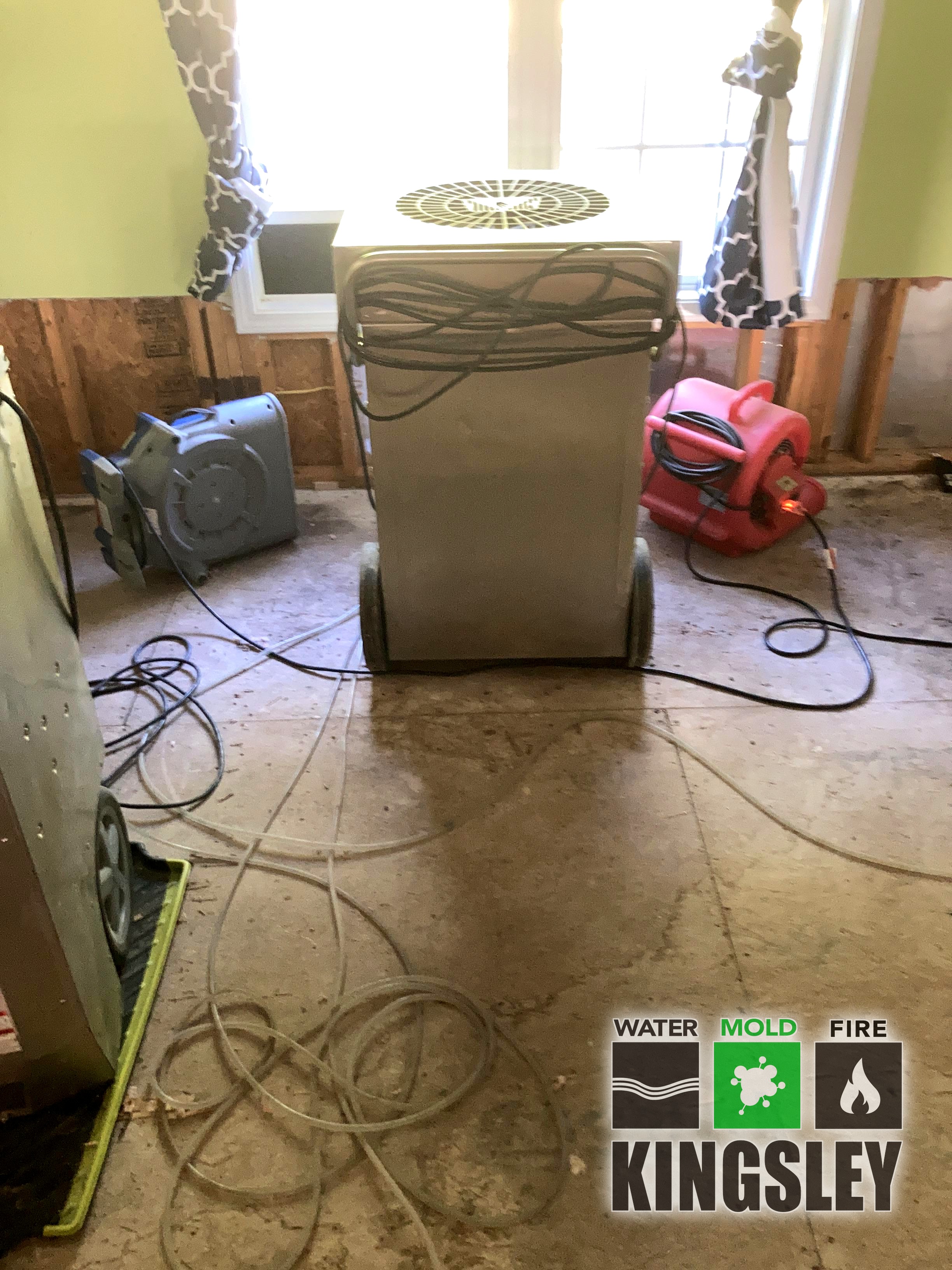
Sumter, SC
September 16, 2026
Kingsley water damage & Fire cleanup handled structural drying with dehumidifier and air movers in Sumter, SC after water loss needing equipment-driven structural drying after selective demo. We began with a room-by-room and assembly-level inspection of the interior room after flood cuts, documenting a wheeled silver dehumidifier with clear drain line between blue and red air movers on bare subfloor after lower drywall was removed, lime-green upper walls and a curtained window in frame. That visual and instrument check — not a guess from the hallway — defined where finishes had to open, what could stay, and where drying equipment had to aim. the home needed source control, selective removal of non-salvageable wet or contaminated material, and verified drying of what remained.
During mitigation we controlled the work zone so debris and moisture did not track into clean rooms. Where finishes blocked drying, we opened only the wet footprint shown by meters and the photo record. Contaminated or saturated materials were bagged and removed; salvageable framing and sheathing were cleaned and treated with an EPA-registered antimicrobial when staining or microbial growth warranted it. HEPA vacuuming and careful handling limited dust from demo. The unique on-site detail that guided this file was a wheeled silver dehumidifier with clear drain line between blue and red air movers on bare subfloor after lower drywall was removed, lime-green upper walls and a curtained window in frame — that condition stayed in the documentation so the homeowner and any follow-on trade could see exactly what drove the scope in Sumter.
IICRC water-damage and mold-remediation practice prioritizes stop-the-source, remove what cannot be dried in place, clean and treat remaining structures, then dry to target with measured air movement and dehumidification. We placed air movers and/or dehumidifiers to match the wet assembly, ran equipment under monitoring, and rechecked moisture within the first week of mitigation rather than leaving gear unattended for an open-ended stretch. Skipping that short monitoring window is how a straightforward wet call becomes secondary damage in adjoining cavities.
As readings stabilized and the work area met a clean, dry condition, we demobilized equipment and left the interior room after flood cuts ready for any needed rebuild of finishes. Photo documentation of the mitigation state stayed with the claim file. If you see standing water, elevated meter readings, or soft/stained flooring in Sumter, stop the source and start professional extraction and drying within the first days — delayed drying is what turns a contained wet zone into a larger structural call.
IICRC water-damage and mold-remediation practice prioritizes stop the moisture source, remove what cannot be dried in place, clean and treat remaining structures, then dry to target with measured air movement and dehumidification. On this Sumter file we ran air movers and dehumidifiers against the wet assembly under monitoring and rechecked moisture on a 3–7 day drying calendar—never past about a week. Skipping that short window is how secondary damage or musty odor returns after finishes go back up.
As readings stabilized within that first-week window, equipment came out and the work area was left ready for any needed rebuild. Photo documentation of the mitigation state stayed with the job file. Helpful takeaway: If you see standing water, elevated meter readings, or soft/stained flooring in Sumter, stop the source and start professional extraction and drying within the first days — delayed drying is what turns a contained wet zone into a larger structural call.
Homeowners comparing structural drying with dehumidifier and air movers options in the Sumter area should expect a written moisture map, selective removal instead of full tear-out when meters allow, and a clear end point when materials hit dry goal—not an open-ended equipment rental. Kingsley water damage & Fire cleanup follows that measured approach so rebuild decisions rest on documented conditions rather than a calendar guess.
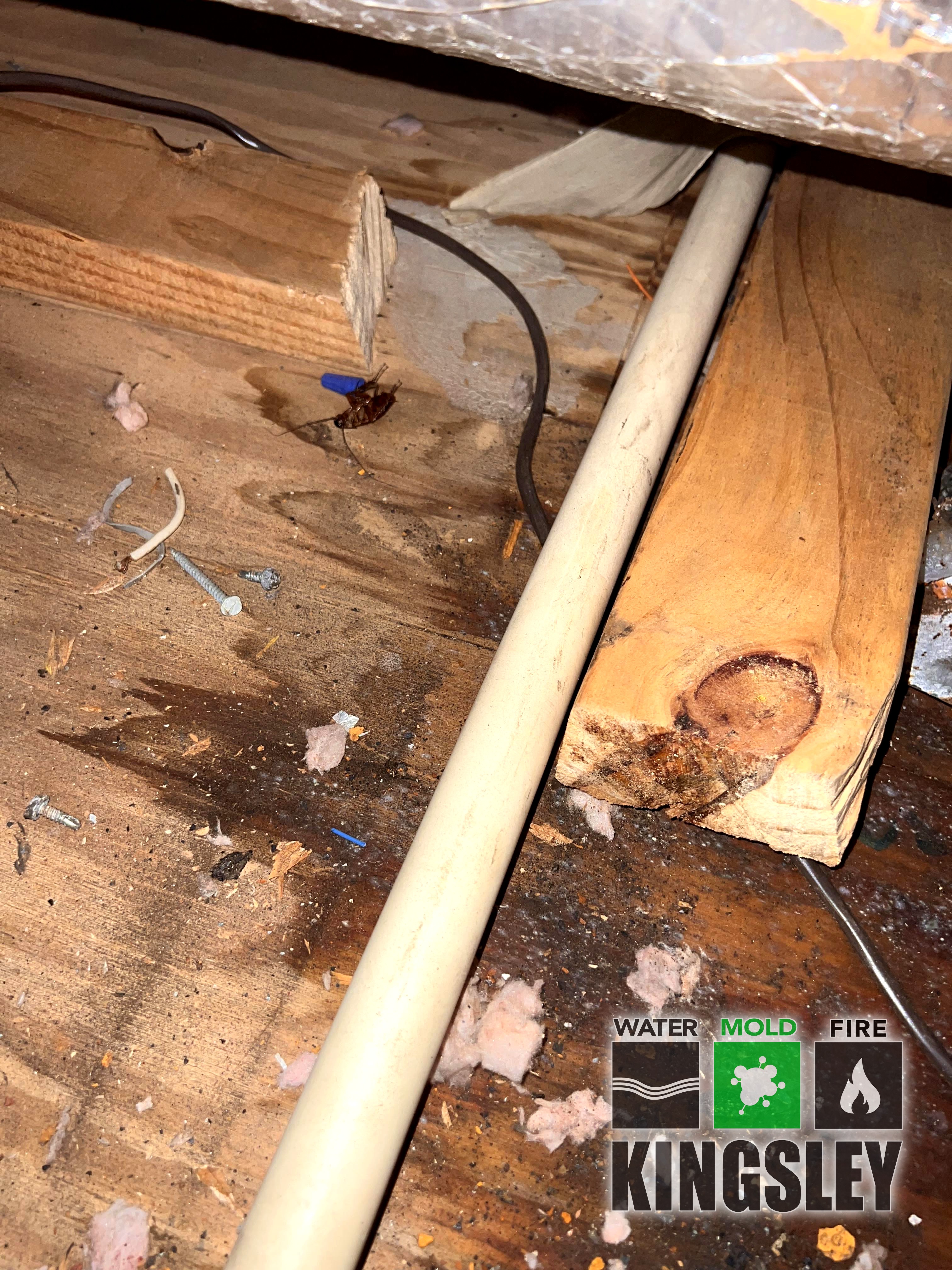
Bluffton, SC
September 16, 2026
Kingsley water damage & Fire cleanup handled ceiling moisture mapping near hvac vent for a Bluffton, SC property. The camera and meters guided scope from the start: ceiling water stain near HVAC vent during mapping. That photo-backed condition check defined where finishes had to open, what could stay, and where drying equipment had to aim. The home needed source control, selective removal of non-salvageable wet or contaminated material, and verified drying of what remained in Bluffton. We labeled the wet edge on the sketch so later visits matched day-one photos.
During mitigation we controlled the work zone so debris did not track into clean rooms. Where finishes blocked drying, we opened only the wet footprint shown by meters and the photo record. Non-salvageable saturated material was bagged and removed; salvageable framing and sheathing were cleaned. HEPA vacuuming and careful handling limited dust from demo. The unique on-site detail that guided this Bluffton file was ceiling water stain near HVAC vent during mapping. Contents near the work path were shifted or protected before tools came out.
IICRC water-damage practice prioritizes stop the moisture source, remove what cannot be dried in place, clean remaining structures, then dry to target with measured air movement and dehumidification. We placed air movers and dehumidifiers to match the wet assembly, aimed airflow along the wet materials in the photo, and rechecked moisture on a 3–7 day drying calendar with overnight humidity checks—never past about a week. Quiet work windows were held where the household schedule required it, without stretching past that first-week ceiling. Skipping that short monitoring window is how a straightforward wet call becomes secondary damage or a musty return odor in Bluffton.
As readings stabilized within that first-week window, we demobilized equipment and left the work area ready for any needed rebuild of finishes or insulation. Photo documentation of the mitigation state stayed with the job file for the Bluffton property, including the same angle that showed ceiling water stain near HVAC vent during mapping. Helpful takeaway: If flooring feels soft, edges cup, or a stain keeps spreading in Bluffton, stop walking the wet zone and request moisture mapping before new finishes go down.
Homeowners comparing ceiling moisture mapping near hvac vent options in the Bluffton area should expect a written moisture map, selective removal instead of full tear-out when meters allow, and a clear end point when materials hit dry goal—not an open-ended equipment rental. Kingsley water damage & Fire cleanup follows that measured approach so rebuild decisions rest on documented conditions rather than a calendar guess.
When rebuild starts, keep the dry-standard notes handy for flooring, cabinet, or insulation trades so no one closes a cavity that still reads wet. That handoff is part of finishing ceiling moisture mapping near hvac vent correctly in Bluffton after mitigation. Throughout the job we kept communication practical: what was wet, what was removed, what was drying, and when meters said the assembly met goal—without inventing a multi-week timeline.
For this Bluffton stop, the close-out standard stayed simple: meters at goal, photo set filed, and no equipment left running past the 3–7 day band.
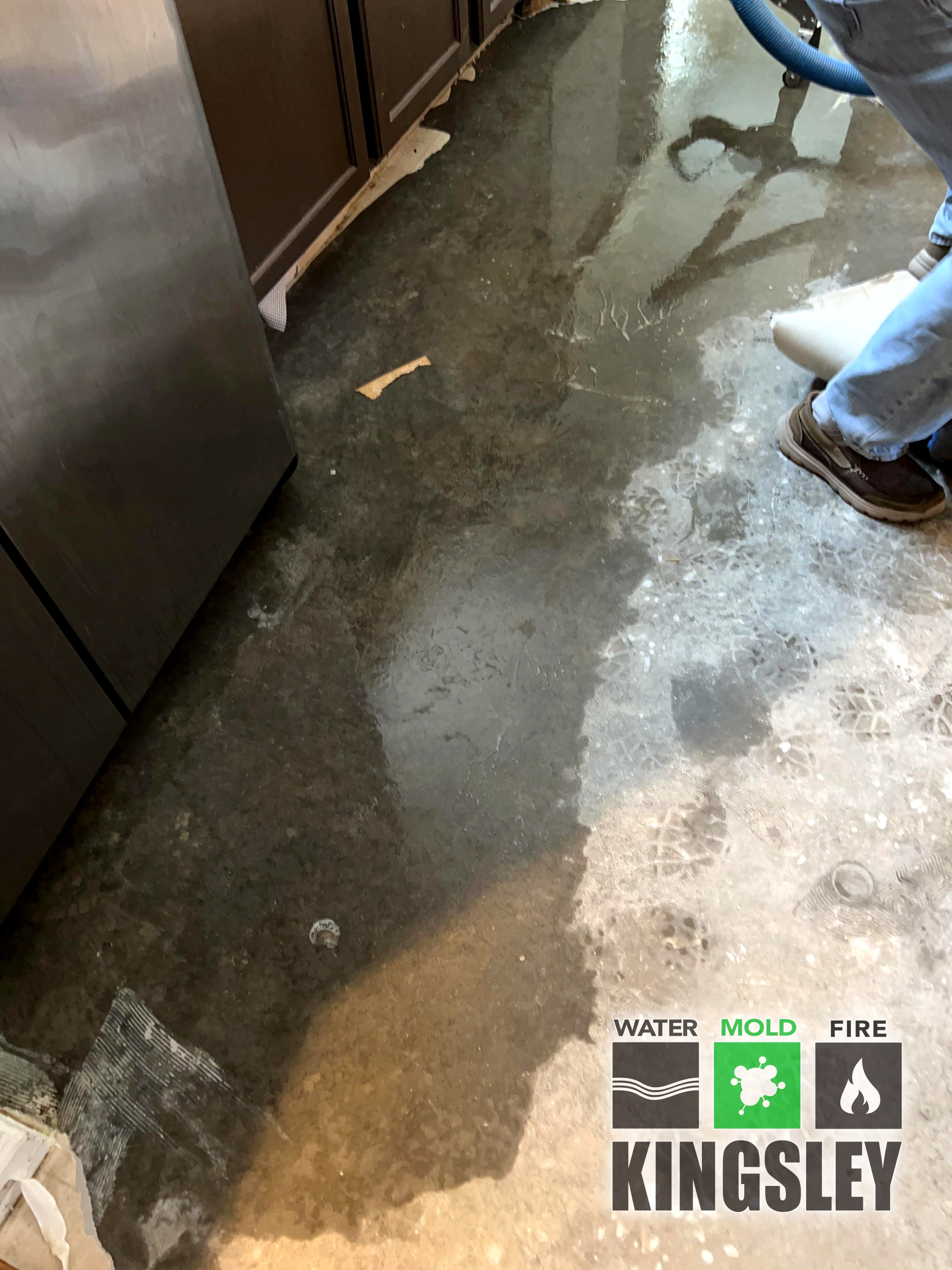
Batesburg, SC
September 16, 2026
Kingsley water damage & Fire cleanup completed crawlspace joist mold inspection and cleanup in Batesburg, SC. On arrival we walked the loss area and documented crawlspace Joist Mold Inspection and Cleanup. That photo-backed condition check defined where finishes had to open, what could stay, and where drying equipment had to aim. The home needed source control, selective removal of non-salvageable wet or contaminated material, and verified drying of what remained in Batesburg. We labeled the wet edge on the sketch so later visits matched day-one photos in Batesburg.
During mitigation we controlled the work zone so debris and spores did not track into clean rooms. Where finishes blocked drying, we opened only the wet footprint shown by meters and the photo record. Non-salvageable saturated material was bagged and removed; salvageable framing and sheathing were cleaned and treated when microbial staining warranted it. HEPA vacuuming and careful handling limited dust from demo. The unique on-site detail that guided this Batesburg file was crawlspace Joist Mold Inspection and Cleanup. Quiet work windows were held where the household schedule required it, without stretching the drying calendar past about a week.
IICRC water-damage and mold-remediation practice prioritizes stop the moisture source, remove what cannot be dried in place, clean and treat remaining structures with an EPA-registered antimicrobial when staining warranted it, then dry to target with measured air movement and dehumidification. We placed air movers and dehumidifiers to match the crawlspace bay, aimed airflow along the wet materials in the photo, and rechecked moisture on a 3–7 day drying calendar with overnight humidity checks—never past about a week. Skipping that short monitoring window is how a straightforward wet call becomes secondary damage or a musty return odor in Batesburg.
As readings stabilized within that first-week window, we demobilized equipment and left the work area ready for any needed rebuild of finishes or insulation. Photo documentation of the mitigation state stayed with the job file for the Batesburg property, including the same angle that showed crawlspace Joist Mold Inspection and Cleanup. Helpful takeaway: Dark staining on crawl joists in Batesburg is a reason to map moisture before buttoning the bay back up with fresh vapor barrier.
Homeowners comparing crawlspace joist mold inspection and cleanup options in the Batesburg area should expect a written moisture map, selective removal instead of full tear-out when meters allow, and a clear end point when materials hit dry goal—not an open-ended equipment rental. Kingsley water damage & Fire cleanup follows that measured approach so rebuild decisions rest on documented conditions rather than a calendar guess.
When rebuild starts, keep the dry-standard notes handy for flooring, cabinet, or insulation trades so no one closes a cavity that still reads wet. That handoff is part of finishing crawlspace joist mold inspection and cleanup correctly in Batesburg after mitigation—not a separate sales pitch.
Throughout the Batesburg job we kept communication practical: what was wet, what was removed, what was drying, and when meters said the assembly met goal. That plain record is what homeowners and trades use after crawlspace joist mold inspection and cleanup—not jargon and not an invented multi-week timeline.
Newberry, SC
September 15, 2026
Kingsley water damage & Fire cleanup handled cabinet drying, moisture mapping, and verified structural drying over a 3–7 day window in Newberry, SC.
Newberry, SC
September 15, 2026
Kingsley water damage & Fire cleanup handled bathroom cabinet water damage cleanup for a Newberry, SC property. The camera and meters guided scope from the start: bathroom Cabinet Water Damage Cleanup. That photo-backed condition check defined where finishes had to open, what could stay, and where drying equipment had to aim. The home needed source control, selective removal of non-salvageable wet or contaminated material, and verified drying of what remained in Newberry. We labeled the wet edge on the sketch so later visits matched day-one photos.
During mitigation we controlled the work zone so debris did not track into clean rooms. Where finishes blocked drying, we opened only the wet footprint shown by meters and the photo record. Non-salvageable saturated material was bagged and removed; salvageable framing and sheathing were cleaned. HEPA vacuuming and careful handling limited dust from demo. The unique on-site detail that guided this Newberry file was bathroom Cabinet Water Damage Cleanup. Contents near the work path were shifted or protected before tools came out.
IICRC water-damage practice prioritizes stop the moisture source, remove what cannot be dried in place, clean remaining structures, then dry to target with measured air movement and dehumidification. We placed air movers and dehumidifiers to match the wet assembly, aimed airflow along the wet materials in the photo, and rechecked moisture on a 3–7 day drying calendar with overnight humidity checks—never past about a week. Quiet work windows were held where the household schedule required it, without stretching past that first-week ceiling. Skipping that short monitoring window is how a straightforward wet call becomes secondary damage or a musty return odor in Newberry.
As readings stabilized within that first-week window, we demobilized equipment and left the work area ready for any needed rebuild of finishes or insulation. Photo documentation of the mitigation state stayed with the job file for the Newberry property, including the same angle that showed bathroom Cabinet Water Damage Cleanup. Helpful takeaway: If flooring feels soft, edges cup, or a stain keeps spreading in Newberry, stop walking the wet zone and request moisture mapping before new finishes go down.
Homeowners comparing bathroom cabinet water damage cleanup options in the Newberry area should expect a written moisture map, selective removal instead of full tear-out when meters allow, and a clear end point when materials hit dry goal—not an open-ended equipment rental. Kingsley water damage & Fire cleanup follows that measured approach so rebuild decisions rest on documented conditions rather than a calendar guess.
When rebuild starts, keep the dry-standard notes handy for flooring, cabinet, or insulation trades so no one closes a cavity that still reads wet. That handoff is part of finishing bathroom cabinet water damage cleanup correctly in Newberry after mitigation. Throughout the job we kept communication practical: what was wet, what was removed, what was drying, and when meters said the assembly met goal—without inventing a multi-week timeline.
For this Newberry stop, the close-out standard stayed simple: meters at goal, photo set filed, and no equipment left running past the 3–7 day band.
Liberty Hill, SC
September 15, 2026
Kingsley water damage & Fire cleanup handled moisture mapping, containment as needed, and verified drying over a 3–7 day window in Liberty Hill, SC.
Gaston, SC
September 15, 2026
Kingsley water damage & Fire cleanup handled moisture mapping, containment as needed, and verified drying over a 3–7 day window in Gaston, SC.
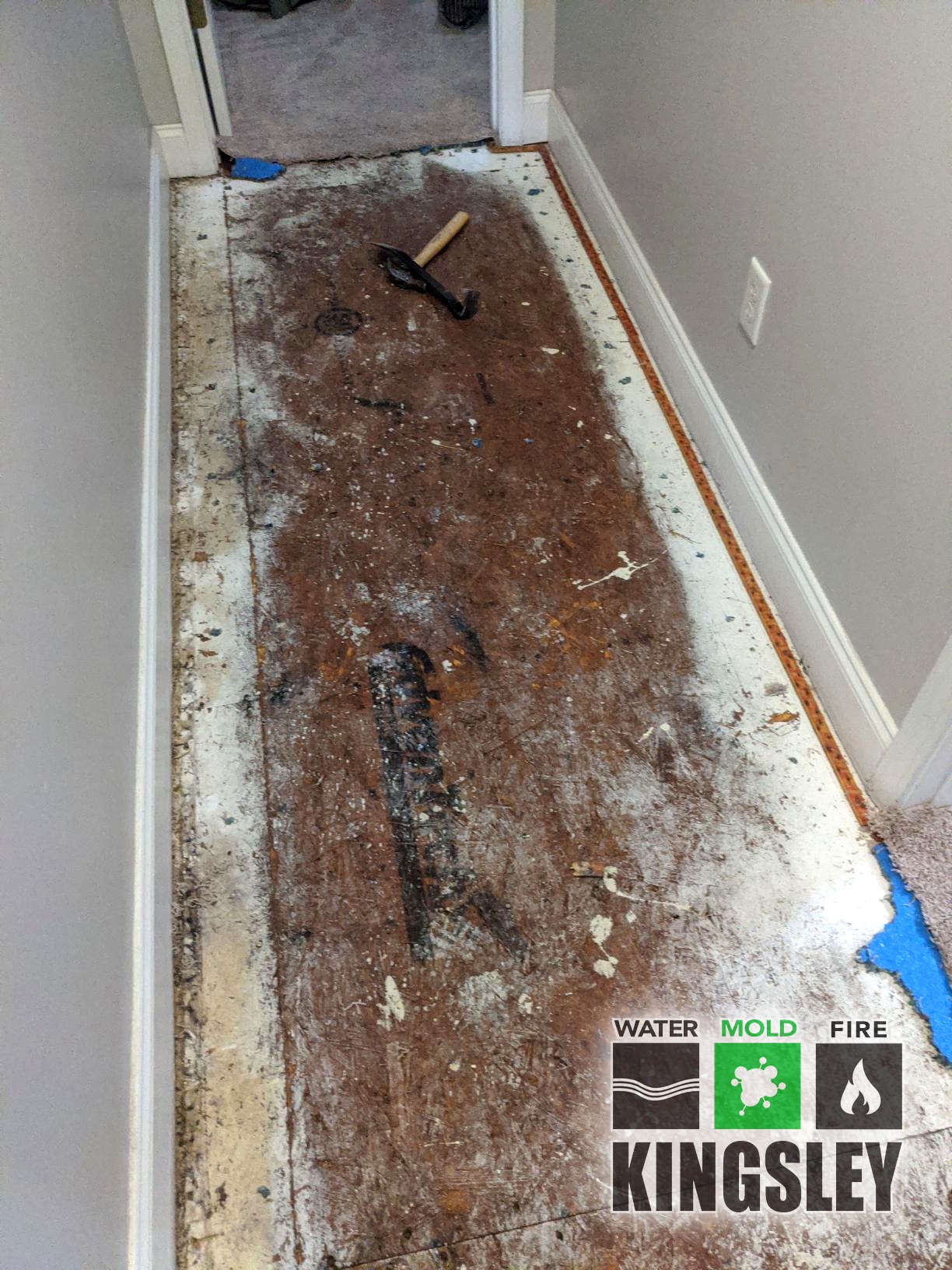
Sumter, SC
September 15, 2026
Kingsley water damage & Fire cleanup handled hallway carpet removal and subfloor cleanup in Sumter, SC after wet carpet and pad that had to come up so the subfloor could be addressed. We began with a room-by-room and assembly-level inspection of the residential hallway, documenting carpet and blue pad stripped from a hallway revealing dark-stained subfloor, tack strips at the baseboards, and a pry bar resting on the exposed deck. That visual and instrument check — not a guess from the hallway — defined where finishes had to open, what could stay, and where drying equipment had to aim. the home needed source control, selective removal of non-salvageable wet or contaminated material, and verified drying of what remained.
During mitigation we controlled the work zone so debris and moisture did not track into clean rooms. Where finishes blocked drying, we opened only the wet footprint shown by meters and the photo record. Contaminated or saturated materials were bagged and removed; salvageable framing and sheathing were cleaned and treated with an EPA-registered antimicrobial when staining or microbial growth warranted it. HEPA vacuuming and careful handling limited dust from demo. The unique on-site detail that guided this file was carpet and blue pad stripped from a hallway revealing dark-stained subfloor, tack strips at the baseboards, and a pry bar resting on the exposed deck — that condition stayed in the documentation so the homeowner and any follow-on trade could see exactly what drove the scope in Sumter.
IICRC water-damage and mold-remediation practice prioritizes stop-the-source, remove what cannot be dried in place, clean and treat remaining structures, then dry to target with measured air movement and dehumidification. We placed air movers and/or dehumidifiers to match the wet assembly, ran equipment under monitoring, and rechecked moisture within the first week of mitigation rather than leaving gear unattended for an open-ended stretch. Skipping that short monitoring window is how a straightforward wet call becomes secondary damage in adjoining cavities.
As readings stabilized and the work area met a clean, dry condition, we demobilized equipment and left the residential hallway ready for any needed rebuild of finishes. Photo documentation of the mitigation state stayed with the claim file. If you see standing water, elevated meter readings, or soft/stained flooring in Sumter, stop the source and start professional extraction and drying within the first days — delayed drying is what turns a contained wet zone into a larger structural call.
IICRC water-damage and mold-remediation practice prioritizes stop the moisture source, remove what cannot be dried in place, clean and treat remaining structures, then dry to target with measured air movement and dehumidification. On this Sumter file we ran air movers and dehumidifiers against the wet assembly under monitoring and rechecked moisture on a 3–7 day drying calendar—never past about a week. Skipping that short window is how secondary damage or musty odor returns after finishes go back up.
As readings stabilized within that first-week window, equipment came out and the work area was left ready for any needed rebuild. Photo documentation of the mitigation state stayed with the job file. Helpful takeaway: If you see standing water, elevated meter readings, or soft/stained flooring in Sumter, stop the source and start professional extraction and drying within the first days — delayed drying is what turns a contained wet zone into a larger structural call.
Homeowners comparing hallway carpet removal and subfloor cleanup options in the Sumter area should expect a written moisture map, selective removal instead of full tear-out when meters allow, and a clear end point when materials hit dry goal—not an open-ended equipment rental. Kingsley water damage & Fire cleanup follows that measured approach so rebuild decisions rest on documented conditions rather than a calendar guess.
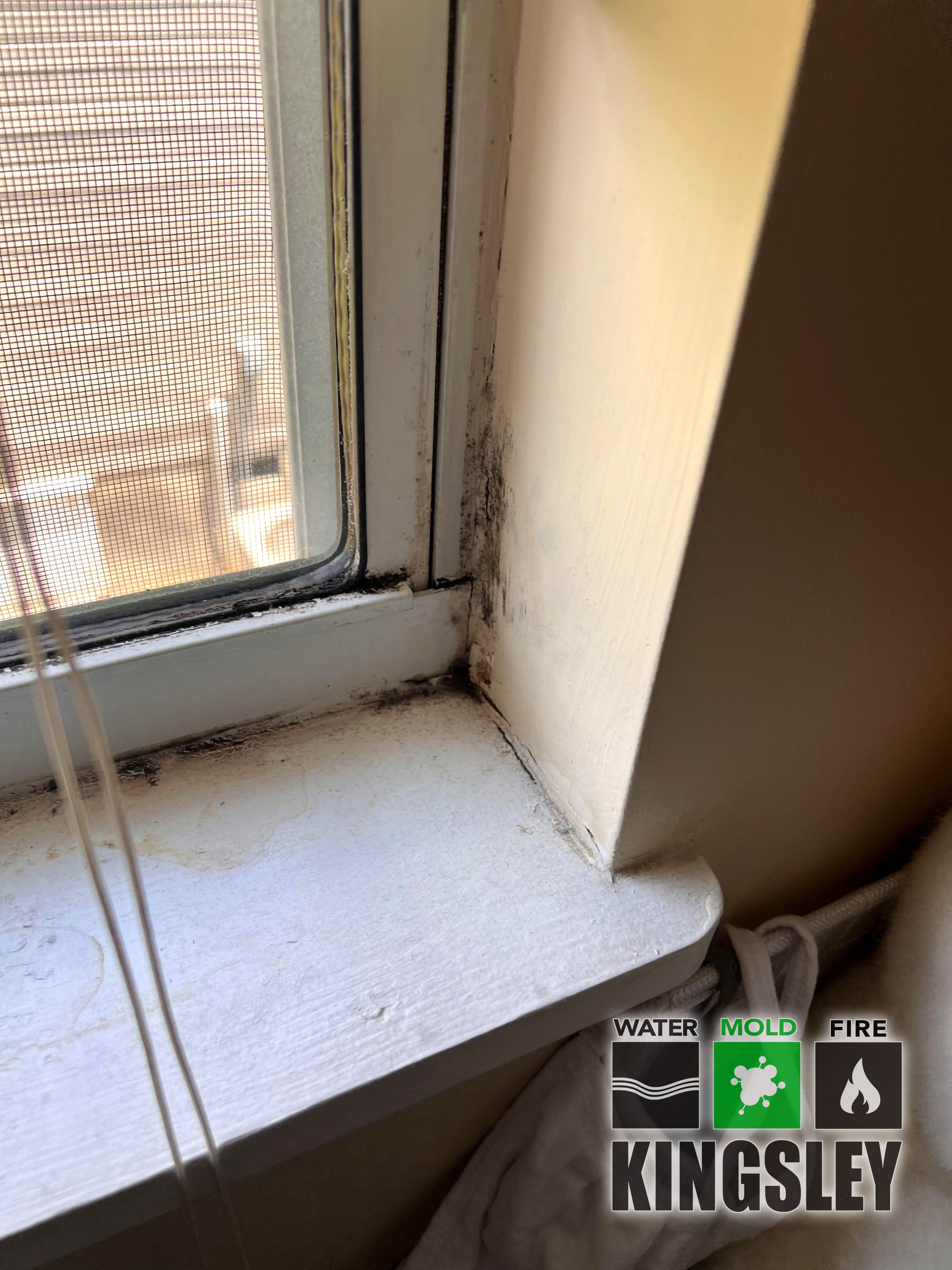
Bluffton, SC
September 15, 2026
Kingsley water damage & Fire cleanup responded for window frame mold cleanup and remediation in Bluffton, SC and began with a photo-backed survey that captured pPE work on window framing during mold remediation. That photo-backed condition check defined where finishes had to open, what could stay, and where drying equipment had to aim. The home needed source control, selective removal of non-salvageable wet or contaminated material, and verified drying of what remained in Bluffton. The adjuster-ready photo set stayed with the file so rebuild trades could see the same framed assembly the crew saw.
During mitigation we controlled the work zone so debris and spores did not track into clean rooms. Where finishes blocked drying, we opened only the wet footprint shown by meters and the photo record. Non-salvageable saturated material was bagged and removed; salvageable framing and sheathing were cleaned and treated when microbial staining warranted it. HEPA vacuuming and careful handling limited dust from demo. The unique on-site detail that guided this Bluffton file was pPE work on window framing during mold remediation. The adjuster-ready photo set stayed with the file so rebuild trades could see the same framed assembly the crew saw.
IICRC water-damage and mold-remediation practice prioritizes stop the moisture source, remove what cannot be dried in place, clean and treat remaining structures with an EPA-registered antimicrobial when staining warranted it, then dry to target with measured air movement and dehumidification. We placed air movers and dehumidifiers to match the wet assembly, aimed airflow along the wet materials in the photo, and rechecked moisture on a 3–7 day drying calendar with overnight humidity checks—never past about a week. Skipping that short monitoring window is how a straightforward wet call becomes secondary damage or a musty return odor in Bluffton.
As readings stabilized within that first-week window, we demobilized equipment and left the work area ready for any needed rebuild of finishes or insulation. Photo documentation of the mitigation state stayed with the job file for the Bluffton property, including the same angle that showed pPE work on window framing during mold remediation. Helpful takeaway: If you see spotting on cabinets, vents, or window sills in Bluffton, have the moisture source checked before finishes hide the growth path.
Homeowners comparing window frame mold cleanup and remediation options in the Bluffton area should expect a written moisture map, selective removal instead of full tear-out when meters allow, and a clear end point when materials hit dry goal—not an open-ended equipment rental. Kingsley water damage & Fire cleanup follows that measured approach so rebuild decisions rest on documented conditions rather than a calendar guess.
When rebuild starts, keep the dry-standard notes handy for flooring, cabinet, or insulation trades so no one closes a cavity that still reads wet. That handoff is part of finishing window frame mold cleanup and remediation correctly in Bluffton after mitigation—not a separate sales pitch.
Throughout the Bluffton job we kept communication practical: what was wet, what was removed, what was drying, and when meters said the assembly met goal. That plain record is what homeowners and trades use after window frame mold cleanup and remediation—not jargon and not an invented multi-week timeline.
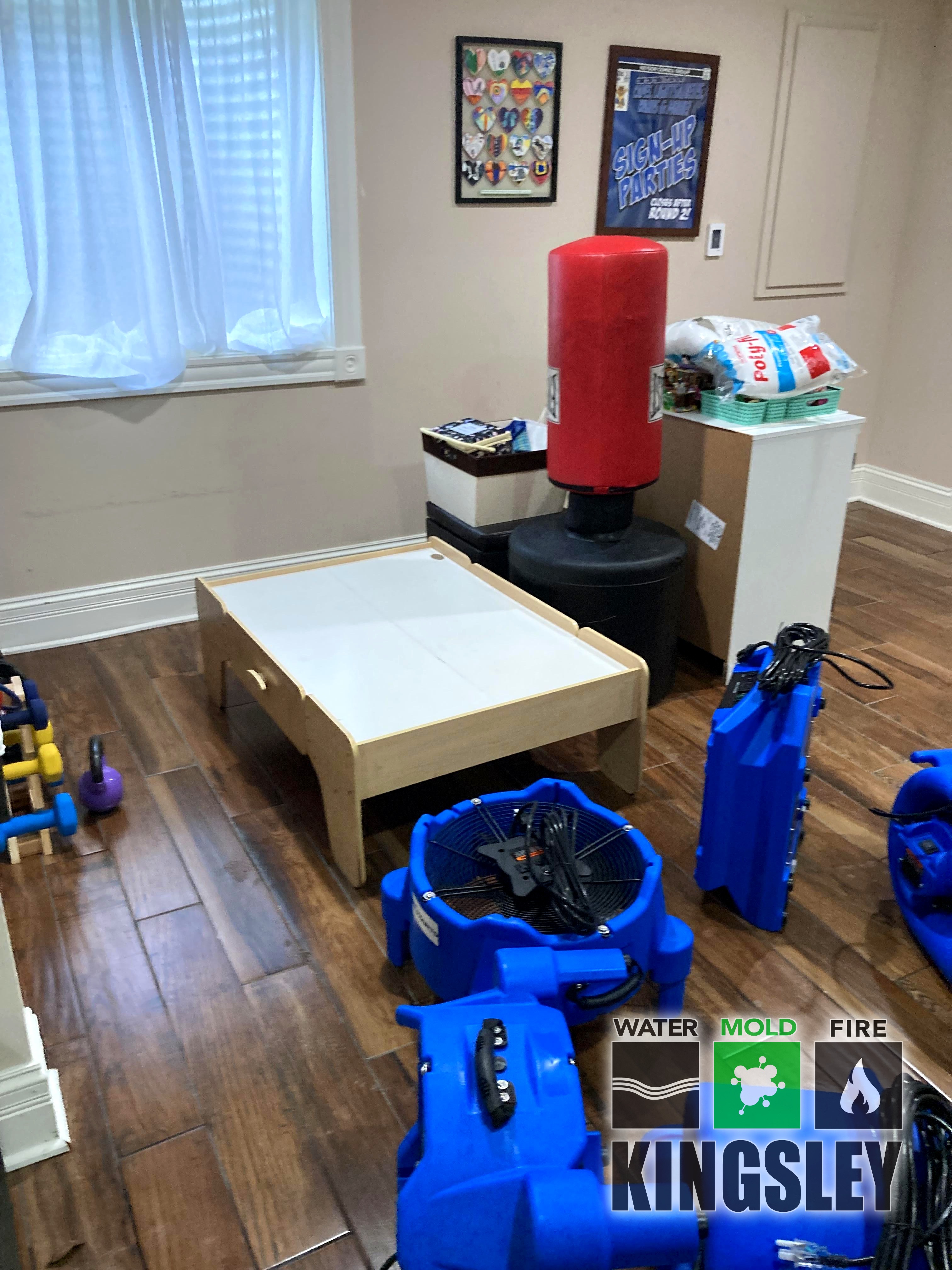
Batesburg, SC
September 15, 2026
In Batesburg, SC, Kingsley water damage & Fire cleanup performed doorway subfloor water damage cleanup after documenting doorway Subfloor Water Damage Cleanup during the initial condition check. That photo-backed condition check defined where finishes had to open, what could stay, and where drying equipment had to aim. The home needed source control, selective removal of non-salvageable wet or contaminated material, and verified drying of what remained in Batesburg. We labeled the wet edge on the sketch so later visits matched day-one photos.
During mitigation we controlled the work zone so debris did not track into clean rooms. Where finishes blocked drying, we opened only the wet footprint shown by meters and the photo record. Non-salvageable saturated material was bagged and removed; salvageable framing and sheathing were cleaned. HEPA vacuuming and careful handling limited dust from demo. The unique on-site detail that guided this Batesburg file was doorway Subfloor Water Damage Cleanup. Contents near the work path were shifted or protected before tools came out.
IICRC water-damage practice prioritizes stop the moisture source, remove what cannot be dried in place, clean remaining structures, then dry to target with measured air movement and dehumidification. We placed air movers and dehumidifiers to match the wet assembly, aimed airflow along the wet materials in the photo, and rechecked moisture on a 3–7 day drying calendar with overnight humidity checks—never past about a week. Quiet work windows were held where the household schedule required it, without stretching past that first-week ceiling. Skipping that short monitoring window is how a straightforward wet call becomes secondary damage or a musty return odor in Batesburg.
As readings stabilized within that first-week window, we demobilized equipment and left the work area ready for any needed rebuild of finishes or insulation. Photo documentation of the mitigation state stayed with the job file for the Batesburg property, including the same angle that showed doorway Subfloor Water Damage Cleanup. Helpful takeaway: If flooring feels soft, edges cup, or a stain keeps spreading in Batesburg, stop walking the wet zone and request moisture mapping before new finishes go down.
Homeowners comparing doorway subfloor water damage cleanup options in the Batesburg area should expect a written moisture map, selective removal instead of full tear-out when meters allow, and a clear end point when materials hit dry goal—not an open-ended equipment rental. Kingsley water damage & Fire cleanup follows that measured approach so rebuild decisions rest on documented conditions rather than a calendar guess.
When rebuild starts, keep the dry-standard notes handy for flooring, cabinet, or insulation trades so no one closes a cavity that still reads wet. That handoff is part of finishing doorway subfloor water damage cleanup correctly in Batesburg after mitigation. Throughout the job we kept communication practical: what was wet, what was removed, what was drying, and when meters said the assembly met goal—without inventing a multi-week timeline.
For this Batesburg stop, the close-out standard stayed simple: meters at goal, photo set filed, and no equipment left running past the 3–7 day band.
Newberry, SC
September 14, 2026
Kingsley water damage & Fire cleanup handled source isolation support, extraction, and ceiling cavity drying over a 3–7 day window in Newberry, SC.
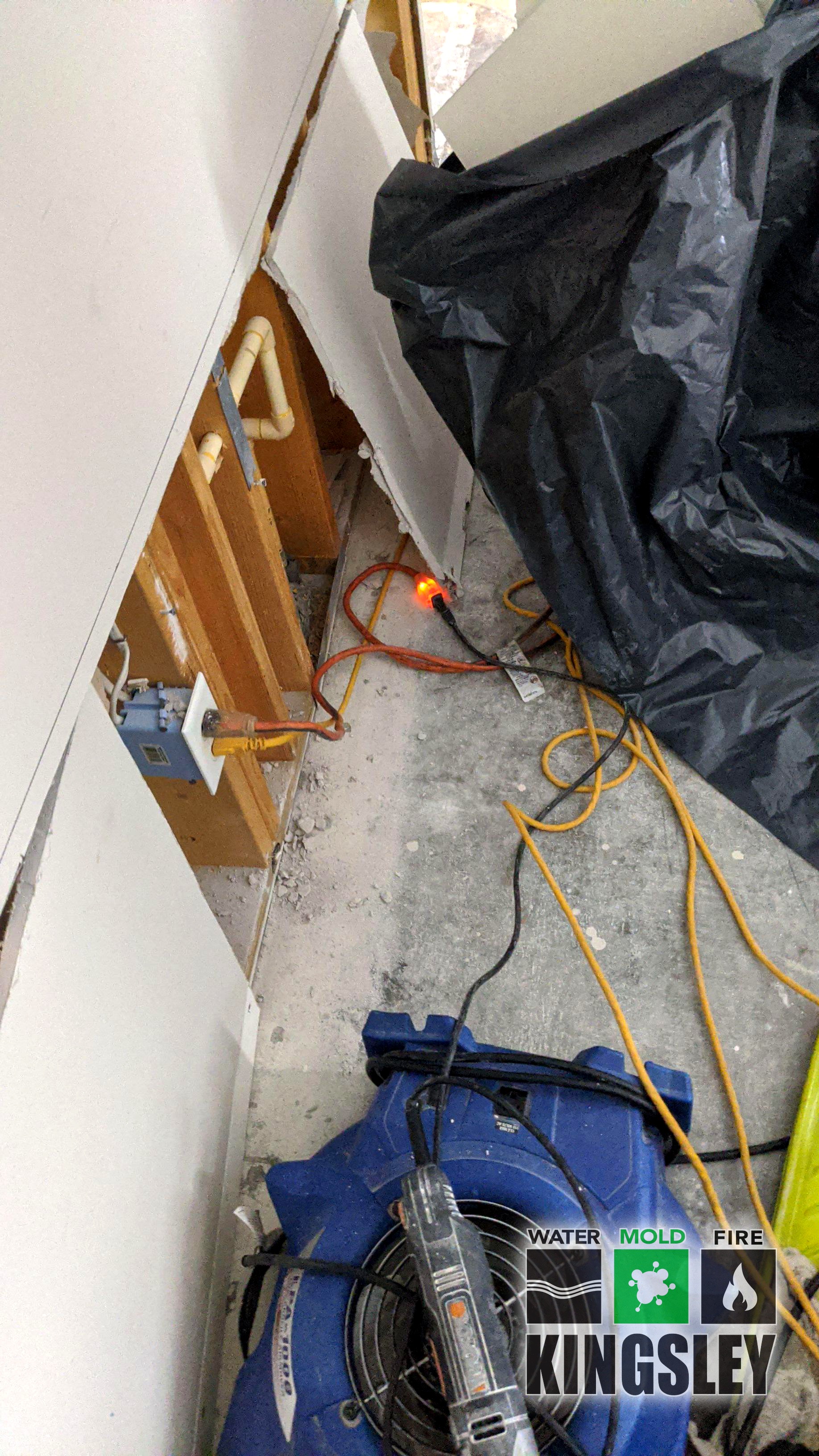
Newberry, SC
September 14, 2026
Kingsley water damage & Fire cleanup completed ceiling stain water intrusion cleanup in Newberry, SC. On arrival we walked the loss area and documented ceiling Stain Water Intrusion Cleanup. That photo-backed condition check defined where finishes had to open, what could stay, and where drying equipment had to aim. The home needed source control, selective removal of non-salvageable wet or contaminated material, and verified drying of what remained in Newberry. We labeled the wet edge on the sketch so later visits matched day-one photos.
During mitigation we controlled the work zone so debris did not track into clean rooms. Where finishes blocked drying, we opened only the wet footprint shown by meters and the photo record. Non-salvageable saturated material was bagged and removed; salvageable framing and sheathing were cleaned. HEPA vacuuming and careful handling limited dust from demo. The unique on-site detail that guided this Newberry file was ceiling Stain Water Intrusion Cleanup. Contents near the work path were shifted or protected before tools came out.
IICRC water-damage practice prioritizes stop the moisture source, remove what cannot be dried in place, clean remaining structures, then dry to target with measured air movement and dehumidification. We placed air movers and dehumidifiers to match the wet assembly, aimed airflow along the wet materials in the photo, and rechecked moisture on a 3–7 day drying calendar with overnight humidity checks—never past about a week. Quiet work windows were held where the household schedule required it, without stretching past that first-week ceiling. Skipping that short monitoring window is how a straightforward wet call becomes secondary damage or a musty return odor in Newberry.
As readings stabilized within that first-week window, we demobilized equipment and left the work area ready for any needed rebuild of finishes or insulation. Photo documentation of the mitigation state stayed with the job file for the Newberry property, including the same angle that showed ceiling Stain Water Intrusion Cleanup. Helpful takeaway: If flooring feels soft, edges cup, or a stain keeps spreading in Newberry, stop walking the wet zone and request moisture mapping before new finishes go down.
Homeowners comparing ceiling stain water intrusion cleanup options in the Newberry area should expect a written moisture map, selective removal instead of full tear-out when meters allow, and a clear end point when materials hit dry goal—not an open-ended equipment rental. Kingsley water damage & Fire cleanup follows that measured approach so rebuild decisions rest on documented conditions rather than a calendar guess.
When rebuild starts, keep the dry-standard notes handy for flooring, cabinet, or insulation trades so no one closes a cavity that still reads wet. That handoff is part of finishing ceiling stain water intrusion cleanup correctly in Newberry after mitigation. Throughout the job we kept communication practical: what was wet, what was removed, what was drying, and when meters said the assembly met goal—without inventing a multi-week timeline.
For this Newberry stop, the close-out standard stayed simple: meters at goal, photo set filed, and no equipment left running past the 3–7 day band.
Steedman, SC
September 14, 2026
Kingsley water damage & Fire cleanup handled moisture mapping, containment as needed, and verified drying over a 3–7 day window in Steedman, SC.
St Andrews, SC
September 14, 2026
Kingsley water damage & Fire cleanup handled moisture mapping, containment as needed, and verified drying over a 3–7 day window in St. Andrews, SC.
Anderson, SC
September 14, 2026
Kingsley water damage & Fire cleanup handled hepa air scrubbing during mold remediation in Anderson, SC after airborne particulates during mold/water cleanup requiring HEPA filtration. We began with a room-by-room and assembly-level inspection of the interior room during active remediation, documenting a light-blue Dri-Eaz DefendAir HEPA 500 air scrubber on brown carpet near a white doorway with power cord on top. That visual and instrument check — not a guess from the hallway — defined where finishes had to open, what could stay, and where drying equipment had to aim. the home needed source control, selective removal of non-salvageable wet or contaminated material, and verified drying of what remained.
During mitigation we controlled the work zone so debris and moisture did not track into clean rooms. Where finishes blocked drying, we opened only the wet footprint shown by meters and the photo record. Contaminated or saturated materials were bagged and removed; salvageable framing and sheathing were cleaned and treated with an EPA-registered antimicrobial when staining or microbial growth warranted it. HEPA vacuuming and careful handling limited dust from demo. The unique on-site detail that guided this file was a light-blue Dri-Eaz DefendAir HEPA 500 air scrubber on brown carpet near a white doorway with power cord on top — that condition stayed in the documentation so the homeowner and any follow-on trade could see exactly what drove the scope in Anderson.
IICRC water-damage and mold-remediation practice prioritizes stop-the-source, remove what cannot be dried in place, clean and treat remaining structures, then dry to target with measured air movement and dehumidification. We placed air movers and/or dehumidifiers to match the wet assembly, ran equipment under monitoring, and rechecked moisture within the first week of mitigation rather than leaving gear unattended for an open-ended stretch. Skipping that short monitoring window is how a straightforward wet call becomes secondary damage in adjoining cavities.
As readings stabilized and the work area met a clean, dry condition, we demobilized equipment and left the interior room during active remediation ready for any needed rebuild of finishes. Photo documentation of the mitigation state stayed with the claim file. If you notice musty odors, spotting on wood, or staining at cabinets, vents, or window sills in Anderson, have the moisture source and affected materials inspected before finishes hide the growth path.
IICRC water-damage and mold-remediation practice prioritizes stop the moisture source, remove what cannot be dried in place, clean and treat remaining structures, then dry to target with measured air movement and dehumidification. On this Anderson file we ran air movers and dehumidifiers against the wet assembly under monitoring and rechecked moisture on a 3–7 day drying calendar—never past about a week. Skipping that short window is how secondary damage or musty odor returns after finishes go back up.
As readings stabilized within that first-week window, equipment came out and the work area was left ready for any needed rebuild. Photo documentation of the mitigation state stayed with the job file. Helpful takeaway: If you notice musty odors, spotting on wood, or staining at cabinets, vents, or window sills in Anderson, have the moisture source and affected materials inspected before finishes hide the growth path.
Homeowners comparing hepa air scrubbing during mold remediation options in the Anderson area should expect a written moisture map, selective removal instead of full tear-out when meters allow, and a clear end point when materials hit dry goal—not an open-ended equipment rental. Kingsley water damage & Fire cleanup follows that measured approach so rebuild decisions rest on documented conditions rather than a calendar guess.
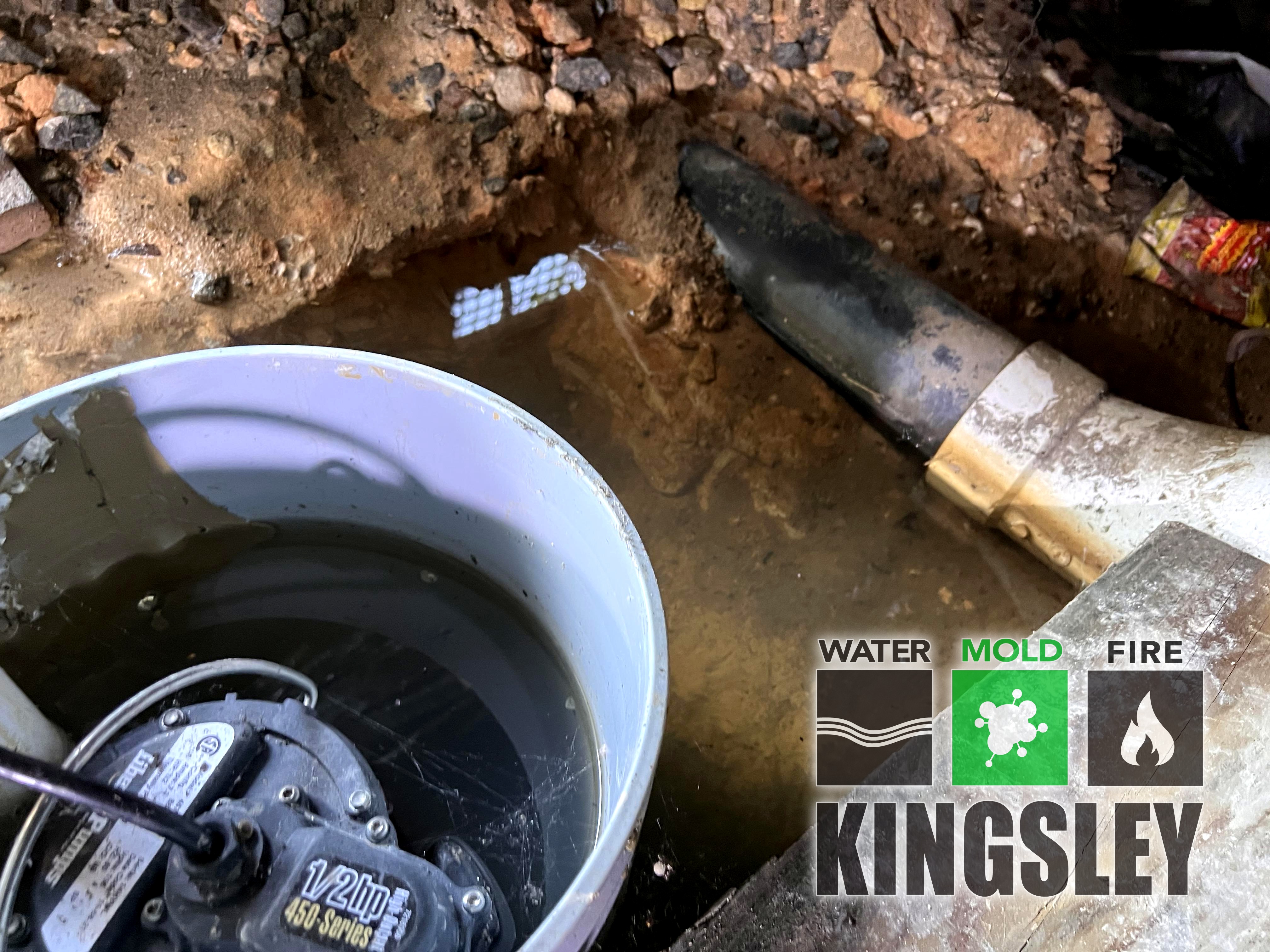
Westville, SC
September 14, 2026
Kingsley water damage & Fire cleanup completed crawlspace joist mold inspection and cleanup in Westville, SC. On arrival we walked the loss area and documented crawlspace joists with staining during mold cleanup. That photo-backed condition check defined where finishes had to open, what could stay, and where drying equipment had to aim. The home needed source control, selective removal of non-salvageable wet or contaminated material, and verified drying of what remained in Westville. Contents near the work path were shifted or protected before tools came out in this Westville home.
During mitigation we controlled the work zone so debris and spores did not track into clean rooms. Where finishes blocked drying, we opened only the wet footprint shown by meters and the photo record. Non-salvageable saturated material was bagged and removed; salvageable framing and sheathing were cleaned and treated when microbial staining warranted it. HEPA vacuuming and careful handling limited dust from demo. The unique on-site detail that guided this Westville file was crawlspace joists with staining during mold cleanup. We labeled the wet edge on the sketch so later visits matched day-one photos in Westville.
IICRC water-damage and mold-remediation practice prioritizes stop the moisture source, remove what cannot be dried in place, clean and treat remaining structures with an EPA-registered antimicrobial when staining warranted it, then dry to target with measured air movement and dehumidification. We placed air movers and dehumidifiers to match the crawlspace bay, aimed airflow along the wet materials in the photo, and rechecked moisture on a 3–7 day drying calendar with overnight humidity checks—never past about a week. Skipping that short monitoring window is how a straightforward wet call becomes secondary damage or a musty return odor in Westville.
As readings stabilized within that first-week window, we demobilized equipment and left the work area ready for any needed rebuild of finishes or insulation. Photo documentation of the mitigation state stayed with the job file for the Westville property, including the same angle that showed crawlspace joists with staining during mold cleanup. Helpful takeaway: Dark staining on crawl joists in Westville is a reason to map moisture before buttoning the bay back up with fresh vapor barrier.
Homeowners comparing crawlspace joist mold inspection and cleanup options in the Westville area should expect a written moisture map, selective removal instead of full tear-out when meters allow, and a clear end point when materials hit dry goal—not an open-ended equipment rental. Kingsley water damage & Fire cleanup follows that measured approach so rebuild decisions rest on documented conditions rather than a calendar guess.
When rebuild starts, keep the dry-standard notes handy for flooring, cabinet, or insulation trades so no one closes a cavity that still reads wet. That handoff is part of finishing crawlspace joist mold inspection and cleanup correctly in Westville after mitigation—not a separate sales pitch.
Throughout the Westville job we kept communication practical: what was wet, what was removed, what was drying, and when meters said the assembly met goal. That plain record is what homeowners and trades use after crawlspace joist mold inspection and cleanup—not jargon and not an invented multi-week timeline.
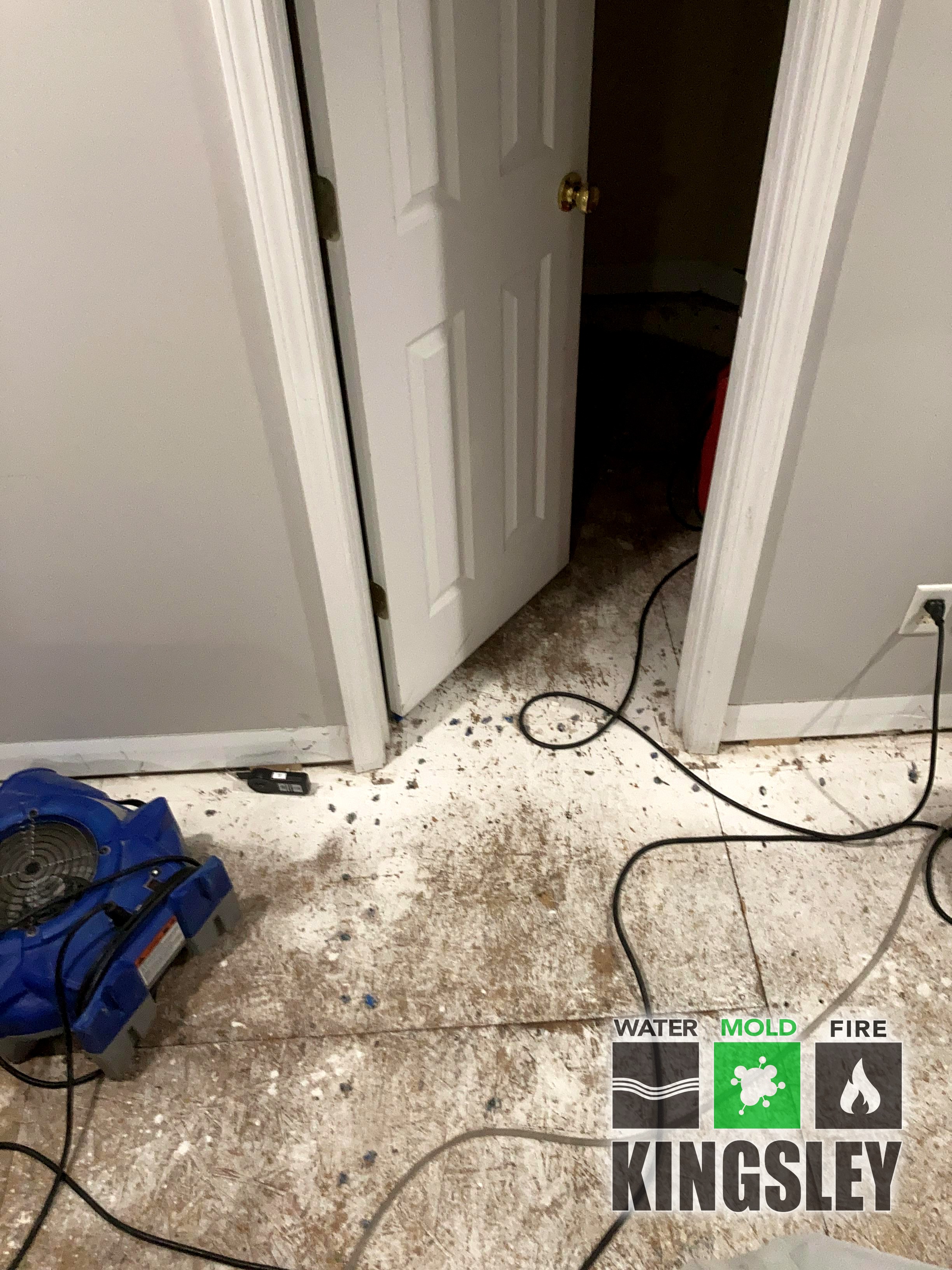
Steedman, SC
September 14, 2026
Kingsley water damage & Fire cleanup completed tile floor moisture mapping and water cleanup in Steedman, SC. On arrival we walked the loss area and documented tile Floor Moisture Mapping and Water Cleanup. That photo-backed condition check defined where finishes had to open, what could stay, and where drying equipment had to aim. The home needed source control, selective removal of non-salvageable wet or contaminated material, and verified drying of what remained in Steedman. We labeled the wet edge on the sketch so later visits matched day-one photos.
During mitigation we controlled the work zone so debris did not track into clean rooms. Where finishes blocked drying, we opened only the wet footprint shown by meters and the photo record. Non-salvageable saturated material was bagged and removed; salvageable framing and sheathing were cleaned. HEPA vacuuming and careful handling limited dust from demo. The unique on-site detail that guided this Steedman file was tile Floor Moisture Mapping and Water Cleanup. Contents near the work path were shifted or protected before tools came out.
IICRC water-damage practice prioritizes stop the moisture source, remove what cannot be dried in place, clean remaining structures, then dry to target with measured air movement and dehumidification. We placed air movers and dehumidifiers to match the wet assembly, aimed airflow along the wet materials in the photo, and rechecked moisture on a 3–7 day drying calendar with overnight humidity checks—never past about a week. Quiet work windows were held where the household schedule required it, without stretching past that first-week ceiling. Skipping that short monitoring window is how a straightforward wet call becomes secondary damage or a musty return odor in Steedman.
As readings stabilized within that first-week window, we demobilized equipment and left the work area ready for any needed rebuild of finishes or insulation. Photo documentation of the mitigation state stayed with the job file for the Steedman property, including the same angle that showed tile Floor Moisture Mapping and Water Cleanup. Helpful takeaway: If flooring feels soft, edges cup, or a stain keeps spreading in Steedman, stop walking the wet zone and request moisture mapping before new finishes go down.
Homeowners comparing tile floor moisture mapping and water cleanup options in the Steedman area should expect a written moisture map, selective removal instead of full tear-out when meters allow, and a clear end point when materials hit dry goal—not an open-ended equipment rental. Kingsley water damage & Fire cleanup follows that measured approach so rebuild decisions rest on documented conditions rather than a calendar guess.
When rebuild starts, keep the dry-standard notes handy for flooring, cabinet, or insulation trades so no one closes a cavity that still reads wet. That handoff is part of finishing tile floor moisture mapping and water cleanup correctly in Steedman after mitigation. Throughout the job we kept communication practical: what was wet, what was removed, what was drying, and when meters said the assembly met goal—without inventing a multi-week timeline.
For this Steedman stop, the close-out standard stayed simple: meters at goal, photo set filed, and no equipment left running past the 3–7 day band.
Ridgeway, SC
September 13, 2026
Kingsley water damage & Fire cleanup handled extraction, baseboard protection, and verified drying over a 3–7 day window in Ridgeway, SC.
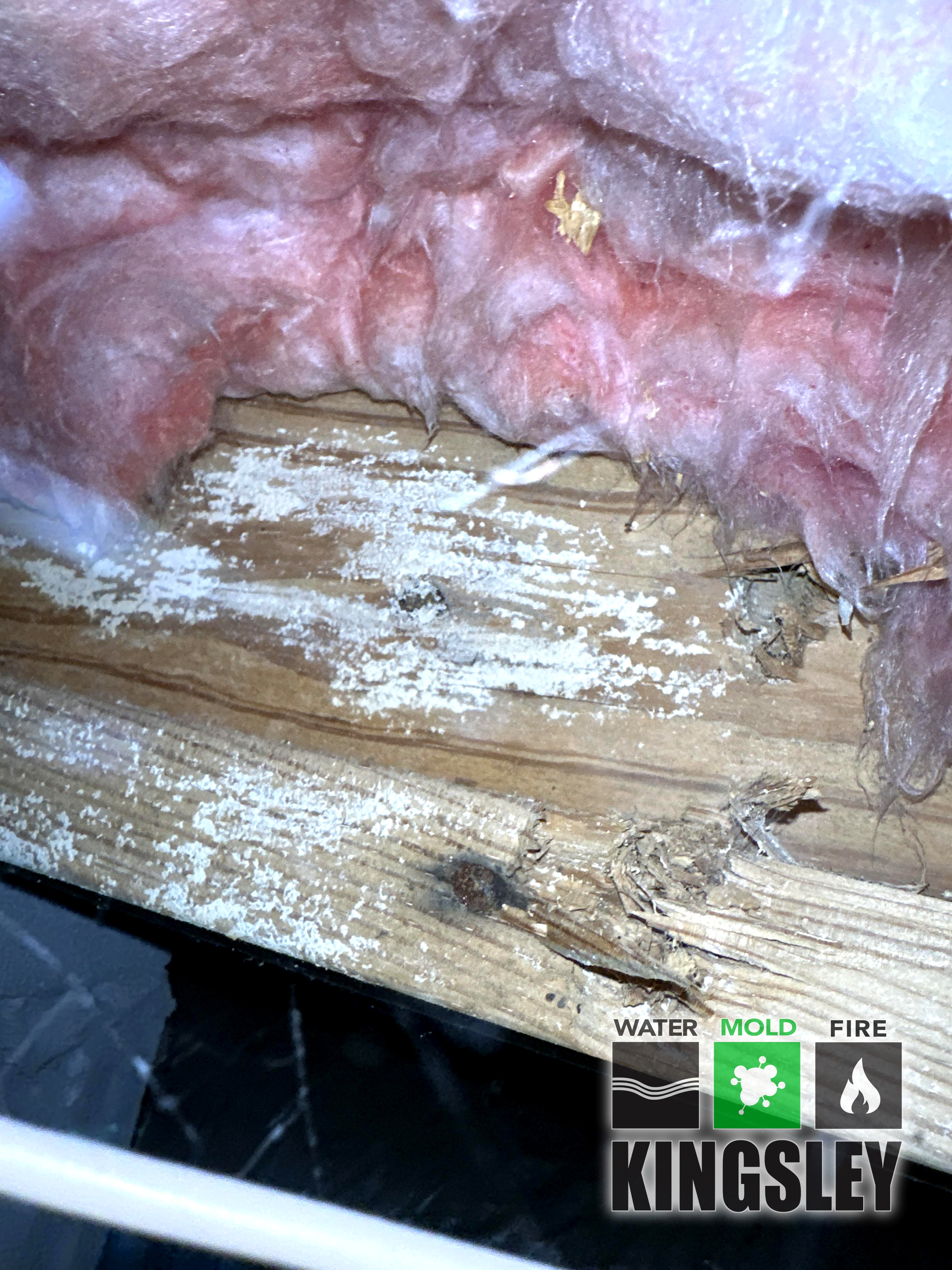
Blythewood, SC
September 13, 2026
In Blythewood, SC, Kingsley water damage & Fire cleanup performed laundry room supply line water cleanup after documenting laundry Room Supply Line Water Cleanup during the initial condition check. That photo-backed condition check defined where finishes had to open, what could stay, and where drying equipment had to aim. The home needed source control, selective removal of non-salvageable wet or contaminated material, and verified drying of what remained in Blythewood. We avoided opening dry cavities that meters and the camera did not support on this Blythewood stop.
During mitigation we controlled the work zone so debris did not track into clean rooms. Where finishes blocked drying, we opened only the wet footprint shown by meters and the photo record. Non-salvageable saturated material was bagged and removed; salvageable framing and sheathing were cleaned. HEPA vacuuming and careful handling limited dust from demo. The unique on-site detail that guided this Blythewood file was laundry Room Supply Line Water Cleanup. Quiet work windows were held where the household schedule required it, without stretching the drying calendar past about a week.
IICRC water-damage practice prioritizes stop the moisture source, remove what cannot be dried in place, clean remaining structures, then dry to target with measured air movement and dehumidification. We placed air movers and dehumidifiers to match the wet assembly, aimed airflow along the wet materials in the photo, and rechecked moisture on a 3–7 day drying calendar with overnight humidity checks—never past about a week. Skipping that short monitoring window is how a straightforward wet call becomes secondary damage or a musty return odor in Blythewood.
As readings stabilized within that first-week window, we demobilized equipment and left the work area ready for any needed rebuild of finishes or insulation. Photo documentation of the mitigation state stayed with the job file for the Blythewood property, including the same angle that showed laundry Room Supply Line Water Cleanup. Helpful takeaway: If flooring feels soft, edges cup, or a stain keeps spreading in Blythewood, stop walking the wet zone and request moisture mapping before new finishes go down.
Homeowners comparing laundry room supply line water cleanup options in the Blythewood area should expect a written moisture map, selective removal instead of full tear-out when meters allow, and a clear end point when materials hit dry goal—not an open-ended equipment rental. Kingsley water damage & Fire cleanup follows that measured approach so rebuild decisions rest on documented conditions rather than a calendar guess.
When rebuild starts, keep the dry-standard notes handy for flooring, cabinet, or insulation trades so no one closes a cavity that still reads wet. That handoff is part of finishing laundry room supply line water cleanup correctly in Blythewood after mitigation—not a separate sales pitch.
Throughout the Blythewood job we kept communication practical: what was wet, what was removed, what was drying, and when meters said the assembly met goal. That plain record is what homeowners and trades use after laundry room supply line water cleanup—not jargon and not an invented multi-week timeline.
Steedman, SC
September 13, 2026
Kingsley water damage & Fire cleanup handled moisture mapping, containment as needed, and verified drying over a 3–7 day window in Steedman, SC.
St Andrews, SC
September 13, 2026
Kingsley water damage & Fire cleanup handled moisture mapping, containment as needed, and verified drying over a 3–7 day window in St. Andrews, SC.
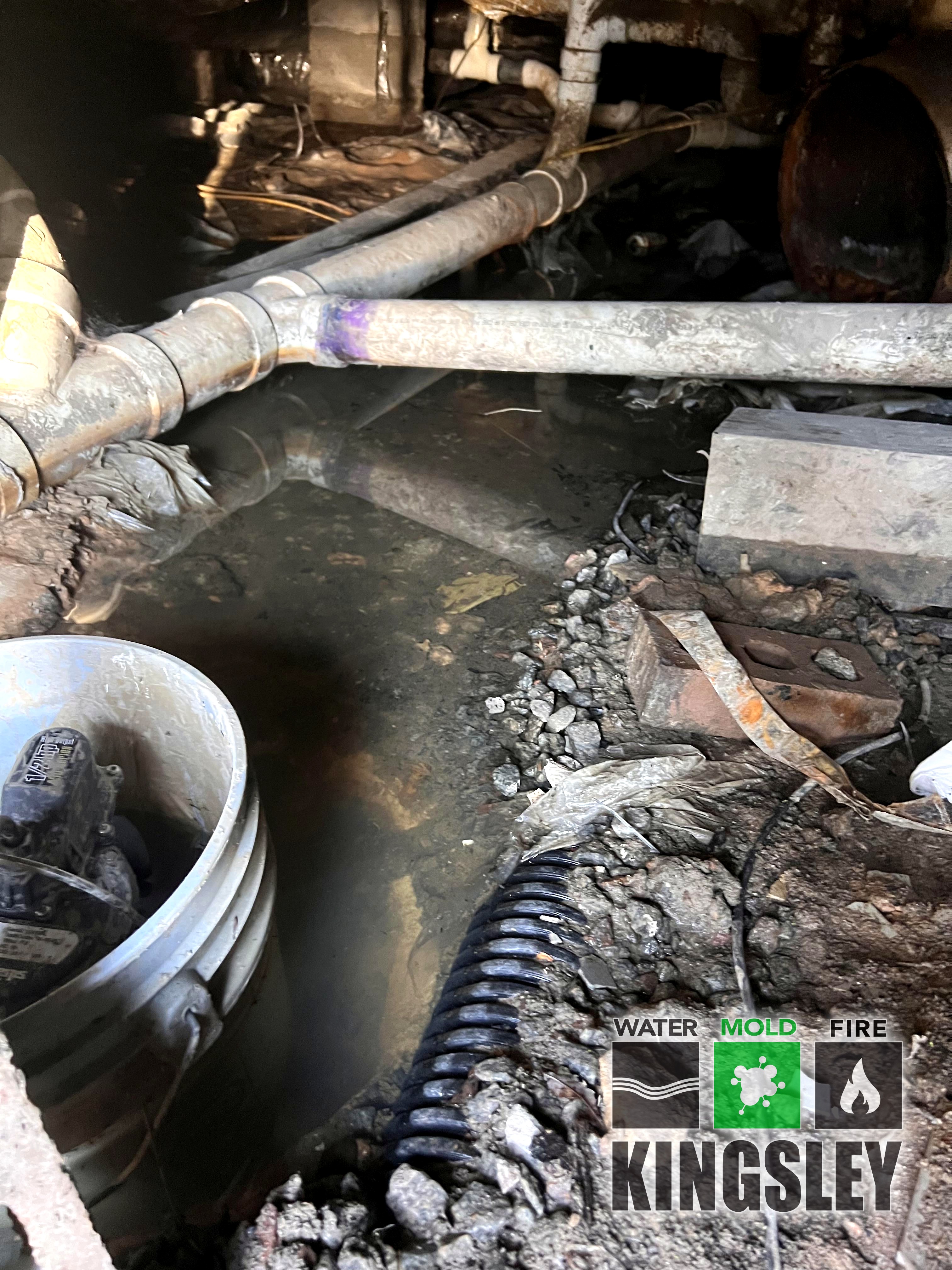
Anderson, SC
September 13, 2026
Kingsley water damage & Fire cleanup handled crawlspace standing water extraction and cleanup in Anderson, SC after standing water under the home around plumbing. We began with a room-by-room and assembly-level inspection of the flooded crawlspace, documenting inches of murky standing water reflecting PVC runs with purple-primed joints, a rusted metal pipe section, and a black pump sitting in a white bucket. That visual and instrument check — not a guess from the hallway — defined where finishes had to open, what could stay, and where drying equipment had to aim. the home needed source control, selective removal of non-salvageable wet or contaminated material, and verified drying of what remained.
During mitigation we controlled the work zone so debris and moisture did not track into clean rooms. Where finishes blocked drying, we opened only the wet footprint shown by meters and the photo record. Contaminated or saturated materials were bagged and removed; salvageable framing and sheathing were cleaned and treated with an EPA-registered antimicrobial when staining or microbial growth warranted it. HEPA vacuuming and careful handling limited dust from demo. The unique on-site detail that guided this file was inches of murky standing water reflecting PVC runs with purple-primed joints, a rusted metal pipe section, and a black pump sitting in a white bucket — that condition stayed in the documentation so the homeowner and any follow-on trade could see exactly what drove the scope in Anderson.
IICRC water-damage and mold-remediation practice prioritizes stop-the-source, remove what cannot be dried in place, clean and treat remaining structures, then dry to target with measured air movement and dehumidification. We placed air movers and/or dehumidifiers to match the wet assembly, ran equipment under monitoring, and rechecked moisture within the first week of mitigation rather than leaving gear unattended for an open-ended stretch. Skipping that short monitoring window is how a straightforward wet call becomes secondary damage in adjoining cavities.
As readings stabilized and the work area met a clean, dry condition, we demobilized equipment and left the flooded crawlspace ready for any needed rebuild of finishes. Photo documentation of the mitigation state stayed with the claim file. If you see standing water, elevated meter readings, or soft/stained flooring in Anderson, stop the source and start professional extraction and drying within the first days — delayed drying is what turns a contained wet zone into a larger structural call.
IICRC water-damage and mold-remediation practice prioritizes stop the moisture source, remove what cannot be dried in place, clean and treat remaining structures, then dry to target with measured air movement and dehumidification. On this Anderson file we ran air movers and dehumidifiers against the wet assembly under monitoring and rechecked moisture on a 3–7 day drying calendar—never past about a week. Skipping that short window is how secondary damage or musty odor returns after finishes go back up.
As readings stabilized within that first-week window, equipment came out and the work area was left ready for any needed rebuild. Photo documentation of the mitigation state stayed with the job file. Helpful takeaway: If you see standing water, elevated meter readings, or soft/stained flooring in Anderson, stop the source and start professional extraction and drying within the first days — delayed drying is what turns a contained wet zone into a larger structural call.
Homeowners comparing crawlspace standing water extraction and cleanup options in the Anderson area should expect a written moisture map, selective removal instead of full tear-out when meters allow, and a clear end point when materials hit dry goal—not an open-ended equipment rental. Kingsley water damage & Fire cleanup follows that measured approach so rebuild decisions rest on documented conditions rather than a calendar guess.
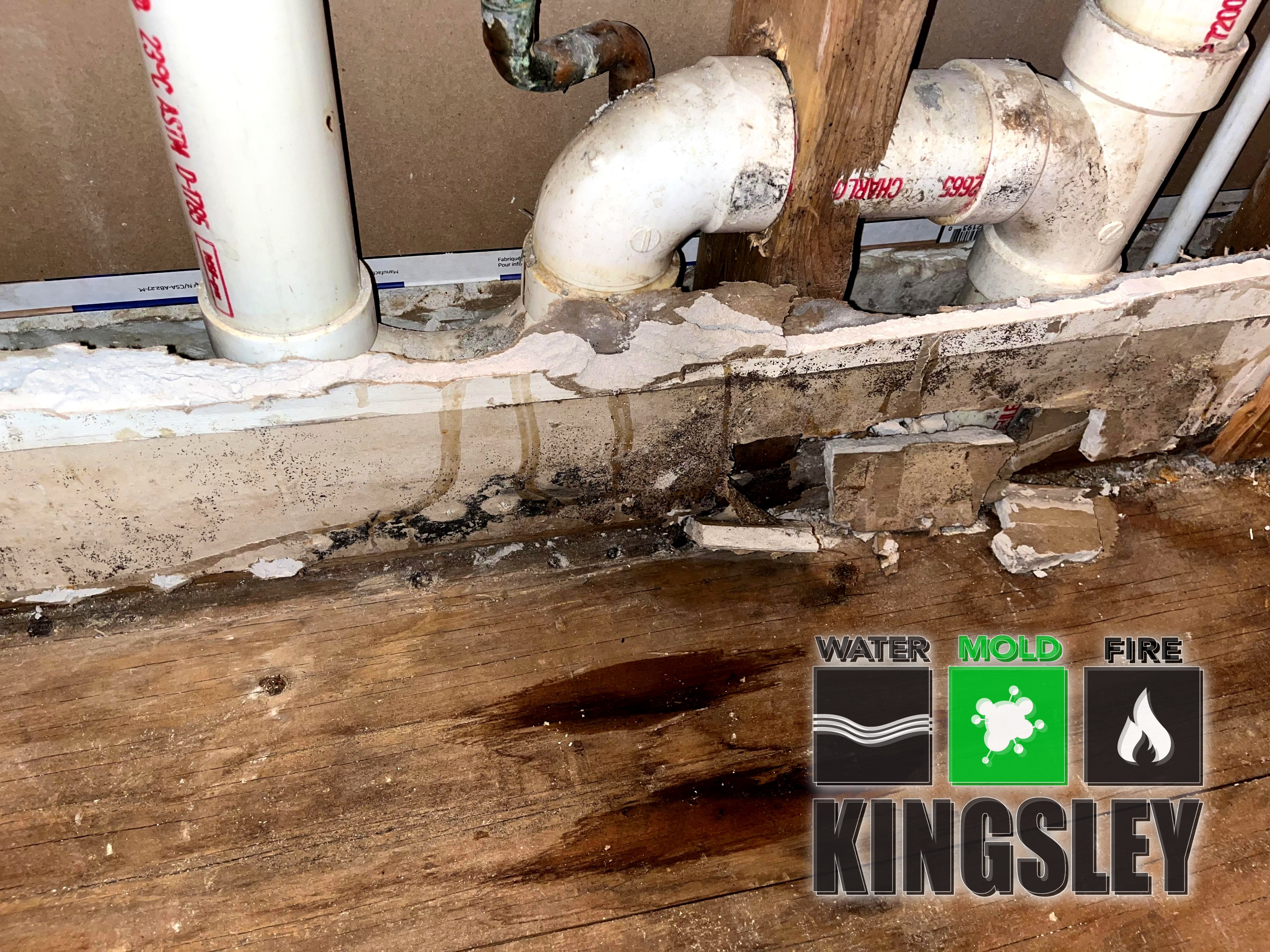
Greenville, SC
September 13, 2026
Kingsley water damage & Fire cleanup handled doorway subfloor water damage cleanup for a Greenville, SC property. The camera and meters guided scope from the start: water-damaged subfloor at doorway transition. That photo-backed condition check defined where finishes had to open, what could stay, and where drying equipment had to aim. The home needed source control, selective removal of non-salvageable wet or contaminated material, and verified drying of what remained in Greenville. We labeled the wet edge on the sketch so later visits matched day-one photos.
During mitigation we controlled the work zone so debris did not track into clean rooms. Where finishes blocked drying, we opened only the wet footprint shown by meters and the photo record. Non-salvageable saturated material was bagged and removed; salvageable framing and sheathing were cleaned. HEPA vacuuming and careful handling limited dust from demo. The unique on-site detail that guided this Greenville file was water-damaged subfloor at doorway transition. Contents near the work path were shifted or protected before tools came out.
IICRC water-damage practice prioritizes stop the moisture source, remove what cannot be dried in place, clean remaining structures, then dry to target with measured air movement and dehumidification. We placed air movers and dehumidifiers to match the wet assembly, aimed airflow along the wet materials in the photo, and rechecked moisture on a 3–7 day drying calendar with overnight humidity checks—never past about a week. Quiet work windows were held where the household schedule required it, without stretching past that first-week ceiling. Skipping that short monitoring window is how a straightforward wet call becomes secondary damage or a musty return odor in Greenville.
As readings stabilized within that first-week window, we demobilized equipment and left the work area ready for any needed rebuild of finishes or insulation. Photo documentation of the mitigation state stayed with the job file for the Greenville property, including the same angle that showed water-damaged subfloor at doorway transition. Helpful takeaway: If flooring feels soft, edges cup, or a stain keeps spreading in Greenville, stop walking the wet zone and request moisture mapping before new finishes go down.
Homeowners comparing doorway subfloor water damage cleanup options in the Greenville area should expect a written moisture map, selective removal instead of full tear-out when meters allow, and a clear end point when materials hit dry goal—not an open-ended equipment rental. Kingsley water damage & Fire cleanup follows that measured approach so rebuild decisions rest on documented conditions rather than a calendar guess.
When rebuild starts, keep the dry-standard notes handy for flooring, cabinet, or insulation trades so no one closes a cavity that still reads wet. That handoff is part of finishing doorway subfloor water damage cleanup correctly in Greenville after mitigation. Throughout the job we kept communication practical: what was wet, what was removed, what was drying, and when meters said the assembly met goal—without inventing a multi-week timeline.
For this Greenville stop, the close-out standard stayed simple: meters at goal, photo set filed, and no equipment left running past the 3–7 day band.
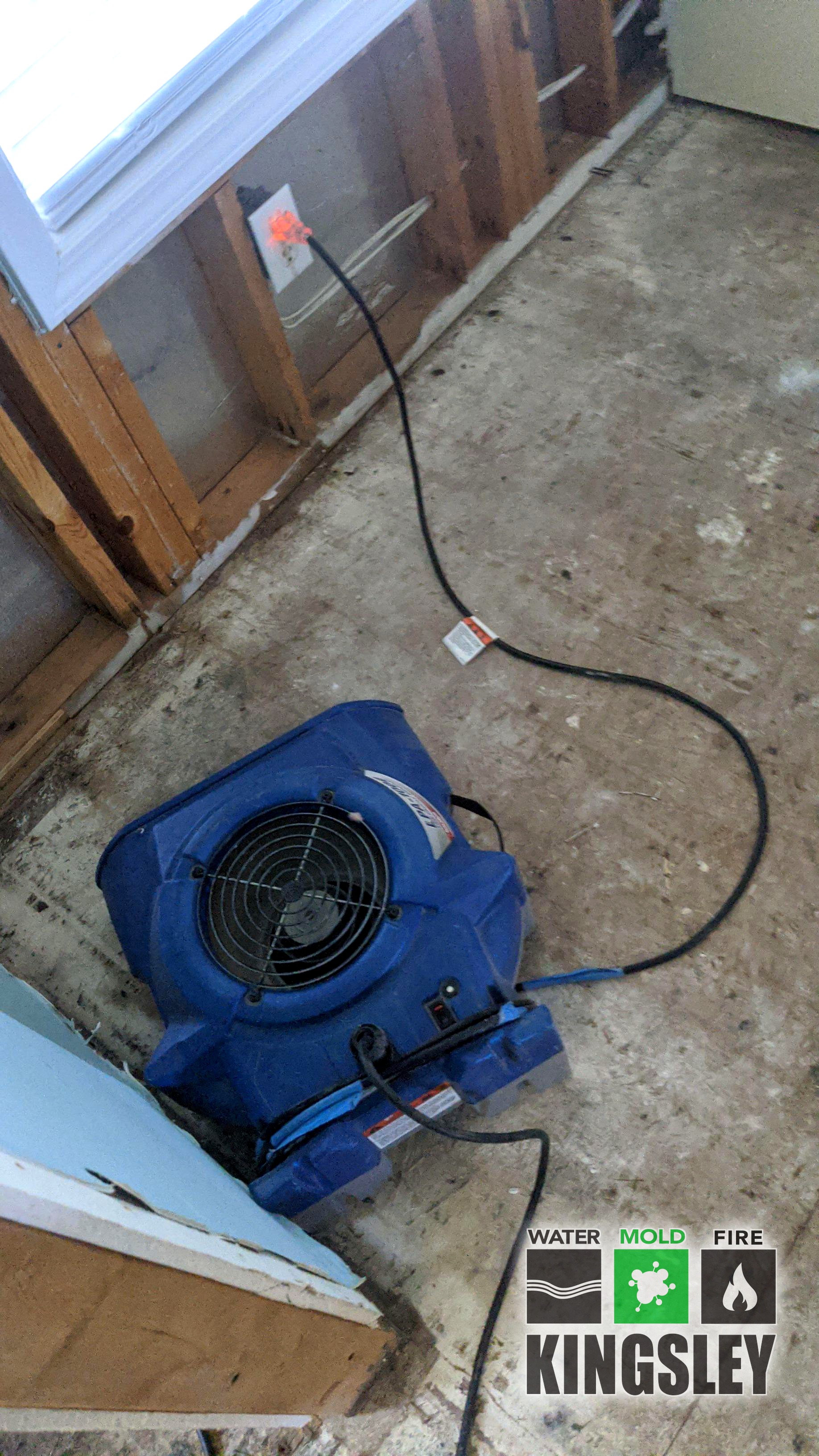
Conway, SC
September 13, 2026
Kingsley water damage & Fire cleanup completed crawlspace joist mold inspection and cleanup in Conway, SC. On arrival we walked the loss area and documented crawlspace Joist Mold Inspection and Cleanup. That photo-backed condition check defined where finishes had to open, what could stay, and where drying equipment had to aim. The home needed source control, selective removal of non-salvageable wet or contaminated material, and verified drying of what remained in Conway. The adjuster-ready photo set stayed with the file so rebuild trades could see the same framed assembly the crew saw.
During mitigation we controlled the work zone so debris and spores did not track into clean rooms. Where finishes blocked drying, we opened only the wet footprint shown by meters and the photo record. Non-salvageable saturated material was bagged and removed; salvageable framing and sheathing were cleaned and treated when microbial staining warranted it. HEPA vacuuming and careful handling limited dust from demo. The unique on-site detail that guided this Conway file was crawlspace Joist Mold Inspection and Cleanup. Contents near the work path were shifted or protected before tools came out in this Conway home.
IICRC water-damage and mold-remediation practice prioritizes stop the moisture source, remove what cannot be dried in place, clean and treat remaining structures with an EPA-registered antimicrobial when staining warranted it, then dry to target with measured air movement and dehumidification. We placed air movers and dehumidifiers to match the crawlspace bay, aimed airflow along the wet materials in the photo, and rechecked moisture on a 3–7 day drying calendar with overnight humidity checks—never past about a week. Skipping that short monitoring window is how a straightforward wet call becomes secondary damage or a musty return odor in Conway.
As readings stabilized within that first-week window, we demobilized equipment and left the work area ready for any needed rebuild of finishes or insulation. Photo documentation of the mitigation state stayed with the job file for the Conway property, including the same angle that showed crawlspace Joist Mold Inspection and Cleanup. Helpful takeaway: If you notice musty odors from floor registers or white spotting on crawl wood under a Conway home, have the moisture source and joists inspected before new insulation hides the path.
Homeowners comparing crawlspace joist mold inspection and cleanup options in the Conway area should expect a written moisture map, selective removal instead of full tear-out when meters allow, and a clear end point when materials hit dry goal—not an open-ended equipment rental. Kingsley water damage & Fire cleanup follows that measured approach so rebuild decisions rest on documented conditions rather than a calendar guess.
When rebuild starts, keep the dry-standard notes handy for flooring, cabinet, or insulation trades so no one closes a cavity that still reads wet. That handoff is part of finishing crawlspace joist mold inspection and cleanup correctly in Conway after mitigation—not a separate sales pitch.
Throughout the Conway job we kept communication practical: what was wet, what was removed, what was drying, and when meters said the assembly met goal. That plain record is what homeowners and trades use after crawlspace joist mold inspection and cleanup—not jargon and not an invented multi-week timeline.
Blythewood, SC
September 12, 2026
Kingsley water damage & Fire cleanup handled containment as needed, HEPA cleaning, and verified drying over a 3–7 day window in Blythewood, SC.
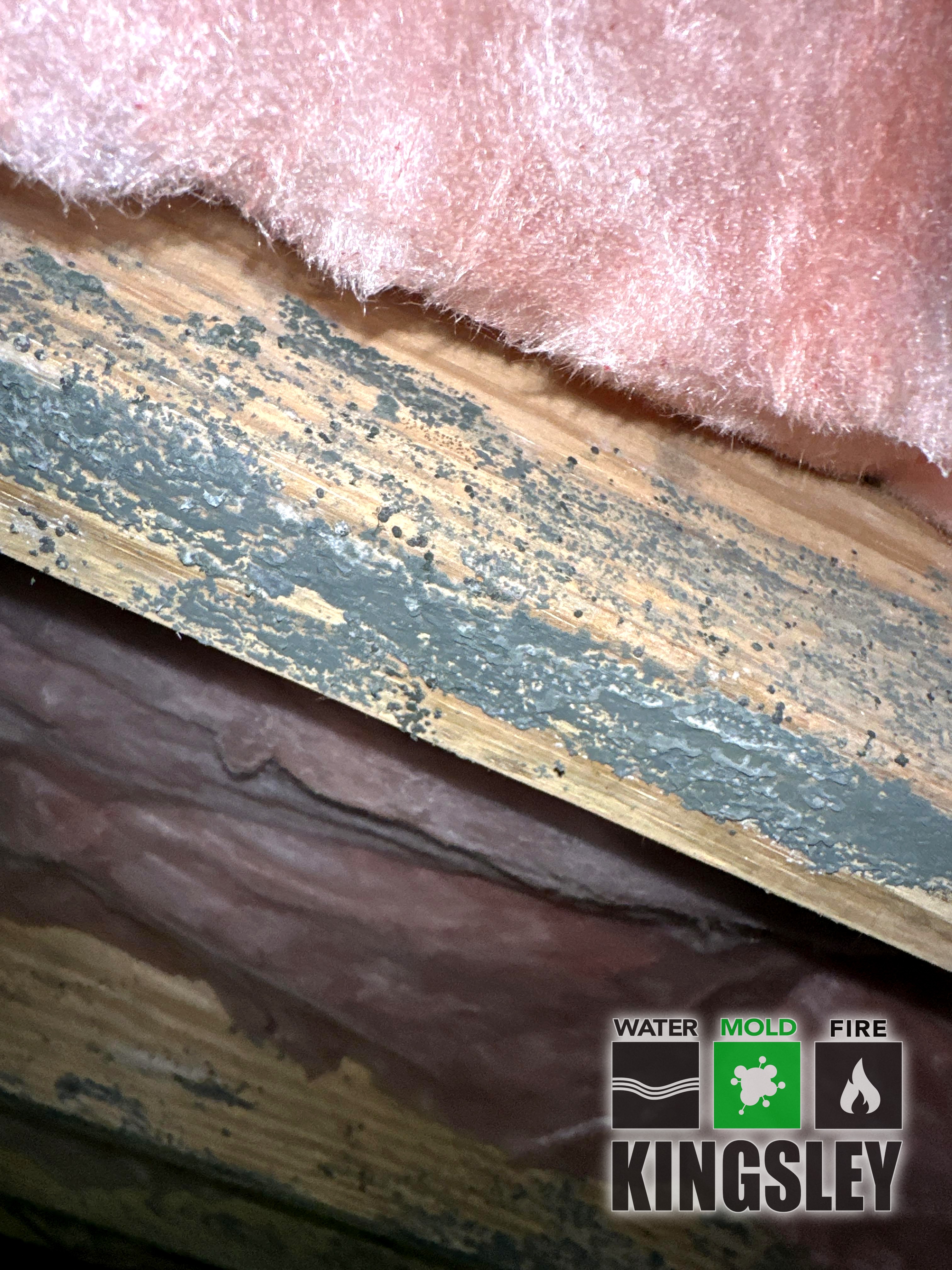
Blythewood, SC
September 12, 2026
In Blythewood, SC, Kingsley water damage & Fire cleanup performed hvac closet moisture and mold cleanup after documenting hVAC Closet Moisture and Mold Cleanup during the initial condition check. That photo-backed condition check defined where finishes had to open, what could stay, and where drying equipment had to aim. The home needed source control, selective removal of non-salvageable wet or contaminated material, and verified drying of what remained in Blythewood. We labeled the wet edge on the sketch so later visits matched day-one photos in Blythewood.
During mitigation we controlled the work zone so debris and spores did not track into clean rooms. Where finishes blocked drying, we opened only the wet footprint shown by meters and the photo record. Non-salvageable saturated material was bagged and removed; salvageable framing and sheathing were cleaned and treated when microbial staining warranted it. HEPA vacuuming and careful handling limited dust from demo. The unique on-site detail that guided this Blythewood file was hVAC Closet Moisture and Mold Cleanup. Quiet work windows were held where the household schedule required it, without stretching the drying calendar past about a week.
IICRC water-damage and mold-remediation practice prioritizes stop the moisture source, remove what cannot be dried in place, clean and treat remaining structures with an EPA-registered antimicrobial when staining warranted it, then dry to target with measured air movement and dehumidification. We placed air movers and dehumidifiers to match the crawlspace bay, aimed airflow along the wet materials in the photo, and rechecked moisture on a 3–7 day drying calendar with overnight humidity checks—never past about a week. Skipping that short monitoring window is how a straightforward wet call becomes secondary damage or a musty return odor in Blythewood.
As readings stabilized within that first-week window, we demobilized equipment and left the work area ready for any needed rebuild of finishes or insulation. Photo documentation of the mitigation state stayed with the job file for the Blythewood property, including the same angle that showed hVAC Closet Moisture and Mold Cleanup. Helpful takeaway: If you notice musty odors from floor registers or white spotting on crawl wood under a Blythewood home, have the moisture source and joists inspected before new insulation hides the path.
Homeowners comparing hvac closet moisture and mold cleanup options in the Blythewood area should expect a written moisture map, selective removal instead of full tear-out when meters allow, and a clear end point when materials hit dry goal—not an open-ended equipment rental. Kingsley water damage & Fire cleanup follows that measured approach so rebuild decisions rest on documented conditions rather than a calendar guess.
When rebuild starts, keep the dry-standard notes handy for flooring, cabinet, or insulation trades so no one closes a cavity that still reads wet. That handoff is part of finishing hvac closet moisture and mold cleanup correctly in Blythewood after mitigation—not a separate sales pitch.
Throughout the Blythewood job we kept communication practical: what was wet, what was removed, what was drying, and when meters said the assembly met goal. That plain record is what homeowners and trades use after hvac closet moisture and mold cleanup—not jargon and not an invented multi-week timeline.
Winnsboro, SC
September 12, 2026
Kingsley water damage & Fire cleanup handled moisture mapping, containment as needed, and verified drying over a 3–7 day window in Winnsboro, SC.
St. Andrews, SC
September 12, 2026
Kingsley water damage & Fire cleanup handled moisture mapping, containment as needed, and verified drying over a 3–7 day window in St. Andrews, SC.
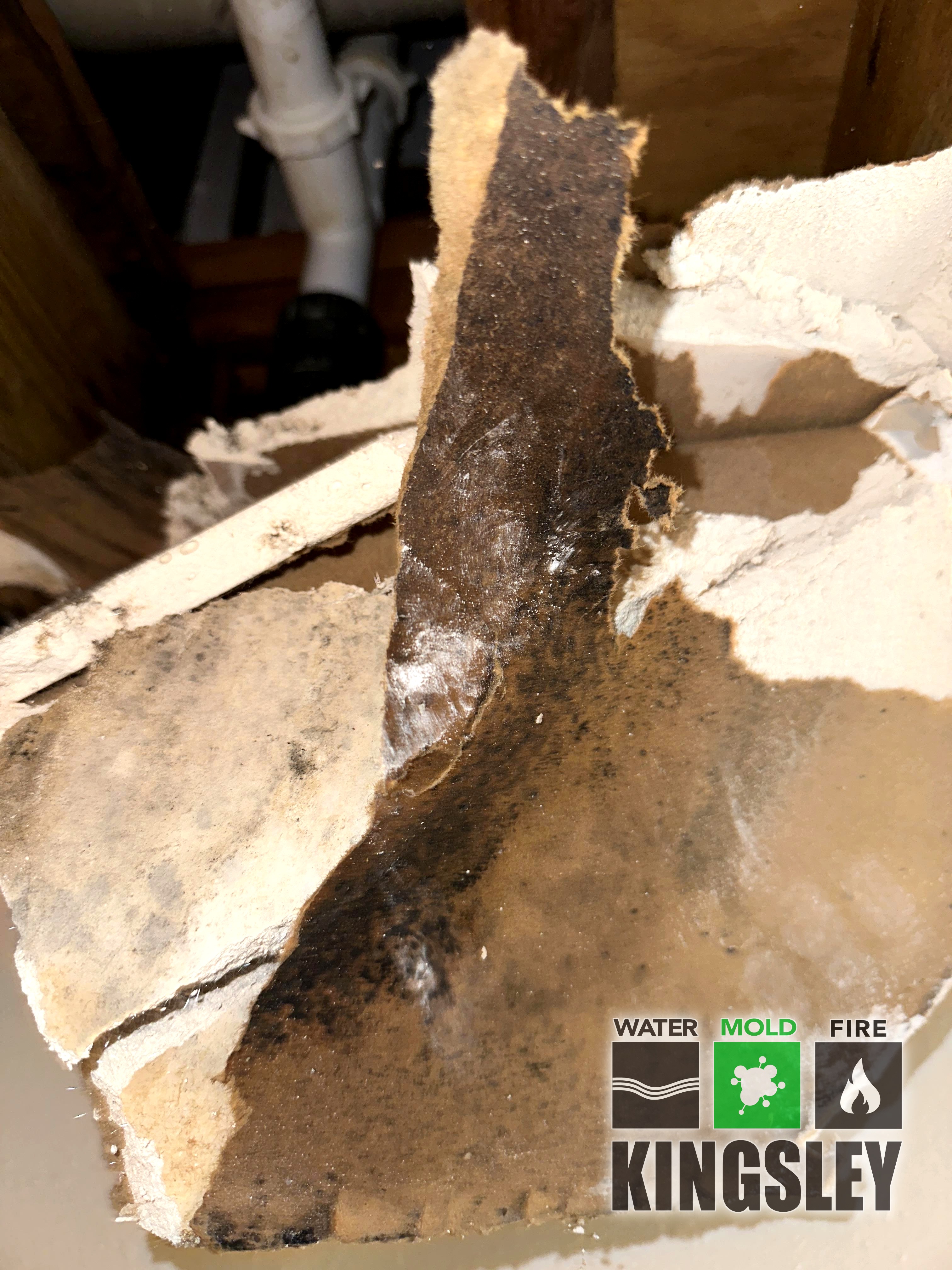
Anderson, SC
September 12, 2026
Kingsley water damage & Fire cleanup handled ceiling cavity joist mold remediation in Anderson, SC after mold on framing inside a wet ceiling cavity. We began with a room-by-room and assembly-level inspection of the opened ceiling structural cavity, documenting mold on a joist inside an opened ceiling cavity after finish materials were selectively removed. That visual and instrument check — not a guess from the hallway — defined where finishes had to open, what could stay, and where drying equipment had to aim. the home needed source control, selective removal of non-salvageable wet or contaminated material, and verified drying of what remained.
During mitigation we controlled the work zone so debris and moisture did not track into clean rooms. Where finishes blocked drying, we opened only the wet footprint shown by meters and the photo record. Contaminated or saturated materials were bagged and removed; salvageable framing and sheathing were cleaned and treated with an EPA-registered antimicrobial when staining or microbial growth warranted it. HEPA vacuuming and careful handling limited dust from demo. The unique on-site detail that guided this file was mold on a joist inside an opened ceiling cavity after finish materials were selectively removed — that condition stayed in the documentation so the homeowner and any follow-on trade could see exactly what drove the scope in Anderson.
IICRC water-damage and mold-remediation practice prioritizes stop-the-source, remove what cannot be dried in place, clean and treat remaining structures, then dry to target with measured air movement and dehumidification. We placed air movers and/or dehumidifiers to match the wet assembly, ran equipment under monitoring, and rechecked moisture within the first week of mitigation rather than leaving gear unattended for an open-ended stretch. Skipping that short monitoring window is how a straightforward wet call becomes secondary damage in adjoining cavities.
As readings stabilized and the work area met a clean, dry condition, we demobilized equipment and left the opened ceiling structural cavity ready for any needed rebuild of finishes. Photo documentation of the mitigation state stayed with the claim file. If you notice musty odors, spotting on wood, or staining at cabinets, vents, or window sills in Anderson, have the moisture source and affected materials inspected before finishes hide the growth path.
IICRC water-damage and mold-remediation practice prioritizes stop the moisture source, remove what cannot be dried in place, clean and treat remaining structures, then dry to target with measured air movement and dehumidification. On this Anderson file we ran air movers and dehumidifiers against the wet assembly under monitoring and rechecked moisture on a 3–7 day drying calendar—never past about a week. Skipping that short window is how secondary damage or musty odor returns after finishes go back up.
As readings stabilized within that first-week window, equipment came out and the work area was left ready for any needed rebuild. Photo documentation of the mitigation state stayed with the job file. Helpful takeaway: If you notice musty odors, spotting on wood, or staining at cabinets, vents, or window sills in Anderson, have the moisture source and affected materials inspected before finishes hide the growth path.
Homeowners comparing ceiling cavity joist mold remediation options in the Anderson area should expect a written moisture map, selective removal instead of full tear-out when meters allow, and a clear end point when materials hit dry goal—not an open-ended equipment rental. Kingsley water damage & Fire cleanup follows that measured approach so rebuild decisions rest on documented conditions rather than a calendar guess.
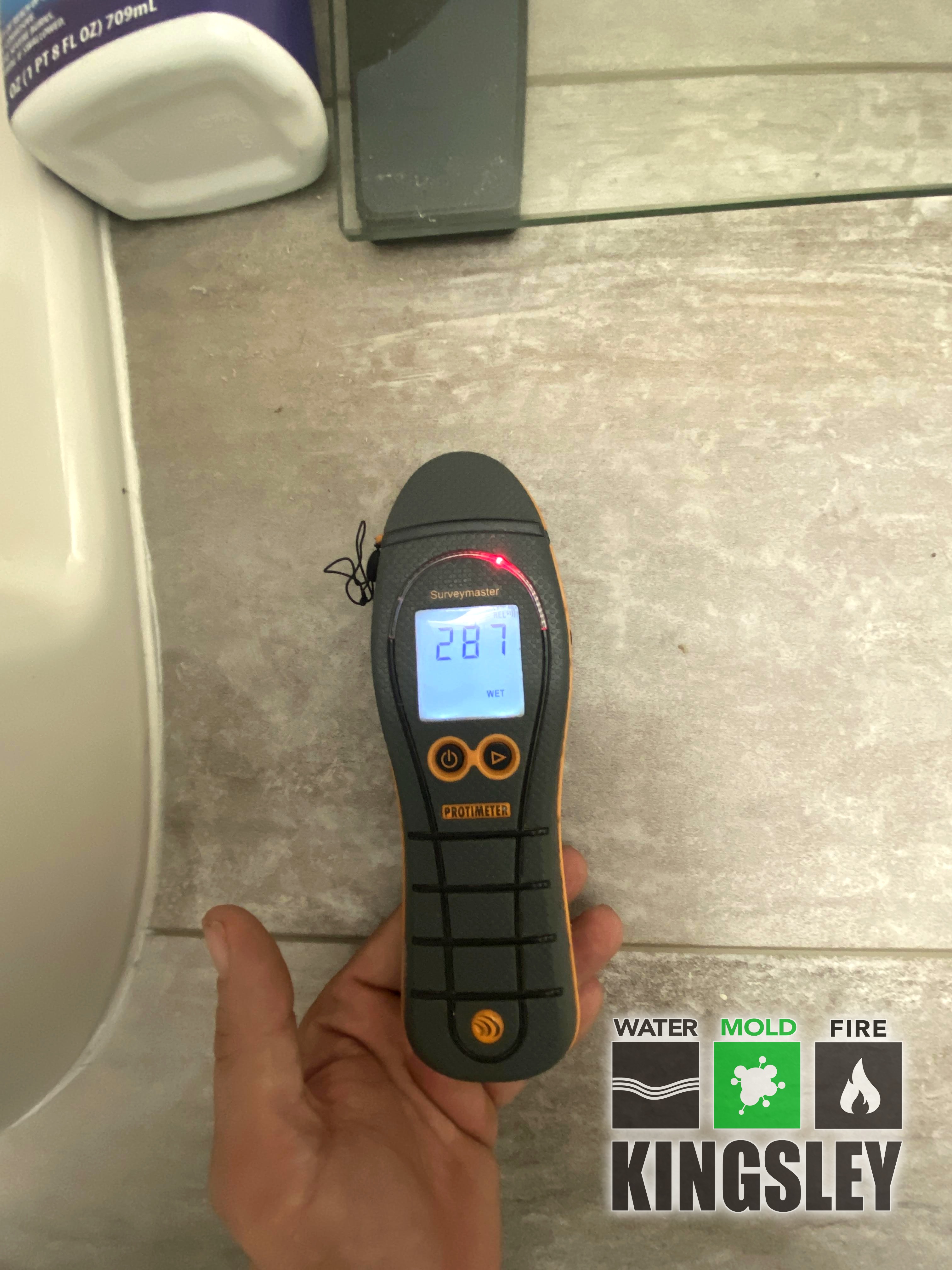
Greenville, SC
September 12, 2026
Kingsley water damage & Fire cleanup responded for tile floor moisture mapping and water cleanup in Greenville, SC and began with a photo-backed survey that captured moisture meter on tile during water damage inspection. That photo-backed condition check defined where finishes had to open, what could stay, and where drying equipment had to aim. The home needed source control, selective removal of non-salvageable wet or contaminated material, and verified drying of what remained in Greenville. The adjuster-ready photo set stayed with the file so rebuild trades could see the same framed assembly the crew saw.
During mitigation we controlled the work zone so debris did not track into clean rooms. Where finishes blocked drying, we opened only the wet footprint shown by meters and the photo record. Non-salvageable saturated material was bagged and removed; salvageable framing and sheathing were cleaned. HEPA vacuuming and careful handling limited dust from demo. The unique on-site detail that guided this Greenville file was moisture meter on tile during water damage inspection. Contents near the work path were shifted or protected before tools came out in this Greenville home.
IICRC water-damage practice prioritizes stop the moisture source, remove what cannot be dried in place, clean remaining structures, then dry to target with measured air movement and dehumidification. We placed air movers and dehumidifiers to match the wet assembly, aimed airflow along the wet materials in the photo, and rechecked moisture on a 3–7 day drying calendar with overnight humidity checks—never past about a week. Skipping that short monitoring window is how a straightforward wet call becomes secondary damage or a musty return odor in Greenville.
As readings stabilized within that first-week window, we demobilized equipment and left the work area ready for any needed rebuild of finishes or insulation. Photo documentation of the mitigation state stayed with the job file for the Greenville property, including the same angle that showed moisture meter on tile during water damage inspection. Helpful takeaway: A leak that looks dry after towels in Greenville can still leave wet underlayment—meter the assembly before rebuild.
Homeowners comparing tile floor moisture mapping and water cleanup options in the Greenville area should expect a written moisture map, selective removal instead of full tear-out when meters allow, and a clear end point when materials hit dry goal—not an open-ended equipment rental. Kingsley water damage & Fire cleanup follows that measured approach so rebuild decisions rest on documented conditions rather than a calendar guess.
When rebuild starts, keep the dry-standard notes handy for flooring, cabinet, or insulation trades so no one closes a cavity that still reads wet. That handoff is part of finishing tile floor moisture mapping and water cleanup correctly in Greenville after mitigation—not a separate sales pitch.
Throughout the Greenville job we kept communication practical: what was wet, what was removed, what was drying, and when meters said the assembly met goal. That plain record is what homeowners and trades use after tile floor moisture mapping and water cleanup—not jargon and not an invented multi-week timeline.
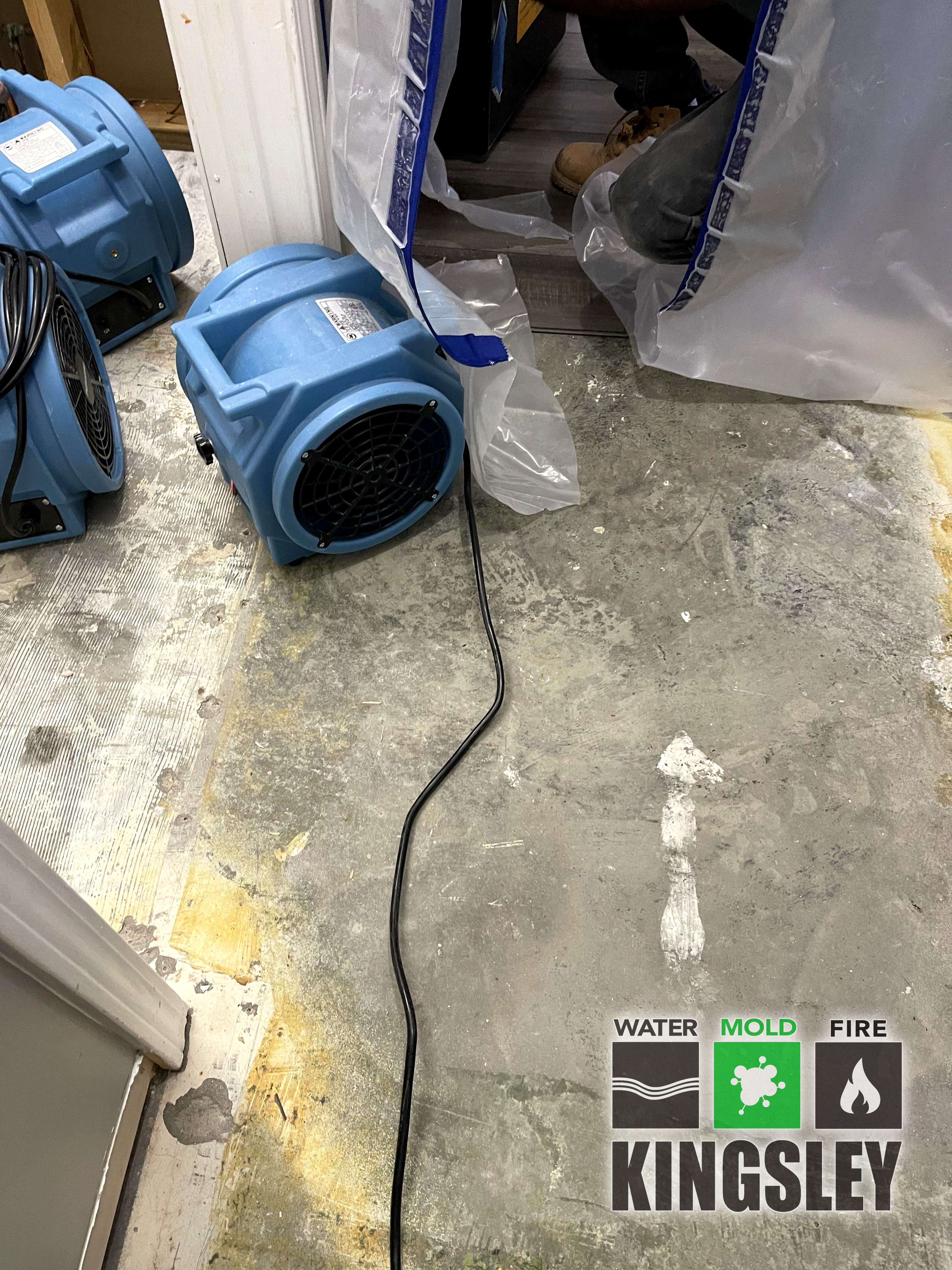
Socastee, SC
September 12, 2026
In Socastee, SC, Kingsley water damage & Fire cleanup performed doorway subfloor water damage cleanup after documenting doorway Subfloor Water Damage Cleanup during the initial condition check. That photo-backed condition check defined where finishes had to open, what could stay, and where drying equipment had to aim. The home needed source control, selective removal of non-salvageable wet or contaminated material, and verified drying of what remained in Socastee. We labeled the wet edge on the sketch so later visits matched day-one photos.
During mitigation we controlled the work zone so debris did not track into clean rooms. Where finishes blocked drying, we opened only the wet footprint shown by meters and the photo record. Non-salvageable saturated material was bagged and removed; salvageable framing and sheathing were cleaned. HEPA vacuuming and careful handling limited dust from demo. The unique on-site detail that guided this Socastee file was doorway Subfloor Water Damage Cleanup. Contents near the work path were shifted or protected before tools came out.
IICRC water-damage practice prioritizes stop the moisture source, remove what cannot be dried in place, clean remaining structures, then dry to target with measured air movement and dehumidification. We placed air movers and dehumidifiers to match the wet assembly, aimed airflow along the wet materials in the photo, and rechecked moisture on a 3–7 day drying calendar with overnight humidity checks—never past about a week. Quiet work windows were held where the household schedule required it, without stretching past that first-week ceiling. Skipping that short monitoring window is how a straightforward wet call becomes secondary damage or a musty return odor in Socastee.
As readings stabilized within that first-week window, we demobilized equipment and left the work area ready for any needed rebuild of finishes or insulation. Photo documentation of the mitigation state stayed with the job file for the Socastee property, including the same angle that showed doorway Subfloor Water Damage Cleanup. Helpful takeaway: If flooring feels soft, edges cup, or a stain keeps spreading in Socastee, stop walking the wet zone and request moisture mapping before new finishes go down.
Homeowners comparing doorway subfloor water damage cleanup options in the Socastee area should expect a written moisture map, selective removal instead of full tear-out when meters allow, and a clear end point when materials hit dry goal—not an open-ended equipment rental. Kingsley water damage & Fire cleanup follows that measured approach so rebuild decisions rest on documented conditions rather than a calendar guess.
When rebuild starts, keep the dry-standard notes handy for flooring, cabinet, or insulation trades so no one closes a cavity that still reads wet. That handoff is part of finishing doorway subfloor water damage cleanup correctly in Socastee after mitigation. Throughout the job we kept communication practical: what was wet, what was removed, what was drying, and when meters said the assembly met goal—without inventing a multi-week timeline.
For this Socastee stop, the close-out standard stayed simple: meters at goal, photo set filed, and no equipment left running past the 3–7 day band.
Blythewood, SC
September 11, 2026
Kingsley water damage & Fire cleanup handled mapping under LVP, targeted removal, and verified drying over a 3–7 day window in Blythewood, SC.
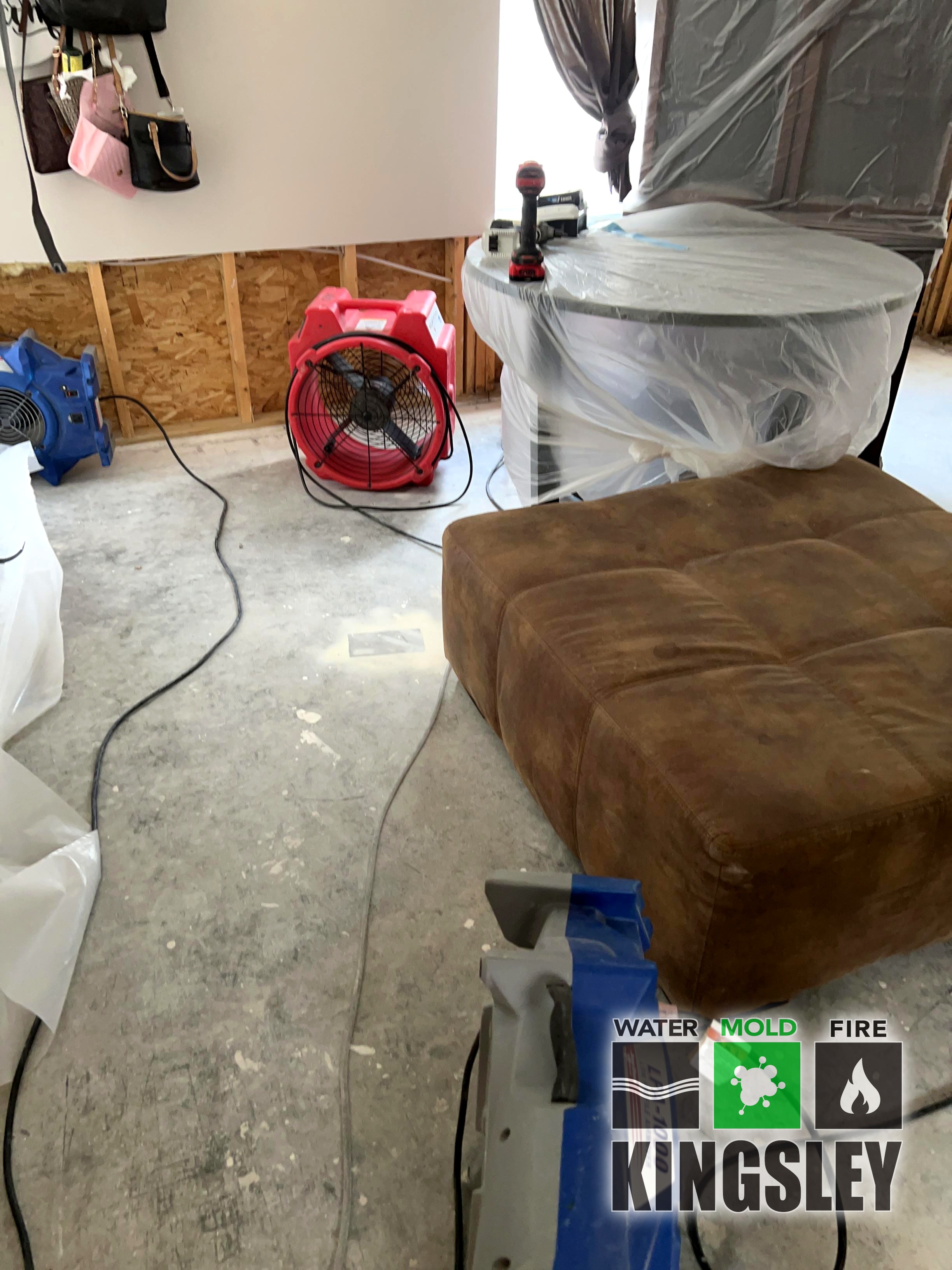
Blythewood, SC
September 11, 2026
In Blythewood, SC, Kingsley water damage & Fire cleanup performed vinyl plank edge water damage cleanup after documenting vinyl Plank Edge Water Damage Cleanup during the initial condition check. That photo-backed condition check defined where finishes had to open, what could stay, and where drying equipment had to aim. The home needed source control, selective removal of non-salvageable wet or contaminated material, and verified drying of what remained in Blythewood. We labeled the wet edge on the sketch so later visits matched day-one photos.
During mitigation we controlled the work zone so debris did not track into clean rooms. Where finishes blocked drying, we opened only the wet footprint shown by meters and the photo record. Non-salvageable saturated material was bagged and removed; salvageable framing and sheathing were cleaned. HEPA vacuuming and careful handling limited dust from demo. The unique on-site detail that guided this Blythewood file was vinyl Plank Edge Water Damage Cleanup. Contents near the work path were shifted or protected before tools came out.
IICRC water-damage practice prioritizes stop the moisture source, remove what cannot be dried in place, clean remaining structures, then dry to target with measured air movement and dehumidification. We placed air movers and dehumidifiers to match the wet assembly, aimed airflow along the wet materials in the photo, and rechecked moisture on a 3–7 day drying calendar with overnight humidity checks—never past about a week. Quiet work windows were held where the household schedule required it, without stretching past that first-week ceiling. Skipping that short monitoring window is how a straightforward wet call becomes secondary damage or a musty return odor in Blythewood.
As readings stabilized within that first-week window, we demobilized equipment and left the work area ready for any needed rebuild of finishes or insulation. Photo documentation of the mitigation state stayed with the job file for the Blythewood property, including the same angle that showed vinyl Plank Edge Water Damage Cleanup. Helpful takeaway: If flooring feels soft, edges cup, or a stain keeps spreading in Blythewood, stop walking the wet zone and request moisture mapping before new finishes go down.
Homeowners comparing vinyl plank edge water damage cleanup options in the Blythewood area should expect a written moisture map, selective removal instead of full tear-out when meters allow, and a clear end point when materials hit dry goal—not an open-ended equipment rental. Kingsley water damage & Fire cleanup follows that measured approach so rebuild decisions rest on documented conditions rather than a calendar guess.
When rebuild starts, keep the dry-standard notes handy for flooring, cabinet, or insulation trades so no one closes a cavity that still reads wet. That handoff is part of finishing vinyl plank edge water damage cleanup correctly in Blythewood after mitigation. Throughout the job we kept communication practical: what was wet, what was removed, what was drying, and when meters said the assembly met goal—without inventing a multi-week timeline.
For this Blythewood stop, the close-out standard stayed simple: meters at goal, photo set filed, and no equipment left running past the 3–7 day band.
Winnsboro, SC
September 11, 2026
Kingsley water damage & Fire cleanup handled moisture mapping, containment as needed, and verified drying over a 3–7 day window in Winnsboro, SC.
Gaston, SC
September 11, 2026
Kingsley water damage & Fire cleanup handled moisture mapping, containment as needed, and verified drying over a 3–7 day window in Gaston, SC.
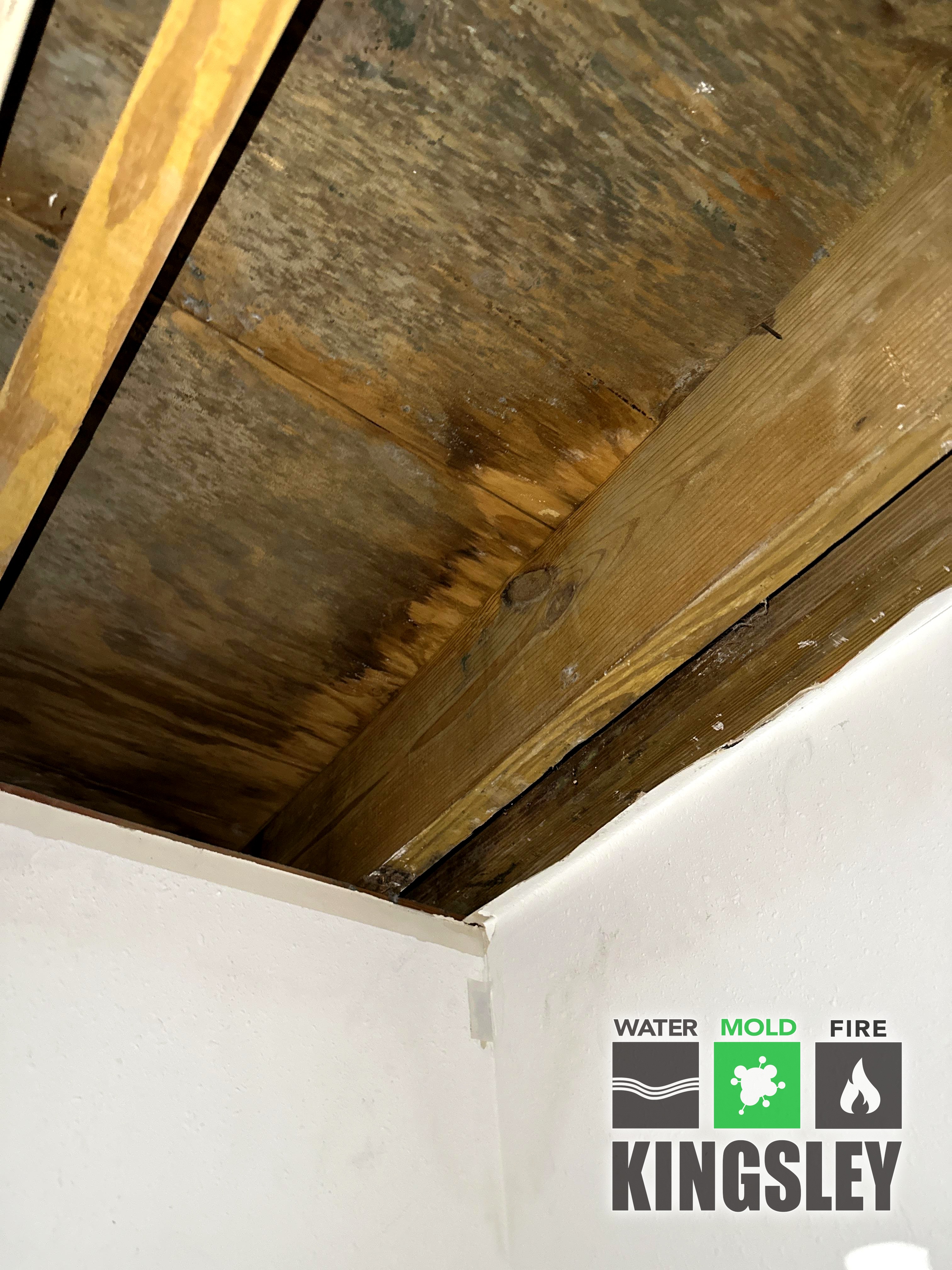
Summerville, SC
September 11, 2026
Kingsley water damage & Fire cleanup handled ceiling mold patch remediation in Summerville, SC after surface mold on a ceiling from overhead moisture. We began with a room-by-room and assembly-level inspection of the interior ceiling surface, documenting a clear mold patch on the ceiling finish marking the wet footprint above. That visual and instrument check — not a guess from the hallway — defined where finishes had to open, what could stay, and where drying equipment had to aim. the home needed source control, selective removal of non-salvageable wet or contaminated material, and verified drying of what remained.
During mitigation we controlled the work zone so debris and moisture did not track into clean rooms. Where finishes blocked drying, we opened only the wet footprint shown by meters and the photo record. Contaminated or saturated materials were bagged and removed; salvageable framing and sheathing were cleaned and treated with an EPA-registered antimicrobial when staining or microbial growth warranted it. HEPA vacuuming and careful handling limited dust from demo. The unique on-site detail that guided this file was a clear mold patch on the ceiling finish marking the wet footprint above — that condition stayed in the documentation so the homeowner and any follow-on trade could see exactly what drove the scope in Summerville.
IICRC water-damage and mold-remediation practice prioritizes stop-the-source, remove what cannot be dried in place, clean and treat remaining structures, then dry to target with measured air movement and dehumidification. We placed air movers and/or dehumidifiers to match the wet assembly, ran equipment under monitoring, and rechecked moisture within the first week of mitigation rather than leaving gear unattended for an open-ended stretch. Skipping that short monitoring window is how a straightforward wet call becomes secondary damage in adjoining cavities.
As readings stabilized and the work area met a clean, dry condition, we demobilized equipment and left the interior ceiling surface ready for any needed rebuild of finishes. Photo documentation of the mitigation state stayed with the claim file. If you notice musty odors, spotting on wood, or staining at cabinets, vents, or window sills in Summerville, have the moisture source and affected materials inspected before finishes hide the growth path.
IICRC water-damage and mold-remediation practice prioritizes stop the moisture source, remove what cannot be dried in place, clean and treat remaining structures, then dry to target with measured air movement and dehumidification. On this Summerville file we ran air movers and dehumidifiers against the wet assembly under monitoring and rechecked moisture on a 3–7 day drying calendar—never past about a week. Skipping that short window is how secondary damage or musty odor returns after finishes go back up.
As readings stabilized within that first-week window, equipment came out and the work area was left ready for any needed rebuild. Photo documentation of the mitigation state stayed with the job file. Helpful takeaway: If you notice musty odors, spotting on wood, or staining at cabinets, vents, or window sills in Summerville, have the moisture source and affected materials inspected before finishes hide the growth path.
Homeowners comparing ceiling mold patch remediation options in the Summerville area should expect a written moisture map, selective removal instead of full tear-out when meters allow, and a clear end point when materials hit dry goal—not an open-ended equipment rental. Kingsley water damage & Fire cleanup follows that measured approach so rebuild decisions rest on documented conditions rather than a calendar guess.
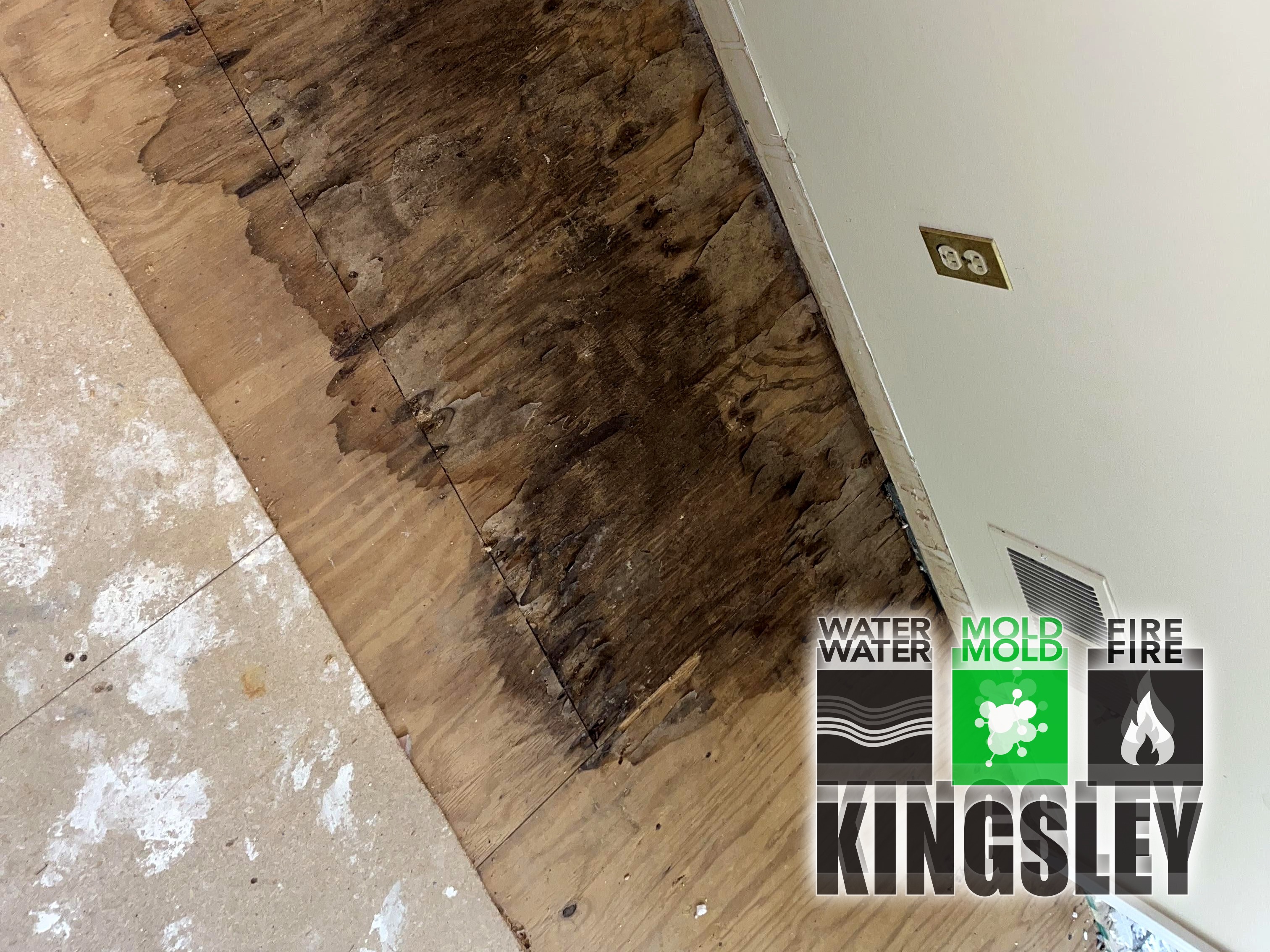
Spartanburg, SC
September 11, 2026
Kingsley water damage & Fire cleanup handled outdoor air sampling during mold inspection for a Spartanburg, SC property. The camera and meters guided scope from the start: air sampling pump on tripod during mold inspection. That setup—not a guess from the porch—defined where samples or meter points were pulled and what the homeowner file needed next. Outdoor control readings sat alongside indoor locations so any later remediation decision in Spartanburg could point back to the same photo and sample map. We labeled each draw location on the sketch so a second visit would match day-one photos.
During the visit we protected finished floors and kept equipment stable while pumps, cassettes, or meters did their timed work. We photographed labels and locations, noted nearby stain or odor clues, and avoided inventing Category or Class labels the documentation did not support. Where visible growth or water staining appeared next to the sample path, that observation stayed in the notes for the Spartanburg file without publishing lab numbers here. Contents near the work path were shifted or protected before tools came out.
IICRC-aligned inspection practice separates find-the-moisture-story from tear-out. If cleanup followed, it would still aim at source control, remove what cannot be saved, clean and treat remaining structures when staining warranted it, then dry to target on a 3–7 day monitoring calendar when materials were wet—never past about a week. This visit focused on documentation so any later drying window in Spartanburg would start from a clear map instead of an open-ended equipment guess.
We demobilized sampling or metering gear, left the property tidy aside from the documented test points, and filed photos with the job record. A short written summary of locations checked stayed with the Spartanburg file for the homeowner and any follow-on trade. Helpful takeaway: If indoor air feels musty or you see unexplained staining in Spartanburg, ask for a documented inspection with outdoor and indoor samples before anyone starts demo.
Homeowners comparing mold inspection or moisture-mapping options in the Spartanburg area should expect labeled sample or meter locations, outdoor controls when air is tested, and photo-backed notes—not a one-line checklist. Kingsley water damage & Fire cleanup keeps that trail so cleanup crews and rebuild trades can see what drove the recommendation without redoing the first walkthrough.
If cleanup is later approved, the same IICRC order applies: stop the source, open only the wet footprint, HEPA and clean what remains, and verify dry goals inside that first-week window. Starting from this inspection record is how Spartanburg homeowners avoid paying twice for the same unknowns. Throughout we kept communication practical—what was checked, what was photographed, and what still needed a meter before rebuild.
For this Spartanburg stop, the close-out standard stayed simple: meters at goal, photo set filed, and no equipment left running past the 3–7 day band.
For this Spartanburg inspection stop we also noted weather and HVAC status at the time of the draws so later readers understand why outdoor controls mattered that day. Labels on cassettes matched the photo board, and nothing in the marketing copy invents spore counts or species names that belong in the lab report only.
If remediation is approved later, the same 3–7 day drying discipline applies once materials are wet: monitor to goal, then demobilize—never an open-ended week-plus rental. Helpful takeaway: If indoor air feels musty or you see unexplained staining in Spartanburg, ask for a documented inspection with outdoor and indoor samples before anyone starts demo.
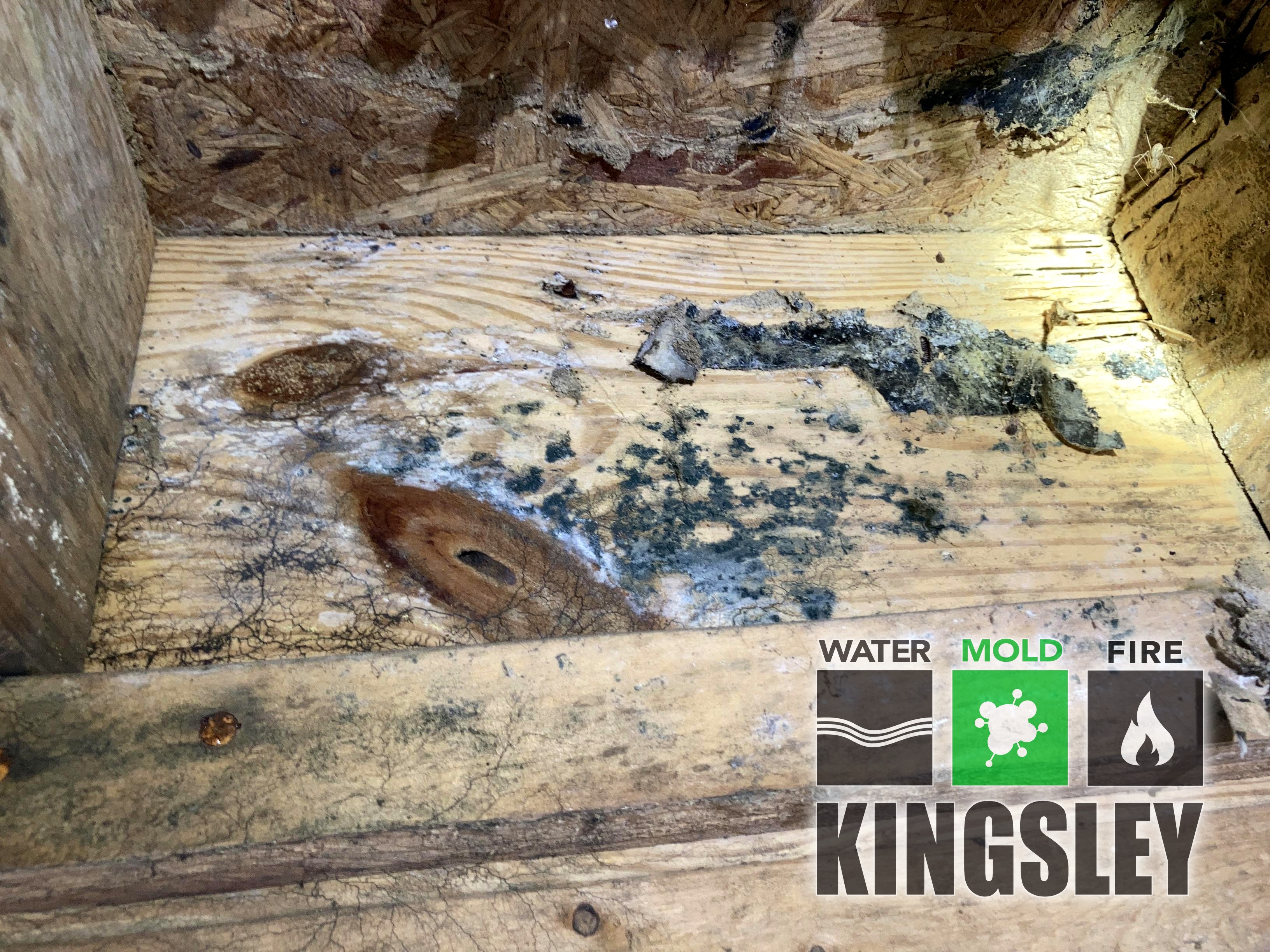
Lake City, SC
September 11, 2026
Kingsley water damage & Fire cleanup handled tile floor moisture mapping and water cleanup for a Lake City, SC property. The camera and meters guided scope from the start: tile Floor Moisture Mapping and Water Cleanup. That photo-backed condition check defined where finishes had to open, what could stay, and where drying equipment had to aim. The home needed source control, selective removal of non-salvageable wet or contaminated material, and verified drying of what remained in Lake City. The adjuster-ready photo set stayed with the file so rebuild trades could see the same framed assembly the crew saw.
During mitigation we controlled the work zone so debris did not track into clean rooms. Where finishes blocked drying, we opened only the wet footprint shown by meters and the photo record. Non-salvageable saturated material was bagged and removed; salvageable framing and sheathing were cleaned. HEPA vacuuming and careful handling limited dust from demo. The unique on-site detail that guided this Lake City file was tile Floor Moisture Mapping and Water Cleanup. The adjuster-ready photo set stayed with the file so rebuild trades could see the same framed assembly the crew saw.
IICRC water-damage practice prioritizes stop the moisture source, remove what cannot be dried in place, clean remaining structures, then dry to target with measured air movement and dehumidification. We placed air movers and dehumidifiers to match the wet assembly, aimed airflow along the wet materials in the photo, and rechecked moisture on a 3–7 day drying calendar with overnight humidity checks—never past about a week. Skipping that short monitoring window is how a straightforward wet call becomes secondary damage or a musty return odor in Lake City.
As readings stabilized within that first-week window, we demobilized equipment and left the work area ready for any needed rebuild of finishes or insulation. Photo documentation of the mitigation state stayed with the job file for the Lake City property, including the same angle that showed tile Floor Moisture Mapping and Water Cleanup. Helpful takeaway: If flooring feels soft, edges cup, or a stain keeps spreading in Lake City, stop walking the wet zone and request moisture mapping before new finishes go down.
Homeowners comparing tile floor moisture mapping and water cleanup options in the Lake City area should expect a written moisture map, selective removal instead of full tear-out when meters allow, and a clear end point when materials hit dry goal—not an open-ended equipment rental. Kingsley water damage & Fire cleanup follows that measured approach so rebuild decisions rest on documented conditions rather than a calendar guess.
When rebuild starts, keep the dry-standard notes handy for flooring, cabinet, or insulation trades so no one closes a cavity that still reads wet. That handoff is part of finishing tile floor moisture mapping and water cleanup correctly in Lake City after mitigation—not a separate sales pitch.
Throughout the Lake City job we kept communication practical: what was wet, what was removed, what was drying, and when meters said the assembly met goal. That plain record is what homeowners and trades use after tile floor moisture mapping and water cleanup—not jargon and not an invented multi-week timeline.
Fairfield, SC
September 10, 2026
Kingsley water damage & Fire cleanup handled extraction, pad assessment, and verified drying over a 3–7 day window in Fairfield, SC.
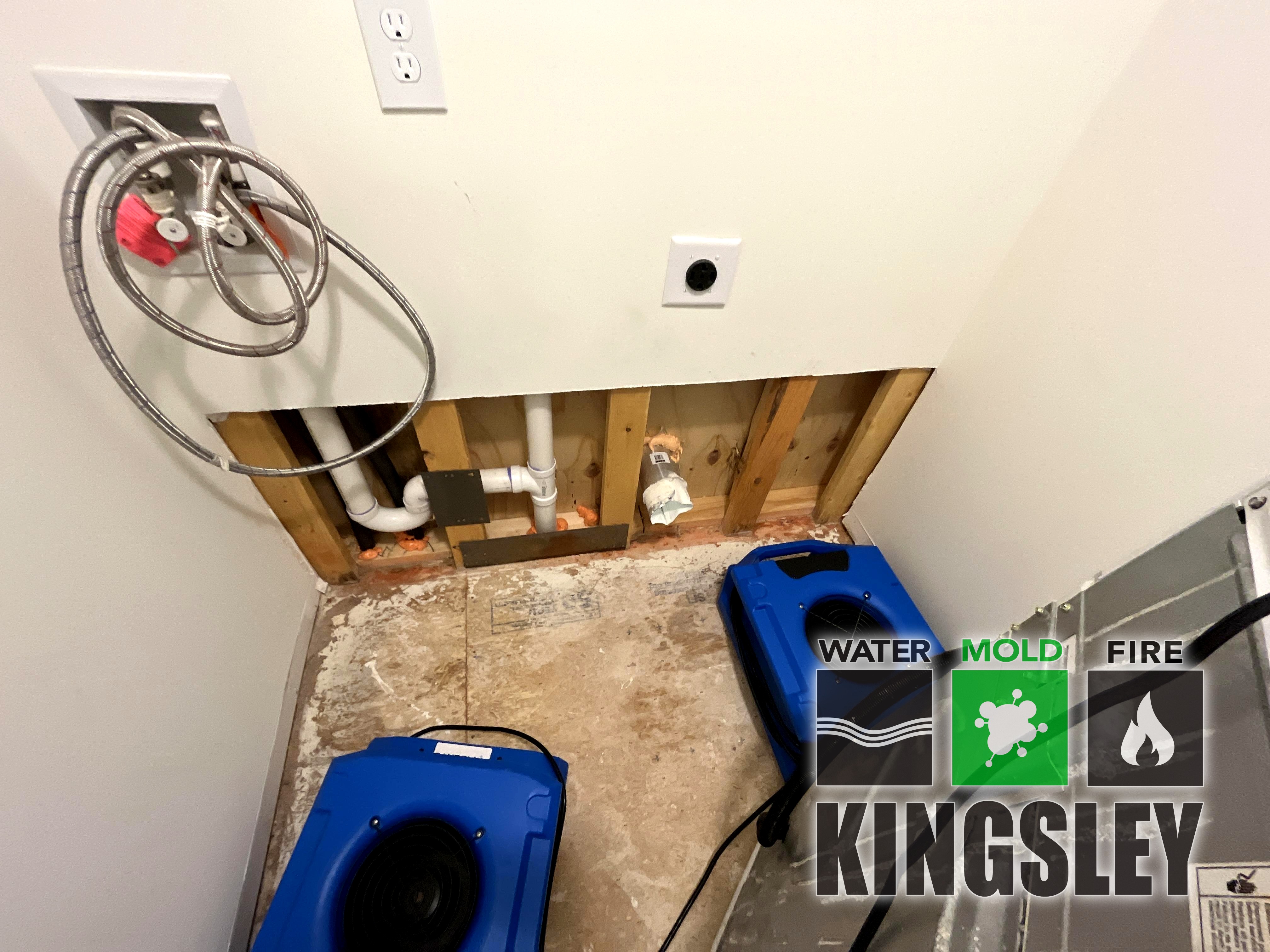
Richland, SC
September 10, 2026
Kingsley water damage & Fire cleanup completed hallway carpet water extraction cleanup in Richland, SC. On arrival we walked the loss area and documented hallway Carpet Water Extraction Cleanup. That photo-backed condition check defined where finishes had to open, what could stay, and where drying equipment had to aim. The home needed source control, selective removal of non-salvageable wet or contaminated material, and verified drying of what remained in Richland. We labeled the wet edge on the sketch so later visits matched day-one photos.
During mitigation we controlled the work zone so debris did not track into clean rooms. Where finishes blocked drying, we opened only the wet footprint shown by meters and the photo record. Non-salvageable saturated material was bagged and removed; salvageable framing and sheathing were cleaned. HEPA vacuuming and careful handling limited dust from demo. The unique on-site detail that guided this Richland file was hallway Carpet Water Extraction Cleanup. Contents near the work path were shifted or protected before tools came out.
IICRC water-damage practice prioritizes stop the moisture source, remove what cannot be dried in place, clean remaining structures, then dry to target with measured air movement and dehumidification. We placed air movers and dehumidifiers to match the wet assembly, aimed airflow along the wet materials in the photo, and rechecked moisture on a 3–7 day drying calendar with overnight humidity checks—never past about a week. Quiet work windows were held where the household schedule required it, without stretching past that first-week ceiling. Skipping that short monitoring window is how a straightforward wet call becomes secondary damage or a musty return odor in Richland.
As readings stabilized within that first-week window, we demobilized equipment and left the work area ready for any needed rebuild of finishes or insulation. Photo documentation of the mitigation state stayed with the job file for the Richland property, including the same angle that showed hallway Carpet Water Extraction Cleanup. Helpful takeaway: If flooring feels soft, edges cup, or a stain keeps spreading in Richland, stop walking the wet zone and request moisture mapping before new finishes go down.
Homeowners comparing hallway carpet water extraction cleanup options in the Richland area should expect a written moisture map, selective removal instead of full tear-out when meters allow, and a clear end point when materials hit dry goal—not an open-ended equipment rental. Kingsley water damage & Fire cleanup follows that measured approach so rebuild decisions rest on documented conditions rather than a calendar guess.
When rebuild starts, keep the dry-standard notes handy for flooring, cabinet, or insulation trades so no one closes a cavity that still reads wet. That handoff is part of finishing hallway carpet water extraction cleanup correctly in Richland after mitigation. Throughout the job we kept communication practical: what was wet, what was removed, what was drying, and when meters said the assembly met goal—without inventing a multi-week timeline.
For this Richland stop, the close-out standard stayed simple: meters at goal, photo set filed, and no equipment left running past the 3–7 day band.
Cassatt, SC
September 10, 2026
Kingsley water damage & Fire cleanup handled moisture mapping, containment as needed, and verified drying over a 3–7 day window in Cassatt, SC.
Swansea, SC
September 10, 2026
Kingsley water damage & Fire cleanup handled moisture mapping, containment as needed, and verified drying over a 3–7 day window in Swansea, SC.
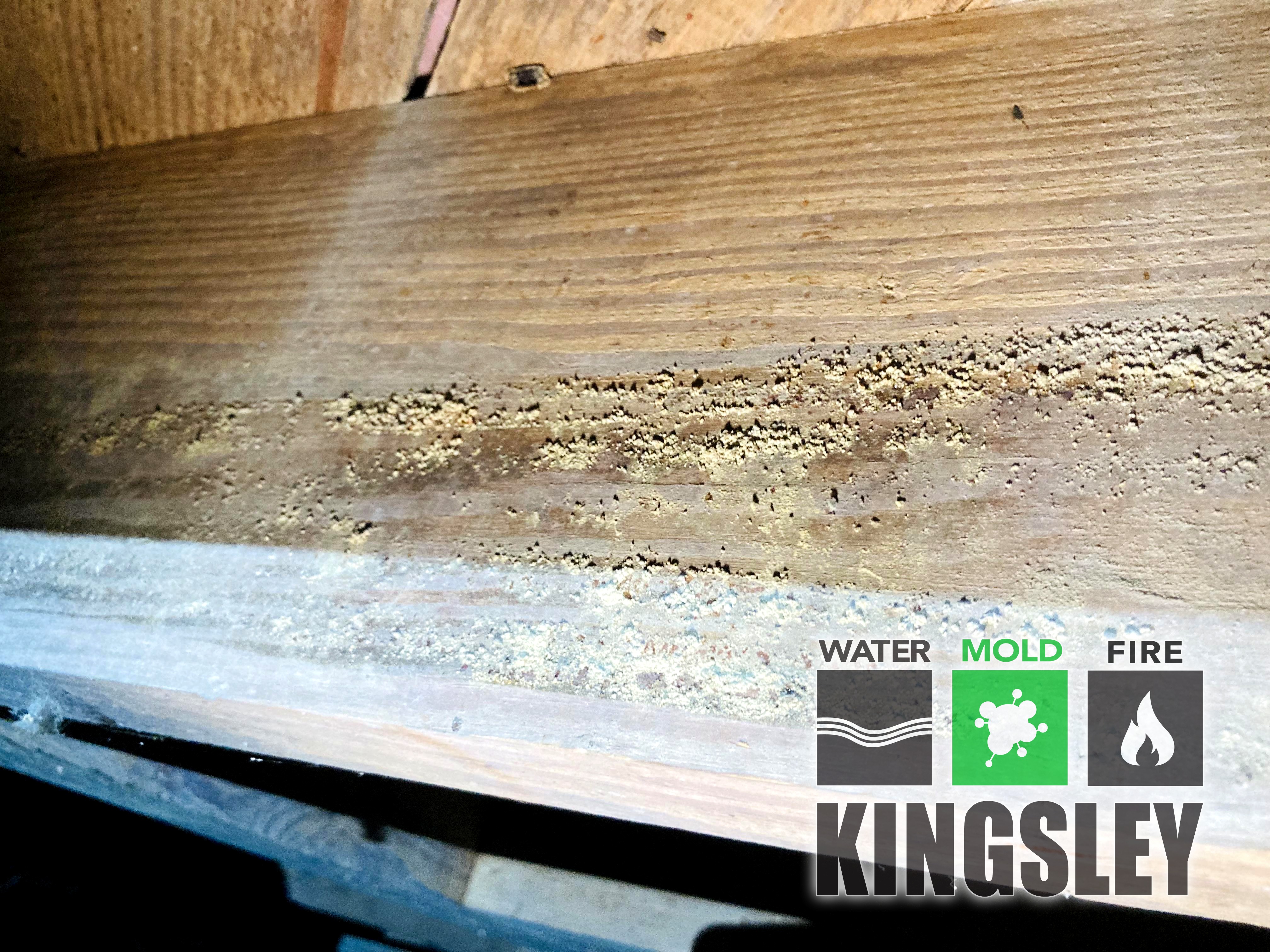
Summerville, SC
September 10, 2026
Kingsley water damage & Fire cleanup handled structural beam mold remediation in Summerville, SC after active mold colonization on structural lumber. We began with a room-by-room and assembly-level inspection of the exposed structural beam, documenting fuzzy white/grey mold growth across a structural beam face. That visual and instrument check — not a guess from the hallway — defined where finishes had to open, what could stay, and where drying equipment had to aim. the home needed source control, selective removal of non-salvageable wet or contaminated material, and verified drying of what remained.
During mitigation we controlled the work zone so debris and moisture did not track into clean rooms. Where finishes blocked drying, we opened only the wet footprint shown by meters and the photo record. Contaminated or saturated materials were bagged and removed; salvageable framing and sheathing were cleaned and treated with an EPA-registered antimicrobial when staining or microbial growth warranted it. HEPA vacuuming and careful handling limited dust from demo. The unique on-site detail that guided this file was fuzzy white/grey mold growth across a structural beam face — that condition stayed in the documentation so the homeowner and any follow-on trade could see exactly what drove the scope in Summerville.
IICRC water-damage and mold-remediation practice prioritizes stop-the-source, remove what cannot be dried in place, clean and treat remaining structures, then dry to target with measured air movement and dehumidification. We placed air movers and/or dehumidifiers to match the wet assembly, ran equipment under monitoring, and rechecked moisture within the first week of mitigation rather than leaving gear unattended for an open-ended stretch. Skipping that short monitoring window is how a straightforward wet call becomes secondary damage in adjoining cavities.
As readings stabilized and the work area met a clean, dry condition, we demobilized equipment and left the exposed structural beam ready for any needed rebuild of finishes. Photo documentation of the mitigation state stayed with the claim file. If you notice musty odors, spotting on wood, or staining at cabinets, vents, or window sills in Summerville, have the moisture source and affected materials inspected before finishes hide the growth path.
IICRC water-damage and mold-remediation practice prioritizes stop the moisture source, remove what cannot be dried in place, clean and treat remaining structures, then dry to target with measured air movement and dehumidification. On this Summerville file we ran air movers and dehumidifiers against the wet assembly under monitoring and rechecked moisture on a 3–7 day drying calendar—never past about a week. Skipping that short window is how secondary damage or musty odor returns after finishes go back up.
As readings stabilized within that first-week window, equipment came out and the work area was left ready for any needed rebuild. Photo documentation of the mitigation state stayed with the job file. Helpful takeaway: If you notice musty odors, spotting on wood, or staining at cabinets, vents, or window sills in Summerville, have the moisture source and affected materials inspected before finishes hide the growth path.
Homeowners comparing structural beam mold remediation options in the Summerville area should expect a written moisture map, selective removal instead of full tear-out when meters allow, and a clear end point when materials hit dry goal—not an open-ended equipment rental. Kingsley water damage & Fire cleanup follows that measured approach so rebuild decisions rest on documented conditions rather than a calendar guess.
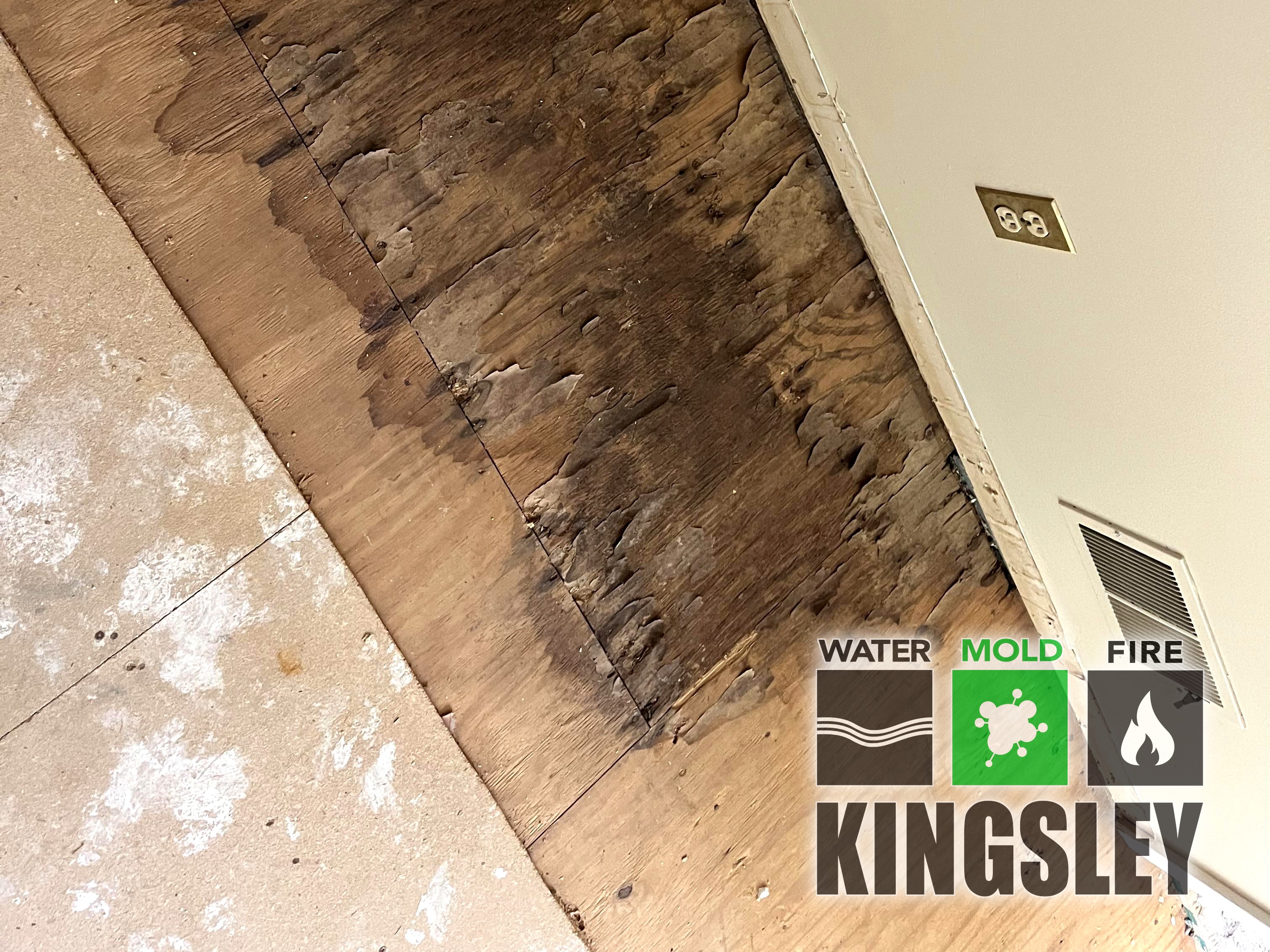
Spartanburg, SC
September 10, 2026
In Spartanburg, SC, Kingsley water damage & Fire cleanup performed residential water damage emergency response after documenting kingsley response truck on water damage call during the initial condition check. That photo-backed condition check defined where finishes had to open, what could stay, and where drying equipment had to aim. The home needed source control, selective removal of non-salvageable wet or contaminated material, and verified drying of what remained in Spartanburg. We labeled the wet edge on the sketch so later visits matched day-one photos.
During mitigation we controlled the work zone so debris did not track into clean rooms. Where finishes blocked drying, we opened only the wet footprint shown by meters and the photo record. Non-salvageable saturated material was bagged and removed; salvageable framing and sheathing were cleaned. HEPA vacuuming and careful handling limited dust from demo. The unique on-site detail that guided this Spartanburg file was kingsley response truck on water damage call. Contents near the work path were shifted or protected before tools came out.
IICRC water-damage practice prioritizes stop the moisture source, remove what cannot be dried in place, clean remaining structures, then dry to target with measured air movement and dehumidification. We placed air movers and dehumidifiers to match the wet assembly, aimed airflow along the wet materials in the photo, and rechecked moisture on a 3–7 day drying calendar with overnight humidity checks—never past about a week. Quiet work windows were held where the household schedule required it, without stretching past that first-week ceiling. Skipping that short monitoring window is how a straightforward wet call becomes secondary damage or a musty return odor in Spartanburg.
As readings stabilized within that first-week window, we demobilized equipment and left the work area ready for any needed rebuild of finishes or insulation. Photo documentation of the mitigation state stayed with the job file for the Spartanburg property, including the same angle that showed kingsley response truck on water damage call. Helpful takeaway: If flooring feels soft, edges cup, or a stain keeps spreading in Spartanburg, stop walking the wet zone and request moisture mapping before new finishes go down.
Homeowners comparing residential water damage emergency response options in the Spartanburg area should expect a written moisture map, selective removal instead of full tear-out when meters allow, and a clear end point when materials hit dry goal—not an open-ended equipment rental. Kingsley water damage & Fire cleanup follows that measured approach so rebuild decisions rest on documented conditions rather than a calendar guess.
When rebuild starts, keep the dry-standard notes handy for flooring, cabinet, or insulation trades so no one closes a cavity that still reads wet. That handoff is part of finishing residential water damage emergency response correctly in Spartanburg after mitigation. Throughout the job we kept communication practical: what was wet, what was removed, what was drying, and when meters said the assembly met goal—without inventing a multi-week timeline.
For this Spartanburg stop, the close-out standard stayed simple: meters at goal, photo set filed, and no equipment left running past the 3–7 day band.
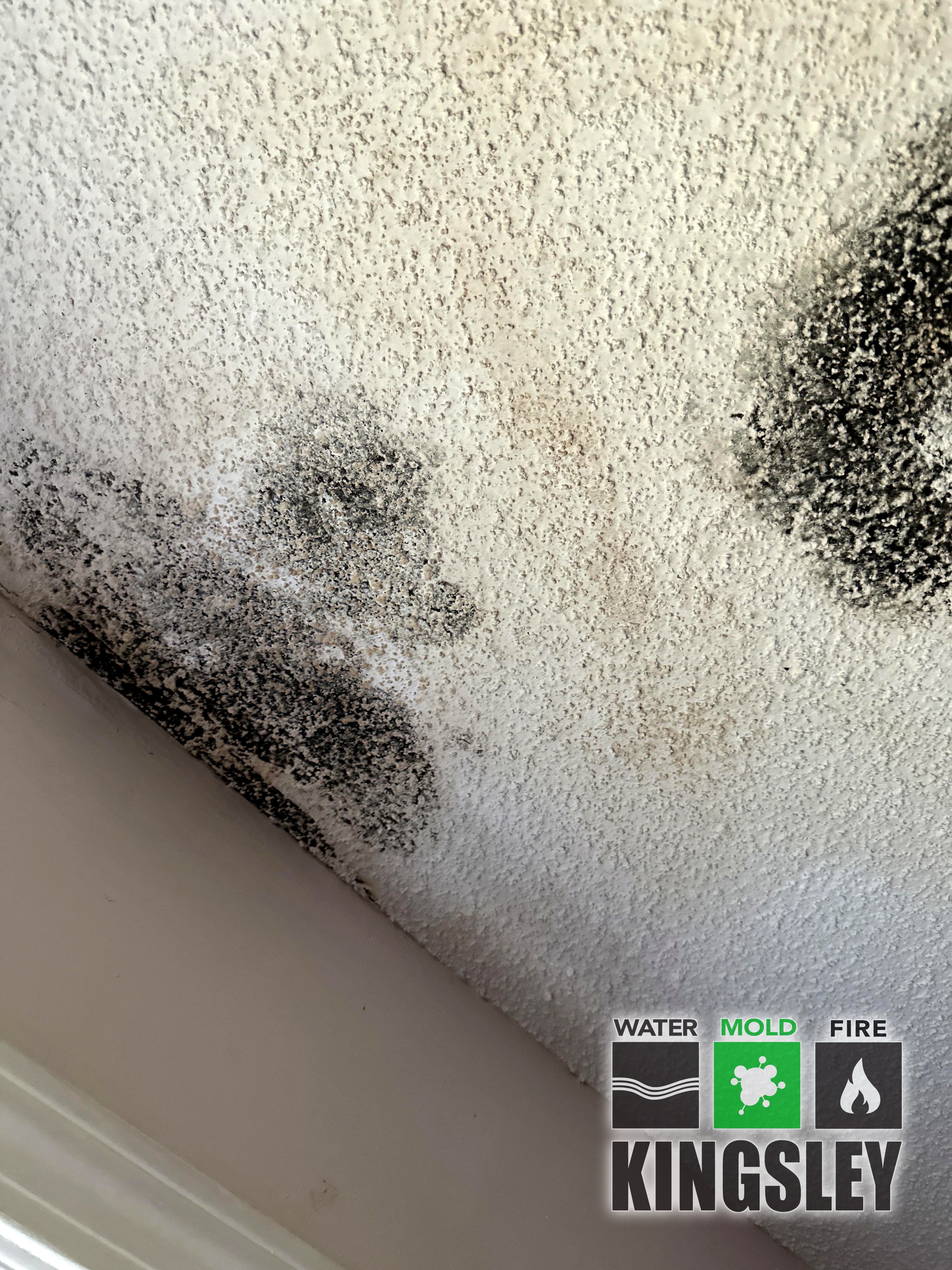
Carolina Forest, SC
September 10, 2026
Kingsley water damage & Fire cleanup completed crawlspace joist mold inspection and cleanup in Carolina Forest, SC. On arrival we walked the loss area and documented crawlspace Joist Mold Inspection and Cleanup. That photo-backed condition check defined where finishes had to open, what could stay, and where drying equipment had to aim. The home needed source control, selective removal of non-salvageable wet or contaminated material, and verified drying of what remained in Carolina Forest. We avoided opening dry cavities that meters and the camera did not support on this Carolina Forest stop.
During mitigation we controlled the work zone so debris and spores did not track into clean rooms. Where finishes blocked drying, we opened only the wet footprint shown by meters and the photo record. Non-salvageable saturated material was bagged and removed; salvageable framing and sheathing were cleaned and treated when microbial staining warranted it. HEPA vacuuming and careful handling limited dust from demo. The unique on-site detail that guided this Carolina Forest file was crawlspace Joist Mold Inspection and Cleanup. Contents near the work path were shifted or protected before tools came out in this Carolina Forest home.
IICRC water-damage and mold-remediation practice prioritizes stop the moisture source, remove what cannot be dried in place, clean and treat remaining structures with an EPA-registered antimicrobial when staining warranted it, then dry to target with measured air movement and dehumidification. We placed air movers and dehumidifiers to match the crawlspace bay, aimed airflow along the wet materials in the photo, and rechecked moisture on a 3–7 day drying calendar with overnight humidity checks—never past about a week. Skipping that short monitoring window is how a straightforward wet call becomes secondary damage or a musty return odor in Carolina Forest.
As readings stabilized within that first-week window, we demobilized equipment and left the work area ready for any needed rebuild of finishes or insulation. Photo documentation of the mitigation state stayed with the job file for the Carolina Forest property, including the same angle that showed crawlspace Joist Mold Inspection and Cleanup. Helpful takeaway: Dark staining on crawl joists in Carolina Forest is a reason to map moisture before buttoning the bay back up with fresh vapor barrier.
Homeowners comparing crawlspace joist mold inspection and cleanup options in the Carolina Forest area should expect a written moisture map, selective removal instead of full tear-out when meters allow, and a clear end point when materials hit dry goal—not an open-ended equipment rental. Kingsley water damage & Fire cleanup follows that measured approach so rebuild decisions rest on documented conditions rather than a calendar guess.
When rebuild starts, keep the dry-standard notes handy for flooring, cabinet, or insulation trades so no one closes a cavity that still reads wet. That handoff is part of finishing crawlspace joist mold inspection and cleanup correctly in Carolina Forest after mitigation—not a separate sales pitch.
Throughout the Carolina Forest job we kept communication practical: what was wet, what was removed, what was drying, and when meters said the assembly met goal. That plain record is what homeowners and trades use after crawlspace joist mold inspection and cleanup—not jargon and not an invented multi-week timeline.
Fairfield, SC
September 9, 2026
Kingsley water damage & Fire cleanup handled moisture mapping, localized remediation, and verified drying over a 3–7 day window in Fairfield, SC.
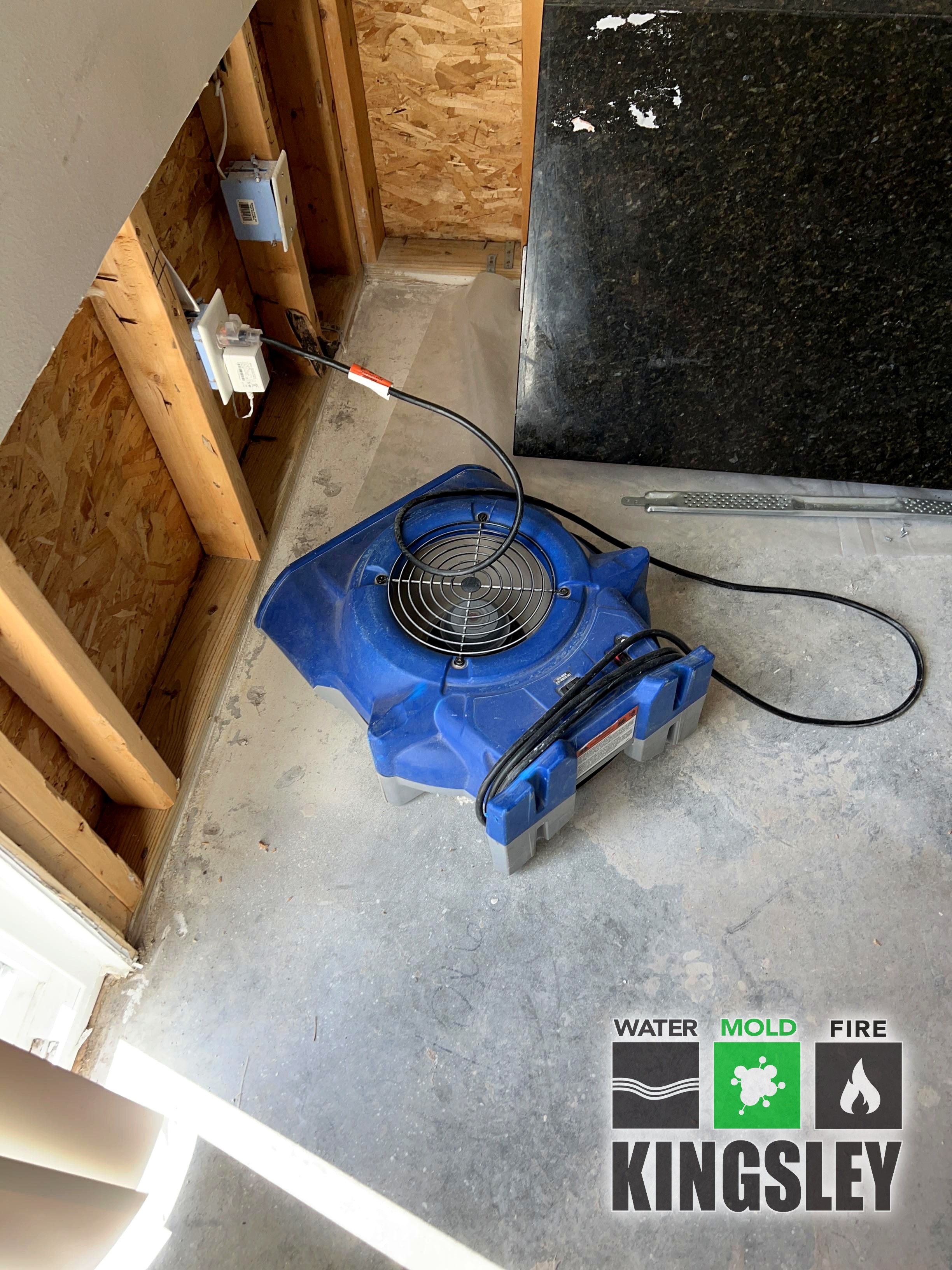
Fairfield, SC
September 9, 2026
Kingsley water damage & Fire cleanup completed vanity subfloor mold inspection cleanup in Fairfield, SC. On arrival we walked the loss area and documented vanity Subfloor Mold Inspection Cleanup. That photo-backed condition check defined where finishes had to open, what could stay, and where drying equipment had to aim. The home needed source control, selective removal of non-salvageable wet or contaminated material, and verified drying of what remained in Fairfield. The adjuster-ready photo set stayed with the file so rebuild trades could see the same framed assembly the crew saw.
During mitigation we controlled the work zone so debris and spores did not track into clean rooms. Where finishes blocked drying, we opened only the wet footprint shown by meters and the photo record. Non-salvageable saturated material was bagged and removed; salvageable framing and sheathing were cleaned and treated when microbial staining warranted it. HEPA vacuuming and careful handling limited dust from demo. The unique on-site detail that guided this Fairfield file was vanity Subfloor Mold Inspection Cleanup. Contents near the work path were shifted or protected before tools came out in this Fairfield home.
IICRC water-damage and mold-remediation practice prioritizes stop the moisture source, remove what cannot be dried in place, clean and treat remaining structures with an EPA-registered antimicrobial when staining warranted it, then dry to target with measured air movement and dehumidification. We placed air movers and dehumidifiers to match the wet assembly, aimed airflow along the wet materials in the photo, and rechecked moisture on a 3–7 day drying calendar with overnight humidity checks—never past about a week. Skipping that short monitoring window is how a straightforward wet call becomes secondary damage or a musty return odor in Fairfield.
As readings stabilized within that first-week window, we demobilized equipment and left the work area ready for any needed rebuild of finishes or insulation. Photo documentation of the mitigation state stayed with the job file for the Fairfield property, including the same angle that showed vanity Subfloor Mold Inspection Cleanup. Helpful takeaway: Musty odor that returns after a quick wipe in Fairfield usually means moisture is still feeding the stain—map it before painting over it.
Homeowners comparing vanity subfloor mold inspection cleanup options in the Fairfield area should expect a written moisture map, selective removal instead of full tear-out when meters allow, and a clear end point when materials hit dry goal—not an open-ended equipment rental. Kingsley water damage & Fire cleanup follows that measured approach so rebuild decisions rest on documented conditions rather than a calendar guess.
When rebuild starts, keep the dry-standard notes handy for flooring, cabinet, or insulation trades so no one closes a cavity that still reads wet. That handoff is part of finishing vanity subfloor mold inspection cleanup correctly in Fairfield after mitigation—not a separate sales pitch.
Throughout the Fairfield job we kept communication practical: what was wet, what was removed, what was drying, and when meters said the assembly met goal. That plain record is what homeowners and trades use after vanity subfloor mold inspection cleanup—not jargon and not an invented multi-week timeline.
Hilton Head Island, SC
September 9, 2026
Kingsley water damage & Fire cleanup handled moisture mapping, containment as needed, and verified drying over a 3–7 day window in Hilton Head Island, SC.
Swansea, SC
September 9, 2026
Kingsley water damage & Fire cleanup handled moisture mapping, containment as needed, and verified drying over a 3–7 day window in Swansea, SC.
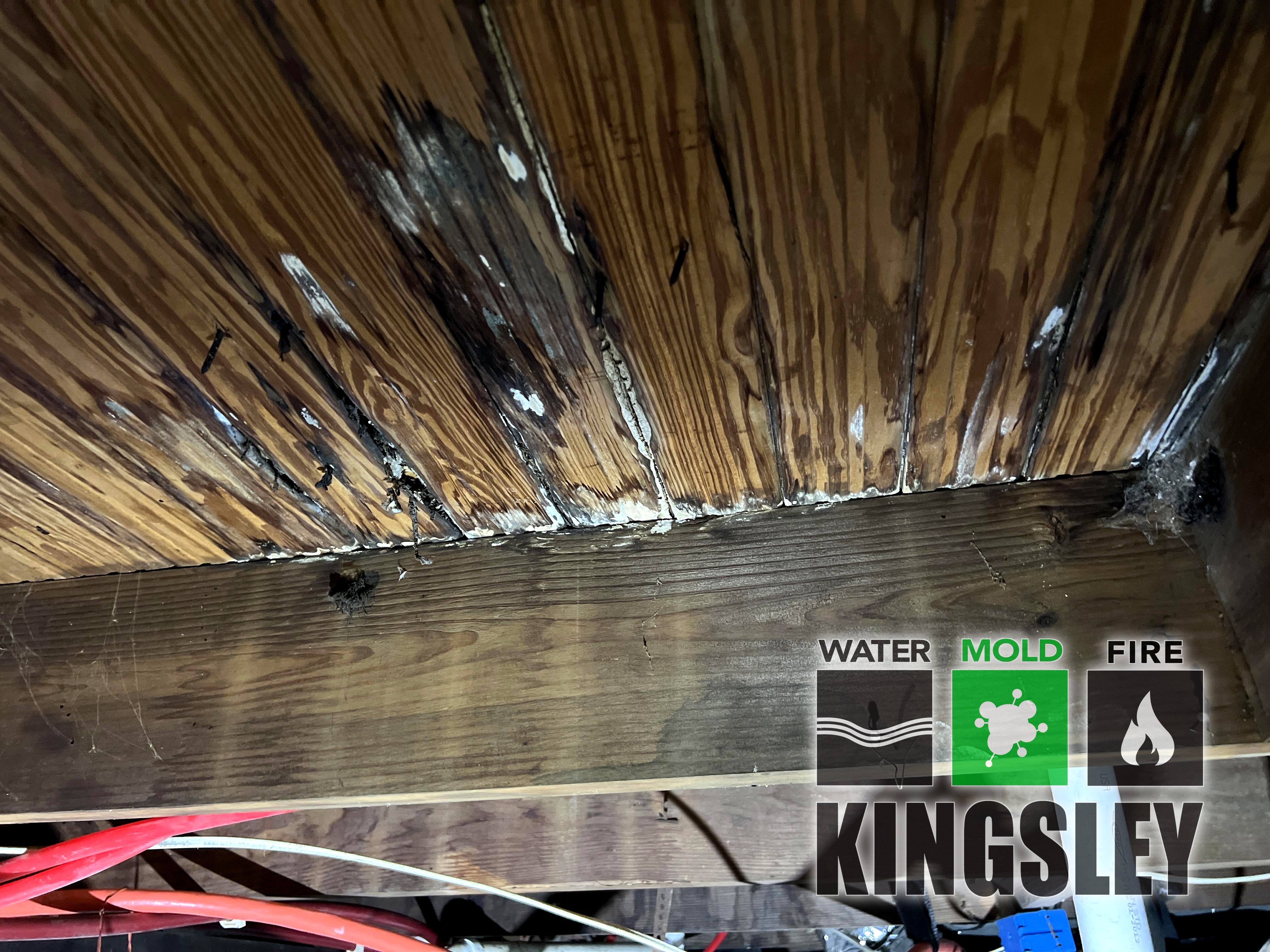
Summerville, SC
September 9, 2026
Kingsley water damage & Fire cleanup handled crawlspace subfloor mold and water cleanup in Summerville, SC after moisture and mold on the underside of the subfloor. We began with a room-by-room and assembly-level inspection of the crawlspace underside of the floor system, documenting dark saturated stains and white fuzzy growth along subfloor plank seams at a horizontal joist, with red/white hoses bundled below. That visual and instrument check — not a guess from the hallway — defined where finishes had to open, what could stay, and where drying equipment had to aim. the home needed source control, selective removal of non-salvageable wet or contaminated material, and verified drying of what remained.
During mitigation we controlled the work zone so debris and moisture did not track into clean rooms. Where finishes blocked drying, we opened only the wet footprint shown by meters and the photo record. Contaminated or saturated materials were bagged and removed; salvageable framing and sheathing were cleaned and treated with an EPA-registered antimicrobial when staining or microbial growth warranted it. HEPA vacuuming and careful handling limited dust from demo. The unique on-site detail that guided this file was dark saturated stains and white fuzzy growth along subfloor plank seams at a horizontal joist, with red/white hoses bundled below — that condition stayed in the documentation so the homeowner and any follow-on trade could see exactly what drove the scope in Summerville.
IICRC water-damage and mold-remediation practice prioritizes stop-the-source, remove what cannot be dried in place, clean and treat remaining structures, then dry to target with measured air movement and dehumidification. We placed air movers and/or dehumidifiers to match the wet assembly, ran equipment under monitoring, and rechecked moisture within the first week of mitigation rather than leaving gear unattended for an open-ended stretch. Skipping that short monitoring window is how a straightforward wet call becomes secondary damage in adjoining cavities.
As readings stabilized and the work area met a clean, dry condition, we demobilized equipment and left the crawlspace underside of the floor system ready for any needed rebuild of finishes. Photo documentation of the mitigation state stayed with the claim file. If you notice musty odors, spotting on wood, or staining at cabinets, vents, or window sills in Summerville, have the moisture source and affected materials inspected before finishes hide the growth path.
IICRC water-damage and mold-remediation practice prioritizes stop the moisture source, remove what cannot be dried in place, clean and treat remaining structures, then dry to target with measured air movement and dehumidification. On this Summerville file we ran air movers and dehumidifiers against the wet assembly under monitoring and rechecked moisture on a 3–7 day drying calendar—never past about a week. Skipping that short window is how secondary damage or musty odor returns after finishes go back up.
As readings stabilized within that first-week window, equipment came out and the work area was left ready for any needed rebuild. Photo documentation of the mitigation state stayed with the job file. Helpful takeaway: If you notice musty odors, spotting on wood, or staining at cabinets, vents, or window sills in Summerville, have the moisture source and affected materials inspected before finishes hide the growth path.
Homeowners comparing crawlspace subfloor mold and water cleanup options in the Summerville area should expect a written moisture map, selective removal instead of full tear-out when meters allow, and a clear end point when materials hit dry goal—not an open-ended equipment rental. Kingsley water damage & Fire cleanup follows that measured approach so rebuild decisions rest on documented conditions rather than a calendar guess.
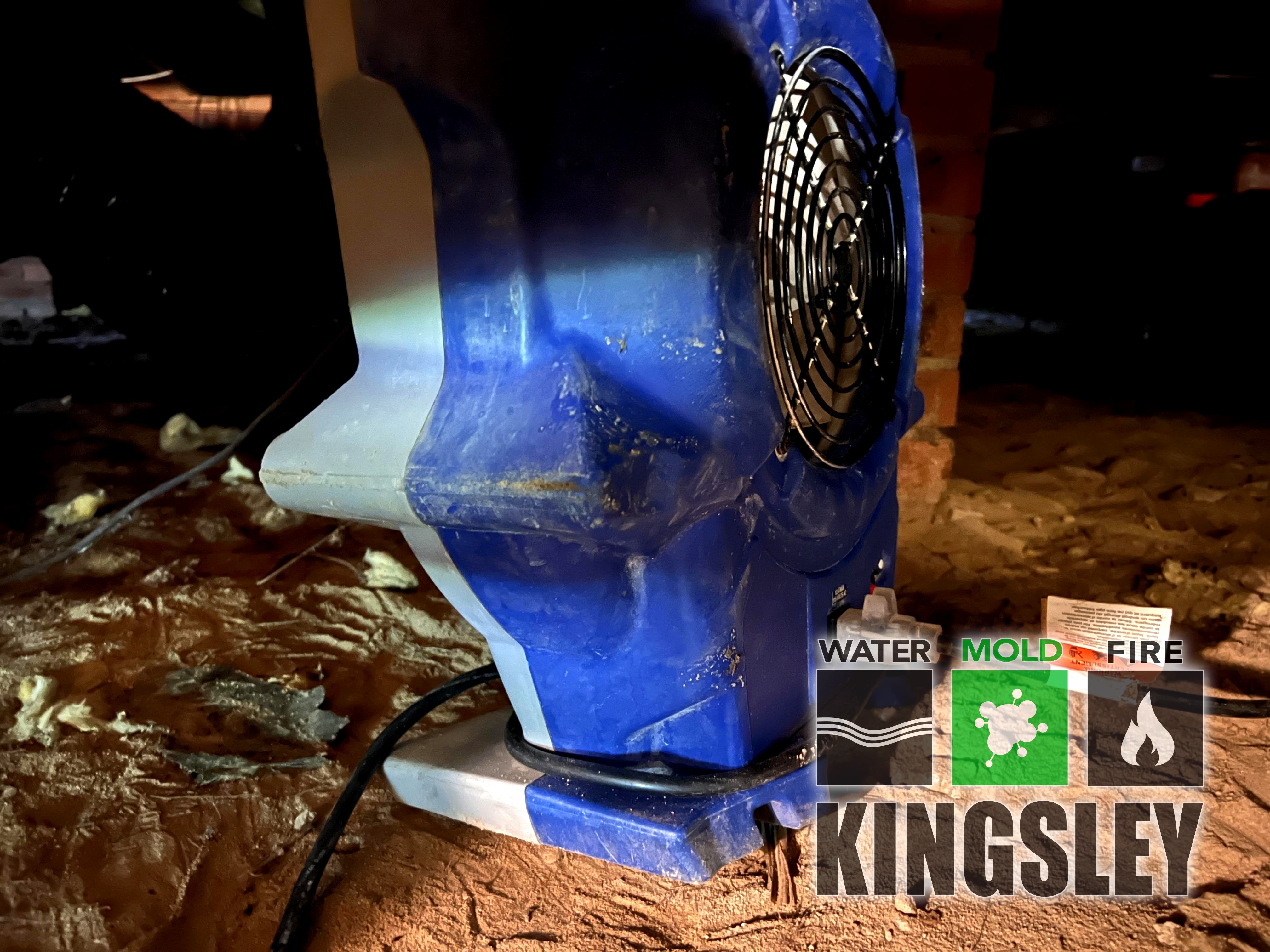
Spartanburg, SC
September 9, 2026
In Spartanburg, SC, Kingsley water damage & Fire cleanup performed residential water damage cleanup and drying after documenting residential water damage cleanup documentation during the initial condition check. That photo-backed condition check defined where finishes had to open, what could stay, and where drying equipment had to aim. The home needed source control, selective removal of non-salvageable wet or contaminated material, and verified drying of what remained in Spartanburg. We labeled the wet edge on the sketch so later visits matched day-one photos.
During mitigation we controlled the work zone so debris did not track into clean rooms. Where finishes blocked drying, we opened only the wet footprint shown by meters and the photo record. Non-salvageable saturated material was bagged and removed; salvageable framing and sheathing were cleaned. HEPA vacuuming and careful handling limited dust from demo. The unique on-site detail that guided this Spartanburg file was residential water damage cleanup documentation. Contents near the work path were shifted or protected before tools came out.
IICRC water-damage practice prioritizes stop the moisture source, remove what cannot be dried in place, clean remaining structures, then dry to target with measured air movement and dehumidification. We placed air movers and dehumidifiers to match the wet assembly, aimed airflow along the wet materials in the photo, and rechecked moisture on a 3–7 day drying calendar with overnight humidity checks—never past about a week. Quiet work windows were held where the household schedule required it, without stretching past that first-week ceiling. Skipping that short monitoring window is how a straightforward wet call becomes secondary damage or a musty return odor in Spartanburg.
As readings stabilized within that first-week window, we demobilized equipment and left the work area ready for any needed rebuild of finishes or insulation. Photo documentation of the mitigation state stayed with the job file for the Spartanburg property, including the same angle that showed residential water damage cleanup documentation. Helpful takeaway: If flooring feels soft, edges cup, or a stain keeps spreading in Spartanburg, stop walking the wet zone and request moisture mapping before new finishes go down.
Homeowners comparing residential water damage cleanup and drying options in the Spartanburg area should expect a written moisture map, selective removal instead of full tear-out when meters allow, and a clear end point when materials hit dry goal—not an open-ended equipment rental. Kingsley water damage & Fire cleanup follows that measured approach so rebuild decisions rest on documented conditions rather than a calendar guess.
When rebuild starts, keep the dry-standard notes handy for flooring, cabinet, or insulation trades so no one closes a cavity that still reads wet. That handoff is part of finishing residential water damage cleanup and drying correctly in Spartanburg after mitigation. Throughout the job we kept communication practical: what was wet, what was removed, what was drying, and when meters said the assembly met goal—without inventing a multi-week timeline.
For this Spartanburg stop, the close-out standard stayed simple: meters at goal, photo set filed, and no equipment left running past the 3–7 day band.
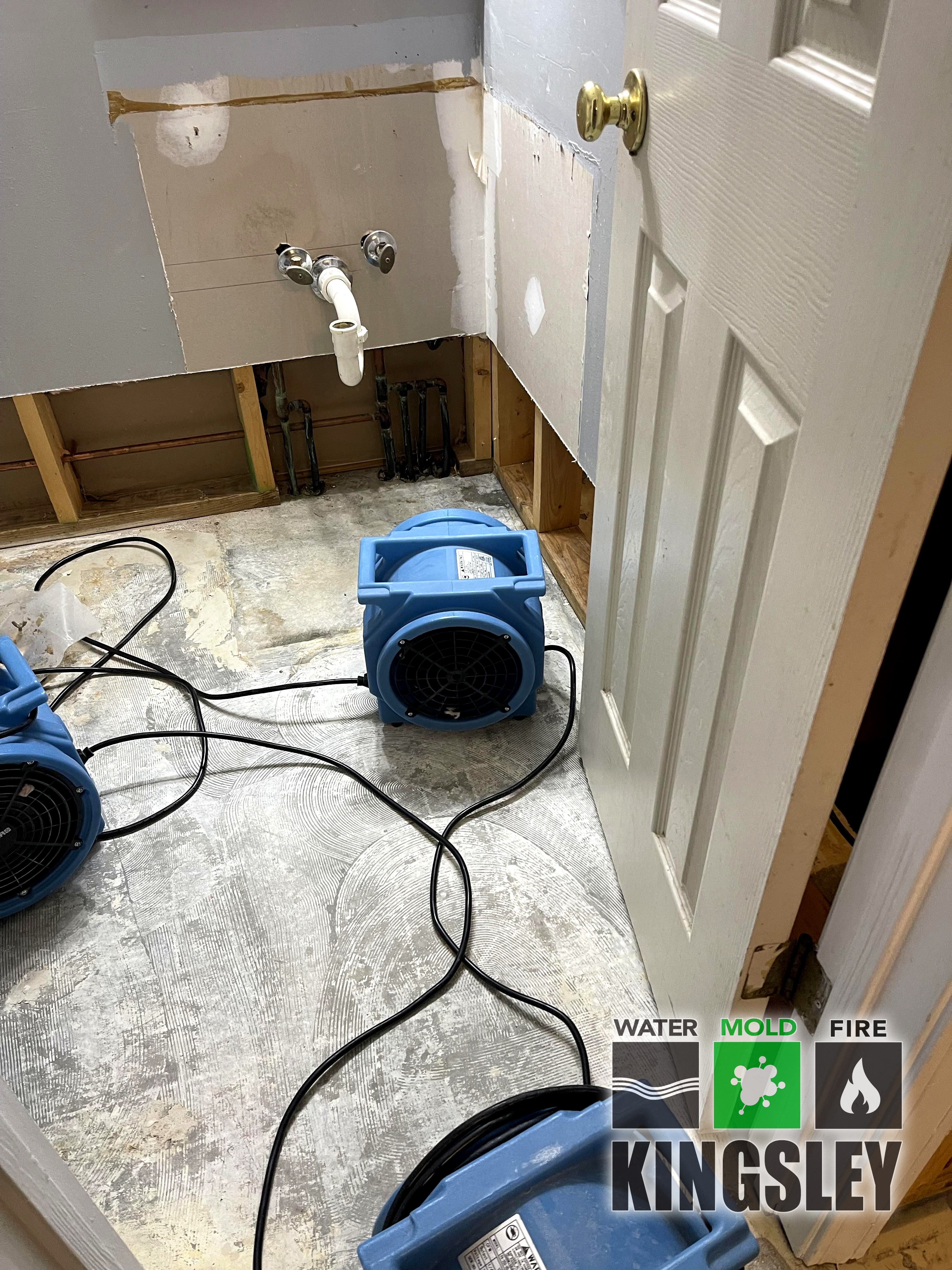
Carolina Forest, SC
September 9, 2026
Kingsley water damage & Fire cleanup handled doorway subfloor water damage cleanup for a Carolina Forest, SC property. The camera and meters guided scope from the start: doorway Subfloor Water Damage Cleanup. That photo-backed condition check defined where finishes had to open, what could stay, and where drying equipment had to aim. The home needed source control, selective removal of non-salvageable wet or contaminated material, and verified drying of what remained in Carolina Forest. We labeled the wet edge on the sketch so later visits matched day-one photos in Carolina Forest.
During mitigation we controlled the work zone so debris did not track into clean rooms. Where finishes blocked drying, we opened only the wet footprint shown by meters and the photo record. Non-salvageable saturated material was bagged and removed; salvageable framing and sheathing were cleaned. HEPA vacuuming and careful handling limited dust from demo. The unique on-site detail that guided this Carolina Forest file was doorway Subfloor Water Damage Cleanup. We avoided opening dry cavities that meters and the camera did not support on this Carolina Forest stop.
IICRC water-damage practice prioritizes stop the moisture source, remove what cannot be dried in place, clean remaining structures, then dry to target with measured air movement and dehumidification. We placed air movers and dehumidifiers to match the wet assembly, aimed airflow along the wet materials in the photo, and rechecked moisture on a 3–7 day drying calendar with overnight humidity checks—never past about a week. Skipping that short monitoring window is how a straightforward wet call becomes secondary damage or a musty return odor in Carolina Forest.
As readings stabilized within that first-week window, we demobilized equipment and left the work area ready for any needed rebuild of finishes or insulation. Photo documentation of the mitigation state stayed with the job file for the Carolina Forest property, including the same angle that showed doorway Subfloor Water Damage Cleanup. Helpful takeaway: If flooring feels soft, edges cup, or a stain keeps spreading in Carolina Forest, stop walking the wet zone and request moisture mapping before new finishes go down.
Homeowners comparing doorway subfloor water damage cleanup options in the Carolina Forest area should expect a written moisture map, selective removal instead of full tear-out when meters allow, and a clear end point when materials hit dry goal—not an open-ended equipment rental. Kingsley water damage & Fire cleanup follows that measured approach so rebuild decisions rest on documented conditions rather than a calendar guess.
When rebuild starts, keep the dry-standard notes handy for flooring, cabinet, or insulation trades so no one closes a cavity that still reads wet. That handoff is part of finishing doorway subfloor water damage cleanup correctly in Carolina Forest after mitigation—not a separate sales pitch.
Throughout the Carolina Forest job we kept communication practical: what was wet, what was removed, what was drying, and when meters said the assembly met goal. That plain record is what homeowners and trades use after doorway subfloor water damage cleanup—not jargon and not an invented multi-week timeline.
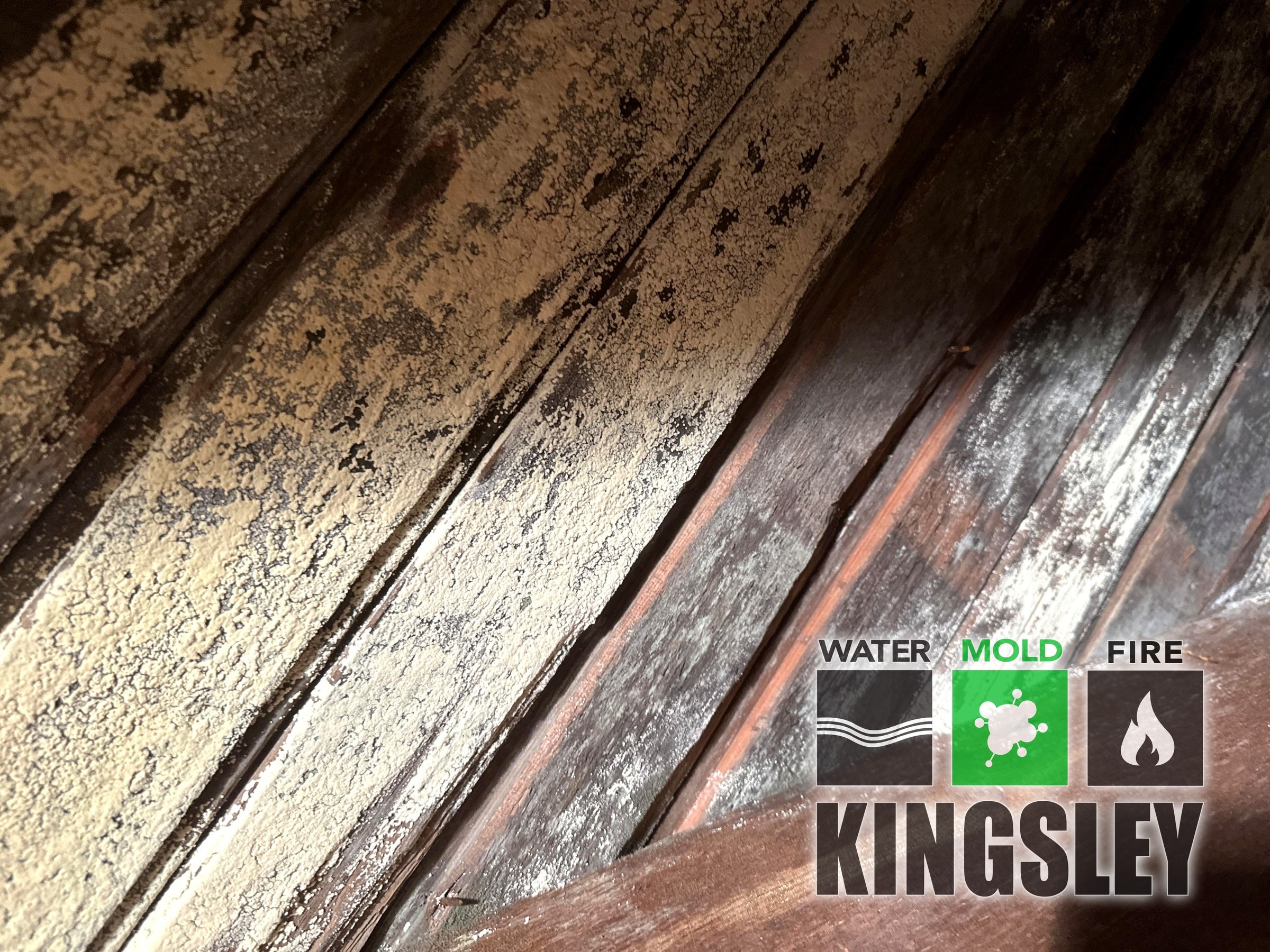
Columbia, SC
September 8, 2026
Kingsley water damage & Fire cleanup handled mold-related work in Columbia, SC after moisture left growth or air concerns on real building materials. Inspection comes first: attic sheathing, crawl framing, cabinet interiors, or wall cavities get a documented look so scope matches what is present. Containment goes up when demolition dust or spores could travel into clean rooms. Columbia homeowners get a plain explanation of what stays, what goes, and why—not a mystery checklist.
Mitigation steps stay in homeowner language: contain the mess, open only what inspection supports, remove what will not dry, and clean or treat what can remain. HEPA filtration supports air cleaning when dust or microbial particles are a concern. Daily updates name the rooms still wet and why machines are still on site—no unexplained jargon wall. If children or pets use the home, we talk through temporary barriers and which doors should stay closed while airflow is balanced.
Drying follows a practical IICRC-oriented order: extract, move air, dehumidify, and monitor until readings support releasing equipment. Typical occupied homes in the Midlands finish structural drying inside a 3–7 day window. Cool crawls, wall cavities, and humid stretches can need the later days; we say so before extending. We will not pack up on day two if meters still show wet materials. Mid-job visits adjust vent counts and dehumidifier settings when outdoor humidity or construction details stall progress.
Contents handling is deliberate. Wet textiles move to a drying path or pack-out decision; furniture feet get blocks on wet carpet; important documents and medications leave the wet zone in a labeled bin you keep. Electronics on wet flooring are unplugged and elevated—we do not power-test them in standing moisture. These steps sound small and prevent a second wave of damage while structural drying continues.
Close-out shows what was cleaned or removed and flags any roof, plumbing, or humidity source that still needs another trade. We do not invent square footage. For Columbia homes, fixing the water path first is the takeaway—otherwise growth conversations restart after the next humid week.
Equipment placement tries to leave bedrooms and kitchens usable when the wet map allows. Cord runs and condensate drains are planned so tanks do not overflow while you are at work. If HOA gates, narrow drives, or shared crawls affect staging in Columbia, share that on the first call so the truck arrives ready. Neighbor notices matter on duplex and townhome hatches.
Kingsley water damage & Fire cleanup uses 3031 Scotsman Rd Suite 16, Columbia, SC 29223 for Midlands paperwork and 803-590-0370 for live dispatch. You choose the contractor; preferred lists are optional. We document for carriers when you authorize it and direct-bill when the policy allows. Where detailed photo logs for this older job are thin, this page describes the standard mitigation approach for this loss type in Columbia without inventing claim numbers, meter digits, or crew names.
If rebuild trades follow mitigation, we leave surfaces accessible and share moisture notes so flooring or drywall work does not trap leftover dampness. That handoff is part of finishing strong in the Midlands humidity cycle.
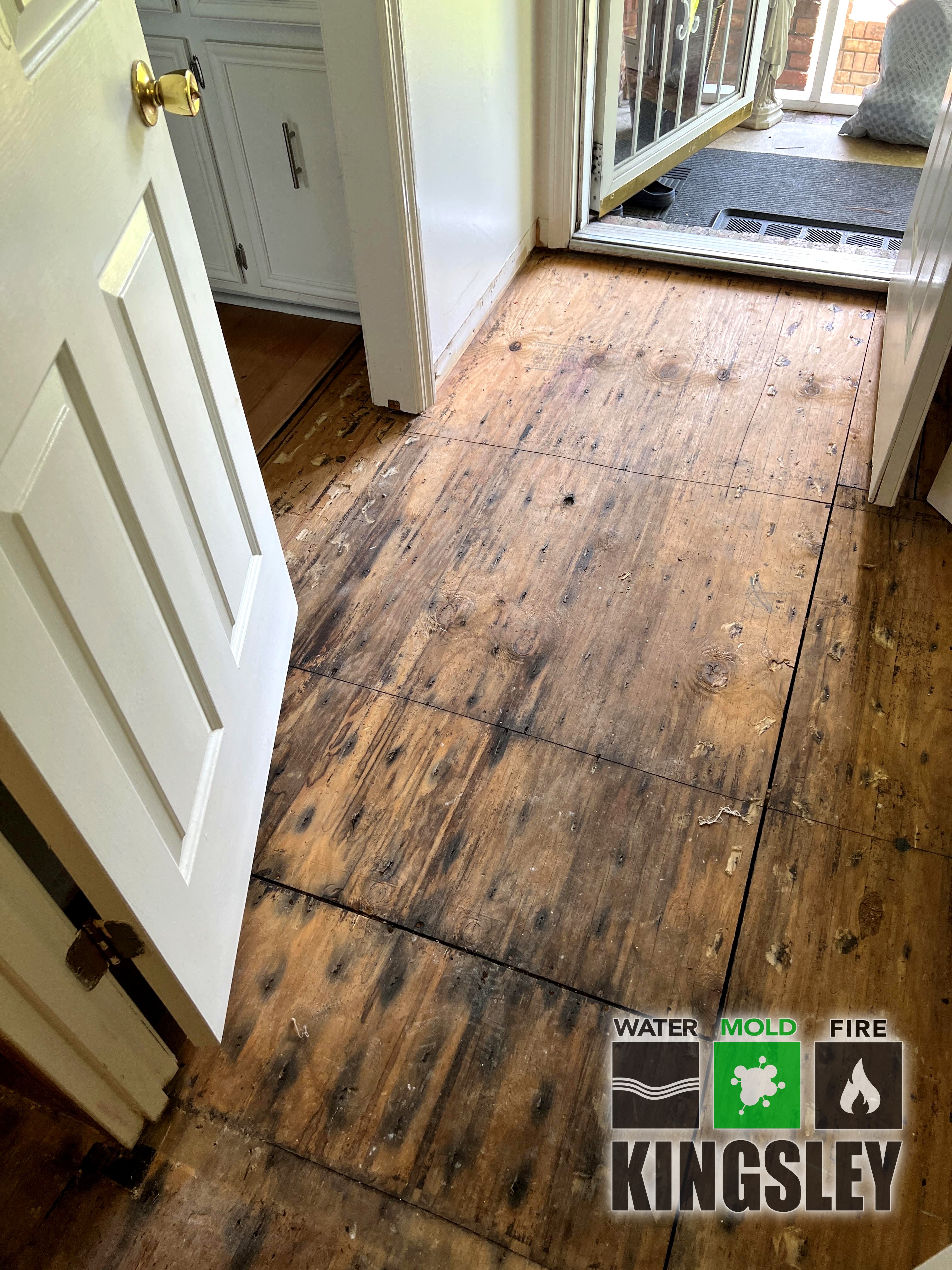
Fairfield, SC
September 8, 2026
Kingsley water damage & Fire cleanup completed crawlspace joist mold inspection and cleanup in Fairfield, SC. On arrival we walked the loss area and documented crawlspace Joist Mold Inspection and Cleanup. That photo-backed condition check defined where finishes had to open, what could stay, and where drying equipment had to aim. The home needed source control, selective removal of non-salvageable wet or contaminated material, and verified drying of what remained in Fairfield. We avoided opening dry cavities that meters and the camera did not support on this Fairfield stop.
During mitigation we controlled the work zone so debris and spores did not track into clean rooms. Where finishes blocked drying, we opened only the wet footprint shown by meters and the photo record. Non-salvageable saturated material was bagged and removed; salvageable framing and sheathing were cleaned and treated when microbial staining warranted it. HEPA vacuuming and careful handling limited dust from demo. The unique on-site detail that guided this Fairfield file was crawlspace Joist Mold Inspection and Cleanup. Contents near the work path were shifted or protected before tools came out in this Fairfield home.
IICRC water-damage and mold-remediation practice prioritizes stop the moisture source, remove what cannot be dried in place, clean and treat remaining structures with an EPA-registered antimicrobial when staining warranted it, then dry to target with measured air movement and dehumidification. We placed air movers and dehumidifiers to match the crawlspace bay, aimed airflow along the wet materials in the photo, and rechecked moisture on a 3–7 day drying calendar with overnight humidity checks—never past about a week. Skipping that short monitoring window is how a straightforward wet call becomes secondary damage or a musty return odor in Fairfield.
As readings stabilized within that first-week window, we demobilized equipment and left the work area ready for any needed rebuild of finishes or insulation. Photo documentation of the mitigation state stayed with the job file for the Fairfield property, including the same angle that showed crawlspace Joist Mold Inspection and Cleanup. Helpful takeaway: Dark staining on crawl joists in Fairfield is a reason to map moisture before buttoning the bay back up with fresh vapor barrier.
Homeowners comparing crawlspace joist mold inspection and cleanup options in the Fairfield area should expect a written moisture map, selective removal instead of full tear-out when meters allow, and a clear end point when materials hit dry goal—not an open-ended equipment rental. Kingsley water damage & Fire cleanup follows that measured approach so rebuild decisions rest on documented conditions rather than a calendar guess.
When rebuild starts, keep the dry-standard notes handy for flooring, cabinet, or insulation trades so no one closes a cavity that still reads wet. That handoff is part of finishing crawlspace joist mold inspection and cleanup correctly in Fairfield after mitigation—not a separate sales pitch.
Throughout the Fairfield job we kept communication practical: what was wet, what was removed, what was drying, and when meters said the assembly met goal. That plain record is what homeowners and trades use after crawlspace joist mold inspection and cleanup—not jargon and not an invented multi-week timeline.
Winnsboro, SC
September 8, 2026
Kingsley water damage & Fire cleanup handled moisture mapping, containment as needed, and verified drying over a 3–7 day window in Winnsboro, SC.
White Knoll, SC
September 8, 2026
Kingsley water damage & Fire cleanup handled subfloor water damage cleanup in White Knoll, SC after moisture moved under finished flooring. We moisture-map the assembly, open only what blocks airflow, and extract before cosmetic resets seal water in place. Soft spots upstairs often start at the subfloor—underside checks prevent a false all-clear.
Mitigation steps stay plain: contain dust, remove unsavable underlayment when needed, and dry framing that can remain. HEPA support is used when demolition creates fine dust. Updates name rooms still wet so you can plan around equipment without guessing.
Verified drying for typical occupied homes lands in a 3–7 day window. Cool subfloor cavities and humid stretches can need later days; we explain before extending and adjust airflow when outdoor humidity stalls progress.
Contents on wet floors are elevated. Soft flooring edges, toe-kicks, and transitions are probed so the last band of moisture is not missed. Stay off spongy patches until cleared. Kids’ and pets’ paths are redirected around open work.
Close-out confirms readings support releasing equipment and notes any rebuild flooring decisions. Rewetting risk is called out if a supply issue is still open with a plumber. A short room summary helps you update insurance without replaying every visit.
Equipment placement tries to keep hallways walkable. Condensate drains are set so tanks do not overflow while you work. Share gate codes early when White Knoll subdivisions require them so the truck is not stuck at the entrance.
Kingsley water damage & Fire cleanup — 3031 Scotsman Rd Suite 16, Columbia, SC 29223 — 803-590-0370. You choose the contractor; we document for carriers when authorized and direct-bill when the policy allows. This page uses general guidance where detailed photo logs are thin—no invented meter numbers. If rebuild trades follow, moisture notes travel with the handoff so new flooring does not trap dampness.
If rebuild trades follow mitigation, we leave surfaces accessible and share moisture notes so flooring or drywall work does not trap leftover dampness. That handoff is part of finishing strong in the Midlands humidity cycle.
On monitoring visits we show where readings dropped and where they stalled. If a corner still reads high, we move air—not hope. You leave with a simple next-day expectation instead of unexplained printouts. Neighbor notices matter on shared walls when demolition dust could travel.
Category decisions and PPE follow what the water actually contacted. Clean supply leaks and contaminated paths are not treated the same. Tell the crew if sewage or outdoor flood water mixed in so disposal and cleaning match the loss.
Mount Pleasant, SC
September 8, 2026
Kingsley water damage & Fire cleanup handled residential water damage emergency response in Mount Pleasant, SC after residential water damage call requiring on-site emergency response. We began with a room-by-room and assembly-level inspection of the residential street curb at the job site, documenting two white Kingsley-branded box trucks with green storm-graphic wraps parked at a residential curb beside a white picket fence and pink-blooming tree. That visual and instrument check — not a guess from the hallway — defined where finishes had to open, what could stay, and where drying equipment had to aim. the home needed source control, selective removal of non-salvageable wet or contaminated material, and verified drying of what remained.
During mitigation we controlled the work zone so debris and moisture did not track into clean rooms. Where finishes blocked drying, we opened only the wet footprint shown by meters and the photo record. Contaminated or saturated materials were bagged and removed; salvageable framing and sheathing were cleaned and treated with an EPA-registered antimicrobial when staining or microbial growth warranted it. HEPA vacuuming and careful handling limited dust from demo. The unique on-site detail that guided this file was two white Kingsley-branded box trucks with green storm-graphic wraps parked at a residential curb beside a white picket fence and pink-blooming tree — that condition stayed in the documentation so the homeowner and any follow-on trade could see exactly what drove the scope in Mount Pleasant.
IICRC water-damage and mold-remediation practice prioritizes stop-the-source, remove what cannot be dried in place, clean and treat remaining structures, then dry to target with measured air movement and dehumidification. We placed air movers and/or dehumidifiers to match the wet assembly, ran equipment under monitoring, and rechecked moisture within the first week of mitigation rather than leaving gear unattended for an open-ended stretch. Skipping that short monitoring window is how a straightforward wet call becomes secondary damage in adjoining cavities.
As readings stabilized and the work area met a clean, dry condition, we demobilized equipment and left the residential street curb at the job site ready for any needed rebuild of finishes. Photo documentation of the mitigation state stayed with the claim file. If you see standing water, elevated meter readings, or soft/stained flooring in Mount Pleasant, stop the source and start professional extraction and drying within the first days — delayed drying is what turns a contained wet zone into a larger structural call.
IICRC water-damage and mold-remediation practice prioritizes stop the moisture source, remove what cannot be dried in place, clean and treat remaining structures, then dry to target with measured air movement and dehumidification. On this Mount Pleasant file we ran air movers and dehumidifiers against the wet assembly under monitoring and rechecked moisture on a 3–7 day drying calendar—never past about a week. Skipping that short window is how secondary damage or musty odor returns after finishes go back up.
As readings stabilized within that first-week window, equipment came out and the work area was left ready for any needed rebuild. Photo documentation of the mitigation state stayed with the job file. Helpful takeaway: If you see standing water, elevated meter readings, or soft/stained flooring in Mount Pleasant, stop the source and start professional extraction and drying within the first days — delayed drying is what turns a contained wet zone into a larger structural call.
Homeowners comparing residential water damage emergency response options in the Mount Pleasant area should expect a written moisture map, selective removal instead of full tear-out when meters allow, and a clear end point when materials hit dry goal—not an open-ended equipment rental. Kingsley water damage & Fire cleanup follows that measured approach so rebuild decisions rest on documented conditions rather than a calendar guess.
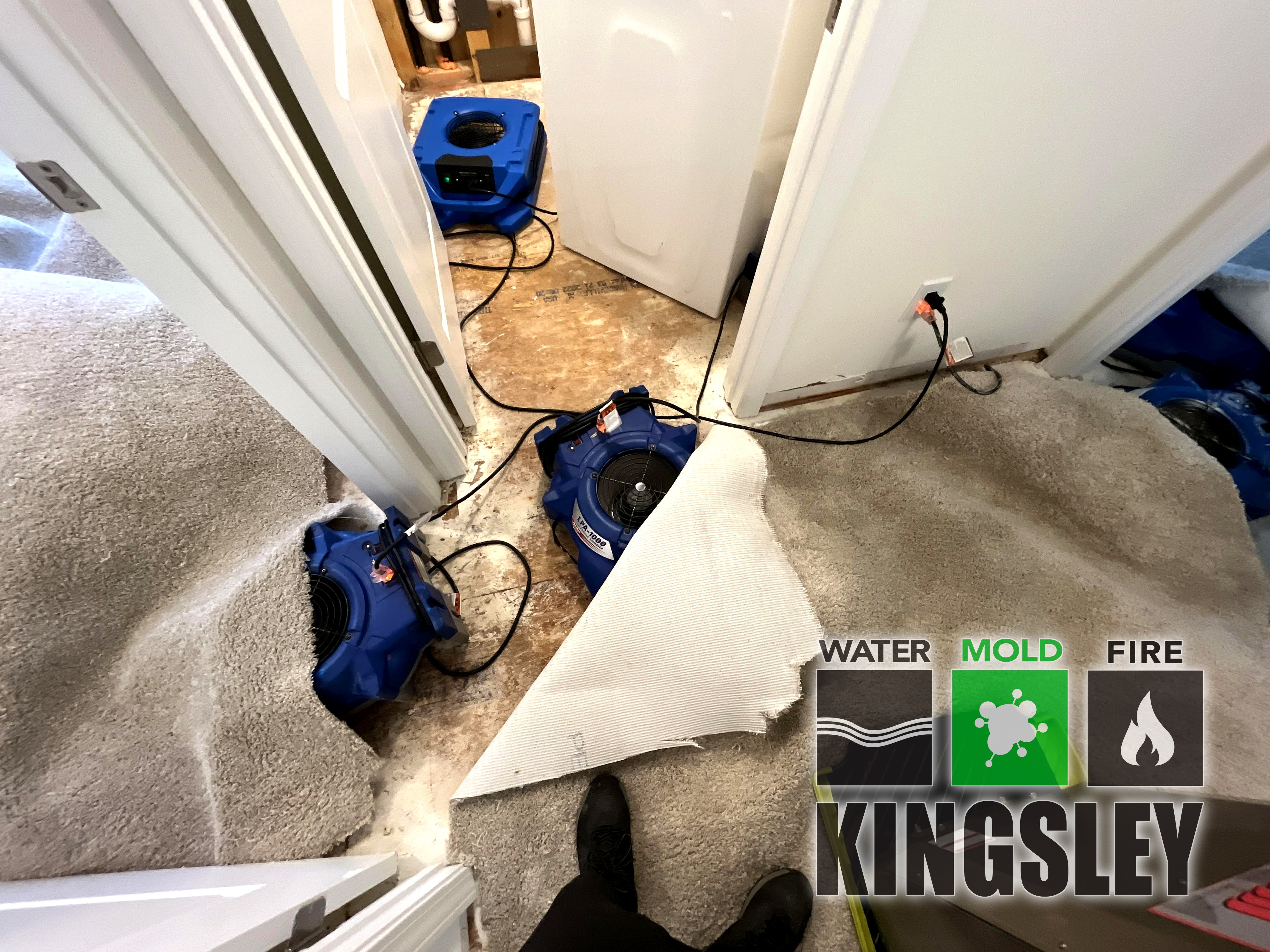
Orangeburg, SC
September 8, 2026
Kingsley water damage & Fire cleanup handled residential water damage cleanup and drying for a Orangeburg, SC property. The camera and meters guided scope from the start: residential water damage cleanup documentation. That photo-backed condition check defined where finishes had to open, what could stay, and where drying equipment had to aim. The home needed source control, selective removal of non-salvageable wet or contaminated material, and verified drying of what remained in Orangeburg. We labeled the wet edge on the sketch so later visits matched day-one photos.
During mitigation we controlled the work zone so debris did not track into clean rooms. Where finishes blocked drying, we opened only the wet footprint shown by meters and the photo record. Non-salvageable saturated material was bagged and removed; salvageable framing and sheathing were cleaned. HEPA vacuuming and careful handling limited dust from demo. The unique on-site detail that guided this Orangeburg file was residential water damage cleanup documentation. Contents near the work path were shifted or protected before tools came out.
IICRC water-damage practice prioritizes stop the moisture source, remove what cannot be dried in place, clean remaining structures, then dry to target with measured air movement and dehumidification. We placed air movers and dehumidifiers to match the wet assembly, aimed airflow along the wet materials in the photo, and rechecked moisture on a 3–7 day drying calendar with overnight humidity checks—never past about a week. Quiet work windows were held where the household schedule required it, without stretching past that first-week ceiling. Skipping that short monitoring window is how a straightforward wet call becomes secondary damage or a musty return odor in Orangeburg.
As readings stabilized within that first-week window, we demobilized equipment and left the work area ready for any needed rebuild of finishes or insulation. Photo documentation of the mitigation state stayed with the job file for the Orangeburg property, including the same angle that showed residential water damage cleanup documentation. Helpful takeaway: If flooring feels soft, edges cup, or a stain keeps spreading in Orangeburg, stop walking the wet zone and request moisture mapping before new finishes go down.
Homeowners comparing residential water damage cleanup and drying options in the Orangeburg area should expect a written moisture map, selective removal instead of full tear-out when meters allow, and a clear end point when materials hit dry goal—not an open-ended equipment rental. Kingsley water damage & Fire cleanup follows that measured approach so rebuild decisions rest on documented conditions rather than a calendar guess.
When rebuild starts, keep the dry-standard notes handy for flooring, cabinet, or insulation trades so no one closes a cavity that still reads wet. That handoff is part of finishing residential water damage cleanup and drying correctly in Orangeburg after mitigation. Throughout the job we kept communication practical: what was wet, what was removed, what was drying, and when meters said the assembly met goal—without inventing a multi-week timeline.
For this Orangeburg stop, the close-out standard stayed simple: meters at goal, photo set filed, and no equipment left running past the 3–7 day band.
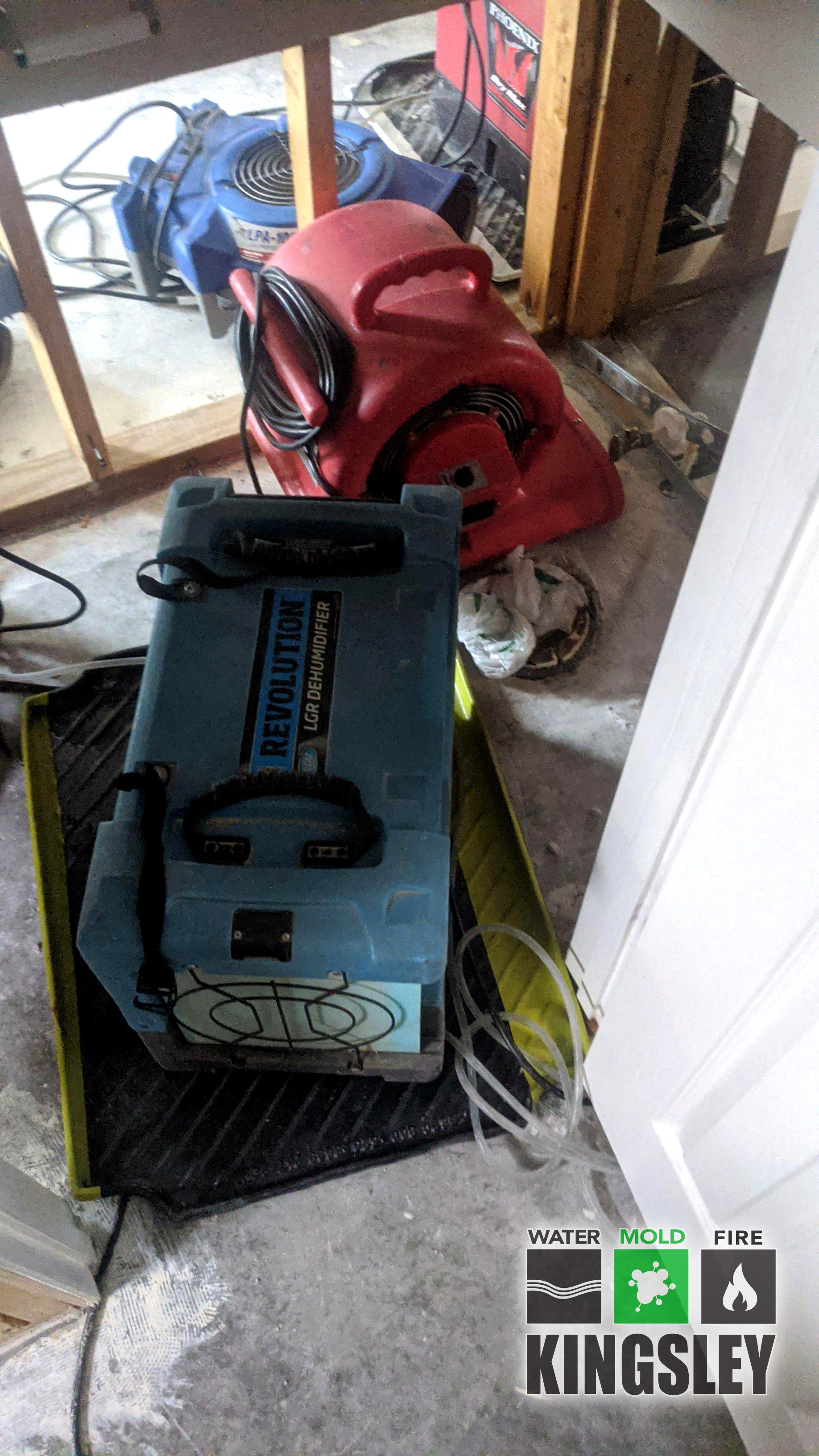
Murrells Inlet, SC
September 8, 2026
Kingsley water damage & Fire cleanup responded for tile floor moisture mapping and water cleanup in Murrells Inlet, SC and began with a photo-backed survey that captured tile Floor Moisture Mapping and Water Cleanup. That photo-backed condition check defined where finishes had to open, what could stay, and where drying equipment had to aim. The home needed source control, selective removal of non-salvageable wet or contaminated material, and verified drying of what remained in Murrells Inlet. Quiet work windows were held where the household schedule required it, without stretching the drying calendar past about a week.
During mitigation we controlled the work zone so debris did not track into clean rooms. Where finishes blocked drying, we opened only the wet footprint shown by meters and the photo record. Non-salvageable saturated material was bagged and removed; salvageable framing and sheathing were cleaned. HEPA vacuuming and careful handling limited dust from demo. The unique on-site detail that guided this Murrells Inlet file was tile Floor Moisture Mapping and Water Cleanup. The adjuster-ready photo set stayed with the file so rebuild trades could see the same framed assembly the crew saw.
IICRC water-damage practice prioritizes stop the moisture source, remove what cannot be dried in place, clean remaining structures, then dry to target with measured air movement and dehumidification. We placed air movers and dehumidifiers to match the wet assembly, aimed airflow along the wet materials in the photo, and rechecked moisture on a 3–7 day drying calendar with overnight humidity checks—never past about a week. Skipping that short monitoring window is how a straightforward wet call becomes secondary damage or a musty return odor in Murrells Inlet.
As readings stabilized within that first-week window, we demobilized equipment and left the work area ready for any needed rebuild of finishes or insulation. Photo documentation of the mitigation state stayed with the job file for the Murrells Inlet property, including the same angle that showed tile Floor Moisture Mapping and Water Cleanup. Helpful takeaway: A leak that looks dry after towels in Murrells Inlet can still leave wet underlayment—meter the assembly before rebuild.
Homeowners comparing tile floor moisture mapping and water cleanup options in the Murrells Inlet area should expect a written moisture map, selective removal instead of full tear-out when meters allow, and a clear end point when materials hit dry goal—not an open-ended equipment rental. Kingsley water damage & Fire cleanup follows that measured approach so rebuild decisions rest on documented conditions rather than a calendar guess.
When rebuild starts, keep the dry-standard notes handy for flooring, cabinet, or insulation trades so no one closes a cavity that still reads wet. That handoff is part of finishing tile floor moisture mapping and water cleanup correctly in Murrells Inlet after mitigation—not a separate sales pitch.
Throughout the Murrells Inlet job we kept communication practical: what was wet, what was removed, what was drying, and when meters said the assembly met goal. That plain record is what homeowners and trades use after tile floor moisture mapping and water cleanup—not jargon and not an invented multi-week timeline.
Camden, SC
September 7, 2026
Doorway Subfloor Water Damage Cleanup in Camden.
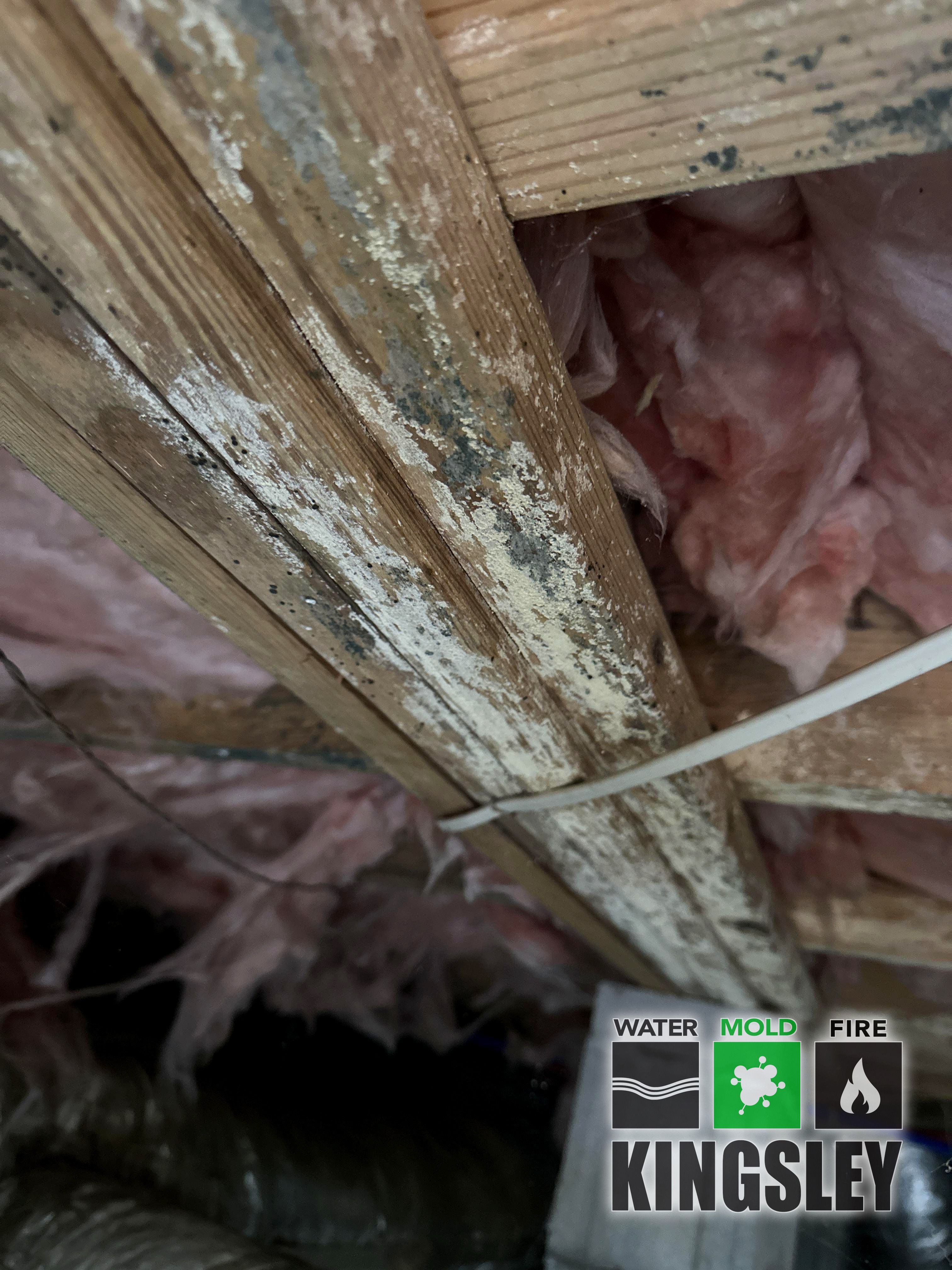
Camden, SC
September 7, 2026
In Camden, SC, Kingsley water damage & Fire cleanup performed doorway subfloor water damage cleanup after documenting doorway Subfloor Water Damage Cleanup during the initial condition check. That photo-backed condition check defined where finishes had to open, what could stay, and where drying equipment had to aim. The home needed source control, selective removal of non-salvageable wet or contaminated material, and verified drying of what remained in Camden. We labeled the wet edge on the sketch so later visits matched day-one photos.
During mitigation we controlled the work zone so debris and spores did not track into clean rooms. Where finishes blocked drying, we opened only the wet footprint shown by meters and the photo record. Non-salvageable saturated material was bagged and removed; salvageable framing and sheathing were cleaned and treated when microbial staining warranted it. HEPA vacuuming and careful handling limited dust from demo. The unique on-site detail that guided this Camden file was doorway Subfloor Water Damage Cleanup. Contents near the work path were shifted or protected before tools came out.
IICRC water-damage and mold-remediation practice prioritizes stop the moisture source, remove what cannot be dried in place, clean and treat remaining structures with an EPA-registered antimicrobial when staining warranted it, then dry to target with measured air movement and dehumidification. We placed air movers and dehumidifiers to match the crawlspace bay, aimed airflow along the wet materials in the photo, and rechecked moisture on a 3–7 day drying calendar with overnight humidity checks—never past about a week. Quiet work windows were held where the household schedule required it, without stretching past that first-week ceiling. Skipping that short monitoring window is how a straightforward wet call becomes secondary damage or a musty return odor in Camden.
As readings stabilized within that first-week window, we demobilized equipment and left the work area ready for any needed rebuild of finishes or insulation. Photo documentation of the mitigation state stayed with the job file for the Camden property, including the same angle that showed doorway Subfloor Water Damage Cleanup. Helpful takeaway: If you notice musty odors from floor registers or white spotting on crawl wood under a Camden home, have the moisture source and joists inspected before new insulation hides the path.
Homeowners comparing doorway subfloor water damage cleanup options in the Camden area should expect a written moisture map, selective removal instead of full tear-out when meters allow, and a clear end point when materials hit dry goal—not an open-ended equipment rental. Kingsley water damage & Fire cleanup follows that measured approach so rebuild decisions rest on documented conditions rather than a calendar guess.
When rebuild starts, keep the dry-standard notes handy for flooring, cabinet, or insulation trades so no one closes a cavity that still reads wet. That handoff is part of finishing doorway subfloor water damage cleanup correctly in Camden after mitigation. Throughout the job we kept communication practical: what was wet, what was removed, what was drying, and when meters said the assembly met goal—without inventing a multi-week timeline.
For this Camden stop, the close-out standard stayed simple: meters at goal, photo set filed, and no equipment left running past the 3–7 day band.
Kershaw, SC
September 7, 2026
Kingsley water damage & Fire cleanup handled moisture mapping, containment as needed, and verified drying over a 3–7 day window in Kershaw, SC.
White Knoll, SC
September 7, 2026
Kingsley water damage & Fire cleanup handled moisture mapping, containment as needed, and verified drying over a 3–7 day window in White Knoll, SC.
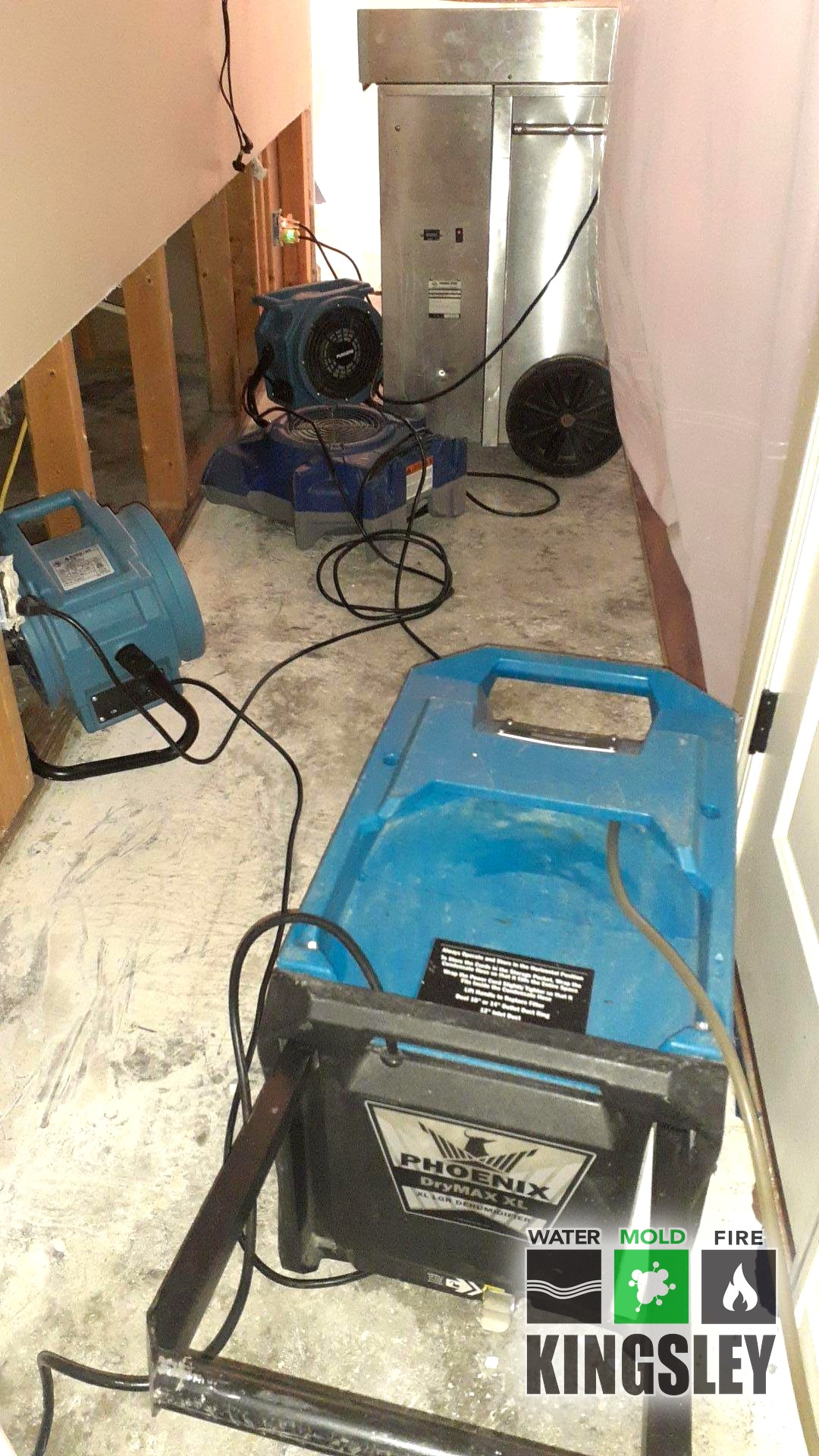
Mount Pleasant, SC
September 7, 2026
Kingsley water damage & Fire cleanup handled contained structural drying with lgr dehumidifiers in Mount Pleasant, SC after water loss requiring LGR dehumidification inside containment. We began with a room-by-room and assembly-level inspection of the contained hallway / room drying chamber, documenting a blue/black Phoenix DryMAX XL LGR dehumidifier in front of a tall stainless dehumidifier and two blue air movers on dusty subfloor with flood-cut studs and pinkish plastic containment. That visual and instrument check — not a guess from the hallway — defined where finishes had to open, what could stay, and where drying equipment had to aim. the home needed source control, selective removal of non-salvageable wet or contaminated material, and verified drying of what remained.
During mitigation we controlled the work zone so debris and moisture did not track into clean rooms. Where finishes blocked drying, we opened only the wet footprint shown by meters and the photo record. Contaminated or saturated materials were bagged and removed; salvageable framing and sheathing were cleaned and treated with an EPA-registered antimicrobial when staining or microbial growth warranted it. HEPA vacuuming and careful handling limited dust from demo. The unique on-site detail that guided this file was a blue/black Phoenix DryMAX XL LGR dehumidifier in front of a tall stainless dehumidifier and two blue air movers on dusty subfloor with flood-cut studs and pinkish plastic containment — that condition stayed in the documentation so the homeowner and any follow-on trade could see exactly what drove the scope in Mount Pleasant.
IICRC water-damage and mold-remediation practice prioritizes stop-the-source, remove what cannot be dried in place, clean and treat remaining structures, then dry to target with measured air movement and dehumidification. We placed air movers and/or dehumidifiers to match the wet assembly, ran equipment under monitoring, and rechecked moisture within the first week of mitigation rather than leaving gear unattended for an open-ended stretch. Skipping that short monitoring window is how a straightforward wet call becomes secondary damage in adjoining cavities.
As readings stabilized and the work area met a clean, dry condition, we demobilized equipment and left the contained hallway / room drying chamber ready for any needed rebuild of finishes. Photo documentation of the mitigation state stayed with the claim file. If you see standing water, elevated meter readings, or soft/stained flooring in Mount Pleasant, stop the source and start professional extraction and drying within the first days — delayed drying is what turns a contained wet zone into a larger structural call.
IICRC water-damage and mold-remediation practice prioritizes stop the moisture source, remove what cannot be dried in place, clean and treat remaining structures, then dry to target with measured air movement and dehumidification. On this Mount Pleasant file we ran air movers and dehumidifiers against the wet assembly under monitoring and rechecked moisture on a 3–7 day drying calendar—never past about a week. Skipping that short window is how secondary damage or musty odor returns after finishes go back up.
As readings stabilized within that first-week window, equipment came out and the work area was left ready for any needed rebuild. Photo documentation of the mitigation state stayed with the job file. Helpful takeaway: If you see standing water, elevated meter readings, or soft/stained flooring in Mount Pleasant, stop the source and start professional extraction and drying within the first days — delayed drying is what turns a contained wet zone into a larger structural call.
Homeowners comparing contained structural drying with lgr dehumidifiers options in the Mount Pleasant area should expect a written moisture map, selective removal instead of full tear-out when meters allow, and a clear end point when materials hit dry goal—not an open-ended equipment rental. Kingsley water damage & Fire cleanup follows that measured approach so rebuild decisions rest on documented conditions rather than a calendar guess.
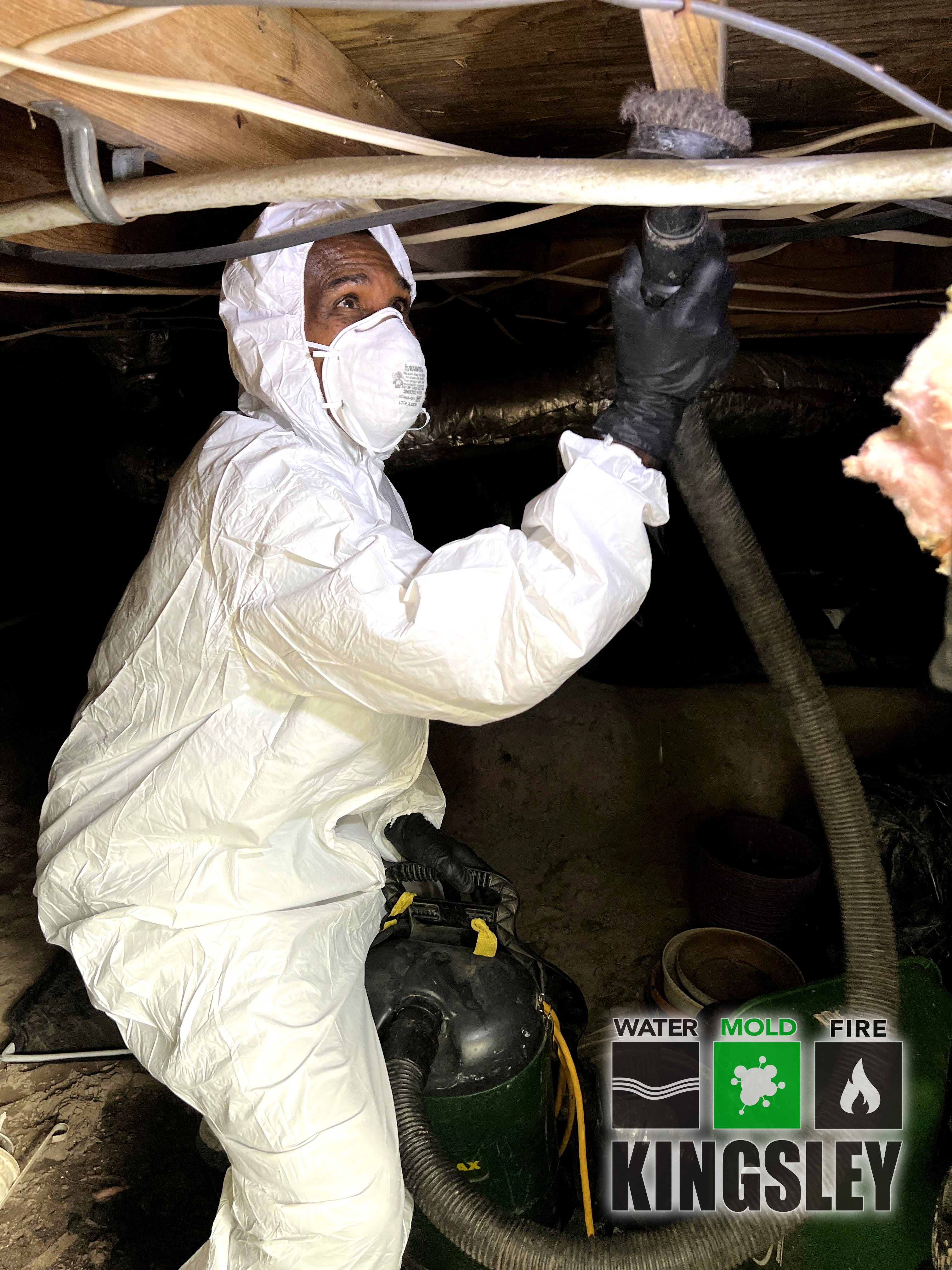
Orangeburg, SC
September 7, 2026
Kingsley water damage & Fire cleanup handled hardwood structural drying with air movers for a Orangeburg, SC property. The camera and meters guided scope from the start: blue air movers on flooring during structural drying. That photo-backed condition check defined where finishes had to open, what could stay, and where drying equipment had to aim. The home needed source control, selective removal of non-salvageable wet or contaminated material, and verified drying of what remained in Orangeburg. The adjuster-ready photo set stayed with the file so rebuild trades could see the same framed assembly the crew saw.
During mitigation we controlled the work zone so debris did not track into clean rooms. Where finishes blocked drying, we opened only the wet footprint shown by meters and the photo record. Non-salvageable saturated material was bagged and removed; salvageable framing and sheathing were cleaned. HEPA vacuuming and careful handling limited dust from demo. The unique on-site detail that guided this Orangeburg file was blue air movers on flooring during structural drying. We avoided opening dry cavities that meters and the camera did not support on this Orangeburg stop.
IICRC water-damage practice prioritizes stop the moisture source, remove what cannot be dried in place, clean remaining structures, then dry to target with measured air movement and dehumidification. We placed air movers and dehumidifiers to match the wet assembly, aimed airflow along the wet materials in the photo, and rechecked moisture on a 3–7 day drying calendar with overnight humidity checks—never past about a week. Skipping that short monitoring window is how a straightforward wet call becomes secondary damage or a musty return odor in Orangeburg.
As readings stabilized within that first-week window, we demobilized equipment and left the work area ready for any needed rebuild of finishes or insulation. Photo documentation of the mitigation state stayed with the job file for the Orangeburg property, including the same angle that showed blue air movers on flooring during structural drying. Helpful takeaway: If flooring feels soft, edges cup, or a stain keeps spreading in Orangeburg, stop walking the wet zone and request moisture mapping before new finishes go down.
Homeowners comparing hardwood structural drying with air movers options in the Orangeburg area should expect a written moisture map, selective removal instead of full tear-out when meters allow, and a clear end point when materials hit dry goal—not an open-ended equipment rental. Kingsley water damage & Fire cleanup follows that measured approach so rebuild decisions rest on documented conditions rather than a calendar guess.
When rebuild starts, keep the dry-standard notes handy for flooring, cabinet, or insulation trades so no one closes a cavity that still reads wet. That handoff is part of finishing hardwood structural drying with air movers correctly in Orangeburg after mitigation—not a separate sales pitch.
Throughout the Orangeburg job we kept communication practical: what was wet, what was removed, what was drying, and when meters said the assembly met goal. That plain record is what homeowners and trades use after hardwood structural drying with air movers—not jargon and not an invented multi-week timeline.
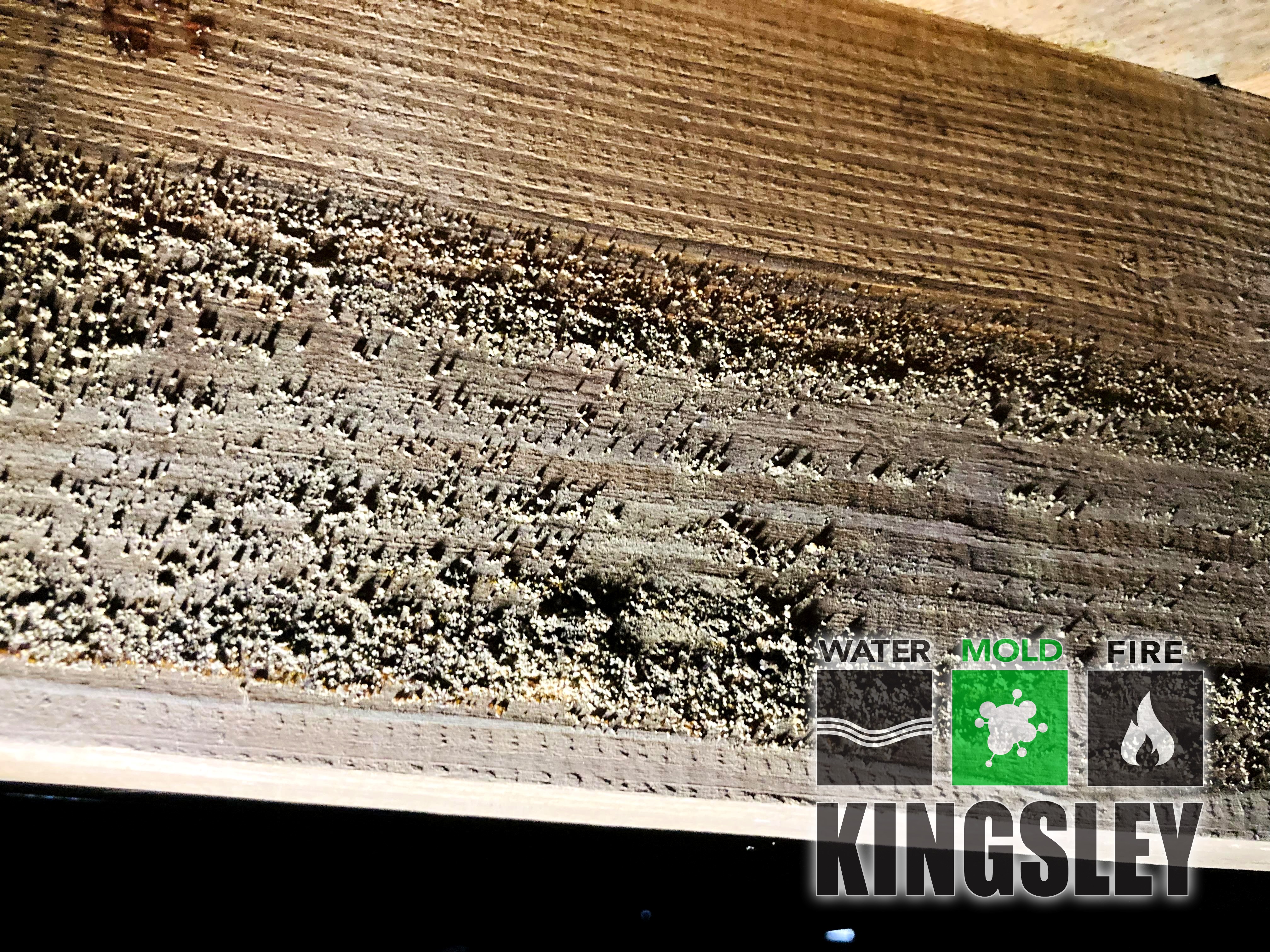
Arcadia Lakes, SC
September 7, 2026
Kingsley water damage & Fire cleanup responded for crawlspace joist mold inspection and cleanup in Arcadia Lakes, SC and began with a photo-backed survey that captured crawlspace Joist Mold Inspection and Cleanup. That photo-backed condition check defined where finishes had to open, what could stay, and where drying equipment had to aim. The home needed source control, selective removal of non-salvageable wet or contaminated material, and verified drying of what remained in Arcadia Lakes. The adjuster-ready photo set stayed with the file so rebuild trades could see the same framed assembly the crew saw.
During mitigation we controlled the work zone so debris and spores did not track into clean rooms. Where finishes blocked drying, we opened only the wet footprint shown by meters and the photo record. Non-salvageable saturated material was bagged and removed; salvageable framing and sheathing were cleaned and treated when microbial staining warranted it. HEPA vacuuming and careful handling limited dust from demo. The unique on-site detail that guided this Arcadia Lakes file was crawlspace Joist Mold Inspection and Cleanup. We labeled the wet edge on the sketch so later visits matched day-one photos in Arcadia Lakes.
IICRC water-damage and mold-remediation practice prioritizes stop the moisture source, remove what cannot be dried in place, clean and treat remaining structures with an EPA-registered antimicrobial when staining warranted it, then dry to target with measured air movement and dehumidification. We placed air movers and dehumidifiers to match the crawlspace bay, aimed airflow along the wet materials in the photo, and rechecked moisture on a 3–7 day drying calendar with overnight humidity checks—never past about a week. Skipping that short monitoring window is how a straightforward wet call becomes secondary damage or a musty return odor in Arcadia Lakes.
As readings stabilized within that first-week window, we demobilized equipment and left the work area ready for any needed rebuild of finishes or insulation. Photo documentation of the mitigation state stayed with the job file for the Arcadia Lakes property, including the same angle that showed crawlspace Joist Mold Inspection and Cleanup. Helpful takeaway: If you notice musty odors from floor registers or white spotting on crawl wood under a Arcadia Lakes home, have the moisture source and joists inspected before new insulation hides the path.
Homeowners comparing crawlspace joist mold inspection and cleanup options in the Arcadia Lakes area should expect a written moisture map, selective removal instead of full tear-out when meters allow, and a clear end point when materials hit dry goal—not an open-ended equipment rental. Kingsley water damage & Fire cleanup follows that measured approach so rebuild decisions rest on documented conditions rather than a calendar guess.
When rebuild starts, keep the dry-standard notes handy for flooring, cabinet, or insulation trades so no one closes a cavity that still reads wet. That handoff is part of finishing crawlspace joist mold inspection and cleanup correctly in Arcadia Lakes after mitigation—not a separate sales pitch.
Throughout the Arcadia Lakes job we kept communication practical: what was wet, what was removed, what was drying, and when meters said the assembly met goal. That plain record is what homeowners and trades use after crawlspace joist mold inspection and cleanup—not jargon and not an invented multi-week timeline.
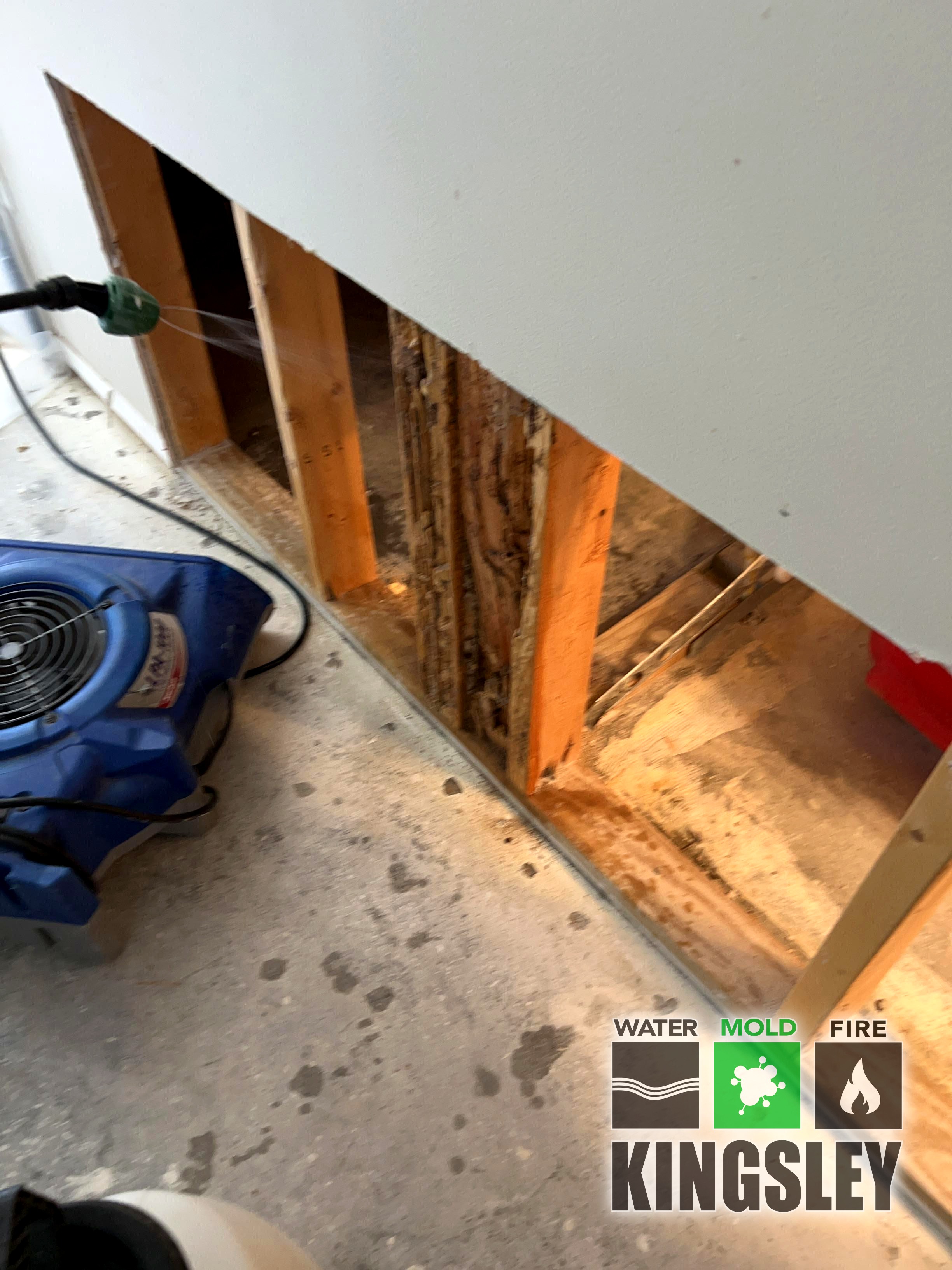
Camden, SC
September 6, 2026
Kingsley water damage & Fire cleanup handled tile floor moisture mapping and water cleanup for a Camden, SC property. The camera and meters guided scope from the start: tile Floor Moisture Mapping and Water Cleanup. That photo-backed condition check defined where finishes had to open, what could stay, and where drying equipment had to aim. The home needed source control, selective removal of non-salvageable wet or contaminated material, and verified drying of what remained in Camden. We labeled the wet edge on the sketch so later visits matched day-one photos.
During mitigation we controlled the work zone so debris did not track into clean rooms. Where finishes blocked drying, we opened only the wet footprint shown by meters and the photo record. Non-salvageable saturated material was bagged and removed; salvageable framing and sheathing were cleaned. HEPA vacuuming and careful handling limited dust from demo. The unique on-site detail that guided this Camden file was tile Floor Moisture Mapping and Water Cleanup. Contents near the work path were shifted or protected before tools came out.
IICRC water-damage practice prioritizes stop the moisture source, remove what cannot be dried in place, clean remaining structures, then dry to target with measured air movement and dehumidification. We placed air movers and dehumidifiers to match the wet assembly, aimed airflow along the wet materials in the photo, and rechecked moisture on a 3–7 day drying calendar with overnight humidity checks—never past about a week. Quiet work windows were held where the household schedule required it, without stretching past that first-week ceiling. Skipping that short monitoring window is how a straightforward wet call becomes secondary damage or a musty return odor in Camden.
As readings stabilized within that first-week window, we demobilized equipment and left the work area ready for any needed rebuild of finishes or insulation. Photo documentation of the mitigation state stayed with the job file for the Camden property, including the same angle that showed tile Floor Moisture Mapping and Water Cleanup. Helpful takeaway: If flooring feels soft, edges cup, or a stain keeps spreading in Camden, stop walking the wet zone and request moisture mapping before new finishes go down.
Homeowners comparing tile floor moisture mapping and water cleanup options in the Camden area should expect a written moisture map, selective removal instead of full tear-out when meters allow, and a clear end point when materials hit dry goal—not an open-ended equipment rental. Kingsley water damage & Fire cleanup follows that measured approach so rebuild decisions rest on documented conditions rather than a calendar guess.
When rebuild starts, keep the dry-standard notes handy for flooring, cabinet, or insulation trades so no one closes a cavity that still reads wet. That handoff is part of finishing tile floor moisture mapping and water cleanup correctly in Camden after mitigation. Throughout the job we kept communication practical: what was wet, what was removed, what was drying, and when meters said the assembly met goal—without inventing a multi-week timeline.
For this Camden stop, the close-out standard stayed simple: meters at goal, photo set filed, and no equipment left running past the 3–7 day band.
Kershaw, SC
September 6, 2026
Kingsley water damage & Fire cleanup handled moisture mapping, containment as needed, and verified drying over a 3–7 day window in Kershaw, SC.
White Knoll, SC
September 6, 2026
Camera angle on crawlspace moisture mapping and cleanup (Springdale). Contents cleared from the wet corner before metered drying. Owner kept rebuild choice. Rechecks inside 3–7 days. Never past about a week.
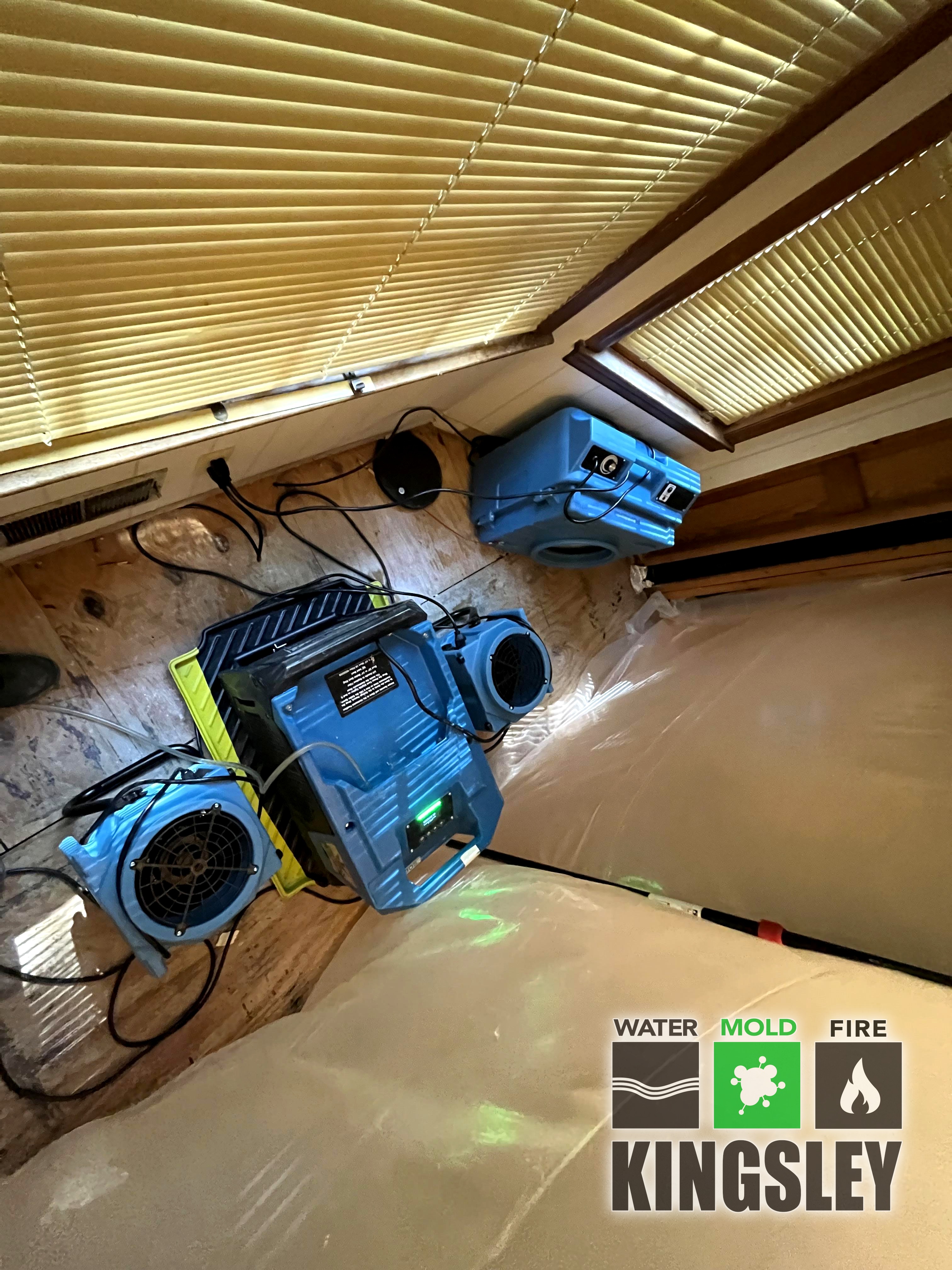
Mount Pleasant, SC
September 6, 2026
Kingsley water damage & Fire cleanup handled contained room structural drying setup in Mount Pleasant, SC after room-level water loss managed with contained equipment drying. We began with a room-by-room and assembly-level inspection of the contained interior room on exposed subfloor, documenting a blue dehumidifier on a yellow/black mat with two blue air movers on plywood subfloor, plastic containment on a tension pole, and window blinds above dark wood trim. That visual and instrument check — not a guess from the hallway — defined where finishes had to open, what could stay, and where drying equipment had to aim. the home needed source control, selective removal of non-salvageable wet or contaminated material, and verified drying of what remained.
During mitigation we controlled the work zone so debris and moisture did not track into clean rooms. Where finishes blocked drying, we opened only the wet footprint shown by meters and the photo record. Contaminated or saturated materials were bagged and removed; salvageable framing and sheathing were cleaned and treated with an EPA-registered antimicrobial when staining or microbial growth warranted it. HEPA vacuuming and careful handling limited dust from demo. The unique on-site detail that guided this file was a blue dehumidifier on a yellow/black mat with two blue air movers on plywood subfloor, plastic containment on a tension pole, and window blinds above dark wood trim — that condition stayed in the documentation so the homeowner and any follow-on trade could see exactly what drove the scope in Mount Pleasant.
IICRC water-damage and mold-remediation practice prioritizes stop-the-source, remove what cannot be dried in place, clean and treat remaining structures, then dry to target with measured air movement and dehumidification. We placed air movers and/or dehumidifiers to match the wet assembly, ran equipment under monitoring, and rechecked moisture within the first week of mitigation rather than leaving gear unattended for an open-ended stretch. Skipping that short monitoring window is how a straightforward wet call becomes secondary damage in adjoining cavities.
As readings stabilized and the work area met a clean, dry condition, we demobilized equipment and left the contained interior room on exposed subfloor ready for any needed rebuild of finishes. Photo documentation of the mitigation state stayed with the claim file. If you see standing water, elevated meter readings, or soft/stained flooring in Mount Pleasant, stop the source and start professional extraction and drying within the first days — delayed drying is what turns a contained wet zone into a larger structural call.
IICRC water-damage and mold-remediation practice prioritizes stop the moisture source, remove what cannot be dried in place, clean and treat remaining structures, then dry to target with measured air movement and dehumidification. On this Mount Pleasant file we ran air movers and dehumidifiers against the wet assembly under monitoring and rechecked moisture on a 3–7 day drying calendar—never past about a week. Skipping that short window is how secondary damage or musty odor returns after finishes go back up.
As readings stabilized within that first-week window, equipment came out and the work area was left ready for any needed rebuild. Photo documentation of the mitigation state stayed with the job file. Helpful takeaway: If you see standing water, elevated meter readings, or soft/stained flooring in Mount Pleasant, stop the source and start professional extraction and drying within the first days — delayed drying is what turns a contained wet zone into a larger structural call.
Homeowners comparing contained room structural drying setup options in the Mount Pleasant area should expect a written moisture map, selective removal instead of full tear-out when meters allow, and a clear end point when materials hit dry goal—not an open-ended equipment rental. Kingsley water damage & Fire cleanup follows that measured approach so rebuild decisions rest on documented conditions rather than a calendar guess.
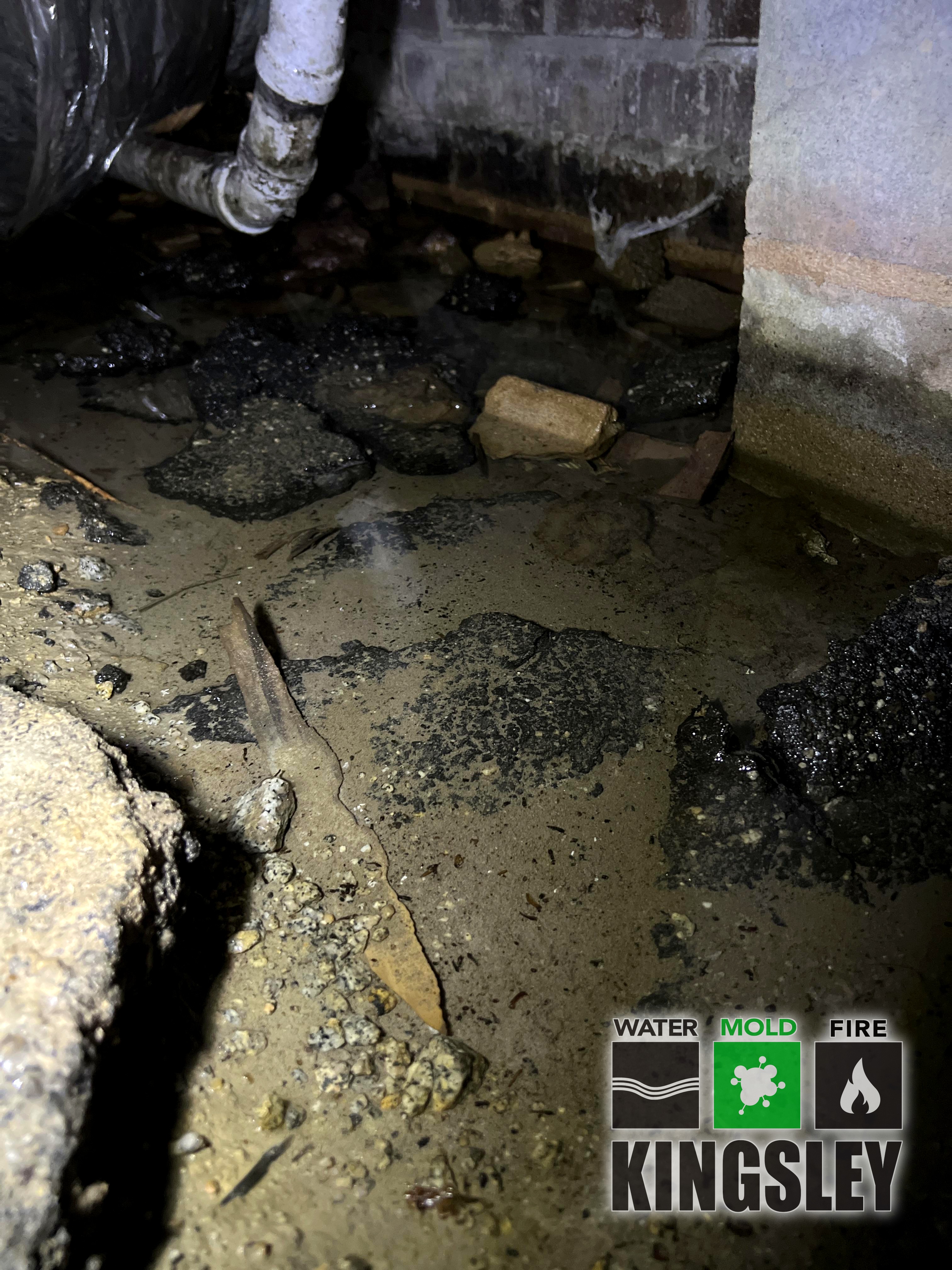
Orangeburg, SC
September 6, 2026
Kingsley water damage & Fire cleanup handled crawlspace joist mold inspection and cleanup for a Orangeburg, SC property. The camera and meters guided scope from the start: crawlspace joists with staining during mold cleanup. That photo-backed condition check defined where finishes had to open, what could stay, and where drying equipment had to aim. The home needed source control, selective removal of non-salvageable wet or contaminated material, and verified drying of what remained in Orangeburg. Quiet work windows were held where the household schedule required it, without stretching the drying calendar past about a week.
During mitigation we controlled the work zone so debris and spores did not track into clean rooms. Where finishes blocked drying, we opened only the wet footprint shown by meters and the photo record. Non-salvageable saturated material was bagged and removed; salvageable framing and sheathing were cleaned and treated when microbial staining warranted it. HEPA vacuuming and careful handling limited dust from demo. The unique on-site detail that guided this Orangeburg file was crawlspace joists with staining during mold cleanup. Contents near the work path were shifted or protected before tools came out in this Orangeburg home.
IICRC water-damage and mold-remediation practice prioritizes stop the moisture source, remove what cannot be dried in place, clean and treat remaining structures with an EPA-registered antimicrobial when staining warranted it, then dry to target with measured air movement and dehumidification. We placed air movers and dehumidifiers to match the crawlspace bay, aimed airflow along the wet materials in the photo, and rechecked moisture on a 3–7 day drying calendar with overnight humidity checks—never past about a week. Skipping that short monitoring window is how a straightforward wet call becomes secondary damage or a musty return odor in Orangeburg.
As readings stabilized within that first-week window, we demobilized equipment and left the work area ready for any needed rebuild of finishes or insulation. Photo documentation of the mitigation state stayed with the job file for the Orangeburg property, including the same angle that showed crawlspace joists with staining during mold cleanup. Helpful takeaway: Dark staining on crawl joists in Orangeburg is a reason to map moisture before buttoning the bay back up with fresh vapor barrier.
Homeowners comparing crawlspace joist mold inspection and cleanup options in the Orangeburg area should expect a written moisture map, selective removal instead of full tear-out when meters allow, and a clear end point when materials hit dry goal—not an open-ended equipment rental. Kingsley water damage & Fire cleanup follows that measured approach so rebuild decisions rest on documented conditions rather than a calendar guess.
When rebuild starts, keep the dry-standard notes handy for flooring, cabinet, or insulation trades so no one closes a cavity that still reads wet. That handoff is part of finishing crawlspace joist mold inspection and cleanup correctly in Orangeburg after mitigation—not a separate sales pitch.
Throughout the Orangeburg job we kept communication practical: what was wet, what was removed, what was drying, and when meters said the assembly met goal. That plain record is what homeowners and trades use after crawlspace joist mold inspection and cleanup—not jargon and not an invented multi-week timeline.
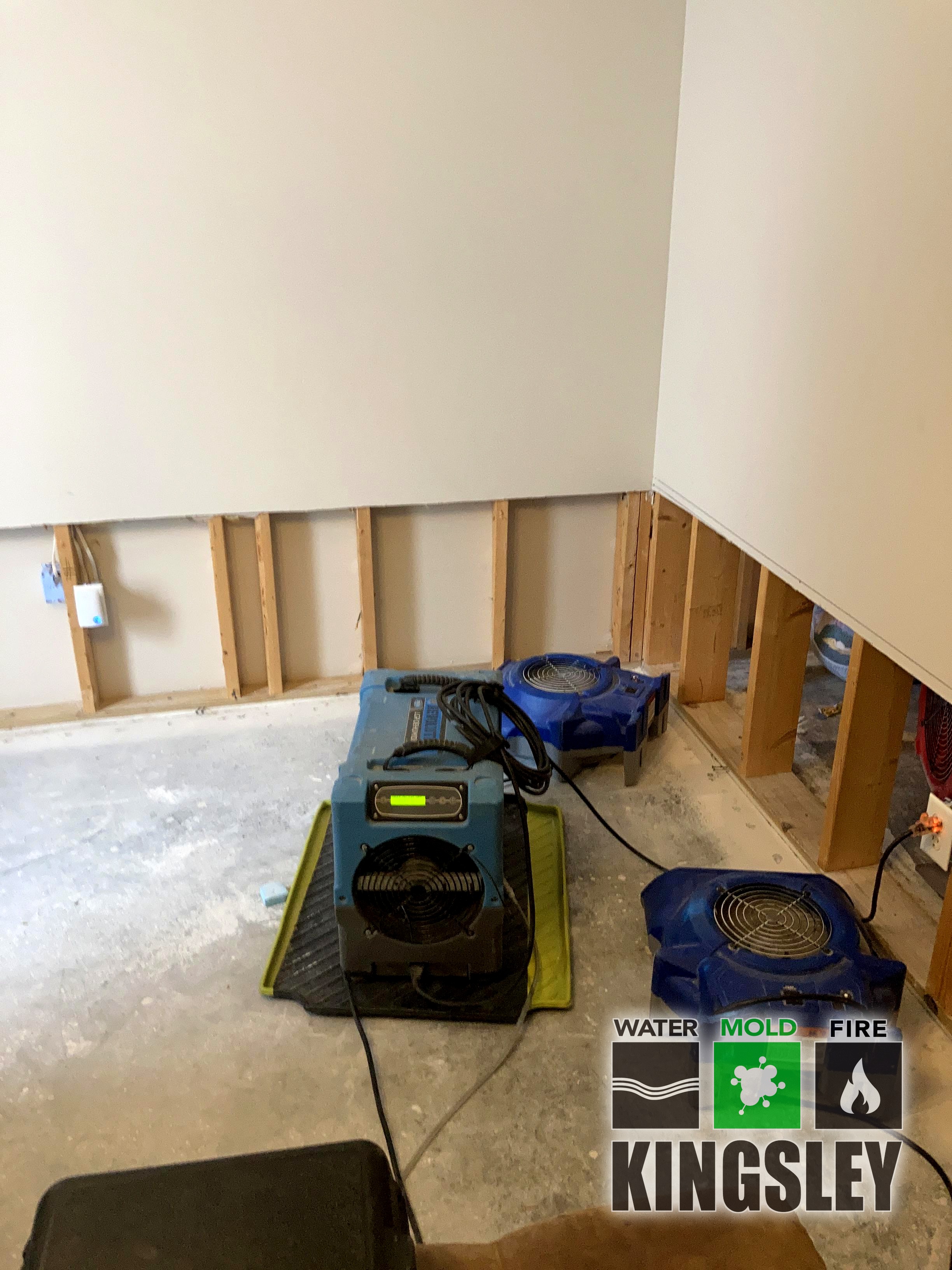
Arcadia Lakes, SC
September 6, 2026
Kingsley water damage & Fire cleanup handled doorway subfloor water damage cleanup for a Arcadia Lakes, SC property. The camera and meters guided scope from the start: doorway Subfloor Water Damage Cleanup. That photo-backed condition check defined where finishes had to open, what could stay, and where drying equipment had to aim. The home needed source control, selective removal of non-salvageable wet or contaminated material, and verified drying of what remained in Arcadia Lakes. We labeled the wet edge on the sketch so later visits matched day-one photos.
During mitigation we controlled the work zone so debris did not track into clean rooms. Where finishes blocked drying, we opened only the wet footprint shown by meters and the photo record. Non-salvageable saturated material was bagged and removed; salvageable framing and sheathing were cleaned. HEPA vacuuming and careful handling limited dust from demo. The unique on-site detail that guided this Arcadia Lakes file was doorway Subfloor Water Damage Cleanup. Contents near the work path were shifted or protected before tools came out.
IICRC water-damage practice prioritizes stop the moisture source, remove what cannot be dried in place, clean remaining structures, then dry to target with measured air movement and dehumidification. We placed air movers and dehumidifiers to match the wet assembly, aimed airflow along the wet materials in the photo, and rechecked moisture on a 3–7 day drying calendar with overnight humidity checks—never past about a week. Quiet work windows were held where the household schedule required it, without stretching past that first-week ceiling. Skipping that short monitoring window is how a straightforward wet call becomes secondary damage or a musty return odor in Arcadia Lakes.
As readings stabilized within that first-week window, we demobilized equipment and left the work area ready for any needed rebuild of finishes or insulation. Photo documentation of the mitigation state stayed with the job file for the Arcadia Lakes property, including the same angle that showed doorway Subfloor Water Damage Cleanup. Helpful takeaway: If flooring feels soft, edges cup, or a stain keeps spreading in Arcadia Lakes, stop walking the wet zone and request moisture mapping before new finishes go down.
Homeowners comparing doorway subfloor water damage cleanup options in the Arcadia Lakes area should expect a written moisture map, selective removal instead of full tear-out when meters allow, and a clear end point when materials hit dry goal—not an open-ended equipment rental. Kingsley water damage & Fire cleanup follows that measured approach so rebuild decisions rest on documented conditions rather than a calendar guess.
When rebuild starts, keep the dry-standard notes handy for flooring, cabinet, or insulation trades so no one closes a cavity that still reads wet. That handoff is part of finishing doorway subfloor water damage cleanup correctly in Arcadia Lakes after mitigation. Throughout the job we kept communication practical: what was wet, what was removed, what was drying, and when meters said the assembly met goal—without inventing a multi-week timeline.
For this Arcadia Lakes stop, the close-out standard stayed simple: meters at goal, photo set filed, and no equipment left running past the 3–7 day band.
Camden, SC
September 5, 2026
Bathroom Cabinet Water Damage Cleanup in Camden.
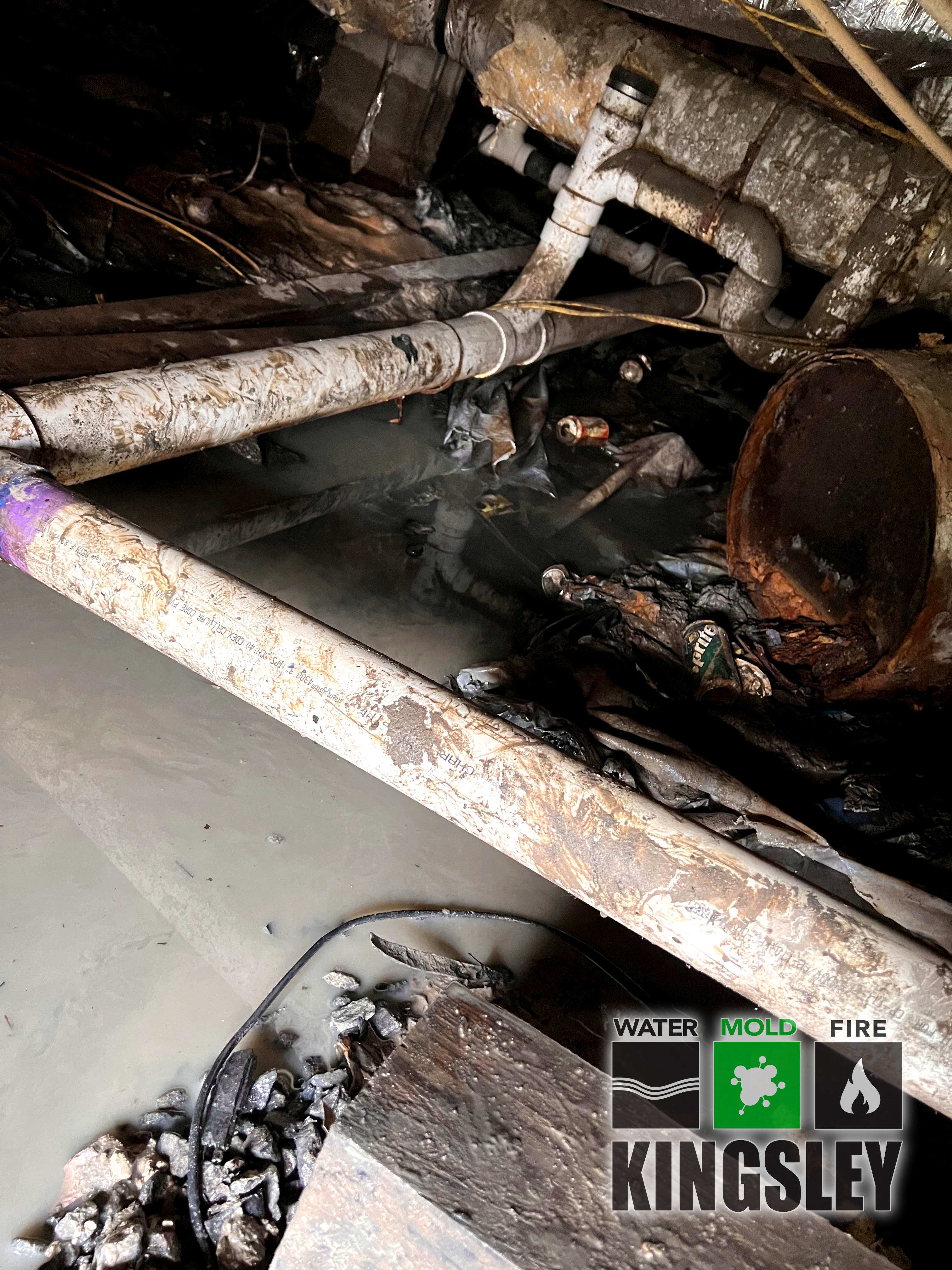
Camden, SC
September 5, 2026
In Camden, SC, Kingsley water damage & Fire cleanup performed bathroom cabinet water damage cleanup after documenting bathroom Cabinet Water Damage Cleanup during the initial condition check. That photo-backed condition check defined where finishes had to open, what could stay, and where drying equipment had to aim. The home needed source control, selective removal of non-salvageable wet or contaminated material, and verified drying of what remained in Camden. We labeled the wet edge on the sketch so later visits matched day-one photos.
During mitigation we controlled the work zone so debris and spores did not track into clean rooms. Where finishes blocked drying, we opened only the wet footprint shown by meters and the photo record. Non-salvageable saturated material was bagged and removed; salvageable framing and sheathing were cleaned and treated when microbial staining warranted it. HEPA vacuuming and careful handling limited dust from demo. The unique on-site detail that guided this Camden file was bathroom Cabinet Water Damage Cleanup. Contents near the work path were shifted or protected before tools came out.
IICRC water-damage and mold-remediation practice prioritizes stop the moisture source, remove what cannot be dried in place, clean and treat remaining structures with an EPA-registered antimicrobial when staining warranted it, then dry to target with measured air movement and dehumidification. We placed air movers and dehumidifiers to match the crawlspace bay, aimed airflow along the wet materials in the photo, and rechecked moisture on a 3–7 day drying calendar with overnight humidity checks—never past about a week. Quiet work windows were held where the household schedule required it, without stretching past that first-week ceiling. Skipping that short monitoring window is how a straightforward wet call becomes secondary damage or a musty return odor in Camden.
As readings stabilized within that first-week window, we demobilized equipment and left the work area ready for any needed rebuild of finishes or insulation. Photo documentation of the mitigation state stayed with the job file for the Camden property, including the same angle that showed bathroom Cabinet Water Damage Cleanup. Helpful takeaway: If you notice musty odors from floor registers or white spotting on crawl wood under a Camden home, have the moisture source and joists inspected before new insulation hides the path.
Homeowners comparing bathroom cabinet water damage cleanup options in the Camden area should expect a written moisture map, selective removal instead of full tear-out when meters allow, and a clear end point when materials hit dry goal—not an open-ended equipment rental. Kingsley water damage & Fire cleanup follows that measured approach so rebuild decisions rest on documented conditions rather than a calendar guess.
When rebuild starts, keep the dry-standard notes handy for flooring, cabinet, or insulation trades so no one closes a cavity that still reads wet. That handoff is part of finishing bathroom cabinet water damage cleanup correctly in Camden after mitigation. Throughout the job we kept communication practical: what was wet, what was removed, what was drying, and when meters said the assembly met goal—without inventing a multi-week timeline.
For this Camden stop, the close-out standard stayed simple: meters at goal, photo set filed, and no equipment left running past the 3–7 day band.
Conway, SC
September 5, 2026
Kingsley water damage & Fire cleanup handled moisture mapping, containment as needed, and verified drying over a 3–7 day window in Conway, SC.
Ridgeway, SC
September 5, 2026
Crawlspace Mold Inspection and Cleanup in Ridgeway.
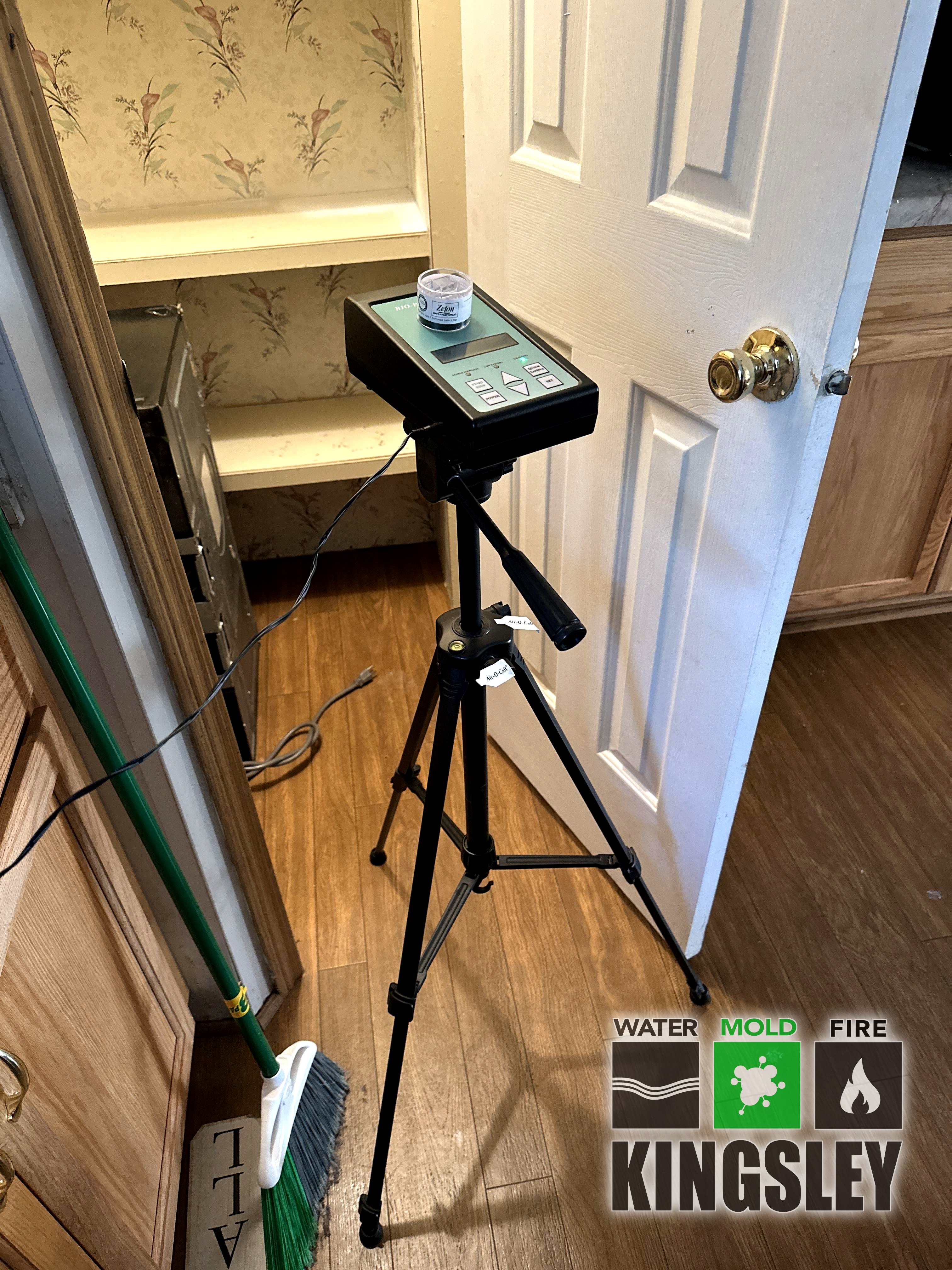
Irmo, SC
September 5, 2026
Kingsley water damage & Fire cleanup handled indoor air sampling and mold inspection in Irmo, SC after suspected indoor mold requiring formal air sampling. We began with a room-by-room and assembly-level inspection of the interior room near pantry / kitchen, documenting a black air-sampling pump on a tripod with a clear cassette on top, set on wood-look flooring beside an open pantry with floral wallpaper and a green broom. That visual and instrument check — not a guess from the hallway — defined where finishes had to open, what could stay, and where drying equipment had to aim. the home needed source control, selective removal of non-salvageable wet or contaminated material, and verified drying of what remained.
During mitigation we controlled the work zone so debris and moisture did not track into clean rooms. Where finishes blocked drying, we opened only the wet footprint shown by meters and the photo record. Contaminated or saturated materials were bagged and removed; salvageable framing and sheathing were cleaned and treated with an EPA-registered antimicrobial when staining or microbial growth warranted it. HEPA vacuuming and careful handling limited dust from demo. The unique on-site detail that guided this file was a black air-sampling pump on a tripod with a clear cassette on top, set on wood-look flooring beside an open pantry with floral wallpaper and a green broom — that condition stayed in the documentation so the homeowner and any follow-on trade could see exactly what drove the scope in Irmo.
IICRC water-damage and mold-remediation practice prioritizes stop-the-source, remove what cannot be dried in place, clean and treat remaining structures, then dry to target with measured air movement and dehumidification. We placed air movers and/or dehumidifiers to match the wet assembly, ran equipment under monitoring, and rechecked moisture within the first week of mitigation rather than leaving gear unattended for an open-ended stretch. Skipping that short monitoring window is how a straightforward wet call becomes secondary damage in adjoining cavities.
As readings stabilized and the work area met a clean, dry condition, we demobilized equipment and left the interior room near pantry / kitchen ready for any needed rebuild of finishes. Photo documentation of the mitigation state stayed with the claim file. If you notice musty odors, spotting on wood, or staining at cabinets, vents, or window sills in Irmo, have the moisture source and affected materials inspected before finishes hide the growth path.
IICRC water-damage and mold-remediation practice prioritizes stop the moisture source, remove what cannot be dried in place, clean and treat remaining structures, then dry to target with measured air movement and dehumidification. On this Irmo file we ran air movers and dehumidifiers against the wet assembly under monitoring and rechecked moisture on a 3–7 day drying calendar—never past about a week. Skipping that short window is how secondary damage or musty odor returns after finishes go back up.
As readings stabilized within that first-week window, equipment came out and the work area was left ready for any needed rebuild. Photo documentation of the mitigation state stayed with the job file. Helpful takeaway: If you notice musty odors, spotting on wood, or staining at cabinets, vents, or window sills in Irmo, have the moisture source and affected materials inspected before finishes hide the growth path.
Homeowners comparing indoor air sampling and mold inspection options in the Irmo area should expect a written moisture map, selective removal instead of full tear-out when meters allow, and a clear end point when materials hit dry goal—not an open-ended equipment rental. Kingsley water damage & Fire cleanup follows that measured approach so rebuild decisions rest on documented conditions rather than a calendar guess.
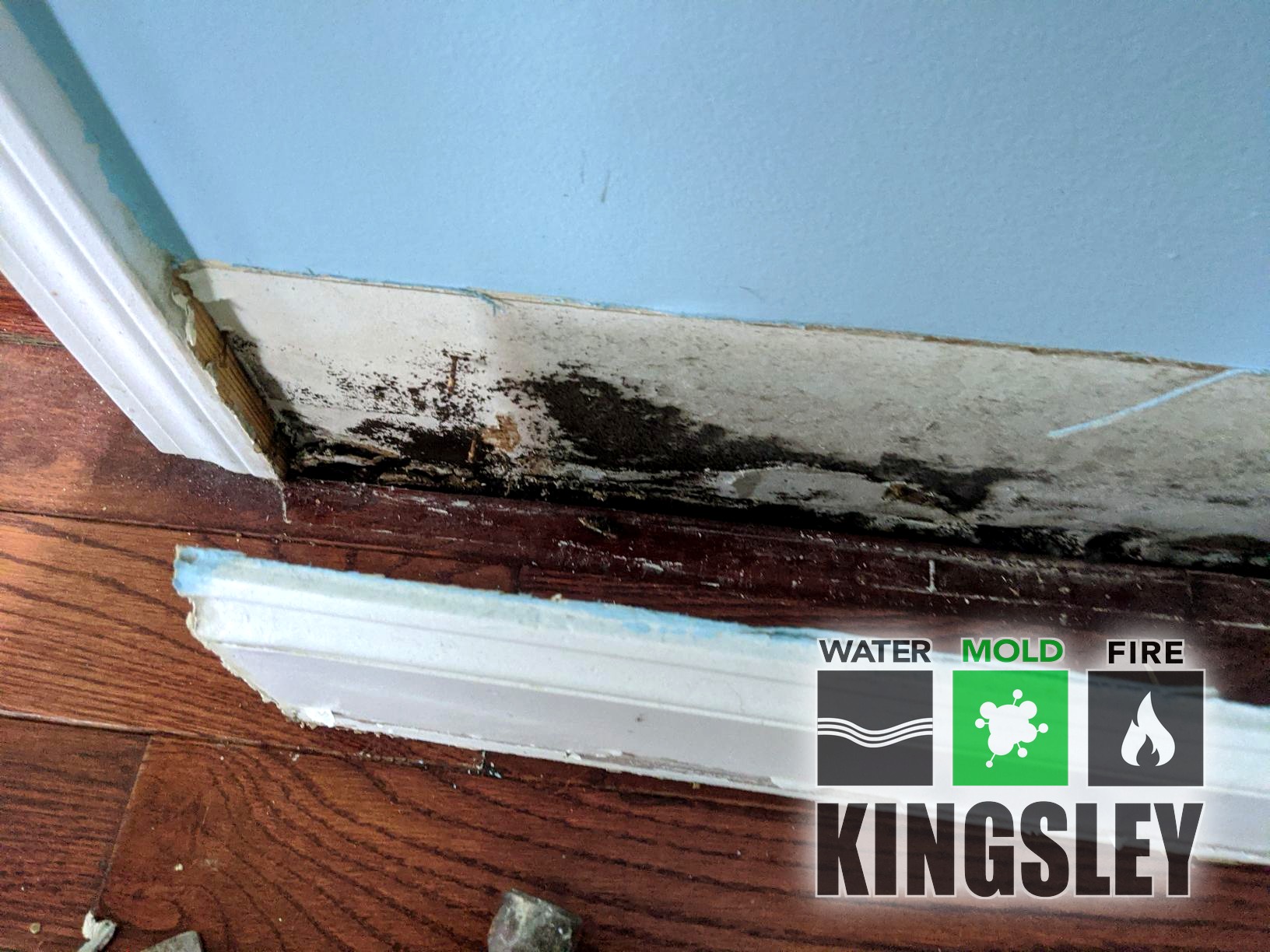
Goose Creek, SC
September 5, 2026
In Goose Creek, SC, Kingsley water damage & Fire cleanup performed residential water damage cleanup and drying after documenting residential water damage cleanup documentation during the initial condition check. That photo-backed condition check defined where finishes had to open, what could stay, and where drying equipment had to aim. The home needed source control, selective removal of non-salvageable wet or contaminated material, and verified drying of what remained in Goose Creek. Contents near the work path were shifted or protected before tools came out in this Goose Creek home.
During mitigation we controlled the work zone so debris did not track into clean rooms. Where finishes blocked drying, we opened only the wet footprint shown by meters and the photo record. Non-salvageable saturated material was bagged and removed; salvageable framing and sheathing were cleaned. HEPA vacuuming and careful handling limited dust from demo. The unique on-site detail that guided this Goose Creek file was residential water damage cleanup documentation. Contents near the work path were shifted or protected before tools came out in this Goose Creek home.
IICRC water-damage practice prioritizes stop the moisture source, remove what cannot be dried in place, clean remaining structures, then dry to target with measured air movement and dehumidification. We placed air movers and dehumidifiers to match the wet assembly, aimed airflow along the wet materials in the photo, and rechecked moisture on a 3–7 day drying calendar with overnight humidity checks—never past about a week. Skipping that short monitoring window is how a straightforward wet call becomes secondary damage or a musty return odor in Goose Creek.
As readings stabilized within that first-week window, we demobilized equipment and left the work area ready for any needed rebuild of finishes or insulation. Photo documentation of the mitigation state stayed with the job file for the Goose Creek property, including the same angle that showed residential water damage cleanup documentation. Helpful takeaway: If flooring feels soft, edges cup, or a stain keeps spreading in Goose Creek, stop walking the wet zone and request moisture mapping before new finishes go down.
Homeowners comparing residential water damage cleanup and drying options in the Goose Creek area should expect a written moisture map, selective removal instead of full tear-out when meters allow, and a clear end point when materials hit dry goal—not an open-ended equipment rental. Kingsley water damage & Fire cleanup follows that measured approach so rebuild decisions rest on documented conditions rather than a calendar guess.
When rebuild starts, keep the dry-standard notes handy for flooring, cabinet, or insulation trades so no one closes a cavity that still reads wet. That handoff is part of finishing residential water damage cleanup and drying correctly in Goose Creek after mitigation—not a separate sales pitch.
Throughout the Goose Creek job we kept communication practical: what was wet, what was removed, what was drying, and when meters said the assembly met goal. That plain record is what homeowners and trades use after residential water damage cleanup and drying—not jargon and not an invented multi-week timeline.
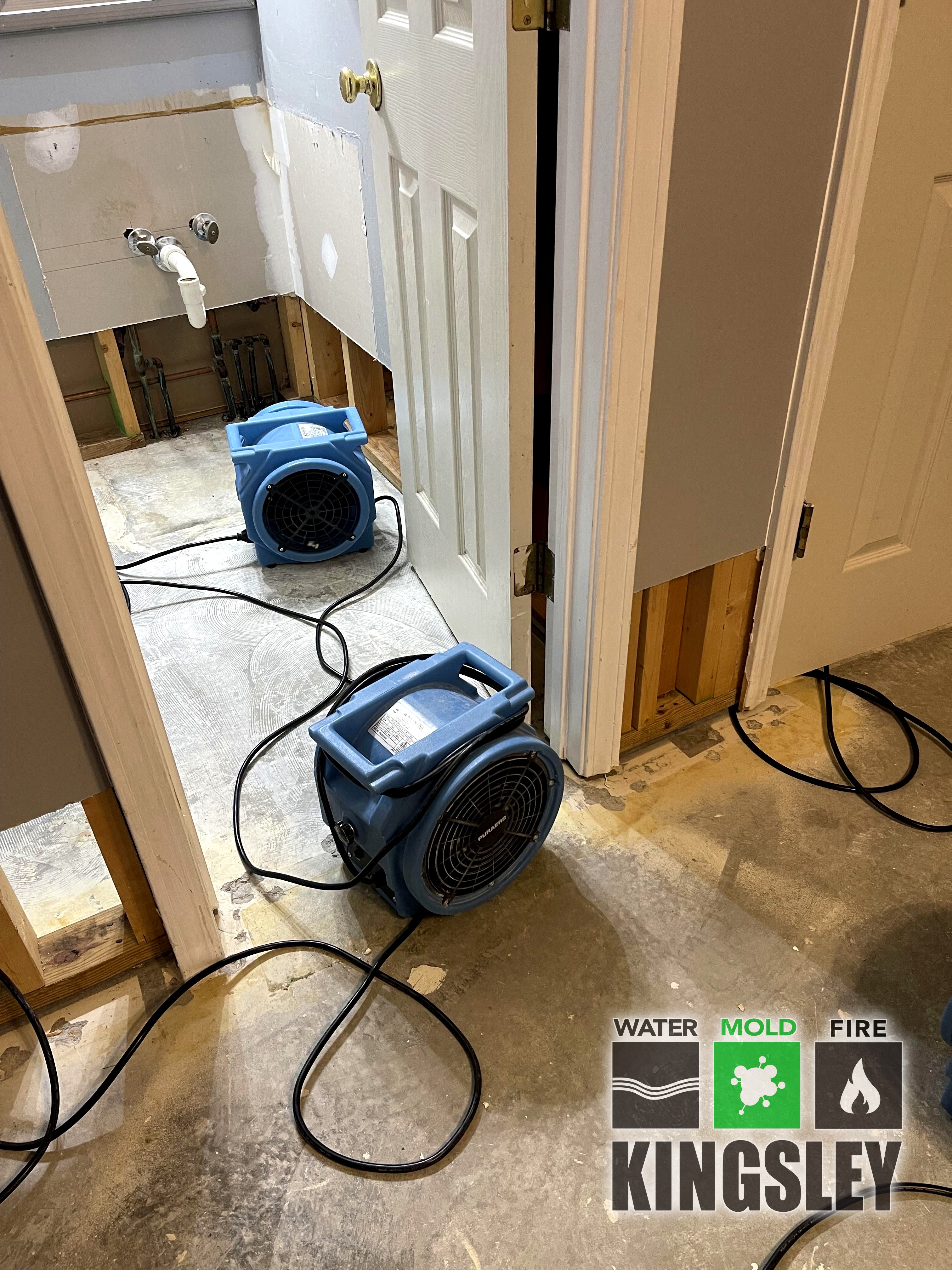
Forest Acres, SC
September 5, 2026
Kingsley water damage & Fire cleanup responded for tile floor moisture mapping and water cleanup in Forest Acres, SC and began with a photo-backed survey that captured tile Floor Moisture Mapping and Water Cleanup. That photo-backed condition check defined where finishes had to open, what could stay, and where drying equipment had to aim. The home needed source control, selective removal of non-salvageable wet or contaminated material, and verified drying of what remained in Forest Acres. Quiet work windows were held where the household schedule required it, without stretching the drying calendar past about a week.
During mitigation we controlled the work zone so debris did not track into clean rooms. Where finishes blocked drying, we opened only the wet footprint shown by meters and the photo record. Non-salvageable saturated material was bagged and removed; salvageable framing and sheathing were cleaned. HEPA vacuuming and careful handling limited dust from demo. The unique on-site detail that guided this Forest Acres file was tile Floor Moisture Mapping and Water Cleanup. Contents near the work path were shifted or protected before tools came out in this Forest Acres home.
IICRC water-damage practice prioritizes stop the moisture source, remove what cannot be dried in place, clean remaining structures, then dry to target with measured air movement and dehumidification. We placed air movers and dehumidifiers to match the wet assembly, aimed airflow along the wet materials in the photo, and rechecked moisture on a 3–7 day drying calendar with overnight humidity checks—never past about a week. Skipping that short monitoring window is how a straightforward wet call becomes secondary damage or a musty return odor in Forest Acres.
As readings stabilized within that first-week window, we demobilized equipment and left the work area ready for any needed rebuild of finishes or insulation. Photo documentation of the mitigation state stayed with the job file for the Forest Acres property, including the same angle that showed tile Floor Moisture Mapping and Water Cleanup. Helpful takeaway: If flooring feels soft, edges cup, or a stain keeps spreading in Forest Acres, stop walking the wet zone and request moisture mapping before new finishes go down.
Homeowners comparing tile floor moisture mapping and water cleanup options in the Forest Acres area should expect a written moisture map, selective removal instead of full tear-out when meters allow, and a clear end point when materials hit dry goal—not an open-ended equipment rental. Kingsley water damage & Fire cleanup follows that measured approach so rebuild decisions rest on documented conditions rather than a calendar guess.
When rebuild starts, keep the dry-standard notes handy for flooring, cabinet, or insulation trades so no one closes a cavity that still reads wet. That handoff is part of finishing tile floor moisture mapping and water cleanup correctly in Forest Acres after mitigation—not a separate sales pitch.
Throughout the Forest Acres job we kept communication practical: what was wet, what was removed, what was drying, and when meters said the assembly met goal. That plain record is what homeowners and trades use after tile floor moisture mapping and water cleanup—not jargon and not an invented multi-week timeline.
Goose Creek, SC
September 4, 2026
Camera angle on ceiling stain water intrusion cleanup (Hanahan). Saturated pieces at the pictured spot were bagged out. Scope stayed tight. Meter calendar: three-to-seven days. Never past about a week.
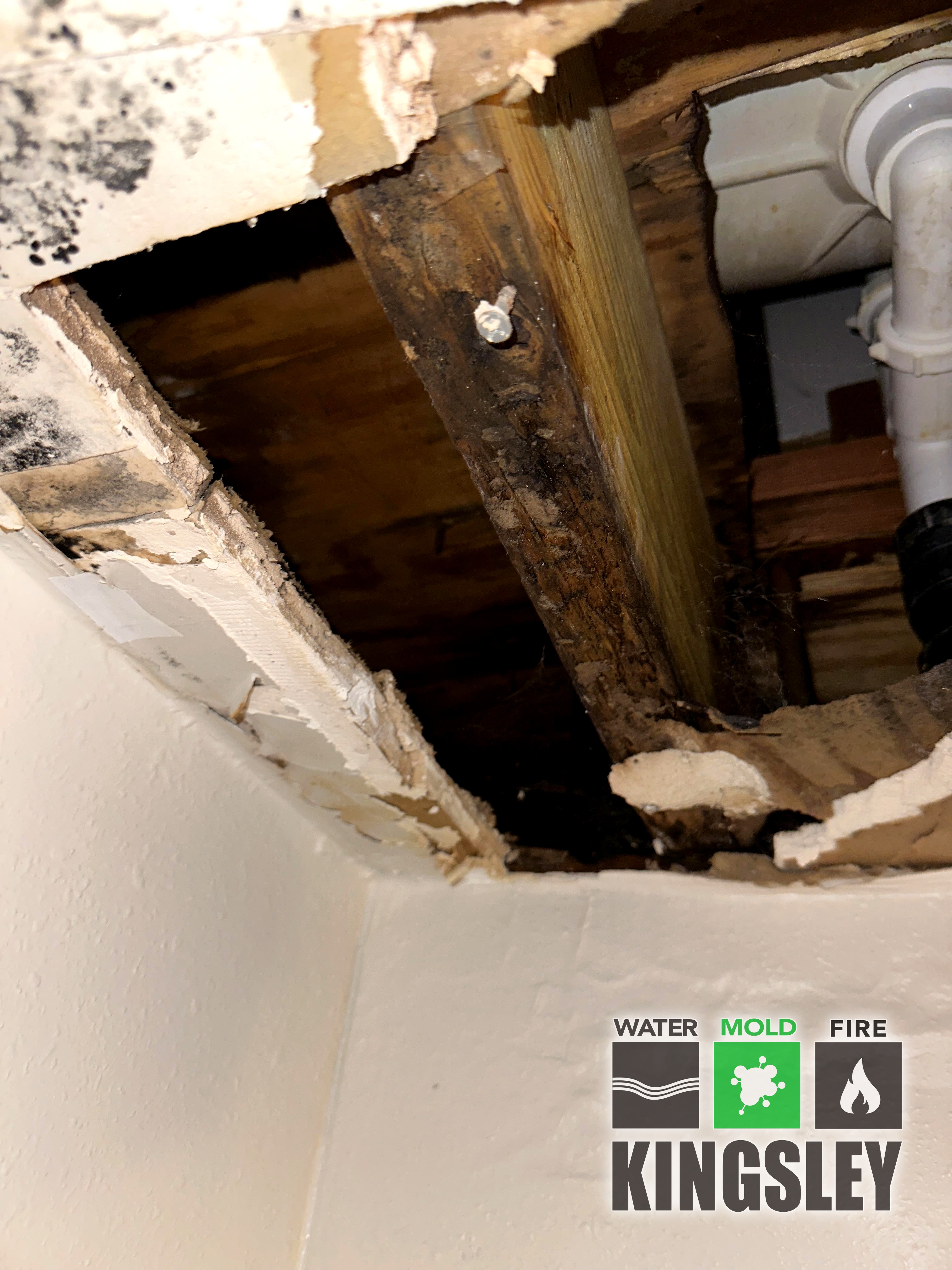
Hanahan, SC
September 4, 2026
In Hanahan, SC, Kingsley water damage & Fire cleanup performed ceiling stain water intrusion cleanup after documenting ceiling Stain Water Intrusion Cleanup during the initial condition check. That photo-backed condition check defined where finishes had to open, what could stay, and where drying equipment had to aim. The home needed source control, selective removal of non-salvageable wet or contaminated material, and verified drying of what remained in Hanahan. Contents near the work path were shifted or protected before tools came out in this Hanahan home.
During mitigation we controlled the work zone so debris and spores did not track into clean rooms. Where finishes blocked drying, we opened only the wet footprint shown by meters and the photo record. Non-salvageable saturated material was bagged and removed; salvageable framing and sheathing were cleaned and treated when microbial staining warranted it. HEPA vacuuming and careful handling limited dust from demo. The unique on-site detail that guided this Hanahan file was ceiling Stain Water Intrusion Cleanup. We avoided opening dry cavities that meters and the camera did not support on this Hanahan stop.
IICRC water-damage and mold-remediation practice prioritizes stop the moisture source, remove what cannot be dried in place, clean and treat remaining structures with an EPA-registered antimicrobial when staining warranted it, then dry to target with measured air movement and dehumidification. We placed air movers and dehumidifiers to match the wet assembly, aimed airflow along the wet materials in the photo, and rechecked moisture on a 3–7 day drying calendar with overnight humidity checks—never past about a week. Skipping that short monitoring window is how a straightforward wet call becomes secondary damage or a musty return odor in Hanahan.
As readings stabilized within that first-week window, we demobilized equipment and left the work area ready for any needed rebuild of finishes or insulation. Photo documentation of the mitigation state stayed with the job file for the Hanahan property, including the same angle that showed ceiling Stain Water Intrusion Cleanup. Helpful takeaway: Musty odor that returns after a quick wipe in Hanahan usually means moisture is still feeding the stain—map it before painting over it.
Homeowners comparing ceiling stain water intrusion cleanup options in the Hanahan area should expect a written moisture map, selective removal instead of full tear-out when meters allow, and a clear end point when materials hit dry goal—not an open-ended equipment rental. Kingsley water damage & Fire cleanup follows that measured approach so rebuild decisions rest on documented conditions rather than a calendar guess.
When rebuild starts, keep the dry-standard notes handy for flooring, cabinet, or insulation trades so no one closes a cavity that still reads wet. That handoff is part of finishing ceiling stain water intrusion cleanup correctly in Hanahan after mitigation—not a separate sales pitch.
Throughout the Hanahan job we kept communication practical: what was wet, what was removed, what was drying, and when meters said the assembly met goal. That plain record is what homeowners and trades use after ceiling stain water intrusion cleanup—not jargon and not an invented multi-week timeline.
Conway, SC
September 4, 2026
Kingsley water damage & Fire cleanup handled moisture mapping, containment as needed, and verified drying over a 3–7 day window in Conway, SC.
Ridgeway, SC
September 4, 2026
Kitchen Floor Water Damage Cleanup in Ridgeway.
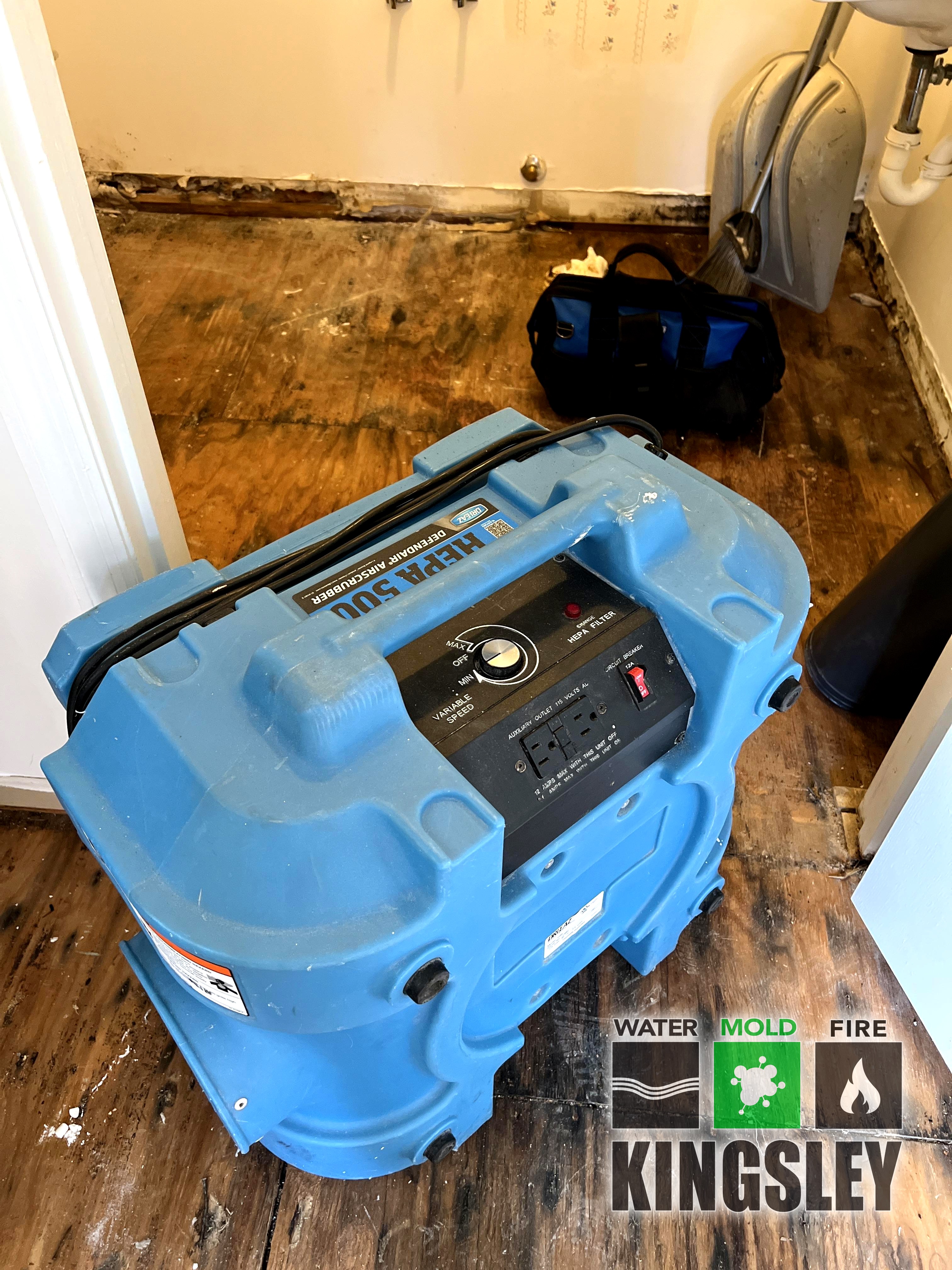
Irmo, SC
September 4, 2026
Kingsley water damage & Fire cleanup handled structural drying with industrial air mover in Irmo, SC after wet structure needing directed airflow for drying. We began with a room-by-room and assembly-level inspection of the unfinished interior floor after mitigation demo, documenting a blue industrial air mover positioned on unfinished flooring to drive evaporation across the wet assembly. That visual and instrument check — not a guess from the hallway — defined where finishes had to open, what could stay, and where drying equipment had to aim. the home needed source control, selective removal of non-salvageable wet or contaminated material, and verified drying of what remained.
During mitigation we controlled the work zone so debris and moisture did not track into clean rooms. Where finishes blocked drying, we opened only the wet footprint shown by meters and the photo record. Contaminated or saturated materials were bagged and removed; salvageable framing and sheathing were cleaned and treated with an EPA-registered antimicrobial when staining or microbial growth warranted it. HEPA vacuuming and careful handling limited dust from demo. The unique on-site detail that guided this file was a blue industrial air mover positioned on unfinished flooring to drive evaporation across the wet assembly — that condition stayed in the documentation so the homeowner and any follow-on trade could see exactly what drove the scope in Irmo.
IICRC water-damage and mold-remediation practice prioritizes stop-the-source, remove what cannot be dried in place, clean and treat remaining structures, then dry to target with measured air movement and dehumidification. We placed air movers and/or dehumidifiers to match the wet assembly, ran equipment under monitoring, and rechecked moisture within the first week of mitigation rather than leaving gear unattended for an open-ended stretch. Skipping that short monitoring window is how a straightforward wet call becomes secondary damage in adjoining cavities.
As readings stabilized and the work area met a clean, dry condition, we demobilized equipment and left the unfinished interior floor after mitigation demo ready for any needed rebuild of finishes. Photo documentation of the mitigation state stayed with the claim file. If you see standing water, elevated meter readings, or soft/stained flooring in Irmo, stop the source and start professional extraction and drying within the first days — delayed drying is what turns a contained wet zone into a larger structural call.
IICRC water-damage and mold-remediation practice prioritizes stop the moisture source, remove what cannot be dried in place, clean and treat remaining structures, then dry to target with measured air movement and dehumidification. On this Irmo file we ran air movers and dehumidifiers against the wet assembly under monitoring and rechecked moisture on a 3–7 day drying calendar—never past about a week. Skipping that short window is how secondary damage or musty odor returns after finishes go back up.
As readings stabilized within that first-week window, equipment came out and the work area was left ready for any needed rebuild. Photo documentation of the mitigation state stayed with the job file. Helpful takeaway: If you see standing water, elevated meter readings, or soft/stained flooring in Irmo, stop the source and start professional extraction and drying within the first days — delayed drying is what turns a contained wet zone into a larger structural call.
Homeowners comparing structural drying with industrial air mover options in the Irmo area should expect a written moisture map, selective removal instead of full tear-out when meters allow, and a clear end point when materials hit dry goal—not an open-ended equipment rental. Kingsley water damage & Fire cleanup follows that measured approach so rebuild decisions rest on documented conditions rather than a calendar guess.
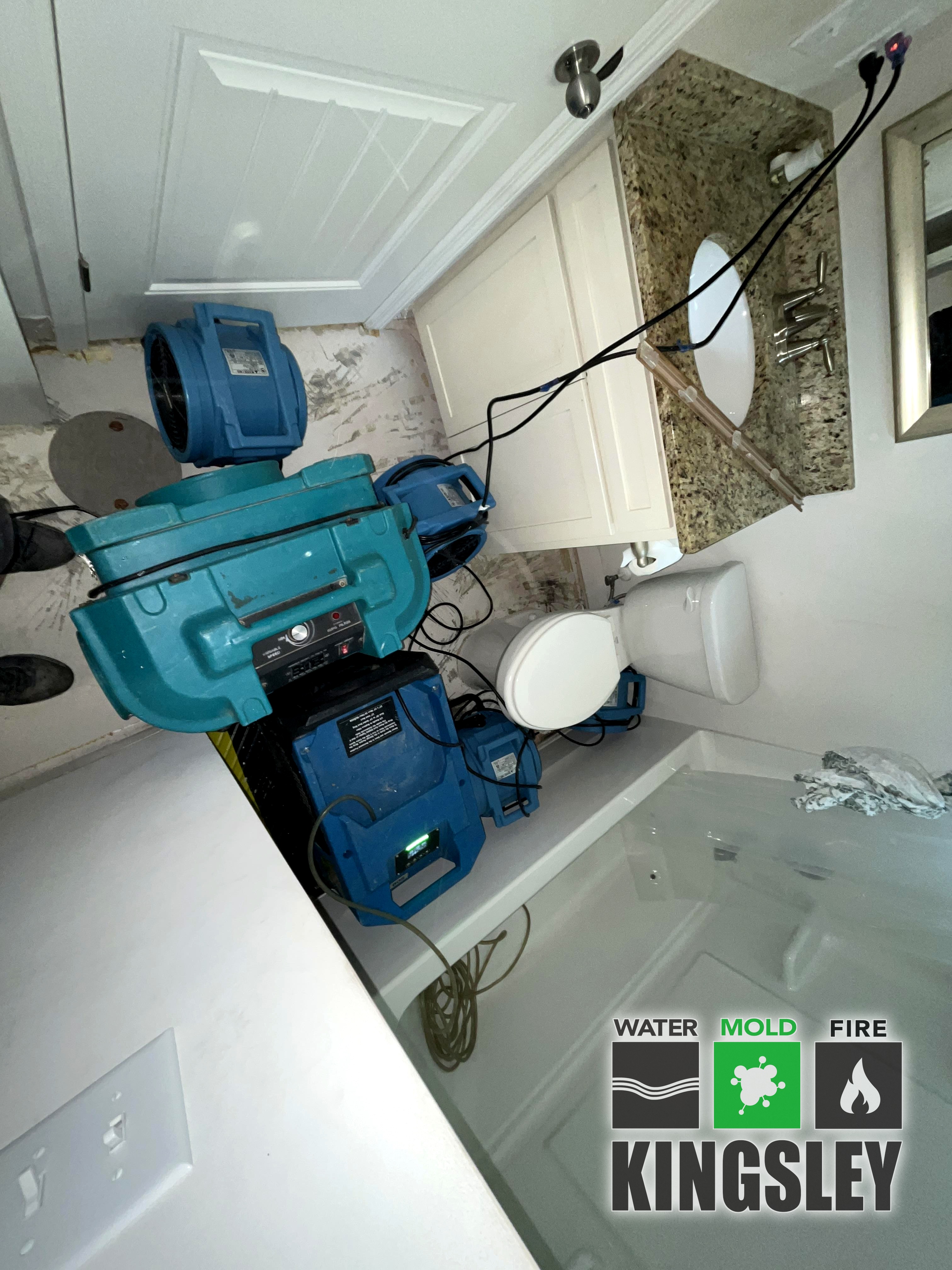
Summerville, SC
September 4, 2026
In Summerville, SC, Kingsley water damage & Fire cleanup performed hardwood structural drying with air movers after documenting blue air movers on flooring during structural drying during the initial condition check. That photo-backed condition check defined where finishes had to open, what could stay, and where drying equipment had to aim. The home needed source control, selective removal of non-salvageable wet or contaminated material, and verified drying of what remained in Summerville. We labeled the wet edge on the sketch so later visits matched day-one photos.
During mitigation we controlled the work zone so debris did not track into clean rooms. Where finishes blocked drying, we opened only the wet footprint shown by meters and the photo record. Non-salvageable saturated material was bagged and removed; salvageable framing and sheathing were cleaned. HEPA vacuuming and careful handling limited dust from demo. The unique on-site detail that guided this Summerville file was blue air movers on flooring during structural drying. Contents near the work path were shifted or protected before tools came out.
IICRC water-damage practice prioritizes stop the moisture source, remove what cannot be dried in place, clean remaining structures, then dry to target with measured air movement and dehumidification. We placed air movers and dehumidifiers to match the wet assembly, aimed airflow along the wet materials in the photo, and rechecked moisture on a 3–7 day drying calendar with overnight humidity checks—never past about a week. Quiet work windows were held where the household schedule required it, without stretching past that first-week ceiling. Skipping that short monitoring window is how a straightforward wet call becomes secondary damage or a musty return odor in Summerville.
As readings stabilized within that first-week window, we demobilized equipment and left the work area ready for any needed rebuild of finishes or insulation. Photo documentation of the mitigation state stayed with the job file for the Summerville property, including the same angle that showed blue air movers on flooring during structural drying. Helpful takeaway: If flooring feels soft, edges cup, or a stain keeps spreading in Summerville, stop walking the wet zone and request moisture mapping before new finishes go down.
Homeowners comparing hardwood structural drying with air movers options in the Summerville area should expect a written moisture map, selective removal instead of full tear-out when meters allow, and a clear end point when materials hit dry goal—not an open-ended equipment rental. Kingsley water damage & Fire cleanup follows that measured approach so rebuild decisions rest on documented conditions rather than a calendar guess.
When rebuild starts, keep the dry-standard notes handy for flooring, cabinet, or insulation trades so no one closes a cavity that still reads wet. That handoff is part of finishing hardwood structural drying with air movers correctly in Summerville after mitigation. Throughout the job we kept communication practical: what was wet, what was removed, what was drying, and when meters said the assembly met goal—without inventing a multi-week timeline.
For this Summerville stop, the close-out standard stayed simple: meters at goal, photo set filed, and no equipment left running past the 3–7 day band.
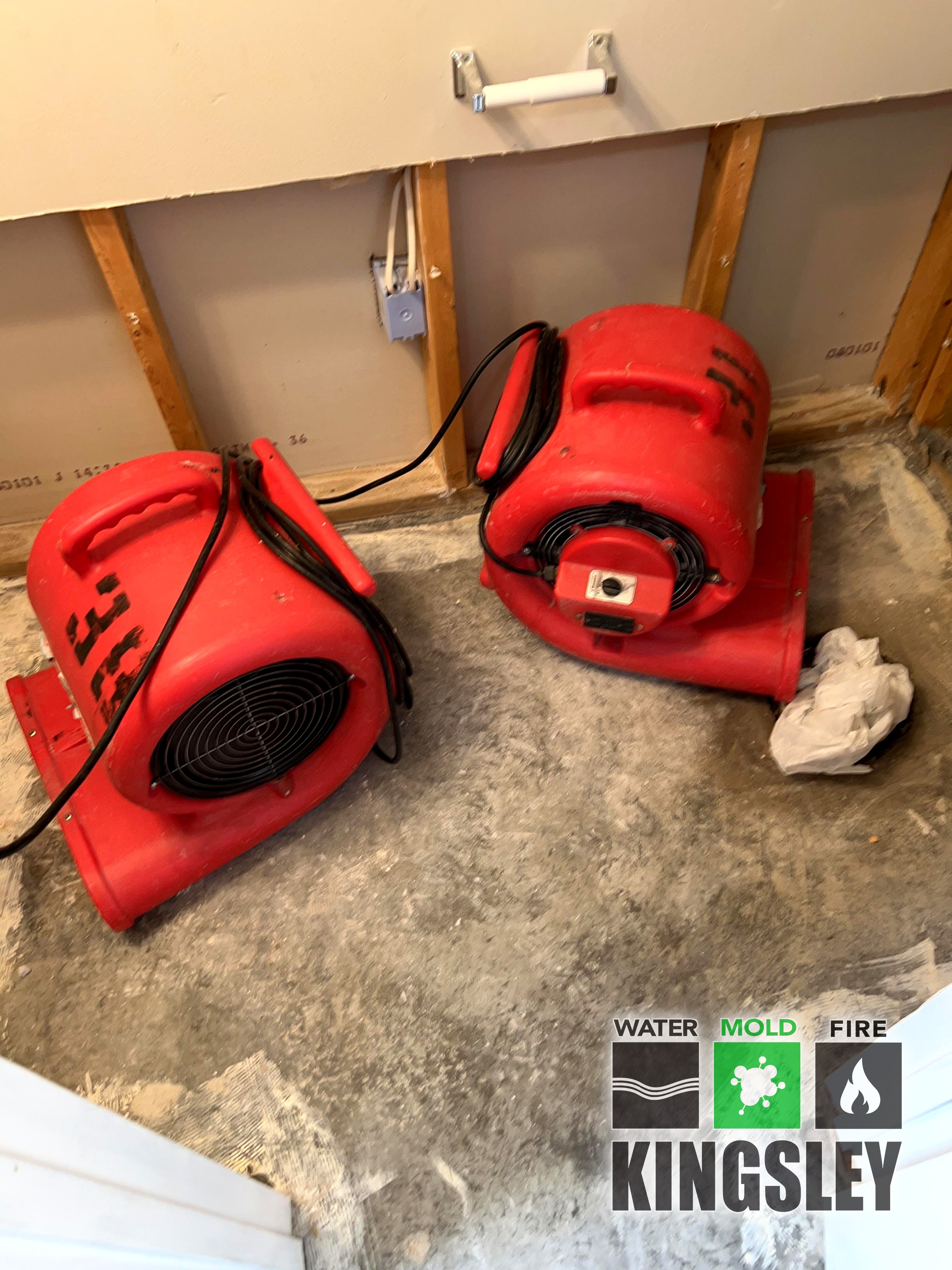
Atlantic Beach, SC
September 4, 2026
Kingsley water damage & Fire cleanup handled crawlspace joist mold inspection and cleanup for a Atlantic Beach, SC property. The camera and meters guided scope from the start: crawlspace Joist Mold Inspection and Cleanup. That photo-backed condition check defined where finishes had to open, what could stay, and where drying equipment had to aim. The home needed source control, selective removal of non-salvageable wet or contaminated material, and verified drying of what remained in Atlantic Beach. We labeled the wet edge on the sketch so later visits matched day-one photos in Atlantic Beach.
During mitigation we controlled the work zone so debris and spores did not track into clean rooms. Where finishes blocked drying, we opened only the wet footprint shown by meters and the photo record. Non-salvageable saturated material was bagged and removed; salvageable framing and sheathing were cleaned and treated when microbial staining warranted it. HEPA vacuuming and careful handling limited dust from demo. The unique on-site detail that guided this Atlantic Beach file was crawlspace Joist Mold Inspection and Cleanup. The adjuster-ready photo set stayed with the file so rebuild trades could see the same framed assembly the crew saw.
IICRC water-damage and mold-remediation practice prioritizes stop the moisture source, remove what cannot be dried in place, clean and treat remaining structures with an EPA-registered antimicrobial when staining warranted it, then dry to target with measured air movement and dehumidification. We placed air movers and dehumidifiers to match the crawlspace bay, aimed airflow along the wet materials in the photo, and rechecked moisture on a 3–7 day drying calendar with overnight humidity checks—never past about a week. Skipping that short monitoring window is how a straightforward wet call becomes secondary damage or a musty return odor in Atlantic Beach.
As readings stabilized within that first-week window, we demobilized equipment and left the work area ready for any needed rebuild of finishes or insulation. Photo documentation of the mitigation state stayed with the job file for the Atlantic Beach property, including the same angle that showed crawlspace Joist Mold Inspection and Cleanup. Helpful takeaway: Dark staining on crawl joists in Atlantic Beach is a reason to map moisture before buttoning the bay back up with fresh vapor barrier.
Homeowners comparing crawlspace joist mold inspection and cleanup options in the Atlantic Beach area should expect a written moisture map, selective removal instead of full tear-out when meters allow, and a clear end point when materials hit dry goal—not an open-ended equipment rental. Kingsley water damage & Fire cleanup follows that measured approach so rebuild decisions rest on documented conditions rather than a calendar guess.
When rebuild starts, keep the dry-standard notes handy for flooring, cabinet, or insulation trades so no one closes a cavity that still reads wet. That handoff is part of finishing crawlspace joist mold inspection and cleanup correctly in Atlantic Beach after mitigation—not a separate sales pitch.
Throughout the Atlantic Beach job we kept communication practical: what was wet, what was removed, what was drying, and when meters said the assembly met goal. That plain record is what homeowners and trades use after crawlspace joist mold inspection and cleanup—not jargon and not an invented multi-week timeline.
Oak Grove, SC
September 3, 2026
Hanahan stop: laundry room supply line water cleanup. Only the wet finish in the shot was lifted; deck dried to target. Quiet hours held. About a week max—specifically 3–7 days. Never past about a week.
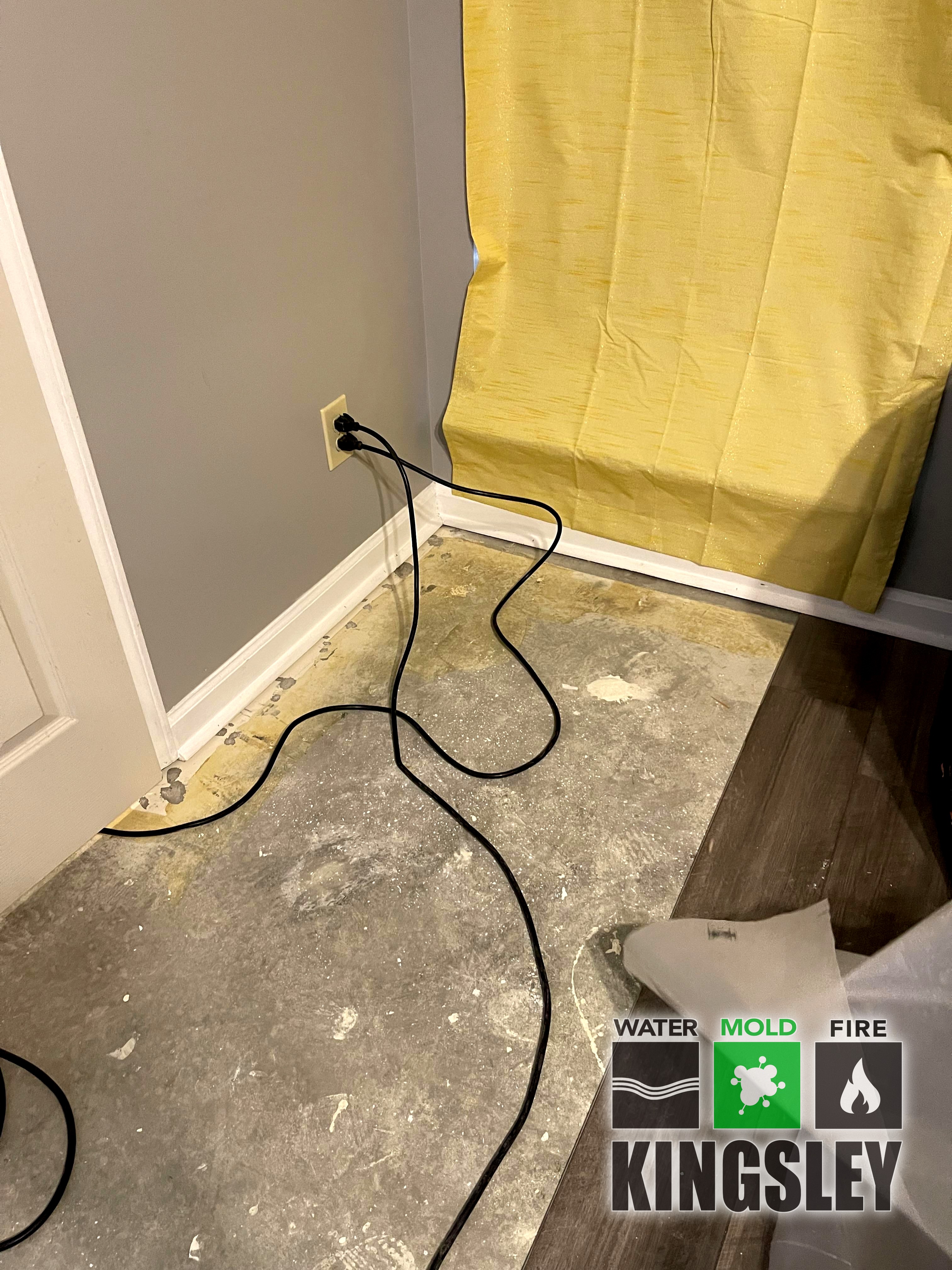
Oak Grove, SC
September 3, 2026
In Oak Grove, SC, Kingsley water damage & Fire cleanup performed laundry room supply line water cleanup after documenting laundry Room Supply Line Water Cleanup during the initial condition check. That photo-backed condition check defined where finishes had to open, what could stay, and where drying equipment had to aim. The home needed source control, selective removal of non-salvageable wet or contaminated material, and verified drying of what remained in Oak Grove. We labeled the wet edge on the sketch so later visits matched day-one photos in Oak Grove.
During mitigation we controlled the work zone so debris did not track into clean rooms. Where finishes blocked drying, we opened only the wet footprint shown by meters and the photo record. Non-salvageable saturated material was bagged and removed; salvageable framing and sheathing were cleaned. HEPA vacuuming and careful handling limited dust from demo. The unique on-site detail that guided this Oak Grove file was laundry Room Supply Line Water Cleanup. Contents near the work path were shifted or protected before tools came out in this Oak Grove home.
IICRC water-damage practice prioritizes stop the moisture source, remove what cannot be dried in place, clean remaining structures, then dry to target with measured air movement and dehumidification. We placed air movers and dehumidifiers to match the wet assembly, aimed airflow along the wet materials in the photo, and rechecked moisture on a 3–7 day drying calendar with overnight humidity checks—never past about a week. Skipping that short monitoring window is how a straightforward wet call becomes secondary damage or a musty return odor in Oak Grove.
As readings stabilized within that first-week window, we demobilized equipment and left the work area ready for any needed rebuild of finishes or insulation. Photo documentation of the mitigation state stayed with the job file for the Oak Grove property, including the same angle that showed laundry Room Supply Line Water Cleanup. Helpful takeaway: If flooring feels soft, edges cup, or a stain keeps spreading in Oak Grove, stop walking the wet zone and request moisture mapping before new finishes go down.
Homeowners comparing laundry room supply line water cleanup options in the Oak Grove area should expect a written moisture map, selective removal instead of full tear-out when meters allow, and a clear end point when materials hit dry goal—not an open-ended equipment rental. Kingsley water damage & Fire cleanup follows that measured approach so rebuild decisions rest on documented conditions rather than a calendar guess.
When rebuild starts, keep the dry-standard notes handy for flooring, cabinet, or insulation trades so no one closes a cavity that still reads wet. That handoff is part of finishing laundry room supply line water cleanup correctly in Oak Grove after mitigation—not a separate sales pitch.
Throughout the Oak Grove job we kept communication practical: what was wet, what was removed, what was drying, and when meters said the assembly met goal. That plain record is what homeowners and trades use after laundry room supply line water cleanup—not jargon and not an invented multi-week timeline.
Conway, SC
September 3, 2026
Kingsley water damage & Fire cleanup handled moisture mapping, containment as needed, and verified drying over a 3–7 day window in Conway, SC.
Ridgeway, SC
September 3, 2026
Attic Mold Inspection and Remediation Support in Ridgeway.
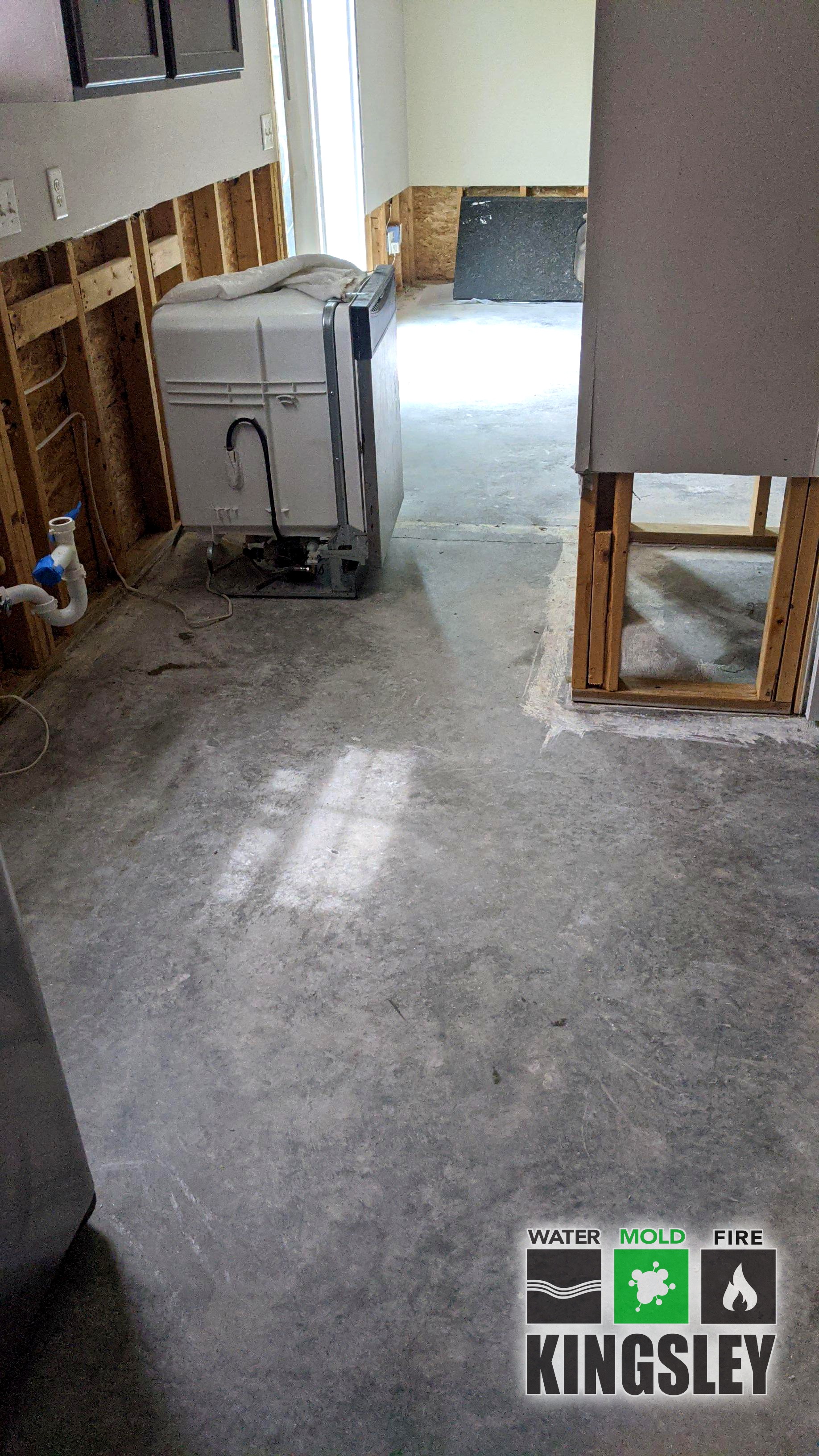
Irmo, SC
September 3, 2026
Kingsley water damage & Fire cleanup handled dishwasher leak demo and kitchen water cleanup in Irmo, SC after dishwasher / kitchen appliance leak wetting cabinets, walls, and floor. We began with a room-by-room and assembly-level inspection of the kitchen after dishwasher-area water loss, documenting a white/black dishwasher pulled out showing its rear drain hose, flood-cut lower drywall exposing studs, bare concrete, and a white PVC P-trap with blue shut-off. That visual and instrument check — not a guess from the hallway — defined where finishes had to open, what could stay, and where drying equipment had to aim. the home needed source control, selective removal of non-salvageable wet or contaminated material, and verified drying of what remained.
During mitigation we controlled the work zone so debris and moisture did not track into clean rooms. Where finishes blocked drying, we opened only the wet footprint shown by meters and the photo record. Contaminated or saturated materials were bagged and removed; salvageable framing and sheathing were cleaned and treated with an EPA-registered antimicrobial when staining or microbial growth warranted it. HEPA vacuuming and careful handling limited dust from demo. The unique on-site detail that guided this file was a white/black dishwasher pulled out showing its rear drain hose, flood-cut lower drywall exposing studs, bare concrete, and a white PVC P-trap with blue shut-off — that condition stayed in the documentation so the homeowner and any follow-on trade could see exactly what drove the scope in Irmo.
IICRC water-damage and mold-remediation practice prioritizes stop-the-source, remove what cannot be dried in place, clean and treat remaining structures, then dry to target with measured air movement and dehumidification. We placed air movers and/or dehumidifiers to match the wet assembly, ran equipment under monitoring, and rechecked moisture within the first week of mitigation rather than leaving gear unattended for an open-ended stretch. Skipping that short monitoring window is how a straightforward wet call becomes secondary damage in adjoining cavities.
As readings stabilized and the work area met a clean, dry condition, we demobilized equipment and left the kitchen after dishwasher-area water loss ready for any needed rebuild of finishes. Photo documentation of the mitigation state stayed with the claim file. If you see standing water, elevated meter readings, or soft/stained flooring in Irmo, stop the source and start professional extraction and drying within the first days — delayed drying is what turns a contained wet zone into a larger structural call.
IICRC water-damage and mold-remediation practice prioritizes stop the moisture source, remove what cannot be dried in place, clean and treat remaining structures, then dry to target with measured air movement and dehumidification. On this Irmo file we ran air movers and dehumidifiers against the wet assembly under monitoring and rechecked moisture on a 3–7 day drying calendar—never past about a week. Skipping that short window is how secondary damage or musty odor returns after finishes go back up.
As readings stabilized within that first-week window, equipment came out and the work area was left ready for any needed rebuild. Photo documentation of the mitigation state stayed with the job file. Helpful takeaway: If you see standing water, elevated meter readings, or soft/stained flooring in Irmo, stop the source and start professional extraction and drying within the first days — delayed drying is what turns a contained wet zone into a larger structural call.
Homeowners comparing dishwasher leak demo and kitchen water cleanup options in the Irmo area should expect a written moisture map, selective removal instead of full tear-out when meters allow, and a clear end point when materials hit dry goal—not an open-ended equipment rental. Kingsley water damage & Fire cleanup follows that measured approach so rebuild decisions rest on documented conditions rather than a calendar guess.
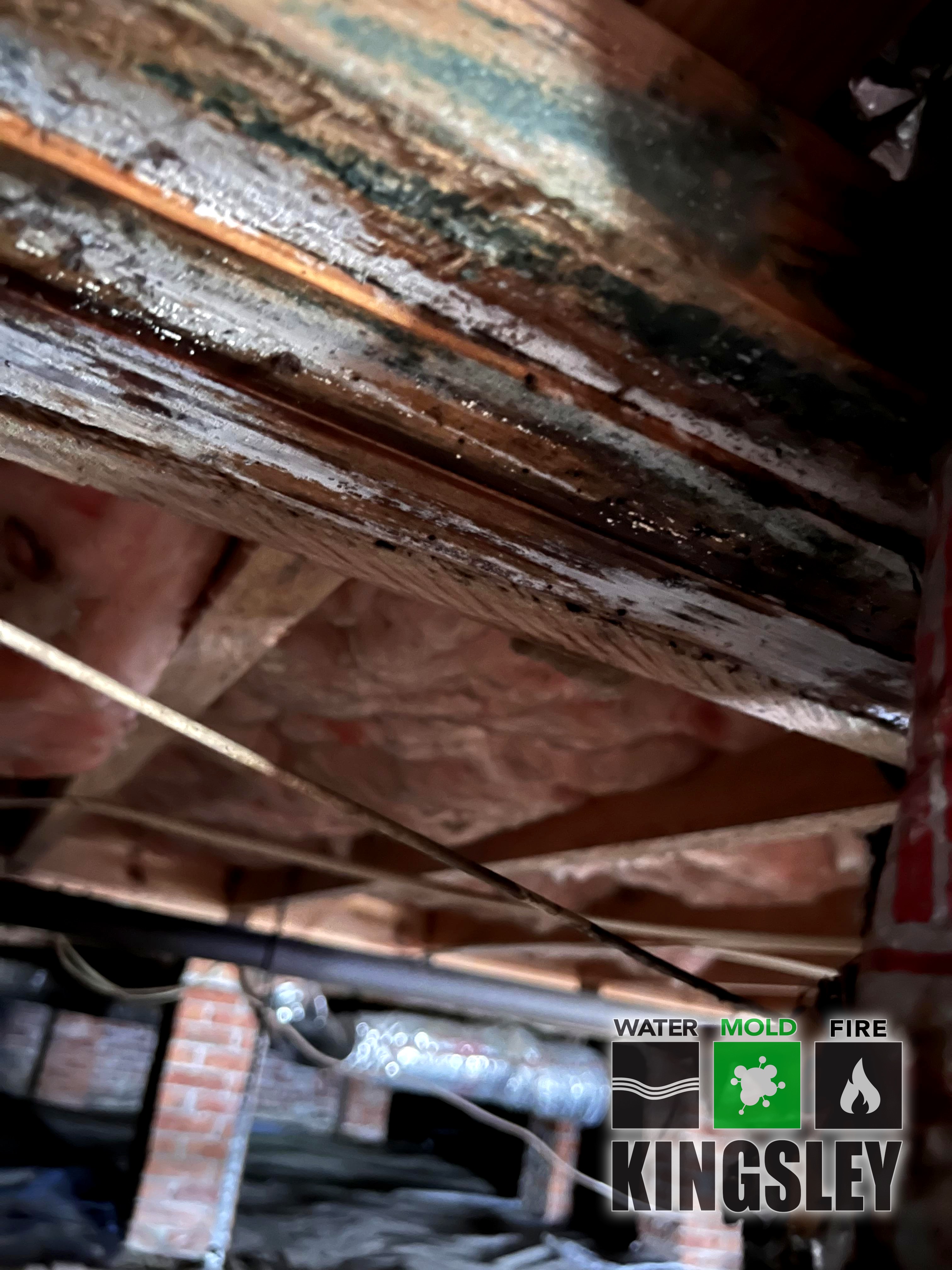
Goose Creek, SC
September 3, 2026
Kingsley water damage & Fire cleanup handled crawlspace joist mold inspection and cleanup for a Goose Creek, SC property. The camera and meters guided scope from the start: crawlspace joists with staining during mold cleanup. That photo-backed condition check defined where finishes had to open, what could stay, and where drying equipment had to aim. The home needed source control, selective removal of non-salvageable wet or contaminated material, and verified drying of what remained in Goose Creek. We avoided opening dry cavities that meters and the camera did not support on this Goose Creek stop.
During mitigation we controlled the work zone so debris and spores did not track into clean rooms. Where finishes blocked drying, we opened only the wet footprint shown by meters and the photo record. Non-salvageable saturated material was bagged and removed; salvageable framing and sheathing were cleaned and treated when microbial staining warranted it. HEPA vacuuming and careful handling limited dust from demo. The unique on-site detail that guided this Goose Creek file was crawlspace joists with staining during mold cleanup. Quiet work windows were held where the household schedule required it, without stretching the drying calendar past about a week.
IICRC water-damage and mold-remediation practice prioritizes stop the moisture source, remove what cannot be dried in place, clean and treat remaining structures with an EPA-registered antimicrobial when staining warranted it, then dry to target with measured air movement and dehumidification. We placed air movers and dehumidifiers to match the crawlspace bay, aimed airflow along the wet materials in the photo, and rechecked moisture on a 3–7 day drying calendar with overnight humidity checks—never past about a week. Skipping that short monitoring window is how a straightforward wet call becomes secondary damage or a musty return odor in Goose Creek.
As readings stabilized within that first-week window, we demobilized equipment and left the work area ready for any needed rebuild of finishes or insulation. Photo documentation of the mitigation state stayed with the job file for the Goose Creek property, including the same angle that showed crawlspace joists with staining during mold cleanup. Helpful takeaway: If you notice musty odors from floor registers or white spotting on crawl wood under a Goose Creek home, have the moisture source and joists inspected before new insulation hides the path.
Homeowners comparing crawlspace joist mold inspection and cleanup options in the Goose Creek area should expect a written moisture map, selective removal instead of full tear-out when meters allow, and a clear end point when materials hit dry goal—not an open-ended equipment rental. Kingsley water damage & Fire cleanup follows that measured approach so rebuild decisions rest on documented conditions rather than a calendar guess.
When rebuild starts, keep the dry-standard notes handy for flooring, cabinet, or insulation trades so no one closes a cavity that still reads wet. That handoff is part of finishing crawlspace joist mold inspection and cleanup correctly in Goose Creek after mitigation—not a separate sales pitch.
Throughout the Goose Creek job we kept communication practical: what was wet, what was removed, what was drying, and when meters said the assembly met goal. That plain record is what homeowners and trades use after crawlspace joist mold inspection and cleanup—not jargon and not an invented multi-week timeline.
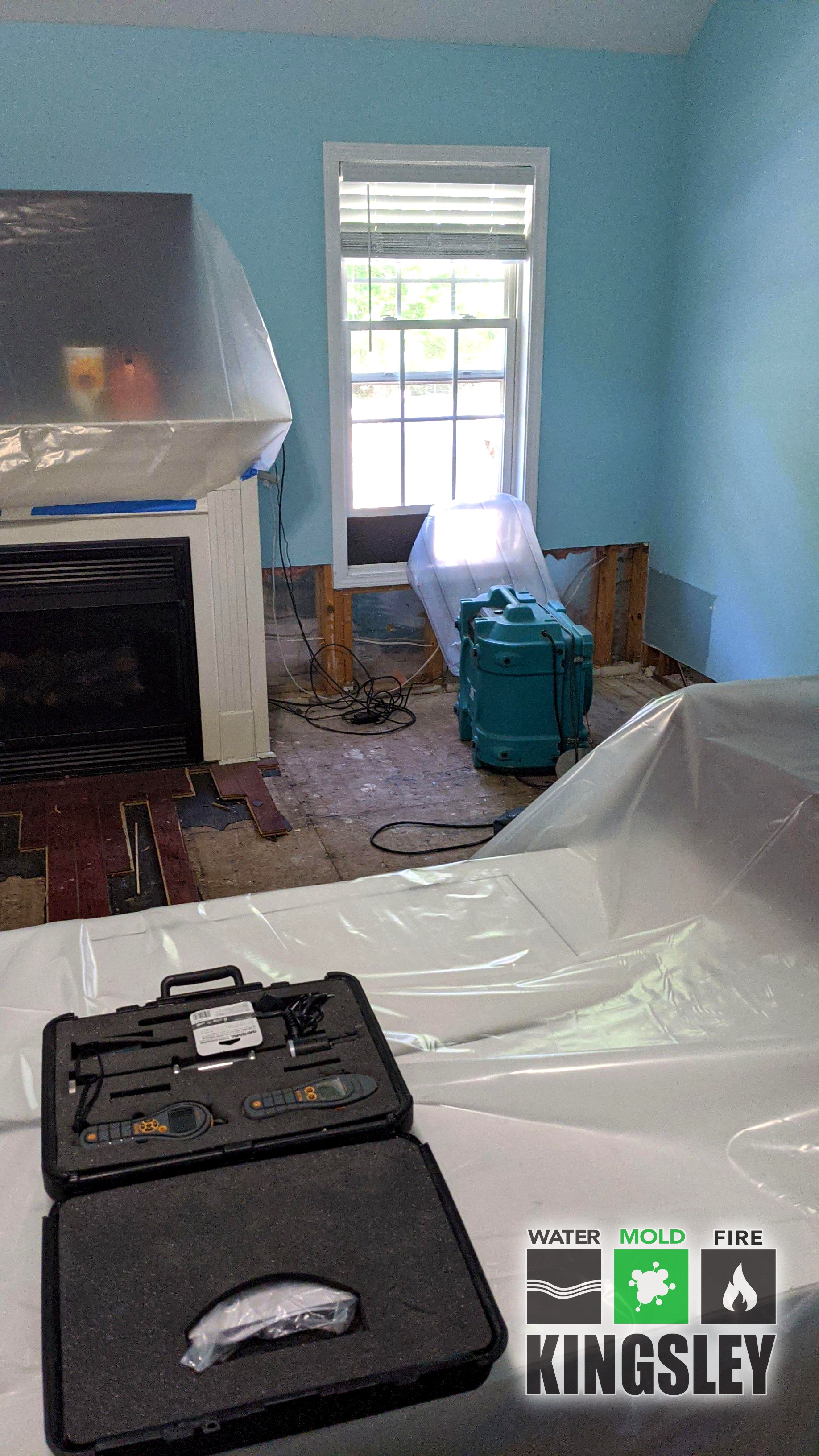
Atlantic Beach, SC
September 3, 2026
Kingsley water damage & Fire cleanup completed doorway subfloor water damage cleanup in Atlantic Beach, SC. On arrival we walked the loss area and documented doorway Subfloor Water Damage Cleanup. That photo-backed condition check defined where finishes had to open, what could stay, and where drying equipment had to aim. The home needed source control, selective removal of non-salvageable wet or contaminated material, and verified drying of what remained in Atlantic Beach. Contents near the work path were shifted or protected before tools came out in this Atlantic Beach home.
During mitigation we controlled the work zone so debris did not track into clean rooms. Where finishes blocked drying, we opened only the wet footprint shown by meters and the photo record. Non-salvageable saturated material was bagged and removed; salvageable framing and sheathing were cleaned. HEPA vacuuming and careful handling limited dust from demo. The unique on-site detail that guided this Atlantic Beach file was doorway Subfloor Water Damage Cleanup. Contents near the work path were shifted or protected before tools came out in this Atlantic Beach home.
IICRC water-damage practice prioritizes stop the moisture source, remove what cannot be dried in place, clean remaining structures, then dry to target with measured air movement and dehumidification. We placed air movers and dehumidifiers to match the wet assembly, aimed airflow along the wet materials in the photo, and rechecked moisture on a 3–7 day drying calendar with overnight humidity checks—never past about a week. Skipping that short monitoring window is how a straightforward wet call becomes secondary damage or a musty return odor in Atlantic Beach.
As readings stabilized within that first-week window, we demobilized equipment and left the work area ready for any needed rebuild of finishes or insulation. Photo documentation of the mitigation state stayed with the job file for the Atlantic Beach property, including the same angle that showed doorway Subfloor Water Damage Cleanup. Helpful takeaway: If flooring feels soft, edges cup, or a stain keeps spreading in Atlantic Beach, stop walking the wet zone and request moisture mapping before new finishes go down.
Homeowners comparing doorway subfloor water damage cleanup options in the Atlantic Beach area should expect a written moisture map, selective removal instead of full tear-out when meters allow, and a clear end point when materials hit dry goal—not an open-ended equipment rental. Kingsley water damage & Fire cleanup follows that measured approach so rebuild decisions rest on documented conditions rather than a calendar guess.
When rebuild starts, keep the dry-standard notes handy for flooring, cabinet, or insulation trades so no one closes a cavity that still reads wet. That handoff is part of finishing doorway subfloor water damage cleanup correctly in Atlantic Beach after mitigation—not a separate sales pitch.
Throughout the Atlantic Beach job we kept communication practical: what was wet, what was removed, what was drying, and when meters said the assembly met goal. That plain record is what homeowners and trades use after doorway subfloor water damage cleanup—not jargon and not an invented multi-week timeline.
Hanahan, SC
September 2, 2026
hvac closet moisture and mold cleanup, logged in Hanahan. Selective demo tracked meters on the framed assembly. Scope stayed tight. Settled within a 3–7 day span. Never past about a week.
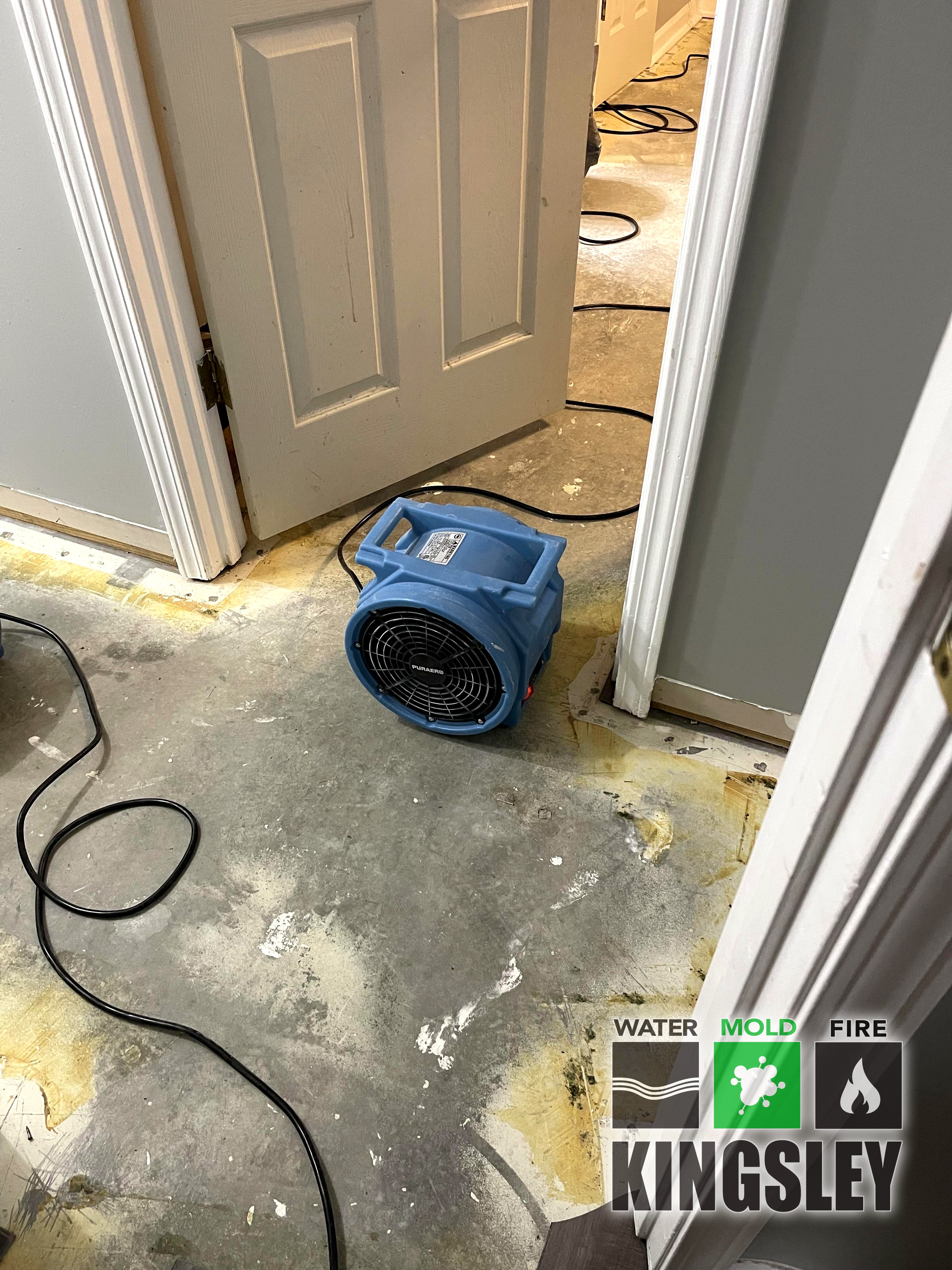
Hanahan, SC
September 2, 2026
Kingsley water damage & Fire cleanup handled hvac closet moisture and mold cleanup for a Hanahan, SC property. The camera and meters guided scope from the start: hVAC Closet Moisture and Mold Cleanup. That photo-backed condition check defined where finishes had to open, what could stay, and where drying equipment had to aim. The home needed source control, selective removal of non-salvageable wet or contaminated material, and verified drying of what remained in Hanahan. Contents near the work path were shifted or protected before tools came out in this Hanahan home.
During mitigation we controlled the work zone so debris and spores did not track into clean rooms. Where finishes blocked drying, we opened only the wet footprint shown by meters and the photo record. Non-salvageable saturated material was bagged and removed; salvageable framing and sheathing were cleaned and treated when microbial staining warranted it. HEPA vacuuming and careful handling limited dust from demo. The unique on-site detail that guided this Hanahan file was hVAC Closet Moisture and Mold Cleanup. Contents near the work path were shifted or protected before tools came out in this Hanahan home.
IICRC water-damage and mold-remediation practice prioritizes stop the moisture source, remove what cannot be dried in place, clean and treat remaining structures with an EPA-registered antimicrobial when staining warranted it, then dry to target with measured air movement and dehumidification. We placed air movers and dehumidifiers to match the wet assembly, aimed airflow along the wet materials in the photo, and rechecked moisture on a 3–7 day drying calendar with overnight humidity checks—never past about a week. Skipping that short monitoring window is how a straightforward wet call becomes secondary damage or a musty return odor in Hanahan.
As readings stabilized within that first-week window, we demobilized equipment and left the work area ready for any needed rebuild of finishes or insulation. Photo documentation of the mitigation state stayed with the job file for the Hanahan property, including the same angle that showed hVAC Closet Moisture and Mold Cleanup. Helpful takeaway: Musty odor that returns after a quick wipe in Hanahan usually means moisture is still feeding the stain—map it before painting over it.
Homeowners comparing hvac closet moisture and mold cleanup options in the Hanahan area should expect a written moisture map, selective removal instead of full tear-out when meters allow, and a clear end point when materials hit dry goal—not an open-ended equipment rental. Kingsley water damage & Fire cleanup follows that measured approach so rebuild decisions rest on documented conditions rather than a calendar guess.
When rebuild starts, keep the dry-standard notes handy for flooring, cabinet, or insulation trades so no one closes a cavity that still reads wet. That handoff is part of finishing hvac closet moisture and mold cleanup correctly in Hanahan after mitigation—not a separate sales pitch.
Throughout the Hanahan job we kept communication practical: what was wet, what was removed, what was drying, and when meters said the assembly met goal. That plain record is what homeowners and trades use after hvac closet moisture and mold cleanup—not jargon and not an invented multi-week timeline.
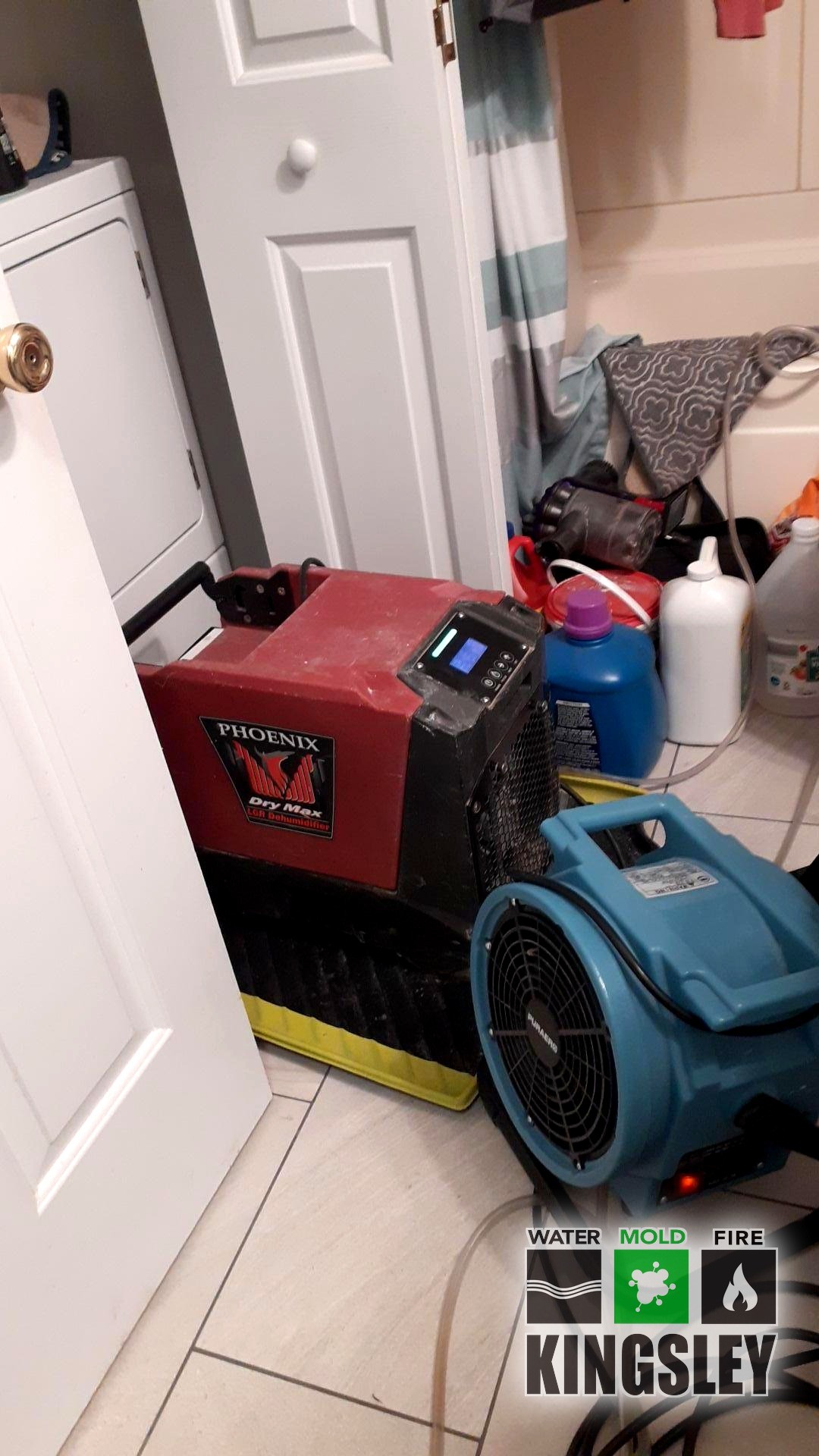
Red Bank, SC
September 2, 2026
Kingsley water damage & Fire cleanup traced ceiling moisture in Red Bank, SC through the stained assembly and any accessible attic or HVAC chase. We document the pattern, check insulation, and confirm whether water is still active before opening finishes. Isolating the wet footprint keeps dry bedrooms from picking up humidity while equipment runs through the drying window.
Mitigation steps stay in homeowner language: contain the mess, open only what inspection supports, remove what will not dry, and clean or treat what can remain. HEPA filtration supports air cleaning when dust or microbial particles are a concern. Daily updates name the rooms still wet and why machines are still on site—no unexplained jargon wall. If children or pets use the home, we talk through temporary barriers and which doors should stay closed while airflow is balanced.
Drying follows a practical IICRC-oriented order: extract, move air, dehumidify, and monitor until readings support releasing equipment. Typical occupied homes in the Midlands finish structural drying inside a 3–7 day window. Cool crawls, wall cavities, and humid stretches can need the later days; we say so before extending. We will not pack up on day two if meters still show wet materials. Mid-job visits adjust vent counts and dehumidifier settings when outdoor humidity or construction details stall progress.
Contents handling is deliberate. Wet textiles move to a drying path or pack-out decision; furniture feet get blocks on wet carpet; important documents and medications leave the wet zone in a labeled bin you keep. Electronics on wet flooring are unplugged and elevated—we do not power-test them in standing moisture. These steps sound small and prevent a second wave of damage while structural drying continues.
Close-out is a plain walkthrough of what dried, what was removed, and what rebuild steps remain. Keep HVAC from blowing moist air into dry rooms while machines run. If anything rewets, call early so the drying window is not lost. A short written summary of rooms and equipment helps you update insurance without replaying every visit from memory.
Equipment placement tries to leave bedrooms and kitchens usable when the wet map allows. Cord runs and condensate drains are planned so tanks do not overflow while you are at work. If HOA gates, narrow drives, or shared crawls affect staging in Red Bank, share that on the first call so the truck arrives ready. Neighbor notices matter on duplex and townhome hatches.
Kingsley water damage & Fire cleanup uses 3031 Scotsman Rd Suite 16, Columbia, SC 29223 for Midlands paperwork and 803-590-0370 for live dispatch. You choose the contractor; preferred lists are optional. We document for carriers when you authorize it and direct-bill when the policy allows. Where detailed photo logs for this older job are thin, this page describes the standard mitigation approach for this loss type in Red Bank without inventing claim numbers, meter digits, or crew names.
If rebuild trades follow mitigation, we leave surfaces accessible and share moisture notes so flooring or drywall work does not trap leftover dampness. That handoff is part of finishing strong in the Midlands humidity cycle.
Richland, SC
September 2, 2026
Kingsley water damage & Fire cleanup handled moisture mapping, containment as needed, and verified drying over a 3–7 day window in Richland, SC.
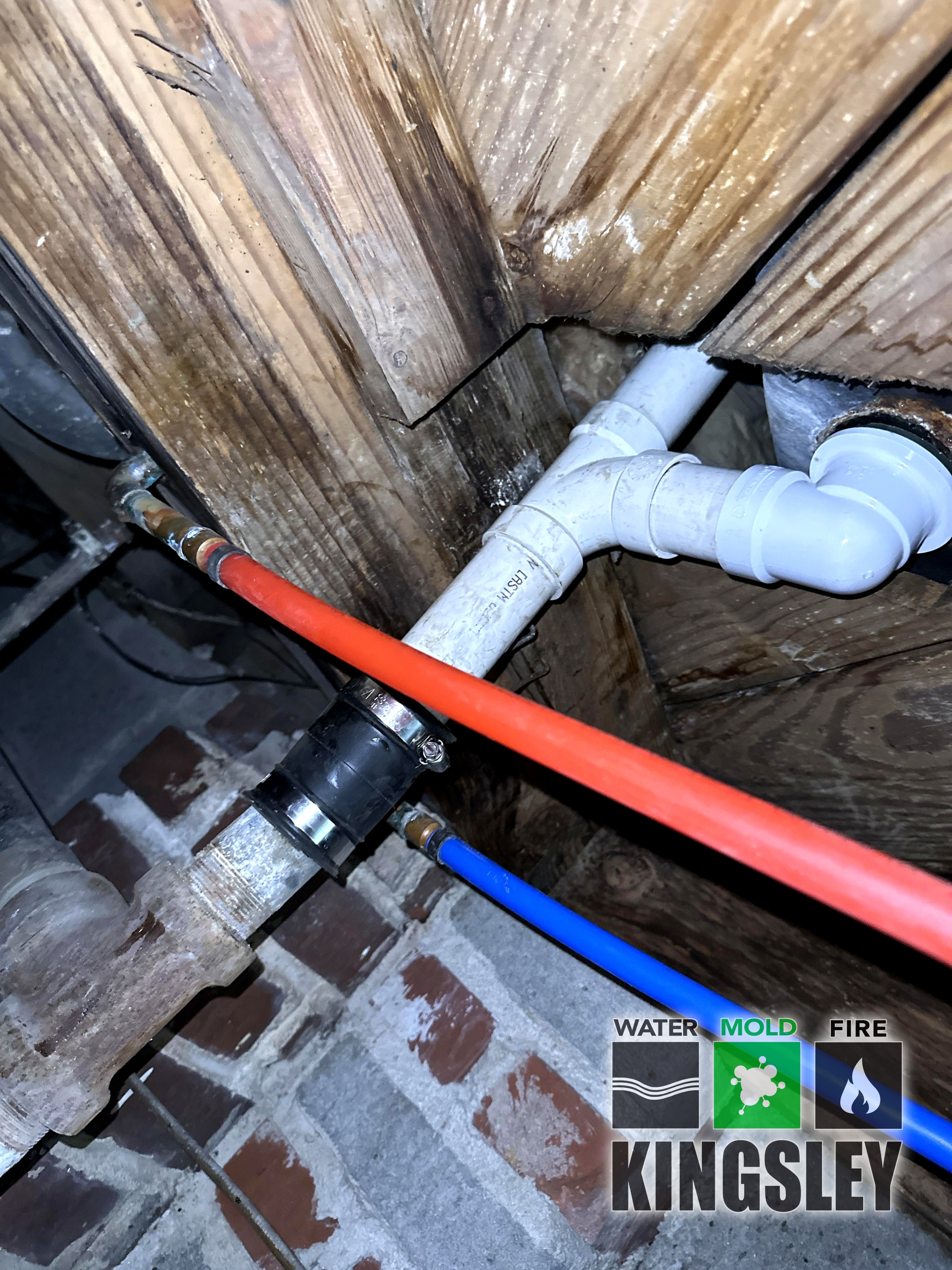
Chapin, SC
September 2, 2026
Kingsley water damage & Fire cleanup handled crawlspace plumbing inspection and water cleanup in Chapin, SC after plumbing-related moisture under the home. We began with a room-by-room and assembly-level inspection of the crawlspace plumbing run under the floor, documenting PEX supply lines and PVC drain piping routed under floor joists in the crawl. That visual and instrument check — not a guess from the hallway — defined where finishes had to open, what could stay, and where drying equipment had to aim. the home needed source control, selective removal of non-salvageable wet or contaminated material, and verified drying of what remained.
During mitigation we controlled the work zone so debris and moisture did not track into clean rooms. Where finishes blocked drying, we opened only the wet footprint shown by meters and the photo record. Contaminated or saturated materials were bagged and removed; salvageable framing and sheathing were cleaned and treated with an EPA-registered antimicrobial when staining or microbial growth warranted it. HEPA vacuuming and careful handling limited dust from demo. The unique on-site detail that guided this file was PEX supply lines and PVC drain piping routed under floor joists in the crawl — that condition stayed in the documentation so the homeowner and any follow-on trade could see exactly what drove the scope in Chapin.
IICRC water-damage and mold-remediation practice prioritizes stop-the-source, remove what cannot be dried in place, clean and treat remaining structures, then dry to target with measured air movement and dehumidification. We placed air movers and/or dehumidifiers to match the wet assembly, ran equipment under monitoring, and rechecked moisture within the first week of mitigation rather than leaving gear unattended for an open-ended stretch. Skipping that short monitoring window is how a straightforward wet call becomes secondary damage in adjoining cavities.
As readings stabilized and the work area met a clean, dry condition, we demobilized equipment and left the crawlspace plumbing run under the floor ready for any needed rebuild of finishes. Photo documentation of the mitigation state stayed with the claim file. If you see standing water, elevated meter readings, or soft/stained flooring in Chapin, stop the source and start professional extraction and drying within the first days — delayed drying is what turns a contained wet zone into a larger structural call.
IICRC water-damage and mold-remediation practice prioritizes stop the moisture source, remove what cannot be dried in place, clean and treat remaining structures, then dry to target with measured air movement and dehumidification. On this Chapin file we ran air movers and dehumidifiers against the wet assembly under monitoring and rechecked moisture on a 3–7 day drying calendar—never past about a week. Skipping that short window is how secondary damage or musty odor returns after finishes go back up.
As readings stabilized within that first-week window, equipment came out and the work area was left ready for any needed rebuild. Photo documentation of the mitigation state stayed with the job file. Helpful takeaway: If you see standing water, elevated meter readings, or soft/stained flooring in Chapin, stop the source and start professional extraction and drying within the first days — delayed drying is what turns a contained wet zone into a larger structural call.
Homeowners comparing crawlspace plumbing inspection and water cleanup options in the Chapin area should expect a written moisture map, selective removal instead of full tear-out when meters allow, and a clear end point when materials hit dry goal—not an open-ended equipment rental. Kingsley water damage & Fire cleanup follows that measured approach so rebuild decisions rest on documented conditions rather than a calendar guess.
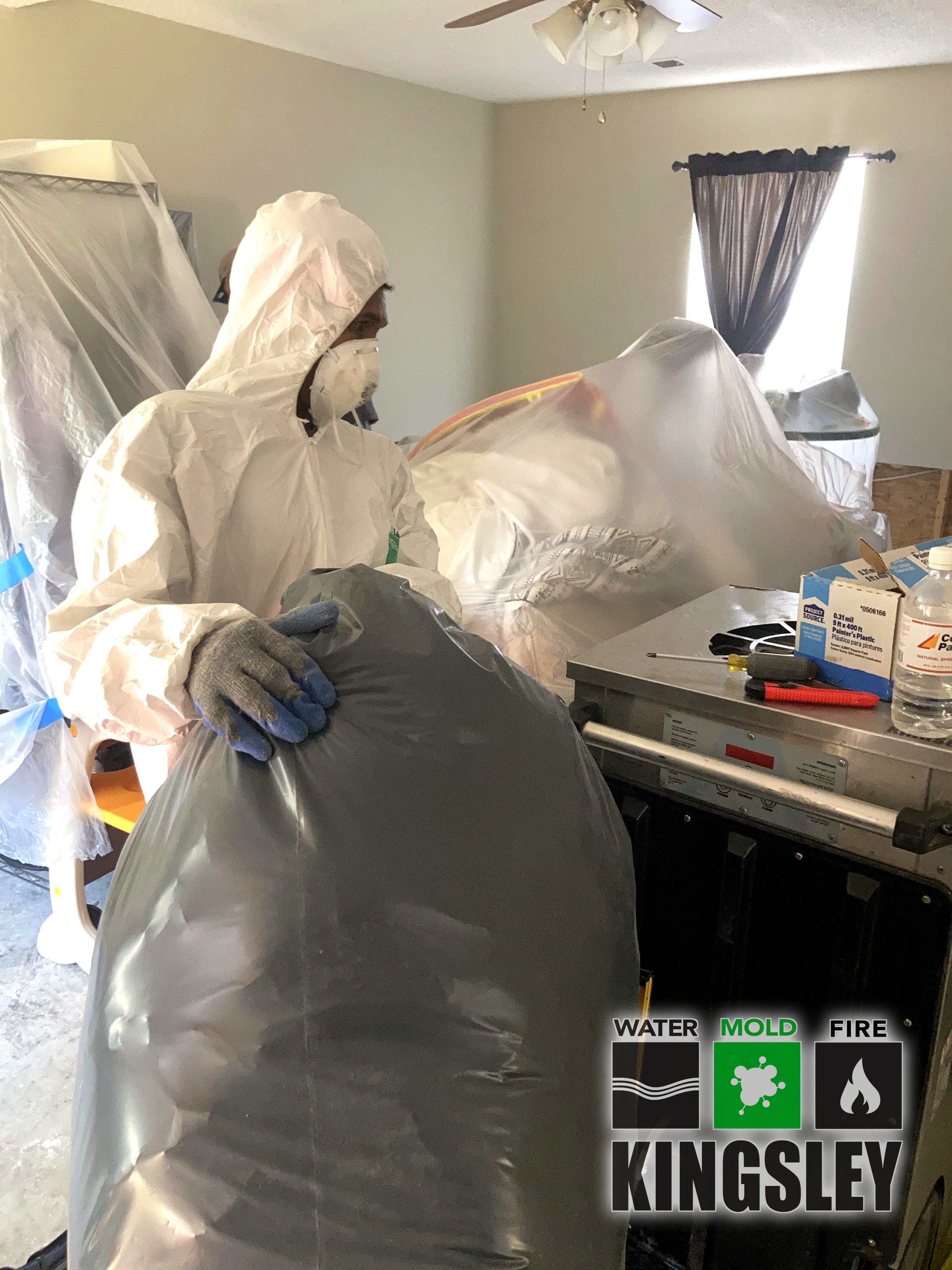
Lake City, SC
September 2, 2026
Kingsley water damage & Fire cleanup responded for tile floor moisture mapping and water cleanup in Lake City, SC and began with a photo-backed survey that captured tile Floor Moisture Mapping and Water Cleanup. That photo-backed condition check defined where finishes had to open, what could stay, and where drying equipment had to aim. The home needed source control, selective removal of non-salvageable wet or contaminated material, and verified drying of what remained in Lake City. Quiet work windows were held where the household schedule required it, without stretching the drying calendar past about a week.
During mitigation we controlled the work zone so debris did not track into clean rooms. Where finishes blocked drying, we opened only the wet footprint shown by meters and the photo record. Non-salvageable saturated material was bagged and removed; salvageable framing and sheathing were cleaned. HEPA vacuuming and careful handling limited dust from demo. The unique on-site detail that guided this Lake City file was tile Floor Moisture Mapping and Water Cleanup. We labeled the wet edge on the sketch so later visits matched day-one photos in Lake City.
IICRC water-damage practice prioritizes stop the moisture source, remove what cannot be dried in place, clean remaining structures, then dry to target with measured air movement and dehumidification. We placed air movers and dehumidifiers to match the wet assembly, aimed airflow along the wet materials in the photo, and rechecked moisture on a 3–7 day drying calendar with overnight humidity checks—never past about a week. Skipping that short monitoring window is how a straightforward wet call becomes secondary damage or a musty return odor in Lake City.
As readings stabilized within that first-week window, we demobilized equipment and left the work area ready for any needed rebuild of finishes or insulation. Photo documentation of the mitigation state stayed with the job file for the Lake City property, including the same angle that showed tile Floor Moisture Mapping and Water Cleanup. Helpful takeaway: A leak that looks dry after towels in Lake City can still leave wet underlayment—meter the assembly before rebuild.
Homeowners comparing tile floor moisture mapping and water cleanup options in the Lake City area should expect a written moisture map, selective removal instead of full tear-out when meters allow, and a clear end point when materials hit dry goal—not an open-ended equipment rental. Kingsley water damage & Fire cleanup follows that measured approach so rebuild decisions rest on documented conditions rather than a calendar guess.
When rebuild starts, keep the dry-standard notes handy for flooring, cabinet, or insulation trades so no one closes a cavity that still reads wet. That handoff is part of finishing tile floor moisture mapping and water cleanup correctly in Lake City after mitigation—not a separate sales pitch.
Throughout the Lake City job we kept communication practical: what was wet, what was removed, what was drying, and when meters said the assembly met goal. That plain record is what homeowners and trades use after tile floor moisture mapping and water cleanup—not jargon and not an invented multi-week timeline.
State Park, SC
September 1, 2026
Kingsley water damage & Fire cleanup handled mapping under LVP, targeted removal, and verified drying over a 3–7 day window in State Park, SC.
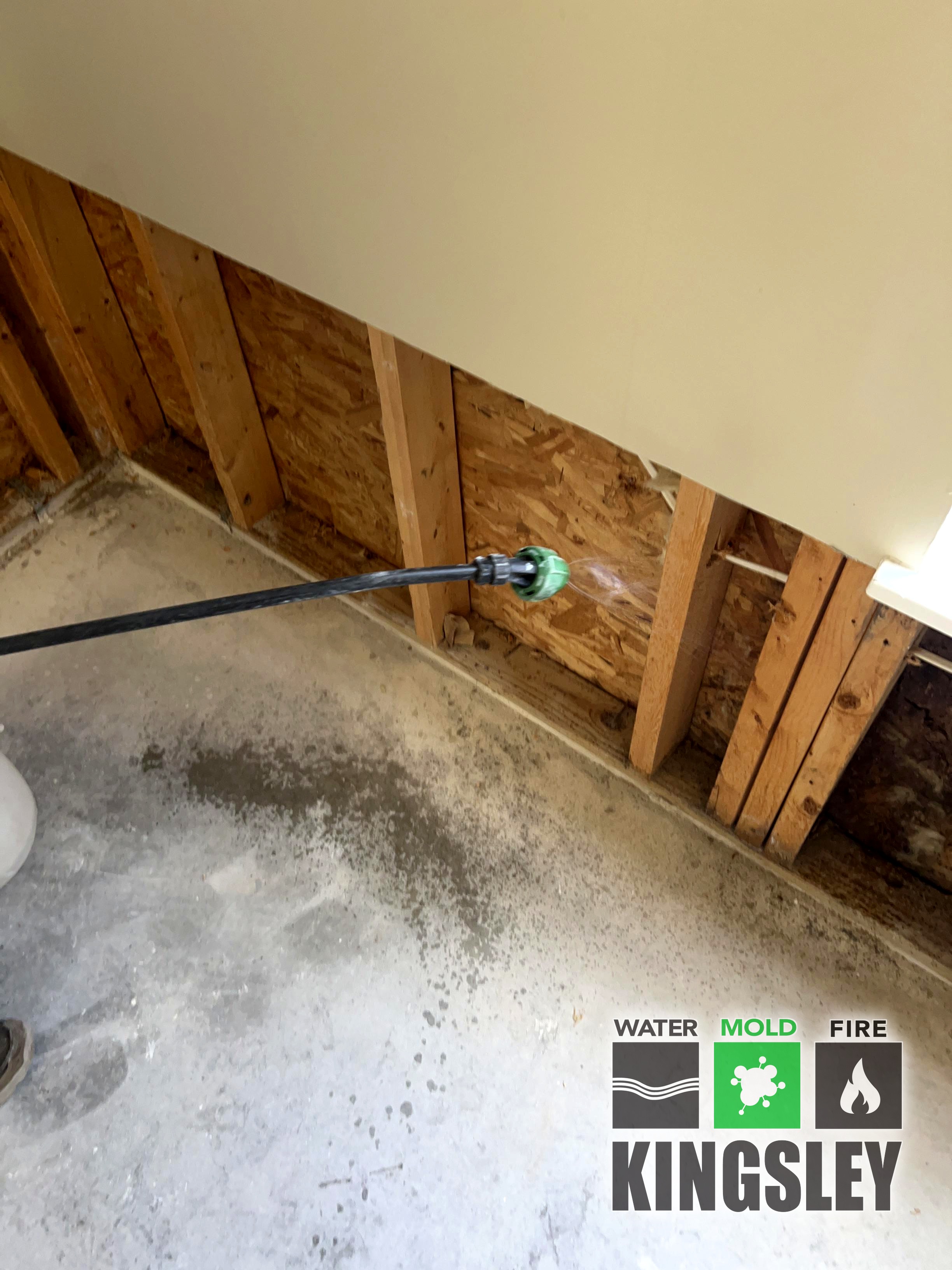
Dentsville, SC
September 1, 2026
Kingsley water damage & Fire cleanup responded for vinyl plank edge water damage cleanup in Dentsville, SC and began with a photo-backed survey that captured vinyl Plank Edge Water Damage Cleanup. That photo-backed condition check defined where finishes had to open, what could stay, and where drying equipment had to aim. The home needed source control, selective removal of non-salvageable wet or contaminated material, and verified drying of what remained in Dentsville. We labeled the wet edge on the sketch so later visits matched day-one photos in Dentsville.
During mitigation we controlled the work zone so debris did not track into clean rooms. Where finishes blocked drying, we opened only the wet footprint shown by meters and the photo record. Non-salvageable saturated material was bagged and removed; salvageable framing and sheathing were cleaned. HEPA vacuuming and careful handling limited dust from demo. The unique on-site detail that guided this Dentsville file was vinyl Plank Edge Water Damage Cleanup. The adjuster-ready photo set stayed with the file so rebuild trades could see the same framed assembly the crew saw.
IICRC water-damage practice prioritizes stop the moisture source, remove what cannot be dried in place, clean remaining structures, then dry to target with measured air movement and dehumidification. We placed air movers and dehumidifiers to match the wet assembly, aimed airflow along the wet materials in the photo, and rechecked moisture on a 3–7 day drying calendar with overnight humidity checks—never past about a week. Skipping that short monitoring window is how a straightforward wet call becomes secondary damage or a musty return odor in Dentsville.
As readings stabilized within that first-week window, we demobilized equipment and left the work area ready for any needed rebuild of finishes or insulation. Photo documentation of the mitigation state stayed with the job file for the Dentsville property, including the same angle that showed vinyl Plank Edge Water Damage Cleanup. Helpful takeaway: If flooring feels soft, edges cup, or a stain keeps spreading in Dentsville, stop walking the wet zone and request moisture mapping before new finishes go down.
Homeowners comparing vinyl plank edge water damage cleanup options in the Dentsville area should expect a written moisture map, selective removal instead of full tear-out when meters allow, and a clear end point when materials hit dry goal—not an open-ended equipment rental. Kingsley water damage & Fire cleanup follows that measured approach so rebuild decisions rest on documented conditions rather than a calendar guess.
When rebuild starts, keep the dry-standard notes handy for flooring, cabinet, or insulation trades so no one closes a cavity that still reads wet. That handoff is part of finishing vinyl plank edge water damage cleanup correctly in Dentsville after mitigation—not a separate sales pitch.
Throughout the Dentsville job we kept communication practical: what was wet, what was removed, what was drying, and when meters said the assembly met goal. That plain record is what homeowners and trades use after vinyl plank edge water damage cleanup—not jargon and not an invented multi-week timeline.
Red Bank, SC
September 1, 2026
Kingsley water damage & Fire cleanup handled moisture mapping, containment as needed, and verified drying over a 3–7 day window in Red Bank, SC.
State Park, SC
September 1, 2026
Kingsley water damage & Fire cleanup handled moisture mapping, containment as needed, and verified drying over a 3–7 day window in State Park, SC.
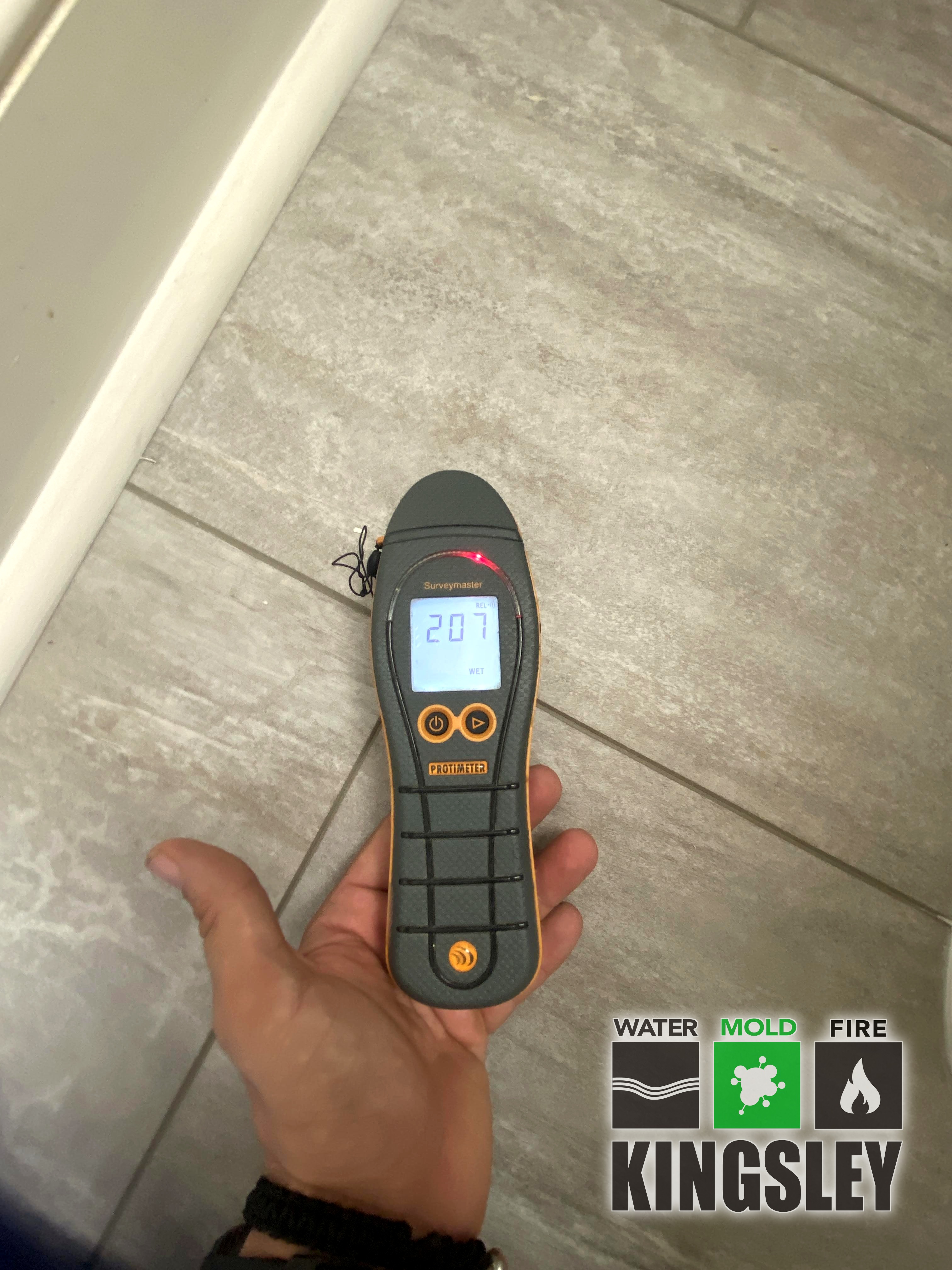
Chapin, SC
September 1, 2026
Kingsley water damage & Fire cleanup handled tile moisture mapping and water damage inspection in Chapin, SC after suspected moisture under or around tile. We began with a room-by-room and assembly-level inspection of the tiled floor surface, documenting moisture meter in contact with tile flooring to map the wet footprint. That visual and instrument check — not a guess from the hallway — defined where finishes had to open, what could stay, and where drying equipment had to aim. the home needed source control, selective removal of non-salvageable wet or contaminated material, and verified drying of what remained.
During mitigation we controlled the work zone so debris and moisture did not track into clean rooms. Where finishes blocked drying, we opened only the wet footprint shown by meters and the photo record. Contaminated or saturated materials were bagged and removed; salvageable framing and sheathing were cleaned and treated with an EPA-registered antimicrobial when staining or microbial growth warranted it. HEPA vacuuming and careful handling limited dust from demo. The unique on-site detail that guided this file was moisture meter in contact with tile flooring to map the wet footprint — that condition stayed in the documentation so the homeowner and any follow-on trade could see exactly what drove the scope in Chapin.
IICRC water-damage and mold-remediation practice prioritizes stop-the-source, remove what cannot be dried in place, clean and treat remaining structures, then dry to target with measured air movement and dehumidification. We placed air movers and/or dehumidifiers to match the wet assembly, ran equipment under monitoring, and rechecked moisture within the first week of mitigation rather than leaving gear unattended for an open-ended stretch. Skipping that short monitoring window is how a straightforward wet call becomes secondary damage in adjoining cavities.
As readings stabilized and the work area met a clean, dry condition, we demobilized equipment and left the tiled floor surface ready for any needed rebuild of finishes. Photo documentation of the mitigation state stayed with the claim file. If you see standing water, elevated meter readings, or soft/stained flooring in Chapin, stop the source and start professional extraction and drying within the first days — delayed drying is what turns a contained wet zone into a larger structural call.
IICRC water-damage and mold-remediation practice prioritizes stop the moisture source, remove what cannot be dried in place, clean and treat remaining structures, then dry to target with measured air movement and dehumidification. On this Chapin file we ran air movers and dehumidifiers against the wet assembly under monitoring and rechecked moisture on a 3–7 day drying calendar—never past about a week. Skipping that short window is how secondary damage or musty odor returns after finishes go back up.
As readings stabilized within that first-week window, equipment came out and the work area was left ready for any needed rebuild. Photo documentation of the mitigation state stayed with the job file. Helpful takeaway: If you see standing water, elevated meter readings, or soft/stained flooring in Chapin, stop the source and start professional extraction and drying within the first days — delayed drying is what turns a contained wet zone into a larger structural call.
Homeowners comparing tile moisture mapping and water damage inspection options in the Chapin area should expect a written moisture map, selective removal instead of full tear-out when meters allow, and a clear end point when materials hit dry goal—not an open-ended equipment rental. Kingsley water damage & Fire cleanup follows that measured approach so rebuild decisions rest on documented conditions rather than a calendar guess.
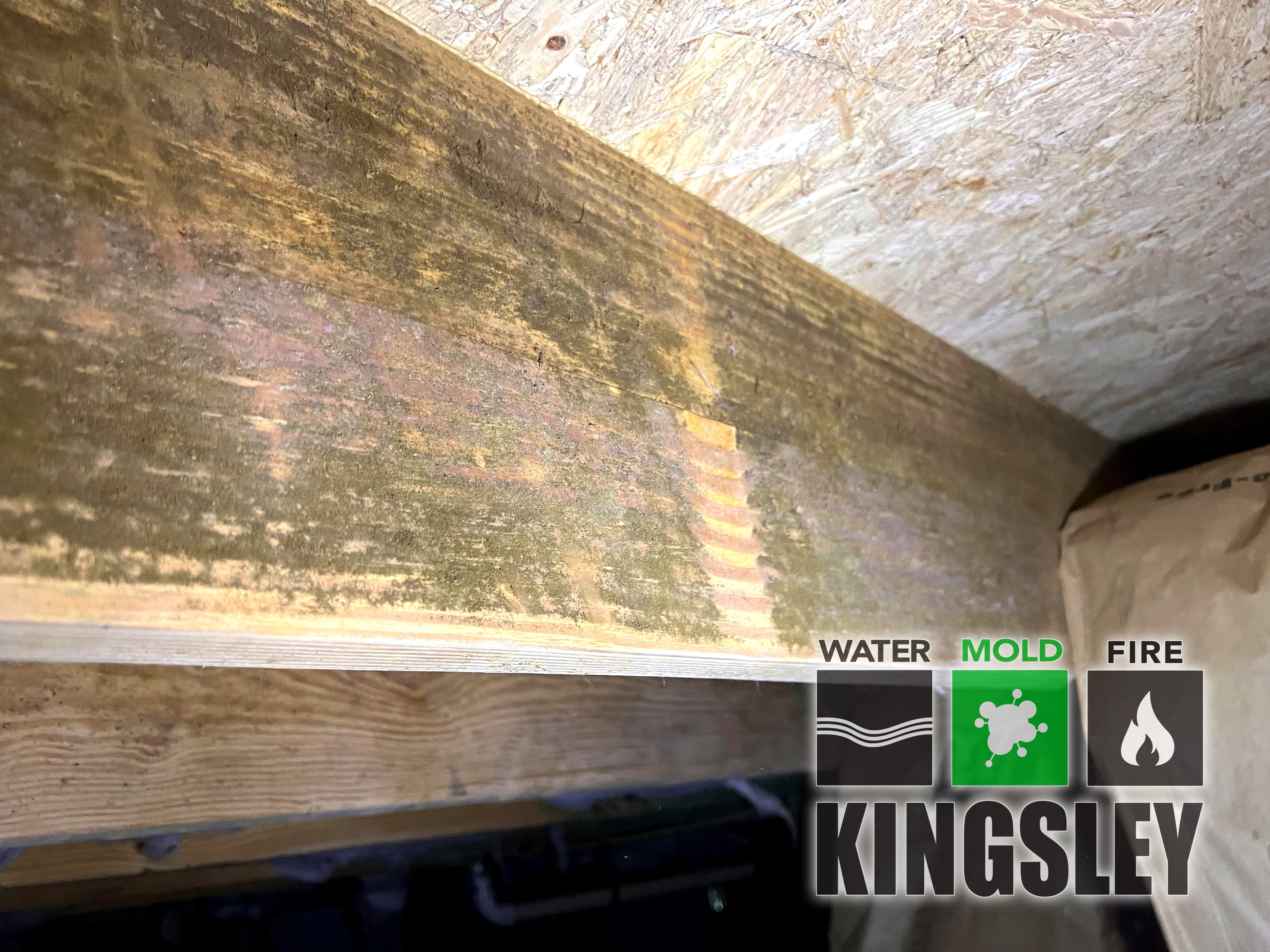
Richland, SC
September 1, 2026
Kingsley water damage & Fire cleanup responded for crawlspace joist mold inspection and cleanup in Richland, SC and began with a photo-backed survey that captured crawlspace Joist Mold Inspection and Cleanup. That photo-backed condition check defined where finishes had to open, what could stay, and where drying equipment had to aim. The home needed source control, selective removal of non-salvageable wet or contaminated material, and verified drying of what remained in Richland. We labeled the wet edge on the sketch so later visits matched day-one photos in Richland.
During mitigation we controlled the work zone so debris and spores did not track into clean rooms. Where finishes blocked drying, we opened only the wet footprint shown by meters and the photo record. Non-salvageable saturated material was bagged and removed; salvageable framing and sheathing were cleaned and treated when microbial staining warranted it. HEPA vacuuming and careful handling limited dust from demo. The unique on-site detail that guided this Richland file was crawlspace Joist Mold Inspection and Cleanup. Contents near the work path were shifted or protected before tools came out in this Richland home.
IICRC water-damage and mold-remediation practice prioritizes stop the moisture source, remove what cannot be dried in place, clean and treat remaining structures with an EPA-registered antimicrobial when staining warranted it, then dry to target with measured air movement and dehumidification. We placed air movers and dehumidifiers to match the crawlspace bay, aimed airflow along the wet materials in the photo, and rechecked moisture on a 3–7 day drying calendar with overnight humidity checks—never past about a week. Skipping that short monitoring window is how a straightforward wet call becomes secondary damage or a musty return odor in Richland.
As readings stabilized within that first-week window, we demobilized equipment and left the work area ready for any needed rebuild of finishes or insulation. Photo documentation of the mitigation state stayed with the job file for the Richland property, including the same angle that showed crawlspace Joist Mold Inspection and Cleanup. Helpful takeaway: If you notice musty odors from floor registers or white spotting on crawl wood under a Richland home, have the moisture source and joists inspected before new insulation hides the path.
Homeowners comparing crawlspace joist mold inspection and cleanup options in the Richland area should expect a written moisture map, selective removal instead of full tear-out when meters allow, and a clear end point when materials hit dry goal—not an open-ended equipment rental. Kingsley water damage & Fire cleanup follows that measured approach so rebuild decisions rest on documented conditions rather than a calendar guess.
When rebuild starts, keep the dry-standard notes handy for flooring, cabinet, or insulation trades so no one closes a cavity that still reads wet. That handoff is part of finishing crawlspace joist mold inspection and cleanup correctly in Richland after mitigation—not a separate sales pitch.
Throughout the Richland job we kept communication practical: what was wet, what was removed, what was drying, and when meters said the assembly met goal. That plain record is what homeowners and trades use after crawlspace joist mold inspection and cleanup—not jargon and not an invented multi-week timeline.
Richland, SC
August 31, 2026
Kingsley water damage & Fire cleanup handled extraction, pad assessment, and verified drying over a 3–7 day window in Richland, SC.
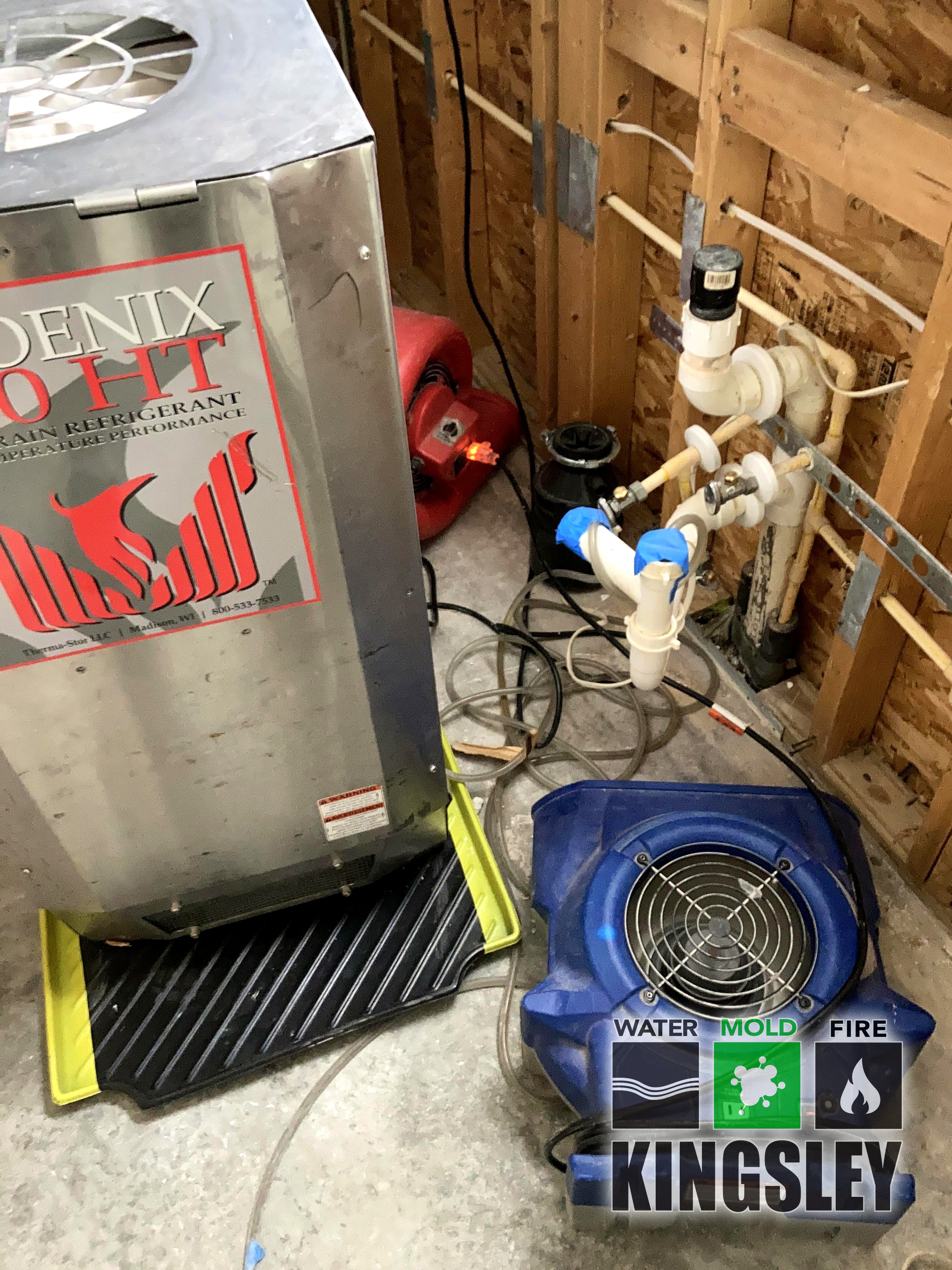
Dentsville, SC
August 31, 2026
Kingsley water damage & Fire cleanup completed hallway carpet water extraction cleanup in Dentsville, SC. On arrival we walked the loss area and documented hallway Carpet Water Extraction Cleanup. That photo-backed condition check defined where finishes had to open, what could stay, and where drying equipment had to aim. The home needed source control, selective removal of non-salvageable wet or contaminated material, and verified drying of what remained in Dentsville. We labeled the wet edge on the sketch so later visits matched day-one photos.
During mitigation we controlled the work zone so debris did not track into clean rooms. Where finishes blocked drying, we opened only the wet footprint shown by meters and the photo record. Non-salvageable saturated material was bagged and removed; salvageable framing and sheathing were cleaned. HEPA vacuuming and careful handling limited dust from demo. The unique on-site detail that guided this Dentsville file was hallway Carpet Water Extraction Cleanup. Contents near the work path were shifted or protected before tools came out.
IICRC water-damage practice prioritizes stop the moisture source, remove what cannot be dried in place, clean remaining structures, then dry to target with measured air movement and dehumidification. We placed air movers and dehumidifiers to match the wet assembly, aimed airflow along the wet materials in the photo, and rechecked moisture on a 3–7 day drying calendar with overnight humidity checks—never past about a week. Quiet work windows were held where the household schedule required it, without stretching past that first-week ceiling. Skipping that short monitoring window is how a straightforward wet call becomes secondary damage or a musty return odor in Dentsville.
As readings stabilized within that first-week window, we demobilized equipment and left the work area ready for any needed rebuild of finishes or insulation. Photo documentation of the mitigation state stayed with the job file for the Dentsville property, including the same angle that showed hallway Carpet Water Extraction Cleanup. Helpful takeaway: If flooring feels soft, edges cup, or a stain keeps spreading in Dentsville, stop walking the wet zone and request moisture mapping before new finishes go down.
Homeowners comparing hallway carpet water extraction cleanup options in the Dentsville area should expect a written moisture map, selective removal instead of full tear-out when meters allow, and a clear end point when materials hit dry goal—not an open-ended equipment rental. Kingsley water damage & Fire cleanup follows that measured approach so rebuild decisions rest on documented conditions rather than a calendar guess.
When rebuild starts, keep the dry-standard notes handy for flooring, cabinet, or insulation trades so no one closes a cavity that still reads wet. That handoff is part of finishing hallway carpet water extraction cleanup correctly in Dentsville after mitigation. Throughout the job we kept communication practical: what was wet, what was removed, what was drying, and when meters said the assembly met goal—without inventing a multi-week timeline.
For this Dentsville stop, the close-out standard stayed simple: meters at goal, photo set filed, and no equipment left running past the 3–7 day band.
Red Bank, SC
August 31, 2026
Kingsley water damage & Fire cleanup handled moisture mapping, containment as needed, and verified drying over a 3–7 day window in Red Bank, SC.
State Park, SC
August 31, 2026
Ceiling Stain Moisture Mapping in State Park.
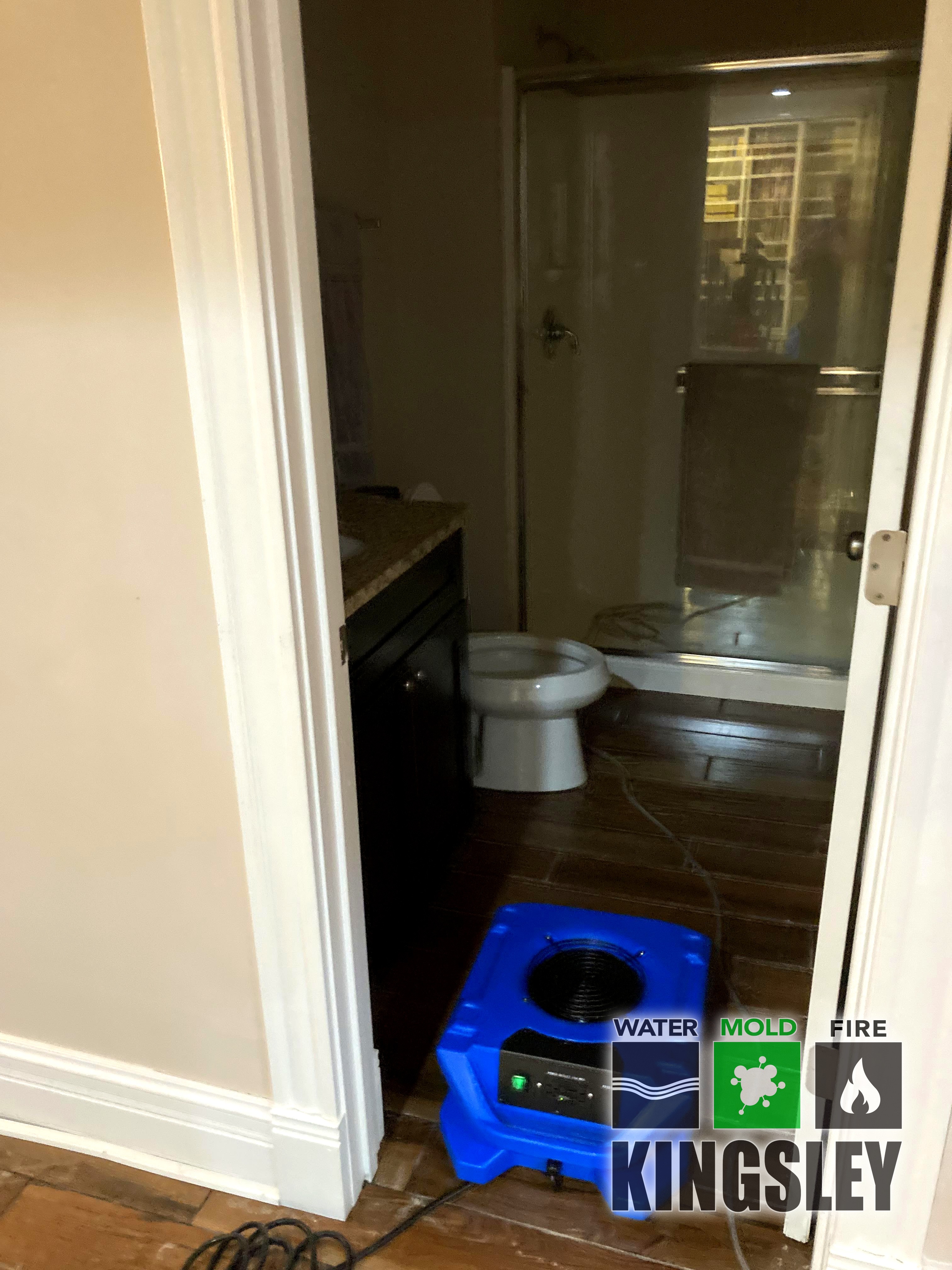
Chapin, SC
August 31, 2026
Kingsley water damage & Fire cleanup handled bathroom water damage drying and cleanup in Chapin, SC after bathroom water loss requiring on-floor drying equipment. We began with a room-by-room and assembly-level inspection of the residential bathroom, documenting a blue air mover with green power light on wood-look tile in a bathroom with dark vanity, granite-look top, white toilet, and glass walk-in shower. That visual and instrument check — not a guess from the hallway — defined where finishes had to open, what could stay, and where drying equipment had to aim. the home needed source control, selective removal of non-salvageable wet or contaminated material, and verified drying of what remained.
During mitigation we controlled the work zone so debris and moisture did not track into clean rooms. Where finishes blocked drying, we opened only the wet footprint shown by meters and the photo record. Contaminated or saturated materials were bagged and removed; salvageable framing and sheathing were cleaned and treated with an EPA-registered antimicrobial when staining or microbial growth warranted it. HEPA vacuuming and careful handling limited dust from demo. The unique on-site detail that guided this file was a blue air mover with green power light on wood-look tile in a bathroom with dark vanity, granite-look top, white toilet, and glass walk-in shower — that condition stayed in the documentation so the homeowner and any follow-on trade could see exactly what drove the scope in Chapin.
IICRC water-damage and mold-remediation practice prioritizes stop-the-source, remove what cannot be dried in place, clean and treat remaining structures, then dry to target with measured air movement and dehumidification. We placed air movers and/or dehumidifiers to match the wet assembly, ran equipment under monitoring, and rechecked moisture within the first week of mitigation rather than leaving gear unattended for an open-ended stretch. Skipping that short monitoring window is how a straightforward wet call becomes secondary damage in adjoining cavities.
As readings stabilized and the work area met a clean, dry condition, we demobilized equipment and left the residential bathroom ready for any needed rebuild of finishes. Photo documentation of the mitigation state stayed with the claim file. If you see standing water, elevated meter readings, or soft/stained flooring in Chapin, stop the source and start professional extraction and drying within the first days — delayed drying is what turns a contained wet zone into a larger structural call.
IICRC water-damage and mold-remediation practice prioritizes stop the moisture source, remove what cannot be dried in place, clean and treat remaining structures, then dry to target with measured air movement and dehumidification. On this Chapin file we ran air movers and dehumidifiers against the wet assembly under monitoring and rechecked moisture on a 3–7 day drying calendar—never past about a week. Skipping that short window is how secondary damage or musty odor returns after finishes go back up.
As readings stabilized within that first-week window, equipment came out and the work area was left ready for any needed rebuild. Photo documentation of the mitigation state stayed with the job file. Helpful takeaway: If you see standing water, elevated meter readings, or soft/stained flooring in Chapin, stop the source and start professional extraction and drying within the first days — delayed drying is what turns a contained wet zone into a larger structural call.
Homeowners comparing bathroom water damage drying and cleanup options in the Chapin area should expect a written moisture map, selective removal instead of full tear-out when meters allow, and a clear end point when materials hit dry goal—not an open-ended equipment rental. Kingsley water damage & Fire cleanup follows that measured approach so rebuild decisions rest on documented conditions rather than a calendar guess.
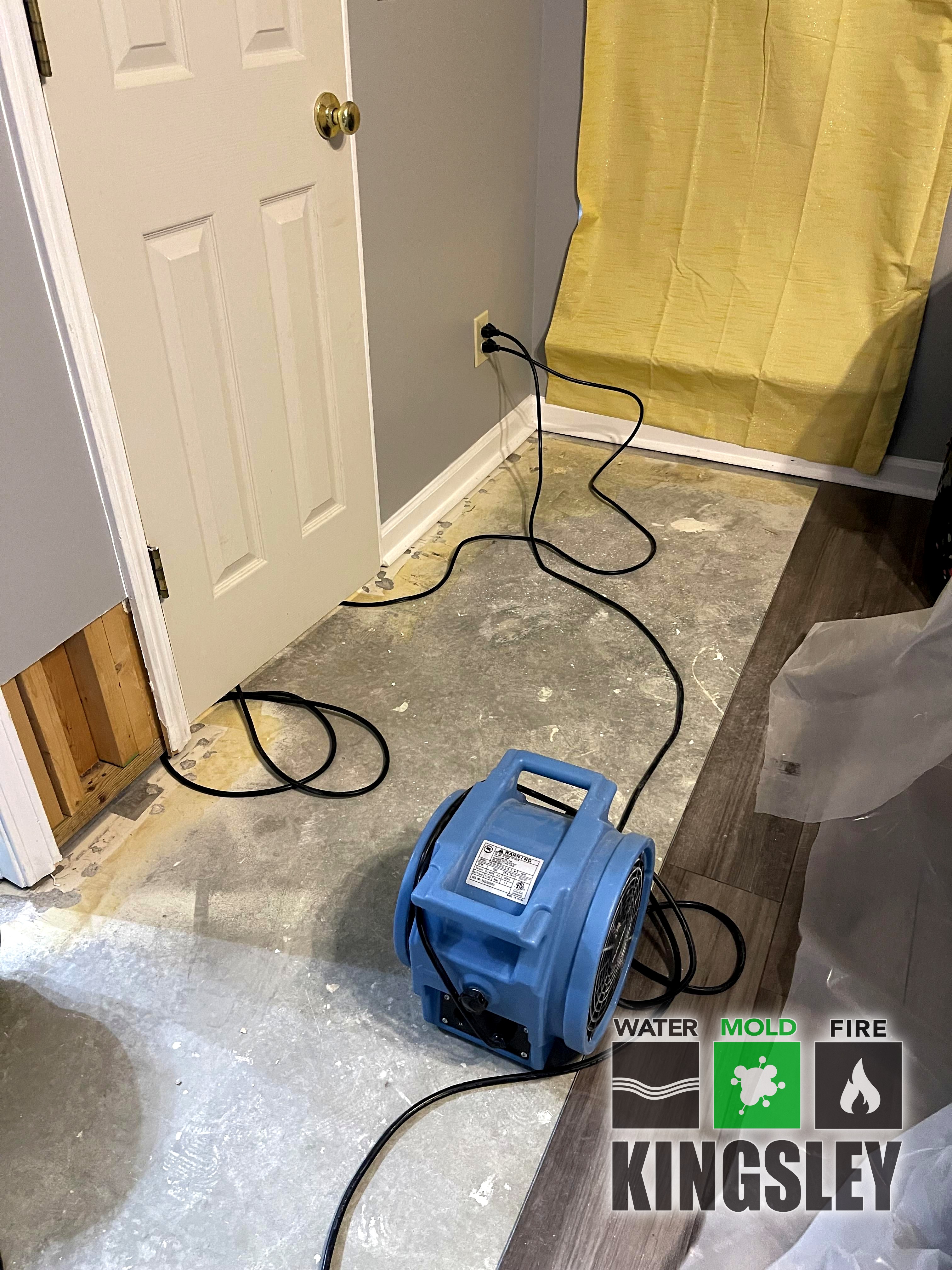
Richland, SC
August 31, 2026
Kingsley water damage & Fire cleanup handled doorway subfloor water damage cleanup for a Richland, SC property. The camera and meters guided scope from the start: doorway Subfloor Water Damage Cleanup. That photo-backed condition check defined where finishes had to open, what could stay, and where drying equipment had to aim. The home needed source control, selective removal of non-salvageable wet or contaminated material, and verified drying of what remained in Richland. We labeled the wet edge on the sketch so later visits matched day-one photos.
During mitigation we controlled the work zone so debris did not track into clean rooms. Where finishes blocked drying, we opened only the wet footprint shown by meters and the photo record. Non-salvageable saturated material was bagged and removed; salvageable framing and sheathing were cleaned. HEPA vacuuming and careful handling limited dust from demo. The unique on-site detail that guided this Richland file was doorway Subfloor Water Damage Cleanup. Contents near the work path were shifted or protected before tools came out.
IICRC water-damage practice prioritizes stop the moisture source, remove what cannot be dried in place, clean remaining structures, then dry to target with measured air movement and dehumidification. We placed air movers and dehumidifiers to match the wet assembly, aimed airflow along the wet materials in the photo, and rechecked moisture on a 3–7 day drying calendar with overnight humidity checks—never past about a week. Quiet work windows were held where the household schedule required it, without stretching past that first-week ceiling. Skipping that short monitoring window is how a straightforward wet call becomes secondary damage or a musty return odor in Richland.
As readings stabilized within that first-week window, we demobilized equipment and left the work area ready for any needed rebuild of finishes or insulation. Photo documentation of the mitigation state stayed with the job file for the Richland property, including the same angle that showed doorway Subfloor Water Damage Cleanup. Helpful takeaway: If flooring feels soft, edges cup, or a stain keeps spreading in Richland, stop walking the wet zone and request moisture mapping before new finishes go down.
Homeowners comparing doorway subfloor water damage cleanup options in the Richland area should expect a written moisture map, selective removal instead of full tear-out when meters allow, and a clear end point when materials hit dry goal—not an open-ended equipment rental. Kingsley water damage & Fire cleanup follows that measured approach so rebuild decisions rest on documented conditions rather than a calendar guess.
When rebuild starts, keep the dry-standard notes handy for flooring, cabinet, or insulation trades so no one closes a cavity that still reads wet. That handoff is part of finishing doorway subfloor water damage cleanup correctly in Richland after mitigation. Throughout the job we kept communication practical: what was wet, what was removed, what was drying, and when meters said the assembly met goal—without inventing a multi-week timeline.
For this Richland stop, the close-out standard stayed simple: meters at goal, photo set filed, and no equipment left running past the 3–7 day band.
Dentsville, SC
August 30, 2026
Kingsley water damage & Fire cleanup handled moisture mapping, localized remediation, and verified drying over a 3–7 day window in Dentsville, SC.
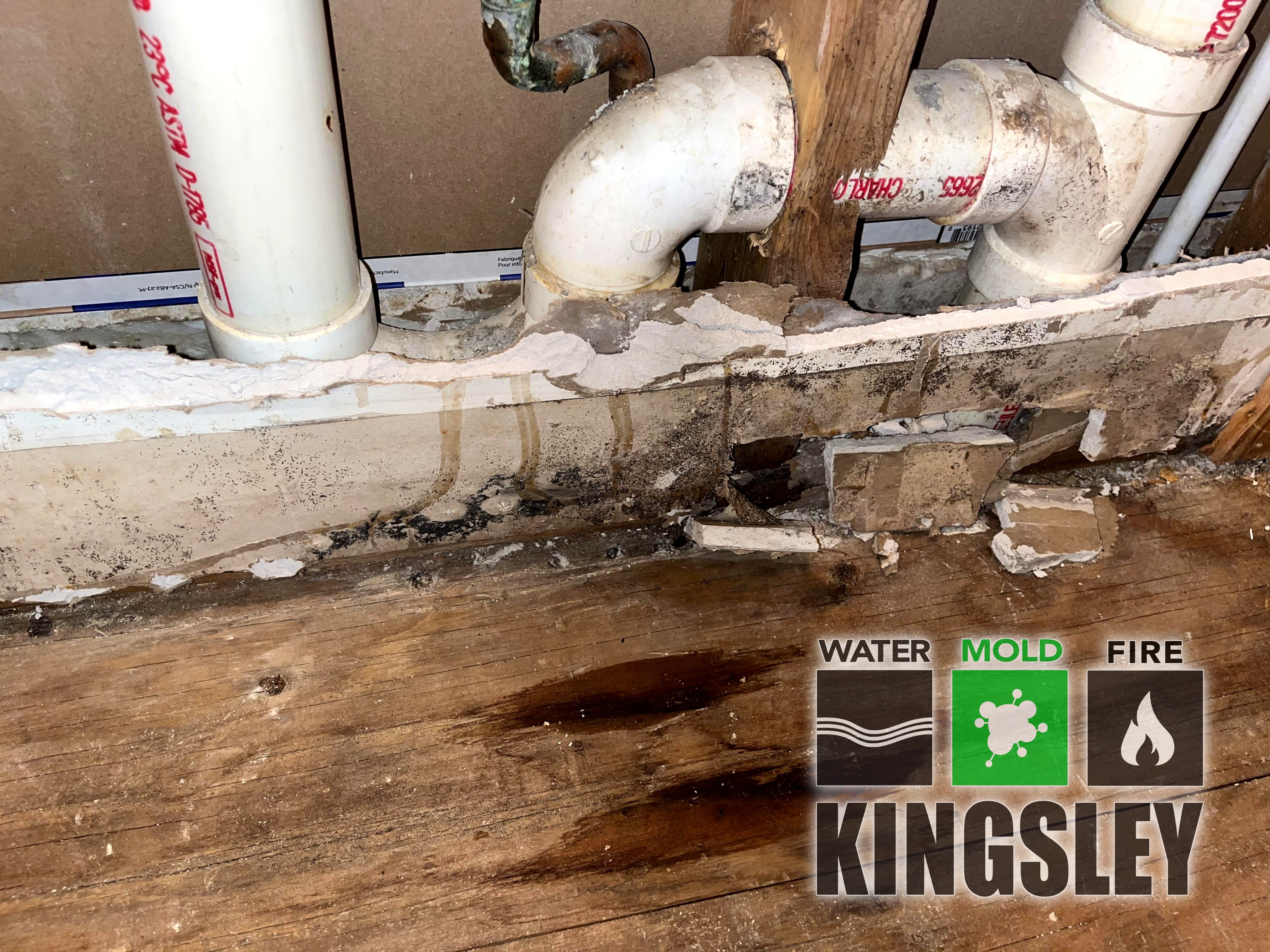
Dentsville, SC
August 30, 2026
Kingsley water damage & Fire cleanup handled vanity subfloor mold inspection cleanup for a Dentsville, SC property. The camera and meters guided scope from the start: vanity Subfloor Mold Inspection Cleanup. That photo-backed condition check defined where finishes had to open, what could stay, and where drying equipment had to aim. The home needed source control, selective removal of non-salvageable wet or contaminated material, and verified drying of what remained in Dentsville. Quiet work windows were held where the household schedule required it, without stretching the drying calendar past about a week.
During mitigation we controlled the work zone so debris and spores did not track into clean rooms. Where finishes blocked drying, we opened only the wet footprint shown by meters and the photo record. Non-salvageable saturated material was bagged and removed; salvageable framing and sheathing were cleaned and treated when microbial staining warranted it. HEPA vacuuming and careful handling limited dust from demo. The unique on-site detail that guided this Dentsville file was vanity Subfloor Mold Inspection Cleanup. Contents near the work path were shifted or protected before tools came out in this Dentsville home.
IICRC water-damage and mold-remediation practice prioritizes stop the moisture source, remove what cannot be dried in place, clean and treat remaining structures with an EPA-registered antimicrobial when staining warranted it, then dry to target with measured air movement and dehumidification. We placed air movers and dehumidifiers to match the wet assembly, aimed airflow along the wet materials in the photo, and rechecked moisture on a 3–7 day drying calendar with overnight humidity checks—never past about a week. Skipping that short monitoring window is how a straightforward wet call becomes secondary damage or a musty return odor in Dentsville.
As readings stabilized within that first-week window, we demobilized equipment and left the work area ready for any needed rebuild of finishes or insulation. Photo documentation of the mitigation state stayed with the job file for the Dentsville property, including the same angle that showed vanity Subfloor Mold Inspection Cleanup. Helpful takeaway: If you see spotting on cabinets, vents, or window sills in Dentsville, have the moisture source checked before finishes hide the growth path.
Homeowners comparing vanity subfloor mold inspection cleanup options in the Dentsville area should expect a written moisture map, selective removal instead of full tear-out when meters allow, and a clear end point when materials hit dry goal—not an open-ended equipment rental. Kingsley water damage & Fire cleanup follows that measured approach so rebuild decisions rest on documented conditions rather than a calendar guess.
When rebuild starts, keep the dry-standard notes handy for flooring, cabinet, or insulation trades so no one closes a cavity that still reads wet. That handoff is part of finishing vanity subfloor mold inspection cleanup correctly in Dentsville after mitigation—not a separate sales pitch.
Throughout the Dentsville job we kept communication practical: what was wet, what was removed, what was drying, and when meters said the assembly met goal. That plain record is what homeowners and trades use after vanity subfloor mold inspection cleanup—not jargon and not an invented multi-week timeline.
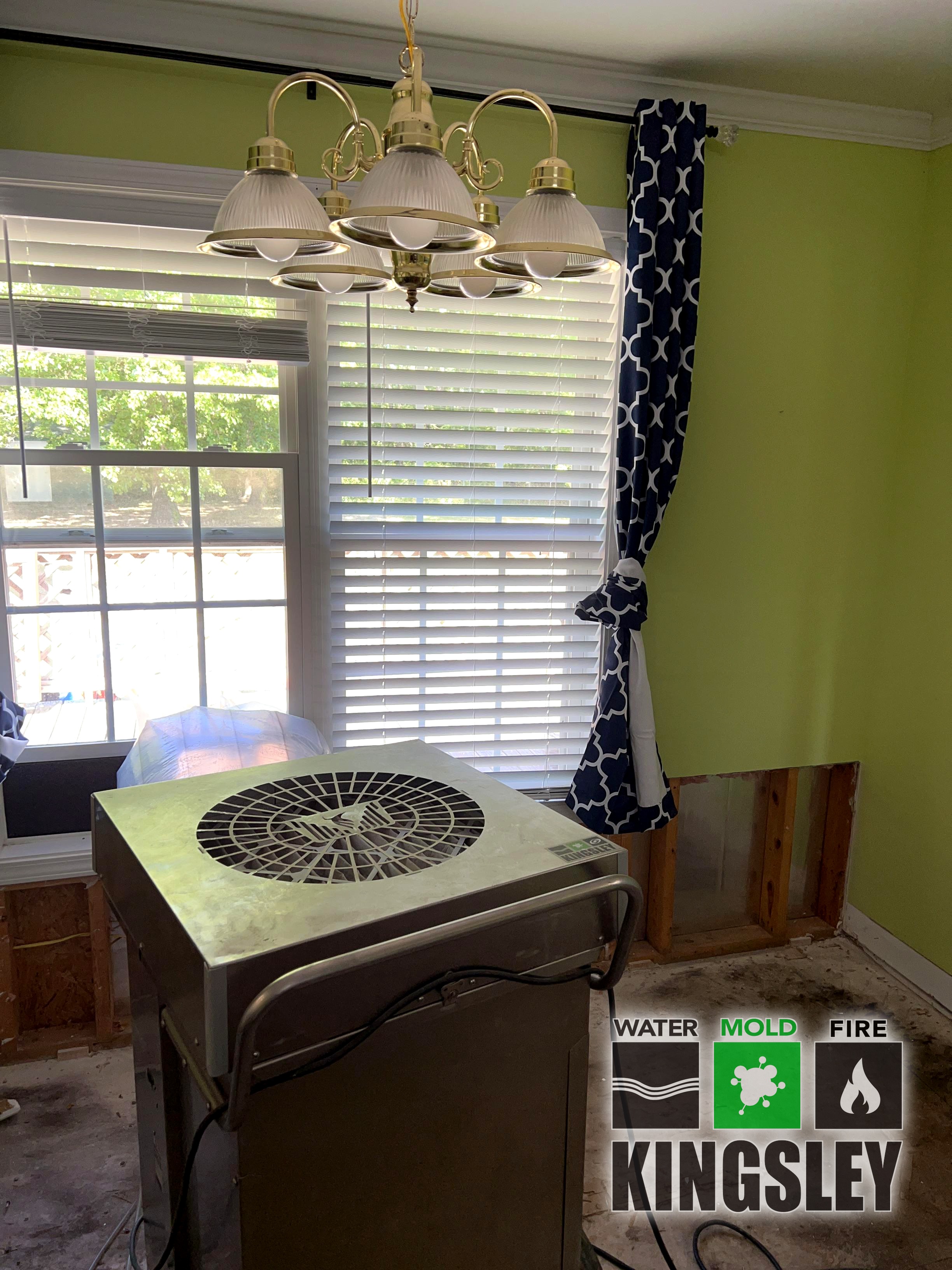
Richland, SC
August 30, 2026
Kingsley water damage & Fire cleanup completed tile floor moisture mapping and water cleanup in Richland, SC. On arrival we walked the loss area and documented tile Floor Moisture Mapping and Water Cleanup. That photo-backed condition check defined where finishes had to open, what could stay, and where drying equipment had to aim. The home needed source control, selective removal of non-salvageable wet or contaminated material, and verified drying of what remained in Richland. We avoided opening dry cavities that meters and the camera did not support on this Richland stop.
During mitigation we controlled the work zone so debris did not track into clean rooms. Where finishes blocked drying, we opened only the wet footprint shown by meters and the photo record. Non-salvageable saturated material was bagged and removed; salvageable framing and sheathing were cleaned. HEPA vacuuming and careful handling limited dust from demo. The unique on-site detail that guided this Richland file was tile Floor Moisture Mapping and Water Cleanup. We labeled the wet edge on the sketch so later visits matched day-one photos in Richland.
IICRC water-damage practice prioritizes stop the moisture source, remove what cannot be dried in place, clean remaining structures, then dry to target with measured air movement and dehumidification. We placed air movers and dehumidifiers to match the wet assembly, aimed airflow along the wet materials in the photo, and rechecked moisture on a 3–7 day drying calendar with overnight humidity checks—never past about a week. Skipping that short monitoring window is how a straightforward wet call becomes secondary damage or a musty return odor in Richland.
As readings stabilized within that first-week window, we demobilized equipment and left the work area ready for any needed rebuild of finishes or insulation. Photo documentation of the mitigation state stayed with the job file for the Richland property, including the same angle that showed tile Floor Moisture Mapping and Water Cleanup. Helpful takeaway: If flooring feels soft, edges cup, or a stain keeps spreading in Richland, stop walking the wet zone and request moisture mapping before new finishes go down.
Homeowners comparing tile floor moisture mapping and water cleanup options in the Richland area should expect a written moisture map, selective removal instead of full tear-out when meters allow, and a clear end point when materials hit dry goal—not an open-ended equipment rental. Kingsley water damage & Fire cleanup follows that measured approach so rebuild decisions rest on documented conditions rather than a calendar guess.
When rebuild starts, keep the dry-standard notes handy for flooring, cabinet, or insulation trades so no one closes a cavity that still reads wet. That handoff is part of finishing tile floor moisture mapping and water cleanup correctly in Richland after mitigation—not a separate sales pitch.
Throughout the Richland job we kept communication practical: what was wet, what was removed, what was drying, and when meters said the assembly met goal. That plain record is what homeowners and trades use after tile floor moisture mapping and water cleanup—not jargon and not an invented multi-week timeline.
Lake City, SC
March 9, 2026
Kingsley water damage & Fire cleanup completed Fire Remediation with moisture mapping, containment as needed, and verified drying over a 3–7 day window in Lake City, SC.
Atlantic Beach, sc
January 20, 2026
Fire Remediation in Columbia in Atlantic Beach.
Myrtle Beach, sc
January 12, 2026
Kingsley water damage & Fire cleanup completed Water Mitigation Emergency Response Setup with moisture mapping, containment as needed, and verified drying over a 3–7 day window in Myrtle Beach, SC.
Hartsville, sc
January 2, 2026
Water Mitigation Emergency Response Setup in Hartsville.
Swansea, SC
December 22, 2025
Water Mitigation Emergency Response Setup in Swansea.
Port Royal, SC
November 18, 2025
Water Mitigation Emergency Response Setup in Port Royal.
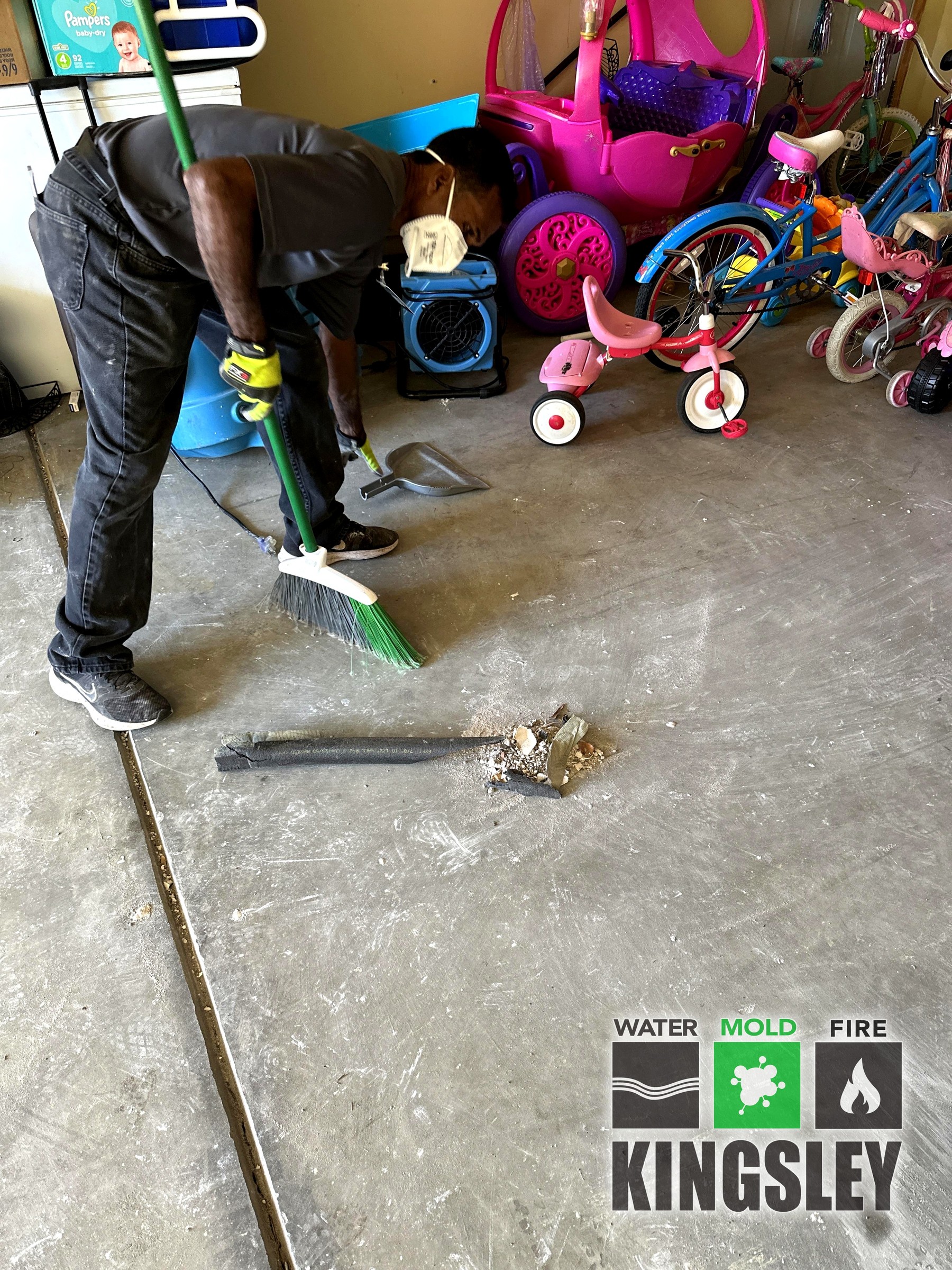
West Columbia, SC
November 11, 2025
Kingsley water damage & Fire cleanup provided emergency water cleanup in West Columbia, SC after standing water or a sudden leak affected the home. Day-one work removes liquid water, protects dry rooms, and builds a wet map so demolition stays limited. Families keep using dry parts of the house while the wet footprint stays isolated.
Mitigation steps stay in homeowner language: contain the mess, open only what inspection supports, remove what will not dry, and clean or treat what can remain. HEPA filtration supports air cleaning when dust or microbial particles are a concern. Daily updates name the rooms still wet and why machines are still on site—no unexplained jargon wall. If children or pets use the home, we talk through temporary barriers and which doors should stay closed while airflow is balanced.
Drying follows a practical IICRC-oriented order: extract, move air, dehumidify, and monitor until readings support releasing equipment. Typical occupied homes in the Midlands finish structural drying inside a 3–7 day window. Cool crawls, wall cavities, and humid stretches can need the later days; we say so before extending. We will not pack up on day two if meters still show wet materials. Mid-job visits adjust vent counts and dehumidifier settings when outdoor humidity or construction details stall progress.
Contents handling is deliberate. Wet textiles move to a drying path or pack-out decision; furniture feet get blocks on wet carpet; important documents and medications leave the wet zone in a labeled bin you keep. Electronics on wet flooring are unplugged and elevated—we do not power-test them in standing moisture. These steps sound small and prevent a second wave of damage while structural drying continues.
Close-out is a plain walkthrough of what dried, what was removed, and what rebuild steps remain. Keep HVAC from blowing moist air into dry rooms while machines run. If anything rewets, call early so the drying window is not lost. A short written summary of rooms and equipment helps you update insurance without replaying every visit from memory.
Equipment placement tries to leave bedrooms and kitchens usable when the wet map allows. Cord runs and condensate drains are planned so tanks do not overflow while you are at work. If HOA gates, narrow drives, or shared crawls affect staging in West Columbia, share that on the first call so the truck arrives ready. Neighbor notices matter on duplex and townhome hatches.
Kingsley water damage & Fire cleanup uses 3031 Scotsman Rd Suite 16, Columbia, SC 29223 for Midlands paperwork and 803-590-0370 for live dispatch. You choose the contractor; preferred lists are optional. We document for carriers when you authorize it and direct-bill when the policy allows. Where detailed photo logs for this older job are thin, this page describes the standard mitigation approach for this loss type in West Columbia without inventing claim numbers, meter digits, or crew names.
If rebuild trades follow mitigation, we leave surfaces accessible and share moisture notes so flooring or drywall work does not trap leftover dampness. That handoff is part of finishing strong in the Midlands humidity cycle.
Columbia, SC
November 3, 2025
Kingsley water damage & Fire cleanup supported fire and smoke cleanup in Columbia, SC where heat and residues affected finished rooms and, in many Midlands losses, suppression water soaked flooring below. We confirm safe entry, photograph soot patterns on walls, ceilings, and contents, and separate dry living space from the work zone before wet-wiping anything. That photo-backed look decides what cleans in place, what packs out, and where structural drying must run in parallel so cleaned surfaces are not sitting on wet substrate.
Mitigation steps stay in homeowner language: contain the mess, open only what inspection supports, remove what will not dry, and clean or treat what can remain. HEPA filtration supports air cleaning when dust or microbial particles are a concern. Daily updates name the rooms still wet and why machines are still on site—no unexplained jargon wall. If children or pets use the home, we talk through temporary barriers and which doors should stay closed while airflow is balanced.
Drying follows a practical IICRC-oriented order: extract, move air, dehumidify, and monitor until readings support releasing equipment. Typical occupied homes in the Midlands finish structural drying inside a 3–7 day window. Cool crawls, wall cavities, and humid stretches can need the later days; we say so before extending. We will not pack up on day two if meters still show wet materials. Mid-job visits adjust vent counts and dehumidifier settings when outdoor humidity or construction details stall progress.
Contents handling is deliberate. Wet textiles move to a drying path or pack-out decision; furniture feet get blocks on wet carpet; important documents and medications leave the wet zone in a labeled bin you keep. Electronics on wet flooring are unplugged and elevated—we do not power-test them in standing moisture. These steps sound small and prevent a second wave of damage while structural drying continues.
Close-out walks cleaned surfaces, sets residual odor expectations, and separates mitigation from longer rebuild decisions. Contents stay or go based on residue depth—not a blanket discard. If suppression water soaked floors, drying continues so soot cleaning is not wasted on wet substrate. You leave knowing which trades may still need to rebuild after mitigation.
Equipment placement tries to leave bedrooms and kitchens usable when the wet map allows. Cord runs and condensate drains are planned so tanks do not overflow while you are at work. If HOA gates, narrow drives, or shared crawls affect staging in Columbia, share that on the first call so the truck arrives ready. Neighbor notices matter on duplex and townhome hatches.
Kingsley water damage & Fire cleanup uses 3031 Scotsman Rd Suite 16, Columbia, SC 29223 for Midlands paperwork and 803-590-0370 for live dispatch. You choose the contractor; preferred lists are optional. We document for carriers when you authorize it and direct-bill when the policy allows. Where detailed photo logs for this older job are thin, this page describes the standard mitigation approach for this loss type in Columbia without inventing claim numbers, meter digits, or crew names.
Summerville, SC
October 8, 2025
Fire and Water Remediation in Summerville.
Myrtle Beach, SC
October 8, 2025
Kingsley water damage & Fire cleanup completed Water Mitigation Emergency Response Setup with moisture mapping, containment as needed, and verified drying over a 3–7 day window in Myrtle Beach, SC.
Greenville, SC
August 28, 2025
Interior Water & Mold Remediation in Greenville.

Lake Murray, SC
August 26, 2025
This Lake Murray property had severe hidden water damage beneath laminate flooring. Moisture meter readings exceeded 99% in several areas, and demo revealed rot, subfloor collapse, and pooling near HVAC returns. Kingsley documented all damage for insurance, removed compromised materials, and treated exposed slab for microbial growth. The space was dried, stabilized, and made ready for safe rebuild.
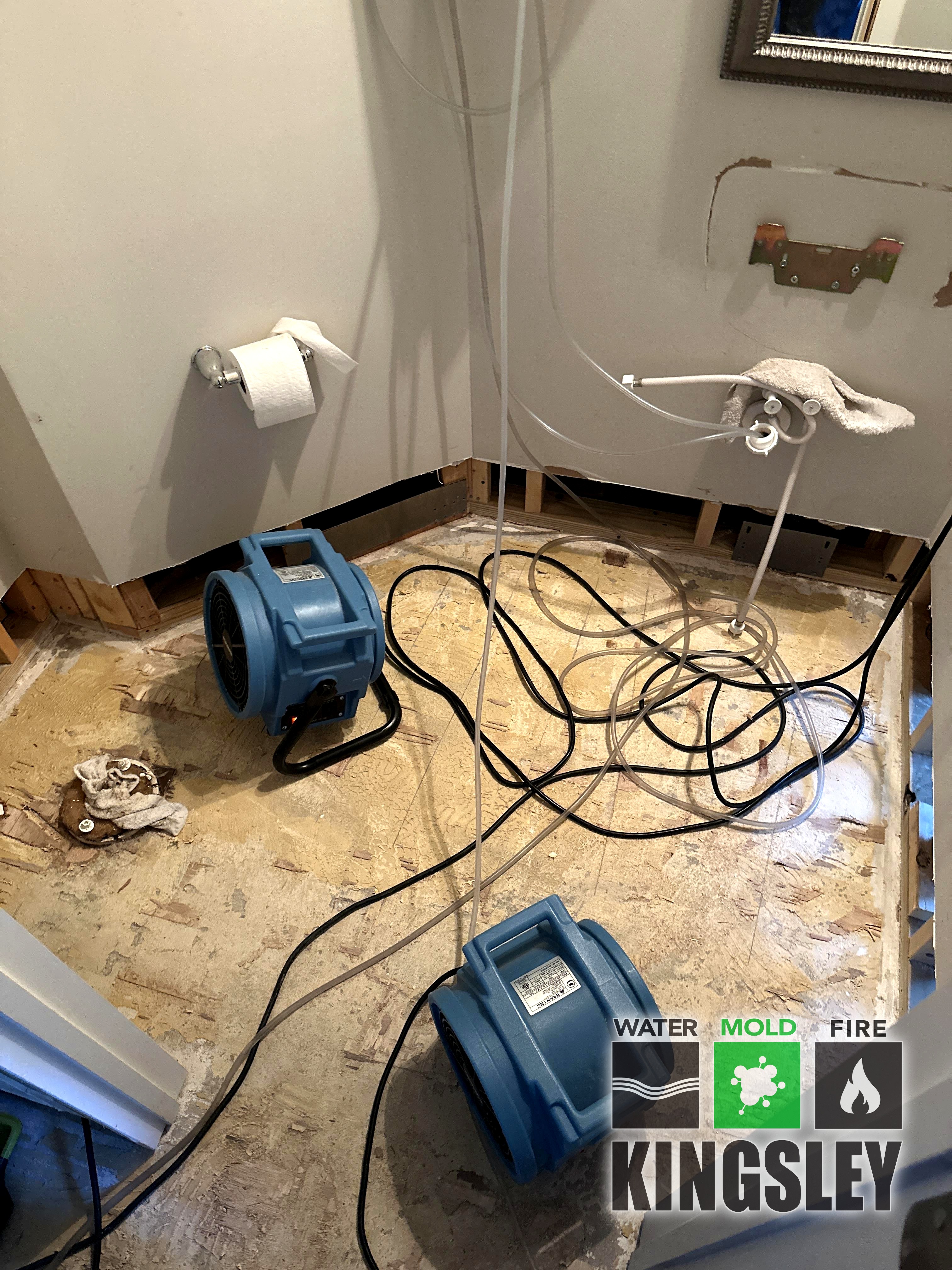
Carolina Forest, SC
August 24, 2025
Kingsley Water Damage & Fire Cleanup provided crawlspace and bathroom mitigation for a homeowner in Carolina Forest, SC. Bathroom leaks and overflows often send water through the subfloor into the crawlspace, where damp wood, insulation, and standing moisture can linger out of sight. On this type of call we start by confirming the water is off at the fixture or supply, checking that the bathroom floor and adjacent finishes are safe to walk, and inspecting the crawlspace entry so the crew can see how far moisture traveled under the home before any drying plan is locked in. That whole-house moisture path—from the wet bathroom down into the crawl—is what drives scope in Carolina Forest homes built over open or sealed crawl bays.
Mitigation follows a homeowner-friendly sequence: contain the work zone so dust and moisture do not track into clean rooms, open only the wet footprint that meters and visual inspection support, and decide what can be cleaned and dried in place versus what must be removed. In bathrooms that can mean carefully handling wet vanity bases, toilet flanges, or saturated underlayment when they block drying. In the crawlspace it can mean bagging unsalvageable wet insulation, wiping and treating salvageable framing when staining or microbial growth warrants it, and using HEPA vacuuming so debris from selective demo stays controlled. Protected pathways and temporary barriers keep the rest of the house usable while the wet zones are worked.
IICRC water-damage practice prioritizes stop the source, remove materials that cannot be dried in place, clean remaining structures, then dry with measured air movement and dehumidification. Air movers and dehumidifiers are placed to match the wet bathroom floor assembly and the crawl bay beneath it, with airflow aimed along damp joists and subfloor undersides rather than running equipment aimlessly. Moisture is rechecked on a 3–7 day drying calendar with overnight humidity awareness—never stretched past about a week for a straightforward mitigation. Skipping that short monitoring window is how a bathroom leak becomes secondary damage in adjoining cavities or a musty return odor under the floor. Quiet work windows are held when the household schedule requires it.
As readings stabilize and the bathroom and crawlspace reach a clean, dry condition within that first-week window, equipment is demobilized and the areas are left ready for any needed rebuild of finishes, insulation, or bathroom fixtures by the homeowner’s chosen trade. Clear handoff notes on what was removed versus what was dried in place help flooring, plumbing, or insulation contractors pick up without reopening dry assemblies. The goal is a stable, odor-controlled under-floor environment and a bathroom floor system ready for lasting repairs—not a rushed cover-up over damp wood.
Helpful takeaway for Carolina Forest homeowners: if you notice soft bathroom flooring, staining at the tub or toilet, musty odors from floor registers, or damp insulation in the crawl, have the moisture path inspected before new flooring or vapor barrier hides the problem. Expect a clear wet map, selective removal instead of full tear-out when meters allow, and a defined end point when materials hit dry goal—not an open-ended equipment rental. Early action after a bathroom overflow usually shortens the drying calendar and limits how much underlayment or insulation has to leave the home.
Homeowners comparing crawlspace and bathroom mitigation options around Carolina Forest and the greater Grand Strand should look for contained demo, measured drying on a 3–7 day plan, and honest talk about what can be saved. Kingsley Water Damage & Fire Cleanup serves Carolina Forest and nearby communities from 3031 Scotsman Rd Suite 16, Columbia, SC 29223, with 24/7 coordination at 803-590-0370 when water is actively spreading from a bath into the crawlspace below.
Greenville, SC
August 17, 2025
Crawl Space Mold Remediation in Greenville.
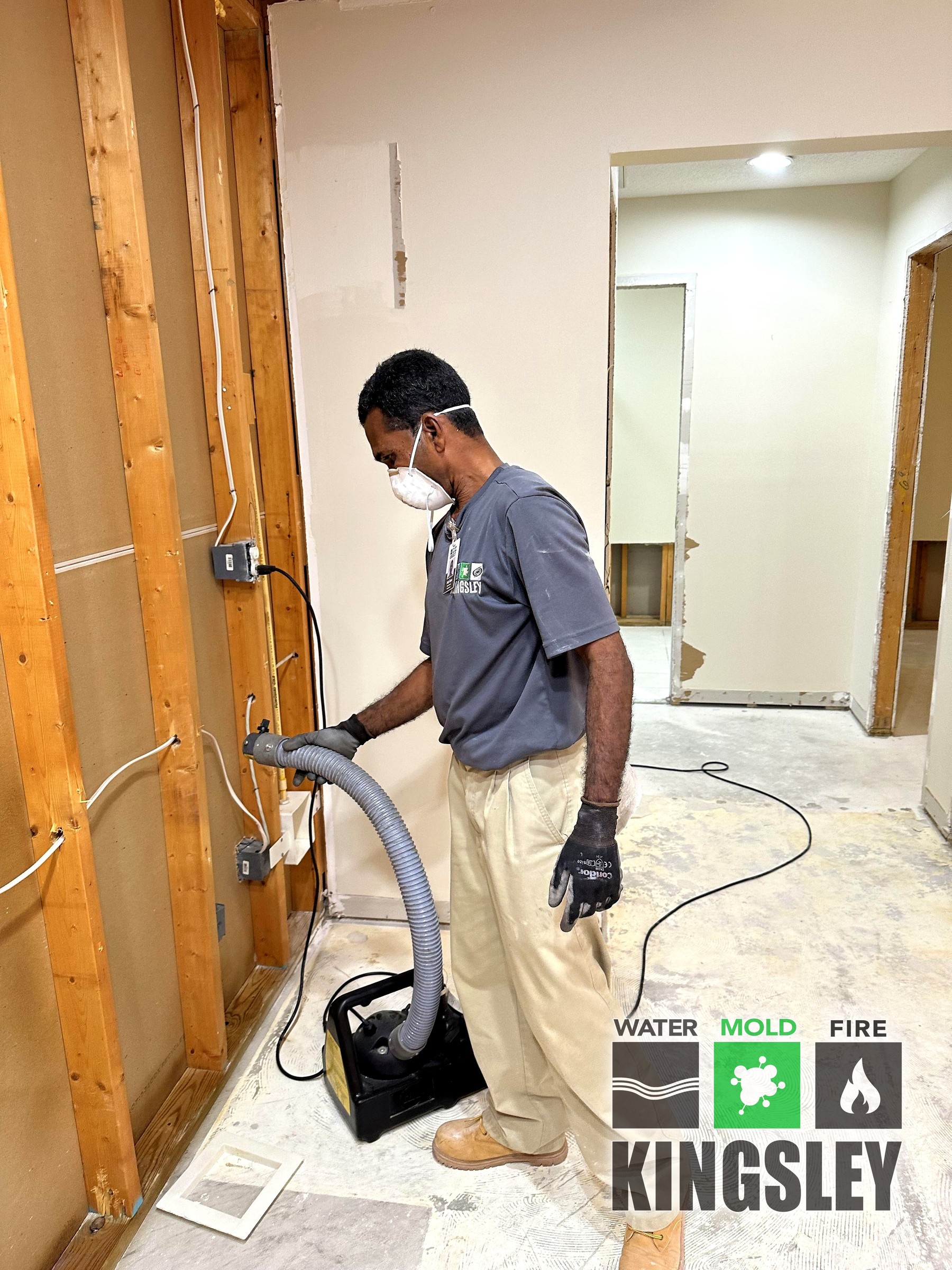
Columbia, SC
August 14, 2025
Kingsley water damage & Fire cleanup mitigated plumbing water damage in Columbia, SC after a supply or fixture failure wet finished areas. With the source controlled, we extract, map baseboards and toe-kicks, and open only materials that block airflow. Bath walls and cabinet bases are common leftover-moisture traps on Midlands plumbing calls.
Mitigation steps stay in homeowner language: contain the mess, open only what inspection supports, remove what will not dry, and clean or treat what can remain. HEPA filtration supports air cleaning when dust or microbial particles are a concern. Daily updates name the rooms still wet and why machines are still on site—no unexplained jargon wall. If children or pets use the home, we talk through temporary barriers and which doors should stay closed while airflow is balanced.
Drying follows a practical IICRC-oriented order: extract, move air, dehumidify, and monitor until readings support releasing equipment. Typical occupied homes in the Midlands finish structural drying inside a 3–7 day window. Cool crawls, wall cavities, and humid stretches can need the later days; we say so before extending. We will not pack up on day two if meters still show wet materials. Mid-job visits adjust vent counts and dehumidifier settings when outdoor humidity or construction details stall progress.
Contents handling is deliberate. Wet textiles move to a drying path or pack-out decision; furniture feet get blocks on wet carpet; important documents and medications leave the wet zone in a labeled bin you keep. Electronics on wet flooring are unplugged and elevated—we do not power-test them in standing moisture. These steps sound small and prevent a second wave of damage while structural drying continues.
Close-out is a plain walkthrough of what dried, what was removed, and what rebuild steps remain. Keep HVAC from blowing moist air into dry rooms while machines run. If anything rewets, call early so the drying window is not lost. A short written summary of rooms and equipment helps you update insurance without replaying every visit from memory.
Equipment placement tries to leave bedrooms and kitchens usable when the wet map allows. Cord runs and condensate drains are planned so tanks do not overflow while you are at work. If HOA gates, narrow drives, or shared crawls affect staging in Columbia, share that on the first call so the truck arrives ready. Neighbor notices matter on duplex and townhome hatches.
Kingsley water damage & Fire cleanup uses 3031 Scotsman Rd Suite 16, Columbia, SC 29223 for Midlands paperwork and 803-590-0370 for live dispatch. You choose the contractor; preferred lists are optional. We document for carriers when you authorize it and direct-bill when the policy allows. Where detailed photo logs for this older job are thin, this page describes the standard mitigation approach for this loss type in Columbia without inventing claim numbers, meter digits, or crew names.
If rebuild trades follow mitigation, we leave surfaces accessible and share moisture notes so flooring or drywall work does not trap leftover dampness. That handoff is part of finishing strong in the Midlands humidity cycle.
Greenville, SC
August 10, 2025
Ceiling Stain to Crawlspace Disaster in Greenville.
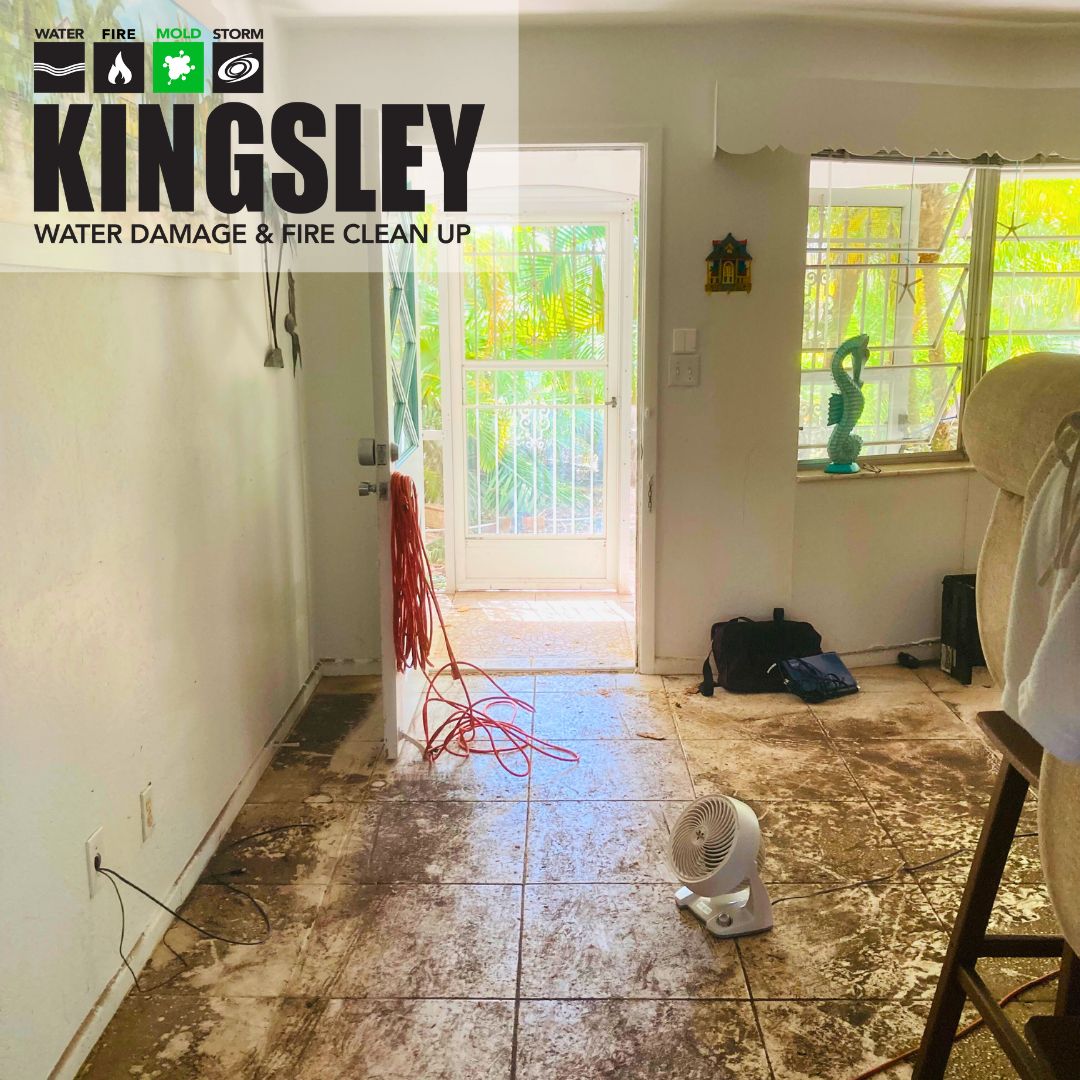
Lake Murray, SC
August 6, 2025
This Lake Murray residence suffered severe flooding that spread quickly from the bathroom and living room into adjoining spaces. The sudden water intrusion saturated flooring, soaked drywall, and left behind soil and debris throughout the home. Kingsley's emergency response team arrived on-site to begin immediate mitigation and recovery.
Our certified water damage specialists performed full moisture mapping, strategic tear-out of affected materials, and high-powered structural drying using commercial-grade dehumidifiers and air movers. All contaminated areas were treated to prevent mold growth and further deterioration. The home was stabilized and prepared for restoration within 48 hours.

York, SC
July 26, 2025
A homeowner in York County contacted Kingsley after heavy storm showers created yellow staining and sagging in their garage ceiling which led to extensive water damage. Upon inspection our team identified a small but growing leak above the water heater. Wet insulation was exposed, drywall deterioration was visible. We initiated moisture mapping and performed a full mitigation plan to remove saturated material and prevent further spread into the adjoining kitchen and hallway.
Lexington, SC
July 21, 2025
Kingsley water damage & Fire cleanup supported fire and smoke cleanup in Lexington, SC where heat and residues affected finished rooms and, in many Midlands losses, suppression water soaked flooring below. We confirm safe entry, photograph soot patterns on walls, ceilings, and contents, and separate dry living space from the work zone before wet-wiping anything. That photo-backed look decides what cleans in place, what packs out, and where structural drying must run in parallel so cleaned surfaces are not sitting on wet substrate.
Mitigation steps stay in homeowner language: contain the mess, open only what inspection supports, remove what will not dry, and clean or treat what can remain. HEPA filtration supports air cleaning when dust or microbial particles are a concern. Daily updates name the rooms still wet and why machines are still on site—no unexplained jargon wall. If children or pets use the home, we talk through temporary barriers and which doors should stay closed while airflow is balanced.
Drying follows a practical IICRC-oriented order: extract, move air, dehumidify, and monitor until readings support releasing equipment. Typical occupied homes in the Midlands finish structural drying inside a 3–7 day window. Cool crawls, wall cavities, and humid stretches can need the later days; we say so before extending. We will not pack up on day two if meters still show wet materials. Mid-job visits adjust vent counts and dehumidifier settings when outdoor humidity or construction details stall progress.
Contents handling is deliberate. Wet textiles move to a drying path or pack-out decision; furniture feet get blocks on wet carpet; important documents and medications leave the wet zone in a labeled bin you keep. Electronics on wet flooring are unplugged and elevated—we do not power-test them in standing moisture. These steps sound small and prevent a second wave of damage while structural drying continues.
Close-out walks cleaned surfaces, sets residual odor expectations, and separates mitigation from longer rebuild decisions. Contents stay or go based on residue depth—not a blanket discard. If suppression water soaked floors, drying continues so soot cleaning is not wasted on wet substrate. You leave knowing which trades may still need to rebuild after mitigation.
Equipment placement tries to leave bedrooms and kitchens usable when the wet map allows. Cord runs and condensate drains are planned so tanks do not overflow while you are at work. If HOA gates, narrow drives, or shared crawls affect staging in Lexington, share that on the first call so the truck arrives ready. Neighbor notices matter on duplex and townhome hatches.
Kingsley water damage & Fire cleanup uses 3031 Scotsman Rd Suite 16, Columbia, SC 29223 for Midlands paperwork and 803-590-0370 for live dispatch. You choose the contractor; preferred lists are optional. We document for carriers when you authorize it and direct-bill when the policy allows. Where detailed photo logs for this older job are thin, this page describes the standard mitigation approach for this loss type in Lexington without inventing claim numbers, meter digits, or crew names.
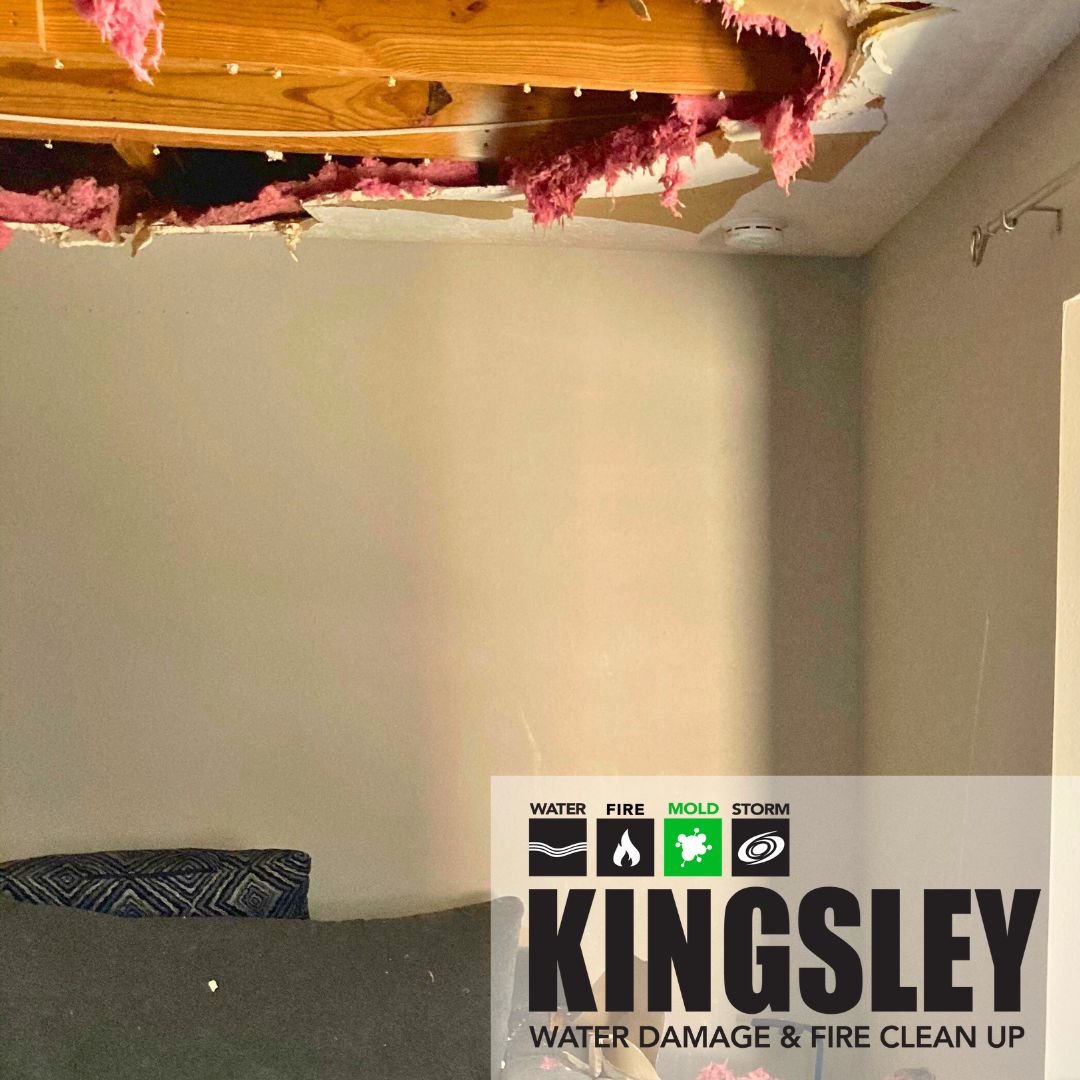
Snug Harbor, SC
July 19, 2025
Heavy rainfall caused water to pool rapidly in the attic of a Snug Harbor residence, resulting in an immediate ceiling failure in the living room. The collapse exposed structural beams, insulation, and caused severe debris contamination. Kingsley responded quickly to secure the area, remove wet materials, and initiate full storm damage restoration.
Blair, SC
July 15, 2025
Kitchen Ceiling Mold Water Damage in Blair.
White Knoll, SC
July 11, 2025
Kingsley water damage & Fire cleanup responded to a water-damaged living room ceiling collapse in White Knoll, SC. We confirm safe entry, photograph the failed ceiling and wet contents below, and isolate dry rooms before demolition. Collapsed drywall and insulation are bagged so dust does not travel through the house.
Mitigation stays in homeowner language: contain the mess, remove what will not dry, and protect family pathways. HEPA filtration supports air cleaning while debris leaves. Daily updates name which rooms are still wet and why equipment remains—no unexplained jargon.
Drying follows extract, air movement, dehumidification, then monitor. Typical occupied Midlands homes finish inside a 3–7 day window; open ceiling cavities and humid weather can need the later days. We will not pack up early if meters still show wet framing or subfloor.
Contents under the collapse—sofas, rugs, electronics—are elevated or packed based on saturation. Furniture feet get blocks; medications and papers leave the wet zone in a labeled bin you keep. These small steps prevent a second wave of damage while structure dries.
Close-out walks what was removed, what is drying, and which rebuild trades may hang new drywall after readings clear. Keep HVAC from blowing moist air into dry bedrooms while machines run. If anything rewets overnight, call early so the drying window is not lost.
Equipment placement leaves as much of the home usable as the wet map allows. Cord runs and condensate drains are planned so tanks do not overflow overnight. Share HOA or driveway limits on the first call when they affect staging in White Knoll subdivisions.
Kingsley water damage & Fire cleanup uses 3031 Scotsman Rd Suite 16, Columbia, SC 29223 for paperwork and 803-590-0370 for live dispatch. You choose the contractor; preferred lists are optional. Where older photo logs are thin, this page describes the standard approach for this loss type without inventing claim numbers or meter digits. If rebuild trades follow, we leave surfaces accessible and share moisture notes so new drywall does not trap leftover dampness in the Midlands humidity cycle.
If rebuild trades follow mitigation, we leave surfaces accessible and share moisture notes so flooring or drywall work does not trap leftover dampness. That handoff is part of finishing strong in the Midlands humidity cycle.
On monitoring visits we show where readings dropped and where they stalled. If a corner still reads high, we move air—not hope. You leave with a simple next-day expectation instead of unexplained printouts. Neighbor notices matter on shared walls when demolition dust could travel.
Category decisions and PPE follow what the water actually contacted. Clean supply leaks and contaminated paths are not treated the same. Tell the crew if sewage or outdoor flood water mixed in so disposal and cleaning match the loss.
Chapin, SC
July 9, 2025
Kingsley water damage & Fire cleanup supported fire and smoke cleanup in Chapin, SC where heat and residues affected finished rooms and, in many Midlands losses, suppression water soaked flooring below. We confirm safe entry, photograph soot patterns on walls, ceilings, and contents, and separate dry living space from the work zone before wet-wiping anything. That photo-backed look decides what cleans in place, what packs out, and where structural drying must run in parallel so cleaned surfaces are not sitting on wet substrate.
Mitigation steps stay in homeowner language: contain the mess, open only what inspection supports, remove what will not dry, and clean or treat what can remain. HEPA filtration supports air cleaning when dust or microbial particles are a concern. Daily updates name the rooms still wet and why machines are still on site—no unexplained jargon wall. If children or pets use the home, we talk through temporary barriers and which doors should stay closed while airflow is balanced.
Drying follows a practical IICRC-oriented order: extract, move air, dehumidify, and monitor until readings support releasing equipment. Typical occupied homes in the Midlands finish structural drying inside a 3–7 day window. Cool crawls, wall cavities, and humid stretches can need the later days; we say so before extending. We will not pack up on day two if meters still show wet materials. Mid-job visits adjust vent counts and dehumidifier settings when outdoor humidity or construction details stall progress.
Contents handling is deliberate. Wet textiles move to a drying path or pack-out decision; furniture feet get blocks on wet carpet; important documents and medications leave the wet zone in a labeled bin you keep. Electronics on wet flooring are unplugged and elevated—we do not power-test them in standing moisture. These steps sound small and prevent a second wave of damage while structural drying continues.
Close-out walks cleaned surfaces, sets residual odor expectations, and separates mitigation from longer rebuild decisions. Contents stay or go based on residue depth—not a blanket discard. If suppression water soaked floors, drying continues so soot cleaning is not wasted on wet substrate. You leave knowing which trades may still need to rebuild after mitigation.
Equipment placement tries to leave bedrooms and kitchens usable when the wet map allows. Cord runs and condensate drains are planned so tanks do not overflow while you are at work. If HOA gates, narrow drives, or shared crawls affect staging in Chapin, share that on the first call so the truck arrives ready. Neighbor notices matter on duplex and townhome hatches.
Kingsley water damage & Fire cleanup uses 3031 Scotsman Rd Suite 16, Columbia, SC 29223 for Midlands paperwork and 803-590-0370 for live dispatch. You choose the contractor; preferred lists are optional. We document for carriers when you authorize it and direct-bill when the policy allows. Where detailed photo logs for this older job are thin, this page describes the standard mitigation approach for this loss type in Chapin without inventing claim numbers, meter digits, or crew names.
Oak Grove, SC
July 8, 2025
Commercial Property Water Mitigation in Oak Grove.
Leesville, SC
July 3, 2025
Moldy Window From Pooling Water in Leesville.
Aiken, SC
July 1, 2025
In Wagener, SC, we responded to a call about heavy mold buildup around window. The infestation had thickened due to prolonged trapped humidity. Our team safely contained and removed the growth, treating the surrounding materials and identifying areas for improved airflow and insulation.
Moncks Corner, SC
June 27, 2025
Crawlspace Subfloor Water Damage in Moncks Corner.

Saluda, SC
June 23, 2025
A local office in Saluda contacted our 24/7 emergency line when they experienced sudden flooding across its carpeted workspace. Kingsley responded with water extraction, drying and structural inspection to ensure the business could return to operations quickly and safely.

Kenwood Acres, SC
June 18, 2025
First steps are to assess damage and secure property once it's been cleared by the fire marshall to safely re-enter the structure. Goal is to address the visible and hidden damages caused by the house fire. That starts with any water removal and drying used to extinguish the fire and prevent mold. Followed by debris and demolition for cleaning and repairs and finished off by smoke/soot removal with a final clean and sanitization. Safety checks and tests are taken every step of the way, critical to returning the home to a safe harm-free living space for families and their pets.
Aiken, SC
June 15, 2025
After a fire tore through the ceiling of a Wagener home, insulation and drywall collapsed, leaving the structure unstable and covered in soot. Kingsley performed the emergency board-up, safety stabilization, and fire damage cleanup.
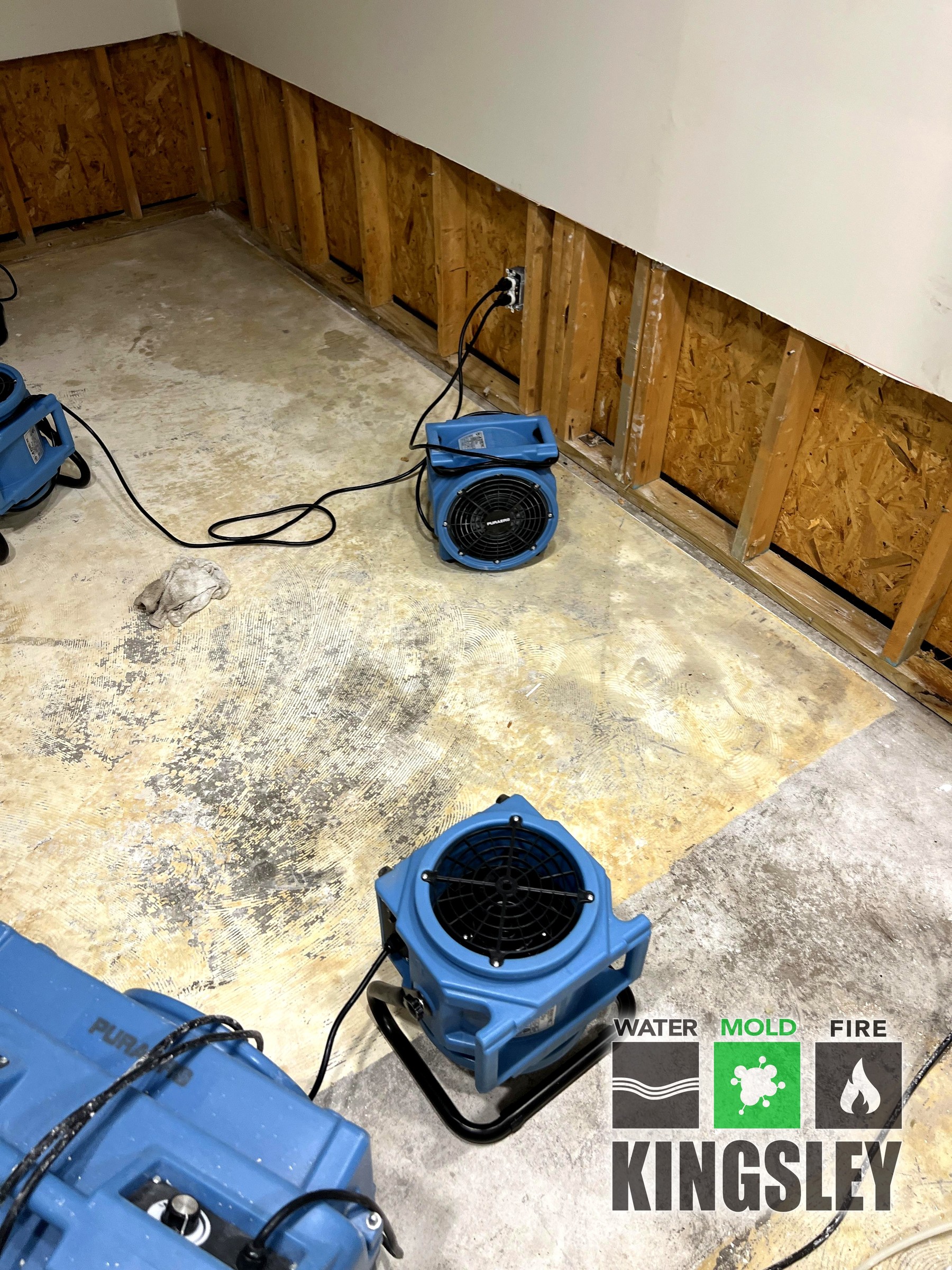
Springdale, SC
June 14, 2025
Kingsley water damage & Fire cleanup traced ceiling moisture in Springdale, SC through the stained assembly and any accessible attic or HVAC chase. We document the pattern, check insulation, and confirm whether water is still active before opening finishes. Isolating the wet footprint keeps dry bedrooms from picking up humidity while equipment runs through the drying window.
Mitigation steps stay in homeowner language: contain the mess, open only what inspection supports, remove what will not dry, and clean or treat what can remain. HEPA filtration supports air cleaning when dust or microbial particles are a concern. Daily updates name the rooms still wet and why machines are still on site—no unexplained jargon wall. If children or pets use the home, we talk through temporary barriers and which doors should stay closed while airflow is balanced.
Drying follows a practical IICRC-oriented order: extract, move air, dehumidify, and monitor until readings support releasing equipment. Typical occupied homes in the Midlands finish structural drying inside a 3–7 day window. Cool crawls, wall cavities, and humid stretches can need the later days; we say so before extending. We will not pack up on day two if meters still show wet materials. Mid-job visits adjust vent counts and dehumidifier settings when outdoor humidity or construction details stall progress.
Contents handling is deliberate. Wet textiles move to a drying path or pack-out decision; furniture feet get blocks on wet carpet; important documents and medications leave the wet zone in a labeled bin you keep. Electronics on wet flooring are unplugged and elevated—we do not power-test them in standing moisture. These steps sound small and prevent a second wave of damage while structural drying continues.
Close-out is a plain walkthrough of what dried, what was removed, and what rebuild steps remain. Keep HVAC from blowing moist air into dry rooms while machines run. If anything rewets, call early so the drying window is not lost. A short written summary of rooms and equipment helps you update insurance without replaying every visit from memory.
Equipment placement tries to leave bedrooms and kitchens usable when the wet map allows. Cord runs and condensate drains are planned so tanks do not overflow while you are at work. If HOA gates, narrow drives, or shared crawls affect staging in Springdale, share that on the first call so the truck arrives ready. Neighbor notices matter on duplex and townhome hatches.
Kingsley water damage & Fire cleanup uses 3031 Scotsman Rd Suite 16, Columbia, SC 29223 for Midlands paperwork and 803-590-0370 for live dispatch. You choose the contractor; preferred lists are optional. We document for carriers when you authorize it and direct-bill when the policy allows. Where detailed photo logs for this older job are thin, this page describes the standard mitigation approach for this loss type in Springdale without inventing claim numbers, meter digits, or crew names.
If rebuild trades follow mitigation, we leave surfaces accessible and share moisture notes so flooring or drywall work does not trap leftover dampness. That handoff is part of finishing strong in the Midlands humidity cycle.
Forest Acres, SC
March 4, 2025
Kingsley water damage & Fire cleanup completed Crawlspace Water Clean Up with moisture mapping, containment as needed, and verified drying over a 3–7 day window in Forest Acres, SC.
Florence, SC
March 2, 2025
Water Damage After Busted Pipe in Florence.
Fairfield, SC
February 18, 2025
Kingsley water damage & Fire cleanup completed Water Damage in Kitchen Cabinets with moisture mapping, containment as needed, and verified drying over a 3–7 day window in Fairfield, SC.
Myrtle Beach, SC
February 12, 2025
Kingsley water damage & Fire cleanup completed Crawlspace Mold Inspection with moisture mapping, containment as needed, and verified drying over a 3–7 day window in Myrtle Beach, SC.
Elgin, SC
February 1, 2025
Applying Antimicrobial Spray and Cleaning Up in Elgin.
Newberry, SC
January 25, 2025
Kingsley water damage & Fire cleanup completed Overflowing Washing Machine with moisture mapping, containment as needed, and verified drying over a 3–7 day window in Newberry, SC.
Leesville, SC
January 13, 2025
Potential Mold in Crawlspace in Leesville.
Aiken, SC
January 2, 2025
Kingsley water damage & Fire cleanup completed Fire Damage with moisture mapping, containment as needed, and verified drying over a 3–7 day window in Aiken, SC.
Chapin, SC
December 27, 2024
Kingsley water damage & Fire cleanup handled mold-related work in Chapin, SC after moisture left growth or air concerns on real building materials. Inspection comes first: attic sheathing, crawl framing, cabinet interiors, or wall cavities get a documented look so scope matches what is present. Containment goes up when demolition dust or spores could travel into clean rooms. Chapin homeowners get a plain explanation of what stays, what goes, and why—not a mystery checklist.
Mitigation steps stay in homeowner language: contain the mess, open only what inspection supports, remove what will not dry, and clean or treat what can remain. HEPA filtration supports air cleaning when dust or microbial particles are a concern. Daily updates name the rooms still wet and why machines are still on site—no unexplained jargon wall. If children or pets use the home, we talk through temporary barriers and which doors should stay closed while airflow is balanced.
Drying follows a practical IICRC-oriented order: extract, move air, dehumidify, and monitor until readings support releasing equipment. Typical occupied homes in the Midlands finish structural drying inside a 3–7 day window. Cool crawls, wall cavities, and humid stretches can need the later days; we say so before extending. We will not pack up on day two if meters still show wet materials. Mid-job visits adjust vent counts and dehumidifier settings when outdoor humidity or construction details stall progress.
Contents handling is deliberate. Wet textiles move to a drying path or pack-out decision; furniture feet get blocks on wet carpet; important documents and medications leave the wet zone in a labeled bin you keep. Electronics on wet flooring are unplugged and elevated—we do not power-test them in standing moisture. These steps sound small and prevent a second wave of damage while structural drying continues.
Close-out shows what was cleaned or removed and flags any roof, plumbing, or humidity source that still needs another trade. We do not invent square footage. For Chapin homes, fixing the water path first is the takeaway—otherwise growth conversations restart after the next humid week.
Equipment placement tries to leave bedrooms and kitchens usable when the wet map allows. Cord runs and condensate drains are planned so tanks do not overflow while you are at work. If HOA gates, narrow drives, or shared crawls affect staging in Chapin, share that on the first call so the truck arrives ready. Neighbor notices matter on duplex and townhome hatches.
Kingsley water damage & Fire cleanup uses 3031 Scotsman Rd Suite 16, Columbia, SC 29223 for Midlands paperwork and 803-590-0370 for live dispatch. You choose the contractor; preferred lists are optional. We document for carriers when you authorize it and direct-bill when the policy allows. Where detailed photo logs for this older job are thin, this page describes the standard mitigation approach for this loss type in Chapin without inventing claim numbers, meter digits, or crew names.
If rebuild trades follow mitigation, we leave surfaces accessible and share moisture notes so flooring or drywall work does not trap leftover dampness. That handoff is part of finishing strong in the Midlands humidity cycle.
Aiken, SC
November 13, 2024
Kingsley water damage & Fire cleanup completed Bathtub Overflow Upstairs with moisture mapping, containment as needed, and verified drying over a 3–7 day window in Aiken, SC.
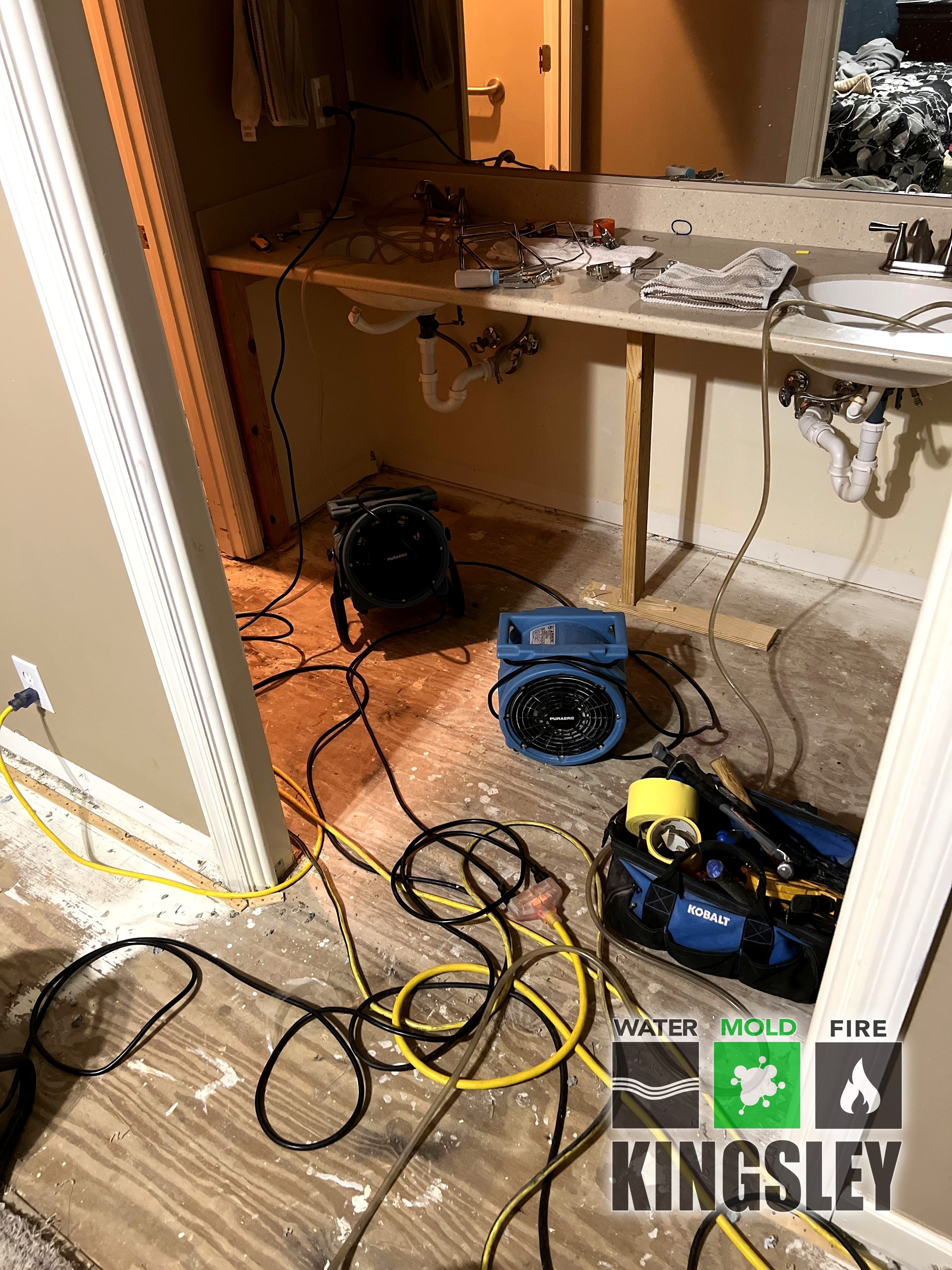
Chapin, SC
November 12, 2024
Kingsley water damage & Fire cleanup mitigated plumbing water damage in Chapin, SC after a supply or fixture failure wet finished areas. With the source controlled, we extract, map baseboards and toe-kicks, and open only materials that block airflow. Bath walls and cabinet bases are common leftover-moisture traps on Midlands plumbing calls.
Mitigation steps stay in homeowner language: contain the mess, open only what inspection supports, remove what will not dry, and clean or treat what can remain. HEPA filtration supports air cleaning when dust or microbial particles are a concern. Daily updates name the rooms still wet and why machines are still on site—no unexplained jargon wall. If children or pets use the home, we talk through temporary barriers and which doors should stay closed while airflow is balanced.
Drying follows a practical IICRC-oriented order: extract, move air, dehumidify, and monitor until readings support releasing equipment. Typical occupied homes in the Midlands finish structural drying inside a 3–7 day window. Cool crawls, wall cavities, and humid stretches can need the later days; we say so before extending. We will not pack up on day two if meters still show wet materials. Mid-job visits adjust vent counts and dehumidifier settings when outdoor humidity or construction details stall progress.
Contents handling is deliberate. Wet textiles move to a drying path or pack-out decision; furniture feet get blocks on wet carpet; important documents and medications leave the wet zone in a labeled bin you keep. Electronics on wet flooring are unplugged and elevated—we do not power-test them in standing moisture. These steps sound small and prevent a second wave of damage while structural drying continues.
Close-out is a plain walkthrough of what dried, what was removed, and what rebuild steps remain. Keep HVAC from blowing moist air into dry rooms while machines run. If anything rewets, call early so the drying window is not lost. A short written summary of rooms and equipment helps you update insurance without replaying every visit from memory.
Equipment placement tries to leave bedrooms and kitchens usable when the wet map allows. Cord runs and condensate drains are planned so tanks do not overflow while you are at work. If HOA gates, narrow drives, or shared crawls affect staging in Chapin, share that on the first call so the truck arrives ready. Neighbor notices matter on duplex and townhome hatches.
Kingsley water damage & Fire cleanup uses 3031 Scotsman Rd Suite 16, Columbia, SC 29223 for Midlands paperwork and 803-590-0370 for live dispatch. You choose the contractor; preferred lists are optional. We document for carriers when you authorize it and direct-bill when the policy allows. Where detailed photo logs for this older job are thin, this page describes the standard mitigation approach for this loss type in Chapin without inventing claim numbers, meter digits, or crew names.
If rebuild trades follow mitigation, we leave surfaces accessible and share moisture notes so flooring or drywall work does not trap leftover dampness. That handoff is part of finishing strong in the Midlands humidity cycle.
White Rock, SC
October 16, 2024
Kingsley water damage & Fire cleanup completed Commercial Fire Damage Cleanup with moisture mapping, containment as needed, and verified drying over a 3–7 day window in White Rock, SC.
Atlantic Beach, SC
September 1, 2024
Commercial Fire Damage in Atlantic Beach.
State Park, SC
August 13, 2024
Mold Remediation in Residential Dwelling in State Park.
Forest Acres, SC
July 26, 2024
Kingsley water damage & Fire cleanup completed Toilet Overflow with moisture mapping, containment as needed, and verified drying over a 3–7 day window in Forest Acres, SC.
Summerville, SC
July 1, 2024
Busted Bathroom Sink Supply Line in Summerville.
Moncks Corner, SC
November 8, 2023
Commercial Mold Testing & Mitigation in Moncks Corner.
Leesville, SC
June 13, 2023
Mold Inspection and Remediation in Leesville.
St. Andrews, SC
February 23, 2023
Kingsley water damage & Fire cleanup completed Kitchen Sink Cabinet Leak and Mold Cleanup with moisture mapping, containment as needed, and verified drying over a 3–7 day window in St. Andrews, SC.
Cassatt, SC
December 19, 2022
Bathroom and Kitchen Plumbing Overflow Cleanup in Cassatt.
Moncks Corner, SC
December 16, 2022
Ceiling and Closet Mold Remediation in Moncks Corner.
Pontiac, SC
December 15, 2022
Kingsley water damage & Fire cleanup completed Crawl Space Cleanup and Vapor Barrier Replacement with moisture mapping, containment as needed, and verified drying over a 3–7 day window in Pontiac, SC.
Johns Island, SC
December 6, 2022
Kingsley water damage & Fire cleanup completed Crawl Space Mold Remediation and Insulation Replacement with moisture mapping, containment as needed, and verified drying over a 3–7 day window in Johns Island, SC.
Forest Acres, SC
December 5, 2022
Flood and Mold Damage Remediation in Forest Acres.
Winnsboro, SC
December 4, 2022
Work on this Rion home started with a room-by-room assessment rather than immediate demolition. Laminate flooring in the kitchen, dining room and living room was lifted so the layers underneath could be checked, and the vinyl in the laundry room came up for the same reason. That inspection turned up a hole in the subfloor near the side door and confirmed that moisture had worked its way down into the crawl space. Meter readings and thermal imaging were used to separate the wet material from the dry before anything further was removed.
Containment came next. The affected rooms were closed off from the rest of the house so dust and humidity would not migrate into unaffected space while demolition was underway. Cabinetry and baseboards were taken out wherever readings showed water trapped behind them, and the stove and refrigerator were pulled forward to open up the wall and floor behind the appliances. Isolating the work area early keeps the drying equipment focused on the wet zone instead of fighting the humidity of the whole house.
The core of the mitigation was removing saturated material and drying what remained in place. Wet flooring and underlayment were bagged and carried out, and more than eight hundred square feet of compromised insulation was pulled from the crawl space, since wet fiberglass holds water against the framing and gives microbial growth somewhere to start. Exposed framing and subflooring were cleaned and treated, then air movers and dehumidifiers were positioned to push dry air across the open cavities and draw moisture out of the structure. The damaged section of kitchen subfloor was documented before the area was prepared for repair.
Drying was verified rather than assumed. Readings were logged at the same points on each visit and compared against unaffected material elsewhere in the house, and equipment was repositioned or added wherever the numbers were slow to come down. In a house like this one in Rion, where water made it into the crawl space, the framing beneath the floor generally takes longer to reach a dry standard than the finished rooms above it, so those readings are what decide when the equipment can come out. The crawl space was also checked for standing water and for any sign that the leak had found a low spot to collect in, because a trapped pocket of water beneath the floor system will go on raising humidity levels overhead however well the finished rooms themselves are drying.
Once the structure held stable dry readings across several checks, the last stage was putting the home back together. The damaged subfloor was replaced, crawl space insulation was renewed, and baseboards, cabinetry and flooring were reinstalled. Appliances were set back into position, the crawl space access was closed up, and the work areas were cleaned before the file was closed out.
Westville, SC
November 26, 2022
Basement and Bathroom Water Damage Cleanup in Westville.
Columbia, SC
November 25, 2022
Kingsley water damage & Fire cleanup completed Water Damage Restoration with moisture mapping, containment as needed, and verified drying over a 3–7 day window in Columbia, SC.
Richland, SC
November 21, 2022
Bathroom Water Damage Repair in Richland.
Forest Acres, SC
November 20, 2022
Kingsley water damage & Fire cleanup completed Water Damage Solution with moisture mapping, containment as needed, and verified drying over a 3–7 day window in Forest Acres, SC.
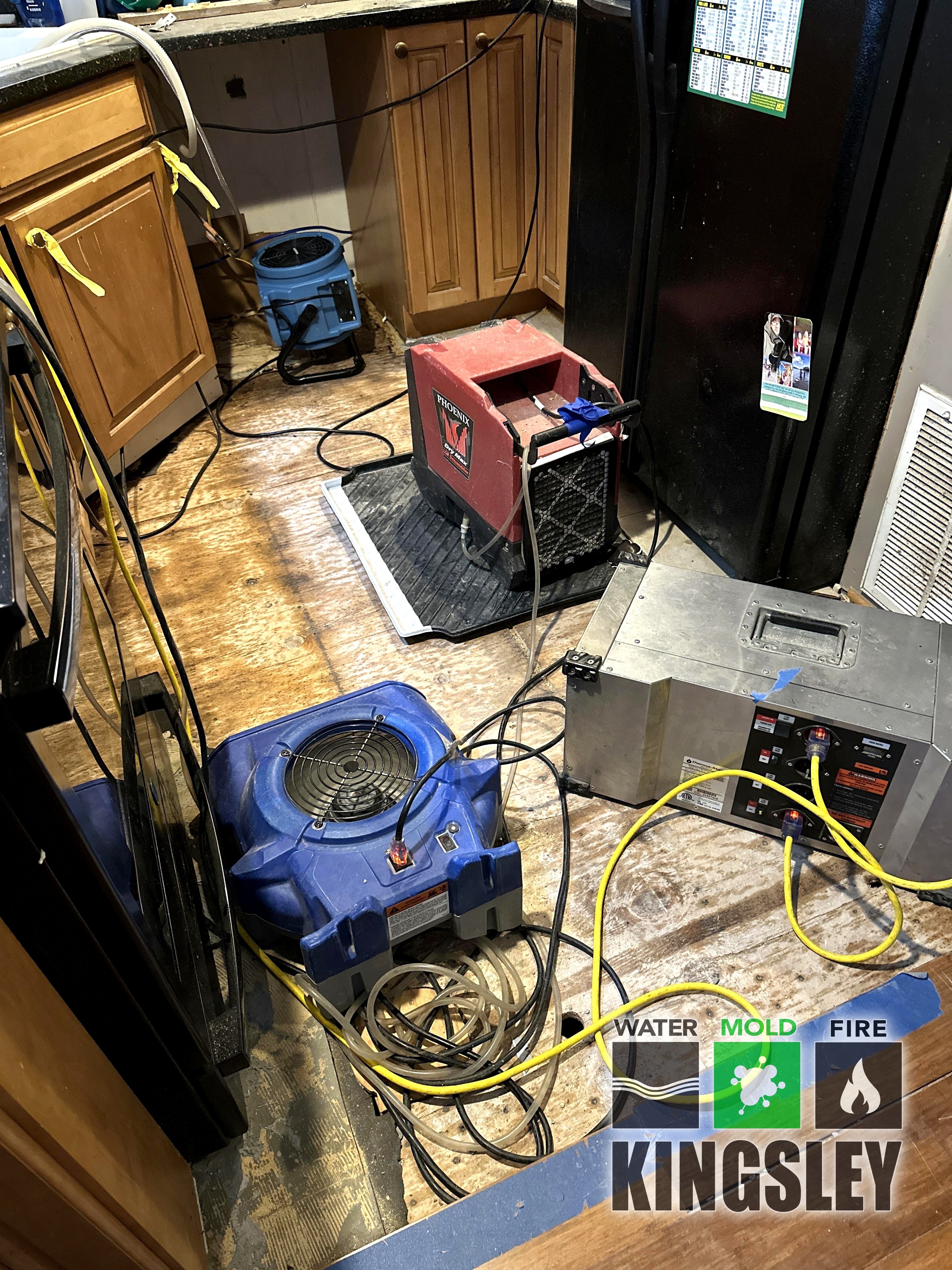
Lexington, SC
November 19, 2022
Kingsley water damage & Fire cleanup provided emergency water cleanup in Lexington, SC after standing water or a sudden leak affected the home. Day-one work removes liquid water, protects dry rooms, and builds a wet map so demolition stays limited. Families keep using dry parts of the house while the wet footprint stays isolated.
Mitigation steps stay in homeowner language: contain the mess, open only what inspection supports, remove what will not dry, and clean or treat what can remain. HEPA filtration supports air cleaning when dust or microbial particles are a concern. Daily updates name the rooms still wet and why machines are still on site—no unexplained jargon wall. If children or pets use the home, we talk through temporary barriers and which doors should stay closed while airflow is balanced.
Drying follows a practical IICRC-oriented order: extract, move air, dehumidify, and monitor until readings support releasing equipment. Typical occupied homes in the Midlands finish structural drying inside a 3–7 day window. Cool crawls, wall cavities, and humid stretches can need the later days; we say so before extending. We will not pack up on day two if meters still show wet materials. Mid-job visits adjust vent counts and dehumidifier settings when outdoor humidity or construction details stall progress.
Contents handling is deliberate. Wet textiles move to a drying path or pack-out decision; furniture feet get blocks on wet carpet; important documents and medications leave the wet zone in a labeled bin you keep. Electronics on wet flooring are unplugged and elevated—we do not power-test them in standing moisture. These steps sound small and prevent a second wave of damage while structural drying continues.
Close-out is a plain walkthrough of what dried, what was removed, and what rebuild steps remain. Keep HVAC from blowing moist air into dry rooms while machines run. If anything rewets, call early so the drying window is not lost. A short written summary of rooms and equipment helps you update insurance without replaying every visit from memory.
Equipment placement tries to leave bedrooms and kitchens usable when the wet map allows. Cord runs and condensate drains are planned so tanks do not overflow while you are at work. If HOA gates, narrow drives, or shared crawls affect staging in Lexington, share that on the first call so the truck arrives ready. Neighbor notices matter on duplex and townhome hatches.
Kingsley water damage & Fire cleanup uses 3031 Scotsman Rd Suite 16, Columbia, SC 29223 for Midlands paperwork and 803-590-0370 for live dispatch. You choose the contractor; preferred lists are optional. We document for carriers when you authorize it and direct-bill when the policy allows. Where detailed photo logs for this older job are thin, this page describes the standard mitigation approach for this loss type in Lexington without inventing claim numbers, meter digits, or crew names.
If rebuild trades follow mitigation, we leave surfaces accessible and share moisture notes so flooring or drywall work does not trap leftover dampness. That handoff is part of finishing strong in the Midlands humidity cycle.
Sumter, SC
November 11, 2022
Kitchen, Laundry and Garage Water Damage Cleanup in Sumter.
St. Andrews, SC
November 10, 2022
Kingsley water damage & Fire cleanup completed Water Damage Remediation with moisture mapping, containment as needed, and verified drying over a 3–7 day window in St. Andrews, SC.
Kershaw, SC
November 10, 2022
Structural Drying After Water Intrusion in Kershaw.
Ridgeway, SC
November 6, 2022
Kingsley water damage & Fire cleanup completed Water Damaged Bathroom with moisture mapping, containment as needed, and verified drying over a 3–7 day window in Ridgeway, SC.
Eastover, SC
November 4, 2022
Bathroom Ceiling Mold and Water Damage Cleanup in Eastover.
Gaston, SC
November 3, 2022
Water Pipe Leak Restoration and Extraction in Gaston.
Pelion, SC
November 3, 2022
Flood Damage Assessment and Solution in Pelion.
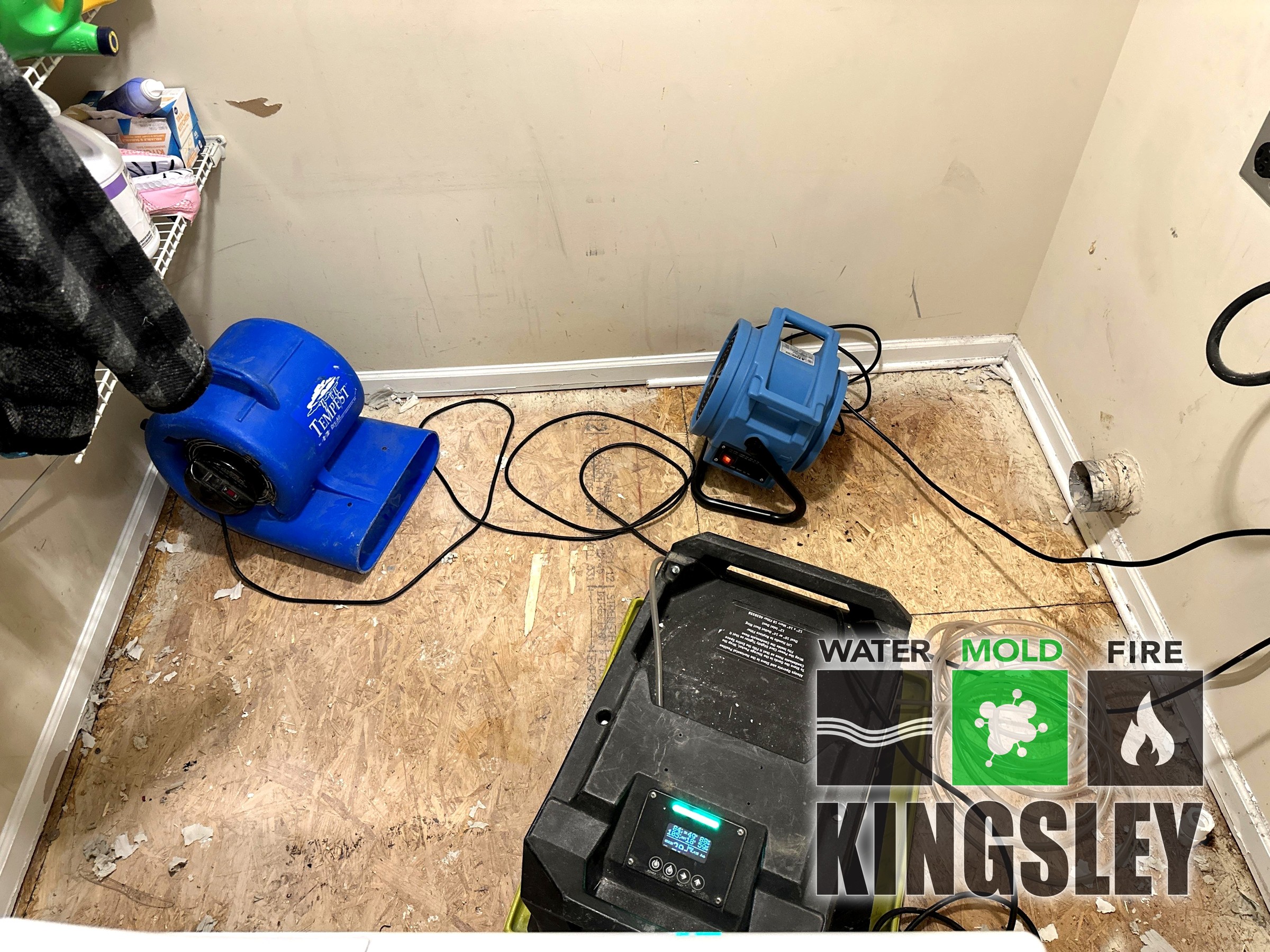
Irmo, SC
November 2, 2022
Kingsley water damage & Fire cleanup provided emergency water cleanup in Irmo, SC after standing water or a sudden leak affected the home. Day-one work removes liquid water, protects dry rooms, and builds a wet map so demolition stays limited. Families keep using dry parts of the house while the wet footprint stays isolated.
Mitigation steps stay in homeowner language: contain the mess, open only what inspection supports, remove what will not dry, and clean or treat what can remain. HEPA filtration supports air cleaning when dust or microbial particles are a concern. Daily updates name the rooms still wet and why machines are still on site—no unexplained jargon wall. If children or pets use the home, we talk through temporary barriers and which doors should stay closed while airflow is balanced.
Drying follows a practical IICRC-oriented order: extract, move air, dehumidify, and monitor until readings support releasing equipment. Typical occupied homes in the Midlands finish structural drying inside a 3–7 day window. Cool crawls, wall cavities, and humid stretches can need the later days; we say so before extending. We will not pack up on day two if meters still show wet materials. Mid-job visits adjust vent counts and dehumidifier settings when outdoor humidity or construction details stall progress.
Contents handling is deliberate. Wet textiles move to a drying path or pack-out decision; furniture feet get blocks on wet carpet; important documents and medications leave the wet zone in a labeled bin you keep. Electronics on wet flooring are unplugged and elevated—we do not power-test them in standing moisture. These steps sound small and prevent a second wave of damage while structural drying continues.
Close-out is a plain walkthrough of what dried, what was removed, and what rebuild steps remain. Keep HVAC from blowing moist air into dry rooms while machines run. If anything rewets, call early so the drying window is not lost. A short written summary of rooms and equipment helps you update insurance without replaying every visit from memory.
Equipment placement tries to leave bedrooms and kitchens usable when the wet map allows. Cord runs and condensate drains are planned so tanks do not overflow while you are at work. If HOA gates, narrow drives, or shared crawls affect staging in Irmo, share that on the first call so the truck arrives ready. Neighbor notices matter on duplex and townhome hatches.
Kingsley water damage & Fire cleanup uses 3031 Scotsman Rd Suite 16, Columbia, SC 29223 for Midlands paperwork and 803-590-0370 for live dispatch. You choose the contractor; preferred lists are optional. We document for carriers when you authorize it and direct-bill when the policy allows. Where detailed photo logs for this older job are thin, this page describes the standard mitigation approach for this loss type in Irmo without inventing claim numbers, meter digits, or crew names.
If rebuild trades follow mitigation, we leave surfaces accessible and share moisture notes so flooring or drywall work does not trap leftover dampness. That handoff is part of finishing strong in the Midlands humidity cycle.
Ridgeway, SC
November 2, 2022
Kingsley water damage & Fire cleanup completed Water Damage Mitigation with moisture mapping, containment as needed, and verified drying over a 3–7 day window in Ridgeway, SC.
Forest Acres, SC
November 1, 2022
Kingsley water damage & Fire cleanup completed Emergency Water Extraction Services with moisture mapping, containment as needed, and verified drying over a 3–7 day window in Forest Acres, SC.
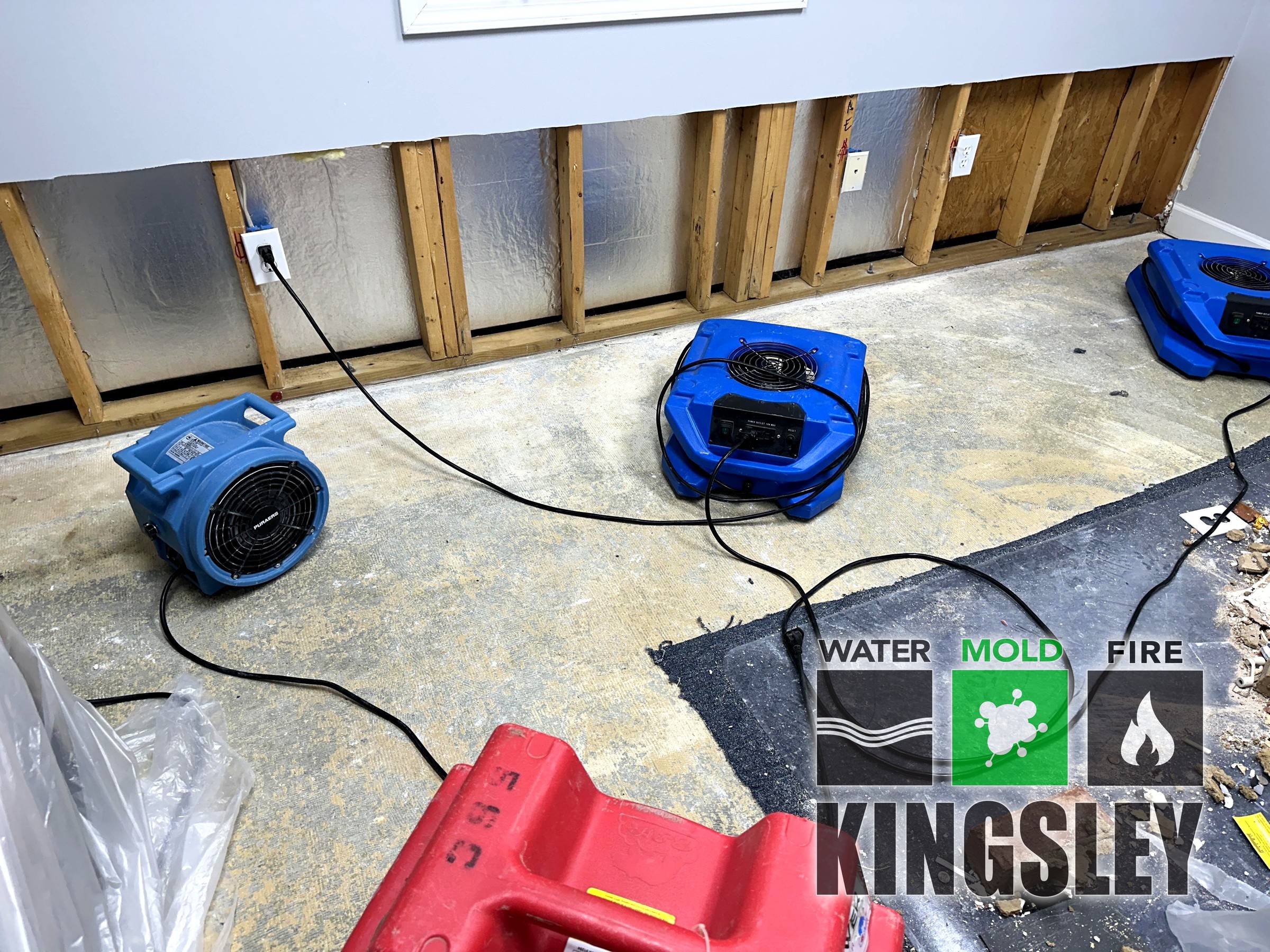
West Columbia, SC
November 1, 2022
Kingsley water damage & Fire cleanup mitigated plumbing water damage in West Columbia, SC after a supply or fixture failure wet finished areas. With the source controlled, we extract, map baseboards and toe-kicks, and open only materials that block airflow. Bath walls and cabinet bases are common leftover-moisture traps on Midlands plumbing calls.
Mitigation steps stay in homeowner language: contain the mess, open only what inspection supports, remove what will not dry, and clean or treat what can remain. HEPA filtration supports air cleaning when dust or microbial particles are a concern. Daily updates name the rooms still wet and why machines are still on site—no unexplained jargon wall. If children or pets use the home, we talk through temporary barriers and which doors should stay closed while airflow is balanced.
Drying follows a practical IICRC-oriented order: extract, move air, dehumidify, and monitor until readings support releasing equipment. Typical occupied homes in the Midlands finish structural drying inside a 3–7 day window. Cool crawls, wall cavities, and humid stretches can need the later days; we say so before extending. We will not pack up on day two if meters still show wet materials. Mid-job visits adjust vent counts and dehumidifier settings when outdoor humidity or construction details stall progress.
Contents handling is deliberate. Wet textiles move to a drying path or pack-out decision; furniture feet get blocks on wet carpet; important documents and medications leave the wet zone in a labeled bin you keep. Electronics on wet flooring are unplugged and elevated—we do not power-test them in standing moisture. These steps sound small and prevent a second wave of damage while structural drying continues.
Close-out is a plain walkthrough of what dried, what was removed, and what rebuild steps remain. Keep HVAC from blowing moist air into dry rooms while machines run. If anything rewets, call early so the drying window is not lost. A short written summary of rooms and equipment helps you update insurance without replaying every visit from memory.
Equipment placement tries to leave bedrooms and kitchens usable when the wet map allows. Cord runs and condensate drains are planned so tanks do not overflow while you are at work. If HOA gates, narrow drives, or shared crawls affect staging in West Columbia, share that on the first call so the truck arrives ready. Neighbor notices matter on duplex and townhome hatches.
Kingsley water damage & Fire cleanup uses 3031 Scotsman Rd Suite 16, Columbia, SC 29223 for Midlands paperwork and 803-590-0370 for live dispatch. You choose the contractor; preferred lists are optional. We document for carriers when you authorize it and direct-bill when the policy allows. Where detailed photo logs for this older job are thin, this page describes the standard mitigation approach for this loss type in West Columbia without inventing claim numbers, meter digits, or crew names.
If rebuild trades follow mitigation, we leave surfaces accessible and share moisture notes so flooring or drywall work does not trap leftover dampness. That handoff is part of finishing strong in the Midlands humidity cycle.
Ridgeway, SC
October 30, 2022
Kingsley water damage & Fire cleanup completed Bathtub Overflow Water Cleanup with moisture mapping, containment as needed, and verified drying over a 3–7 day window in Ridgeway, SC.
Sumter, SC
October 27, 2022
Water Leak Cleanup and Mold Removal in Sumter.
Ladies Island, SC
October 25, 2022
Flood Cut Drywall Removal and Structural Drying in Ladies Island.
Moncks Corner, SC
October 22, 2022
Kingsley water damage & Fire cleanup completed Bathroom Vent Condensation and Ceiling Mold Cleanup with moisture mapping, containment as needed, and verified drying over a 3–7 day window in Moncks Corner, SC.
Goose Creek, SC
October 21, 2022
Water Leak Damage Restoration in Goose Creek.
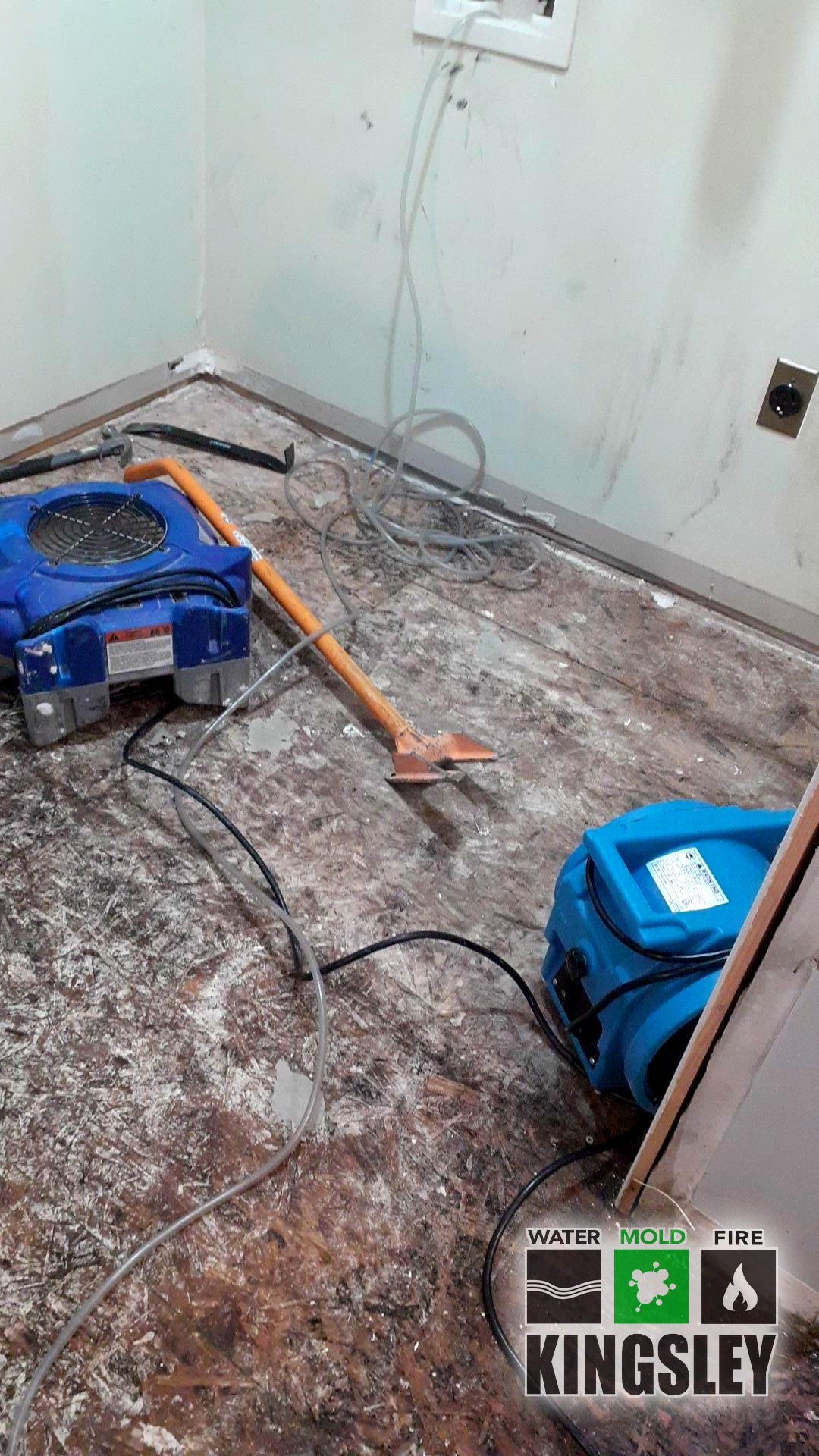
Chapin, SC
October 20, 2022
Kingsley water damage & Fire cleanup mitigated plumbing water damage in Chapin, SC after a supply or fixture failure wet finished areas. With the source controlled, we extract, map baseboards and toe-kicks, and open only materials that block airflow. Bath walls and cabinet bases are common leftover-moisture traps on Midlands plumbing calls.
Mitigation steps stay in homeowner language: contain the mess, open only what inspection supports, remove what will not dry, and clean or treat what can remain. HEPA filtration supports air cleaning when dust or microbial particles are a concern. Daily updates name the rooms still wet and why machines are still on site—no unexplained jargon wall. If children or pets use the home, we talk through temporary barriers and which doors should stay closed while airflow is balanced.
Drying follows a practical IICRC-oriented order: extract, move air, dehumidify, and monitor until readings support releasing equipment. Typical occupied homes in the Midlands finish structural drying inside a 3–7 day window. Cool crawls, wall cavities, and humid stretches can need the later days; we say so before extending. We will not pack up on day two if meters still show wet materials. Mid-job visits adjust vent counts and dehumidifier settings when outdoor humidity or construction details stall progress.
Contents handling is deliberate. Wet textiles move to a drying path or pack-out decision; furniture feet get blocks on wet carpet; important documents and medications leave the wet zone in a labeled bin you keep. Electronics on wet flooring are unplugged and elevated—we do not power-test them in standing moisture. These steps sound small and prevent a second wave of damage while structural drying continues.
Close-out is a plain walkthrough of what dried, what was removed, and what rebuild steps remain. Keep HVAC from blowing moist air into dry rooms while machines run. If anything rewets, call early so the drying window is not lost. A short written summary of rooms and equipment helps you update insurance without replaying every visit from memory.
Equipment placement tries to leave bedrooms and kitchens usable when the wet map allows. Cord runs and condensate drains are planned so tanks do not overflow while you are at work. If HOA gates, narrow drives, or shared crawls affect staging in Chapin, share that on the first call so the truck arrives ready. Neighbor notices matter on duplex and townhome hatches.
Kingsley water damage & Fire cleanup uses 3031 Scotsman Rd Suite 16, Columbia, SC 29223 for Midlands paperwork and 803-590-0370 for live dispatch. You choose the contractor; preferred lists are optional. We document for carriers when you authorize it and direct-bill when the policy allows. Where detailed photo logs for this older job are thin, this page describes the standard mitigation approach for this loss type in Chapin without inventing claim numbers, meter digits, or crew names.
If rebuild trades follow mitigation, we leave surfaces accessible and share moisture notes so flooring or drywall work does not trap leftover dampness. That handoff is part of finishing strong in the Midlands humidity cycle.
Lake Carolina, SC
October 13, 2022
Kingsley water damage & Fire cleanup completed Water Damage Clean-up with moisture mapping, containment as needed, and verified drying over a 3–7 day window in Lake Carolina, SC.
Westville, SC
October 13, 2022
Water Damage Clean-up and Mitigation in Westville.
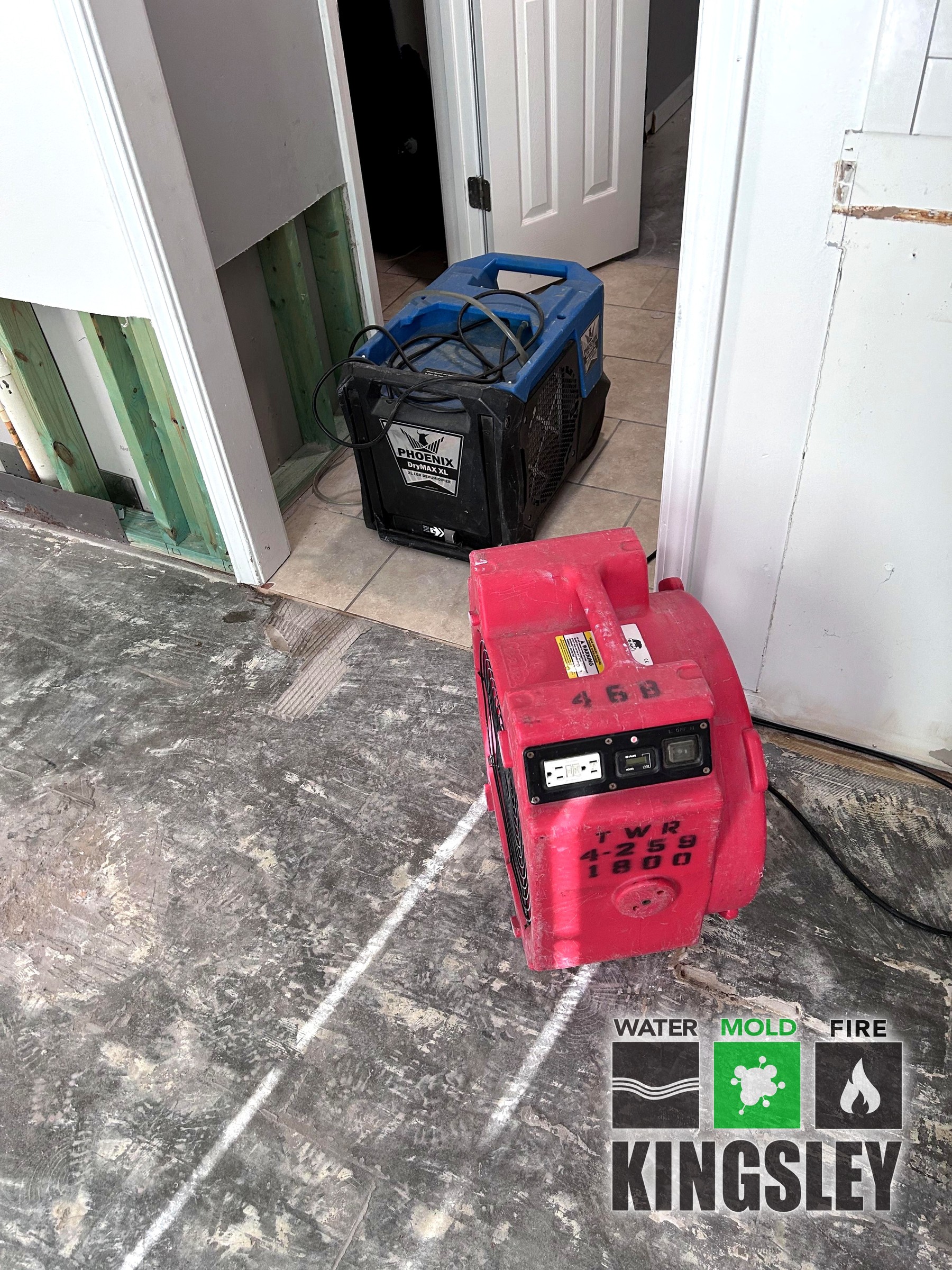
Irmo, SC
October 8, 2022
Kingsley water damage & Fire cleanup cleaned up laundry-room water in Irmo, SC after a leak or overflow wet floors and nearby finishes. Washer pans and vinyl edges hide water that carpet or hallways then wick overnight. Extraction and edge inspection come before cosmetic resets so moisture is not sealed under a surface that only looks dry.
Mitigation steps stay in homeowner language: contain the mess, open only what inspection supports, remove what will not dry, and clean or treat what can remain. HEPA filtration supports air cleaning when dust or microbial particles are a concern. Daily updates name the rooms still wet and why machines are still on site—no unexplained jargon wall. If children or pets use the home, we talk through temporary barriers and which doors should stay closed while airflow is balanced.
Drying follows a practical IICRC-oriented order: extract, move air, dehumidify, and monitor until readings support releasing equipment. Typical occupied homes in the Midlands finish structural drying inside a 3–7 day window. Cool crawls, wall cavities, and humid stretches can need the later days; we say so before extending. We will not pack up on day two if meters still show wet materials. Mid-job visits adjust vent counts and dehumidifier settings when outdoor humidity or construction details stall progress.
Contents handling is deliberate. Wet textiles move to a drying path or pack-out decision; furniture feet get blocks on wet carpet; important documents and medications leave the wet zone in a labeled bin you keep. Electronics on wet flooring are unplugged and elevated—we do not power-test them in standing moisture. These steps sound small and prevent a second wave of damage while structural drying continues.
Close-out is a plain walkthrough of what dried, what was removed, and what rebuild steps remain. Keep HVAC from blowing moist air into dry rooms while machines run. If anything rewets, call early so the drying window is not lost. A short written summary of rooms and equipment helps you update insurance without replaying every visit from memory.
Equipment placement tries to leave bedrooms and kitchens usable when the wet map allows. Cord runs and condensate drains are planned so tanks do not overflow while you are at work. If HOA gates, narrow drives, or shared crawls affect staging in Irmo, share that on the first call so the truck arrives ready. Neighbor notices matter on duplex and townhome hatches.
Kingsley water damage & Fire cleanup uses 3031 Scotsman Rd Suite 16, Columbia, SC 29223 for Midlands paperwork and 803-590-0370 for live dispatch. You choose the contractor; preferred lists are optional. We document for carriers when you authorize it and direct-bill when the policy allows. Where detailed photo logs for this older job are thin, this page describes the standard mitigation approach for this loss type in Irmo without inventing claim numbers, meter digits, or crew names.
If rebuild trades follow mitigation, we leave surfaces accessible and share moisture notes so flooring or drywall work does not trap leftover dampness. That handoff is part of finishing strong in the Midlands humidity cycle.
Winnsboro, SC
September 29, 2022
Kingsley water damage & Fire cleanup completed Toilet Leak Water Damage Cleanup with moisture mapping, containment as needed, and verified drying over a 3–7 day window in Winnsboro, SC.
Goose Creek, SC
September 28, 2022
Crawl Space Insulation Removal and Moisture Control in Goose Creek.
Greenville, SC
September 26, 2022
Underground Pipe Break Water Cleanup in Greenville.
Ballentine, SC
September 24, 2022
Professional Water Damage Prevention in Ballentine.
Batesburg, SC
September 22, 2022
Water Damage Cleanup and Repair in Batesburg.
Fairfield, SC
June 22, 2022
Irmo, SC
June 20, 2022
Standing water on a finished wood floor is a timing problem. Every hour it sits, more of it moves down through the seams into the subfloor, so extraction was the first task on this Irmo property before any assessment was written up. A weighted extraction tool was worked across the hardwood in the entry and the adjoining rooms, drawing water up through the board seams under vacuum instead of merely wiping the surface. The crew worked outward from the wettest area toward the carpeted stair landing so water was not pushed into dry material.
With the surface water gone, the extent of the intrusion could be measured properly. Moisture meters and thermal imaging were used across the foyer, kitchen, dining room, bathroom and garage to find where water had gone under cabinets, behind baseboards and beneath the floor covering. Readings from unaffected areas of the same house were taken as a baseline so there was something real to dry back to. The termite damage in the bathroom corner was noted and photographed at this stage so the compromised wood was handled carefully rather than discovered mid-demolition.
Only the material that could not be dried in place was removed. Baseboards came off in the affected rooms so air could reach the wall cavities and the framing behind them, and wet insulation and drywall were cut out where the readings called for it. The bathroom toilet and pedestal sink were detached so the wall and floor behind them could be reached. Everything that was opened up was HEPA vacuumed and treated with an antimicrobial before drying equipment went in, which is the step that keeps a water loss from turning into a mold problem later.
Drying the hardwood was handled differently from drying the rest of the house. Air movers were set to move air along the length of the boards rather than straight down at them, and dehumidifiers were sized to hold the room dry while moisture came out of the wood, which happens slowly and unevenly. Readings were taken from the boards, the subfloor beneath and the framing on each visit, and the equipment was left running and adjusted until those numbers matched the baseline instead of being pulled on a schedule. Wood floors that look dry on top routinely still hold water underneath, so the meter decides.
When the readings held steady, the equipment was removed and the reconstruction stage began. Removed drywall and insulation were replaced, baseboards were reinstalled, plumbing fixtures were reset, and the sections of flooring that could not be saved were addressed. The affected rooms in Irmo were cleaned down and the drying documentation was completed and filed with the job.
Jenkinsville, SC
June 13, 2022
Structural Drying After Water Intrusion in Jenkinsville.
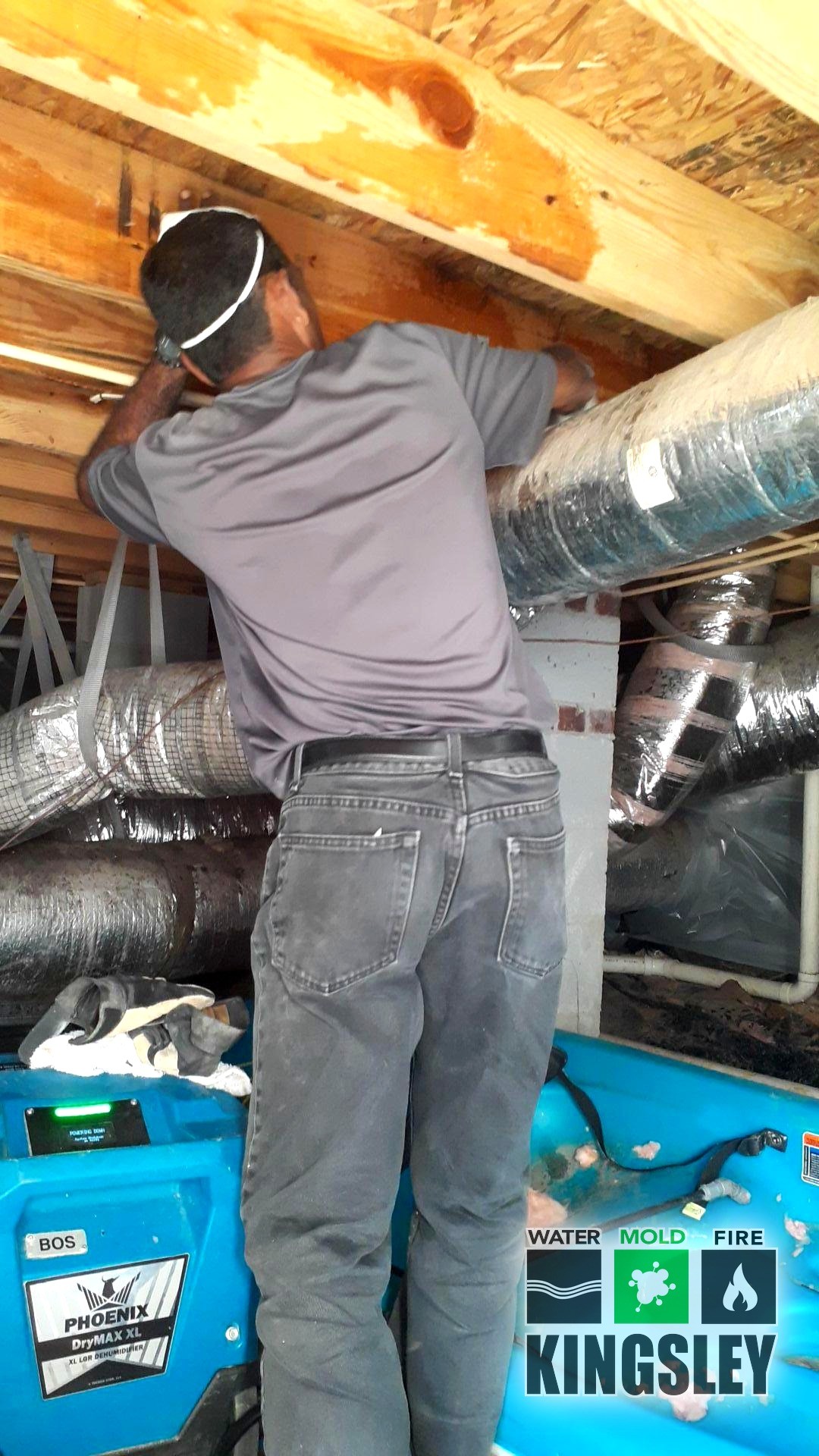
Springdale, SC
June 9, 2022
Kingsley water damage & Fire cleanup provided emergency water cleanup in Springdale, SC after standing water or a sudden leak affected the home. Day-one work removes liquid water, protects dry rooms, and builds a wet map so demolition stays limited. Families keep using dry parts of the house while the wet footprint stays isolated.
Mitigation steps stay in homeowner language: contain the mess, open only what inspection supports, remove what will not dry, and clean or treat what can remain. HEPA filtration supports air cleaning when dust or microbial particles are a concern. Daily updates name the rooms still wet and why machines are still on site—no unexplained jargon wall. If children or pets use the home, we talk through temporary barriers and which doors should stay closed while airflow is balanced.
Drying follows a practical IICRC-oriented order: extract, move air, dehumidify, and monitor until readings support releasing equipment. Typical occupied homes in the Midlands finish structural drying inside a 3–7 day window. Cool crawls, wall cavities, and humid stretches can need the later days; we say so before extending. We will not pack up on day two if meters still show wet materials. Mid-job visits adjust vent counts and dehumidifier settings when outdoor humidity or construction details stall progress.
Contents handling is deliberate. Wet textiles move to a drying path or pack-out decision; furniture feet get blocks on wet carpet; important documents and medications leave the wet zone in a labeled bin you keep. Electronics on wet flooring are unplugged and elevated—we do not power-test them in standing moisture. These steps sound small and prevent a second wave of damage while structural drying continues.
Close-out is a plain walkthrough of what dried, what was removed, and what rebuild steps remain. Keep HVAC from blowing moist air into dry rooms while machines run. If anything rewets, call early so the drying window is not lost. A short written summary of rooms and equipment helps you update insurance without replaying every visit from memory.
Equipment placement tries to leave bedrooms and kitchens usable when the wet map allows. Cord runs and condensate drains are planned so tanks do not overflow while you are at work. If HOA gates, narrow drives, or shared crawls affect staging in Springdale, share that on the first call so the truck arrives ready. Neighbor notices matter on duplex and townhome hatches.
Kingsley water damage & Fire cleanup uses 3031 Scotsman Rd Suite 16, Columbia, SC 29223 for Midlands paperwork and 803-590-0370 for live dispatch. You choose the contractor; preferred lists are optional. We document for carriers when you authorize it and direct-bill when the policy allows. Where detailed photo logs for this older job are thin, this page describes the standard mitigation approach for this loss type in Springdale without inventing claim numbers, meter digits, or crew names.
If rebuild trades follow mitigation, we leave surfaces accessible and share moisture notes so flooring or drywall work does not trap leftover dampness. That handoff is part of finishing strong in the Midlands humidity cycle.
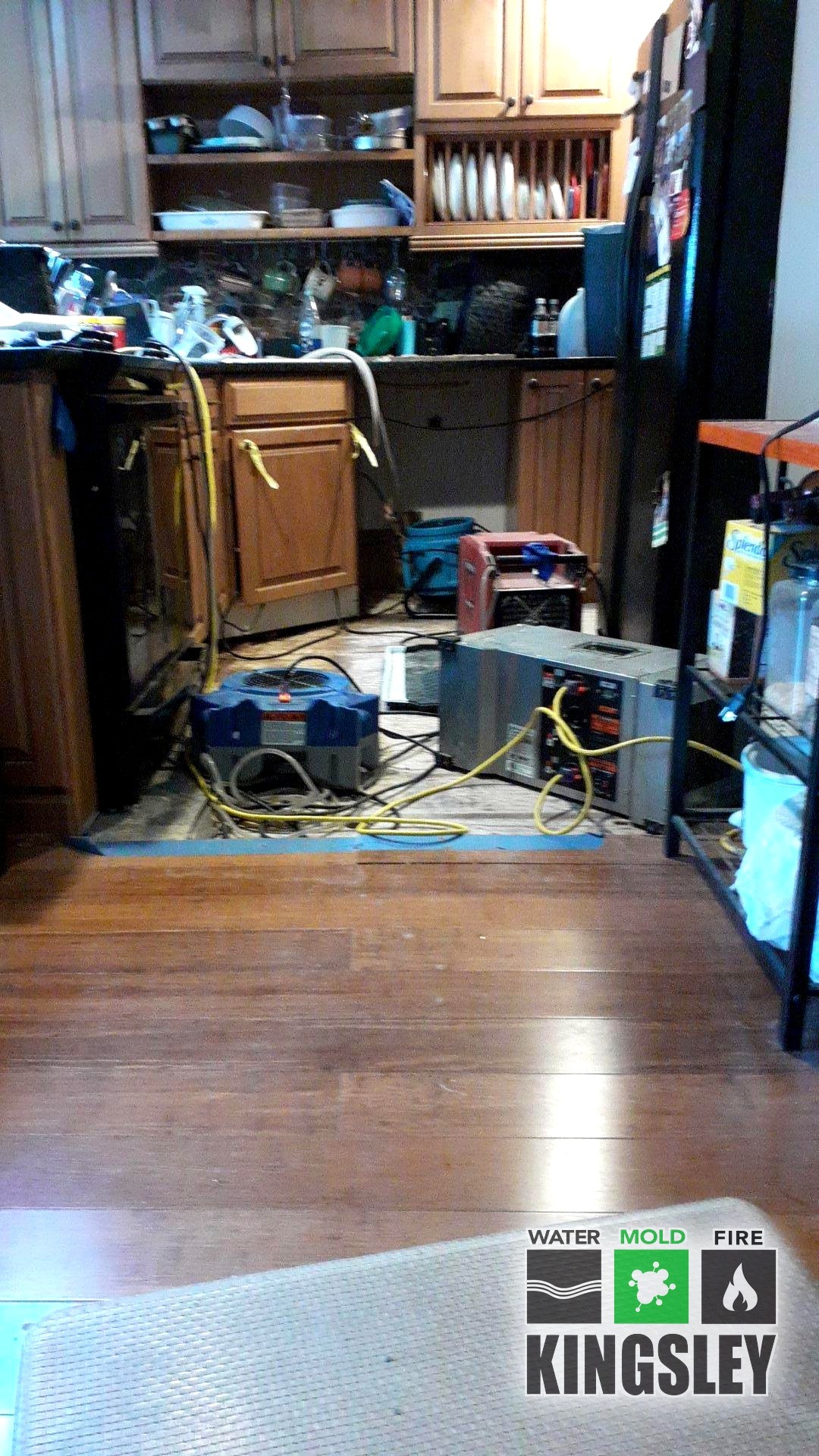
Lexington, SC
May 12, 2022
Kingsley water damage & Fire cleanup provided emergency water cleanup in Lexington, SC after standing water or a sudden leak affected the home. Day-one work removes liquid water, protects dry rooms, and builds a wet map so demolition stays limited. Families keep using dry parts of the house while the wet footprint stays isolated.
Mitigation steps stay in homeowner language: contain the mess, open only what inspection supports, remove what will not dry, and clean or treat what can remain. HEPA filtration supports air cleaning when dust or microbial particles are a concern. Daily updates name the rooms still wet and why machines are still on site—no unexplained jargon wall. If children or pets use the home, we talk through temporary barriers and which doors should stay closed while airflow is balanced.
Drying follows a practical IICRC-oriented order: extract, move air, dehumidify, and monitor until readings support releasing equipment. Typical occupied homes in the Midlands finish structural drying inside a 3–7 day window. Cool crawls, wall cavities, and humid stretches can need the later days; we say so before extending. We will not pack up on day two if meters still show wet materials. Mid-job visits adjust vent counts and dehumidifier settings when outdoor humidity or construction details stall progress.
Contents handling is deliberate. Wet textiles move to a drying path or pack-out decision; furniture feet get blocks on wet carpet; important documents and medications leave the wet zone in a labeled bin you keep. Electronics on wet flooring are unplugged and elevated—we do not power-test them in standing moisture. These steps sound small and prevent a second wave of damage while structural drying continues.
Close-out is a plain walkthrough of what dried, what was removed, and what rebuild steps remain. Keep HVAC from blowing moist air into dry rooms while machines run. If anything rewets, call early so the drying window is not lost. A short written summary of rooms and equipment helps you update insurance without replaying every visit from memory.
Equipment placement tries to leave bedrooms and kitchens usable when the wet map allows. Cord runs and condensate drains are planned so tanks do not overflow while you are at work. If HOA gates, narrow drives, or shared crawls affect staging in Lexington, share that on the first call so the truck arrives ready. Neighbor notices matter on duplex and townhome hatches.
Kingsley water damage & Fire cleanup uses 3031 Scotsman Rd Suite 16, Columbia, SC 29223 for Midlands paperwork and 803-590-0370 for live dispatch. You choose the contractor; preferred lists are optional. We document for carriers when you authorize it and direct-bill when the policy allows. Where detailed photo logs for this older job are thin, this page describes the standard mitigation approach for this loss type in Lexington without inventing claim numbers, meter digits, or crew names.
If rebuild trades follow mitigation, we leave surfaces accessible and share moisture notes so flooring or drywall work does not trap leftover dampness. That handoff is part of finishing strong in the Midlands humidity cycle.
Gilbert, SC
May 12, 2022
Toilet Water Overflow Cleanup and Assessment in Gilbert.
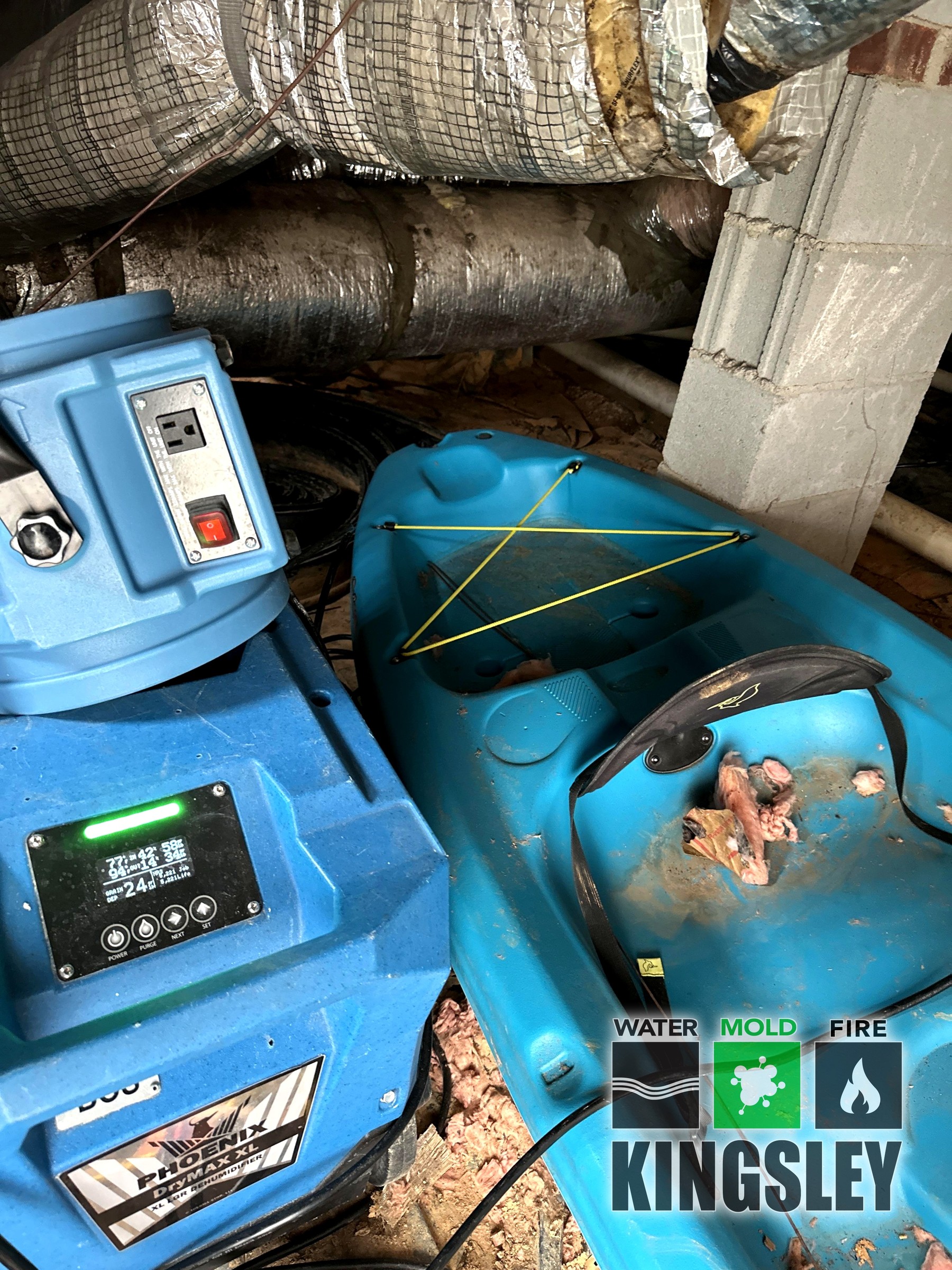
Chapin, SC
March 10, 2022
Kingsley water damage & Fire cleanup mitigated plumbing water damage in Chapin, SC after a supply or fixture failure wet finished areas. With the source controlled, we extract, map baseboards and toe-kicks, and open only materials that block airflow. Bath walls and cabinet bases are common leftover-moisture traps on Midlands plumbing calls.
Mitigation steps stay in homeowner language: contain the mess, open only what inspection supports, remove what will not dry, and clean or treat what can remain. HEPA filtration supports air cleaning when dust or microbial particles are a concern. Daily updates name the rooms still wet and why machines are still on site—no unexplained jargon wall. If children or pets use the home, we talk through temporary barriers and which doors should stay closed while airflow is balanced.
Drying follows a practical IICRC-oriented order: extract, move air, dehumidify, and monitor until readings support releasing equipment. Typical occupied homes in the Midlands finish structural drying inside a 3–7 day window. Cool crawls, wall cavities, and humid stretches can need the later days; we say so before extending. We will not pack up on day two if meters still show wet materials. Mid-job visits adjust vent counts and dehumidifier settings when outdoor humidity or construction details stall progress.
Contents handling is deliberate. Wet textiles move to a drying path or pack-out decision; furniture feet get blocks on wet carpet; important documents and medications leave the wet zone in a labeled bin you keep. Electronics on wet flooring are unplugged and elevated—we do not power-test them in standing moisture. These steps sound small and prevent a second wave of damage while structural drying continues.
Close-out is a plain walkthrough of what dried, what was removed, and what rebuild steps remain. Keep HVAC from blowing moist air into dry rooms while machines run. If anything rewets, call early so the drying window is not lost. A short written summary of rooms and equipment helps you update insurance without replaying every visit from memory.
Equipment placement tries to leave bedrooms and kitchens usable when the wet map allows. Cord runs and condensate drains are planned so tanks do not overflow while you are at work. If HOA gates, narrow drives, or shared crawls affect staging in Chapin, share that on the first call so the truck arrives ready. Neighbor notices matter on duplex and townhome hatches.
Kingsley water damage & Fire cleanup uses 3031 Scotsman Rd Suite 16, Columbia, SC 29223 for Midlands paperwork and 803-590-0370 for live dispatch. You choose the contractor; preferred lists are optional. We document for carriers when you authorize it and direct-bill when the policy allows. Where detailed photo logs for this older job are thin, this page describes the standard mitigation approach for this loss type in Chapin without inventing claim numbers, meter digits, or crew names.
If rebuild trades follow mitigation, we leave surfaces accessible and share moisture notes so flooring or drywall work does not trap leftover dampness. That handoff is part of finishing strong in the Midlands humidity cycle.
Pelion, SC
March 9, 2022
Water Leak Evaluation and Damage Solution in Pelion.
Gaston, SC
February 17, 2022
Leak and Water Damage Recovery in Gaston.
Forest Acres, SC
January 28, 2022
Fire and Smoke Damage Solution in Forest Acres.
St Andrews, SC
January 5, 2022
Water Damage Impact Mitigation in St Andrews.