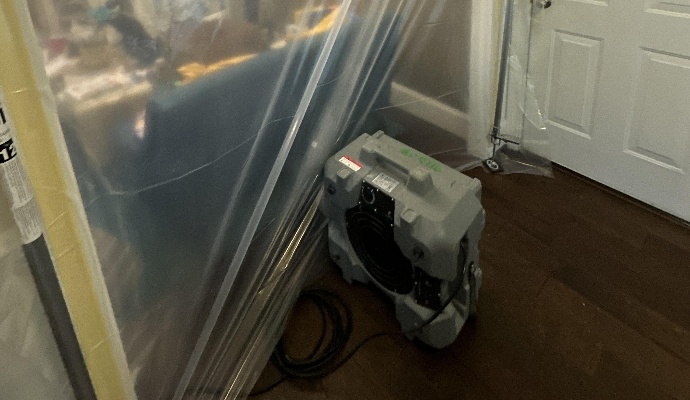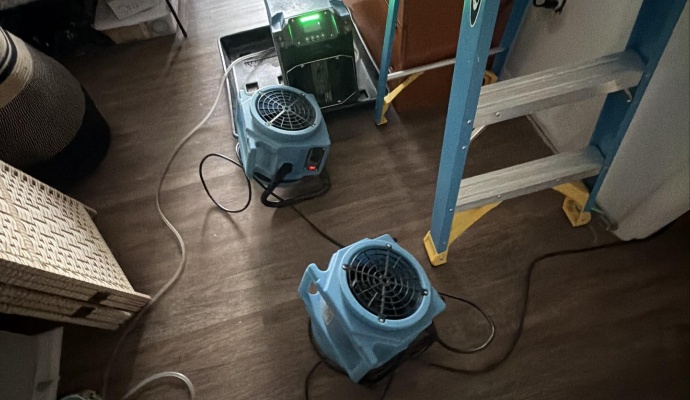
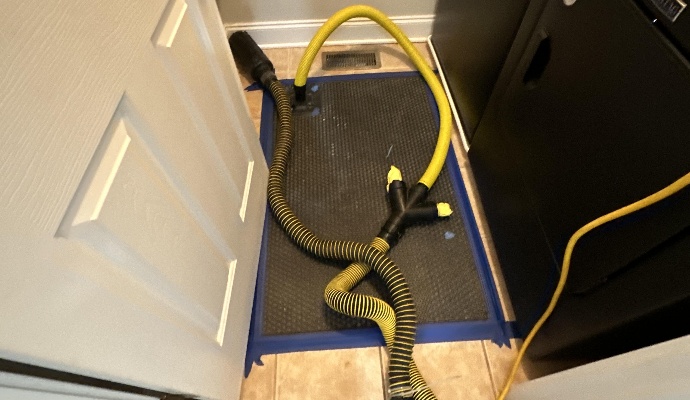
A professional floor-drying mat system with yellow vacuum hoses

BEST Water & Fire Damage Restoration in Lexington, SC

Lexington Homeowners: Not Every Restoration Company Is the Same

  • Real Person Answers 24/7, Crew Sent Fast
  • We Specialize in Insurance Damage Repairs
  • Nothing Upfront- Your Insurer Gets the Bill
  • Rated 5 Stars in 440+ Google Reviews
  • From Lake Murray to Main Street, Work Guaranteed
803-590-0370

If you're dealing with water damage in Lexington, SC, you don't have time to wait. At Kingsley Water Damage & Fire Cleanup, we respond immediately to protect your home or business, stop the spread of damage, and begin the drying process right away.

From burst pipes and appliance leaks to storm flooding and sewage backups, our team is equipped to handle it all--quickly, professionally, and with complete transparency.

803-590-0370
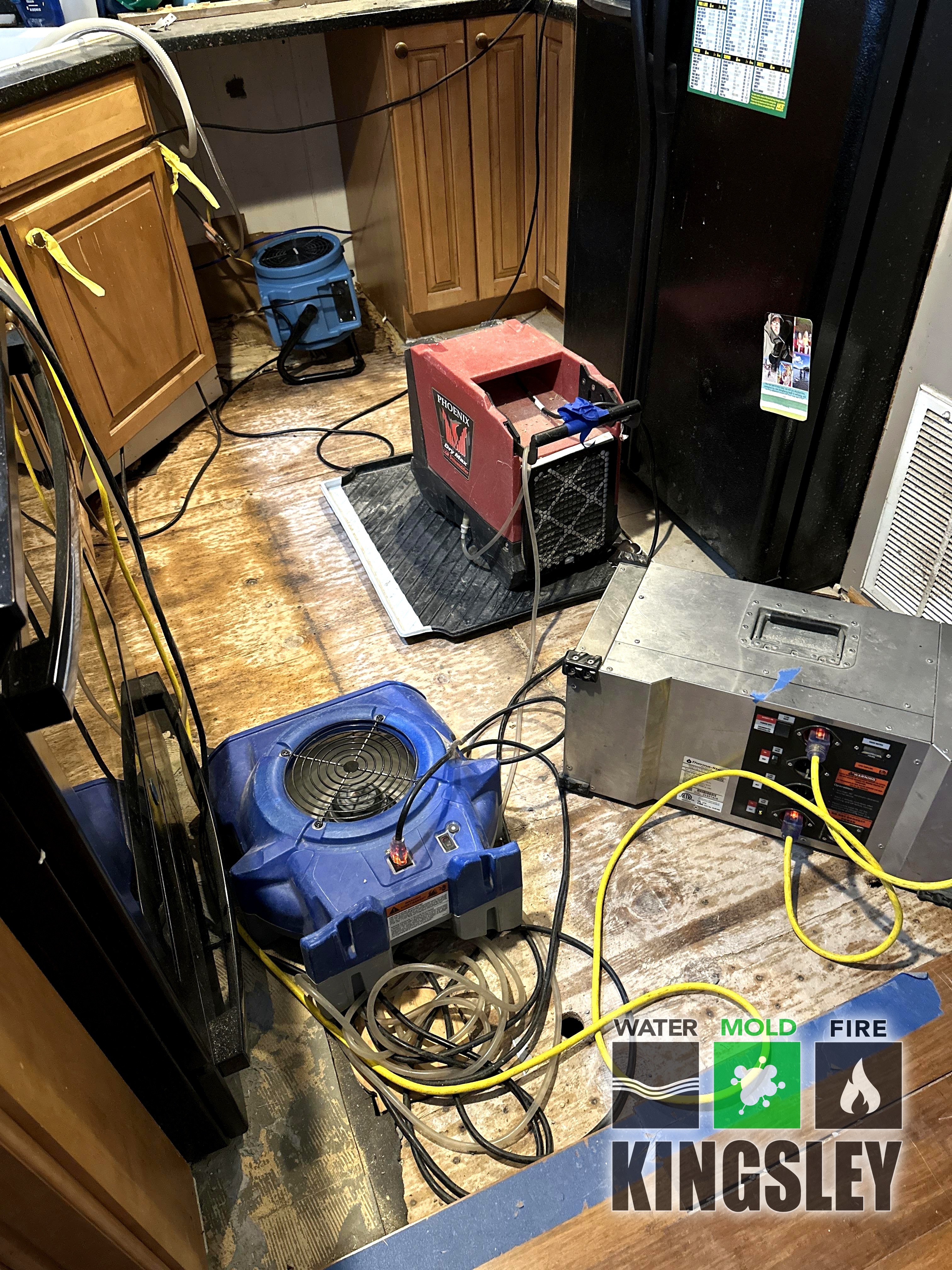
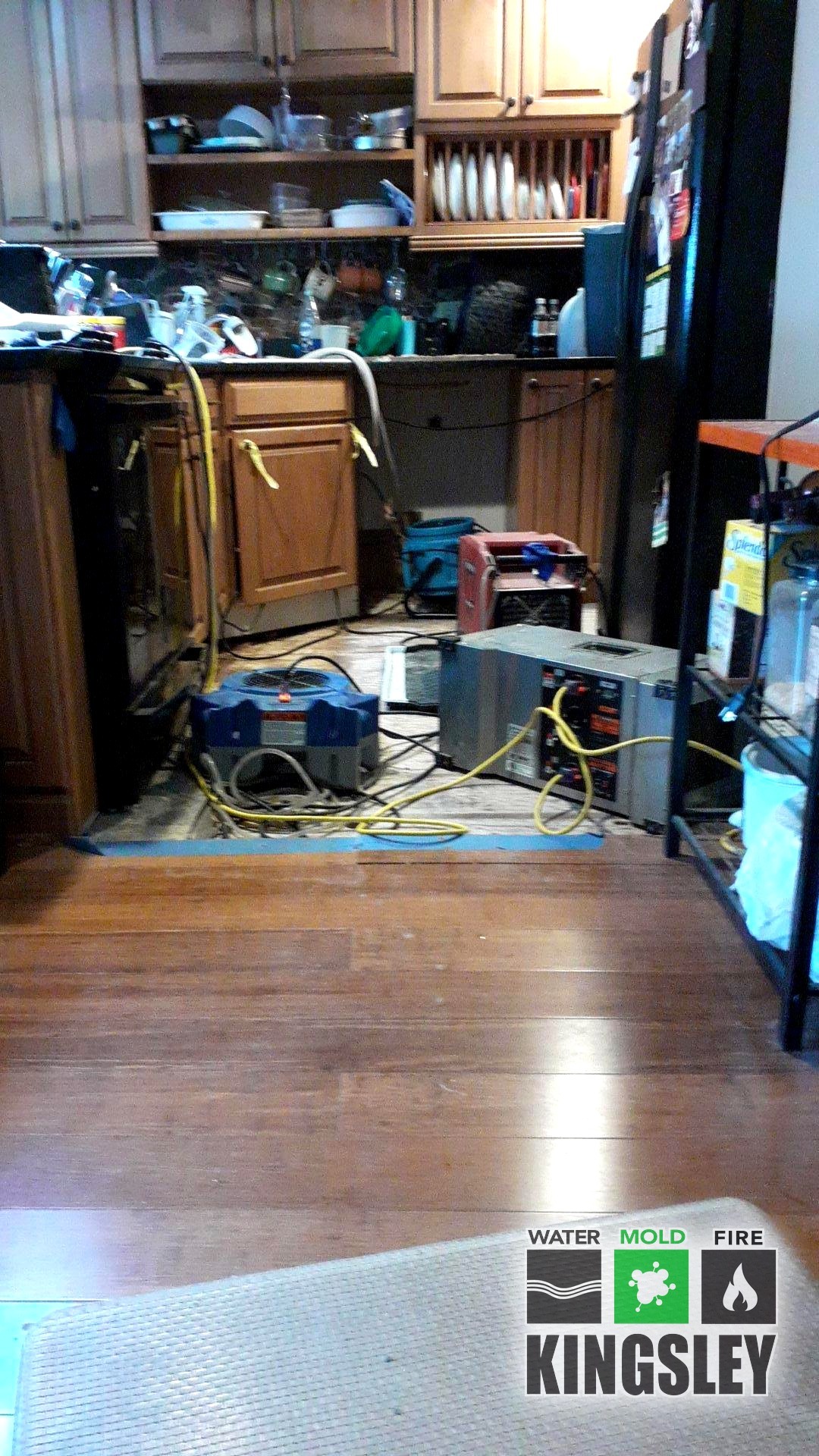
Water damage restoration service with airmover system

24/7 Emergency Water Damage Restoration in Lexington

Water damage spreads faster than most homeowners realize. Within minutes, it begins soaking into flooring, drywall, cabinets, and structural materials. Within hours, it can cause swelling, warping, and permanent damage.

We provide immediate emergency response throughout Lexington with:

  • Rapid water extraction
  • Structural drying and dehumidification
  • Moisture detection and mapping
  • Antimicrobial treatment to prevent mold
  • Full documentation for insurance
The faster we respond, the more we can save--and the less this costs you long-term.
Water damaged wooden floor restoration service

What To Do Immediately After Water Damage

If you're dealing with active water damage, follow these steps:

  • Shut off the water source if possible
  • Turn off electricity in affected areas (if safe)
  • Move valuables and furniture out of wet areas
  • Avoid walking on wet flooring to prevent damage and injury
  • Call a professional restoration company immediately

Many homeowners try to "air dry" with fans or open windows. In most cases, this is not enough--and can actually spread moisture deeper into materials.
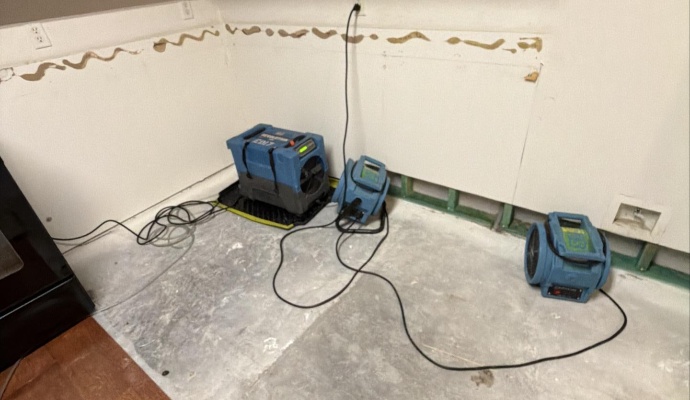
Water damage restoration service with equipments

How Quickly Water Damage Spreads

  • Within minutes: Water spreads into carpets, padding, and walls
  • Within hours: Drywall begins swelling, odors develop
  • Within 24 hours: Mold growth can begin
  • Within days: Structural materials weaken and degrade

This is why professional drying isn't optional--it's critical.

Our Science-Based Drying Process

At Kingsley, we don't rely on guesswork. Every job is guided by measurable data and industry standards.

Step 1
Inspection & Moisture Mapping

We identify all affected materials--including hidden moisture behind walls, under flooring, and inside cavities.

Step 2
Water Extraction

Standing water is removed quickly to prevent further absorption.

Step 3
Controlled Structural Drying

We deploy commercial dehumidifiers and air movers based on the size and condition of the loss--not guesswork.

Step 4
Daily Monitoring & Adjustments

We track moisture levels daily and adjust equipment to ensure proper drying.

Step 5
Sanitization & Mold Prevention

We apply antimicrobial treatments to reduce mold risk and protect indoor air quality.

Our goal is simple: dry it right the first time--without unnecessary demolition.
Kingsley Water Damage & Fire Cleanup service team with service vehicle

Why Lexington Homeowners Choose Kingsley

  • Science-Based Precision: Every decision is backed by measurable data
  • Insurance Claim Specialists: We work directly with adjusters and carriers
  • Transparent Process: Clear communication from start to finish
  • Proven System: Our 4-step process ensures consistent results

You're not just hiring a cleanup crew--you're hiring a team that understands both restoration and the insurance process.

Insurance & Billing -- What Lexington Homeowners Should Know

We work with all major insurance carriers, including State Farm, Allstate, USAA, Nationwide, Travelers, and more.

Water damage mitigation is performed under a standard authorization agreement, not a fixed upfront quote. This is normal and expected in our industry.

Why pricing isn't fixed upfront:
  • Drying time varies based on materials and conditions
  • Hidden damage is often discovered during the process
  • The final scope is based on real-time moisture data

Insurance companies expect this. Their priority is getting your home dry and safe first.

We handle:
  • Detailed documentation
  • Moisture logs and photo reports
  • Communication with your adjuster
  • Estimate alignment with industry standards

We bridge the gap between homeowner and insurance--so nothing gets missed.
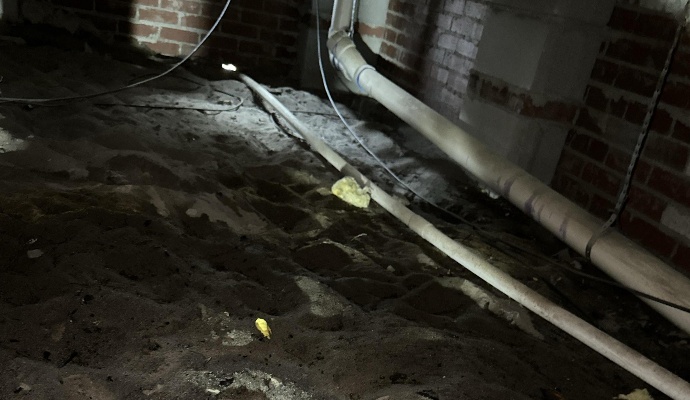
Water damaged muddy crawlspace

Common Water Damage Problems in Lexington

  • Burst and frozen pipes
  • Toilet overflows and sewage backups
  • Water heater and appliance leaks
  • Roof leaks from storms
  • Flooded crawlspaces
  • Overflowing sinks, tubs, and drains

No matter the source, the solution is the same: remove water fast, dry thoroughly, and prevent long-term damage.
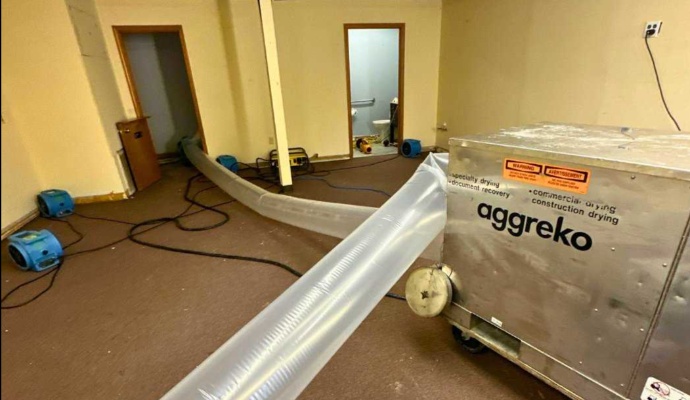
Large dehumidifiers system with plastic ducting and multiple air movers working to dry pooled water on carpeted floor

Commercial Water Damage Restoration in Lexington

Water damage doesn't just affect homes--it can shut down businesses.

We help Lexington businesses minimize downtime with fast response and structured drying:

  • Office buildings
  • Retail locations
  • Medical facilities
  • Apartment complexes
  • Schools and churches

We prioritize speed, communication, and documentation to get you back operational quickly.

Areas We Serve Around Lexington

We provide fast response throughout Lexington and surrounding areas, including:
  • Red Bank
  • Oak Grove
  • Seven Oaks
  • White Knoll
  • Lake Murray area
  • West Columbia
  • Irmo
  • Chapin

Need Water Damage Help in Lexington, SC?

If you're dealing with water damage, don't wait. The sooner we start, the more we can save.

We'll stabilize the situation, document everything, and guide you through the entire process--from emergency response to full restoration.

803-590-0370

Frequently Asked Questions

How quickly should water damage be addressed?
Immediately. Mold can begin forming within 24-48 hours, and structural damage worsens the longer water sits.
Do you work with insurance?
Yes. We work with all major carriers and help guide you through the claims process.
Can you provide a price upfront?
No. Final cost depends on drying time and materials affected, which can only be determined during the process.
Will everything need to be removed?
No. Our goal is to save as much as possible using controlled drying techniques.
How do you prevent mold?
We remove moisture completely and apply antimicrobial treatments to inhibit growth.

Our customers love us!

See All 439 Reviews
Customer Reviews from Lexington and Surrounding Areas ( 5
from 12 reviews )

Happy Customers across Lexington and Surrounding Areas

Completed Jobs from Lexington and Surrounding Areas

See All

September 26, 2026 | Lexington, SC

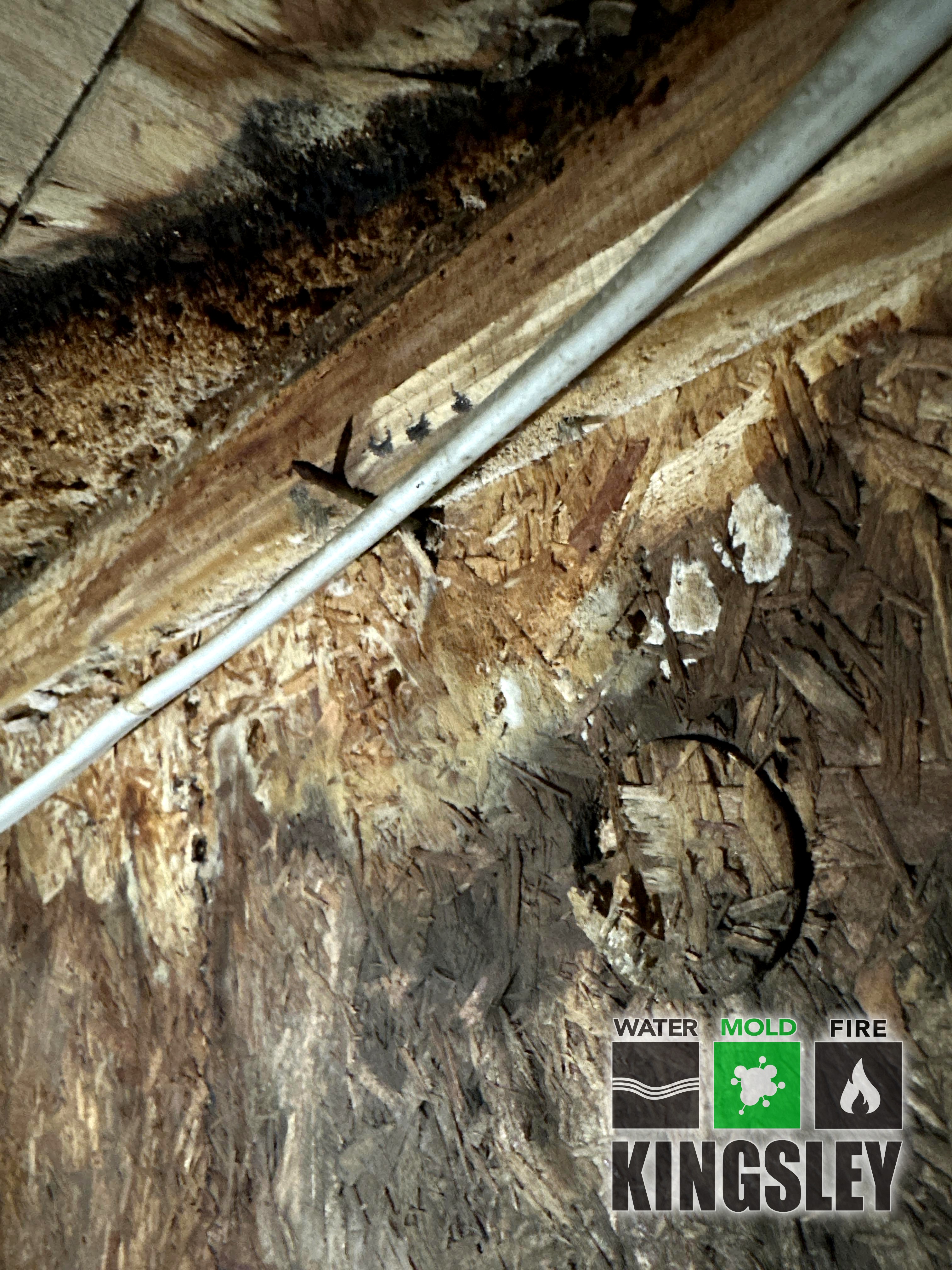
Kingsley water damage & Fire cleanup completed crawlspace joist rot and fungal damage cleanup in Lexington, SC after long-term moisture left rot and fungal growth on framing. On arrival we inspected the crawlspace structural bay and recorded what the camera shows clearly: advanced dark staining across the OSB subfloor underside, white fuzzy fungal colonies on the sheathing, and crumbly wood fiber on the joist face. A white electrical cable stapled along the joist crossed the wet zone, so the crew worked carefully around utilities while mapping how far moisture had traveled from a dark, saturated circular cutout in the OSB. That photo-backed condition check—not a guess from the hallway—set the wet map and the scope for selective cleanup, antimicrobial treatment where needed, and verified drying.

During mitigation we controlled the work zone so debris and spores did not track into clean living space above the crawl. Where insulation or vapor barrier blocked drying, we opened only the wet footprint shown by meters and the photo record. Non-salvageable saturated or contaminated OSB and soft framing pieces were bagged and removed; salvageable joist faces and sheathing were cleaned and treated with an EPA-registered antimicrobial when staining or microbial growth warranted it. HEPA vacuuming and careful wipe-down limited dust from demo around the joist bay and the cutout. The unique on-site detail that guided this Lexington file was the combination of black moisture staining, white fungal patches on the OSB, and soft wood on the joist next to that opening—conditions left in the documentation so the homeowner and any follow-on trade could see exactly what drove the scope.

IICRC water-damage and mold-remediation practice prioritizes stop the moisture source, remove what cannot be dried in place, clean and treat remaining structures, then dry to target with measured air movement and dehumidification. We placed air movers and dehumidifiers to match the wet crawl assembly, aimed airflow along the stained joist and OSB underside, and rechecked moisture on a 3–7 day drying calendar with overnight humidity checks—never past about a week. Quiet work windows were held where the home required it. Skipping that short monitoring window is how a straightforward wet crawl call becomes secondary damage in adjoining cavities or a musty return odor under the floor boards.

As readings stabilized and the work area met a clean, dry condition within that first-week window, we demobilized equipment and left the crawlspace structural bay ready for any needed rebuild of finishes or insulation. Photo documentation of the mitigation state stayed with the job file for the Lexington property. Helpful takeaway: if you notice musty odors from floor registers, white spotting on crawl wood, or dark staining around pipe or duct cutouts under a Lexington home, have the moisture source and affected joists inspected before new insulation or vapor barrier hides the growth path.

Homeowners comparing crawlspace mold cleanup options in the Lexington area should expect a written moisture map, selective removal instead of full tear-out when meters allow, and a clear end point when materials hit dry goal—not an open-ended equipment rental. Kingsley water damage & Fire cleanup follows that measured approach so rebuild decisions rest on documented conditions rather than a calendar guess.

September 25, 2026 | Lexington, SC

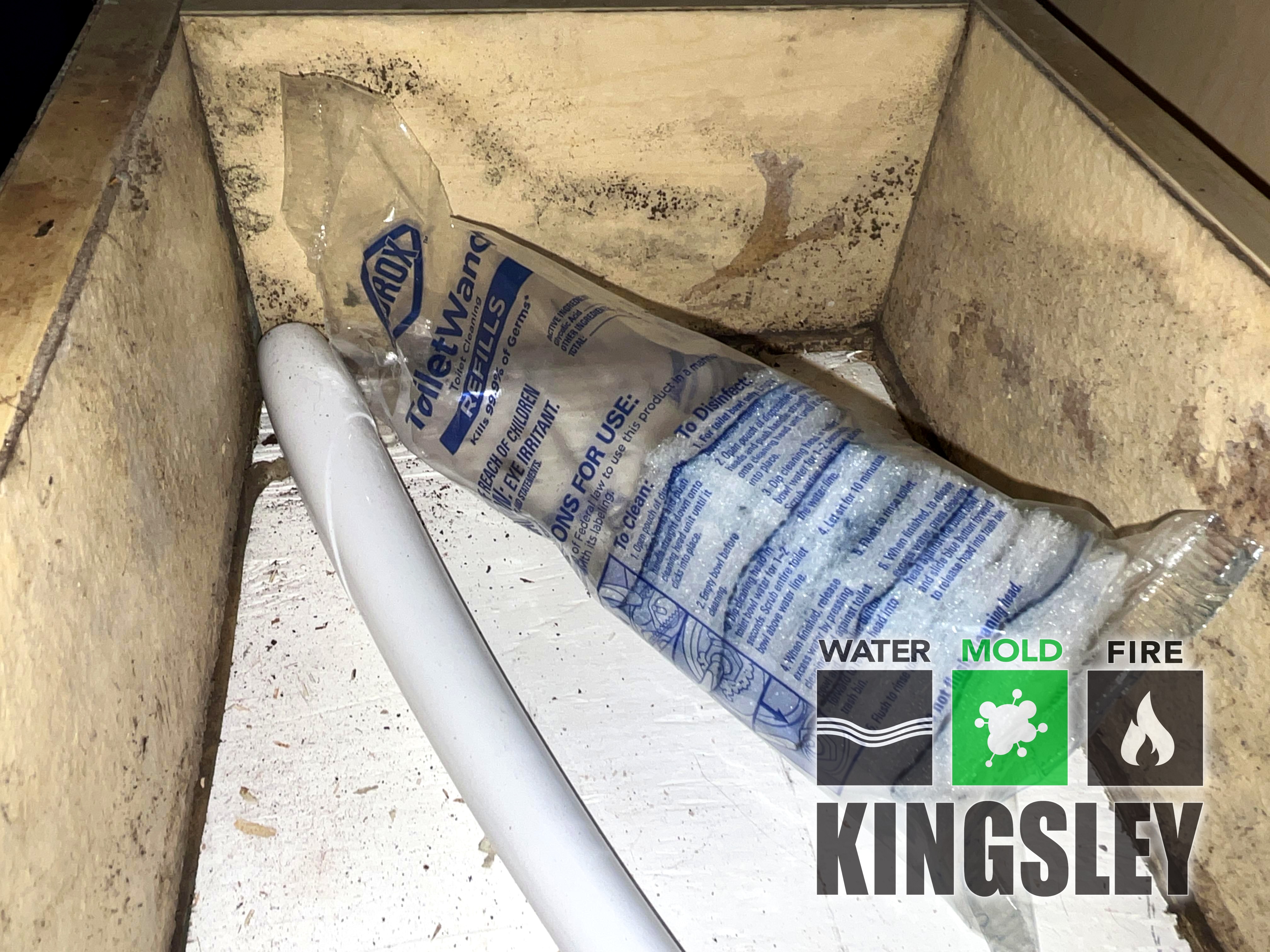
Kingsley water damage & Fire cleanup handled cabinet seam mold remediation in Lexington, SC after localized mold along cabinet joints from repeated moisture. We began with a room-by-room and assembly-level inspection of the interior cabinetry / vanity zone, documenting mold tracking along a cabinet seam and adjacent wood panel face. That visual and instrument check — not a guess from the hallway — defined where finishes had to open, what could stay, and where drying equipment had to aim. the home needed source control, selective removal of non-salvageable wet or contaminated material, and verified drying of what remained.

During mitigation we controlled the work zone so debris and moisture did not track into clean rooms. Where finishes blocked drying, we opened only the wet footprint shown by meters and the photo record. Contaminated or saturated materials were bagged and removed; salvageable framing and sheathing were cleaned and treated with an EPA-registered antimicrobial when staining or microbial growth warranted it. HEPA vacuuming and careful handling limited dust from demo. The unique on-site detail that guided this file was mold tracking along a cabinet seam and adjacent wood panel face — that condition stayed in the documentation so the homeowner and any follow-on trade could see exactly what drove the scope in Lexington.

IICRC water-damage and mold-remediation practice prioritizes stop-the-source, remove what cannot be dried in place, clean and treat remaining structures, then dry to target with measured air movement and dehumidification. We placed air movers and/or dehumidifiers to match the wet assembly, ran equipment under monitoring, and rechecked moisture within the first week of mitigation rather than leaving gear unattended for an open-ended stretch. Skipping that short monitoring window is how a straightforward wet call becomes secondary damage in adjoining cavities.

As readings stabilized and the work area met a clean, dry condition, we demobilized equipment and left the interior cabinetry / vanity zone ready for any needed rebuild of finishes. Photo documentation of the mitigation state stayed with the claim file. If you notice musty odors, spotting on wood, or staining at cabinets, vents, or window sills in Lexington, have the moisture source and affected materials inspected before finishes hide the growth path.

IICRC water-damage and mold-remediation practice prioritizes stop the moisture source, remove what cannot be dried in place, clean and treat remaining structures, then dry to target with measured air movement and dehumidification. On this Lexington file we ran air movers and dehumidifiers against the wet assembly under monitoring and rechecked moisture on a 3–7 day drying calendar—never past about a week. Skipping that short window is how secondary damage or musty odor returns after finishes go back up.

As readings stabilized within that first-week window, equipment came out and the work area was left ready for any needed rebuild. Photo documentation of the mitigation state stayed with the job file. Helpful takeaway: If you notice musty odors, spotting on wood, or staining at cabinets, vents, or window sills in Lexington, have the moisture source and affected materials inspected before finishes hide the growth path.

Homeowners comparing cabinet seam mold remediation options in the Lexington area should expect a written moisture map, selective removal instead of full tear-out when meters allow, and a clear end point when materials hit dry goal—not an open-ended equipment rental. Kingsley water damage & Fire cleanup follows that measured approach so rebuild decisions rest on documented conditions rather than a calendar guess.

September 24, 2026 | Lexington, SC

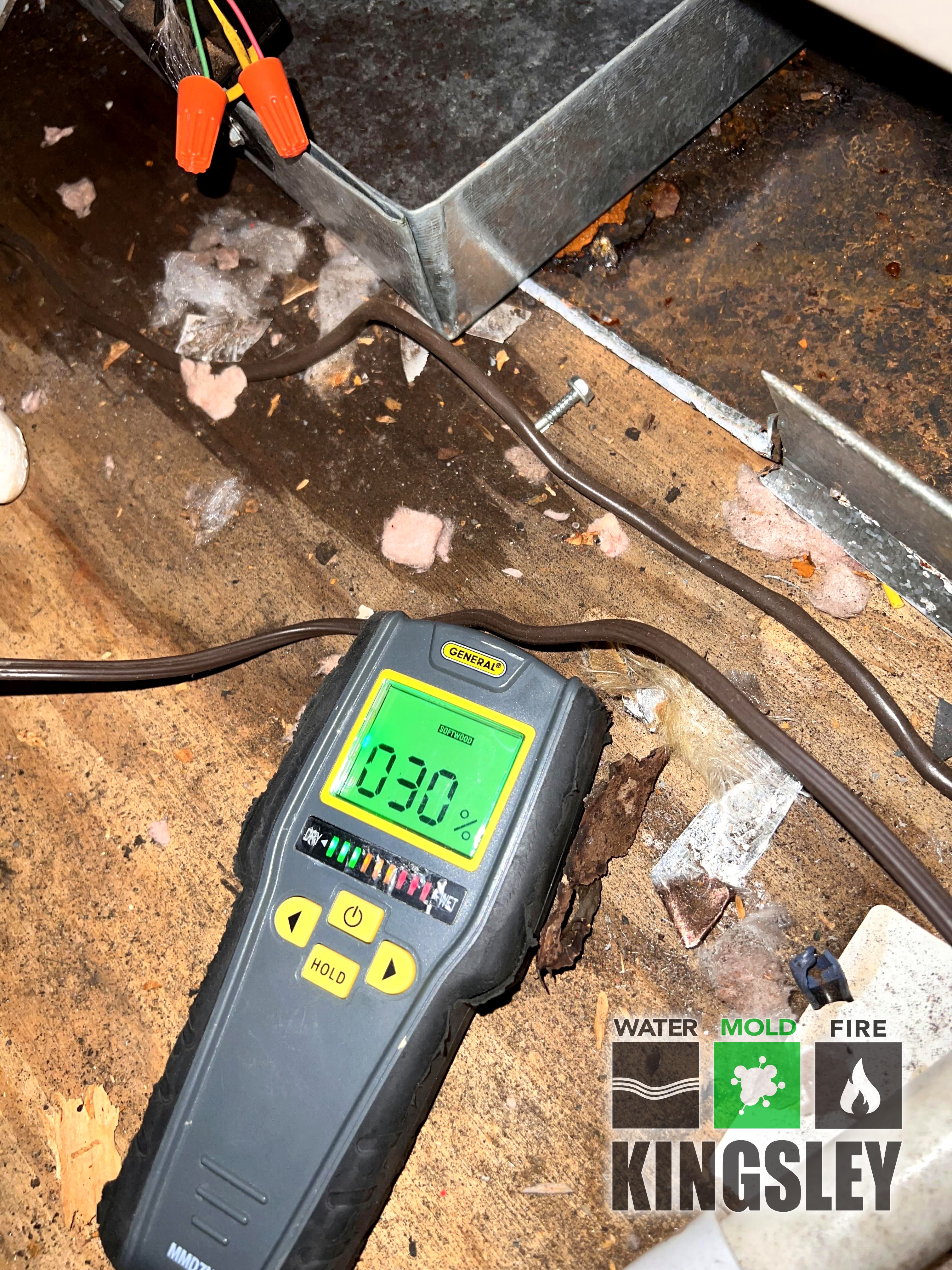
Kingsley water damage & Fire cleanup handled subfloor moisture mapping and water damage cleanup in Lexington, SC after elevated moisture in plywood subfloor after water intrusion. We began with a room-by-room and assembly-level inspection of the exposed plywood subfloor cavity, documenting a GENERAL softwood moisture meter reading 030% in the red WET zone on dusty plywood with pink insulation scraps and wire nuts nearby. That visual and instrument check — not a guess from the hallway — defined where finishes had to open, what could stay, and where drying equipment had to aim. the home needed source control, selective removal of non-salvageable wet or contaminated material, and verified drying of what remained.

During mitigation we controlled the work zone so debris and moisture did not track into clean rooms. Where finishes blocked drying, we opened only the wet footprint shown by meters and the photo record. Contaminated or saturated materials were bagged and removed; salvageable framing and sheathing were cleaned and treated with an EPA-registered antimicrobial when staining or microbial growth warranted it. HEPA vacuuming and careful handling limited dust from demo. The unique on-site detail that guided this file was a GENERAL softwood moisture meter reading 030% in the red WET zone on dusty plywood with pink insulation scraps and wire nuts nearby — that condition stayed in the documentation so the homeowner and any follow-on trade could see exactly what drove the scope in Lexington.

IICRC water-damage and mold-remediation practice prioritizes stop-the-source, remove what cannot be dried in place, clean and treat remaining structures, then dry to target with measured air movement and dehumidification. We placed air movers and/or dehumidifiers to match the wet assembly, ran equipment under monitoring, and rechecked moisture within the first week of mitigation rather than leaving gear unattended for an open-ended stretch. Skipping that short monitoring window is how a straightforward wet call becomes secondary damage in adjoining cavities.

As readings stabilized and the work area met a clean, dry condition, we demobilized equipment and left the exposed plywood subfloor cavity ready for any needed rebuild of finishes. Photo documentation of the mitigation state stayed with the claim file. If you see standing water, elevated meter readings, or soft/stained flooring in Lexington, stop the source and start professional extraction and drying within the first days — delayed drying is what turns a contained wet zone into a larger structural call.

IICRC water-damage and mold-remediation practice prioritizes stop the moisture source, remove what cannot be dried in place, clean and treat remaining structures, then dry to target with measured air movement and dehumidification. On this Lexington file we ran air movers and dehumidifiers against the wet assembly under monitoring and rechecked moisture on a 3–7 day drying calendar—never past about a week. Skipping that short window is how secondary damage or musty odor returns after finishes go back up.

As readings stabilized within that first-week window, equipment came out and the work area was left ready for any needed rebuild. Photo documentation of the mitigation state stayed with the job file. Helpful takeaway: If you see standing water, elevated meter readings, or soft/stained flooring in Lexington, stop the source and start professional extraction and drying within the first days — delayed drying is what turns a contained wet zone into a larger structural call.

Homeowners comparing subfloor moisture mapping and water damage cleanup options in the Lexington area should expect a written moisture map, selective removal instead of full tear-out when meters allow, and a clear end point when materials hit dry goal—not an open-ended equipment rental. Kingsley water damage & Fire cleanup follows that measured approach so rebuild decisions rest on documented conditions rather than a calendar guess.

July 21, 2025 | Lexington, SC

Kingsley water damage & Fire cleanup supported fire and smoke cleanup in Lexington, SC where heat and residues affected finished rooms and, in many Midlands losses, suppression water soaked flooring below. We confirm safe entry, photograph soot patterns on walls, ceilings, and contents, and separate dry living space from the work zone before wet-wiping anything. That photo-backed look decides what cleans in place, what packs out, and where structural drying must run in parallel so cleaned surfaces are not sitting on wet substrate.

Mitigation steps stay in homeowner language: contain the mess, open only what inspection supports, remove what will not dry, and clean or treat what can remain. HEPA filtration supports air cleaning when dust or microbial particles are a concern. Daily updates name the rooms still wet and why machines are still on site—no unexplained jargon wall. If children or pets use the home, we talk through temporary barriers and which doors should stay closed while airflow is balanced.

Drying follows a practical IICRC-oriented order: extract, move air, dehumidify, and monitor until readings support releasing equipment. Typical occupied homes in the Midlands finish structural drying inside a 3–7 day window. Cool crawls, wall cavities, and humid stretches can need the later days; we say so before extending. We will not pack up on day two if meters still show wet materials. Mid-job visits adjust vent counts and dehumidifier settings when outdoor humidity or construction details stall progress.

Contents handling is deliberate. Wet textiles move to a drying path or pack-out decision; furniture feet get blocks on wet carpet; important documents and medications leave the wet zone in a labeled bin you keep. Electronics on wet flooring are unplugged and elevated—we do not power-test them in standing moisture. These steps sound small and prevent a second wave of damage while structural drying continues.

Close-out walks cleaned surfaces, sets residual odor expectations, and separates mitigation from longer rebuild decisions. Contents stay or go based on residue depth—not a blanket discard. If suppression water soaked floors, drying continues so soot cleaning is not wasted on wet substrate. You leave knowing which trades may still need to rebuild after mitigation.

Equipment placement tries to leave bedrooms and kitchens usable when the wet map allows. Cord runs and condensate drains are planned so tanks do not overflow while you are at work. If HOA gates, narrow drives, or shared crawls affect staging in Lexington, share that on the first call so the truck arrives ready. Neighbor notices matter on duplex and townhome hatches.

Kingsley water damage & Fire cleanup uses 3031 Scotsman Rd Suite 16, Columbia, SC 29223 for Midlands paperwork and 803-590-0370 for live dispatch. You choose the contractor; preferred lists are optional. We document for carriers when you authorize it and direct-bill when the policy allows. Where detailed photo logs for this older job are thin, this page describes the standard mitigation approach for this loss type in Lexington without inventing claim numbers, meter digits, or crew names.

November 19, 2022 | Lexington, SC

Kingsley water damage & Fire cleanup provided emergency water cleanup in Lexington, SC after standing water or a sudden leak affected the home. Day-one work removes liquid water, protects dry rooms, and builds a wet map so demolition stays limited. Families keep using dry parts of the house while the wet footprint stays isolated.

Mitigation steps stay in homeowner language: contain the mess, open only what inspection supports, remove what will not dry, and clean or treat what can remain. HEPA filtration supports air cleaning when dust or microbial particles are a concern. Daily updates name the rooms still wet and why machines are still on site—no unexplained jargon wall. If children or pets use the home, we talk through temporary barriers and which doors should stay closed while airflow is balanced.

Drying follows a practical IICRC-oriented order: extract, move air, dehumidify, and monitor until readings support releasing equipment. Typical occupied homes in the Midlands finish structural drying inside a 3–7 day window. Cool crawls, wall cavities, and humid stretches can need the later days; we say so before extending. We will not pack up on day two if meters still show wet materials. Mid-job visits adjust vent counts and dehumidifier settings when outdoor humidity or construction details stall progress.

Contents handling is deliberate. Wet textiles move to a drying path or pack-out decision; furniture feet get blocks on wet carpet; important documents and medications leave the wet zone in a labeled bin you keep. Electronics on wet flooring are unplugged and elevated—we do not power-test them in standing moisture. These steps sound small and prevent a second wave of damage while structural drying continues.

Close-out is a plain walkthrough of what dried, what was removed, and what rebuild steps remain. Keep HVAC from blowing moist air into dry rooms while machines run. If anything rewets, call early so the drying window is not lost. A short written summary of rooms and equipment helps you update insurance without replaying every visit from memory.

Equipment placement tries to leave bedrooms and kitchens usable when the wet map allows. Cord runs and condensate drains are planned so tanks do not overflow while you are at work. If HOA gates, narrow drives, or shared crawls affect staging in Lexington, share that on the first call so the truck arrives ready. Neighbor notices matter on duplex and townhome hatches.

Kingsley water damage & Fire cleanup uses 3031 Scotsman Rd Suite 16, Columbia, SC 29223 for Midlands paperwork and 803-590-0370 for live dispatch. You choose the contractor; preferred lists are optional. We document for carriers when you authorize it and direct-bill when the policy allows. Where detailed photo logs for this older job are thin, this page describes the standard mitigation approach for this loss type in Lexington without inventing claim numbers, meter digits, or crew names.

If rebuild trades follow mitigation, we leave surfaces accessible and share moisture notes so flooring or drywall work does not trap leftover dampness. That handoff is part of finishing strong in the Midlands humidity cycle.

May 12, 2022 | Lexington, SC

Kingsley water damage & Fire cleanup provided emergency water cleanup in Lexington, SC after standing water or a sudden leak affected the home. Day-one work removes liquid water, protects dry rooms, and builds a wet map so demolition stays limited. Families keep using dry parts of the house while the wet footprint stays isolated.

Mitigation steps stay in homeowner language: contain the mess, open only what inspection supports, remove what will not dry, and clean or treat what can remain. HEPA filtration supports air cleaning when dust or microbial particles are a concern. Daily updates name the rooms still wet and why machines are still on site—no unexplained jargon wall. If children or pets use the home, we talk through temporary barriers and which doors should stay closed while airflow is balanced.

Drying follows a practical IICRC-oriented order: extract, move air, dehumidify, and monitor until readings support releasing equipment. Typical occupied homes in the Midlands finish structural drying inside a 3–7 day window. Cool crawls, wall cavities, and humid stretches can need the later days; we say so before extending. We will not pack up on day two if meters still show wet materials. Mid-job visits adjust vent counts and dehumidifier settings when outdoor humidity or construction details stall progress.

Contents handling is deliberate. Wet textiles move to a drying path or pack-out decision; furniture feet get blocks on wet carpet; important documents and medications leave the wet zone in a labeled bin you keep. Electronics on wet flooring are unplugged and elevated—we do not power-test them in standing moisture. These steps sound small and prevent a second wave of damage while structural drying continues.

Close-out is a plain walkthrough of what dried, what was removed, and what rebuild steps remain. Keep HVAC from blowing moist air into dry rooms while machines run. If anything rewets, call early so the drying window is not lost. A short written summary of rooms and equipment helps you update insurance without replaying every visit from memory.

Equipment placement tries to leave bedrooms and kitchens usable when the wet map allows. Cord runs and condensate drains are planned so tanks do not overflow while you are at work. If HOA gates, narrow drives, or shared crawls affect staging in Lexington, share that on the first call so the truck arrives ready. Neighbor notices matter on duplex and townhome hatches.

Kingsley water damage & Fire cleanup uses 3031 Scotsman Rd Suite 16, Columbia, SC 29223 for Midlands paperwork and 803-590-0370 for live dispatch. You choose the contractor; preferred lists are optional. We document for carriers when you authorize it and direct-bill when the policy allows. Where detailed photo logs for this older job are thin, this page describes the standard mitigation approach for this loss type in Lexington without inventing claim numbers, meter digits, or crew names.

If rebuild trades follow mitigation, we leave surfaces accessible and share moisture notes so flooring or drywall work does not trap leftover dampness. That handoff is part of finishing strong in the Midlands humidity cycle.