BEST Water Damage and Fire Cleanup Service in Camden, SC
Water Damage Repair Columbia
  • 24-Hour Eastover Water Cleanup
  • Fire Restoration, Duct Cleaning, Mold Removal & Testing
  • Calls Answered Live- No Call Center
  • No Money Upfront- Direct Bill Insurance
  • 440+ five-star Google reviews
  • IICRC Certified Technicians

Kingsley Water Damage & Fire Cleanup offers emergency water damage restoration in Columbia, SC. We believe in providing the best possible services and are committed to customer satisfaction. Whether there is a minor pipe leak or complete basement flood, Kingsley Water Damage & Fire Cleanup will work with you and your family from the minute you call. For many years, our licensed and insured contractors have helped homeowners in the area restore their homes back to their preexisting conditions. We provide expert restoration services in compliance with the IICRC.

803-590-0370

Camden, SC Water Damage Restoration

In times of unpredictable weather or sudden accidents, acting quickly is the most important step you can take to protect your home and your peace of mind. Water is an incredibly powerful force that, if left unaddressed, can impact your property’s value and safety without warning. That is why our team of insured and IICRC-certified professionals stays ready to step in, tackling even the most challenging water removal and drying projects with the expertise your home deserves.

As a leading restoration specialist in Camden, SC, Kingsley is dedicated to ensuring you never have to face these moments alone. We understand that property damage is often an unexpected and overwhelming event, which is why we aim to bring immediate relief and a steady hand to the recovery process. When you choose Kingsley, you are partnering with neighbors who are committed to your best interests and to restoring your property to its very best.

Contact Us
Water Damage is Not Properly Remediated

What to Expect From Water Damage Restoration in Camden

Water damage mitigation is unique in that it often requires us to begin the restoration process before a final cost can be determined. Because every home is built differently, it is impossible to know upfront exactly how long a specific material will take to dry or if hidden elements, like particleboard flooring, will need to be carefully removed. There are countless variables that can influence the final scope of work, and providing a fixed price before the moisture is managed would be a disservice to the thoroughness your home requires.

Insurance providers understand and expect this process; their primary goal, like ours, is to ensure your property is dried out and made safe as quickly as possible to prevent further loss. While rebuilding costs may be discussed later, the emergency mitigation phase is about immediate protection. At Kingsley, we prioritize your safety and the integrity of your home above all else, working transparently with both you and your insurance company to ensure the job is done right, with no corners cut and no hidden surprises.

Get Help From Camden Water Damage Restoration Experts

We are full-time water damage restoration specialists, and therefore have extensive experience serving homes in Camden. Do not be fooled into thinking companies such as carpet cleaners, plumbers, or even home builders can offer the same quality water damage restoration as Kingsley LLC. We stick to what we know, and that is returning your home to pre-loss condition quickly, safely, and efficiently. Water damage restoration services are highly unregulated, meaning anybody can claim to be an expert. Unfortunately, even some nationally recognized companies are still offering services that do not fully resolve the water issue. If you need real services fast, schedule an appointment with Kingsley Water Damage & Fire Cleanup or call us at 803-590-0370 today.
Our customers love us!

See All 441 Reviews
Customer Reviews from Camden and Surrounding Areas ( 5
from 12 reviews )

Happy Customers across Camden and Surrounding Areas

Completed Jobs from Camden and Surrounding Areas

See All

September 24, 2026 | Camden, SC

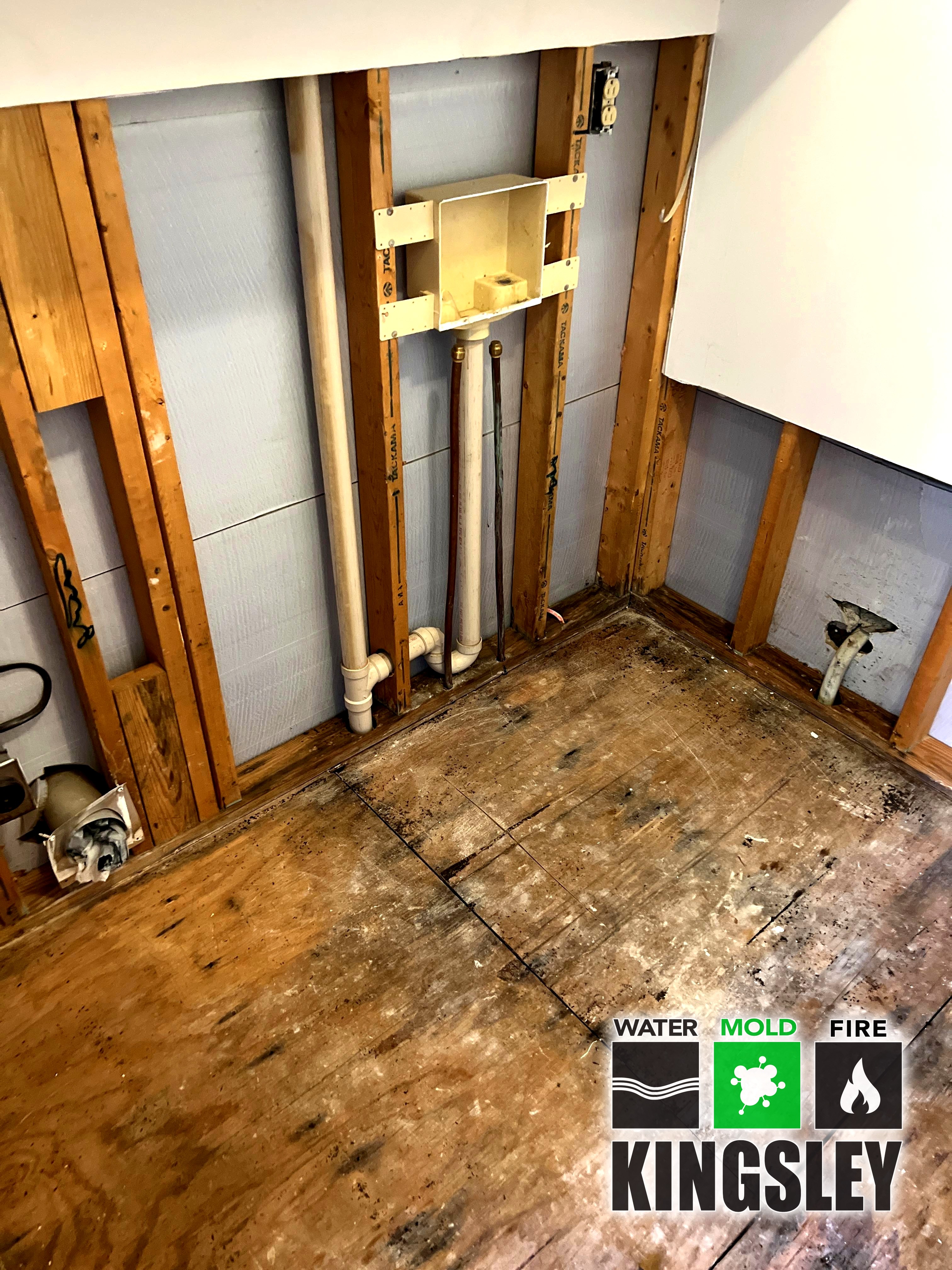
Kingsley water damage & Fire cleanup restored a Camden, SC laundry room after water damage reached the wall cavity and plywood subfloor at the washer connections. We began with inspection and moisture mapping of the wet wall and floor assembly. Flooring, baseboards, and trim had already been removed before our crew arrived; we then removed the laundry drywall along with the insulation. Finished drywall that had taken on moisture came out under controlled demolition — two walls cut four feet up and the remaining walls two feet up — so we could see the studs, insulation, bottom plate, and the full washer outlet box. That flood-cut approach confirmed how far water had traveled along the framing and subfloor without opening more of the home than necessary. Wet insulation came out with the drywall so drying air could reach the wood instead of staying trapped behind saturated batts.

With the wall open, copper supply lines, the PVC drain and P-trap, and the recessed washer box were fully accessible for inspection. A dryer vent plate and adjacent plumbing stack remained visible in the open cavity while the plywood subfloor showed irregular dark staining concentrated near the wall and along panel seams — a pattern consistent with prolonged moisture at laundry connections. Studs near the floor plates carried vertical water staining. We HEPA-vacuumed and remediated light superficial growth present inside the drywall cavity with an EPA-registered antimicrobial before any drying equipment was placed. Wet or contaminated finish materials that could not be cleaned to a dry standard were bagged and removed so the structure, not the finishes, became the focus of mitigation.

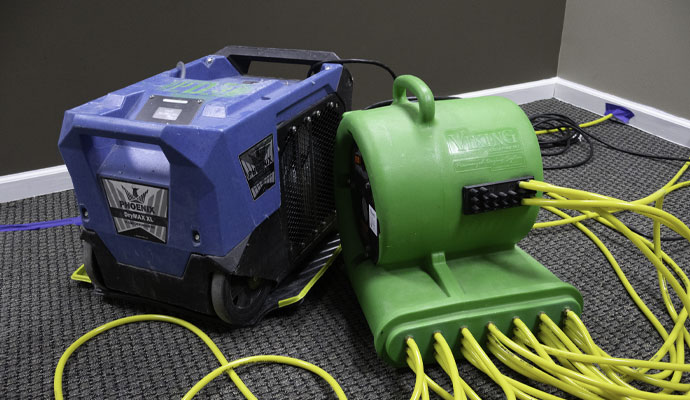
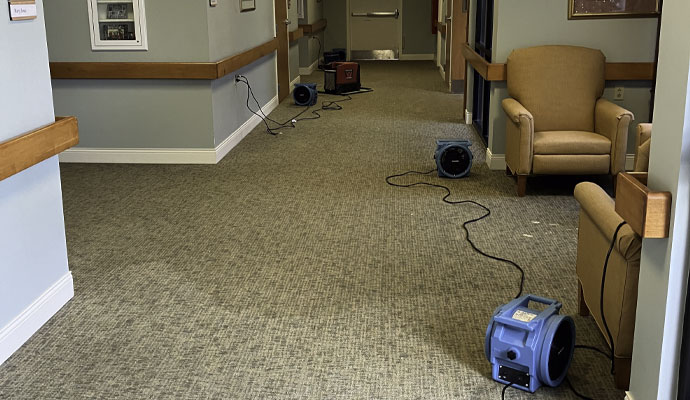
We set containment so the work zone would not pull adjoining rooms into the project while we cleaned exposed framing and subfloor. In the laundry itself we set three air movers and one dehumidifier to establish controlled airflow across the open studs and stained plywood. Connected areas that moisture mapping had flagged — including the back entry hall and a small kitchen floor section — received additional air movement and dehumidification so the laundry loss did not rewet through shared assemblies. We also finished crawlspace work on the connected underside of the home and set air movers there as part of that same mitigation scope; the laundry cavity above grade is what this job stage documents, not the crawlspace itself. Psychrometric conditions and moisture-content readings, not the calendar, decided when equipment could come out.

We inspected plumbing connections while the wall was open so any ongoing leak risk at the washer supply or drain could be addressed before new drywall went up. Leaving a slow drip behind finished surfaces is how laundry losses return months later as mold behind baseboards. We collected a material sample for flooring identification so rebuild products would match what was removed, and we coordinated an adjuster video walkthrough of the affected areas so the mid-demo condition — studs open, plumbing visible, stained subfloor exposed — was documented while the cavity was still accessible.

Monitoring continued over several days until all affected materials were dry at goal or below, then we removed drying equipment from the structure. When readings were stable within that first week of mitigation, we left the laundry cavity and floor ready for new insulation, drywall, base, and flooring on a clean substrate. Laundry rooms are a frequent water source because of supply-line and drain issues; opening the wall early, remediating growth before equipment runs, and drying to industry standards is what keeps a Camden repair contained instead of becoming a larger microbial problem later.

After mitigation, there was a clear path to restore the laundry room without trapping moisture inside the wall or under new flooring in this Camden home. Crew documentation stayed with the file so rebuild could proceed on a verified dry substrate. If you notice a musty smell near the washer, soft flooring at the toe-kick, or staining around supply valves, shut the valves off and request moisture mapping before replacing finishes alone.

January 10, 2025 | Camden, SC

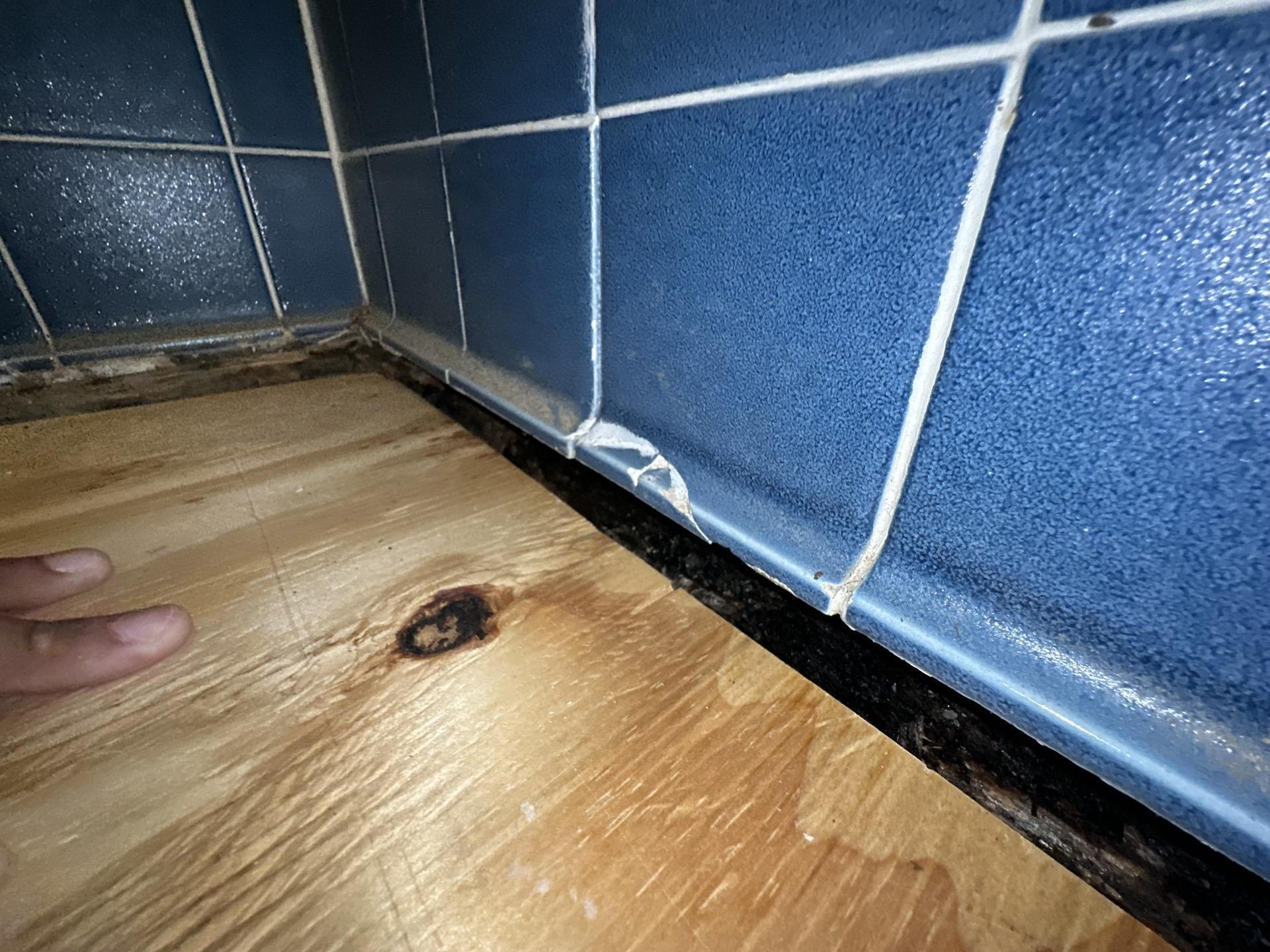
We were able to dry out the wood, and apply antimicrobial to the corners to prevent any mold damage.

June 09, 2024 | Camden, SC

We promptly arrived at the property, and boarded up this home. We were then able to start cleaning and get this property squared away.

November 08, 2023 | Camden, SC

We have specialized equipment stabilized to dry this insulation in place.

November 15, 2022 | Lugoff, SC

By the time we reached the Lugoff home the plumbing repair was finished and there was no standing water left in the crawlspace, which can make a situation look resolved when it is not. We took moisture readings across the wood framing and subfloor and found levels in the sixteen to eighteen percent range, above where those materials should sit and high enough to support microbial growth if left alone. Moisture meters and infrared imaging let us map which areas were still wet, since none of it showed up as visible damage.

Working under a house means dealing with whatever else is down there. We cleared out debris and the old plastic vapor barrier, since wet plastic and trash hold moisture against the soil and give microbes somewhere to live. We then established negative air pressure in the crawlspace so air moved into the work area instead of up into the living space, and ran an air scrubber with HEPA filtration to pull airborne particles and any spores out of the air while the work went on.

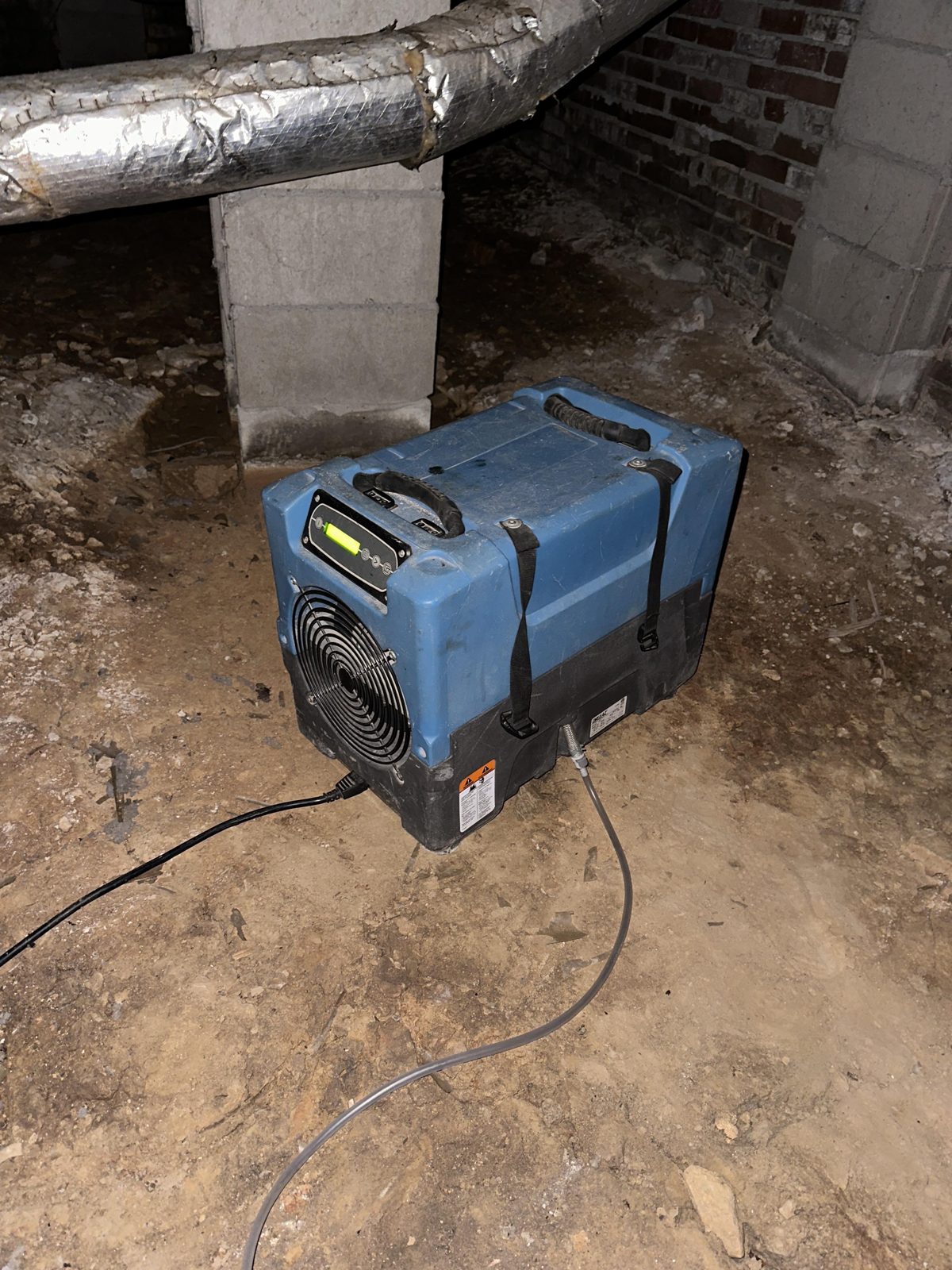
The drying itself came down to moving air and removing humidity. Five high-velocity air movers were placed to sweep air across the joists and subfloor and speed up evaporation, and three dehumidifiers captured that moisture out of the air before it could resettle. Crawlspaces in this part of Lugoff often have very few electrical outlets, so equipment placement had to be worked out around the circuits that were available, balancing airflow against the risk of overloading them.

Readings were taken regularly through the drying period to confirm the numbers were falling toward normal rather than holding steady. That monitoring is what tells us whether the air movers are in the right places or need to be repositioned. Negative pressure and filtration ran the entire time, which kept the risk of secondary mold growth low while the structure came back to a normal moisture level.

When the wood reached an acceptable moisture content, we treated the area to limit microbial risk, pulled the equipment out and finished with a clean-up of the crawlspace. The framing and subfloor were left dry, and the space was left clear of the wet material that had been sitting under the house.

Hidden water damage is frustrating precisely because there is nothing to look at. A pipe break under a house in Lugoff can be fixed by a plumber in an afternoon and still leave weeks of moisture in the structure above it. Measuring it, drying it, and then confirming it is dry is what keeps a plumbing problem from becoming a framing or mold problem later on.